

Embodied Artificial Intelligence (AI) Global Market Opportunities And Strategies To 2035
By Product (Robots, Exoskeleton, Autonomous Systems, Smart Appliances), By Technology (Machine Learning, Computer Vision, Robotics, Natural Language Processing), By End User (Healthcare, Automation And Manufacturing, Automotive, Logistics And Supply Chain, Defense And Security, Retail, Education, Other End-Users), And By Region, Opportunities And Strategies – Global Forecast To 2035
Embodied Artificial Intelligence (AI) Market Definition
Embodied Artificial Intelligence (AI) refers to artificial intelligence systems that are integrated into physical entities such as machines, devices, or robotic systems, enabling them to perceive, interact with, and respond to the physical world. Unlike purely software-based AI, embodied AI combines computational intelligence with sensors, actuators, and mechanical structures to perform tasks in real-world environments. These systems are used by a wide range of users including industrial enterprises, healthcare providers, logistics companies, defense organizations, educational institutions, and consumers. The embodied artificial intelligence (AI) market consists of sales of embodied artificial intelligence (AI) by entities (organizations, sole traders and partnerships) that is used in situations where physical interaction, mobility, or manipulation of objects is required, such as in manufacturing automation, medical assistance, autonomous navigation, and service delivery.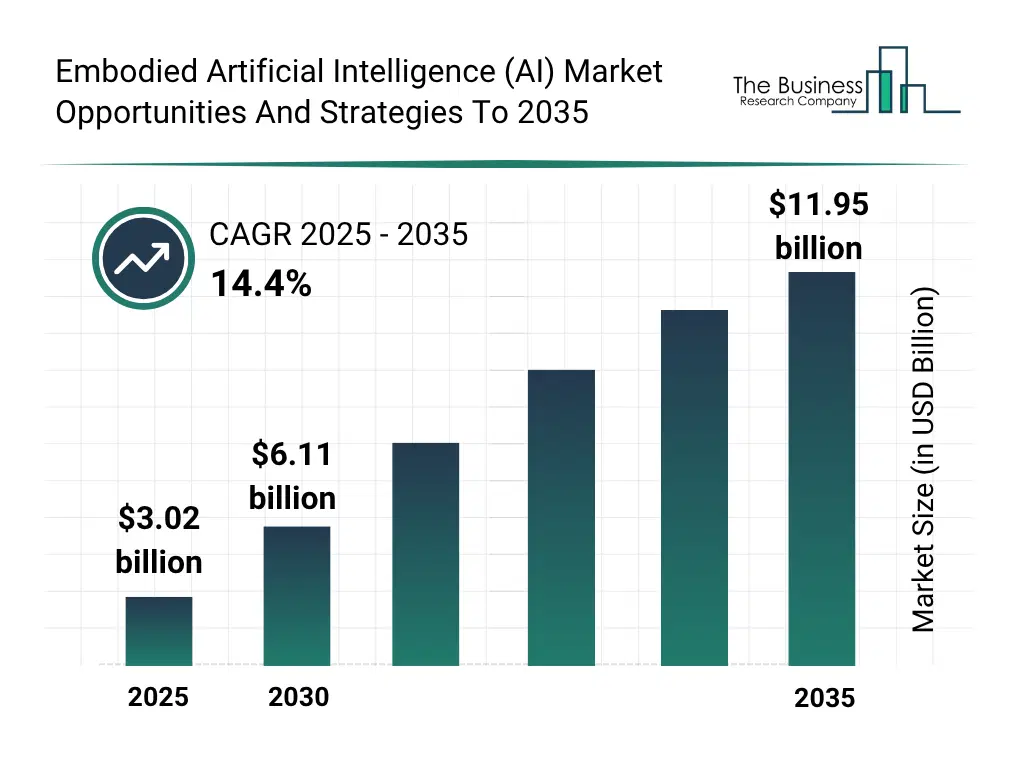
Embodied Artificial Intelligence (AI) Market Size
The global embodied artificial intelligence (AI) market reached a value of nearly $3,020.0 million in 2025, having grown at a compound annual growth rate (CAGR) of 15.4% since 2020. The market is expected to grow from $3,020.0 million in 2025 to $6,106.6 million in 2030 at a rate of 15.1%. The market is then expected to grow at a CAGR of 14.4% from 2030 and reach $11,950.0 million in 2035. Growth in the historic period resulted from increasing commercial adoption of robotics across industries, increasing government and defense spending on robotics, growing demand for collaborative robots (Cobots) in enterprises and rising adoption of industry 4.0 and smart manufacturing. Factors that negatively affected growth in the historic period were cybersecurity risks and system vulnerabilities and regulatory and compliance challenges. Going forward, increasing labor shortages and rising labor costs, growing investments and funding in ai startups and innovation, expansion of smart city projects and urban automation and rising demand for autonomous mobility and delivery solutions will drive the growth. Factors that could hinder the growth of the embodied artificial intelligence (AI) market in the future include high development, deployment, and maintenance costs, data privacy and ethical concerns and impact of trade and tariff war.
Embodied Artificial Intelligence (AI) Market Segmentation
The embodied artificial intelligence (AI) market is segmented by product, by technology and by end user.
By Product –
The embodied artificial intelligence (AI) market is segmented by product into:
By Technology –
The embodied artificial intelligence (AI) market is segmented by technology into:
By Material –
The embodied artificial intelligence (AI) market is segmented by material into:
By Geography - The embodied artificial intelligence (AI) market is segmented by geography into:
By Product –
The embodied artificial intelligence (AI) market is segmented by product into:
- a) Robots
- b) Exoskeleton
- c) Autonomous Systems
- c) Smart Appliances
By Technology –
The embodied artificial intelligence (AI) market is segmented by technology into:
- a) Machine Learning
- b) Computer Vision
- c) Robotics
- d) Natural Language Processing
By Material –
The embodied artificial intelligence (AI) market is segmented by material into:
- a) Healthcare
- b) Automation And Manufacturing
- c) Automotive
- d) Logistics And Supply Chain
- e) Defense And Security
- f) Retail
- g) Education
- h) Other End-Users
By Geography - The embodied artificial intelligence (AI) market is segmented by geography into:
- China
- India
- Japan
- Australia
- Taiwan
- South Korea
- Indonesia
- USA
- Canada
- Brazil
- France
- Germany
- UK
- Italy
- Spain
- Russia
-
o Asia Pacific
o Africa