
Emergency Medical Equipment Market Report 2026
Global Outlook – By Product Type (Defibrillators, Ventilators, Patient Monitoring Systems, Resuscitation Equipment, Emergency Stretchers, Suction Devices, Infusion Pumps, Other Emergency Medical Equipment), By Distribution Channel (Direct Sales, Distributors And Dealers, Online Sales), By Application (Cardiac Care, Trauma Care, Respiratory Care, Neonatal And Pediatric Emergency Care, Disaster And Emergency Response, Other Applications), By End User (Hospitals, Emergency Medical Services, Ambulatory Surgical Centers, Clinics, Military And Defense Organizations, Other End Users) – Market Size, Trends, Strategies, and Forecast to 2030
Emergency Medical Equipment Market Overview
• Emergency Medical Equipment market size has reached to $34.22 billion in 2025 • Expected to grow to $50.09 billion in 2030 at a compound annual growth rate (CAGR) of 7.8% • Growth Driver: Growing Number Of Road Accidents And Trauma Cases Driving The Market Growth Due To Increasing Demand For Advanced Trauma Care Solutions • Market Trend: Innovation In Minimally Invasive Cardiac Technologies Accelerates Treatment Advancements • North America was the largest region in 2025 and Asia-Pacific is the fastest growing region.What Is Covered Under Emergency Medical Equipment Market?
Emergency medical equipment refers to specialized devices and tools designed for immediate medical intervention, diagnosis, monitoring, and patient support during urgent or critical situations. These products are developed to enable rapid response, stabilization, and management of medical emergencies by supporting essential healthcare procedures and improving patient outcomes. They are engineered for reliability, portability, and ease of use in time-sensitive environments. The main product types of emergency medical equipment include defibrillators, ventilators, patient monitoring systems, resuscitation equipment, emergency stretchers, suction devices, infusion pumps, and other emergency medical equipment. Defibrillators refer to medical devices that deliver an electrical shock to the heart to help restore a normal heart rhythm during certain life-threatening cardiac emergencies. These products are distributed through direct sales, distributors and dealers, and online sales. They find application in cardiac care, trauma care, respiratory care, neonatal and pediatric emergency care, disaster and emergency response, and others, serving end users including hospitals, emergency medical services, ambulatory surgical centers, clinics, military and defense organizations, and others.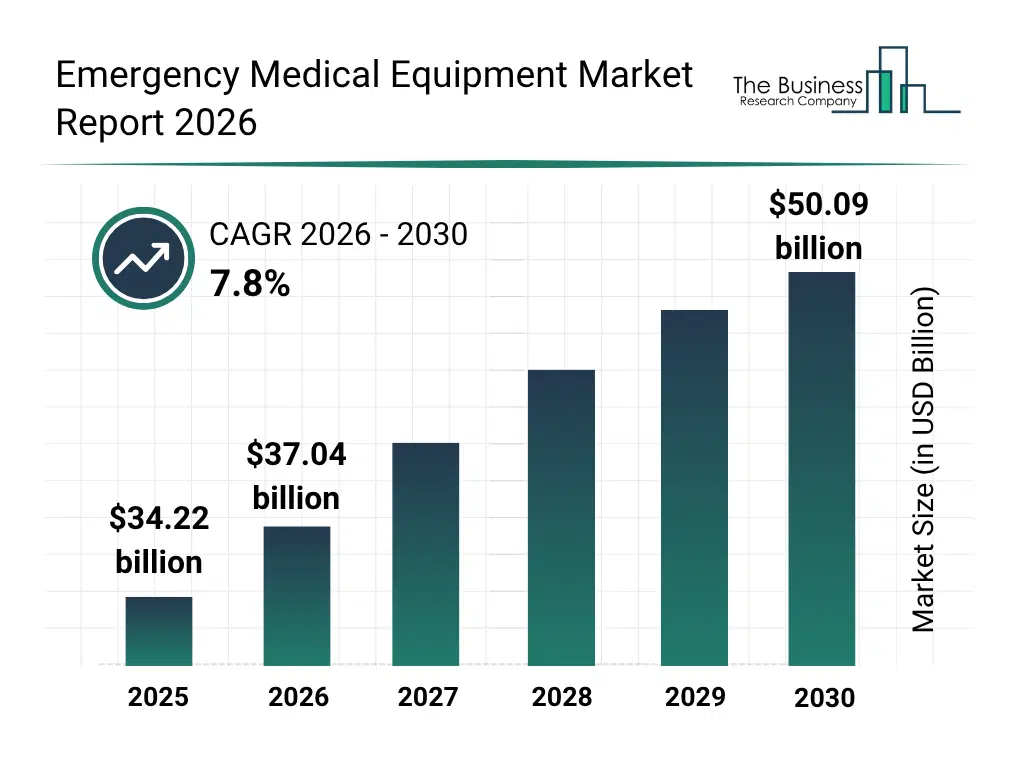
What Is The Emergency Medical Equipment Market Size and Share 2026?
The emergency medical equipment market size has grown strongly in recent years. It will grow from $34.22 billion in 2025 to $37.04 billion in 2026 at a compound annual growth rate (CAGR) of 8.3%. The growth in the historic period can be attributed to increasing incidence of medical emergencies, rising demand for emergency healthcare services, growing need for rapid patient stabilization, increasing adoption of portable medical equipment, expanding emergency care infrastructure.What Is The Emergency Medical Equipment Market Growth Forecast?
The emergency medical equipment market size is expected to see strong growth in the next few years. It will grow to $50.09 billion in 2030 at a compound annual growth rate (CAGR) of 7.8%. The growth in the forecast period can be attributed to increasing demand for advanced emergency diagnostic equipment, rising need for faster emergency patient monitoring, growing adoption of portable and battery-powered medical devices, increasing demand for reliable emergency response equipment, expanding deployment of emergency medical equipment across healthcare facilities. Major trends in the forecast period include increasing demand for rapid emergency response equipment, rising adoption of portable emergency medical devices, growing need for reliable patient stabilization equipment, increasing demand for easy-to-use emergency care devices, expanding use of compact and lightweight emergency medical equipment.
Global Emergency Medical Equipment Market Segmentation
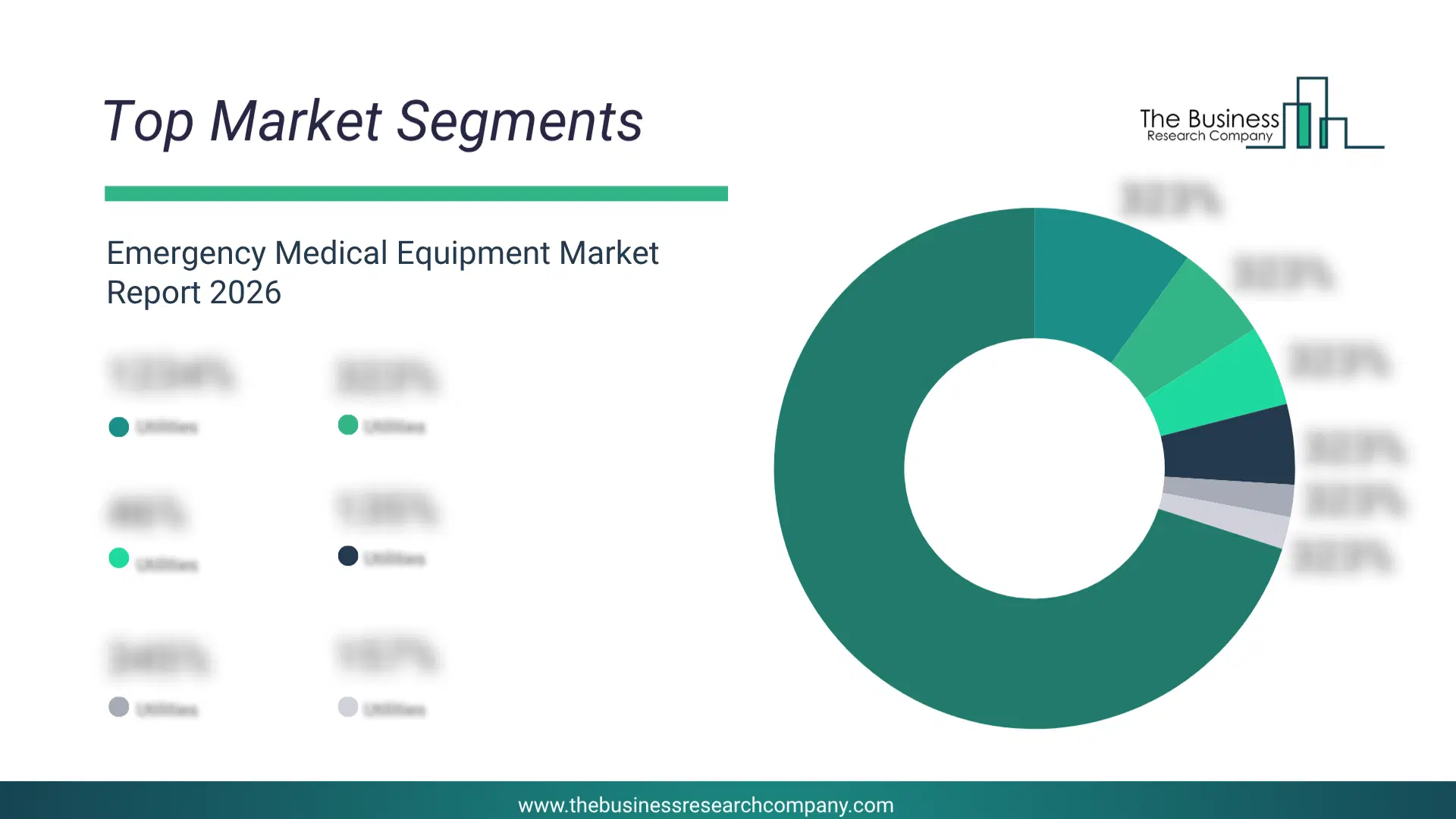
1) By Product Type: Defibrillators, Ventilators, Patient Monitoring Systems, Resuscitation Equipment, Emergency Stretchers, Suction Devices, Infusion Pumps, Other Emergency Medical Equipment 2) By Distribution Channel: Direct Sales, Distributors And Dealers, Online Sales 3) By Application: Cardiac Care, Trauma Care, Respiratory Care, Neonatal And Pediatric Emergency Care, Disaster And Emergency Response, Other Applications 4) By End User: Hospitals, Emergency Medical Services, Ambulatory Surgical Centers, Clinics, Military And Defense Organizations, Other End Users Subsegments: 1) By Defibrillators: Automated External Defibrillators, Manual External Defibrillators, Implantable Cardioverter Defibrillators, Wearable Defibrillators, Biphasic Defibrillators 2) By Ventilators: Mechanical Ventilators, Portable Ventilators, Non Invasive Ventilators, Invasive Ventilators, Emergency Transport Ventilators 3) By Patient Monitoring Systems: Multiparameter Patient Monitoring Systems, Cardiac Monitoring Systems, Respiratory Monitoring Systems, Vital Sign Monitoring Systems, Portable Patient Monitoring Systems 4) By Resuscitation Equipment: Manual Resuscitators, Automatic Resuscitation Devices, Cardiopulmonary Resuscitation Devices, Airway Management Devices, Resuscitation Masks 5) By Emergency Stretchers: Foldable Emergency Stretchers, Wheeled Emergency Stretchers, Stair Chair Stretchers, Basket Stretchers, Spinal Stretchers 6) By Suction Devices: Portable Suction Devices, Electric Suction Devices, Manual Suction Devices, Emergency Airway Suction Devices, Surgical Suction Devices 7) By Infusion Pumps: Volumetric Infusion Pumps, Syringe Infusion Pumps, Patient Controlled Analgesia Pumps, Ambulatory Infusion Pumps, Disposable Infusion Pumps 8) By Other Emergency Medical Equipment: Emergency Diagnostic Devices, Trauma Care Equipment, Emergency Oxygen Delivery Equipment, Immobilization Devices, Emergency Communication EquipmentWhat Is The Driver Of The Emergency Medical Equipment Market?
The growing number of road accidents and trauma cases is expected to propel the growth of the emergency medical equipment market going forward. Road accidents and trauma cases refer to injuries caused by vehicle collisions, falls, and other sudden physical impacts that require immediate medical attention and emergency care. The number of road accidents and trauma cases is rising due to higher traffic congestion, which increases vehicle interactions and the likelihood of collisions. Accidents and trauma cases support the use of emergency medical equipment by increasing the demand for advanced trauma care solutions, including defibrillators, ventilators, patient monitoring devices, stretchers, and emergency response equipment, which help healthcare providers deliver timely treatment and improve patient survival outcomes. For instance, in May 2025, according to Transport Canada, a Canada-based government agency, motor vehicle fatalities reached 1,964 in 2023, marking a 1.7% increase from the 1,931 deaths reported in 2022. Therefore, the growing number of road accidents and trauma cases is driving the growth of the emergency medical equipment industry.Key Players In The Global Emergency Medical Equipment Market
Major companies operating in the emergency medical equipment market are Cardinal Health Inc., Medtronic plc, Stryker Corporation, GE HealthCare Technologies Inc., Becton Dickinson and Company, Koninklijke Philips N.V., Baxter International Inc., B. Braun Melsungen AG, Shenzhen Mindray Bio-Medical Electronics Co. Ltd., Getinge AB, Teleflex Incorporated, Drägerwerk AG & Co. KGaA, Masimo Corporation, ZOLL Medical Corporation, Nihon Kohden Corporation, Hamilton Medical AG, Ambu A/S, Laerdal Medical AS, Shenzhen Comen Medical Instruments Co. Ltd., Schiller AG, WEINMANN Emergency Medical Technology GmbH & Co. KG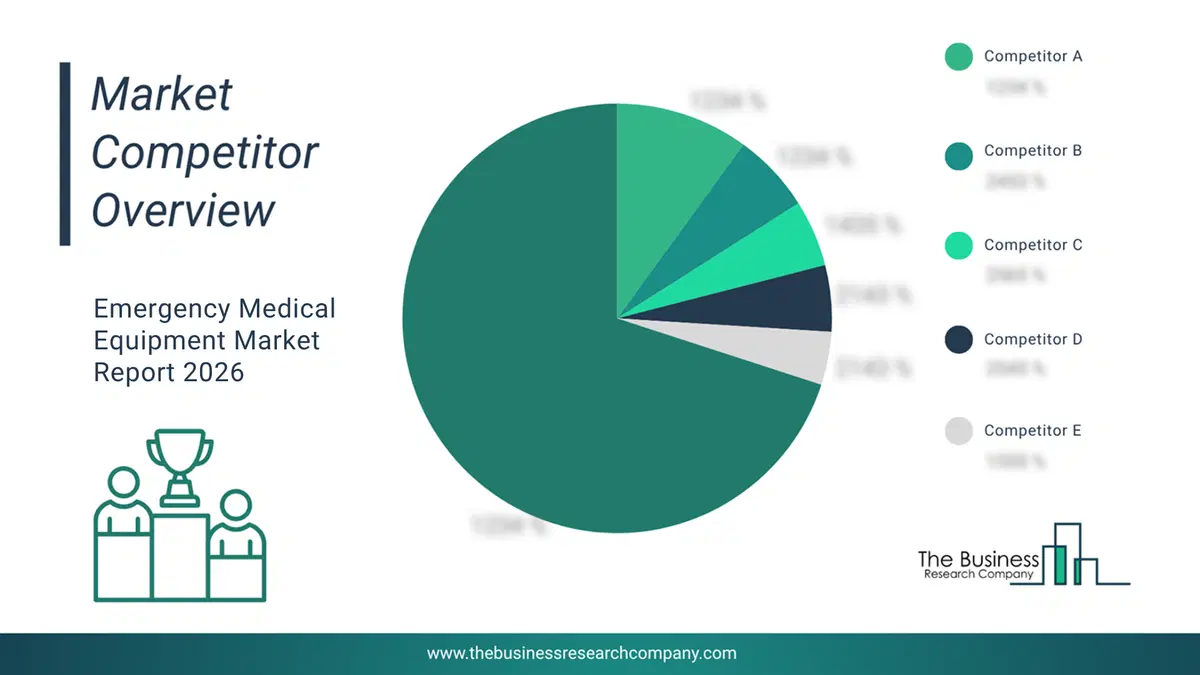
This chart is for illustrative purposes; the full report includes a detailed competitor analysis and comprehensive overview of the top 10 companies in the market.
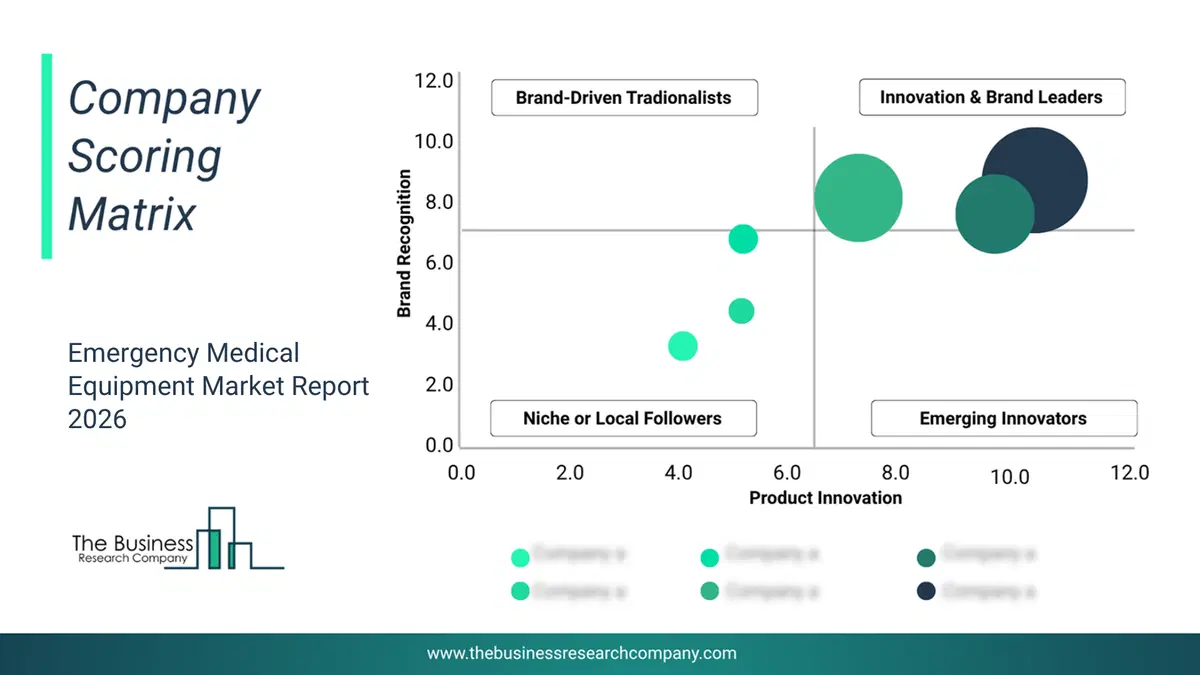
This chart maps companies by product innovation and brand strength, with bubble size indicating relative revenue, helping identify market leaders, challengers, and niche players. This is an illustrative chart; the full report provides a complete and accurate competitive analysis.
Global Emergency Medical Equipment Market Trends and Insights
Major companies operating in the emergency medical equipment market are focusing on developing innovative products such as, miniaturized implantable defibrillation leads to enhance cardiac emergency care, treatment reliability, patient safety, and minimally invasive device performance. Miniaturized implantable defibrillation leads are advanced components connected to implantable cardioverter defibrillators (ICDs) that deliver pacing, sensing, cardioversion, and defibrillation therapies while using a smaller diameter design than conventional leads, helping reduce the risk of complications and improving suitability for a wider range of patients. For instance, in January 2026, Medtronic plc, an Ireland-based medical device company, launched OmniaSecure MRI SureScan Defibrillation Lead in the U.S. market, an innovative defibrillation lead designed for managing life-threatening heart rhythm disorders. The device is the world’s smallest defibrillation lead and is approved for adults as well as pediatric patients aged 12 years and older. It connects with implantable defibrillators to provide pacing, sensing, cardioversion, and defibrillation therapies for conditions such as ventricular tachyarrhythmias, ventricular fibrillation, and bradyarrhythmias. Engineered based on Medtronic’s established SelectSecure Model 3830 pacing lead technology, the device offers high defibrillation success, reliable performance, and reduced lead-related complications, supporting improved emergency cardiac care outcomes.What Are Latest Mergers And Acquisitions In The Emergency Medical Equipment Market?
In May 2024, Tri-Tech Forensics Inc., a US-based emergency medical and forensic solutions company, acquired SAM Medical for an undisclosed amount. With this acquisition, Tri-Tech Forensics, Inc. aimed to expand its emergency medical product portfolio by integrating SAM Medical’s trauma care technologies, strengthening its position in the first responder and pre-hospital emergency markets, and enhancing its ability to provide comprehensive life-saving medical solutions to emergency personnel, healthcare providers, and defense organizations worldwide. SAM Medical is a US-based medical device company that specializes in developing and manufacturing emergency trauma care products, including tourniquets, splints, pelvic binders, hemostatic solutions, and intraosseous access systems.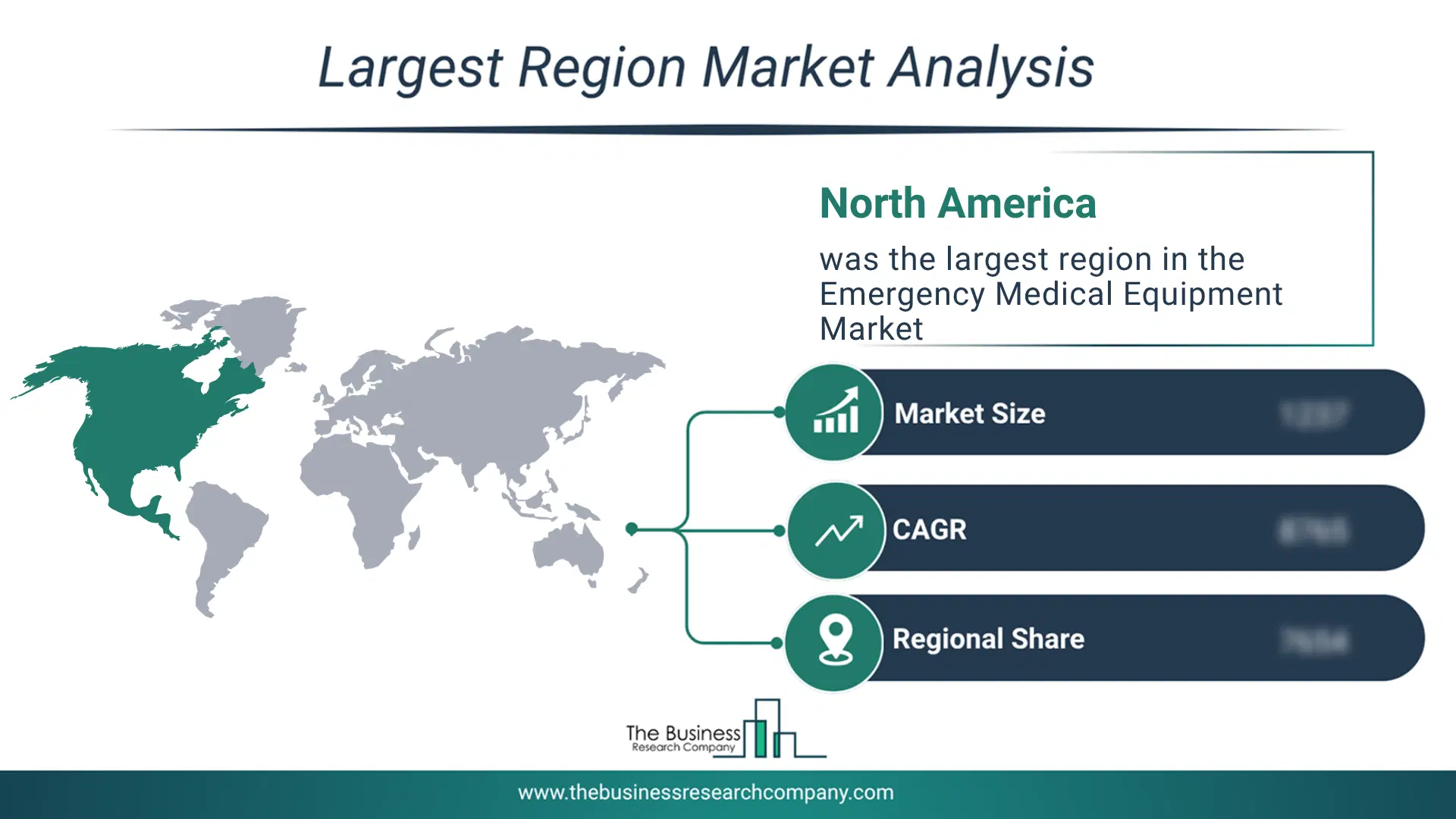
Regional Insights
North America was the largest region in the emergency medical equipment market in 2025. Asia-Pacific is expected to be the fastest-growing region in the forecast period. The regions covered in this market report are Asia-Pacific, South East Asia, Western Europe, Eastern Europe, North America, South America, Middle East, Africa. The countries covered in this market report are Australia, Brazil, China, France, Germany, India, Indonesia, Japan, Taiwan, Russia, South Korea, UK, USA, Canada, Italy, Spain.What Defines the Emergency Medical Equipment Market?
The emergency medical equipment market consists of sales of emergency response devices, medical support equipment, trauma care tools, diagnostic equipment, life-support accessories, and emergency transport equipment. Values in this market are ‘factory gate’ values, that is, the value of goods sold by the manufacturers or creators of the goods, whether to other entities (including downstream manufacturers, wholesalers, distributors, and retailers) or directly to end customers. The value of goods in this market includes related services sold by the creators of the goods.How is Market Value Defined and Measured?
The market value is defined as the revenues that enterprises gain from the sale of goods and/or services within the specified market and geography through sales, grants, or donations in terms of the currency (in USD unless otherwise specified). The revenues for a specified geography are consumption values that are revenues generated by organizations in the specified geography within the market, irrespective of where they are produced. It does not include revenues from resales along the supply chain, either further along the supply chain or as part of other products.
This chart presents market attractiveness based on a quantitative evaluation of growth, competition, strategic alignment, and risk, offering a clear view of opportunity areas for decision-making. This chart is for illustrative purposes; the full report contains the complete analysis.

This chart highlights the Total Addressable Market (TAM) by estimating the maximum revenue opportunity using an assumption-driven approach, supporting strategic planning and opportunity sizing across markets. The chart is illustrative; the full report provides a more comprehensive analysis.
What Key Data and Analysis Are Included in the Emergency Medical Equipment Market Report 2026?
The emergency medical equipment market research report is one of a series of new reports from The Business Research Company that provides market statistics, including industry global market size, regional shares, competitors with the market share, detailed market segments, market trends and opportunities, and any further data you may need to thrive in the emergency medical equipment industry. The market research report delivers a complete perspective of everything you need, with an in-depth analysis of the current and future state of the industry.Emergency Medical Equipment Market Report Forecast Analysis
| Report Attribute | Details |
|---|---|
| Market Size Value In 2026 | $37.04 billion |
| Revenue Forecast In 2030 | $50.09 billion |
| Growth Rate | CAGR of 7.8% from 2026 to 2030 |
| Base Year For Estimation | 2025 |
| Actual Estimates/Historical Data | 2020-2025 |
| Forecast Period | 2026 - 2030 |
| Market Representation | Revenue in USD Billion and CAGR from 2026 to 2030 |
| Segments Covered | Product Type, Distribution Channel, Application, End User |
| Regional Scope | Asia-Pacific, Western Europe, Eastern Europe, North America, South America, Middle East, Africa |
| Country Scope | The countries covered in the report are Australia, Brazil, China, France, Germany, India, Indonesia, Japan, Taiwan, Russia, South Korea, UK, USA, Canada, Italy, Spain. |
| Key Companies Profiled | Cardinal Health Inc., Medtronic plc, Stryker Corporation, GE HealthCare Technologies Inc., Becton Dickinson and Company, Koninklijke Philips N.V., Baxter International Inc., B. Braun Melsungen AG, Shenzhen Mindray Bio-Medical Electronics Co. Ltd., Getinge AB, Teleflex Incorporated, Drägerwerk AG & Co. KGaA, Masimo Corporation, ZOLL Medical Corporation, Nihon Kohden Corporation, Hamilton Medical AG, Ambu A/S, Laerdal Medical AS, Shenzhen Comen Medical Instruments Co. Ltd., Schiller AG, WEINMANN Emergency Medical Technology GmbH & Co. KG |
| Customization Scope | Request for Customization |
| Pricing And Purchase Options | Explore Purchase Options |