
Emergency Shutdown System Market Report 2026
Global Outlook – By Component (Switches, Sensors, Programmable Safety Systems, Safety Valves, Actuators, Others Components), By Control Method (Pneumatic, Electrical, Fiber Optic, Hydraulic, Other Control Methods), By Industry Vertical (Oil And Gas, Refining, Power Generation, Metal And Mining, Paper And Pulp, Other Industry Verticals ) – Market Size, Trends, Strategies, and Forecast to 2030
Emergency Shutdown System Market Overview
• Emergency Shutdown System market size has reached to $2.18 billion in 2025 • Expected to grow to $3.1 billion in 2030 at a compound annual growth rate (CAGR) of 7.1% • Growth Driver: Workplace Accidents Driving Growth In Emergency Shutdown System Market • Europe was the largest region in 2025 and Asia-Pacific is the fastest growing region.What Is Covered Under Emergency Shutdown System Market?
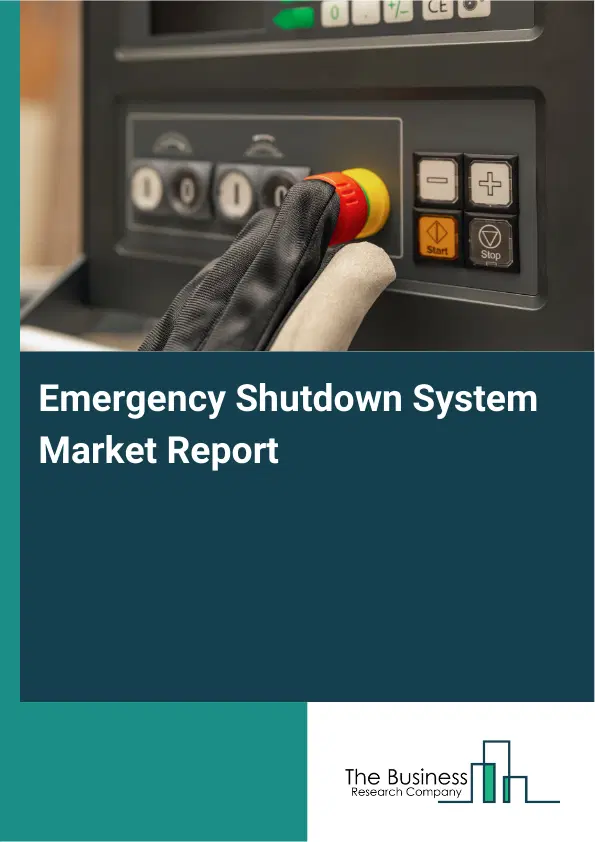
An emergency shutdown system refers to a safety mechanism designed to rapidly and automatically shut down a process or facility in an emergency. These systems help prevent catastrophic impacts economically, environmentally, and operationally by safeguarding against leaks, hydrocarbon escape, fire outbreaks, and explosions. The main types of components in an emergency shutdown system are switches, sensors, programmable safety systems, safety valves, actuators, and others. Switches are electrical components that control the flow of current in a circuit. It includes various control methods pneumatic, electrical, fiber optic, hydraulic, and others are employed in various industry verticals oil and gas, refining, power generation, metal and mining, paper and pulp, and others.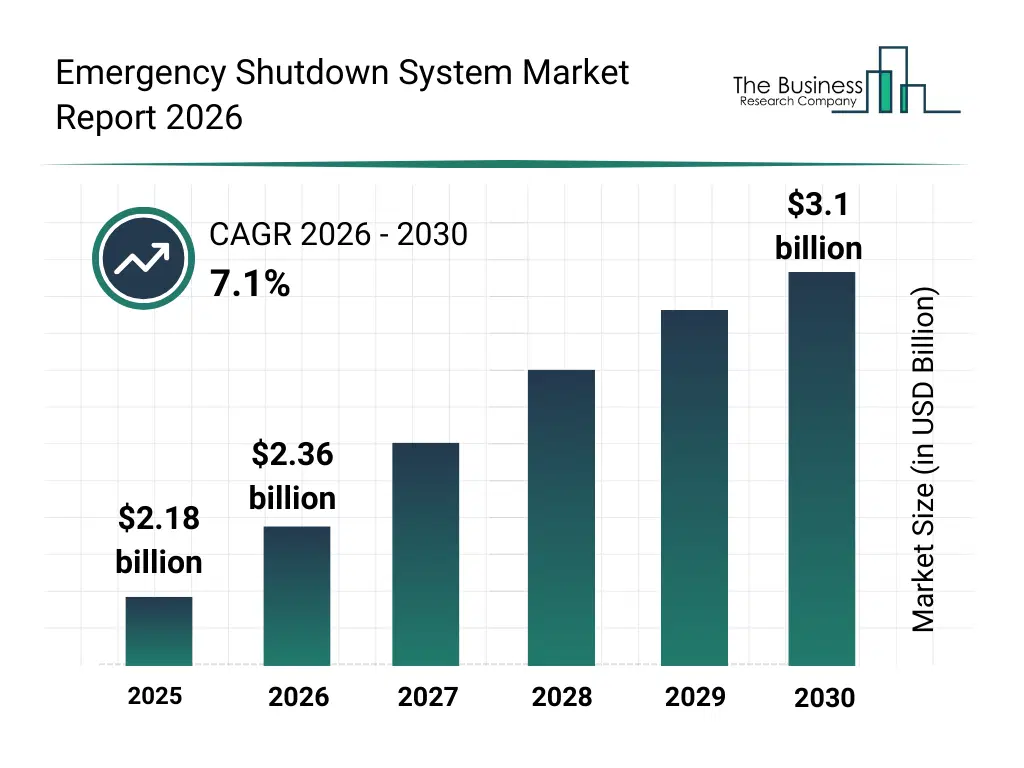
What Is The Emergency Shutdown System Market Size and Share 2026?
The emergency shutdown system market size has grown strongly in recent years. It will grow from $2.18 billion in 2025 to $2.36 billion in 2026 at a compound annual growth rate (CAGR) of 8.5%. The growth in the historic period can be attributed to expansion of oil and gas operations, growth in industrial automation systems, increasing regulatory safety requirements, rising installation of safety instrumented systems, availability of advanced control technologies.What Is The Emergency Shutdown System Market Growth Forecast?
The emergency shutdown system market size is expected to see strong growth in the next few years. It will grow to $3.1 billion in 2030 at a compound annual growth rate (CAGR) of 7.1%. The growth in the forecast period can be attributed to growing adoption of IIoT-based safety solutions, rising investments in smart industrial facilities, expansion of renewable power infrastructure, increasing demand for real-time hazard detection, growing integration of AI in safety systems. Major trends in the forecast period include increasing adoption of automated safety shutdown systems, rising integration of smart sensors and actuators, growing focus on process safety compliance, expansion of digital safety monitoring platforms, enhanced system redundancy designs.Tariff Impact On Emergency Shutdown System Market
Tariffs are significantly influencing the emergency shutdown system market by increasing the cost of imported safety PLCs, sensors, actuators, control panels, and communication modules. Oil and gas, power generation, and heavy industrial sectors in North America and the Middle East are most affected due to dependence on globally sourced safety components, while Asia-Pacific faces pricing pressure on advanced systems. These tariffs are increasing project costs and extending commissioning timelines. However, they are also supporting domestic safety equipment manufacturing, regional system integration capabilities, and innovation in modular and scalable shutdown solutions.
Global Emergency Shutdown System Market Segmentation
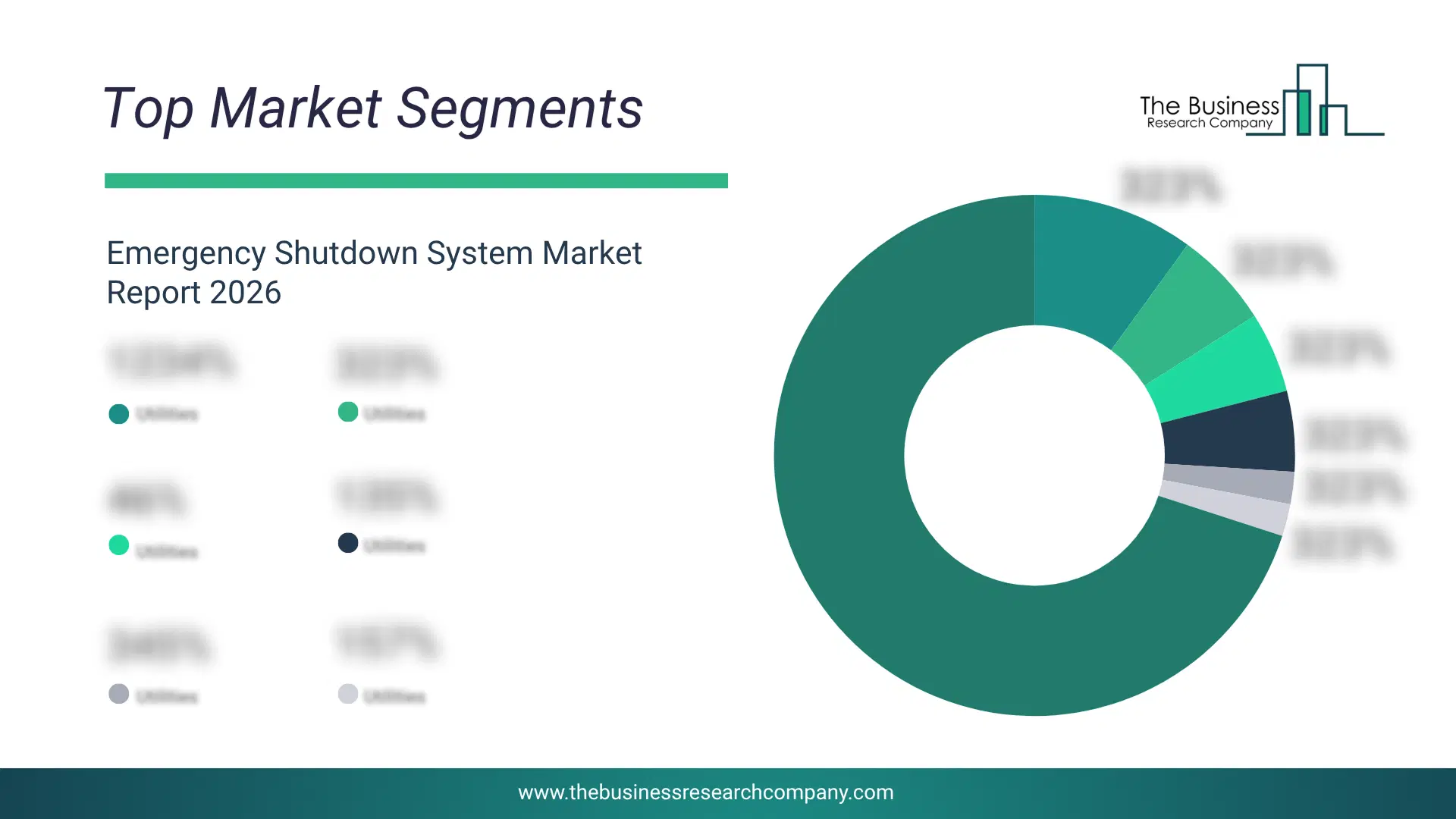
1) By Component: Switches, Sensors, Programmable Safety Systems, Safety Valves, Actuators, Others Components 2) By Control Method: Pneumatic, Electrical, Fiber Optic, Hydraulic, Other Control Methods 3) By Industry Vertical: Oil And Gas, Refining, Power Generation, Metal And Mining, Paper And Pulp, Other Industry Verticals Subsegments: 1) By Switches: Emergency Stop Switches, Limit Switches, Pressure Switches 2) By Sensors: Temperature Sensors, Pressure Sensors, Flow Sensors, Gas Sensors 3) By Programmable Safety Systems: Safety Plcs (Programmable Logic Controllers), Safety Instrumented Systems (SIS), Safety Monitoring Systems 4) By Safety Valves: Pressure Relief Valves, Safety Shut-Off Valves, Emergency Isolation Valves 5) By Actuators: Pneumatic Actuators, Hydraulic Actuators, Electric Actuators 6) By Other Components: Emergency Shutdown Panels, Control Systems, Alarms And Signaling DevicesWhat Are The Drivers Of The Emergency Shutdown System Market?
The increasing number of accidents at the workplace is expected to propel the growth of the emergency shutdown system market going forward. Workplace accidents encompass various unexpected incidents within a work environment, resulting in injury, illness, or damage. Workplace accidents are increasing due to workplace stress and fatigue, inadequate safety training and awareness, a poor safety culture, and high employee turnover. Emergency shutdown systems are used in workplaces to protect personnel, property, and the environment by automatically securing processes or assets via shutdown in an emergency. For instance, in December 2024, according to reports published by the Bureau of Labor Statistics, a US-based government agency, a worker died every 99 minutes from a work-related injury in 2023 compared to 96 minutes in 2022. Therefore, the increasing number of accidents at the workplace is driving the growth of the emergency shutdown system industry. The increasing investments in infrastructure are expected to propel the growth of the emergency shutdown system market going forward. Investments in infrastructure involve funding the development and enhancement of critical systems such as transportation, energy, water, and communication networks that underpin economic growth and societal functioning. Increasing investments in infrastructure boosts economic growth by creating jobs, improving efficiency, and enhancing connectivity for businesses and services. Investments in infrastructure drive the adoption of Emergency Shutdown (ESD) systems by expanding industrial, energy, and manufacturing facilities, which increases the need for safety mechanisms to protect personnel, equipment, and operations. For instance, in February 2024, according to the Infrastructure and Projects Authority, a UK-based government agency, £164 ($214.18) billion planned investment in major infrastructure and construction projects for 2024/25 exceeds that of 2023/24. Over the next decade, total projected investments are estimated to reach between £700 ($914.16) billion and £775 ($1012.11) billion. Therefore, the increasing investments in infrastructure are driving the growth of the emergency shutdown system industry. The growing automation is expected to propel the growth of the emergency shutdown system market going forward. Automation is the use of technology or machines to perform tasks with minimal human intervention, improving efficiency and accuracy. Increasing automation is driven by the need to enhance operational efficiency; by automating repetitive or complex tasks, businesses can complete processes faster, reduce human errors, and optimize resource use, leading to higher productivity and lower costs. Emergency shutdown (ESD) systems help automation by safely and automatically halting operations during critical failures or hazardous conditions, ensuring machinery and processes stop without human intervention, protecting equipment, personnel, and the environment while maintaining overall automated system reliability. For instance, in April 2024, according to the International Federation of Robotics, a Germany-based international organization, in the United States, manufacturing companies have significantly increased their automation efforts, with total industrial robot installations rising 12% to 44,303 units in 2023. Therefore, growing automation is driving the growth of the emergency shutdown system industry.Key Players In The Global Emergency Shutdown System Market
Major companies operating in the emergency shutdown system market are Siemens AG, General Electric Company, Honeywell International Inc., Schneider Electric SE, ABB Ltd, Emerson Electric Co., Rockwell Automation Inc., Yokogawa Electric Corporation, HIMA Paul Hildebrandt GmbH, Kongsberg Maritime, National Oilwell Varco Inc., Halliburton Company, Wartsila Oyj Abp, Metso Outotec, Norgren, Doedijns Group, Proserv, Bifold Group Ltd, Versa Products Company Inc., Ruelco Inc., Safoco Inc., Sella Controls, BWB Controls Inc.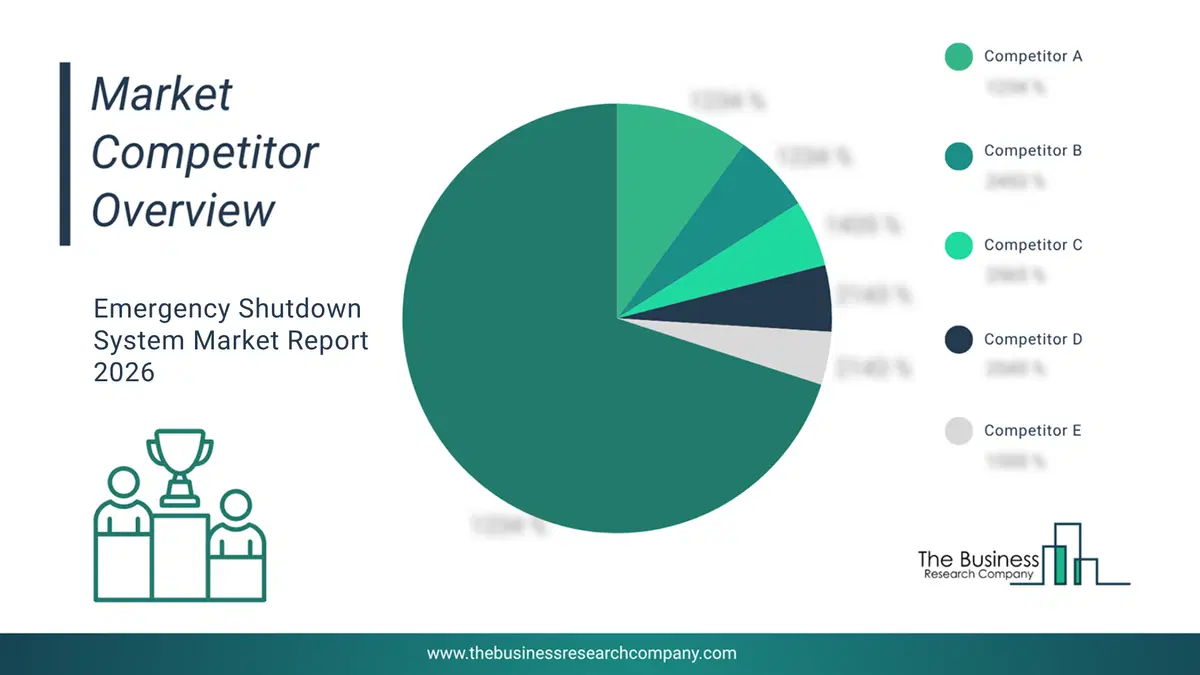
This chart is for illustrative purposes; the full report includes a detailed competitor analysis and comprehensive overview of the top 10 companies in the market.
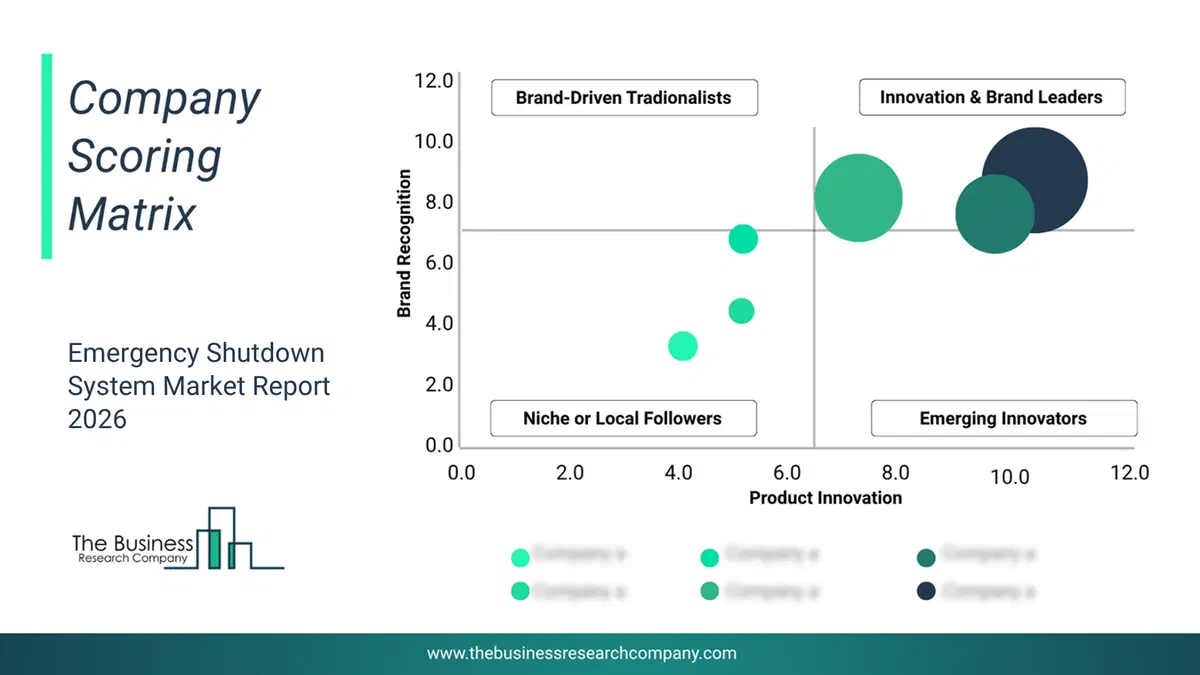
This chart maps companies by product innovation and brand strength, with bubble size indicating relative revenue, helping identify market leaders, challengers, and niche players. This is an illustrative chart; the full report provides a complete and accurate competitive analysis.
Regional Outlook
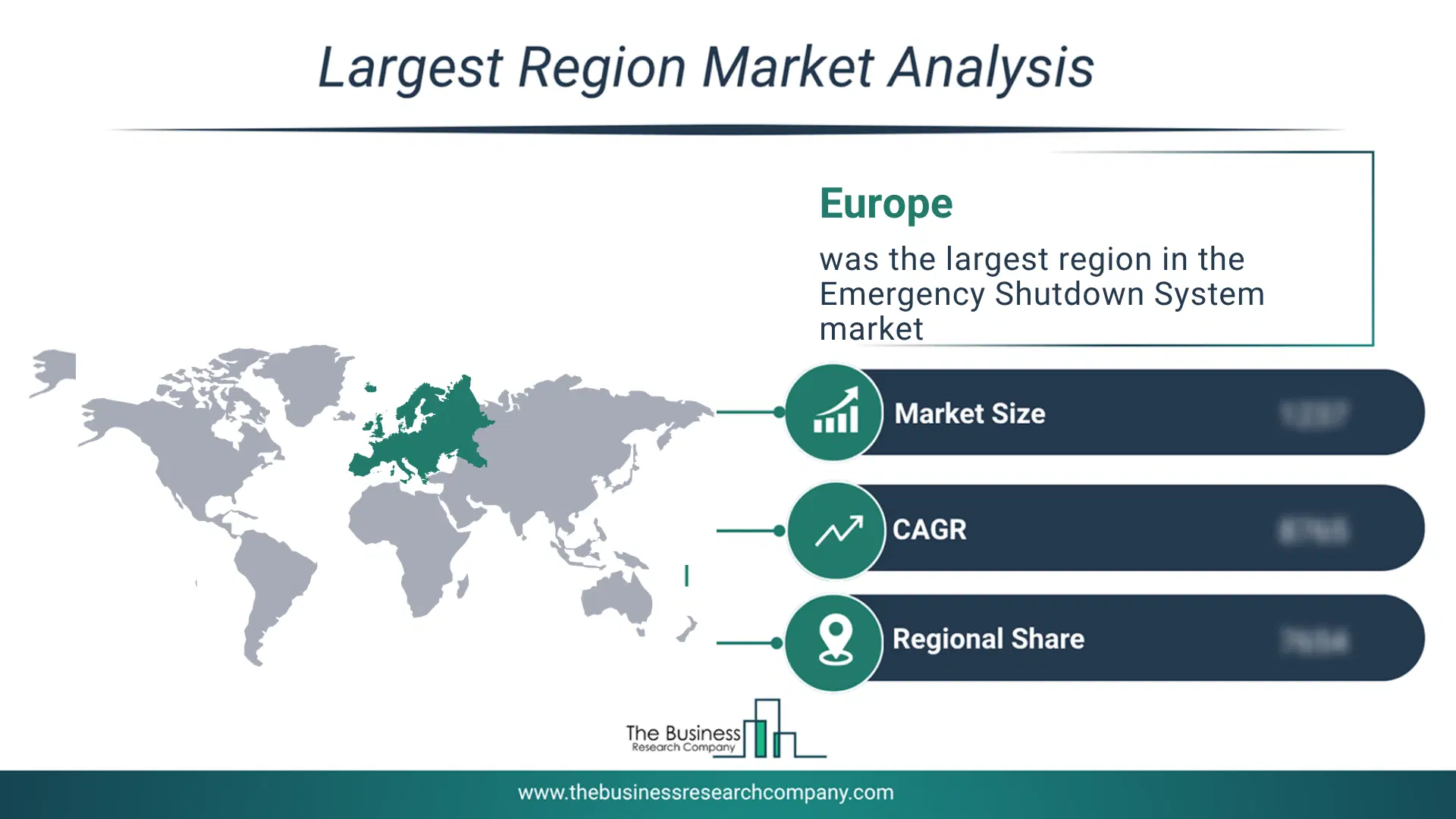
Europe was the largest region in the emergency shutdown systems market in 2025. Asia-Pacific is expected to be the fastest-growing region in the forecast period. The regions covered in this market report are Asia-Pacific, South East Asia, Western Europe, Eastern Europe, North America, South America, Middle East, Africa The countries covered in this market report are Australia, Brazil, China, France, Germany, India, Indonesia, Japan, Taiwan, Russia, South Korea, UK, USA, Canada, Italy, Spain.What Defines the Emergency Shutdown System Market?
The emergency shutdown system market consists of sales of valves, actuators, process shutdown systems, gas detection systems, pressure protection systems, safety instrumented systems, solenoid valves, and interlocks. Values in this market are ‘factory gate’ values, that is, the value of goods sold by the manufacturers or creators of the goods, whether to other entities (including downstream manufacturers, wholesalers, distributors, and retailers) or directly to end customers. The value of goods in this market includes related services sold by the creators of the goods.How is Market Value Defined and Measured?
The market value is defined as the revenues that enterprises gain from the sale of goods and/or services within the specified market and geography through sales, grants, or donations in terms of the currency (in USD unless otherwise specified). The revenues for a specified geography are consumption values that are revenues generated by organizations in the specified geography within the market, irrespective of where they are produced. It does not include revenues from resales along the supply chain, either further along the supply chain or as part of other products.
This chart presents market attractiveness based on a quantitative evaluation of growth, competition, strategic alignment, and risk, offering a clear view of opportunity areas for decision-making. This chart is for illustrative purposes; the full report contains the complete analysis.

This chart highlights the Total Addressable Market (TAM) by estimating the maximum revenue opportunity using an assumption-driven approach, supporting strategic planning and opportunity sizing across markets. The chart is illustrative; the full report provides a more comprehensive analysis.
What Key Data and Analysis Are Included in the Emergency Shutdown System Market Report 2026?
The emergency shutdown system market research report is one of a series of new reports from The Business Research Company that provides market statistics, including industry global market size, regional shares, competitors with the market share, detailed market segments, market trends and opportunities, and any further data you may need to thrive in the emergency shutdown system industry. The market research report delivers a complete perspective of everything you need, with an in-depth analysis of the current and future state of the industry.Emergency Shutdown System Market Report Forecast Analysis
| Report Attribute | Details |
|---|---|
| Market Size Value In 2026 | $2.36 billion |
| Revenue Forecast In 2030 | $3.1 billion |
| Growth Rate | CAGR of 7.1% from 2026 to 2030 |
| Base Year For Estimation | 2025 |
| Actual Estimates/Historical Data | 2020-2025 |
| Forecast Period | 2026 - 2030 |
| Market Representation | Revenue in USD Billion and CAGR from 2026 to 2030 |
| Segments Covered | Component, Control Method, Industry Vertical |
| Regional Scope | Asia-Pacific, Western Europe, Eastern Europe, North America, South America, Middle East, Africa |
| Key Companies Profiled | Siemens AG, General Electric Company, Honeywell International Inc., Schneider Electric SE, ABB Ltd, Emerson Electric Co., Rockwell Automation Inc., Yokogawa Electric Corporation, HIMA Paul Hildebrandt GmbH, Kongsberg Maritime, National Oilwell Varco Inc., Halliburton Company, Wartsila Oyj Abp, Metso Outotec, Norgren, Doedijns Group, Proserv, Bifold Group Ltd, Versa Products Company Inc., Ruelco Inc., Safoco Inc., Sella Controls, BWB Controls Inc. |
| Customization Scope | Request for Customization |
| Pricing And Purchase Options | Explore Purchase Options |