
Employer Fertility Stop-Loss Insurance Market Report 2026
Global Outlook – By Type (Specific Stop Loss Insurance, Aggregate Stop Loss Insurance), By Coverage Focus (In Vitro Fertilization Treatment Coverage, Egg Freezing Coverage), By Distribution Channel (Direct Sales, Brokers Or Agents), By Application (Self Funded Employers, Fully Insured Employers), By End User (Large Enterprises, Small And Medium Enterprises) – Market Size, Trends, Strategies, and Forecast to 2030
Employer Fertility Stop-Loss Insurance Market Report 2026 Market Overview
• Employer Fertility Stop-Loss Insurance Market Report 2026 market size has reached to $1.46 billion in 2025 • Expected to grow to $2.47 billion in 2030 at a compound annual growth rate (CAGR) of 11% • Growth Driver: Healthcare Cost Inflation Fueling The Growth Of The Market Due To Increasing Demand For Cost Containment And Fertility Claim Risk Management Solutions • North America was the largest region in 2025 and Asia-Pacific is the fastest growing region.What Is Covered Under Employer Fertility Stop-Loss Insurance Market?
The employer fertility stop-loss insurance refers to the industry focused on providing insurance products that protect employers from excessive financial risks associated with employee fertility treatment claims, including IVF, egg freezing, and other reproductive healthcare services. It support organizations in managing rising fertility benefit costs while expanding employee healthcare coverage. The main types of employer fertility stop-loss insurance include specific stop loss insurance and aggregate stop loss insurance. Specific stop loss insurance refers to coverage that protects employers from high-cost individual fertility claims by limiting financial exposure per employee. These products provide coverage focus including in vitro fertilization treatment coverage and egg freezing coverage and are distributed through direct sales and brokers or agents. The various applications involved are self funded employers and fully insured employers and they are used by several end users such as large enterprises and small and medium enterprises.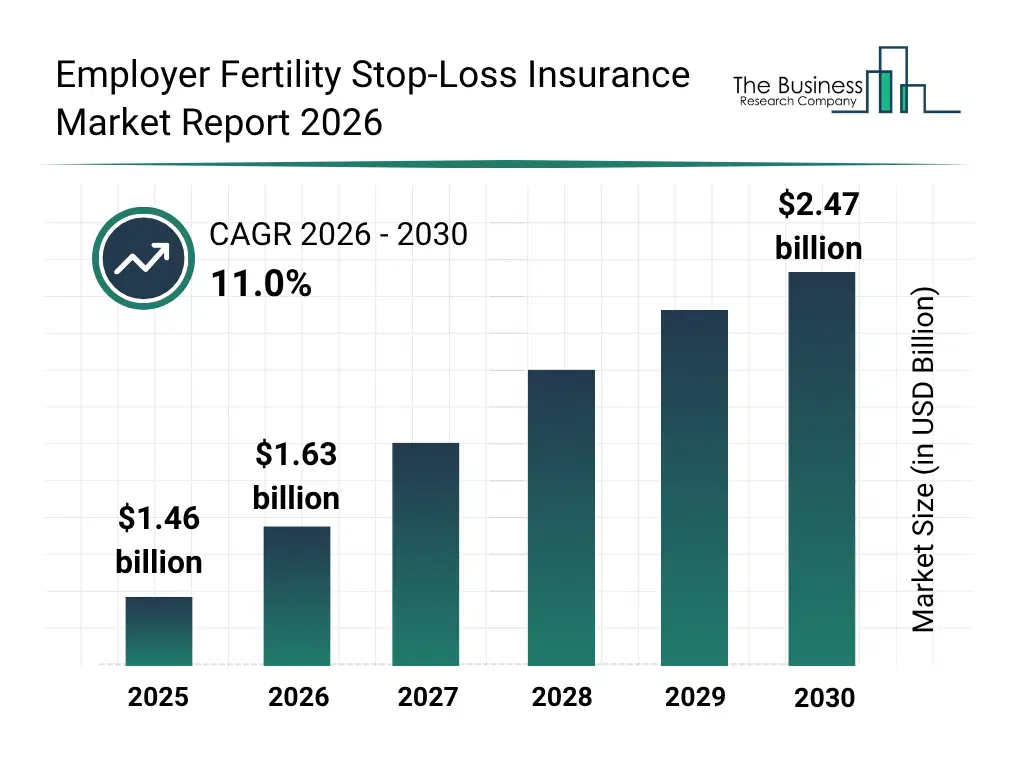
What Is The Employer Fertility Stop-Loss Insurance Market Size and Share 2026?
The employer fertility stop-loss insurance market size has grown rapidly in recent years. It will grow from $1.46 billion in 2025 to $1.63 billion in 2026 at a compound annual growth rate (CAGR) of 11.4%. The growth in the historic period can be attributed to rising infertility rates among working age population, increasing employer focus on employee wellness benefits, growth in assisted reproductive technology adoption, rising healthcare inflation costs, expansion of corporate health insurance penetration.What Is The Employer Fertility Stop-Loss Insurance Market Growth Forecast?
The employer fertility stop-loss insurance market size is expected to see rapid growth in the next few years. It will grow to $2.47 billion in 2030 at a compound annual growth rate (CAGR) of 11.0%. The growth in the forecast period can be attributed to expanding corporate adoption of fertility benefits as talent retention tool, increasing awareness of reproductive health coverage, growth in personalized insurance product offerings, rising demand for cost containment in self funded employer plans, advancement in predictive healthcare risk analytics. Major trends in the forecast period include employer sponsored fertility benefit expansion with risk pooling mechanisms for reproductive healthcare cost management, rising adoption of stop loss insurance for high cost ivf and assisted reproductive treatments, increasing integration of mental health and fertility wellness coverage within corporate insurance plans, customized fertility reimbursement structures for diverse employee demographic needs, growing demand for predictive actuarial modeling to manage fertility related healthcare liabilities.
Global Employer Fertility Stop-Loss Insurance Market Segmentation
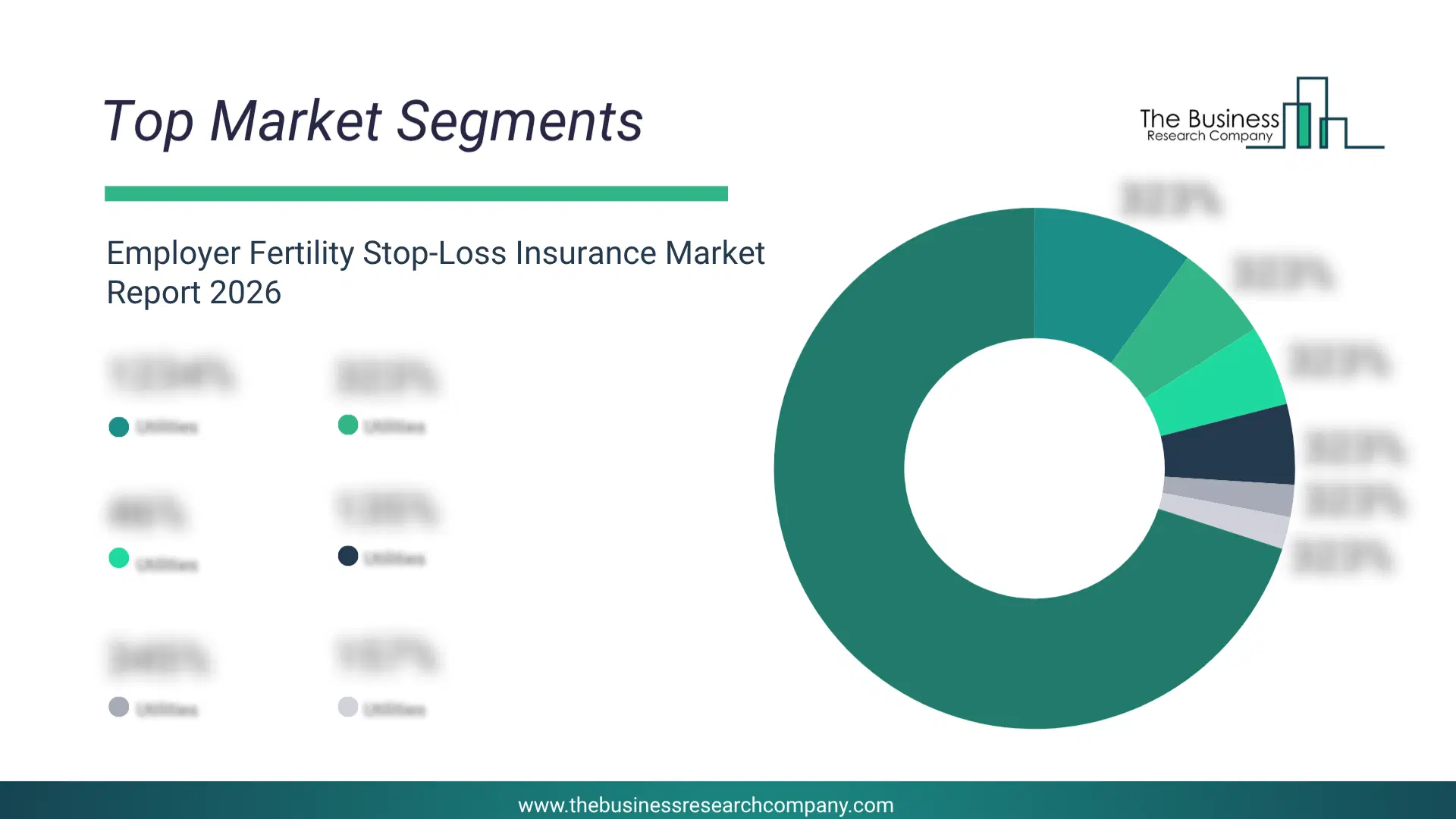
1) By Type: Specific Stop Loss Insurance, Aggregate Stop Loss Insurance 2) By Coverage Focus: In Vitro Fertilization Treatment Coverage, Egg Freezing Coverage 3) By Distribution Channel: Direct Sales, Brokers Or Agents 4) By Application: Self Funded Employers, Fully Insured Employers 5) By End User: Large Enterprises, Small And Medium Enterprises Subsegments: 1) By Specific Stop Loss Insurance: Individual Specific Stop Loss, Advanced Specific Stop Loss, Laser Specific Stop Loss 2) By Aggregate Stop Loss Insurance: Annual Aggregate Stop Loss, Monthly Aggregate Stop Loss, Corridor Aggregate Stop LossWhat Are The Drivers Of The Employer Fertility Stop-Loss Insurance Market?
The healthcare cost inflation is expected to propel the growth of the employer fertility stop-loss insurance market going forward. Healthcare cost inflation refers to the continuous increase in medical treatment, hospital, medication, and healthcare service expenses over time. Healthcare cost inflation is increasing due to the rising utilization of assisted reproductive technologies that require multiple treatment cycles and specialized clinical procedures per patient. Employer fertility stop-loss insurance helps control employer financial exposure by capping liability and transferring excess fertility-related claim risk to insurers under structured reimbursement models. For instance, in May 2026, according to the US Inflation Calculator, a US-based online financial information platform, the average cost of healthcare in the United States rose by 2.5% over the 12 months ending in April, following a 3.1% increase recorded in March. Therefore, the healthcare cost inflation is driving the growth of the employer fertility stop-loss insurance industry. The expanding workforce participation among women is expected to propel the growth of the employer fertility stop-loss insurance market going forward. Workforce participation among women refers to the proportion of women who are employed or actively seeking employment within the labor market. The increase in workforce participation among women is driven by rising educational attainment and growing economic inclusion across industries. Employer fertility stop-loss insurance supports workforce participation by helping employers manage the financial risks associated with fertility treatment benefits while improving employee retention and reproductive healthcare access. For instance, in April 2024, according to the Organization for Economic Co-operation and Development, a France-based intergovernmental organization, the labor force participation rate among women aged 15 to 64 across OECD countries reached a record 66.6% in 2023, while the female employment rate increased by 1.0% from 2022 to 63.2%, outpacing the 0.3% increase recorded among men. Therefore, the expanding workforce participation among women is driving the growth of the employer fertility stop-loss insurance industry. The expansion of telehealth is expected to propel the growth of the employer fertility stop-loss insurance market going forward. Telehealth refers to the delivery of healthcare services, consultations, monitoring, and patient education through digital communication technologies such as video conferencing, mobile applications, and remote monitoring platforms. The expansion of telehealth is increasing as healthcare providers and patients continue to adopt digital care models that improve convenience, accessibility, and continuity of care. Employer fertility stop-loss insurance supports the expansion of telehealth by helping employers manage the financial risks associated with rising fertility treatment utilization that results from broader virtual access to reproductive health services. For instance, in February 2026, according to the National Center for Biotechnology Information (NCBI), a US-based government-supported biomedical research organization, the proportion of the U.S. population with at least one telehealth visit increased from 12.05% in 2022 to 12.12% in 2023. Therefore, the expansion of telehealth is driving the growth of the employer fertility stop-loss insurance industry.Key Players In The Global Employer Fertility Stop-Loss Insurance Market
Major companies operating in the employer fertility stop-loss insurance market report are Berkshire Hathaway Inc, UnitedHealth Group Incorporated, The Cigna Group, Munich Reinsurance Company, Sun Life Financial Inc, Fairfax Financial Holdings Limited, QBE Insurance Group Limited, Mutual of Omaha Insurance Company, Everest Group Ltd, Arch Insurance Group Inc, W R Berkley Corporation, Swiss Re Ltd, Zurich Insurance Group Ltd, Symetra Life Insurance Company, Highmark Inc, BCS Financial Corporation, Nationwide Mutual Insurance Company, Tokio Marine Holdings Inc, Voya Financial Inc, Prudential Financial Inc, Hartford Financial Services Group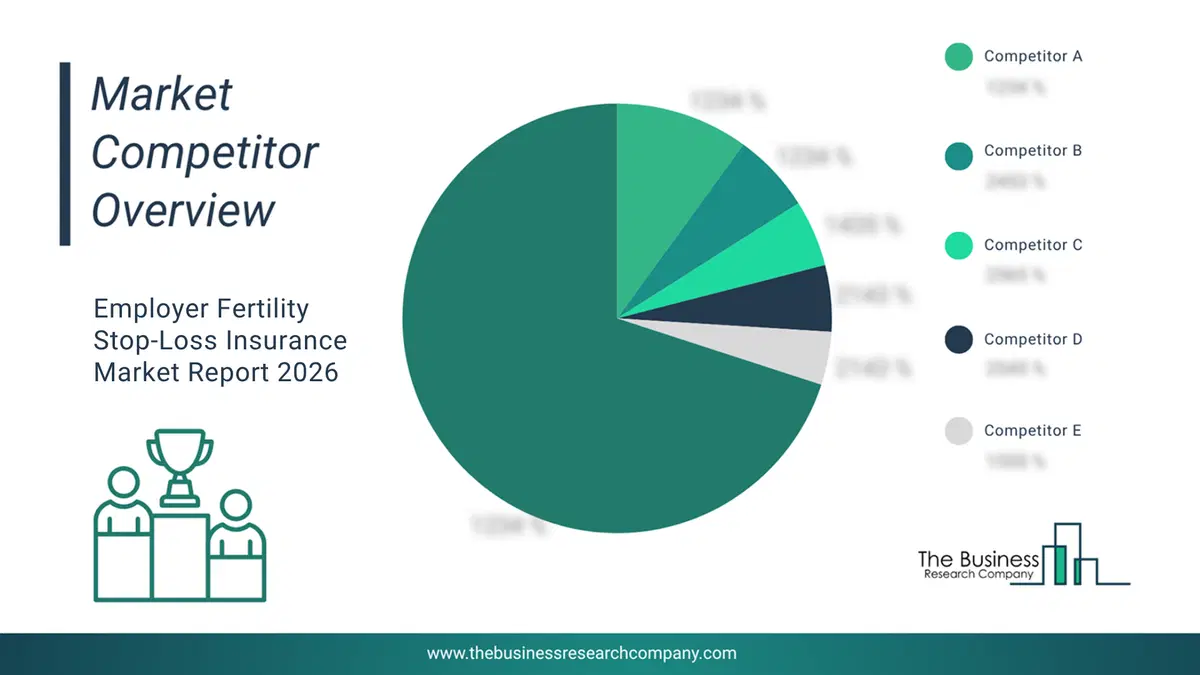
This chart is for illustrative purposes; the full report includes a detailed competitor analysis and comprehensive overview of the top 10 companies in the market.
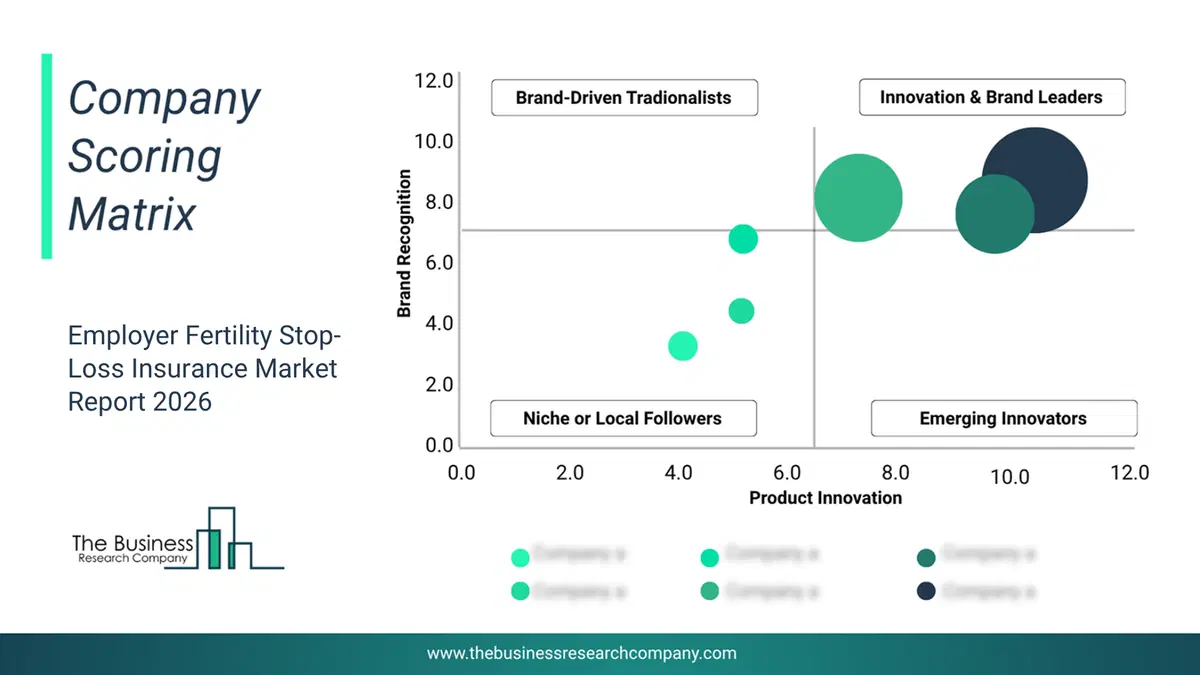
This chart maps companies by product innovation and brand strength, with bubble size indicating relative revenue, helping identify market leaders, challengers, and niche players. This is an illustrative chart; the full report provides a complete and accurate competitive analysis.
Regional Outlook
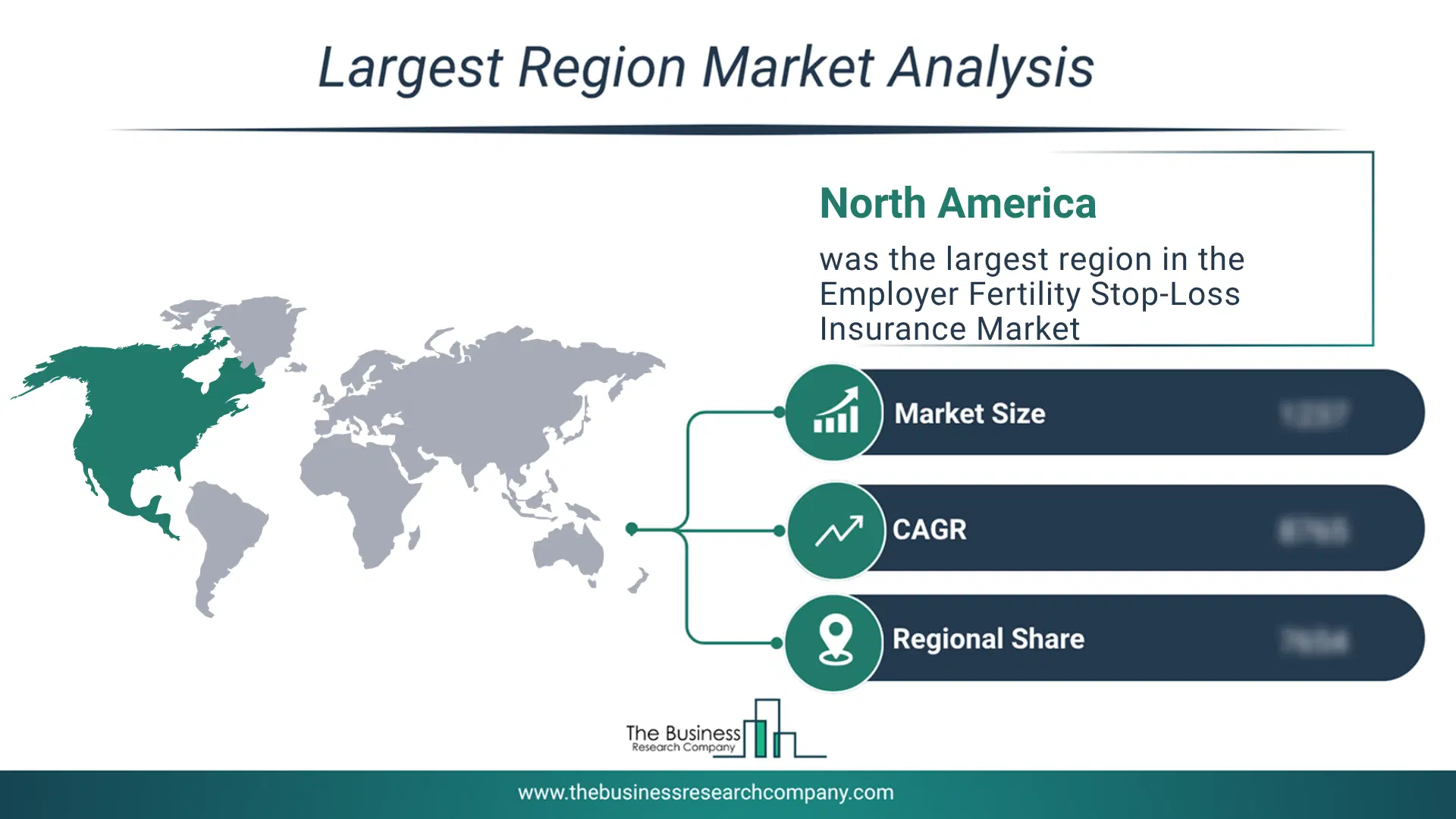
North America was the largest region in the employer fertility stop-loss insurance market in 2025. Asia-Pacific is expected to be the fastest-growing region in the forecast period. The regions covered in this market report are Asia-Pacific, South East Asia, Western Europe, Eastern Europe, North America, South America, Middle East, Africa. The countries covered in this market report are Australia, Brazil, China, France, Germany, India, Indonesia, Japan, Taiwan, Russia, South Korea, UK, USA, Canada, Italy, Spain.What Defines the Employer Fertility Stop-Loss Insurance Market?
The employer fertility stop-loss insurance market consists of revenues earned by entities by providing services such as fertility benefits risk management, claims administration, reimbursement services, and related employee healthcare insurance solutions. The market value includes the value of related services and associated healthcare benefit management offerings included within the insurance service package. Only goods and services traded between entities or sold to end consumers are included.How is Market Value Defined and Measured?
The market value is defined as the revenues that enterprises gain from the sale of goods and/or services within the specified market and geography through sales, grants, or donations in terms of the currency (in USD unless otherwise specified). The revenues for a specified geography are consumption values that are revenues generated by organizations in the specified geography within the market, irrespective of where they are produced. It does not include revenues from resales along the supply chain, either further along the supply chain or as part of other products.
This chart presents market attractiveness based on a quantitative evaluation of growth, competition, strategic alignment, and risk, offering a clear view of opportunity areas for decision-making. This chart is for illustrative purposes; the full report contains the complete analysis.

This chart highlights the Total Addressable Market (TAM) by estimating the maximum revenue opportunity using an assumption-driven approach, supporting strategic planning and opportunity sizing across markets. The chart is illustrative; the full report provides a more comprehensive analysis.
What Key Data and Analysis Are Included in the Employer Fertility Stop-Loss Insurance Market Report 2026?
The employer fertility stop-loss insurance market research report is one of a series of new reports from The Business Research Company that provides market statistics, including industry global market size, regional shares, competitors with the market share, detailed market segments, market trends and opportunities, and any further data you may need to thrive in the employer fertility stop-loss insurance industry. The market research report delivers a complete perspective of everything you need, with an in-depth analysis of the current and future state of the industry.Employer Fertility Stop-Loss Insurance Market Report Forecast Analysis
| Report Attribute | Details |
|---|---|
| Market Size Value In 2026 | $1.63 billion |
| Revenue Forecast In 2030 | $2.47 billion |
| Growth Rate | CAGR of 11% from 2026 to 2030 |
| Base Year For Estimation | 2025 |
| Actual Estimates/Historical Data | 2020-2025 |
| Forecast Period | 2026 - 2030 |
| Market Representation | Revenue in USD Billion and CAGR from 2026 to 2030 |
| Segments Covered | Type, Coverage Focus, Distribution Channel, Application, End User |
| Regional Scope | Asia-Pacific, Western Europe, Eastern Europe, North America, South America, Middle East, Africa |
| Country Scope | The countries covered in the report are Australia, Brazil, China, France, Germany, India, Indonesia, Japan, Taiwan, Russia, South Korea, UK, USA, Canada, Italy, Spain. |
| Key Companies Profiled | Berkshire Hathaway Inc, UnitedHealth Group Incorporated, The Cigna Group, Munich Reinsurance Company, Sun Life Financial Inc, Fairfax Financial Holdings Limited, QBE Insurance Group Limited, Mutual of Omaha Insurance Company, Everest Group Ltd, Arch Insurance Group Inc, W R Berkley Corporation, Swiss Re Ltd, Zurich Insurance Group Ltd, Symetra Life Insurance Company, Highmark Inc, BCS Financial Corporation, Nationwide Mutual Insurance Company, Tokio Marine Holdings Inc, Voya Financial Inc, Prudential Financial Inc, Hartford Financial Services Group |
| Customization Scope | Request for Customization |
| Pricing And Purchase Options | Explore Purchase Options |