

Encephalitis Treatment Market Report 2026
Global Outlook – By Disease Type (Primary Encephalitis, Secondary Encephalitis), By Treatment (Antiviral Agents, Steroid Injections, Antibiotics, Immunoglobulin Therapy, Plasmapheresis, Other Treatments), By Route Of Administration (Oral, Parenteral, Other Routes Of Administrations), By Diagnosis (Imaging Tests, Blood Tests, Biopsy, Other Diagnosis), By End-User (Hospitals, Specialty Clinics, Other End-Users) - Market Size, Trends, Strategies, and Forecast to 2030
Encephalitis Treatment Market Overview
• Encephalitis Treatment market size has reached to $22.17 billion in 2025 • Expected to grow to $29.68 billion in 2030 at a compound annual growth rate (CAGR) of 6.2% • Growth Driver: The Rise In Healthcare Infrastructure Investment Fueling The Growth Of The Encephalitis Treatment Market Due To Improved Access To Advanced Medical Facilities • Market Trend: Significant Investment Secured to Advance Precision Medicine for Anti-NMDA Receptor Encephalitis • North America was the largest region in 2025.What Is Covered Under Encephalitis Treatment Market?
Encephalitis treatment is the treatment of a medical condition characterized by inflammation of the brain, usually caused by a viral infection, a fungal infection, an autoimmune reaction, or certain medications. Encephalitis treatment is used to manage symptoms, slow down the progression of the disease and prevent complications. The main disease type included in encephalitis treatment are primary encephalitis, secondary encephalitis. Primary encephalitis refers to an inflammation of the brain that originates directly within the brain rather than being caused by an infection elsewhere in the body. Primary encephalitis treatment includes antiviral medications, supportive care, and management of symptoms. The treatment types are antiviral agents, steroid injections, antibiotics, immunoglobulin therapy, plasmapheresis, and other treatment, that uses route of administration, such as oral, parenteral, and other routes of administrations. The diagnosis test types are imaging tests, blood tests, biopsy, and other diagnosis, with end users as hospitals, specialty clinics, and others.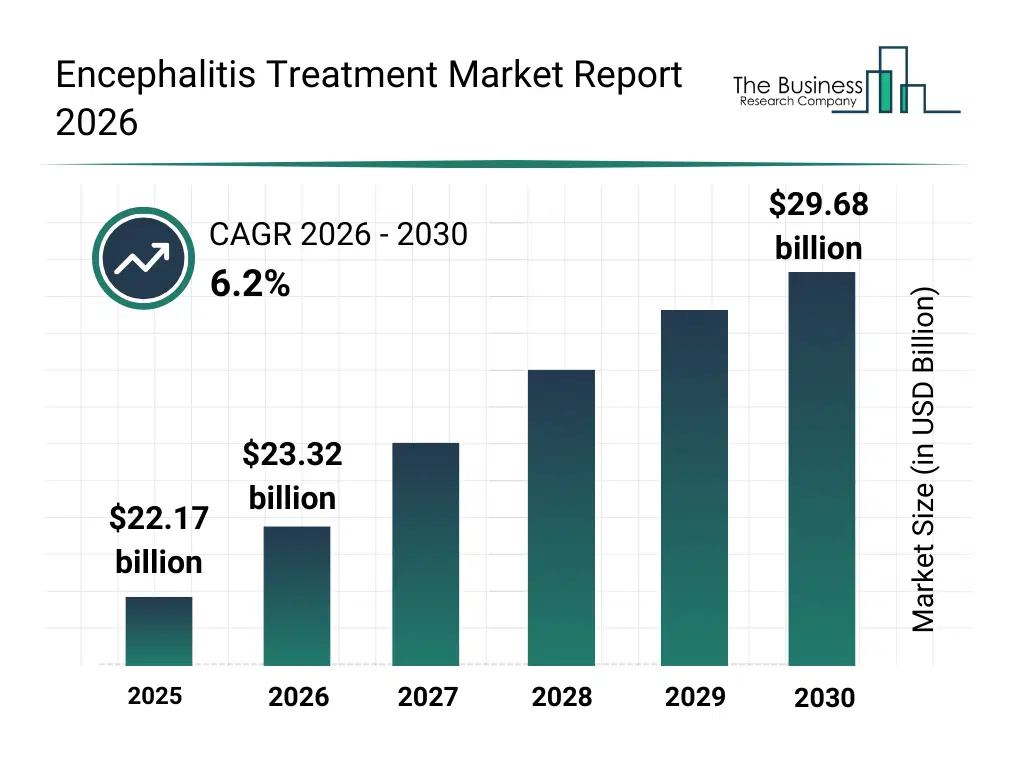
What Is The Encephalitis Treatment Market Size and Share 2026?
The encephalitis treatment market size has grown strongly in recent years. It will grow from $22.17 billion in 2025 to $23.32 billion in 2026 at a compound annual growth rate (CAGR) of 5.1%. The growth in the historic period can be attributed to viral infection outbreaks, neurological disorder awareness, hospital icu expansion, diagnostic imaging availability, emergency neurology care.What Is The Encephalitis Treatment Market Growth Forecast?
The encephalitis treatment market size is expected to see strong growth in the next few years. It will grow to $29.68 billion in 2030 at a compound annual growth rate (CAGR) of 6.2%. The growth in the forecast period can be attributed to immunotherapy advancements, rapid diagnostic adoption, intensive care investments, aging population vulnerability, neurological research funding. Major trends in the forecast period include rising incidence of viral and autoimmune encephalitis, increased use of targeted antiviral therapies, growing demand for early neurological diagnosis, expansion of intensive care treatment protocols, focus on reducing neurological complications.
Global Encephalitis Treatment Market Segmentation
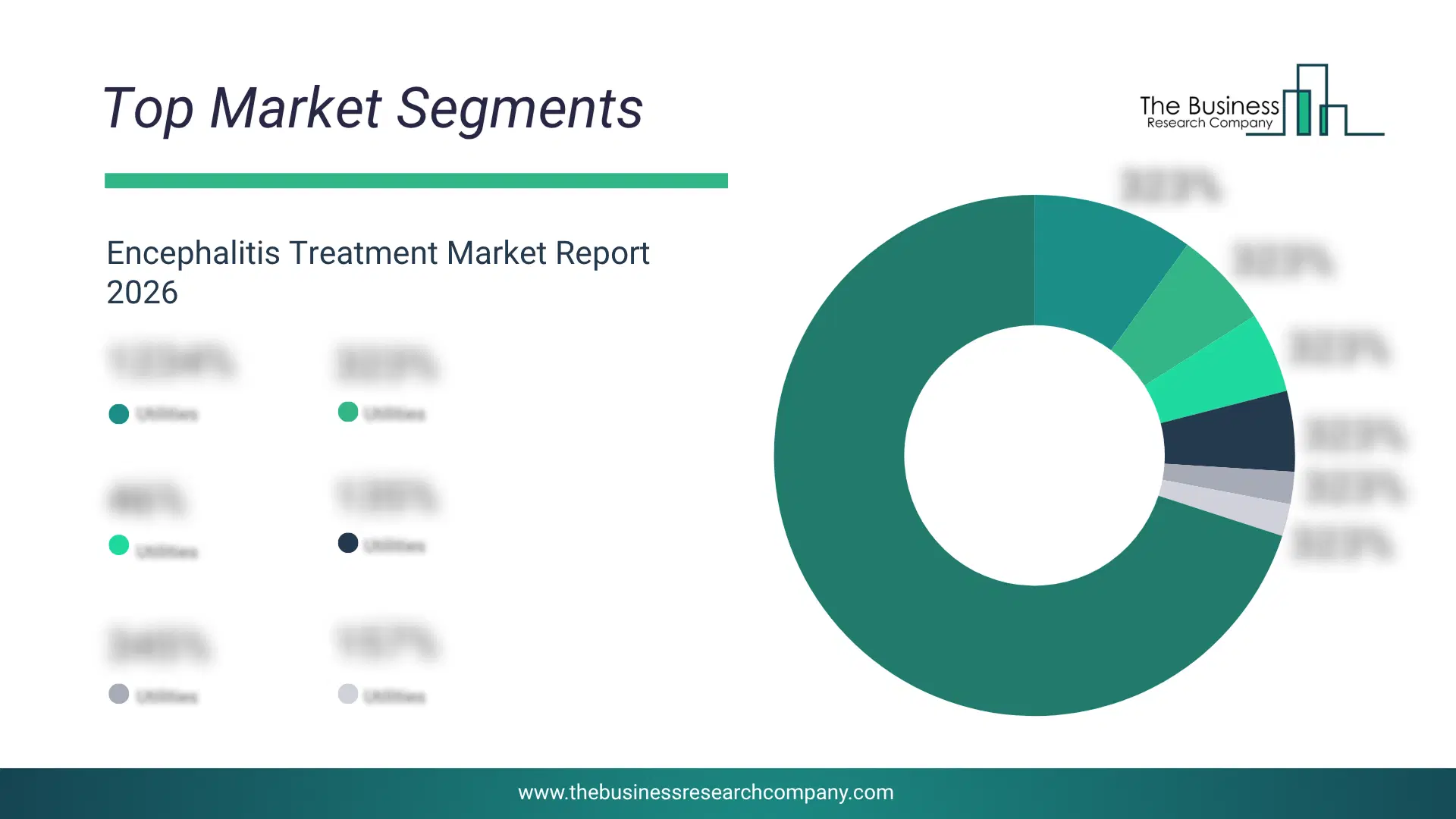
1) By Disease Type: Primary Encephalitis, Secondary Encephalitis 2) By Treatment: Antiviral Agents, Steroid Injections, Antibiotics, Immunoglobulin Therapy, Plasmapheresis, Other Treatments 3) By Route Of Administration: Oral, Parenteral, Other Routes Of Administrations 4) By Diagnosis: Imaging Tests, Blood Tests, Biopsy, Other Diagnosis 5) By End-User: Hospitals, Specialty Clinics, Other End-Users Subsegments: 1) By Primary Encephalitis: Viral Encephalitis, Bacterial Encephalitis, Fungal Encephalitis, Parasitic Encephalitis 2) By Secondary Encephalitis: Post-Infectious Encephalitis, Autoimmune Encephalitis, Encephalitis Due To SystemicWhat Is The Driver Of The Encephalitis Treatment Market?
The rising investment in healthcare infrastructure is expected to propel the growth of the encephalitis treatment market going forward. Healthcare infrastructure refers to the network of hospitals, clinics, laboratories, and medical resources equipped with modern technology and staffed by qualified healthcare professionals that support the delivery of essential medical services. The increase in healthcare infrastructure investment is driven by the need for better diagnostic capabilities, expanded critical-care capacity, and improved access to specialized neurological services. Encephalitis treatment relies heavily on strong healthcare infrastructure, as patients require timely diagnosis, advanced imaging, antiviral or immunotherapy administration, and supportive care in well-equipped facilities. For instance, in May 2024, according to Office of National Statistics a UK-based government agency, total healthcare expenditure increased by 5.6% in nominal terms between 2022 and 2023, compared with growth of 0.9% in 2022. Therefore, the rising investment in healthcare infrastructure is driving the growth of the encephalitis treatment industry.Key Players In The Global Encephalitis Treatment Market
Major companies operating in the encephalitis treatment market are Pfizer Inc., Johnson & Johnson, F. Hoffmann-La Roche, Merck & Co. Inc., AbbVie Inc., Bayer AG, Novartis AG, Sanofi S.A., Bristol Myers Squibb, Abbott Laboratories, GlaxoSmithKline plc, Takeda Pharmaceutical Company Limited, Eli Lilly and Company, Amgen Inc., Teva Pharmaceutical Industries, Regeneron Pharmaceuticals, Aurobindo Pharma Limited, Hikma Pharmaceuticals plc, Vir Biotechnology, Torrent Pharmaceuticals Ltd., Valneva SE, Sangamo Therapeutics, Xenon Pharmaceuticals, Tiziana Life Sciences, Vivet Therapeutics, Tetraphase Pharmaceuticals, QED Therapeutics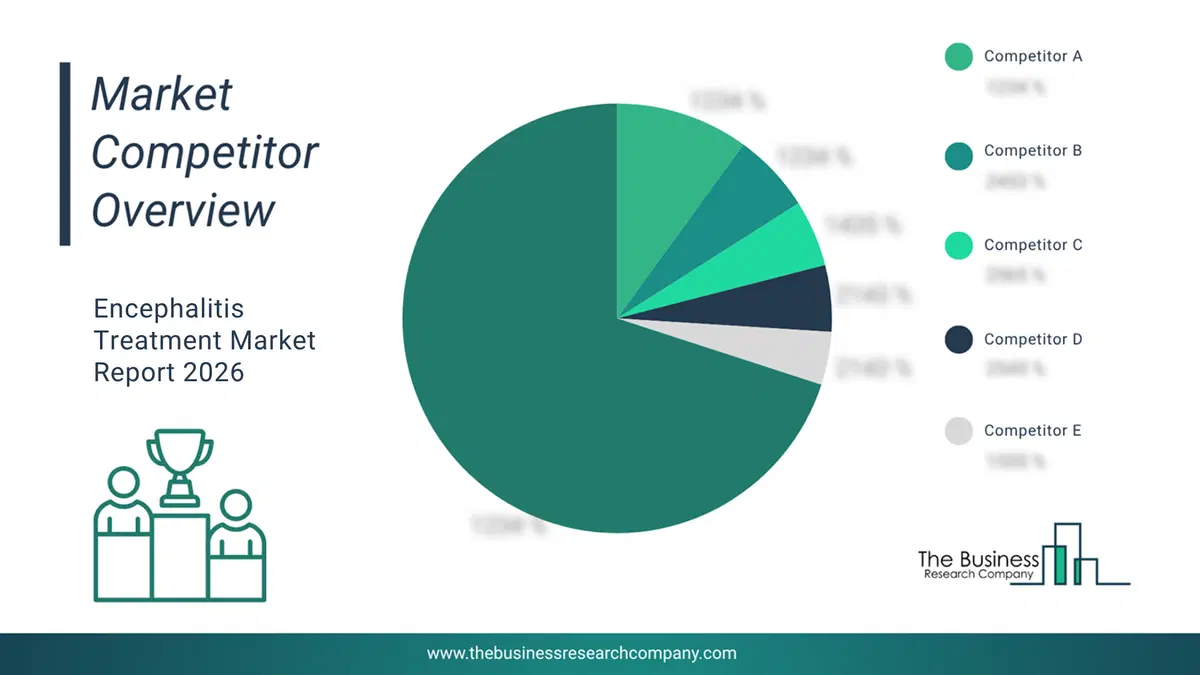
This chart is for illustrative purposes; the full report includes a detailed competitor analysis and comprehensive overview of the top 10 companies in the market.
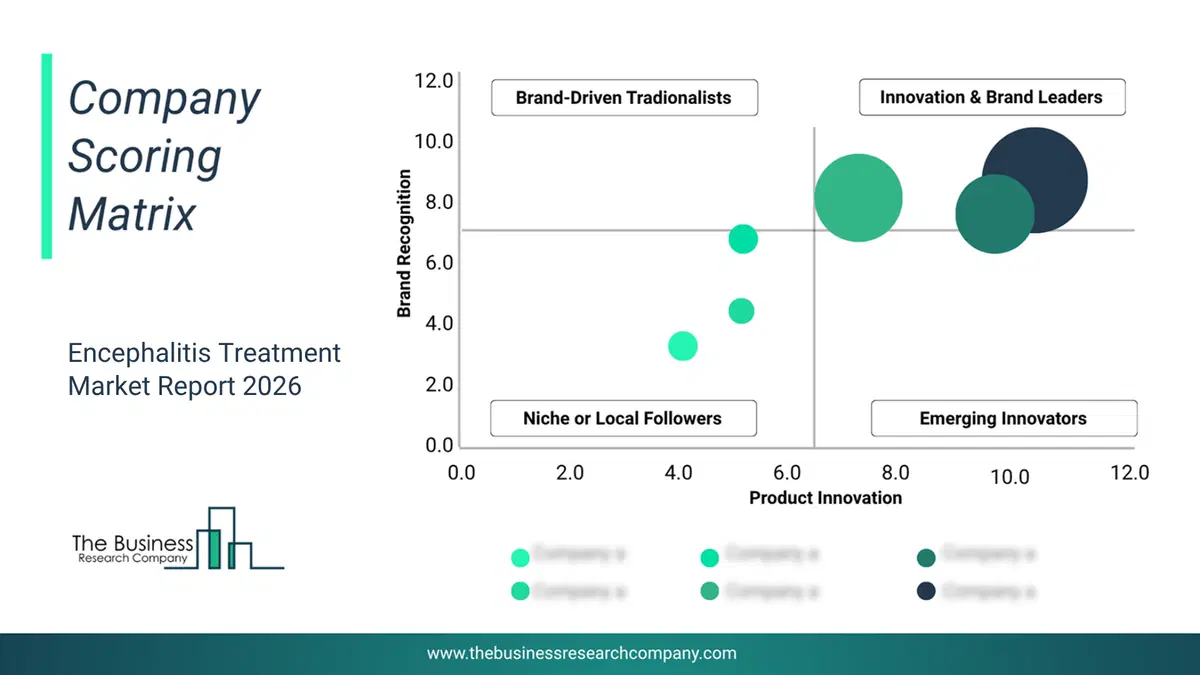
This chart maps companies by product innovation and brand strength, with bubble size indicating relative revenue, helping identify market leaders, challengers, and niche players. This is an illustrative chart; the full report provides a complete and accurate competitive analysis.
Global Encephalitis Treatment Market Trends and Insights
Major companies operating in the encephalitis treatment market are focused on strategic investments to accelerate the development of innovative therapies, enhance their research and development capabilities, and expand clinical trials. For instance, in September 2023, Arialys Therapeutics, a US-based preclinical-stage company, secured $58 million in seed funding to advance its lead candidate, ART5803, designed to treat anti-NMDA receptor encephalitis (ANRE), a prevalent form of autoimmune encephalitis. The company plans to initiate clinical trials with healthy volunteers by late 2024, followed by testing in ANRE patients in early 2025. Arialys is focused on developing precision therapies that specifically target pathogenic antibodies impacting the central nervous system.What Are Latest Mergers And Acquisitions In The Encephalitis Treatment Market?
In March 2023, UC Davis Health, a US-based academic health institution, collaborated with Propeller Health to deliver individualized treatment for chronic obstructive pulmonary disease and asthma using remote patient monitoring technology. With this collaboration, UC Davis Health would provide eligible patients with a Propeller Health remote patient monitoring (RPM) service that delivers individualized therapy for high-risk chronic obstructive pulmonary disease (COPD) and asthma using sensors, a smartphone application, and a website. Propeller Health is a US-based mobile platform company that provides sensors, mobile apps, analytics, and services to assist respiratory health management.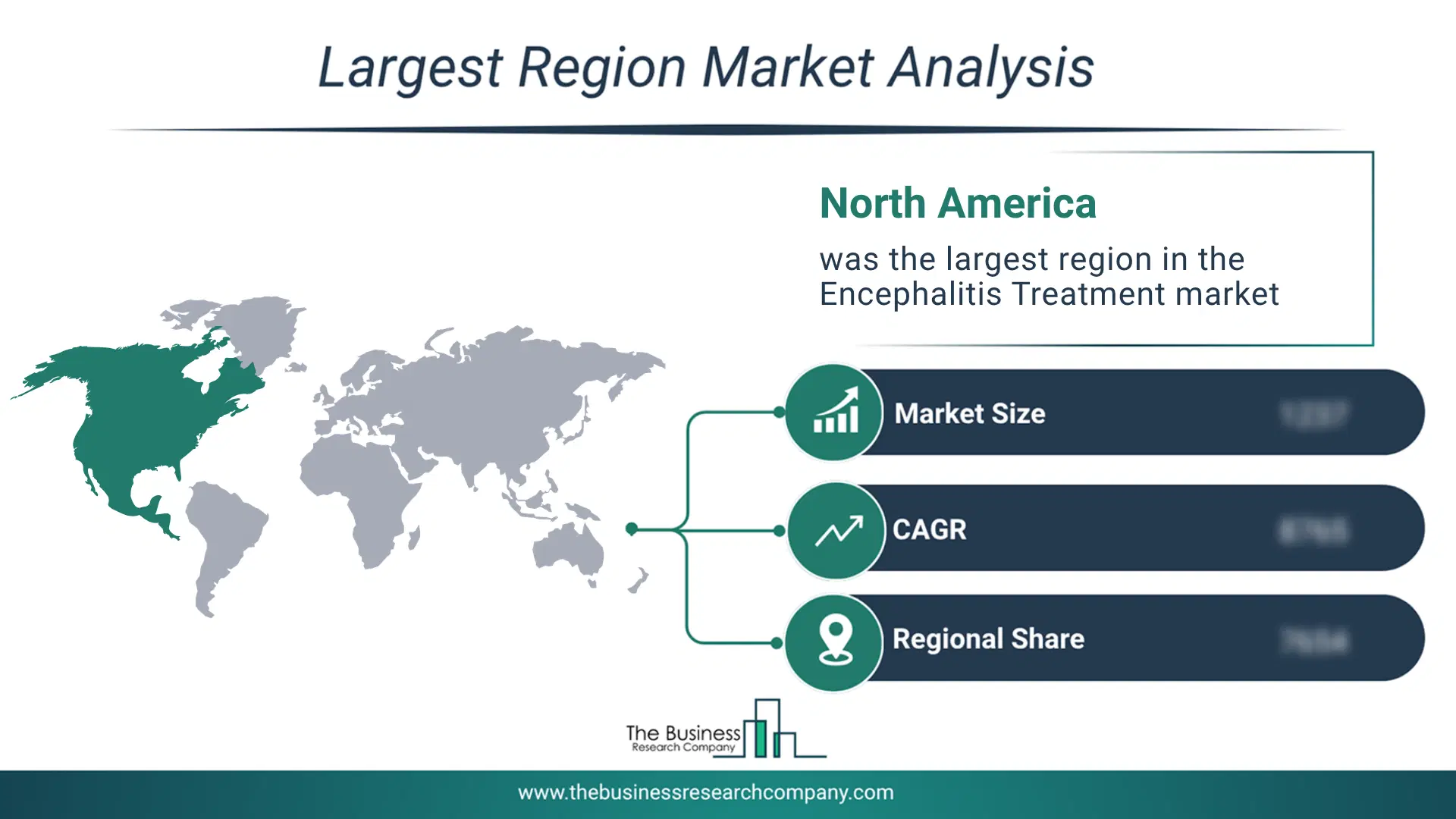
Regional Outlook
North America was the largest region in the encephalitis treatment market in 2025. The regions covered in this market report are Asia-Pacific, South East Asia, Western Europe, Eastern Europe, North America, South America, Middle East, Africa. The countries covered in this market report are Australia, Brazil, China, France, Germany, India, Indonesia, Japan, Taiwan, Russia, South Korea, UK, USA, Canada, Italy, Spain.What Defines the Encephalitis Treatment Market?
The encephalitis treatment market consists of revenues earned by entities by providing plasmapheresis, immunoglobulin therapy, computed tomography (CT scans), magnetic resonance imaging (MRI) and magnetoencephalography (MEG) tests. The market value includes the value of related goods sold by the service provider or included within the service offering. The encephalitis treatment market also includes sales of immunosuppressant drugs, antiseizure medicines and immunomodulators. Values in this market are ‘factory gate’ values, that is, the value of goods sold by the manufacturers or creators of the goods, whether to other entities (including downstream manufacturers, wholesalers, distributors and retailers) or directly to end customers. The value of goods in this market includes related services sold by the creators of the goods.How is Market Value Defined and Measured?
The market value is defined as the revenues that enterprises gain from the sale of goods and/or services within the specified market and geography through sales, grants, or donations in terms of the currency (in USD unless otherwise specified). The revenues for a specified geography are consumption values that are revenues generated by organizations in the specified geography within the market, irrespective of where they are produced. It does not include revenues from resales along the supply chain, either further along the supply chain or as part of other products.
This chart presents market attractiveness based on a quantitative evaluation of growth, competition, strategic alignment, and risk, offering a clear view of opportunity areas for decision-making. This chart is for illustrative purposes; the full report contains the complete analysis.

This chart highlights the Total Addressable Market (TAM) by estimating the maximum revenue opportunity using an assumption-driven approach, supporting strategic planning and opportunity sizing across markets. The chart is illustrative; the full report provides a more comprehensive analysis.
What Key Data and Analysis Are Included in the Encephalitis Treatment Market Report 2026?
The encephalitis treatment market research report is one of a series of new reports from The Business Research Company that provides market statistics, including industry global market size, regional shares, competitors with the market share, detailed market segments, market trends and opportunities, and any further data you may need to thrive in the encephalitis treatment industry. The market research report delivers a complete perspective of everything you need, with an in-depth analysis of the current and future state of the industry.Encephalitis Treatment Market Report Forecast Analysis
| Report Attribute | Details |
|---|---|
| Market Size Value In 2026 | $23.32 billion |
| Revenue Forecast In 2030 | $29.68 billion |
| Growth Rate | CAGR of 6.2% from 2026 to 2030 |
| Base Year For Estimation | 2025 |
| Actual Estimates/Historical Data | 2020-2025 |
| Forecast Period | 2026 - 2030 |
| Market Representation | Revenue in USD Billion and CAGR from 2026 to 2030 |
| Segments Covered | Disease Type, Treatment, Route Of Administration, Diagnosis, End-User |
| Regional Scope | Asia-Pacific, Western Europe, Eastern Europe, North America, South America, Middle East, Africa |
| Country Scope | The countries covered in the report are Australia, Brazil, China, France, Germany, India, Indonesia, Japan, Taiwan, Russia, South Korea, UK, USA, Canada, Italy, Spain |
| Key Companies Profiled | Pfizer Inc., Johnson & Johnson, F. Hoffmann-La Roche, Merck & Co. Inc., AbbVie Inc., Bayer AG, Novartis AG, Sanofi S.A., Bristol Myers Squibb, Abbott Laboratories, GlaxoSmithKline plc, Takeda Pharmaceutical Company Limited, Eli Lilly and Company, Amgen Inc., Teva Pharmaceutical Industries, Regeneron Pharmaceuticals, Aurobindo Pharma Limited, Hikma Pharmaceuticals plc, Vir Biotechnology, Torrent Pharmaceuticals Ltd., Valneva SE, Sangamo Therapeutics, Xenon Pharmaceuticals, Tiziana Life Sciences, Vivet Therapeutics, Tetraphase Pharmaceuticals, QED Therapeutics |
| Customization Scope | Request for Customization |
| Pricing And Purchase Options | Explore Purchase Options |