

Endocrine Peptide Test Market Report 2026
Global Outlook – By Test-Type (Dehydroepiandrosterone Sulphate, Progesterone, Luteinizing Hormone, Thyroid Prolactin, Oestradiol, Human Chorionic Gonadotropin, Thyroid-Stimulating Hormone, Other Test-Types), By Technology (Mass Spectroscopy, Immunoassay, Chromatography, Nucleic Acid Based, Other Technologies), By End-User (Clinics, Healthcare Centers, Hospitals, Commercial Laboratories) - Market Size, Trends, Strategies, and Forecast to 2030
Endocrine Peptide Test Market Overview
• Endocrine Peptide Test market size has reached to $9.95 billion in 2025 • Expected to grow to $14.88 billion in 2030 at a compound annual growth rate (CAGR) of 8.1% • Growth Driver: Impact of Diabetes Prevalence on Endocrine Peptide Test Market Growth • Market Trend: Advancements in Immunoassay Testing Systems for Endocrine Peptide Testing • North America was the largest region in 2025.What Is Covered Under Endocrine Peptide Test Market?
Endocrine peptide test refers to a diagnostic test used to measure the levels of specific peptides (small proteins) in the blood or urine that are related to the functioning of the endocrine system. The primary aim of the endocrine peptide test is to diagnose and monitor endocrine disorders by measuring specific peptide hormones in the blood. The main types of tests in endocrine peptide test market are dehydroepiandrosterone sulphate, progesterone, luteinizing hormone, thyroid prolactin, oestradiol, human chorionic gonadotropin, thyroid-stimulating hormone, and others. The dehydroepiandrosterone sulfate (DHEAS) test is a blood test that measures the levels of DHEAS in the body. The various technologies include mass spectroscopy, immunoassay, chromatography, nucleic acid based, and others. The end users are clinics, healthcare centers, hospitals, and commercial laboratories.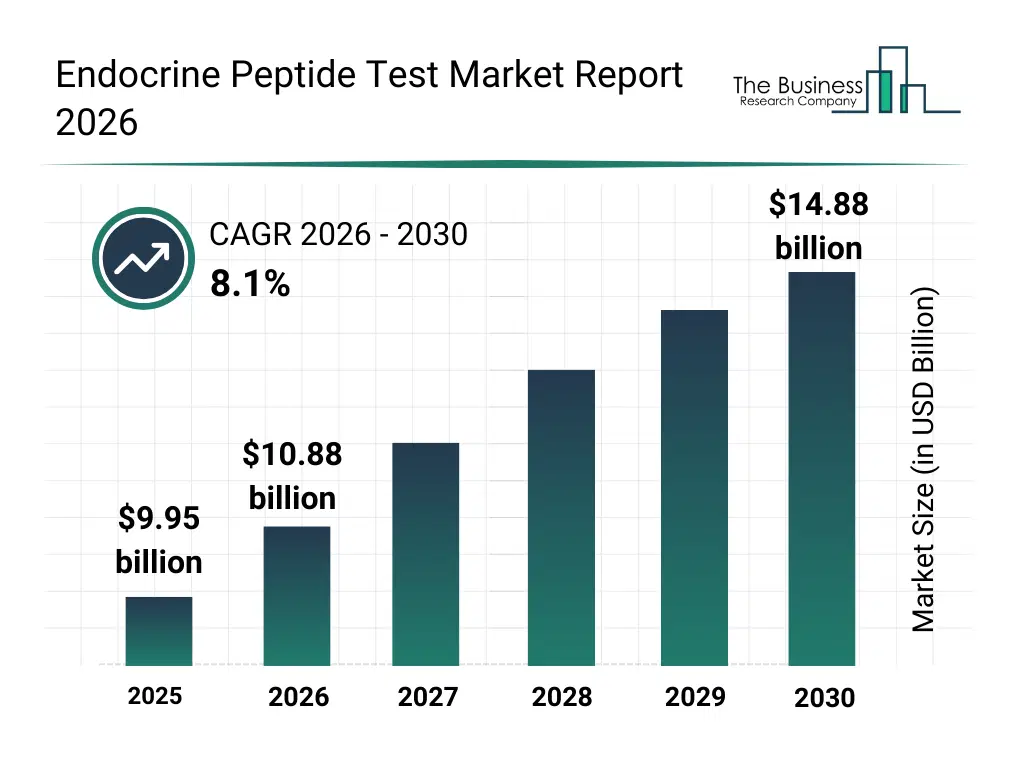
What Is The Endocrine Peptide Test Market Size and Share 2026?
The endocrine peptide test market size has grown strongly in recent years. It will grow from $9.95 billion in 2025 to $10.88 billion in 2026 at a compound annual growth rate (CAGR) of 9.3%. The growth in the historic period can be attributed to growth in endocrine disorders, expansion of diagnostic laboratories, hormone imbalance awareness, advancements in immunoassay techniques, clinical endocrinology expansion.What Is The Endocrine Peptide Test Market Growth Forecast?
The endocrine peptide test market size is expected to see strong growth in the next few years. It will grow to $14.88 billion in 2030 at a compound annual growth rate (CAGR) of 8.1%. The growth in the forecast period can be attributed to precision medicine adoption, advanced biomarker research, automation in diagnostic labs, personalized endocrine care, demand for early diagnosis. Major trends in the forecast period include rising demand for hormone disorder diagnostics, increased use of peptide biomarkers, growth in early endocrine disease detection, expansion of laboratory-based specialized testing, focus on accurate hormonal monitoring.
Global Endocrine Peptide Test Market Segmentation
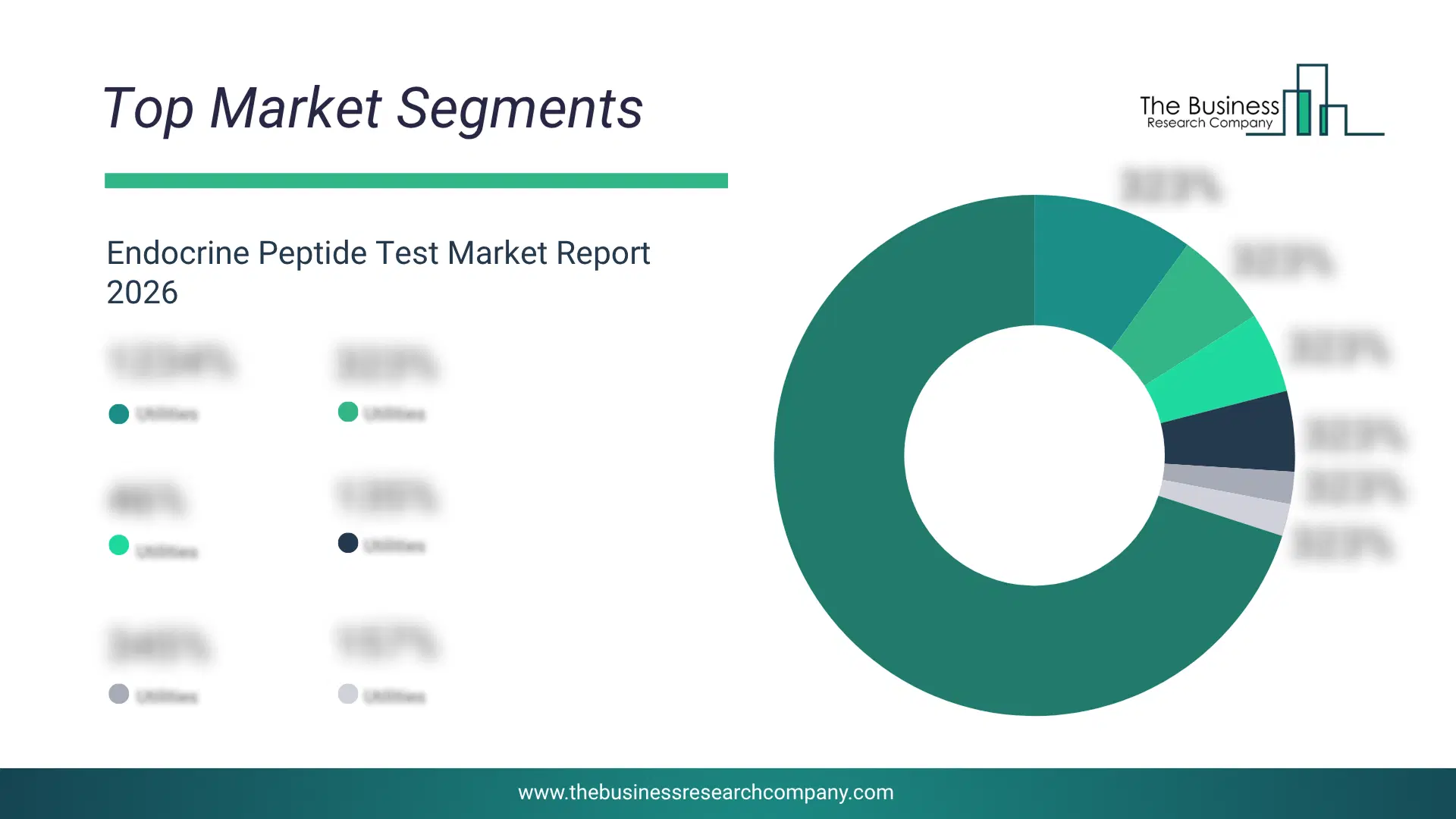
1) By Test-Type: Dehydroepiandrosterone Sulphate, Progesterone, Luteinizing Hormone, Thyroid Prolactin, Oestradiol, Human Chorionic Gonadotropin, Thyroid-Stimulating Hormone, Other Test-Types 2) By Technology: Mass Spectroscopy, Immunoassay, Chromatography, Nucleic Acid Based, Other Technologies 3) By End-User: Clinics, Healthcare Centers, Hospitals, Commercial Laboratories Subsegments: 1) By Dehydroepiandrosterone Sulphate (DHEA-S): Immunoassay Tests, Enzyme-Linked Immunosorbent Assay (ELISA), Radioimmunoassay (RIA) 2) By Progesterone: Immunoassay Tests, Chemiluminescence Assays, ELISA Tests 3) By Luteinizing Hormone: Immunoassay Tests, Enzyme Immunoassay (EIA), Radioimmunoassay (RIA) 4) By Thyroid Prolactin: Immunoassay Tests, Chemiluminescence Assays, Radioimmunoassay (RIA) 5) By Oestradiol: Immunoassay Tests, Enzyme-Linked Immunosorbent Assay (ELISA), Radioimmunoassay (RIA) 6) By Human Chorionic Gonadotropin (hCG): Immunoassay Tests, Chemiluminescence Assays, Enzyme Immunoassay (EIA) 7) By Thyroid-Stimulating Hormone (TSH): Immunoassay Tests, Radioimmunoassay (RIA), Enzyme-Linked Immunosorbent Assay (ELISA) 8) By Other Test-Types: Cortisol, Insulin, Growth Hormone (GH), Parathyroid Hormone (PTH)What Is The Driver Of The Endocrine Peptide Test Market?
The rising prevalence of diabetes is expected to propel the growth of the endocrine peptide test market going forward. Diabetes refers to a group of diseases that result in high blood sugar (glucose) levels. The prevalence of diabetes is increasing due to factors such as unhealthy diets, sedentary lifestyles, genetic predisposition, and an aging population. Endocrine peptide test, including hemoglobin A1c, fasting plasma glucose, and C-peptide tests, is used in diabetes to diagnose the condition, monitor glucose levels, and assess insulin production and sensitivity. For instance, in June 2024, according to the National Health Service (NHS), UK-based government department, the number of individuals under 40 diagnosed with diabetes increased significantly, rising from 173,166 in 2022 to 216,440 in 2023. This sharp growth underscores a concerning trend of rising diabetes prevalence in younger populations. Therefore, the rising prevalence of diabetes is driving the endocrine peptide test industry.Key Players In The Global Endocrine Peptide Test Market
Major companies operating in the endocrine peptide test market are Siemens AG, F. Hoffmann-La Roche AG, Thermo Fisher Scientific Inc., Merck KGaA, Becton Dickinson and Company, Laboratory Corporation of America Holdings (LabCorp), Quest Diagnostics Incorporated, Agilent Technologies Inc., Illumina Inc., bioMérieux SA, Bio-Rad Laboratories Inc., DiaSorin S.p.A., Sciex, Bio-Techne Corporation, Invitae Corporation, ARUP Laboratories, Genova Diagnostics, Boston Heart Diagnostics Corporation, Immunodiagnostic Systems Ltd., Mayo Clinic Laboratories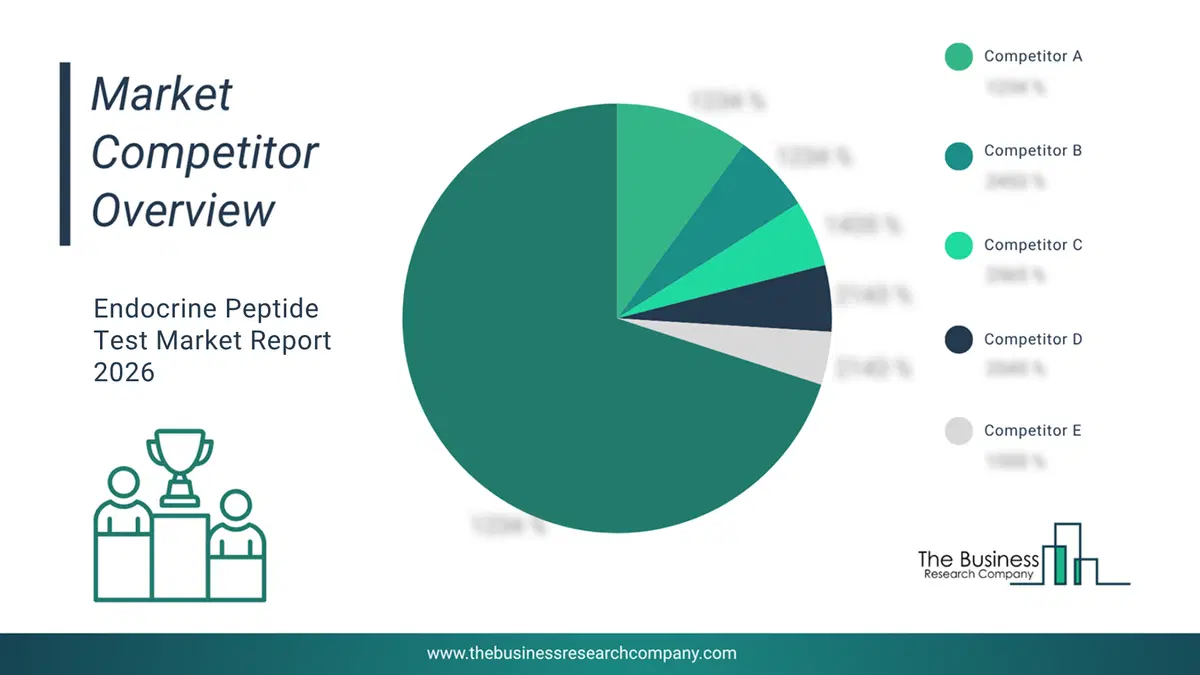
This chart is for illustrative purposes; the full report includes a detailed competitor analysis and comprehensive overview of the top 10 companies in the market.
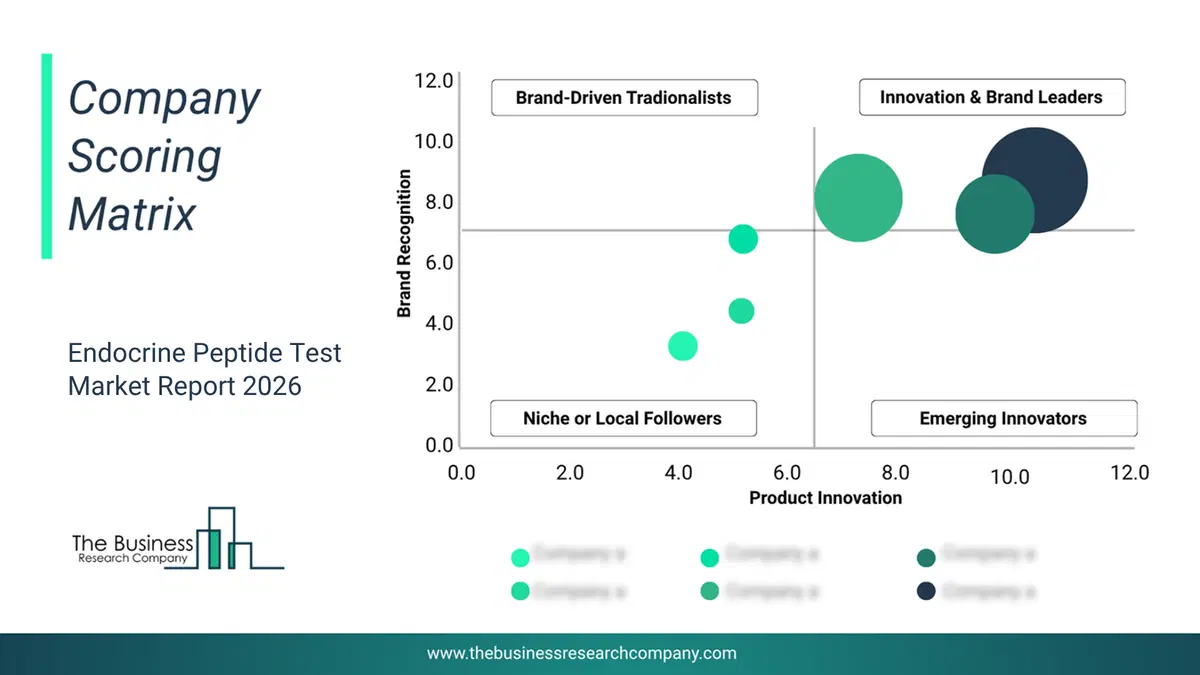
This chart maps companies by product innovation and brand strength, with bubble size indicating relative revenue, helping identify market leaders, challengers, and niche players. This is an illustrative chart; the full report provides a complete and accurate competitive analysis.
Global Endocrine Peptide Test Market Trends and Insights
Major companies operating in the endocrine peptide test market are developing immunoassay testing systems to improve endocrine peptide testing accuracy, sensitivity, and speed. These testing systems use antibodies to detect and measure specific peptides in blood or urine samples, providing healthcare professionals with valuable information about hormone levels and endocrine function. For instance, in July 2023, Siemens Healthineers, a German-based healthcare services company, launched Atellica CI Analyzer, a compact system for immunoassay and clinical chemistry testing, including endocrine peptide assays. The analyzer also features a reproductive endocrinology menu that includes anti-Mullerian hormone (AMH) to determine ovarian reserve and sFlt-1 and PlGF (placental growth factor) to aid in the prognosis of preeclampsia. The Atellica CI Analyzer is designed to deliver quality results quickly and consistently, with up to 1000 tests per hour capacity. It provides workflow efficiency and flexibility to help labs meet evolving testing needs.What Are Latest Mergers And Acquisitions In The Endocrine Peptide Test Market?
In March 2025, Laboratory Corporation of America Holdings a US-based healthcare diagnostics company, acquired SYNLAB for an undisclosed amount. With this investment, Labcorp aims to deepen its presence in the European diagnostics market, leveraging SYNLAB’s scale and network to bring its specialty testing capabilities to new markets and explore procurement and clinical‑trial synergies. SYNLAB AG is a Germany-based company that provides Endocrine Peptide Tests as part of its extensive range of routine and specialized medical diagnostic services.
Regional Outlook
North America was the largest region in the endocrine peptide test market in 2025. The regions covered in this market report are Asia-Pacific, South East Asia, Western Europe, Eastern Europe, North America, South America, Middle East, Africa. The countries covered in this market report are Australia, Brazil, China, France, Germany, India, Indonesia, Japan, Taiwan, Russia, South Korea, UK, USA, Canada, Italy, Spain.What Defines the Endocrine Peptide Test Market?
The endocrine peptide test market includes revenues earned by entities by providing services such as diagnostic testing, laboratory analysis, research studies, and clinical evaluations. The market value includes the value of related goods sold by the service provider or included within the service offering. The endocrine peptide test market also includes sales of diagnostic kits, reagents, testing instruments, and laboratory equipment. Values in this market are ‘factory gate’ values, that is the value of goods sold by the manufacturers or creators of the goods, whether to other entities (including downstream manufacturers, wholesalers, distributors and retailers) or directly to end customers. The value of goods in this market includes related services sold by the creators of the goods.How is Market Value Defined and Measured?
The market value is defined as the revenues that enterprises gain from the sale of goods and/or services within the specified market and geography through sales, grants, or donations in terms of the currency (in USD unless otherwise specified). The revenues for a specified geography are consumption values that are revenues generated by organizations in the specified geography within the market, irrespective of where they are produced. It does not include revenues from resales along the supply chain, either further along the supply chain or as part of other products.
This chart presents market attractiveness based on a quantitative evaluation of growth, competition, strategic alignment, and risk, offering a clear view of opportunity areas for decision-making. This chart is for illustrative purposes; the full report contains the complete analysis.

This chart highlights the Total Addressable Market (TAM) by estimating the maximum revenue opportunity using an assumption-driven approach, supporting strategic planning and opportunity sizing across markets. The chart is illustrative; the full report provides a more comprehensive analysis.
What Key Data and Analysis Are Included in the Endocrine Peptide Test Market Report 2026?
The endocrine peptide test market research report is one of a series of new reports from The Business Research Company that provides market statistics, including industry global market size, regional shares, competitors with the market share, detailed market segments, market trends and opportunities, and any further data you may need to thrive in the endocrine peptide test industry. The market research report delivers a complete perspective of everything you need, with an in-depth analysis of the current and future state of the industry.Endocrine Peptide Test Market Report Forecast Analysis
| Report Attribute | Details |
|---|---|
| Market Size Value In 2026 | $10.88 billion |
| Revenue Forecast In 2030 | $14.88 billion |
| Growth Rate | CAGR of 8.1% from 2026 to 2030 |
| Base Year For Estimation | 2025 |
| Actual Estimates/Historical Data | 2020-2025 |
| Forecast Period | 2026 - 2030 |
| Market Representation | Revenue in USD Billion and CAGR from 2026 to 2030 |
| Segments Covered | Test-Type, Technology, End-User |
| Regional Scope | Asia-Pacific, Western Europe, Eastern Europe, North America, South America, Middle East, Africa |
| Country Scope | The countries covered in the report are Australia, Brazil, China, France, Germany, India, Indonesia, Japan, Taiwan, Russia, South Korea, UK, USA, Canada, Italy, Spain |
| Key Companies Profiled | Siemens AG, F. Hoffmann-La Roche AG, Thermo Fisher Scientific Inc., Merck KGaA, Becton Dickinson and Company, Laboratory Corporation of America Holdings (LabCorp), Quest Diagnostics Incorporated, Agilent Technologies Inc., Illumina Inc., bioMérieux SA, Bio-Rad Laboratories Inc., DiaSorin S.p.A., Sciex, Bio-Techne Corporation, Invitae Corporation, ARUP Laboratories, Genova Diagnostics, Boston Heart Diagnostics Corporation, Immunodiagnostic Systems Ltd., Mayo Clinic Laboratories |
| Customization Scope | Request for Customization |
| Pricing And Purchase Options | Explore Purchase Options |