
Energy Efficient Devices Market Report 2026
Global Outlook – By Component (Hardware, Software, Services), By System Type (Industrial Energy Management Systems (IEMS), Building Energy Management Systems (BEMS), Home Energy Management Systems (HEMS)), By Vertical (Residential, Energy And Power, Telecom And Information Technology (IT), Manufacturing, Retail, Healthcare, Other Verticals) – Market Size, Trends, Strategies, and Forecast to 2030
Energy Efficient Devices Market Overview
• Energy Efficient Devices market size has reached to $1221.14 billion in 2025 • Expected to grow to $2017.82 billion in 2030 at a compound annual growth rate (CAGR) of 10.4% • Growth Driver: Government Energy Efficiency Initiatives Driving Growth In The Energy-Efficient Lighting Market • Market Trend: Smart Internet of Things (IoT) Solutions Transforming Markets • North America was the largest region in 2025 and Asia-Pacific is the fastest growing region.Market Gains By 2030 – Top Opportunities By Segment
Market Gain identifies the most promising market opportunities by highlighting the segments or products expected to generate the highest incremental revenue growth over the next five years.
What Is Covered Under Energy Efficient Devices Market?
Energy efficient devices refer to appliances, equipment, or systems designed to consume less energy while delivering comparable performance to traditional counterparts. These are designed with the primary purpose of minimizing energy consumption while maintaining or improving performance and reducing the overall demand on energy production. The main components of energy efficient devices are hardware, software, and services. Energy-efficient devices hardware refers to the physical components and technologies used in appliances, equipment, and systems designed to reduce energy consumption. They are used in industrial energy management systems (IEMS), building energy management systems (BEMS), and home energy management systems (HEMS) by residential, energy and power, telecom and information technology (IT), manufacturing, retail, healthcare, and others.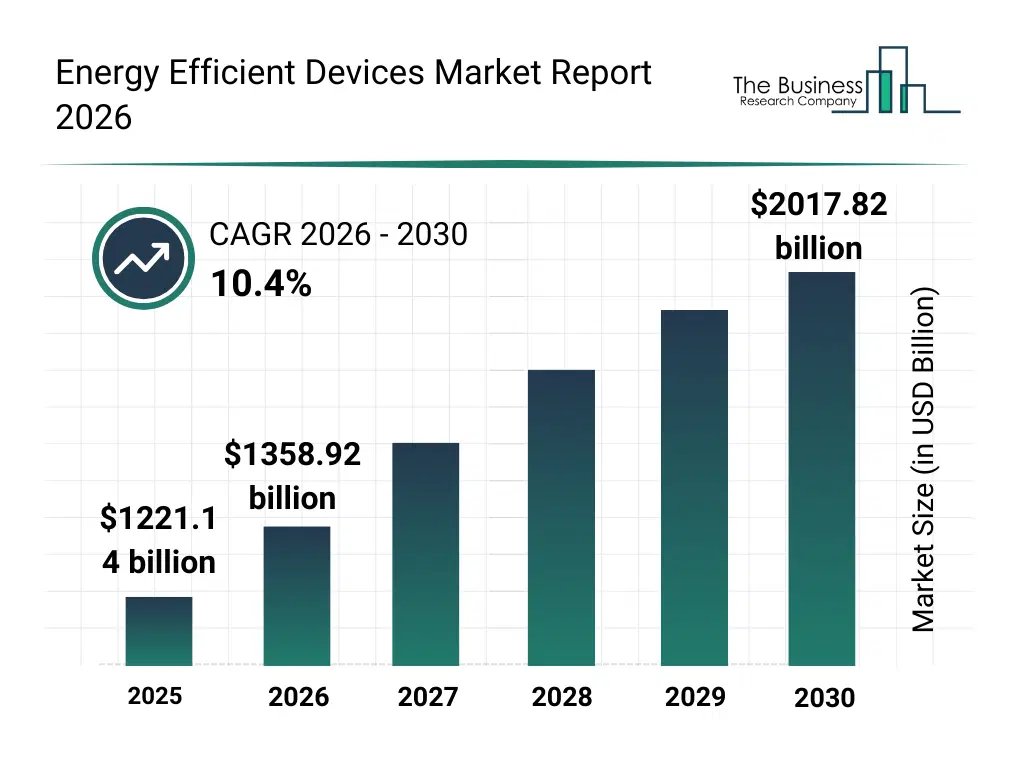
What Is The Energy Efficient Devices Market Size and Share 2026?
The energy efficient devices market size has grown rapidly in recent years. It will grow from $1221.14 billion in 2025 to $1358.92 billion in 2026 at a compound annual growth rate (CAGR) of 11.3%. The growth in the historic period can be attributed to rising energy costs across industries, implementation of energy efficiency regulations, increased deployment of smart building systems, availability of efficient power electronics, growth in industrial automation.What Is The Energy Efficient Devices Market Growth Forecast?
The energy efficient devices market size is expected to see rapid growth in the next few years. It will grow to $2017.82 billion in 2030 at a compound annual growth rate (CAGR) of 10.4%. The growth in the forecast period can be attributed to increasing adoption of renewable energy integration, expansion of smart grid infrastructure, rising demand for net-zero buildings, growing investments in digital energy platforms, increasing focus on carbon footprint reduction. Major trends in the forecast period include increasing adoption of smart energy management systems, rising demand for low-power consumption devices, growing integration of iot-enabled energy monitoring, expansion of predictive maintenance solutions, enhanced focus on lifecycle energy efficiency.
Global Energy Efficient Devices Market Segmentation
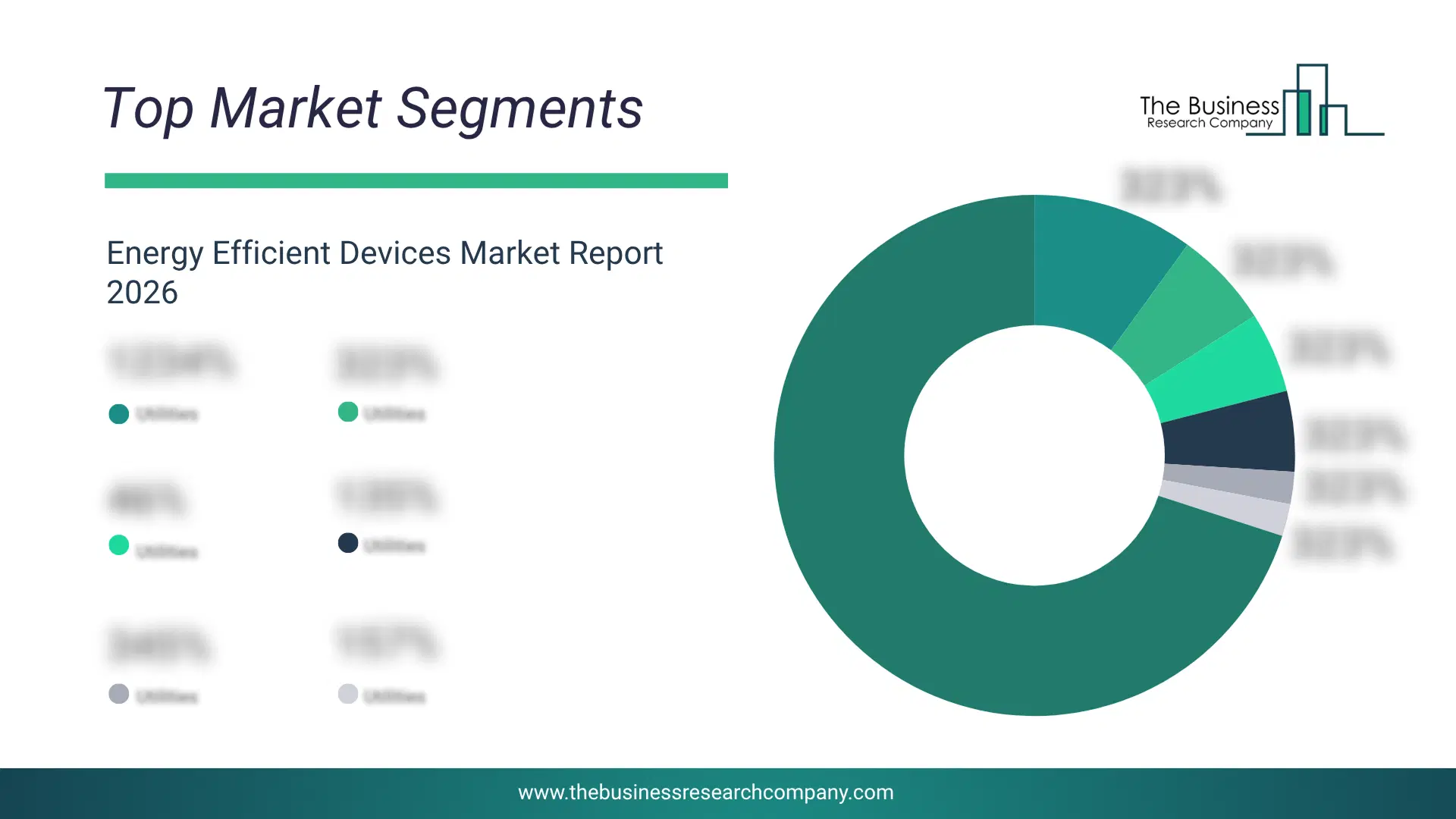
1) By Component: Hardware, Software, Services 2) By System Type: Industrial Energy Management Systems (IEMS), Building Energy Management Systems (BEMS), Home Energy Management Systems (HEMS) 3) By Vertical: Residential, Energy And Power, Telecom And Information Technology (IT), Manufacturing, Retail, Healthcare, Other Verticals Subsegments: 1) By Hardware: Sensors, Actuators, Power Supplies, Controllers, Batteries, LED Lighting, Energy-efficient Appliances 2) By Software: Energy Management Software, Automation Software, Monitoring And Analytics Software, Smart Grid Software, Predictive Maintenance Software 3) By Services: Installation Services, Maintenance And Support Services, Consulting And Advisory Services, Managed Services, System Integration Services The top segments in the energy efficient devices market will be: • Hardware will reach $715906.76 Million by 2025. • Industrial Energy Management Systems (IEMS) will reach $550434.4 Million by 2025. • Building Energy Management Systems (BEMS) will reach $419077.02 Million by 2025. • Software will reach $343277.51 Million by 2025. • Energy And Power will reach $315820.46 Million by 2025.What Is The Driver Of The Energy Efficient Devices Market?
The government's energy-efficiency initiatives are expected to fuel the growth of the energy-efficient devices market going forward. Energy-efficiency initiatives refer to programs, policies, or actions implemented to reduce energy consumption and increase energy efficiency. Government energy-efficiency initiatives are pivotal in advancing energy-efficient devices through the establishment of standards, incentivizing adoption, increasing awareness, supporting research and development, implementing building codes, and promoting cross-sector collaboration. For instance, in March 2024, according to the Department for Energy Security and Net Zero, a UK-based government department, during 2023, around 318,600 energy efficiency measures were installed through government schemes, an increase of 49% compared with 2022. Therefore, the government's energy-efficiency initiatives are driving the energy-efficient devices market.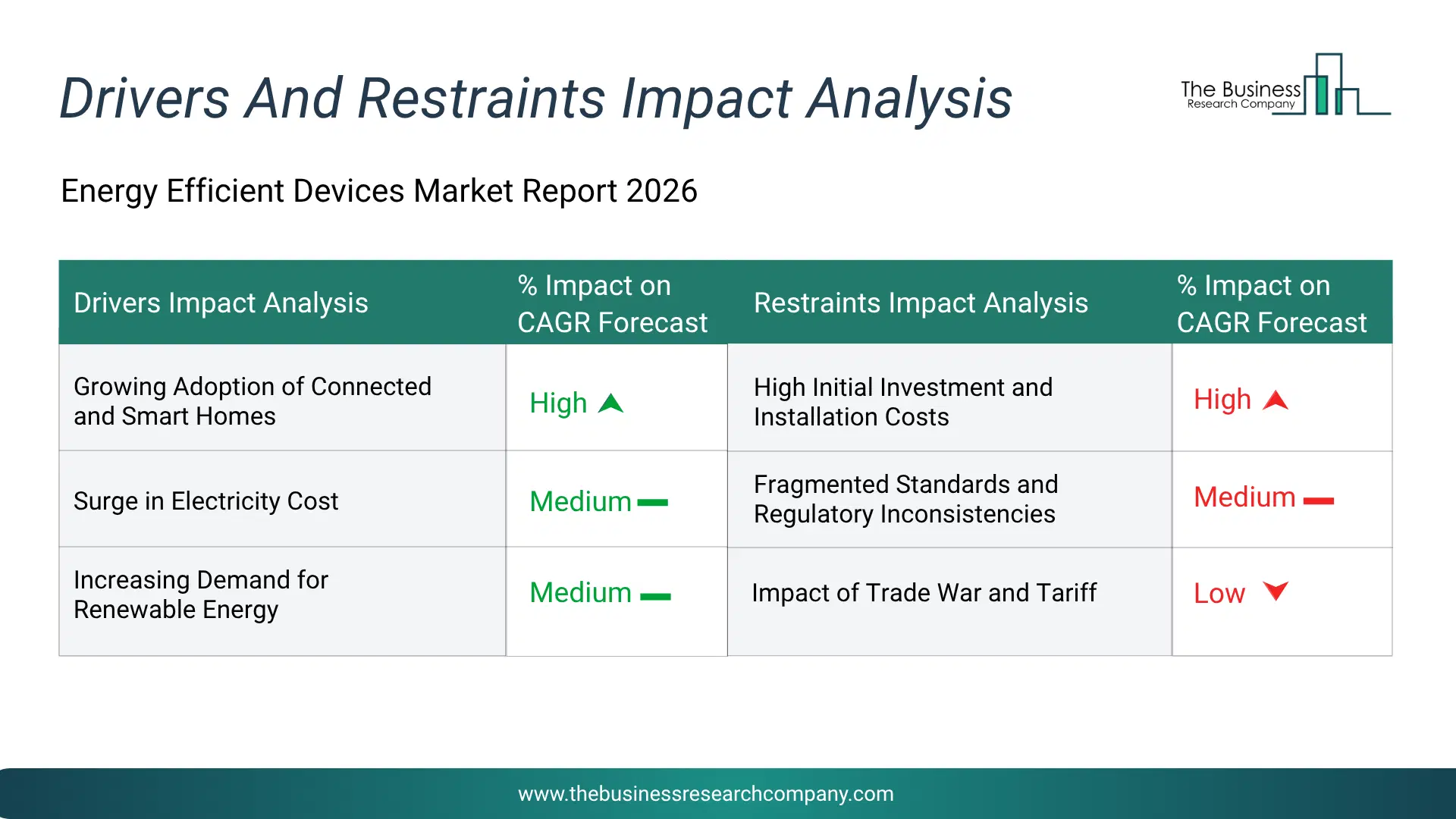
Infographic Chart Showing Key Market Drivers Analysis And Restraints For Energy Efficient Devices Market
The chart presents an impact analysis of key drivers and restraints, quantifying their relative influence on the market's growth rate and helping assess the balance between growth enablers and limiting factors. This chart offers a high-level perspective; the full report contains more detailed insights.
How Will The Drivers Impact Growth In The Global Energy Efficient Devices Market?
• Growing Adoption of Connected and Smart Homes (High) – The growing adoption of connected and smart homes will become a key driver of growth in the energy efficient devices market by 2030. As consumers prioritize convenience, automation, and energy conservation, the demand for smart home technologies continues to rise. These solutions such as smart thermostats, intelligent lighting systems, and energy-efficient appliances allow users to monitor and manage their energy consumption more effectively. The integration of artificial intelligence (AI) and the Internet of Things (IoT) further enhance these systems, enabling personalized energy optimization and predictive maintenance. With ongoing technological advancements and growing consumer awareness, the adoption of smart home solutions is set to accelerate, fueling demand for energy-efficient devices. As a result, the growing adoption of connected and smart homes is anticipated to contributing to a 2.0% annual growth in the market. • Surge in Electricity Cost (Medium) – The surge in electricity cost will emerge as a major factor driving the expansion of the energy efficient devices market by 2030. As energy expenses continue to escalate, both consumers and businesses are actively seeking ways to reduce consumption and lower utility bills. Energy-efficient devices such as smart thermostats, LED lighting, and advanced HVAC systems offer practical solutions to improve energy usage and generate cost savings. As a result, the growing financial pressure from rising electricity prices is expected to accelerate the adoption of energy-efficient technologies. Consequently, the surge in electricity cost is projected to contributing to a 1.5% annual growth in the market. • Increasing Demand for Renewable Energy (Medium) – The increasing demand for renewable energy will serve as a key growth catalyst for the energy efficient devices market by 2030. As nations shift towards cleaner energy sources like solar, wind, and hydropower to meet climate targets and lower carbon emissions, there is an increasing need for technologies that can optimize energy use and enhance efficiency. Energy-efficient appliances and systems are essential for maximizing the utility of renewable energy, reducing waste, and promoting sustainability. Additionally, as renewable energy becomes more prevalent across residential, commercial, and industrial sectors, the integration of energy-efficient solutions is becoming critical for effective energy management and cost reduction. As a result, the rising adoption of renewable energy is poised to significantly boost demand for energy-efficient devices in the coming years. Therefore, this increasing demand for renewable energy is projected to supporting to a 1.0% annual growth in the market. • Growing Adoption of Microgrids (Low) – The increasing emphasis on predictive maintenance will become a significant driver contributing to the growth of the energy efficient devices market by 2030. Microgrids localized energy systems that can function independently or in tandem with the main power grid are gaining popularity for their ability to enhance energy resilience and seamlessly integrate renewable energy sources. These systems typically rely on advanced energy storage, smart grid infrastructure, and intelligent energy management technologies, all of which contribute to greater energy efficiency. As the demand for reliable, sustainable power solutions grows especially in remote regions and disaster-prone areas the deployment of microgrids is expected to expand. This, in turn, will increase the demand for energy-efficient devices designed to optimize energy use and minimize waste. Consequently, the rising adoption of predictive maintenance strategies is projected to contributing to a 0.5% annual growth in the market.How Will The Restraints Impact Growth In The Global Energy Efficient Devices Market?
• High Initial Investment and Installation Costs (Medium) – High Initial Investment and Installation Costs will restrict the growth of the Energy Efficient Devices market during the forecast period. Energy efficient devices and systems involve significant upfront costs for equipment and installation. High costs create barriers for consumers and organizations with limited budgets. Cost constraints can delay adoption and limit the penetration of energy efficient technologies in price-sensitive markets. • Fragmented Standards and Regulatory Inconsistencies (Medium) – Fragmented Standards and Regulatory Inconsistencies will restrict the growth of the Energy Efficient Devices market during the forecast period. Energy efficiency standards and regulations vary across regions, creating compliance challenges for manufacturers. Fragmented standards can increase product development and certification costs. Regulatory inconsistencies affect market access and product availability, limiting market growth. • Impact of Trade War and Tariff (Low) – Impact of Trade War and Tariff will restrict the growth of the Energy Efficient Devices market during the forecast period. Energy efficient devices rely on imported electronic components, motors, and materials subject to trade tariffs. Trade barriers can increase product costs and affect affordability. Trade tensions may also impact energy efficiency investment and technology adoption.Key Players In The Global Energy Efficient Devices Market
Major companies operating in the energy efficient devices market are Samsung Electronics, Siemens AG, GE Electric, Panasonic Corporation, Mitsubishi Electric Corporation, Schneider Electric SE, Honeywell International Inc., ABB Ltd., Daikin Industries Ltd., Toshiba Corporation, Johnson Controls International plc, Eaton Corporation, Carrier Global Corporation, Koninklijke Philips N.V., Trane Technologies, Emerson Electric Co., Legrand Group, Osram Group, Acuity Brands Inc., Itron Inc., Zumtobel Group, Cree Inc., Crompton Greaves Consumer Electricals Limited, Danfoss Group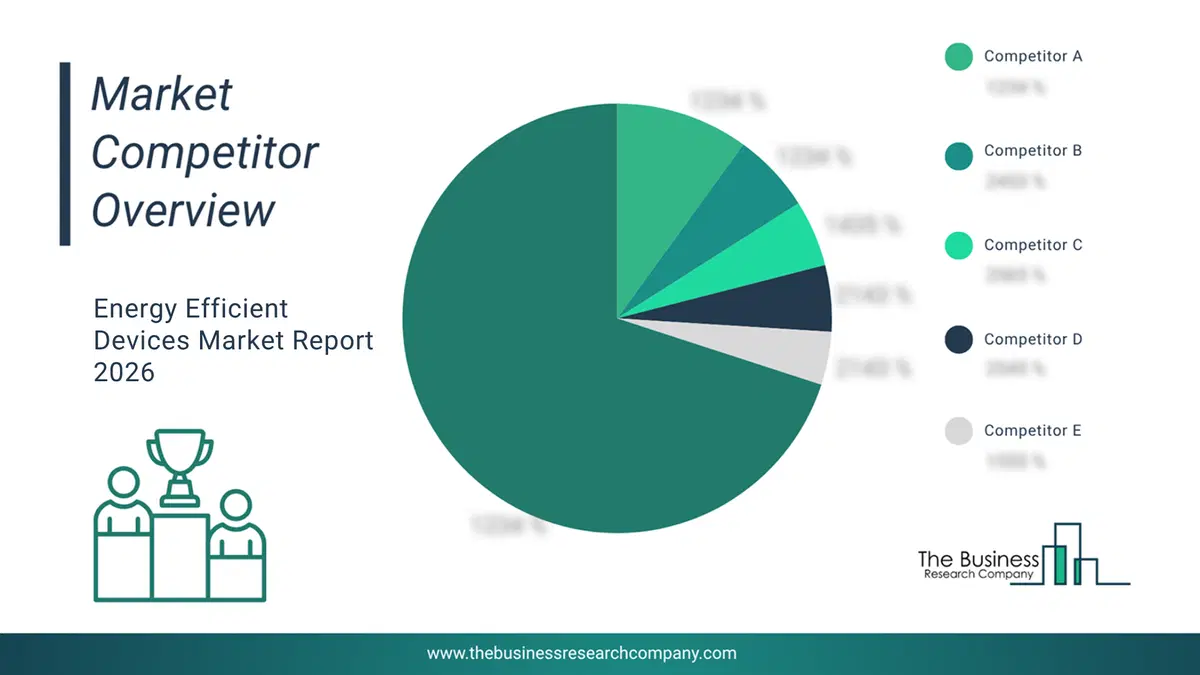
This chart is for illustrative purposes; the full report includes a detailed competitor analysis and comprehensive overview of the top 10 companies in the market.
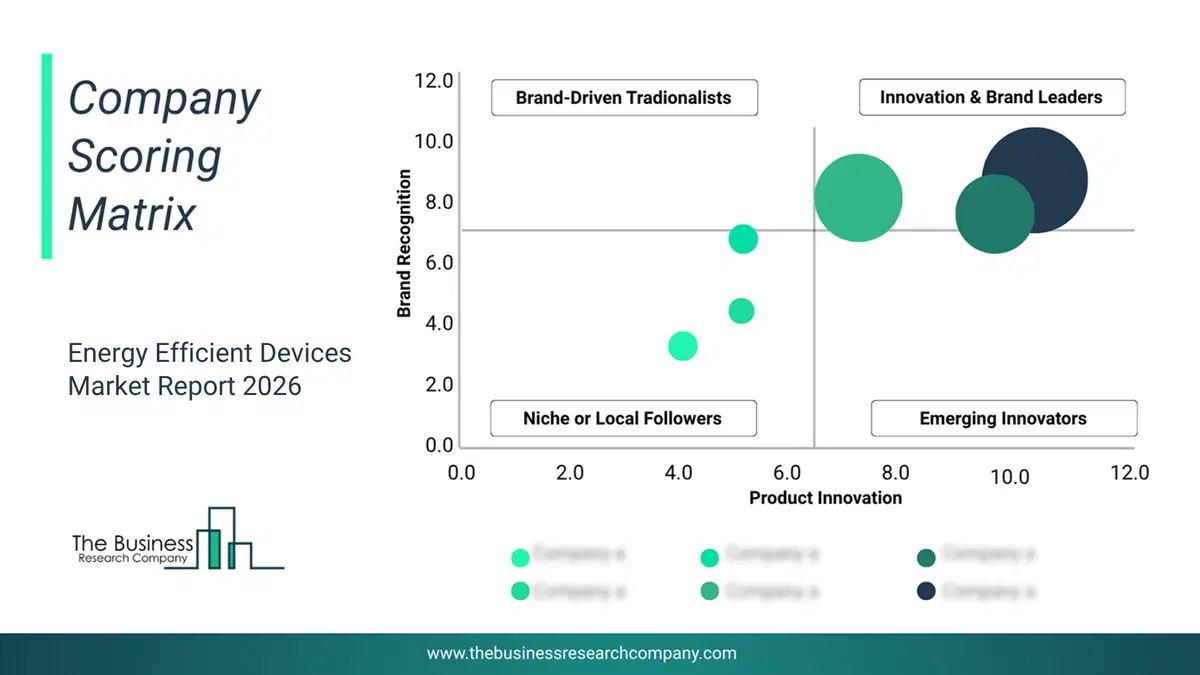
This chart maps companies by product innovation and brand strength, with bubble size indicating relative revenue, helping identify market leaders, challengers, and niche players. This is an illustrative chart; the full report provides a complete and accurate competitive analysis.
Global Energy Efficient Devices Market Trends and Insights
Major companies operating in the energy-efficient devices market are focused on developing innovative products with advanced technologies, such as smart IoT solutions, to increase their profitability in the market. Smart IoT solutions are crucial in promoting energy efficiency across various domains, including homes, buildings, industries, and cities, ultimately contributing to sustainability and environmental conservation efforts. For instance, in March 2023, Siemens AG, a Germany-based energy technology and manufacturing company, launched Connect Box. Connect Box is an IoT solution for small to medium-sized buildings, seamlessly integrating wired/wireless devices. It optimizes energy usage, monitors performance, and enhances indoor air quality through real-time analysis. With a plug-and-play setup, diverse licensing options, and user-friendly interfaces, it caters to varied needs while ensuring compliance with sustainability regulations and delivering up to 30% energy savings.What Are Latest Mergers And Acquisitions In The Energy Efficient Devices Market?
In June 2023, ABB Group, a Switzerland-based technology company, acquired Eve Systems for an undisclosed amount. This acquisition enhances ABB's position as an energy-efficient smart home solutions expert and underscores its commitment to innovation and sustainability in the electrification sector. Eve Systems is a Germany-based company specializing in energy-efficient devices, such as the smart plug and power meter, which offers built-in schedules, voice control, and bluetooth low-energy connectivity.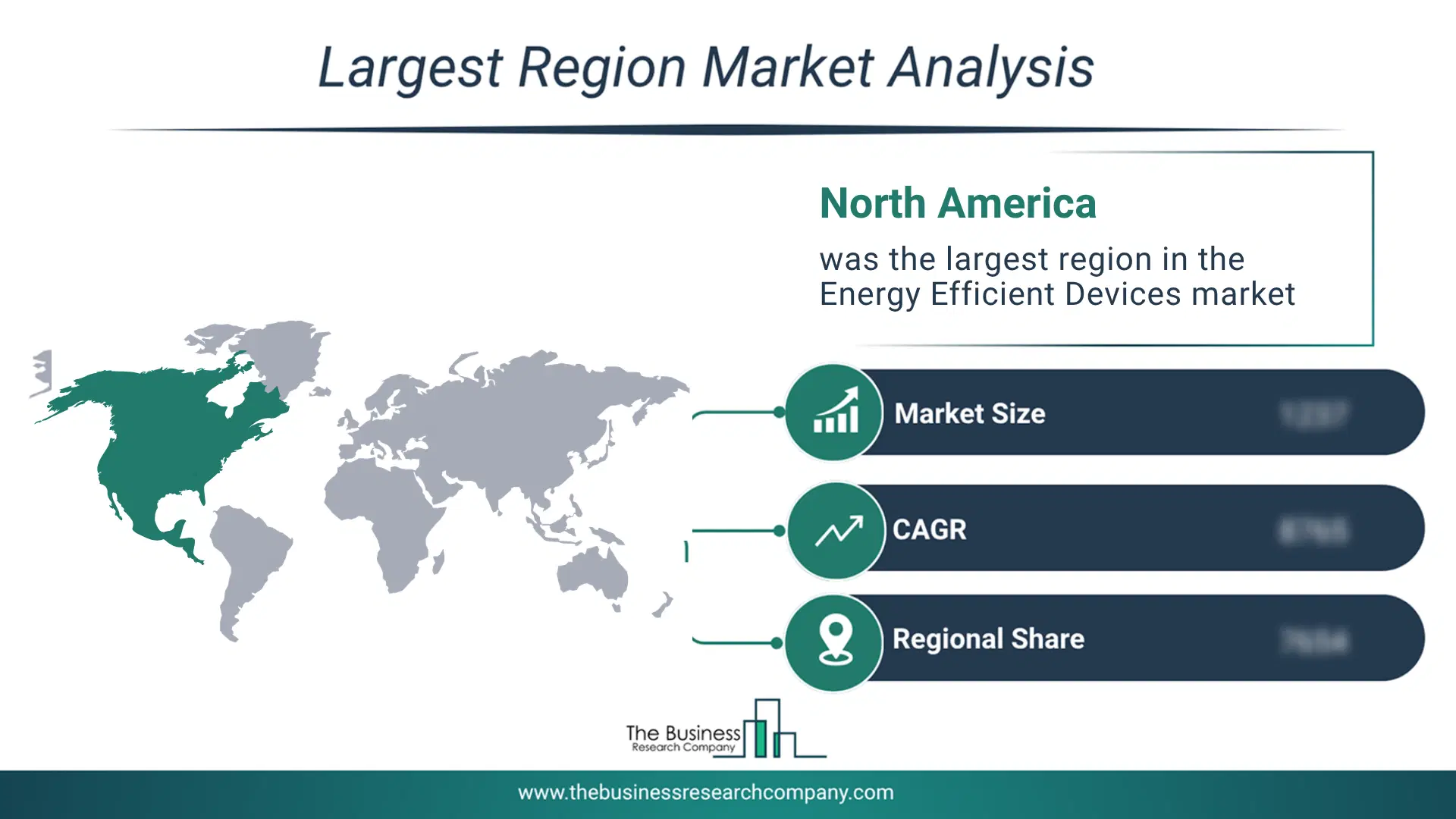
Regional Outlook
North America was the largest region in the energy efficient devices market in 2025. Asia-Pacific is expected to be the fastest-growing region in the forecast period. The regions covered in this market report are Asia-Pacific, South East Asia, Western Europe, Eastern Europe, North America, South America, Middle East, Africa The countries covered in this market report are Australia, Brazil, China, France, Germany, India, Indonesia, Japan, Taiwan, Russia, South Korea, UK, USA, Canada, Italy, Spain.What Defines the Energy Efficient Devices Market?
The energy efficient devices market consists of sales of lighting solutions, HVAC (heating, ventilation, and air conditioning) systems, smart appliances, and energy-efficient motors. Values in this market are ‘factory gate’ values, that is the value of goods sold by the manufacturers or creators of the goods, whether to other entities (including downstream manufacturers, wholesalers, distributors and retailers) or directly to end customers. The value of goods in this market includes related services sold by the creators of the goods.How is Market Value Defined and Measured?
The market value is defined as the revenues that enterprises gain from the sale of goods and/or services within the specified market and geography through sales, grants, or donations in terms of the currency (in USD unless otherwise specified). The revenues for a specified geography are consumption values that are revenues generated by organizations in the specified geography within the market, irrespective of where they are produced. It does not include revenues from resales along the supply chain, either further along the supply chain or as part of other products.
This chart presents market attractiveness based on a quantitative evaluation of growth, competition, strategic alignment, and risk, offering a clear view of opportunity areas for decision-making. This chart is for illustrative purposes; the full report contains the complete analysis.

This chart highlights the Total Addressable Market (TAM) by estimating the maximum revenue opportunity using an assumption-driven approach, supporting strategic planning and opportunity sizing across markets. The chart is illustrative; the full report provides a more comprehensive analysis.
What Key Data and Analysis Are Included in the Energy Efficient Devices Market Report 2026?
The energy efficient devices market research report is one of a series of new reports from The Business Research Company that provides market statistics, including industry global market size, regional shares, competitors with the market share, detailed market segments, market trends and opportunities, and any further data you may need to thrive in the energy efficient devices industry. The market research report delivers a complete perspective of everything you need, with an in-depth analysis of the current and future state of the industry.Energy Efficient Devices Market Report Forecast Analysis
| Report Attribute | Details |
|---|---|
| Market Size Value In 2026 | $1358.92 billion |
| Revenue Forecast In 2030 | $2017.82 billion |
| Growth Rate | CAGR of 11.3% from 2026 to 2030 |
| Base Year For Estimation | 2025 |
| Actual Estimates/Historical Data | 2020-2025 |
| Forecast Period | 2026 - 2030 |
| Market Representation | Revenue in USD Billion and CAGR from 2026 to 2030 |
| Segments Covered | Component, System Type, Vertical |
| Regional Scope | Asia-Pacific, Western Europe, Eastern Europe, North America, South America, Middle East, Africa |
| Country Scope | The countries covered in the report are Australia, Brazil, China, France, Germany, India, Indonesia, Japan, Taiwan, Russia, South Korea, UK, USA, Canada, Italy, Spain. |
| Key Companies Profiled | Samsung Electronics, Siemens AG, GE Electric, Panasonic Corporation, Mitsubishi Electric Corporation, Schneider Electric SE, Honeywell International Inc., ABB Ltd., Daikin Industries Ltd., Toshiba Corporation, Johnson Controls International plc, Eaton Corporation, Carrier Global Corporation, Koninklijke Philips N.V., Trane Technologies, Emerson Electric Co., Legrand Group, Osram Group, Acuity Brands Inc., Itron Inc., Zumtobel Group, Cree Inc., Crompton Greaves Consumer Electricals Limited, Danfoss Group |
| Customization Scope | Request for Customization |
| Pricing And Purchase Options | Explore Purchase Options |