

Energy Storage For Unmanned Aerial Vehicles (UAVS) Market Report 2026
Global Outlook – By Battery Technology (Lithium-ion Batteries, Lead-Acid Batteries, Nickel-Metal Hydride Batteries, Solid State Batteries, Ultracapacitors), By Product (Battery, Fuel Cell), By Capacity (0-10 Kilowatt-Hour, 10-50 Kilowatt-Hour, 50-100 Kilowatt-Hour, 100- 200 Kilowatt-Hour, > 200 Kilowatt-Hour), By Distribution (Original Equipment Manufacturers (OEMs), Aftermarket Sales, Direct Sales, Specialized Integrators, Online Retailers), By Aplication (Military And Defense, Commercial Logistics And Delivery, Agriculture And Forestry, Infrastructure Inspection And Monitoring, Entertainment And Media) – Market Size, Trends, Strategies, and Forecast to 2030
Energy Storage For Unmanned Aerial Vehicles (UAVS) Market Overview
• Energy Storage For Unmanned Aerial Vehicles (UAVS) market size has reached to $2.1 billion in 2025 • Expected to grow to $5.11 billion in 2030 at a compound annual growth rate (CAGR) of 19.3% • Growth Driver: Rising Adoption Of Drones In Commercial Applications Driving The Growth Of The Market Due To Need For Extended Flight Times And Enhanced Operational Efficiency • Market Trend: Development Of Ultra-Lightweight, High-Endurance Batteries To Support Long-Range Drone Operations • North America was the largest region in 2025 and Asia-Pacific is the fastest growing region.Market Gains By 2030 – Top Opportunities By Segment
Market Gain identifies the most promising market opportunities by highlighting the segments or products expected to generate the highest incremental revenue growth over the next five years.
What Is Covered Under Energy Storage For Unmanned Aerial Vehicles (UAVS) Market?
Energy storage for unmanned aerial vehicles (UAVs) refers to the systems and devices, such as batteries or supercapacitors, that store electrical energy to power the UAV’s motors, avionics, and payloads during flight. Its purpose is to provide reliable, high-density, and lightweight energy supply to ensure longer flight duration, enhanced performance, and operational efficiency for various UAV applications. The main types of energy storage for unmanned aerial vehicles (UAVs) are lithium-ion batteries, lead-acid batteries, nickel-metal hydride batteries, solid-state batteries, and ultracapacitors. Lithium-ion batteries are rechargeable batteries that store and release electrical energy through the movement of lithium ions between the anode and cathode. They are available in different products, including batteries and fuel cells, with various capacities such as 0–10 kilowatt-hours, 10–50 kilowatt-hours, 50–100 kilowatt-hours, 100–200 kilowatt-hours, and over 200 kilowatt-hours. These batteries are distributed through original equipment manufacturers (OEMs), aftermarket sales, direct sales, specialized integrators, and online retailers, and they are used in various applications, including military and defense, commercial logistics and delivery, agriculture and forestry, infrastructure inspection and monitoring, and entertainment and media.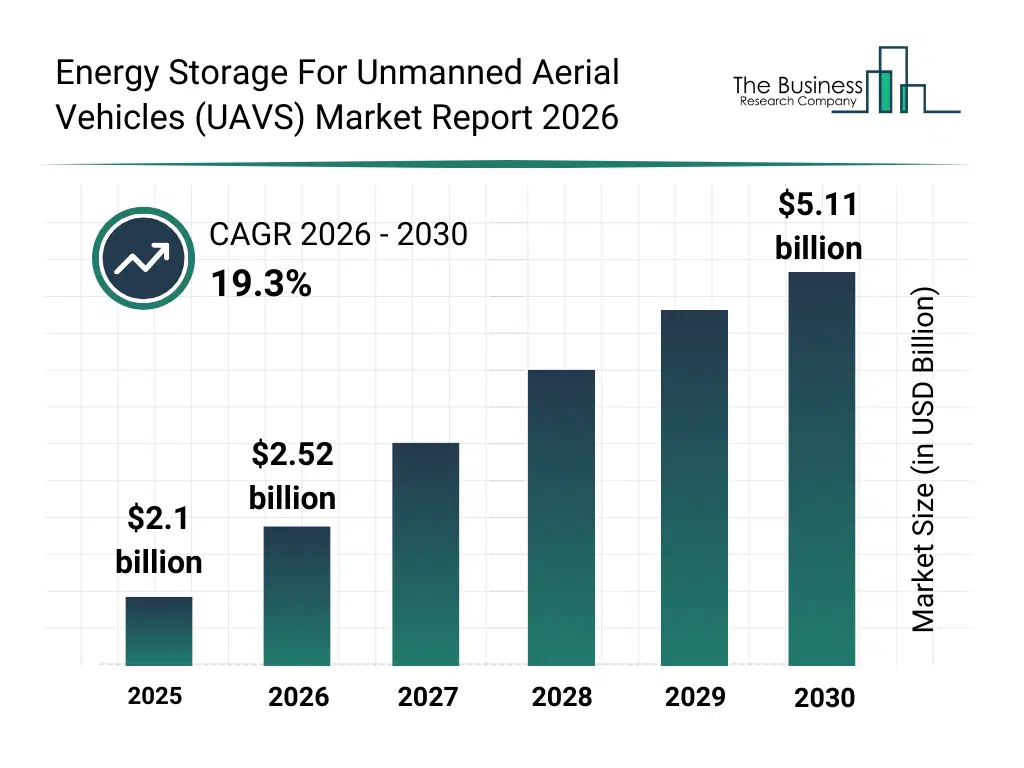
What Is The Energy Storage For Unmanned Aerial Vehicles (UAVS) Market Size and Share 2026?
The energy storage for unmanned aerial vehicles (uavs) market size has grown exponentially in recent years. It will grow from $2.1 billion in 2025 to $2.52 billion in 2026 at a compound annual growth rate (CAGR) of 20.0%. The growth in the historic period can be attributed to advancements in high-energy-density battery technologies for uavs, increasing adoption of uavs across commercial and defense sectors, development of lightweight and compact energy storage systems, rising demand for extended flight durations and operational efficiency, improvements in rechargeable battery chemistries such as lithium-sulfur and zinc-air.What Is The Energy Storage For Unmanned Aerial Vehicles (UAVS) Market Growth Forecast?
The energy storage for unmanned aerial vehicles (uavs) market size is expected to see rapid growth in the next few years. It will grow to $5.11 billion in 2030 at a compound annual growth rate (CAGR) of 19.3%. The growth in the forecast period can be attributed to expansion of uav energy-as-a-service (eaas) and battery swapping solutions, adoption of next-generation graphene-based and sodium-ion batteries, integration of renewable energy sources for uav charging, increasing investments in high-performance energy storage for long-endurance uavs, collaborations between uav manufacturers and energy storage developers for optimized system design. Major trends in the forecast period include rising demand for lightweight, high-density uav batteries, increasing use of energy-as-a-service (eaas) for drone fleets, growth in battery swapping and rapid recharge station infrastructure, advancements in next-generation chemistries such as zinc-air and graphene batteries, expansion of renewable energy–powered uav charging ecosystems.
Global Energy Storage For Unmanned Aerial Vehicles (UAVS) Market Segmentation
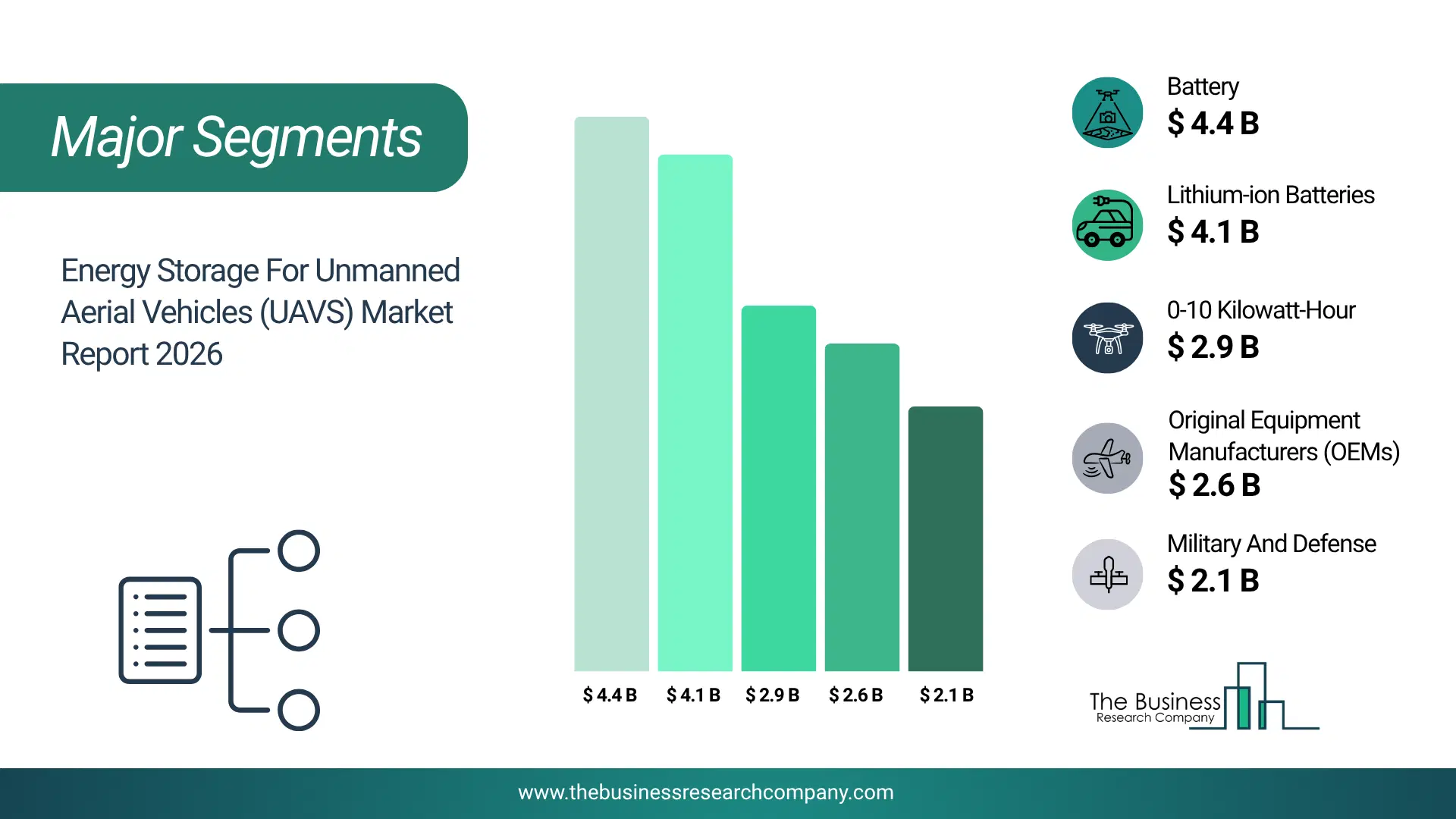
1) By Battery Technology: Lithium-ion Batteries, Lead-Acid Batteries, Nickel-Metal Hydride Batteries, Solid State Batteries, Ultracapacitors 2) By Product: Battery, Fuel Cell 3) By Capacity: 0-10 Kilowatt-Hour, 10-50 Kilowatt-Hour, 50-100 Kilowatt-Hour, 100- 200 Kilowatt-Hour, > 200 Kilowatt-Hour 4) By Distribution: Original Equipment Manufacturers (OEMs), Aftermarket Sales, Direct Sales, Specialized Integrators, Online Retailers 5) By Aplication: Military And Defense, Commercial Logistics And Delivery, Agriculture And Forestry, Infrastructure Inspection And Monitoring, Entertainment And Media Subsegments: 1) By Lithium-ion Batteries: Lithium Polymer (LiPo), Lithium-ion Cylindrical, Lithium-ion Prismatic, Lithium-ion Pouch 2) By Lead-Acid Batteries: Sealed Lead Acid (SLA), Valve-Regulated Lead Acid (VRLA), Absorbent Glass Mat (AGM), Flooded Lead Acid 3) By Nickel-Metal Hydride Batteries: Cylindrical Nickel-Metal Hydride, Prismatic Nickel-Metal Hydride, Button Cell Nickel-Metal Hydride 4) By Solid State Batteries: Lithium Solid State, Sodium Solid State, Polymer Solid State 5) By Ultracapacitors: Electric Double-Layer Capacitors (EDLC), Pseudocapacitors, Hybrid Capacitors The top segments in the energy storage for unmanned aerial vehicles (uavs) market will be: • Battery will reach $4420.1 Million by 2030. • Lithium-ion Batteries will reach $4107.2 Million by 2030. • 0-10 Kilowatt-Hour will reach $2987.17 Million by 2030. • Original Equipment Manufacturers (OEMs) will reach $2685.86 Million by 2030. • Military And Defense will reach $2119.45 Million by 2030.What Is Driver Of The Energy Storage For Unmanned Aerial Vehicles (UAVS) Market?
The increasing use of drones in commercial applications is expected to propel the growth of the energy storage for unmanned aerial vehicles (UAVs) market going forward. The use of drones in commercial applications refers to deploying unmanned aerial vehicles for tasks across various industries. The use of drones in commercial applications is rising due to their ability to perform tasks more efficiently, safely, and cost-effectively compared to traditional methods. Energy storage for unmanned aerial vehicles (UAVs) in commercial applications enables extended flight times, enhanced operational efficiency, and reliable performance for tasks such as surveying, delivery, and inspection. For instance, in May 2024, according to the UK drone survey consisting of 2,000 adults conducted by the Civil Aviation Authority (CAA), a UK-based government authority that oversees aviation activities to ensure safety and regulatory compliance, drone users across the UK increased to 5% in 2023 compared to previous year. Commercial deliveries using drones are expected to grow by 30% in 10 years, compared to 13% in 5 years. Therefore, the increasing use of drones in commercial applications is driving the unmanned aerial vehicles (UAVs) market.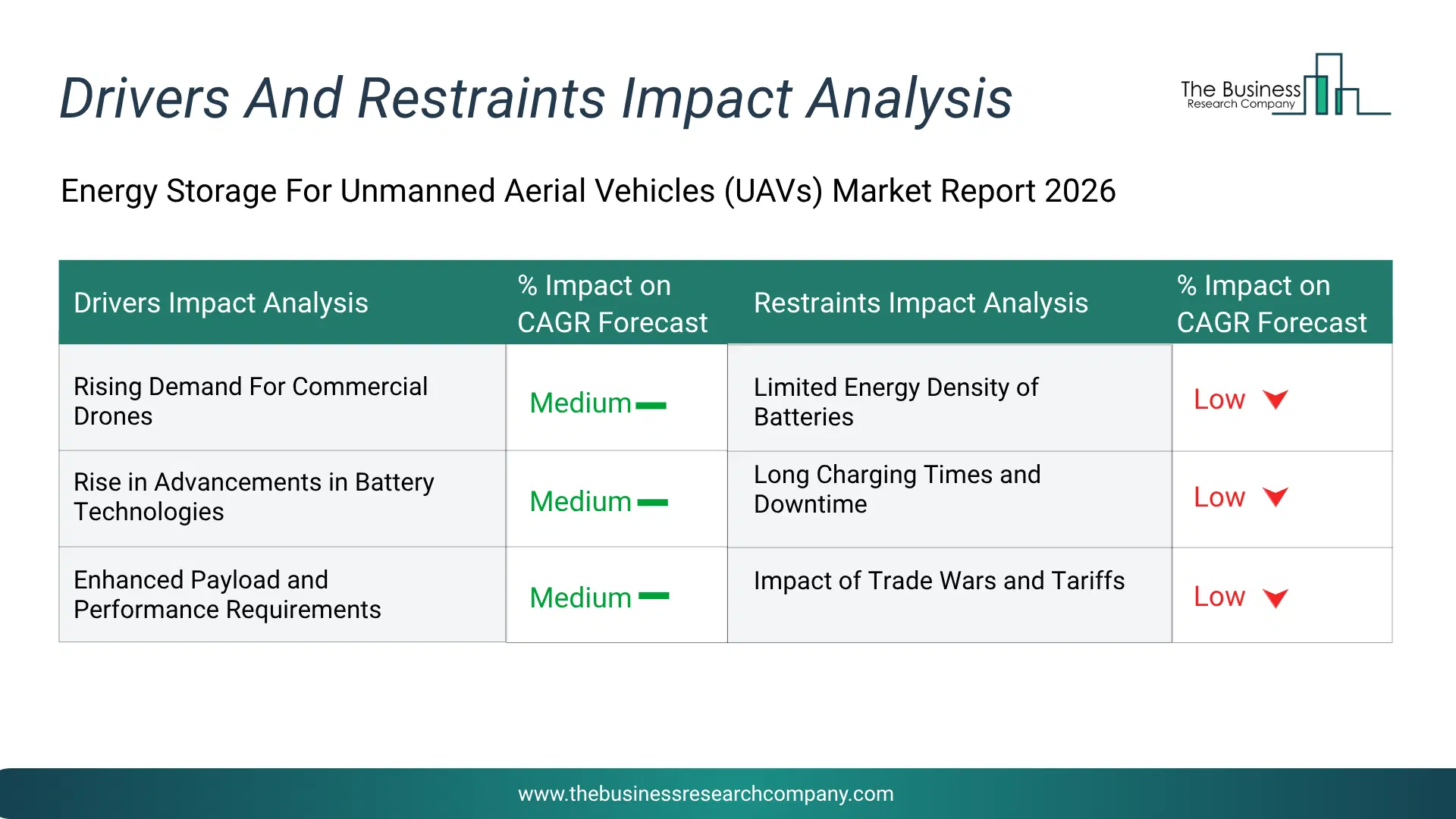
Infographic Chart Showing Key Market Drivers Analysis And Restraints For Energy Storage For Unmanned Aerial Vehicles (Uavs) Market
The chart presents an impact analysis of key drivers and restraints, quantifying their relative influence on the market's growth rate and helping assess the balance between growth enablers and limiting factors. This chart offers a high-level perspective; the full report contains more detailed insights.
How Will The Drivers Impact Growth In The Global Energy Storage For Unmanned Aerial Vehicles (UAVs) Market?
• Rising Demand For Commercial Drones (Medium) – During the forecast period, the rising demand for commercial drones will propel the growth of the energy storage for unmanned aerial vehicles (UAVs) market. As enterprises and industries increasingly deploy commercial drones across applications such as agriculture, logistics, infrastructure inspection, and aerial monitoring, the expanding use of UAV platforms drives the need for advanced energy storage systems capable of supporting longer flight durations, higher payloads, and more frequent operations. Industry projections indicate that the global commercial drone fleet is expanding rapidly year on year, reflecting a broader shift toward automation, precision operations, and cost-efficient aerial solutions across multiple sectors. As organizations deploy larger numbers of commercial drones and expand mission complexity and operational scale, the demand for high-performance, reliable, and efficient battery technologies becomes critical to ensure endurance, productivity, and operational continuity, thereby significantly driving the growth of the energy storage for unmanned aerial vehicles (UAVs) market. The rising demand for commercial drones growth contribution during the forecast period in 2025 is 1.6%. • Rise in Advancements in Battery Technologies (Medium) – During the forecast period, the rise in advancements in battery technologies will emerge as a major factor driving the expansion of the energy storage for unmanned aerial vehicles (uavs) market by 2030. as research and development in battery chemistries, cell architectures, and manufacturing processes accelerate, next-generation energy storage solutions are delivering higher energy density, improved safety, faster charging, and longer cycle life, capabilities that are increasingly critical for uav platforms operating across commercial, industrial, and defense applications. industry analysis indicates that the global battery industry has entered a new phase characterized by innovation in solid-state cells, silicon-enhanced anodes, and scalable production techniques, reflecting a broader shift toward more efficient, durable, and cost-effective energy storage systems. as organizations integrate these advanced battery technologies into uav designs to support extended flight durations, heavier payloads, and more demanding mission profiles, the demand for high-performance energy storage solutions will become essential to meet evolving operational expectations, thereby significantly driving the growth of the energy storage for unmanned aerial vehicles (uavs) market. consequently, the rise in advancements in battery technologies is projected to contributing to a 1.4% annual growth in the market. • Enhanced Payload and Performance Requirements (Medium) – During the forecast period, the enhanced payload and performance requirements will serve as a key growth catalyst for the energy storage for unmanned aerial vehicles (uavs) market by 2030. as uav operators increasingly demand drones capable of carrying heavier sensors, extended-range equipment, and multifunctional payloads for applications such as mapping, surveillance, delivery, and industrial inspection, the need for more capable and efficient energy storage systems becomes critical to support these higher performance standards. research indicates that higher payload capacities and expanded mission capabilities are key drivers of uav utilization across commercial and defense sectors, reflecting a broader trend toward multipurpose aerial platforms that require longer flight endurance and greater power delivery. as organizations pursue advanced uav applications that push the limits of flight time, operational range, and mission complexity, the adoption of advanced battery technologies and high-density energy storage solutions will become essential to meet these requirements, thereby significantly driving the growth of the energy storage for unmanned aerial vehicles (uavs) market. therefore, this enhanced payload and performance requirements is projected to supporting to a 1.1% annual growth in the market. • Rising Incorporation of UAVs in Precision Agriculture (Low) – During the forecast period, the rising incorporation of UAVs in precision agriculture will propel the growth of the energy storage for unmanned aerial vehicles (UAVs) market. As agricultural producers and farm management firms increasingly adopt precision farming practices to optimize input use, enhance crop yields, and support sustainable operations, unmanned aerial vehicles are being deployed to collect high-resolution field data, monitor crop health, and enable targeted interventions such as variable-rate spraying and resource application. Industry trends indicate that UAVs are becoming essential tools in modern precision agriculture due to their ability to perform rapid field scouting, multispectral imaging, and real-time decision support that drive efficiency and reduce resource waste on farms worldwide. As more agricultural operations integrate UAVs into their precision agriculture strategies to support data-driven crop management and maximize productivity, the demand for advanced, high-performance energy storage systems that enable longer flight durations, robust endurance, and reliable operation will become increasingly critical, thereby significantly driving growth in the energy storage for unmanned aerial vehicles (UAVs) market. The rising incorporation of UAVs in precision agriculture growth contribution during the forecast period in 2025 is 0.9%.How Will The Restraints Impact Growth In The Global Energy Storage For Unmanned Aerial Vehicles (UAVs) Market?
• Limited Energy Density of Batteries (Medium) – During the forecast period, limited energy density of batteries is restricting the growth of the energy storage for unmanned aerial vehicles (uavs) market during the forecast period. many uav manufacturers and energy storage developers continue to face performance constraints because existing battery technologies provide limited energy storage relative to weight and volume, directly impacting flight endurance, payload capacity, and operational range. these limitations become more pronounced as demand increases for longer-duration missions, heavier onboard sensors, and expanded commercial and defense applications, where incremental improvements in energy density are often insufficient to meet operational requirements. as a result, uav platforms powered by conventional battery systems struggle to achieve the performance levels needed for extended or high intensity use cases, leading manufacturers and operators to delay adoption, reduce mission scope, or explore alternative propulsion solutions, thereby restricting the growth of the energy storage for unmanned aerial vehicles (uavs) market during the forecast period. growth affected by limited energy density of batteries during the forecast period in 2025 is -0.7%. • Long Charging Times and Downtime (Medium) – During the forecast period, long charging times and downtime are restricting the growth of the energy storage for unmanned aerial vehicles (uavs) market during the forecast period. many uav operators and manufacturers face operational challenges due to prolonged battery charging cycles that increase ground time, reduce mission availability, and limit overall productivity, particularly in commercial and industrial applications where rapid turnaround is critical. from a performance standpoint, extended recharge durations can strain operational schedules, require additional spare batteries, and increase maintenance complexity, all of which can deter users from deploying drones for continuous or large-scale missions. as a result, operators may postpone adoption of certain uav systems or scale back deployment plans to manage charging-related downtime and ensure mission readiness, thereby restricting the growth of the energy storage for unmanned aerial vehicles (uavs) market during the forecast period. growth affected by long charging times and downtime during the forecast period in 2025 is -0.5%. • Impact of Trade Wars and Tariffs (Medium) – During the forecast period, impact of trade war and tariff is restricting the growth of the energy storage for unmanned aerial vehicles (uavs) market during the forecast period. ongoing trade tensions between major economies, particularly the united states and china, have resulted in escalating tariffs, export controls, and supply chain frictions that increase the cost and complexity of importing critical battery materials, components, and finished energy storage systems. as many uav energy storage manufacturers rely on globally sourced raw materials such as lithium, graphite, cathodes, and complete battery cells, punitive tariffs and trade barriers disrupt supply chain continuity, reduce pricing predictability, and deter capital investment in advanced battery production facilities. from an operational standpoint, these geopolitical trade measures can lead to increased production expenses, longer lead times, and reconfiguration of supplier networks, particularly for smaller and mid-sized energy storage developers with limited bargaining power. as a result, manufacturers and end users may delay or scale back investments in next-generation uav energy storage solutions to manage tariff-driven cost volatility and supply chain uncertainty, thereby restricting the growth of the energy storage for unmanned aerial vehicles (uavs) market during the forecast period. growth affected by trade war and tariffs across regions during the forecast period in 2025 is -0.2%.Key Players In The Global Energy Storage For Unmanned Aerial Vehicles (UAVS) Market
Major companies operating in the energy storage for unmanned aerial vehicles (uavs) market are LG Energy Solution Ltd., Toshiba Corporation, Teledyne Energy Systems Inc., GS Yuasa International Ltd., EnerSys, Grepow Technology Co. Ltd., EaglePicher Technologies LLC., Highpower International Inc., SZ DJI Technology Co. Ltd., Ultralife Corporation, Lyten Inc., Ballard Power Systems Inc., Bren-Tronics Inc., Kokam Co. Ltd., Sion Power Corporation, Tadiran Batteries GmbH, Molicel Energy Co. Ltd., Navitas Systems Inc., Amperex Technology Limited, Amprius Technologies Inc.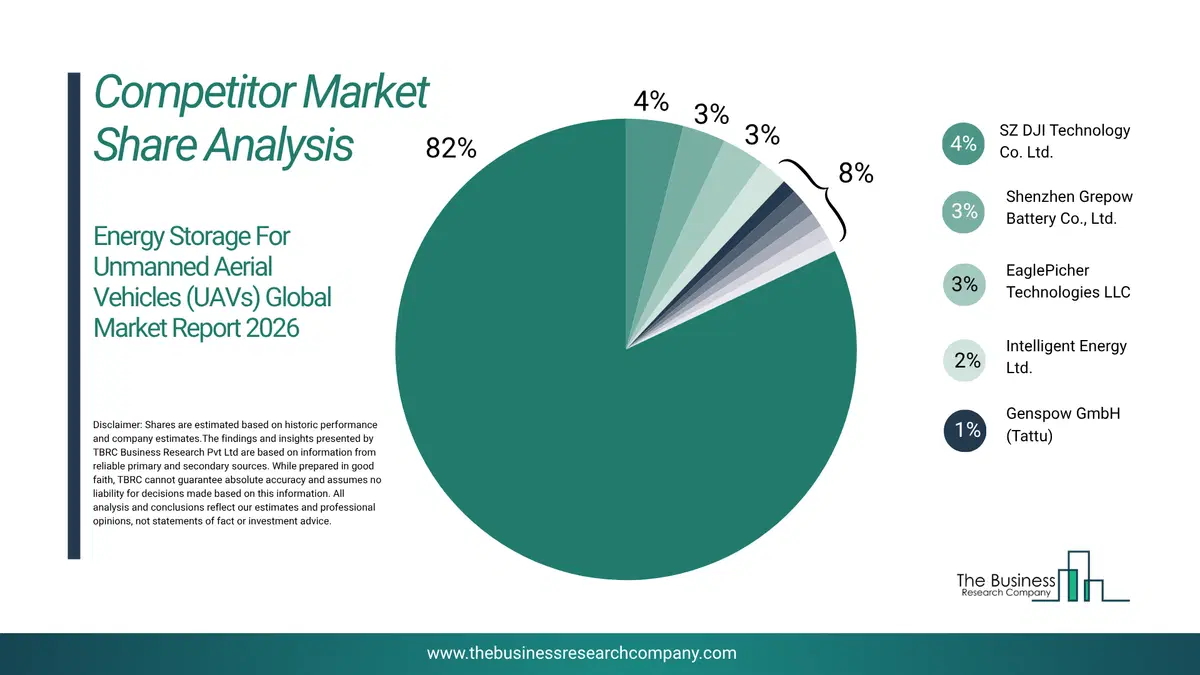
This chart is for illustrative purposes; the full report includes a detailed competitor analysis and comprehensive overview of the top 10 companies in the market.
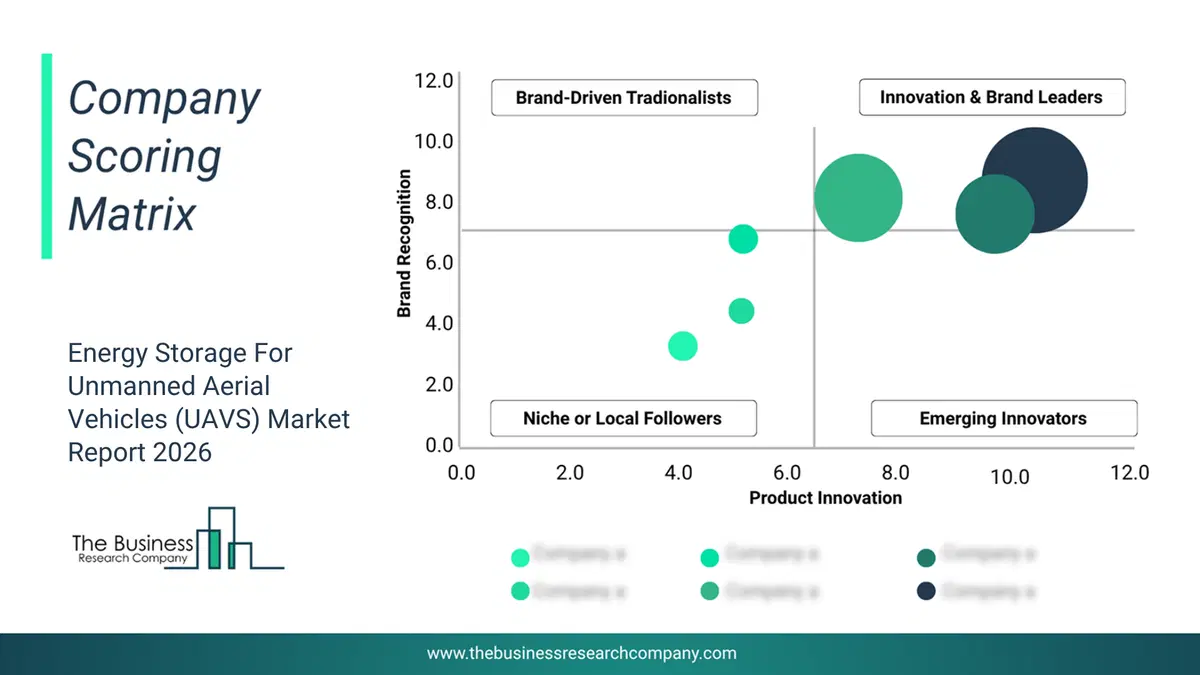
This chart maps companies by product innovation and brand strength, with bubble size indicating relative revenue, helping identify market leaders, challengers, and niche players. This is an illustrative chart; the full report provides a complete and accurate competitive analysis.
Global Energy Storage For Unmanned Aerial Vehicles (UAVS) Market Trends and Insights
Major companies operating in the energy storage for unmanned aerial vehicles (UAVs) market are focusing on developing innovative technologies such as security-focused initiatives to enhance battery safety, reliability, and resilience during critical missions. Security-focused initiatives refer to measures aimed at improving battery safety, data protection, and system reliability to prevent failures, malfunctions, or cyber threats in UAV operations. For instance, in May 2025, Lyten Inc., a US-based advanced materials company, launched a national security-focused initiative to address the increasing demand for high-endurance, long-range drones in defense applications. The program leverages Lyten’s next-generation drone energy storage systems, powered by its ultra-lightweight lithium-sulfur (Li-S) batteries. The company is allocating production capacity at its California manufacturing facilities to serve the specific requirements of the U.S. defense, unmanned aerial vehicle (UAV), and satellite sectors.What Are Latest Mergers And Acquisitions In The Energy Storage For Unmanned Aerial Vehicles (UAVS) Market? EnerSys Strengthens Defense Portfolio With Bren-Tronics Inc. Acquisition
In May 2024, EnerSys, a US-based provider of stored energy solutions, acquired Bren-Tronics, Inc. for $208 million. Through this acquisition, EnerSys aims to expand its presence in critical defense applications, including military communications, surveillance, and tactical systems, by leveraging Bren-Tronics’ expertise in portable power solutions. Bren-Tronics Inc. is a US-based company specializing in the design and manufacture of advanced battery systems for defense and military applications.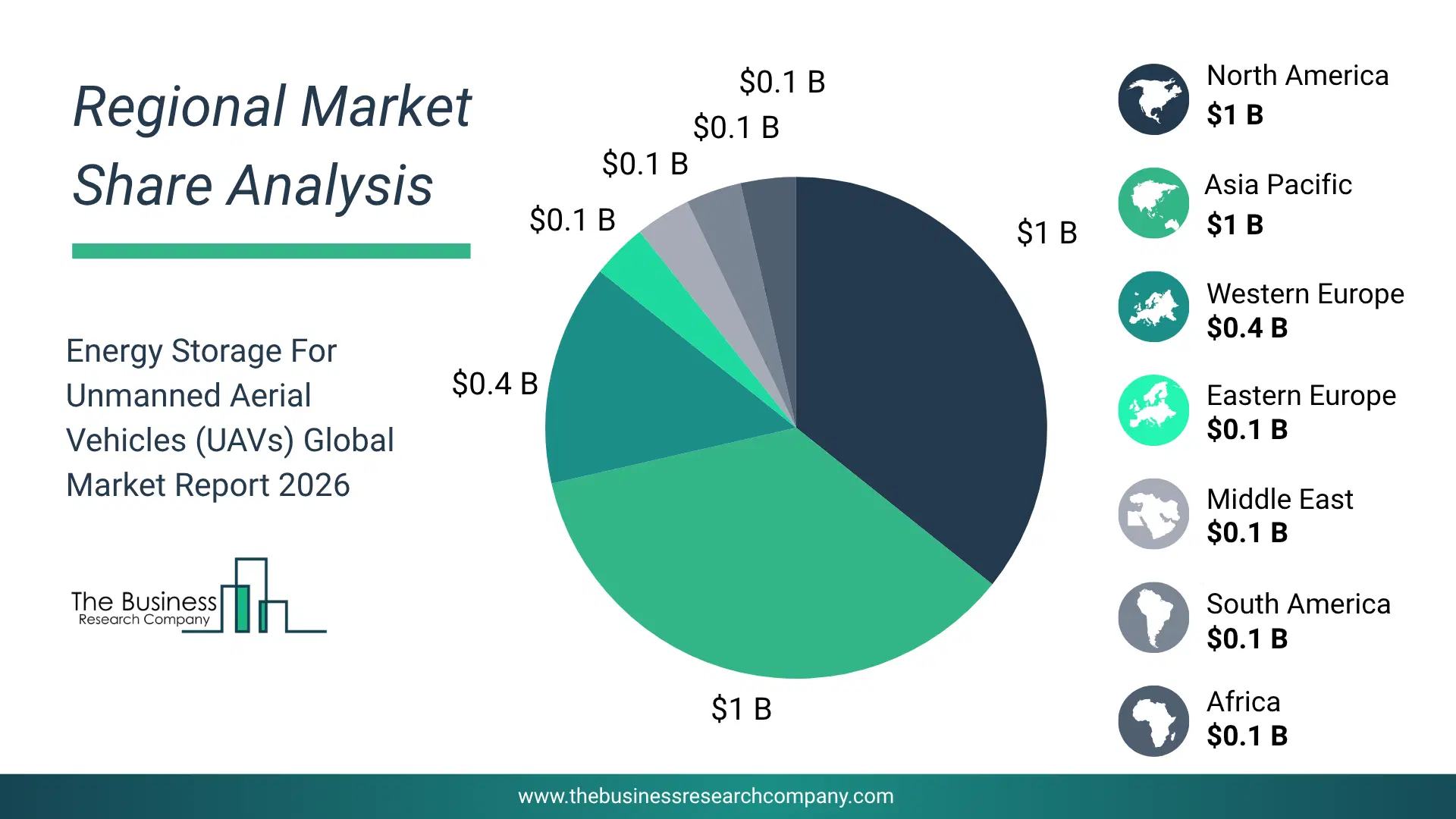
Regional Insights
North America was the largest region in the energy storage for unmanned aerial vehicles (UAVS) market in 2025. Asia-Pacific is expected to be the fastest-growing region in the forecast period. The regions covered in this market report are Asia-Pacific, South East Asia, Western Europe, Eastern Europe, North America, South America, Middle East, Africa. The countries covered in this market report are Australia, Brazil, China, France, Germany, India, Indonesia, Japan, Taiwan, Russia, South Korea, UK, USA, Canada, Italy, SpainWhat Defines the Energy Storage For Unmanned Aerial Vehicles (UAVS) Market?
The energy storage for unmanned aerial vehicles (UAVS) market consists of revenues earned by entities by providing services such as UAV energy-as-a-service (EaaS) models, battery swapping stations, energy integration consulting, emergency backup power, and renewable energy integration. The market value includes the value of related goods sold by the service provider or included within the service offering. The energy storage for unmanned aerial vehicles (UAVs) market also includes sales of aluminum-air batteries, zinc-air batteries, sodium-ion batteries, rechargeable lithium-sulfur batteries, and graphene-based batteries. Values in this market are ‘factory gate’ values; that is, the value of goods sold by the manufacturers or creators of the goods, whether to other entities (including downstream manufacturers, wholesalers, distributors, and retailers) or directly to end customers. The value of goods in this market includes related services sold by the creators of the goods.How is Market Value Defined and Measured?
The market value is defined as the revenues that enterprises gain from the sale of goods and/or services within the specified market and geography through sales, grants, or donations in terms of the currency (in USD unless otherwise specified). The revenues for a specified geography are consumption values that are revenues generated by organizations in the specified geography within the market, irrespective of where they are produced. It does not include revenues from resales along the supply chain, either further along the supply chain or as part of other products.
This chart presents market attractiveness based on a quantitative evaluation of growth, competition, strategic alignment, and risk, offering a clear view of opportunity areas for decision-making. This chart is for illustrative purposes; the full report contains the complete analysis.

This chart highlights the Total Addressable Market (TAM) by estimating the maximum revenue opportunity using an assumption-driven approach, supporting strategic planning and opportunity sizing across markets. The chart is illustrative; the full report provides a more comprehensive analysis.
What Key Data and Analysis Are Included in the Energy Storage For Unmanned Aerial Vehicles (UAVS) Market Report 2026?
The energy storage for unmanned aerial vehicles (uavs) market research report is one of a series of new reports from The Business Research Company that provides market statistics, including industry global market size, regional shares, competitors with the market share, detailed market segments, market trends and opportunities, and any further data you may need to thrive in the energy storage for unmanned aerial vehicles (uavs) industry. The market research report delivers a complete perspective of everything you need, with an in-depth analysis of the current and future state of the industry.Energy Storage For Unmanned Aerial Vehicles (UAVS) Market Report Forecast Analysis
| Report Attribute | Details |
|---|---|
| Market Size Value In 2026 | $2.52 billion |
| Revenue Forecast In 2030 | $5.11 billion |
| Growth Rate | CAGR of 20.0% from 2026 to 2030 |
| Base Year For Estimation | 2025 |
| Actual Estimates/Historical Data | 2020-2025 |
| Forecast Period | 2026 - 2030 - 2035 |
| Market Representation | Revenue in USD Billion and CAGR from 2026 to 2030 |
| Segments Covered | Battery Technology, Product, Capacity, Distribution, Aplication |
| Regional Scope | Asia-Pacific, Western Europe, Eastern Europe, North America, South America, Middle East, Africa |
| Country Scope | The countries covered in the report are Australia, Brazil, China, France, Germany, India, Indonesia, Japan, Taiwan, Russia, South Korea, UK, USA, Canada, Italy, Spain. |
| Key Companies Profiled | LG Energy Solution Ltd., Toshiba Corporation, Teledyne Energy Systems Inc., GS Yuasa International Ltd., EnerSys, Grepow Technology Co. Ltd., EaglePicher Technologies LLC., Highpower International Inc., SZ DJI Technology Co. Ltd., Ultralife Corporation, Lyten Inc., Ballard Power Systems Inc., Bren-Tronics Inc., Kokam Co. Ltd., Sion Power Corporation, Tadiran Batteries GmbH, Molicel Energy Co. Ltd., Navitas Systems Inc., Amperex Technology Limited, Amprius Technologies Inc. |
| Customization Scope | Request for Customization |
| Pricing And Purchase Options | Explore Purchase Options |