

Engineering Thermoplastics Market Report 2026
Global Outlook – By Type (Polyamide (Nylon), Polycarbonate, Polyoxymethylene, Polyphenylene Sulfide, Thermoplastic Polyurethane, Polyetheretherketone, Other Types), By Manufacturing Process (Injection Molding, Extrusion, Blow Molding, 3D Printing, Compression Molding, Other Manufacturing Processes), By Distribution Channel (Direct Sales, Distributors And Wholesalers, Online Sales), By End User Industry (Final Market) (Automotive, Aerospace And Defense, Healthcare, Electronics And Electrical, Construction, Packaging, Other End User Industries) – Market Size, Trends, Strategies, and Forecast to 2035
Engineering Thermoplastics Market Overview
• Engineering Thermoplastics market size has reached to $109.09 billion in 2025 • Expected to grow to $145.77 billion in 2030 at a compound annual growth rate (CAGR) of 5.9% • Growth Driver: Growing Electric Vehicle (EV) Adoption Driving The Market Growth Due To Increasing Environmental Awareness And Demand For Sustainable Transportation Solutions • Market Trend: Technological Advancements In Reinforced Polymer Composites For Large-Scale Additive Manufacturing • Asia-Pacific was the largest region and fastest growing region.What Is Covered Under Engineering Thermoplastics Market?
Engineering thermoplastics refer to advanced polymer materials designed to provide superior mechanical strength, heat resistance, chemical stability, durability, and dimensional stability compared with conventional plastics. These materials can be repeatedly softened and reshaped through heating, allowing efficient processing and manufacturing flexibility while maintaining performance characteristics required for demanding applications. The main types of engineering thermoplastics include polyamide (nylon), polycarbonate, polyoxymethylene, polyphenylene sulfide, thermoplastic polyurethane, polyetheretherketone, and other types. Polyamide (nylon) refers to a group of synthetic thermoplastic polymers known for their high strength, toughness, abrasion resistance, and durability, making them suitable for demanding engineering applications. These thermoplastics are manufactured through injection molding, extrusion, blow molding, 3D printing, compression molding, and other manufacturing processes. They are distributed through direct sales, distributors and wholesalers, and online sales, and are used across end user industries including automotive, aerospace and defense, healthcare, electronics and electrical, construction, packaging, and others.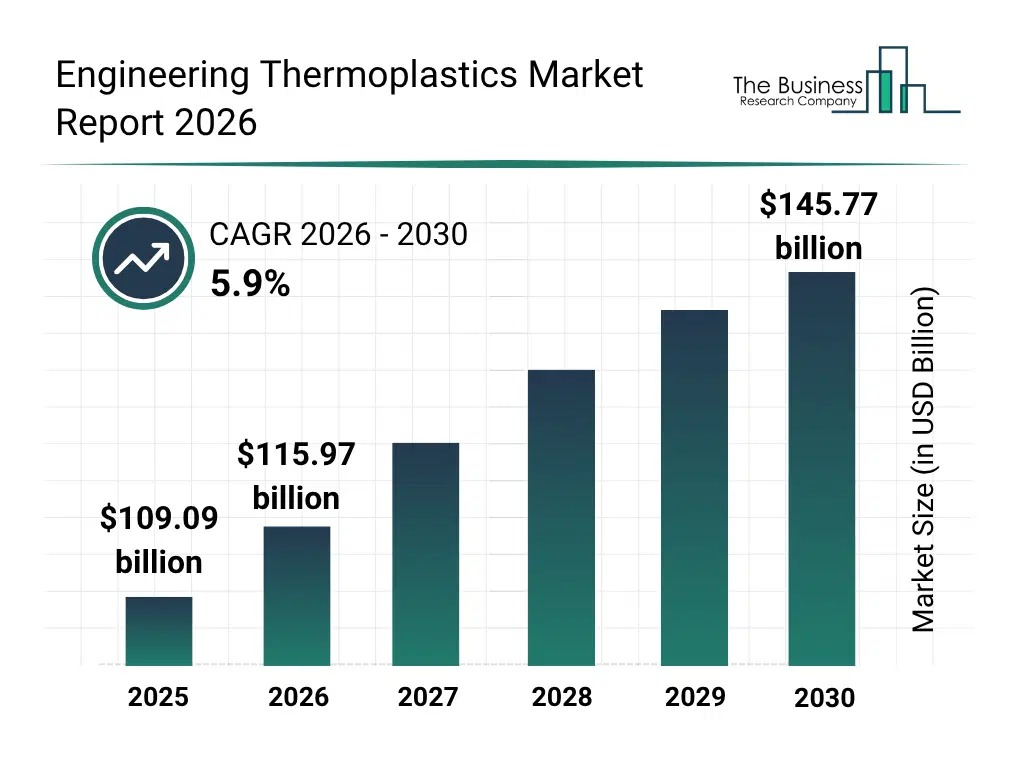
What Is The Engineering Thermoplastics Market Size and Share 2026?
The engineering thermoplastics market size has grown strongly in recent years. It will grow from $109.09 billion in 2025 to $115.97 billion in 2026 at a compound annual growth rate (CAGR) of 6.3%. The growth in the historic period can be attributed to increasing demand for lightweight automotive components, growing adoption of high-performance materials in electronics, rising use of thermoplastics in medical devices, expansion of aerospace component manufacturing, increasing demand for durable and chemically resistant materials.What Is The Engineering Thermoplastics Market Growth Forecast?
The engineering thermoplastics market size is expected to see strong growth in the next few years. It will grow to $145.77 billion in 2030 at a compound annual growth rate (CAGR) of 5.9%. The growth in the forecast period can be attributed to growing electric vehicle production, increasing demand for high-temperature polymer components, rising adoption of additive manufacturing, expanding use of engineering thermoplastics in aerospace applications, increasing demand for recyclable and bio-based polymer materials. Major trends in the forecast period include advanced high-performance polymer formulations, lightweight engineering thermoplastic components, bio-based engineering thermoplastics, flame-retardant thermoplastic development, high-temperature thermoplastic materials.Tariff Impact On Engineering Thermoplastics Market
Tariffs are impacting the engineering thermoplastics market by increasing the cost of imported polymers, additives, reinforcement materials, processing equipment, and specialized manufacturing components. Automotive, electronics and electrical, aerospace and defense, and healthcare applications may face greater cost pressures, particularly in North America, Europe, and Asia-Pacific due to globally interconnected polymer and manufacturing supply chains. Higher input costs may raise component prices and encourage manufacturers to diversify suppliers and expand regional production. However, tariffs can also support domestic polymer manufacturing, localized supply chains, and investment in alternative materials and processing technologies.
Global Engineering Thermoplastics Market Segmentation
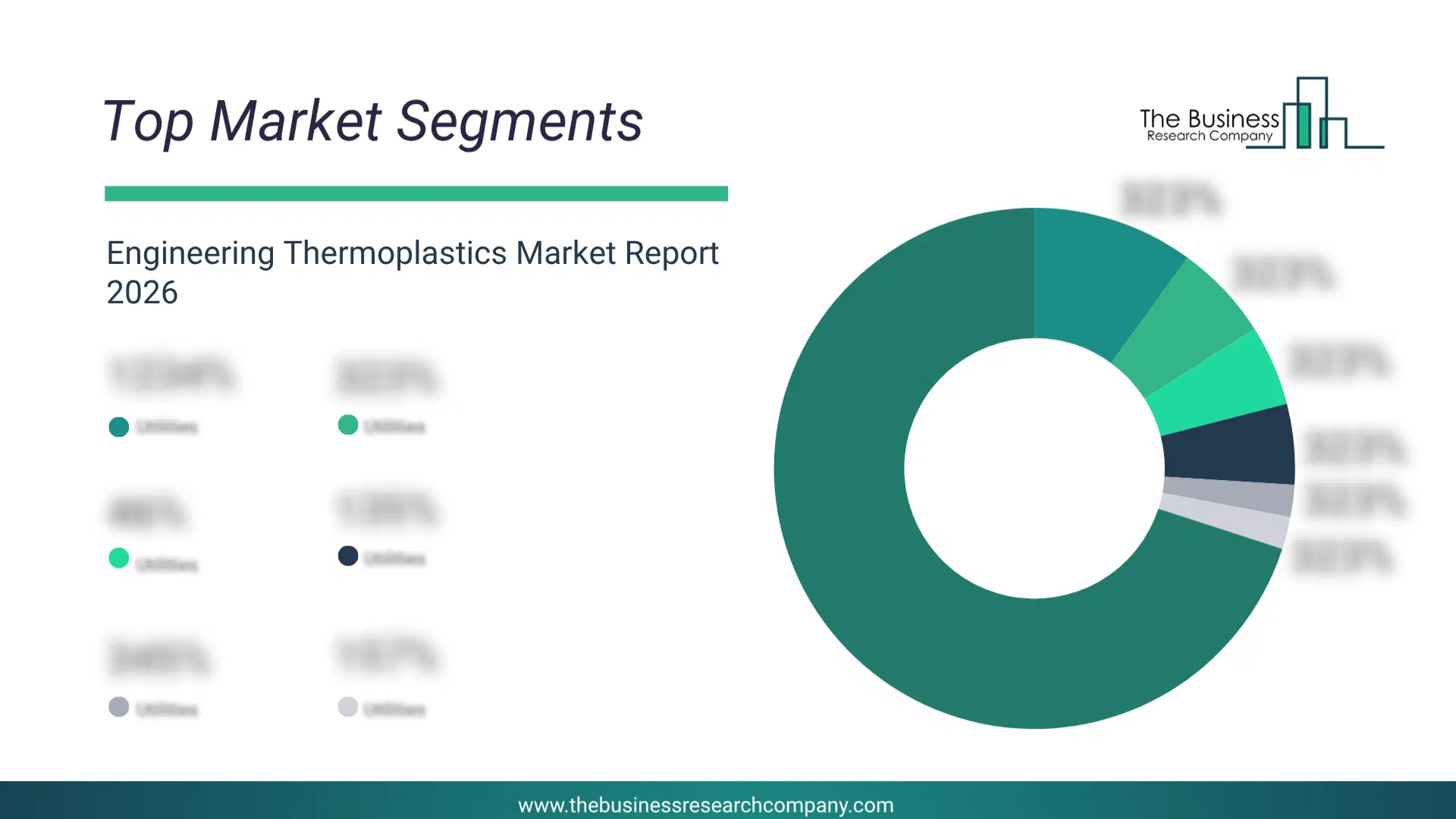
2) By Manufacturing Process: Injection Molding, Extrusion, Blow Molding, 3D Printing, Compression Molding, Other Manufacturing Processes 3) By Distribution Channel: Direct Sales, Distributors And Wholesalers, Online Sales 4) By End User Industry (Final Market): Automotive, Aerospace And Defense, Healthcare, Electronics And Electrical, Construction, Packaging, Other End User Industries Subsegments: 1) By Polyamide (Nylon): Polyamide 6, Polyamide 66, Polyamide 11, Polyamide 12, Bio Based Polyamide 2) By Polycarbonate: General Purpose Polycarbonate, Optical Grade Polycarbonate, Flame Retardant Polycarbonate, Glass Filled Polycarbonate, Ultraviolet Stabilized Polycarbonate 3) By Polyoxymethylene: Polyoxymethylene Homopolymer, Polyoxymethylene Copolymer, Glass Reinforced Polyoxymethylene, High Lubricity Polyoxymethylene, High Stiffness Polyoxymethylene 4) By Polyphenylene Sulfide: Linear Polyphenylene Sulfide, Branched Polyphenylene Sulfide, Glass Fiber Reinforced Polyphenylene Sulfide, Mineral Filled Polyphenylene Sulfide, Conductive Polyphenylene Sulfide 5) By Thermoplastic Polyurethane: Polyester Based Thermoplastic Polyurethane, Polyether Based Thermoplastic Polyurethane, Polycaprolactone Based Thermoplastic Polyurethane, Flame Retardant Thermoplastic Polyurethane, High Abrasion Resistant Thermoplastic Polyurethane 6) By Polyetheretherketone: Unfilled Polyetheretherketone, Glass Filled Polyetheretherketone, Carbon Fiber Reinforced Polyetheretherketone, Bearing Grade Polyetheretherketone, Medical Grade Polyetheretherketone 7) By Other Types: Polyetherimide, Liquid Crystal Polymer, Polysulfone, Polyphenylsulfone, PolyarylateWhat Is The Driver Of The Engineering Thermoplastics Market?
The growing adoption of electric vehicles (EVs) is expected to propel the growth of the engineering thermoplastics market going forward. Electric vehicles (EVs) are automobiles powered fully or partially by electric motors using rechargeable battery systems instead of traditional internal combustion engines. The demand for electric vehicles is increasing due to rising environmental awareness, as electric vehicles offer lower emissions, improved energy efficiency, and reduced dependence on fossil fuels compared to conventional vehicles. Growing adoption of lightweight, high-performance materials is driving demand for engineering thermoplastics by increasing their use in automotive, electrical and electronics, aerospace, and industrial applications, where they offer high strength, heat resistance, chemical resistance, durability, and improved design flexibility. For instance, in July 2026, according to the U.S. Energy Information Administration, a US-based government agency, combined sales of hybrid, plug-in hybrid, and battery electric vehicles (BEVs) reached 24% of total new light-duty vehicle sales in the second quarter of 2026 (2Q26), up from 22% in the second quarter of 2025 (2Q25). Therefore, the growing adoption of electric vehicles (EVs) is driving the growth of the engineering thermoplastics industry.Key Players In The Global Engineering Thermoplastics Market
Major companies operating in the engineering thermoplastics market are BASF SE, LG Chem Ltd., Saudi Basic Industries Corporation, Mitsubishi Chemical Group Corporation, Asahi Kasei Corporation, Toray Industries Inc., Sumitomo Chemical Co. Ltd., Evonik Industries AG, LOTTE Chemical Corporation, Arkema S.A., Celanese Corporation, Syensqo SA, Kuraray Co. Ltd., Avient Corporation, Röchling SE & Co. KG, EMS-CHEMIE Holding AG, Ensinger GmbH, DOMO Chemicals GmbH, Mitsubishi Corporation Plastics Ltd., RTP Company, Radici Novacips S.p.A., Victrex plc.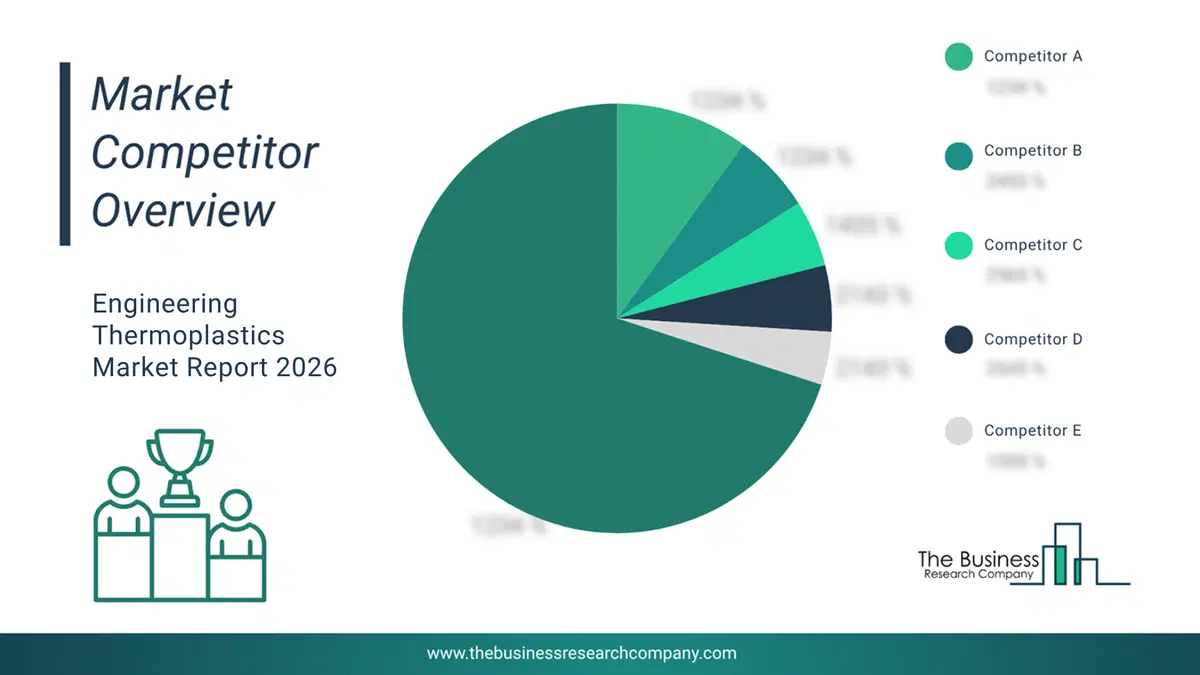
This chart is for illustrative purposes; the full report includes a detailed competitor analysis and comprehensive overview of the top 10 companies in the market.
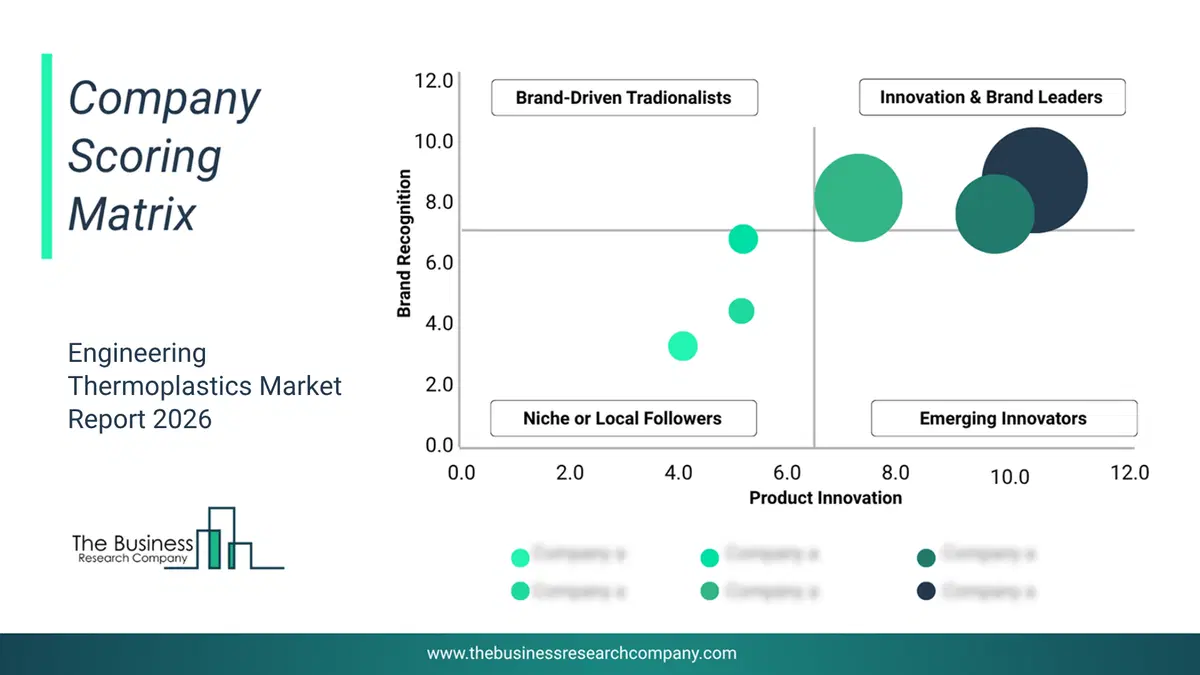
This chart maps companies by product innovation and brand strength, with bubble size indicating relative revenue, helping identify market leaders, challengers, and niche players. This is an illustrative chart; the full report provides a complete and accurate competitive analysis.
Global Engineering Thermoplastics Market Trends and Insights
Major companies operating in the engineering thermoplastics market are focusing on developing innovative products such as, reinforced polymer composites, to enhance lightweighting, thermal stability, dimensional accuracy, mechanical strength, and manufacturing efficiency across high-performance industrial applications. Reinforced polymer composites are advanced engineering thermoplastic materials consisting of high-performance polymer matrices reinforced with carbon or glass fibers to improve stiffness, strength, heat resistance, and dimensional stability compared to conventional thermoplastics, making them suitable for demanding structural and tooling applications. For instance, in 2026, Xenia Materials, an Italy-based high-performance thermoplastic composites manufacturer, launched a portfolio of reinforced pellet-based materials for Large Scale Additive Manufacturing (LSAM). The portfolio includes engineering thermoplastics such as PETG, polycarbonate (PC), high-temperature polycarbonate (PC-HT), ABS, polyetherimide (PEI), polyethersulfone (PESU), polyether ether ketone (PEEK), and polyetherketoneketone (PEKK), reinforced primarily with carbon fiber, while PETG is also available with glass fiber reinforcement. These materials offer a low coefficient of thermal expansion, high rigidity, excellent structural stability, and thermal resistance up to 260°C, enabling the production of lightweight, high-precision tooling and structural components for aerospace, automotive, defense, marine, construction, energy, and transportation applications.What Are Latest Mergers And Acquisitions In The Engineering Thermoplastics Market?
In June 2025, LATI Industria Termoplastici S.p.A., an Italy-based manufacturing company that specializes in providing engineering thermoplastics or technical thermoplastic compounds, partnered with LOXIM Industries Limited to strengthen their presence in the Indian engineering plastics market. Through this partnership, LATI Industria Termoplastici S.p.A. and LOXIM Industries Limited aim to combine LATI’s advanced engineering polymer technologies with LOXIM’s manufacturing capabilities and market presence in India, expand the supply of high-performance engineering plastics for the electrical and electronics (E&E), home appliances, automotive, and e-mobility sectors, and support the development of customized, sustainable polymer solutions through local production and technical expertise. LOXIM Industries Limited is an India-based specialty chemicals and engineering plastics manufacturer with expertise in polymer compounding and a strong presence in the automotive and electrical industries.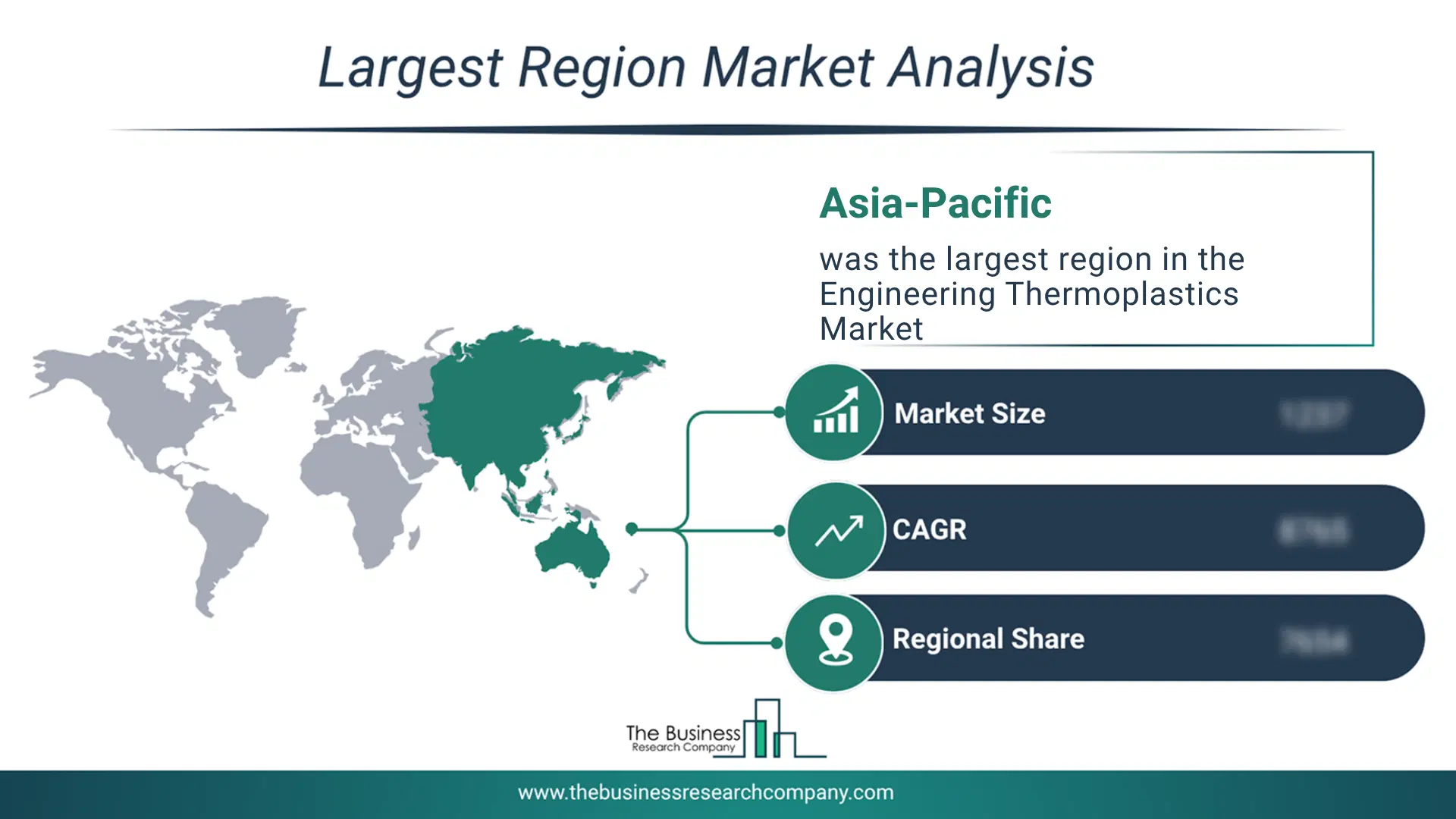
Regional Outlook/Insights
Asia-Pacific was the largest region in the engineering thermoplastics market in 2025. Asia-Pacific is expected to be the fastest-growing region in the forecast period. The regions covered in this market report are Asia-Pacific, South East Asia, Western Europe, Eastern Europe, North America, South America, Middle East, Africa. The countries covered in this market report are Australia, Brazil, China, France, Germany, India, Indonesia, Japan, Taiwan, Russia, South Korea, UK, USA, Canada, Italy, Spain.What Defines the Engineering Thermoplastics Market?
The engineering thermoplastics market consists of sales of thermoplastic compounds, reinforced thermoplastic materials, flame-retardant thermoplastic materials, impact-modified thermoplastics, transparent thermoplastic materials, and high-temperature resistant thermoplastics. Values in this market are ‘factory gate’ values, that is, the value of goods sold by the manufacturers or creators of the goods, whether to other entities (including downstream manufacturers, wholesalers, distributors, and retailers) or directly to end customers. The value of goods in this market includes related services sold by the creators of the goods.How is Market Value Defined and Measured?
The market value is defined as the revenues that enterprises gain from the sale of goods and/or services within the specified market and geography through sales, grants, or donations in terms of the currency (in USD unless otherwise specified). The revenues for a specified geography are consumption values that are revenues generated by organizations in the specified geography within the market, irrespective of where they are produced. It does not include revenues from resales along the supply chain, either further along the supply chain or as part of other products.
This chart presents market attractiveness based on a quantitative evaluation of growth, competition, strategic alignment, and risk, offering a clear view of opportunity areas for decision-making. This chart is for illustrative purposes; the full report contains the complete analysis.

This chart highlights the Total Addressable Market (TAM) by estimating the maximum revenue opportunity using an assumption-driven approach, supporting strategic planning and opportunity sizing across markets. The chart is illustrative; the full report provides a more comprehensive analysis.
What Key Data and Analysis Are Included in the Engineering Thermoplastics Market Report 2026?
The engineering thermoplastics market research report is one of a series of new reports from The Business Research Company that provides market statistics, including industry global market size, regional shares, competitors with the market share, detailed market segments, market trends and opportunities, and any further data you may need to thrive in the engineering thermoplastics industry. The market research report delivers a complete perspective of everything you need, with an in-depth analysis of the current and future state of the industry.Engineering Thermoplastics Market Report Forecast Analysis
| Report Attribute | Details |
|---|---|
| Market Size Value In 2026 | $115.97 billion |
| Revenue Forecast In 2030 | $145.77 billion |
| Growth Rate | CAGR of 5.9% from 2026 to 2035 |
| Base Year For Estimation | 2025 |
| Actual Estimates/Historical Data | 2020-2025 |
| Forecast Period | 2026 - 2030 |
| Market Representation | Revenue in USD Billion and CAGR from 2026 to 2030 |
| Segments Covered | Type, Manufacturing Process, Distribution Channel, End User Industry (Final Market) |
| Regional Scope | Asia-Pacific, Western Europe, Eastern Europe, North America, South America, Middle East, Africa |
| Country Scope | The countries covered in the report are Australia, Brazil, China, France, Germany, India, Indonesia, Japan, Taiwan, Russia, South Korea, UK, USA, Canada, Italy, Spain. |
| Customization Scope | Request for Customization |
| Pricing And Purchase Options | Explore Purchase Options |