

Enzyme Inhibitor Market Report 2026
Global Outlook – By Type (Proton Pump Inhibitors (PPIs), Protease Inhibitors, Reverse Transcriptase Inhibitors, Aromatase Inhibitors, Kinase Inhibitors, Neuraminidase Inhibitors, Statins, Other Types), By Disease Indication (Chronic Obstructive Pulmonary Disorders, Cardiovascular Disease, Gastrointestinal Disorders, Arthritis, Inflammatory Diseases, Other Disease Indications), By Application (Chemotherapy, Antibiotics, Pesticides, Cardiovascular Treatments, Other Applications), By End User (Pharmaceutical, Biotechnology, Food And Beverage, Other End Users) – Market Size, Trends, Strategies, and Forecast to 2030
Enzyme Inhibitor Market Overview
• Enzyme Inhibitor market size has reached to $187.4 billion in 2025 • Expected to grow to $232.06 billion in 2030 at a compound annual growth rate (CAGR) of 4.4% • Growth Driver: Enzyme Inhibitors Catalyzing Growth In The Era Of Personalized Medicine • Market Trend: Rising Trend Strategic Collaborations Driving Innovation And Market Expansion In The Enzyme Inhibitor Industry • North America was the largest region in 2025 and Asia-Pacific is the fastest growing region.What Is Covered Under Enzyme Inhibitor Market?
Enzyme inhibitor refers to a chemical that inhibits an enzyme's activity. Enzymes participate in a variety of cell processes, including cell signaling, growth, and division, as well as accelerating chemical reactions in the body. Enzymes help to speed up chemical reactions in the body and take part in many cell functions, including cell signaling, growth, and division. The main types of enzyme inhibitors are proton pump inhibitors (PPIs), protease inhibitors, reverse transcriptase inhibitors, aromatase inhibitors, kinase inhibitors, neuraminidase inhibitors, statins, and other types. Proton pump inhibitors refer to medicines that work by decreasing the amount of stomach acid made by glands in the lining of the stomach. The various disease indications include chronic obstructive pulmonary disorders, cardiovascular disease, gastrointestinal disorders, arthritis, inflammatory diseases, and others. The enzyme inhibitors are applicable in chemotherapy, antibiotics, pesticides, cardiovascular treatments, and others and are used in pharmaceuticals, biotechnology, food and beverage, and other end users.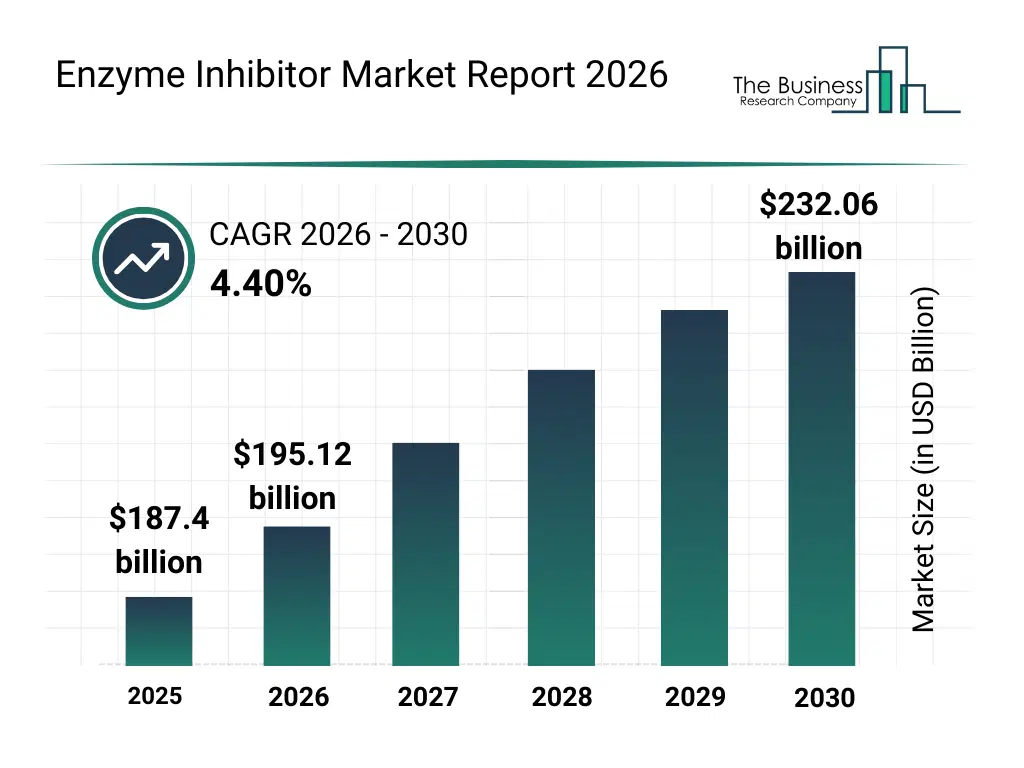
What Is The Enzyme Inhibitor Market Size and Share 2026?
The enzyme inhibitor market size has grown steadily in recent years. It will grow from $187.4 billion in 2025 to $195.12 billion in 2026 at a compound annual growth rate (CAGR) of 4.1%. The growth in the historic period can be attributed to increasing prevalence of chronic diseases, growth in pharmaceutical r&d spending, strong demand for ppIs and statins, rising aging population, expansion of generic enzyme inhibitor drugs.What Is The Enzyme Inhibitor Market Growth Forecast?
The enzyme inhibitor market size is expected to see steady growth in the next few years. It will grow to $232.06 billion in 2030 at a compound annual growth rate (CAGR) of 4.4%. The growth in the forecast period can be attributed to advancement in precision medicine, increasing oncology drug pipelines, growing biotech industry investments, rising demand for personalized therapies, expanding applications in non-pharma sectors. Major trends in the forecast period include rising adoption of targeted enzyme inhibitor therapies, expansion of enzyme inhibitors in chronic disease management, increased r&d focus on selective and safer inhibitors, growing use of enzyme inhibitors beyond therapeutics, shift toward combination drug therapies.
Global Enzyme Inhibitor Market Segmentation
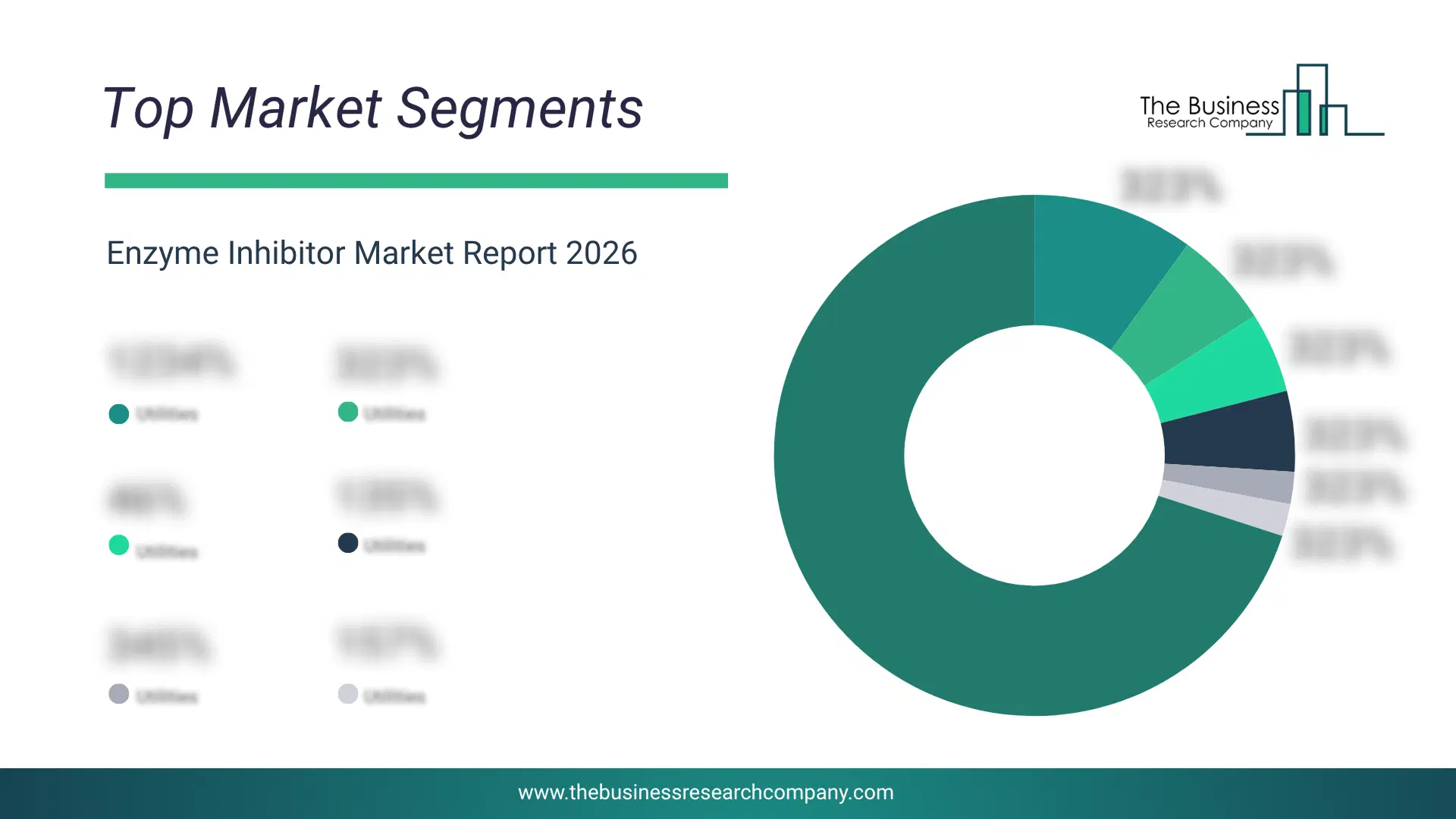
1) By Type: Proton Pump Inhibitors (PPIs), Protease Inhibitors, Reverse Transcriptase Inhibitors, Aromatase Inhibitors, Kinase Inhibitors, Neuraminidase Inhibitors, Statins, Other Types 2) By Disease Indication: Chronic Obstructive Pulmonary Disorders, Cardiovascular Disease, Gastrointestinal Disorders, Arthritis, Inflammatory Diseases, Other Disease Indications 3) By Application: Chemotherapy, Antibiotics, Pesticides, Cardiovascular Treatments, Other Applications 4) By End User: Pharmaceutical, Biotechnology, Food And Beverage, Other End Users Subsegments: 1) By Proton Pump Inhibitors (PPIs): Omeprazole, Esomeprazole, Lansoprazole, Pantoprazole, Rabeprazole 2) By Protease Inhibitors: Ritonavir, Lopinavir, Atazanavir, Saquinavir, Darunavir 3) By Reverse Transcriptase Inhibitors: NRTIs (Nucleoside Reverse Transcriptase Inhibitors), NNRTIs (Non-Nucleoside Reverse Transcriptase Inhibitors) 4) By Aromatase Inhibitors: Anastrozole, Letrozole, Exemestane 5) By Kinase Inhibitors: BCR-ABL Inhibitors, EGFR Inhibitors, ALK Inhibitors, MEK Inhibitors 6) By Neuraminidase Inhibitors: Oseltamivir, Zanamivir, Peramivir 7) By Statins: Atorvastatin, Simvastatin, Rosuvastatin, Lovastatin 8) By Other Types: Antifolates, Phosphodiesterase Inhibitors, Cyclooxygenase InhibitorsWhat Is The Driver Of The Enzyme Inhibitor Market?
The increasing demand for personalized medicine is expected to propel the growth of the enzyme inhibitor market in the coming years. Personalized medicine, also referred to as precision medicine, is a healthcare and treatment approach that considers an individual's specific genetic makeup, environment, and lifestyle. The growing adoption of personalized medicine is driven by advancements in targeted therapies, precision diagnostics, and drug discovery, where enzyme inhibitors play a critical role by being tailored to specific patients or disease subtypes. For instance, in February 2024, according to the Personalised Medicine Coalition, a US-based hospital and health care organization, in 2023, the FDA approved 16 new personalized treatments for rare disease patients, up from 6 in 2022. Therefore, the increasing demand for personalized medicine is driving the growth of the enzyme inhibitor industry.Key Players In The Global Enzyme Inhibitor Market
Major companies operating in the enzyme inhibitor market are Abbott Laboratories, Amgen Inc., AstraZeneca plc, Bayer AG, F. Hoffmann-La Roche AG, Pfizer Inc., Takeda Pharmaceutical Company, Merck and Co. Inc., Eli Lilly and Company, Bristol-Myers Squibb Company, Cipla USA Inc., AbbVie Inc., Teva Pharmaceutical Industries Ltd., Janssen Pharmaceuticals, Acellera Ltd., BioSolveIT GmbH, Cresset BioMolecular Discovery Ltd., Dotmatics Limited, Inte:Ligand GmbH, LeadIT, Chemical Computing Group Inc.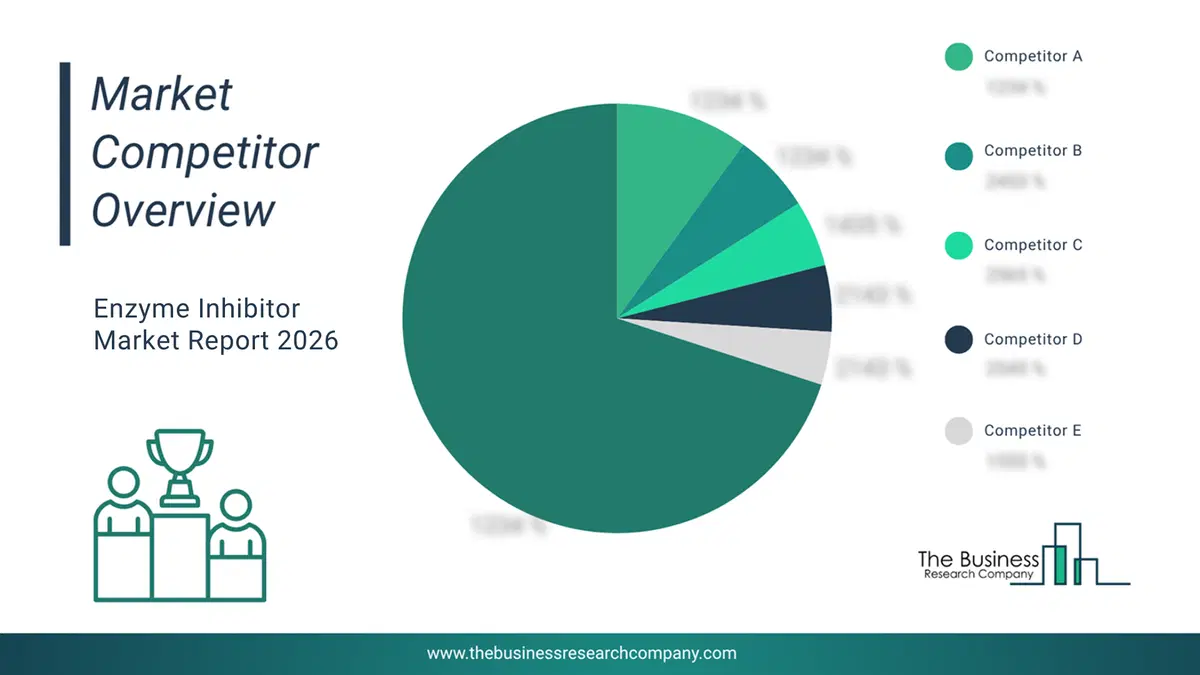
This chart is for illustrative purposes; the full report includes a detailed competitor analysis and comprehensive overview of the top 10 companies in the market.
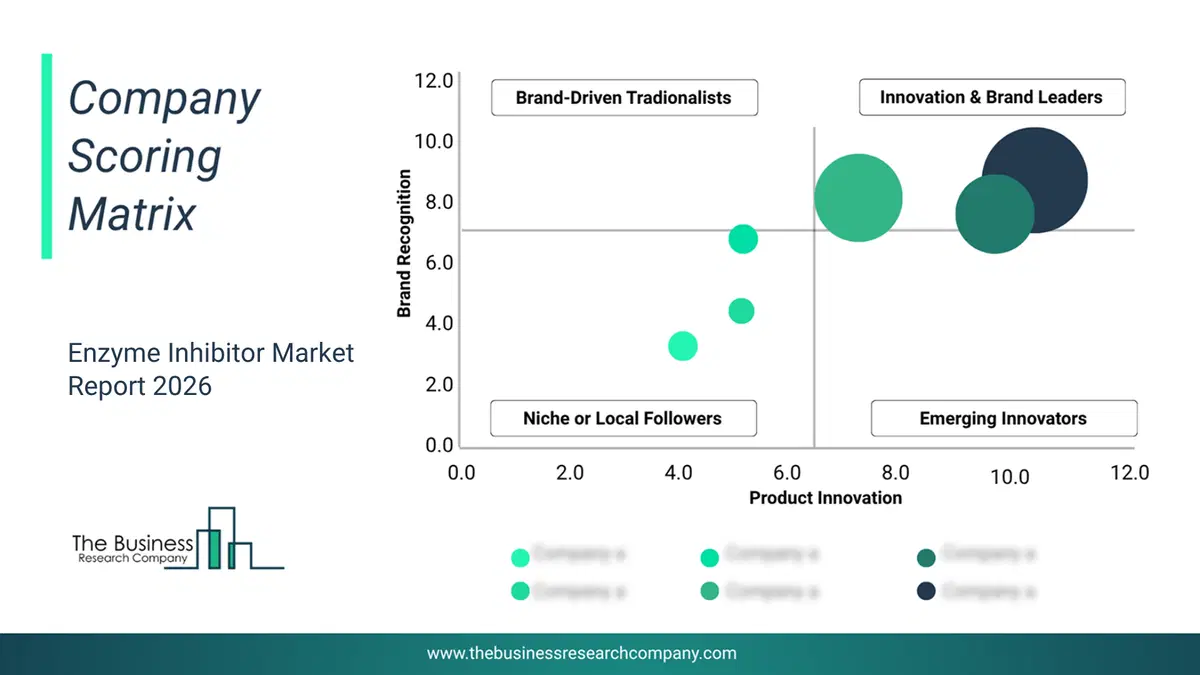
This chart maps companies by product innovation and brand strength, with bubble size indicating relative revenue, helping identify market leaders, challengers, and niche players. This is an illustrative chart; the full report provides a complete and accurate competitive analysis.
Global Enzyme Inhibitor Market Trends and Insights
Major companies in the enzyme inhibitor market are focusing on innovative therapies, such as selective kinase inhibitors, to improve treatment options and patient outcomes across various diseases. Jaypirca (pirtobrutinib) is a highly selective, non-covalent Bruton's tyrosine kinase (BTK) inhibitor approved by the FDA for treating adult patients with relapsed or refractory mantle cell lymphoma after at least two prior systemic therapies. For instance, in January 2023, Loxo Oncology at Lilly, the oncology unit of Eli Lilly and Company, a US-based pharmaceutical companylaunched Jaypirca tablets, the first and only non-covalent (reversible) Bruton's tyrosine kinase (BTK) inhibitor approved by the Food and Drug Administration, a US-based health organization. This approval represents a significant advancement for patients with MCL who have limited treatment options after progressing on existing therapies. Jaypirca provides a novel approach to targeting the BTK pathway, potentially improving outcomes for this patient population.What Are Latest Mergers And Acquisitions In The Enzyme Inhibitor Market?
In August 2024, Eli Lilly and Company, a US-based pharmaceutical company, acquired Morphic Holding, Inc. for an undisclosed amount. With the acquisition, Eli Lilly aims to expand its therapeutic portfolio in gastroenterology, innovate treatment options for inflammatory bowel disease, strengthen its market position, leverage research synergies, and broaden patient access to effective therapies. Morphic Holding Inc. is a US-based biopharmaceutical company that develops enzyme inhibitors.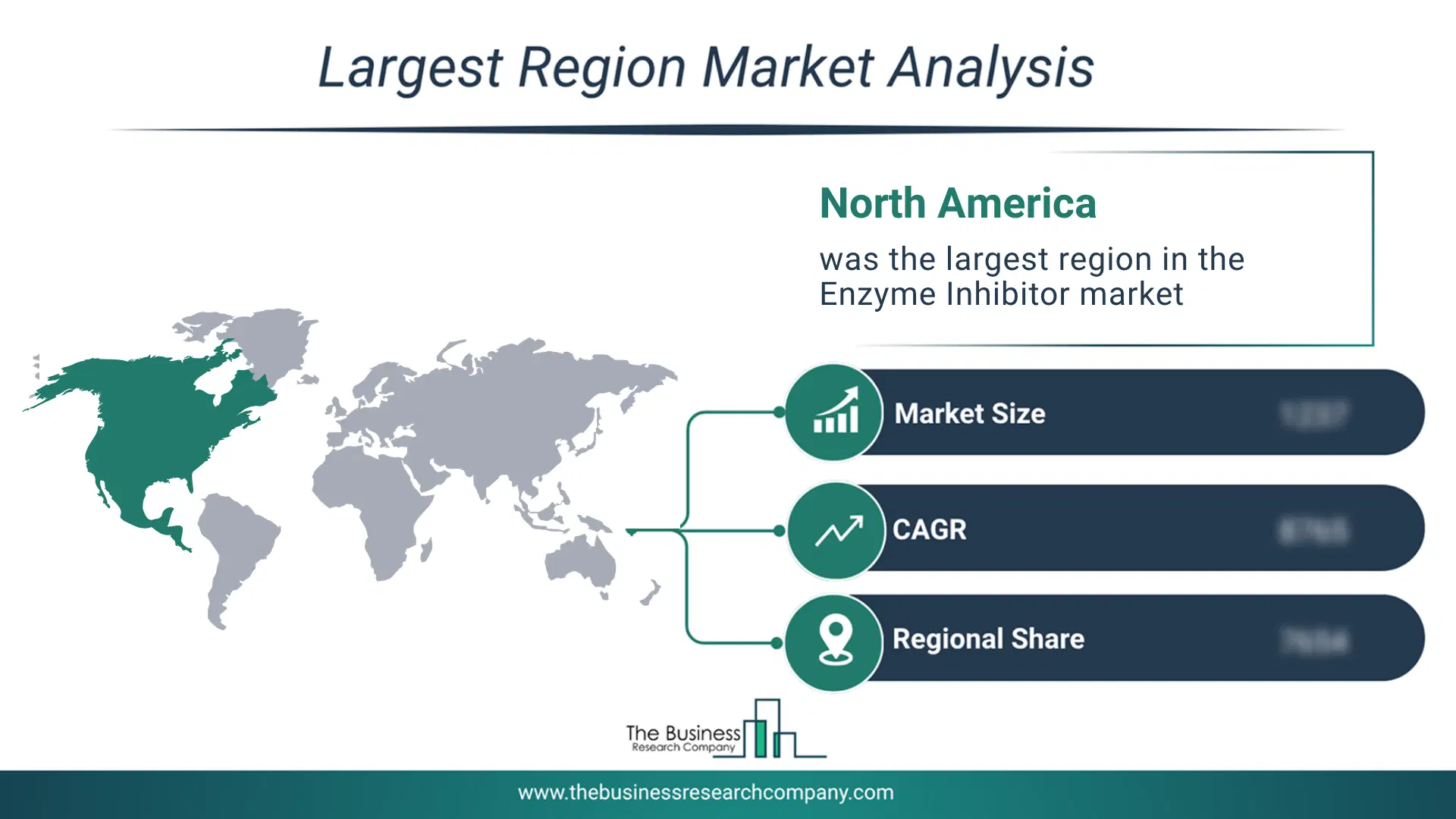
Regional Insights
North America was the largest region in the enzyme inhibitor market in 2025. Asia-Pacific is expected to be the fastest-growing region in the forecast period. The regions covered in this market report are Asia-Pacific, South East Asia, Western Europe, Eastern Europe, North America, South America, Middle East, Africa. The countries covered in this market report are Australia, Brazil, China, France, Germany, India, Indonesia, Japan, Taiwan, Russia, South Korea, UK, USA, Canada, Italy, Spain.What Defines the Enzyme Inhibitor Market?
The enzyme inhibitor market consists of sales of competitive, noncompetitive, and uncompetitive inhibitors. Values in this market are ‘factory gate’ values, that is the value of goods sold by the manufacturers or creators of the goods, whether to other entities (including downstream manufacturers, wholesalers, distributors and retailers) or directly to end customers. The value of goods in this market includes related services sold by the creators of the goods.How is Market Value Defined and Measured?
The market value is defined as the revenues that enterprises gain from the sale of goods and/or services within the specified market and geography through sales, grants, or donations in terms of the currency (in USD unless otherwise specified). The revenues for a specified geography are consumption values that are revenues generated by organizations in the specified geography within the market, irrespective of where they are produced. It does not include revenues from resales along the supply chain, either further along the supply chain or as part of other products.
This chart presents market attractiveness based on a quantitative evaluation of growth, competition, strategic alignment, and risk, offering a clear view of opportunity areas for decision-making. This chart is for illustrative purposes; the full report contains the complete analysis.

This chart highlights the Total Addressable Market (TAM) by estimating the maximum revenue opportunity using an assumption-driven approach, supporting strategic planning and opportunity sizing across markets. The chart is illustrative; the full report provides a more comprehensive analysis.
What Key Data and Analysis Are Included in the Enzyme Inhibitor Market Report 2026?
The enzyme inhibitor market research report is one of a series of new reports from The Business Research Company that provides market statistics, including industry global market size, regional shares, competitors with the market share, detailed market segments, market trends and opportunities, and any further data you may need to thrive in the enzyme inhibitor industry. The market research report delivers a complete perspective of everything you need, with an in-depth analysis of the current and future state of the industry.Enzyme Inhibitor Market Report Forecast Analysis
| Report Attribute | Details |
|---|---|
| Market Size Value In 2026 | $195.12 billion |
| Revenue Forecast In 2030 | $232.06 billion |
| Growth Rate | CAGR of 4.1% from 2026 to 2030 |
| Base Year For Estimation | 2025 |
| Actual Estimates/Historical Data | 2020-2025 |
| Forecast Period | 2026 - 2030 |
| Market Representation | Revenue in USD Billion and CAGR from 2026 to 2030 |
| Segments Covered | Type, Disease Indication, Application, End User |
| Regional Scope | Asia-Pacific, Western Europe, Eastern Europe, North America, South America, Middle East, Africa |
| Country Scope | The countries covered in the report are Australia, Brazil, China, France, Germany, India, Indonesia, Japan, Taiwan, Russia, South Korea, UK, USA, Canada, Italy, Spain. |
| Key Companies Profiled | Abbott Laboratories, Amgen Inc., AstraZeneca plc, Bayer AG, F. Hoffmann-La Roche AG, Pfizer Inc., Takeda Pharmaceutical Company, Merck and Co. Inc., Eli Lilly and Company, Bristol-Myers Squibb Company, Cipla USA Inc., AbbVie Inc., Teva Pharmaceutical Industries Ltd., Janssen Pharmaceuticals, Acellera Ltd., BioSolveIT GmbH, Cresset BioMolecular Discovery Ltd., Dotmatics Limited, Inte:Ligand GmbH, LeadIT, Chemical Computing Group Inc. |
| Customization Scope | Request for Customization |
| Pricing And Purchase Options | Explore Purchase Options |