
Enzyme Replacement Therapy For Rare Lysosomal Storage Disorders Market Report 2026
Global Outlook – By Therapy Type (Recombinant Enzyme Replacement Therapy, Pegylated Enzyme Replacement Therapy, Fusion Protein Enzyme Therapy, Next Generation Enzyme Therapies), By Disease Type (Gaucher Disease, Fabry Disease, Pompe Disease, Mucopolysaccharidoses, Niemann Pick Disease, Other Rare Lysosomal Storage Disorders), By Route Of Administration (Intravenous Infusion, Subcutaneous Or Alternative Injectables), By End User (Pediatric Hospitals, Specialty Rare Disease Clinics, Academic Medical Centers, Home Infusion Services) – Market Size, Trends, Strategies, and Forecast to 2030
Enzyme Replacement Therapy For Rare Lysosomal Storage Disorders Market Report 2026 Market Overview
• Enzyme Replacement Therapy For Rare Lysosomal Storage Disorders Market Report 2026 market size has reached to $4.19 billion in 2025 • Expected to grow to $7.24 billion in 2030 at a compound annual growth rate (CAGR) of 11.5% • Growth Driver: The Increasing Healthcare Investment In Rare Diseases Fuels The Market Growth Due To Growing Focus On Orphan Therapies • Market Trend: Extended-Release Enzyme Therapy Advances Improve Treatment Durability And Reduce Dosing Burden In Lysosomal Storage Disorders • North America was the largest region in 2025 and Asia-Pacific is the fastest growing region.What Is Covered Under Enzyme Replacement Therapy For Rare Lysosomal Storage Disorders Market?
Enzyme replacement therapy (ERT) for rare lysosomal storage disorders refers to a medical treatment in which a synthetic or recombinant version of a missing or deficient enzyme is administered to patients. This therapy helps restore the enzyme’s normal function, reducing the accumulation of toxic substances in cells and alleviating symptoms of disorders caused by lysosomal enzyme deficiencies. The main therapy types of enzyme replacement therapy for rare lysosomal storage disorders include recombinant enzyme replacement therapy, pegylated enzyme replacement therapy, fusion protein enzyme therapy, and next generation enzyme therapies. Recombinant enzyme replacement therapy refers to biologically engineered enzymes designed to replace deficient or missing enzymes in patients with lysosomal storage disorders to restore normal cellular function. These therapies are used for disease types including Gaucher disease, Fabry disease, Pompe disease, mucopolysaccharidoses, Niemann Pick disease, and other rare lysosomal storage disorders. They are administered through routes such as intravenous infusion and subcutaneous or alternative injectables while the end-users pediatric hospitals, specialty rare disease clinics, academic medical centers, and home infusion services.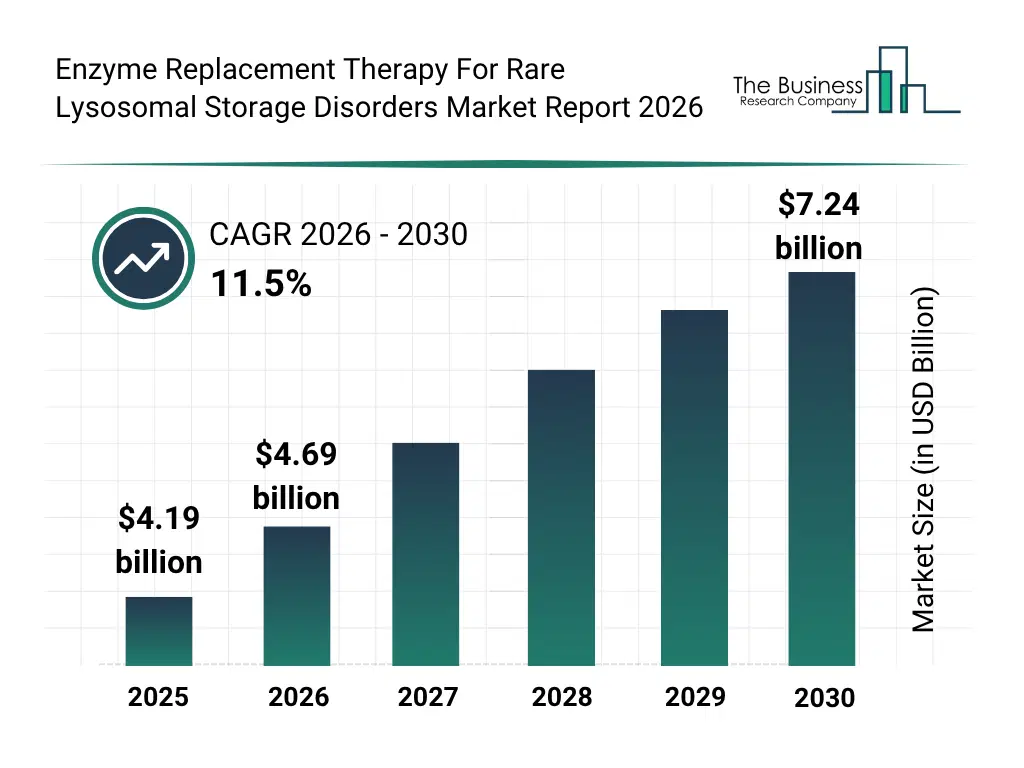
What Is The Enzyme Replacement Therapy For Rare Lysosomal Storage Disorders Market Size and Share 2026?
The enzyme replacement therapy for rare lysosomal storage disorders market size has grown rapidly in recent years. It will grow from $4.19 billion in 2025 to $4.69 billion in 2026 at a compound annual growth rate (CAGR) of 11.9%. The growth in the historic period can be attributed to rising diagnosis rates of rare lysosomal storage disorders, increasing availability of recombinant biologic therapies, expansion of rare disease awareness programs, growth in pediatric genetic screening initiatives, increasing healthcare expenditure on specialty biologics.What Is The Enzyme Replacement Therapy For Rare Lysosomal Storage Disorders Market Growth Forecast?
The enzyme replacement therapy for rare lysosomal storage disorders market size is expected to see rapid growth in the next few years. It will grow to $7.24 billion in 2030 at a compound annual growth rate (CAGR) of 11.5%. The growth in the forecast period can be attributed to advancement in gene editing and enzyme engineering technologies, increasing adoption of personalized rare disease treatment approaches, rising investment in orphan drug development, expansion of global rare disease treatment infrastructure, growth in home based infusion and patient centric care models. Major trends in the forecast period include next generation gene edited enzyme replacement therapies for improved cellular uptake and efficacy, pegylated long acting enzyme formulations for reduced infusion frequency and improved patient compliance, nanoparticle based enzyme delivery systems enhancing tissue targeting in lysosomal storage disorders, personalized precision medicine approaches for rare disease enzyme dosing optimization, recombinant enzyme production using advanced mammalian and plant expression systems for higher yield and stability.
Global Enzyme Replacement Therapy For Rare Lysosomal Storage Disorders Market Segmentation
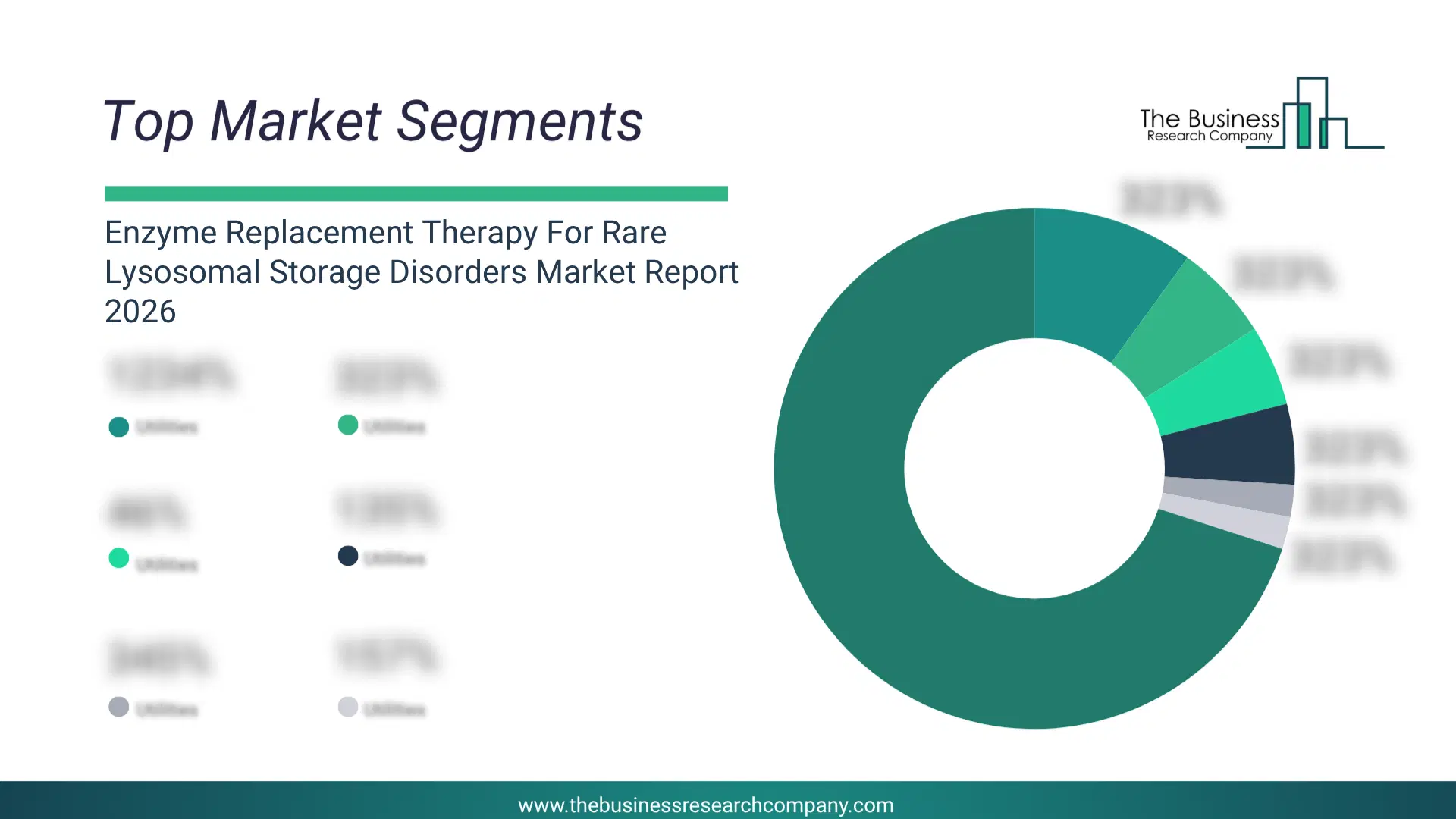
1) By Therapy Type: Recombinant Enzyme Replacement Therapy, Pegylated Enzyme Replacement Therapy, Fusion Protein Enzyme Therapy, Next Generation Enzyme Therapies 2) By Disease Type: Gaucher Disease, Fabry Disease, Pompe Disease, Mucopolysaccharidoses, Niemann Pick Disease, Other Rare Lysosomal Storage Disorders 3) By Route Of Administration: Intravenous Infusion, Subcutaneous Or Alternative Injectables 4) By End User: Pediatric Hospitals, Specialty Rare Disease Clinics, Academic Medical Centers, Home Infusion Services Subsegments: 1) By Recombinant Enzyme Replacement Therapy: Mammalian Cell Derived Recombinant Enzymes, Yeast Derived Recombinant Enzymes, Plant Cell Based Recombinant Enzymes, Bacterial Expression System Derived Enzymes, Insect Cell Expression Derived Enzymes 2) By Pegylated Enzyme Replacement Therapy: Linear Pegylated Enzyme Formulations, Branched Pegylated Enzyme Formulations, Site Specific Pegylated Enzyme Formulations, Long Acting Pegylated Enzyme Formulations 3) By Fusion Protein Enzyme Therapy: Immunoglobulin Fragment Fusion Enzymes, Albumin Fusion Enzymes, Receptor Targeted Fusion Enzymes, Transport Mediated Fusion Enzymes 4) By Next Generation Enzyme Therapies: Gene Edited Enzyme Therapies, Messenger Ribonucleic Acid Based Enzyme Expression Therapies, Nanoparticle Delivered Enzyme Therapies, Engineered High Stability Enzyme VariantsWhat Are The Drivers Of The Enzyme Replacement Therapy For Rare Lysosomal Storage Disorders Market?
The increasing healthcare investment in rare diseases is expected to propel the growth of the enzyme replacement therapy for rare lysosomal storage disorders market going forward. Healthcare investment in rare diseases refers to the allocation of funds toward researching, developing, and providing treatments for uncommon medical conditions that affect a small percentage of the population. Healthcare investment in rare diseases is rising due to increasing government incentives such as orphan drug policies, tax credits, and regulatory support, which encourage pharmaceutical companies to invest in the development of treatments for small and underserved patient populations. Healthcare investment in rare diseases enables enzyme replacement therapy for rare lysosomal storage disorders by funding early diagnosis, advancing recombinant enzyme research, strengthening orphan drug development, improving reimbursement and patient access, and expanding specialized treatment infrastructure, accelerating therapy availability and market growth. For instance, in April 2024, according to Global Genes, a US-based nonprofit organization, companies developing drugs for rare diseases raised $7.1 billion through public equity and debt financings in the first quarter of 2024, a 307% surge compared to the $1.8 billion raised in the same period of 2023. Therefore, the increasing healthcare investment in rare diseases is driving the growth of the enzyme replacement therapy for rare lysosomal storage disorders industry. The growing use of personalized medicine approaches is expected to propel the growth of the enzyme replacement therapy for rare lysosomal storage disorders market going forward. Personalized medicine approaches involve tailoring medical treatments and therapeutic strategies to an individual's genetic profile, disease characteristics, and biological markers to achieve more effective clinical outcomes. Personalized medicine approaches are rising due to advancements in genetic testing technologies, which enable healthcare providers to identify disease-causing mutations more accurately and select treatments that are better suited to an individual patient's biological profile. The growing use of personalized medicine approaches supports enzyme replacement therapy for rare lysosomal storage disorders by enabling precise genetic diagnosis, allowing clinicians to identify the specific enzyme deficiency responsible for the disease and initiate the most appropriate enzyme replacement treatment at an earlier stage. For instance, in February 2024, according to the Personalized Medicine Coalition, a US-based non-profit organization, in 2023, the FDA approved 16 new personalized therapies for patients with rare diseases, marking a substantial rise from the six approvals recorded in 2022. Therefore, the growing use of personalized medicine approaches is driving the growth of the enzyme replacement therapy for rare lysosomal storage disorders industry.Key Players In The Global Enzyme Replacement Therapy For Rare Lysosomal Storage Disorders Market
Major companies operating in the enzyme replacement therapy for rare lysosomal storage disorders market report are Sanofi SA, Takeda Pharmaceutical Company Limited, Pfizer Inc., Chiesi Farmaceutici S.p.A., BioMarin Pharmaceutical Inc., GC Biopharma Corp., Ultragenyx Pharmaceutical Inc., Amicus Therapeutics Inc., JCR Pharmaceuticals Co. Ltd., Protalix BioTherapeutics Inc., ISU ABXIS Co. Ltd., Eleva GmbH, M6P Therapeutics, Denali Therapeutics Inc.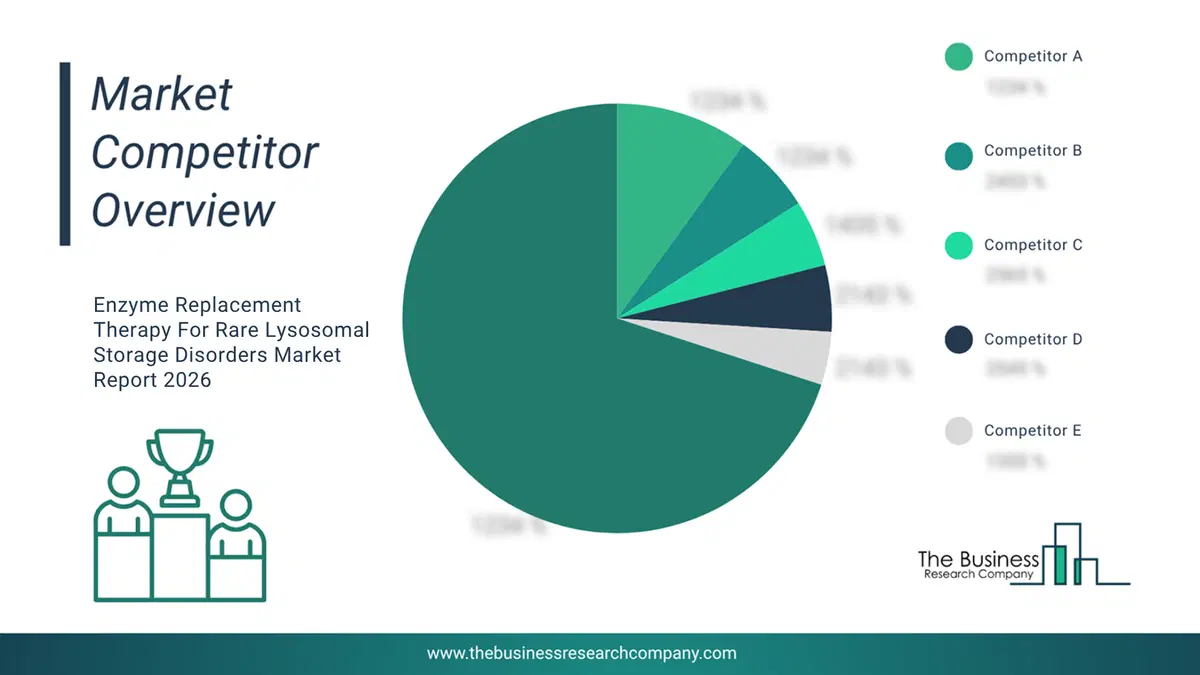
This chart is for illustrative purposes; the full report includes a detailed competitor analysis and comprehensive overview of the top 10 companies in the market.
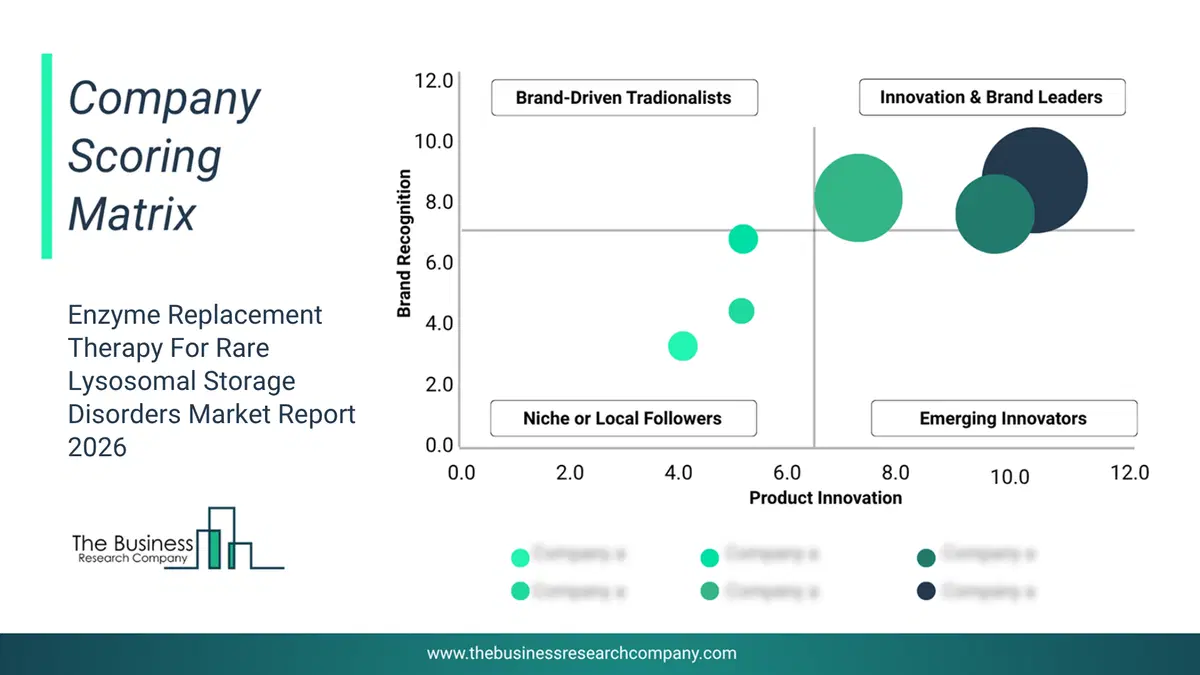
This chart maps companies by product innovation and brand strength, with bubble size indicating relative revenue, helping identify market leaders, challengers, and niche players. This is an illustrative chart; the full report provides a complete and accurate competitive analysis.
Global Enzyme Replacement Therapy For Rare Lysosomal Storage Disorders Market Trends and Insights
Major companies operating in the enzyme replacement therapy for rare lysosomal storage disorders market are focusing developing innovative therapies, such as long-acting enzyme replacement therapy to improve treatment durability, enhance patient compliance, and reduce dosing frequency while maintaining sustained therapeutic efficacy. Long-acting enzyme replacement therapy is a modified form of standard enzyme replacement treatment designed to remain active in the body for a longer period, allowing less frequent dosing while still replacing the deficient or missing enzyme in patients with conditions such as lysosomal storage disorders. For instance, in May 2023, Chiesi Farmaceutici S.p.A., an Italy-based biopharmaceutical company, in a partnership with Protalix BioTherapeutics Inc., an Israel-based biopharmaceutical company, received U.S. Food and Drug Administration approval for Elfabrio (pegunigalsidase alfa) for the treatment of adult patients with Fabry disease. Elfabrio is a PEGylated recombinant human α-galactosidase-A enzyme expressed in plant-cell culture, designed to provide enhanced enzyme stability and an extended half-life. The therapy is intended to support long-term disease management and expand treatment options for Fabry disease patients by improving therapeutic durability and enzyme replacement efficacy.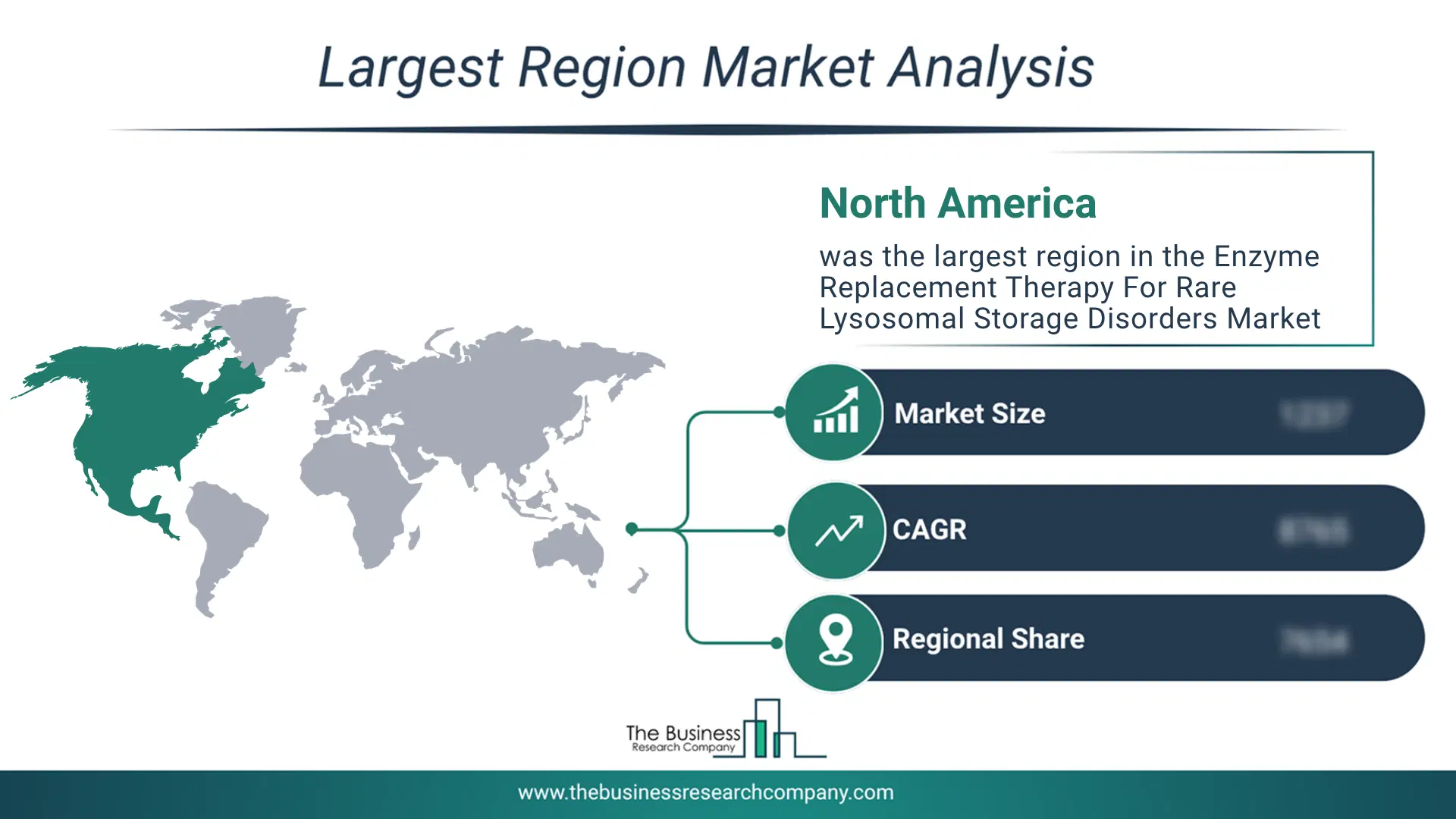
Regional Outlook
North America was the largest region in the enzyme replacement therapy for rare lysosomal storage disorders market in 2025. Asia-Pacific is expected to be the fastest-growing region in the forecast period. The regions covered in this market report are Asia-Pacific, South East Asia, Western Europe, Eastern Europe, North America, South America, Middle East, Africa. The countries covered in this market report are Australia, Brazil, China, France, Germany, India, Indonesia, Japan, Taiwan, Russia, South Korea, UK, USA, Canada, Italy, Spain.What Defines the Enzyme Replacement Therapy For Rare Lysosomal Storage Disorders Market?
The enzyme replacement therapy for rare lysosomal storage disorders market consists of revenues earned by entities by providing services such as clinical administration services, drug development and manufacturing services, diagnostic and screening services, patient monitoring and disease management services, and specialty pharmacy and distribution services. The market value includes the value of related goods sold by the service provider or included within the service offering. The enzyme replacement therapy (ERT) for rare lysosomal storage disorders market also includes sales of lysosomal enzyme replacement biologics, biosimilar enzymes, and next-generation modified enzyme products. Values in this market are ‘factory gate’ values, that is the value of goods sold by the manufacturers or creators of the goods, whether to other entities (including downstream manufacturers, wholesalers, distributors and retailers) or directly to end customers. The value of goods in this market includes related services sold by the creators of the goods.How is Market Value Defined and Measured?
The market value is defined as the revenues that enterprises gain from the sale of goods and/or services within the specified market and geography through sales, grants, or donations in terms of the currency (in USD unless otherwise specified). The revenues for a specified geography are consumption values that are revenues generated by organizations in the specified geography within the market, irrespective of where they are produced. It does not include revenues from resales along the supply chain, either further along the supply chain or as part of other products.
This chart presents market attractiveness based on a quantitative evaluation of growth, competition, strategic alignment, and risk, offering a clear view of opportunity areas for decision-making. This chart is for illustrative purposes; the full report contains the complete analysis.

This chart highlights the Total Addressable Market (TAM) by estimating the maximum revenue opportunity using an assumption-driven approach, supporting strategic planning and opportunity sizing across markets. The chart is illustrative; the full report provides a more comprehensive analysis.
What Key Data and Analysis Are Included in the Enzyme Replacement Therapy For Rare Lysosomal Storage Disorders Market Report 2026?
The enzyme replacement therapy for rare lysosomal storage disorders market research report is one of a series of new reports from The Business Research Company that provides market statistics, including industry global market size, regional shares, competitors with the market share, detailed market segments, market trends and opportunities, and any further data you may need to thrive in the enzyme replacement therapy for rare lysosomal storage disorders industry. The market research report delivers a complete perspective of everything you need, with an in-depth analysis of the current and future state of the industry.Enzyme Replacement Therapy For Rare Lysosomal Storage Disorders Market Report Forecast Analysis
| Report Attribute | Details |
|---|---|
| Market Size Value In 2026 | $4.69 billion |
| Revenue Forecast In 2030 | $7.24 billion |
| Growth Rate | CAGR of 11.5% from 2026 to 2030 |
| Base Year For Estimation | 2025 |
| Actual Estimates/Historical Data | 2020-2025 |
| Forecast Period | 2026 - 2030 |
| Market Representation | Revenue in USD Billion and CAGR from 2026 to 2030 |
| Segments Covered | Therapy Type, Disease Type, Route Of Administration, End User |
| Regional Scope | Asia-Pacific, Western Europe, Eastern Europe, North America, South America, Middle East, Africa |
| Country Scope | The countries covered in the report are Australia, Brazil, China, France, Germany, India, Indonesia, Japan, Taiwan, Russia, South Korea, UK, USA, Canada, Italy, Spain. |
| Key Companies Profiled | Sanofi SA, Takeda Pharmaceutical Company Limited, Pfizer Inc., Chiesi Farmaceutici S.p.A., BioMarin Pharmaceutical Inc., GC Biopharma Corp., Ultragenyx Pharmaceutical Inc., Amicus Therapeutics Inc., JCR Pharmaceuticals Co. Ltd., Protalix BioTherapeutics Inc., ISU ABXIS Co. Ltd., Eleva GmbH, M6P Therapeutics, Denali Therapeutics Inc. |
| Customization Scope | Request for Customization |
| Pricing And Purchase Options | Explore Purchase Options |