
Enzyme Stabilizer Market Report 2026
Global Outlook – By Type (Chemical Stabilizers, Physical Stabilizers, Biological Stabilizers), By Stabilization Mechanism (Encapsulation And Microencapsulation, Immobilization Covalent And Non-Covalent, pH And Ionic Strength Control, Thermal Stabilization, Oxidative Protection), By Target (Amylases, Proteases, Lipases, Lactases), By Application (Enzyme Production, Enzyme Laundry Treatment, Enzyme Detergents, Food Industry), By End Use (Food Processing, Animal Nutrition, Pharmaceuticals, Cleaning Agents, Chemical) – Market Size, Trends, Strategies, and Forecast to 2030
Enzyme Stabilizer Market Overview
• Enzyme Stabilizer market size has reached to $3.61 billion in 2025 • Expected to grow to $5 billion in 2030 at a compound annual growth rate (CAGR) of 6.7% • Growth Driver: Rising Demand For Processed Foods Drives Growth In Enzyme Stabilizer Market • Market Trend: Innovative Oral Enzyme Stabilizers Enhance Efficacy And User Convenience • North America was the largest region in 2025 and Asia-Pacific is the fastest growing region.What Is Covered Under Enzyme Stabilizer Market?
An enzyme stabilizer is a substance or compound used to maintain the structural integrity and functional activity of enzymes under various conditions, such as changes in temperature, pH, or exposure to chemicals. They prevent enzymes' denaturation or degradation, extending their shelf life and preserving their catalytic activity over time. The main types of enzyme stabilizer are enzyme protectors, enzyme inhibitors, and enzyme activators. Enzyme protectors refer to substances that safeguard enzymes from degradation and denaturation, ensuring their stability and activity during processing and storage. The mechanisms of stabilization include covalent bond formation, non-covalent complex formation, and encapsulation for targets such as amylases, proteases, lipases, and lactases. These stabilizers find applications in enzyme production, enzyme laundry treatment, enzyme detergents, and the food industry. The end uses of enzyme stabilizers encompass food processing, animal nutrition, pharmaceuticals, cleaning agents (detergents), and chemical (silk and leather).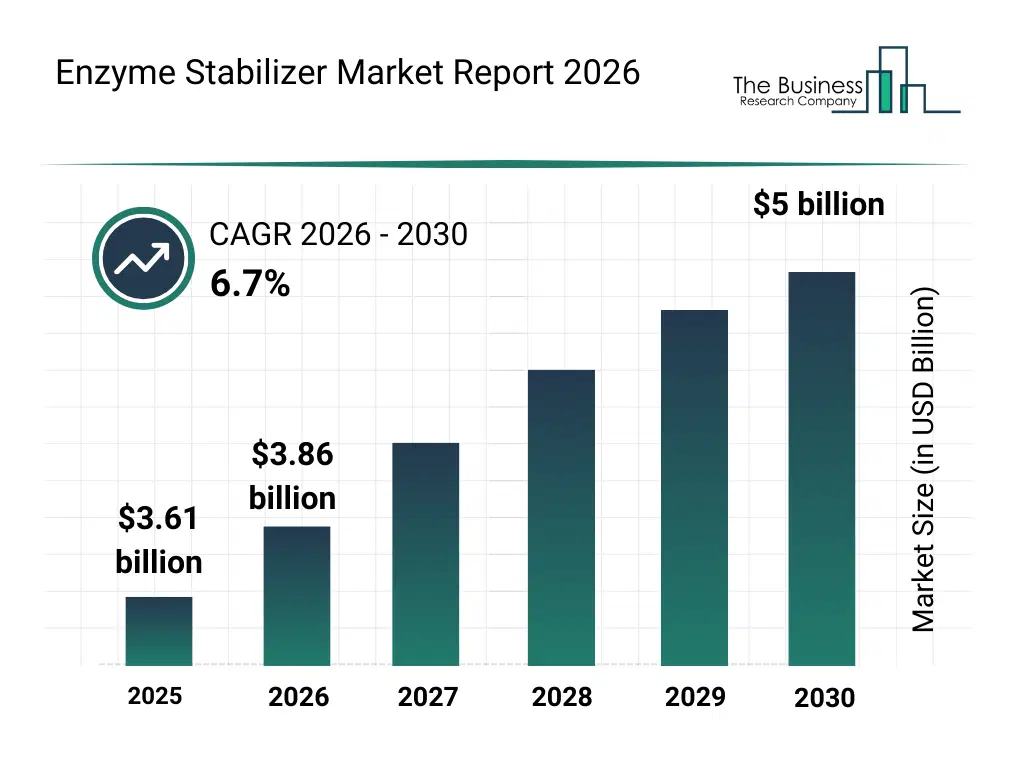
What Is The Enzyme Stabilizer Market Size and Share 2026?
The enzyme stabilizer market size has grown strongly in recent years. It will grow from $3.61 billion in 2025 to $3.86 billion in 2026 at a compound annual growth rate (CAGR) of 6.8%. The growth in the historic period can be attributed to expansion of enzyme-based industrial processes, growth in detergent and food enzyme usage, increased adoption in pharmaceuticals, availability of stabilizing compounds, rising focus on product quality.What Is The Enzyme Stabilizer Market Growth Forecast?
The enzyme stabilizer market size is expected to see strong growth in the next few years. It will grow to $5 billion in 2030 at a compound annual growth rate (CAGR) of 6.7%. The growth in the forecast period can be attributed to increasing demand for specialty enzymes, expansion of biopharmaceutical manufacturing, growing focus on sustainable bio-based processes, rising investments in enzyme engineering, increasing adoption in advanced food processing. Major trends in the forecast period include increasing demand for enhanced enzyme shelf stability, rising use in industrial biotechnology applications, growing focus on temperature and ph resistance, expansion of encapsulation technologies, enhanced optimization of enzyme performance.Tariff Impact On Enzyme Stabilizer Market
Tariffs are affecting the enzyme stabilizer market by increasing costs of imported specialty chemicals, encapsulation materials, fermentation inputs, and laboratory-grade raw materials. Pharmaceutical, food processing, and detergent manufacturers in North America and Europe are most impacted due to dependence on imported stabilizing agents and intermediates, while Asia-Pacific exporters face competitive pressure. These tariffs are increasing formulation costs and influencing pricing of enzyme-based products. However, tariffs are also encouraging local chemical synthesis, regional sourcing of stabilizer compounds, and innovation in cost-efficient enzyme stabilization technologies.
Global Enzyme Stabilizer Market Segmentation
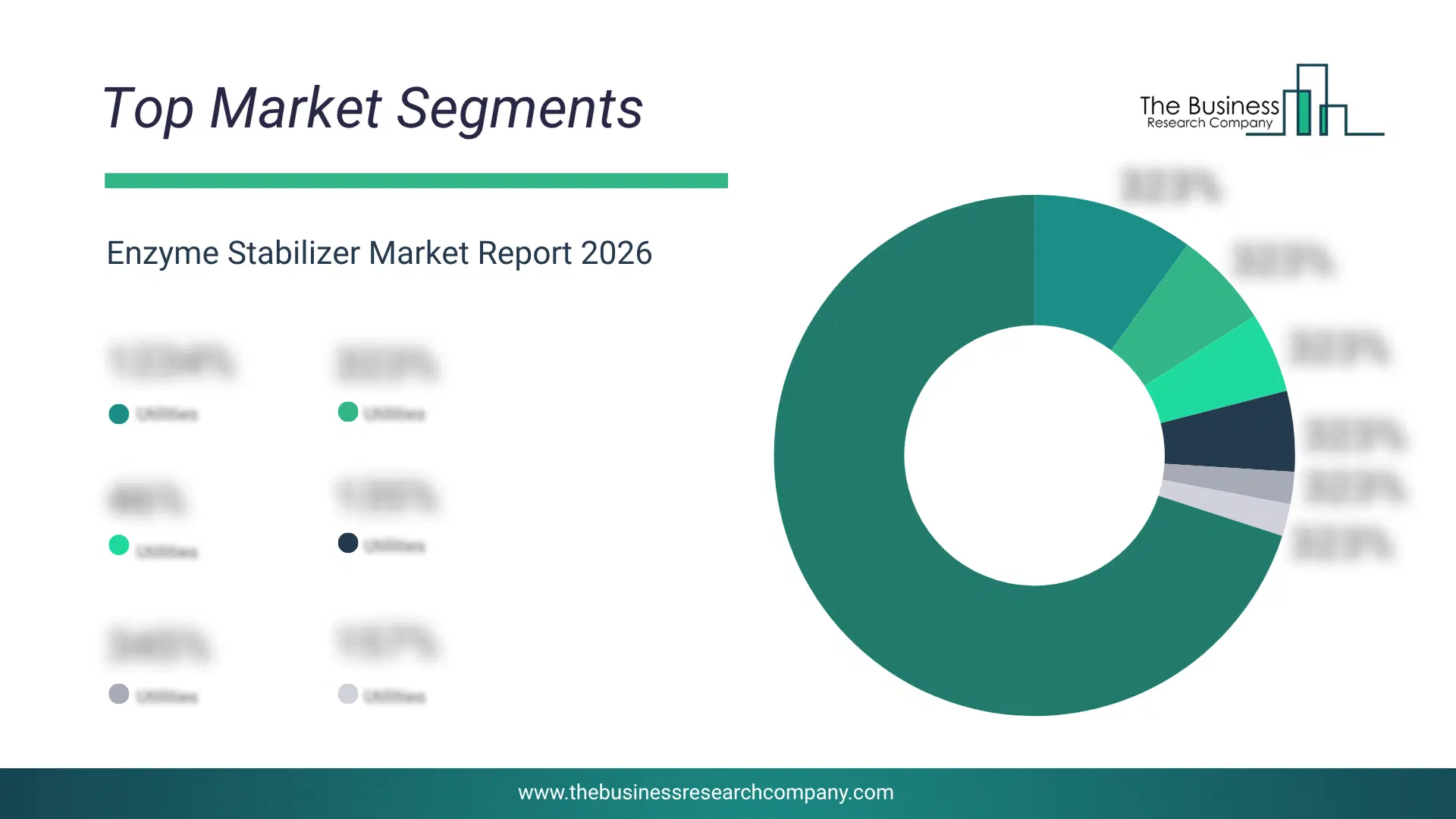
1) By Type: Chemical Stabilizers, Physical Stabilizers, Biological Stabilizers 2) By Stabilization Mechanism: Encapsulation And Microencapsulation, Immobilization Covalent And Non-Covalent, pH And Ionic Strength Control, Thermal Stabilization, Oxidative Protection 3) By Target: Amylases, Proteases, Lipases, Lactases 4) By Application: Enzyme Production, Enzyme Laundry Treatment, Enzyme Detergents, Food Industry 5) By End Use: Food Processing, Animal Nutrition, Pharmaceuticals, Cleaning Agents, Chemical Subsegments: 1) By Chemical Stabilizers: Polyols, Sugars and Sugar Alcohols, Salts and Buffer Systems, Antioxidants And Preservatives 2) By Physical Stabilizers: Encapsulation Agents, Immobilization Supports, Coating and Matrix Materials 3) By Biological Stabilizers: Protein-Based Stabilizers, Peptide-Based Stabilizers, Compatible SolutesWhat Is The Driver Of The Enzyme Stabilizer Market?
The growing demand for processed foods is expected to propel the growth of the enzyme stabilizer market going forward. Processed foods are food items that have transformed their natural state using techniques such as canning, freezing, and adding preservatives. The demand for processed foods is due to the desire for convenience, extended shelf life, and consumers' fast-paced lives. Enzyme stabilizers are used in processed foods to maintain enzyme activity during manufacturing and storage, ensuring product consistency and extended shelf life. For instance, in 2023, according to the United States Department of Agriculture, a US-based federal agency, the total value of US processed food products exported from the country increased to $36.59 billion in 2023, an increase of 1.7% compared to previous years. Therefore, the growing demand for processed foods is driving the growth of the enzyme stabilizer industry.Key Players In The Global Enzyme Stabilizer Market
Major companies operating in the enzyme stabilizer market are Novozymes A/S, DSM-Firmenich N.V., DuPont de Nemours Inc., BASF SE, Kerry Group plc, Chr. Hansen Holding A/S, AB Enzymes GmbH, Amano Enzyme Inc., Biocatalysts Ltd., Codexis Inc., Specialty Enzymes and Probiotics LLC, Dyadic International Inc., Megazyme Ltd., Enzyme Innovation Inc., Maps Enzymes Ltd., Laffort SA, Sorachim SA, Creative Enzymes Inc., Advanced Enzyme Technologies Ltd., Sunson Industry Group Co. Ltd., Jiangsu Boli Bioproducts Co. Ltd., Enzymatic Solutions Inc., Aumgene Biosciences Inc.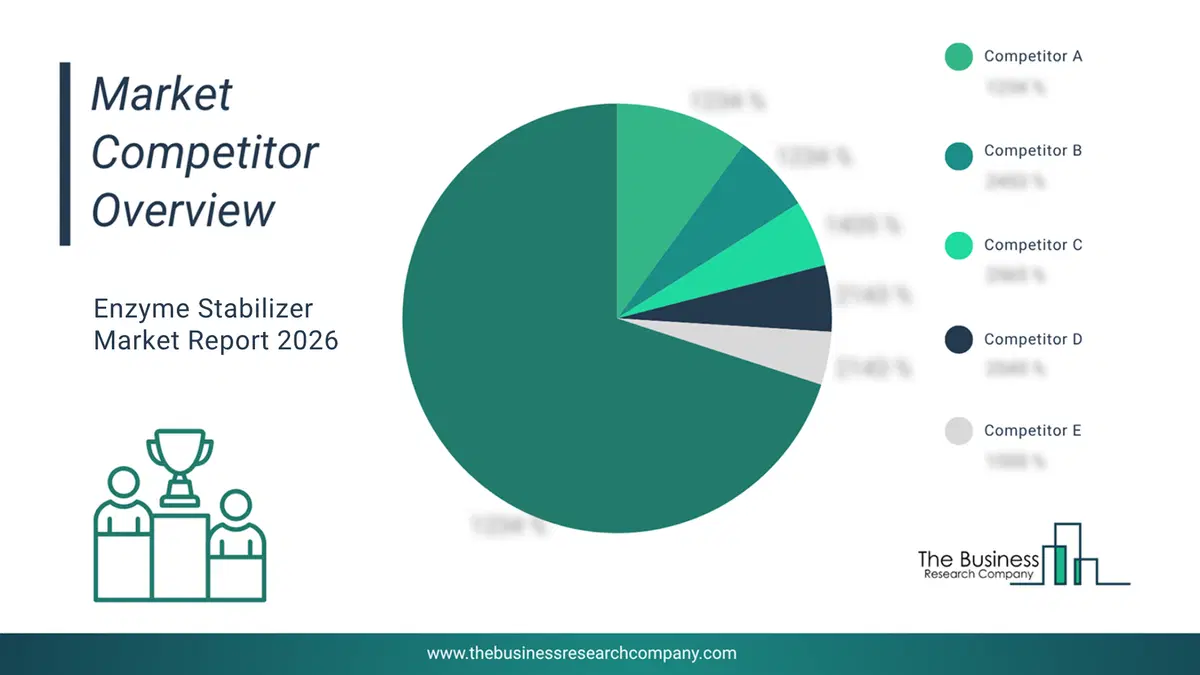
This chart is for illustrative purposes; the full report includes a detailed competitor analysis and comprehensive overview of the top 10 companies in the market.
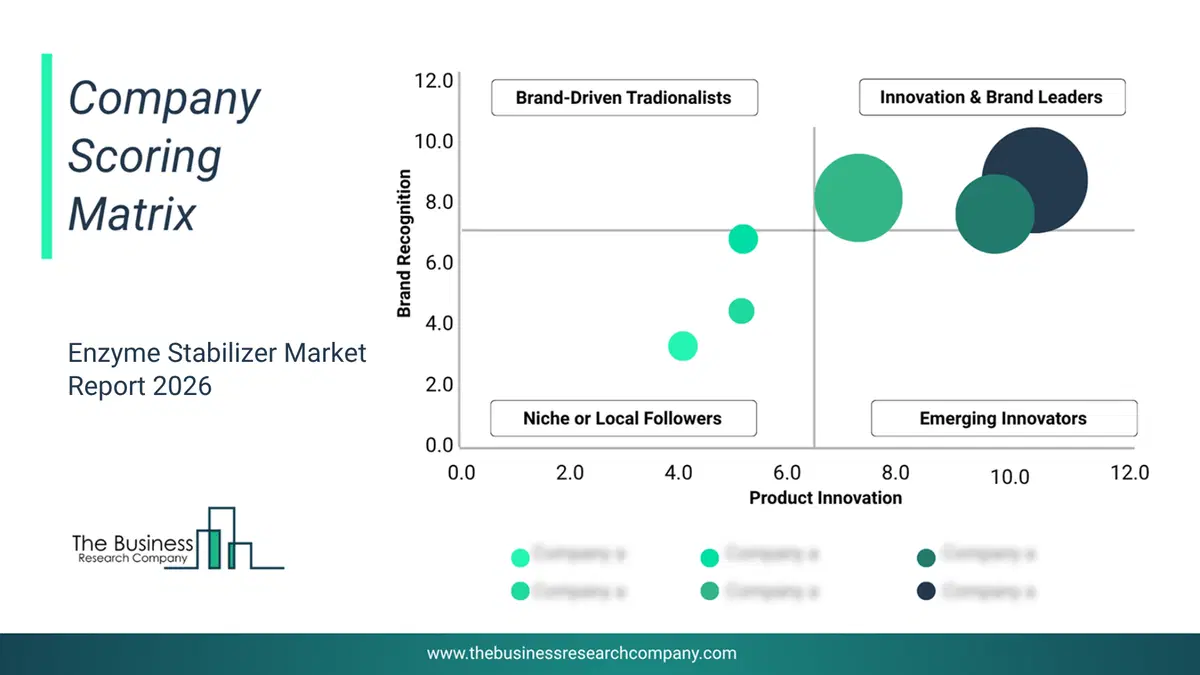
This chart maps companies by product innovation and brand strength, with bubble size indicating relative revenue, helping identify market leaders, challengers, and niche players. This is an illustrative chart; the full report provides a complete and accurate competitive analysis.
Global Enzyme Stabilizer Market Trends and Insights
Major companies operating in the enzyme stabilizer market are focusing on developing innovative solutions, such as oral enzyme stabilizers, to enhance efficacy and user convenience. Oral enzyme stabilizers are substances that protect and maintain the effectiveness of enzymes as they pass through the gastrointestinal tract, ensuring their activity for therapeutic and digestive purposes. For instance, in June 2023, Amicus Therapeutics, a US-based biotechnology company, received European Commission (EC) approval for opfolda (miglustat) 65 mg capsules, an enzyme stabilizer of cipaglucosidase alfa, a long-term enzyme replacement therapy for adults with late-onset Pompe disease. They are an essential component of the treatment regimen for adults with late-onset Pompe disease, specifically when used with cipaglucosidase alfa (Pombiliti).What Are Latest Mergers And Acquisitions In The Enzyme Stabilizer Market?
In November 2023, Biocatalysts Ltd., a US-based company that develops and manufactures specialty enzymes, acquired Breatec, WeissBioTech, and Biosun from Brain Biotech AG for an undisclosed amount. Through this acquisition, Biocatalysts enhanced its ability to leverage synergies within the BRAIN group and strengthened its focus on significant growth in its core regions of Europe and North America. Breatec is a Netherlands-based company that develops optimized enzymes and biocatalysts, WeissBioTech GmbH is a Germany-based provider of tailored ready-to-use Enzymes for the Food and Beverages Industries, and Biosun is a Germany-based provider of food ingredients such as flavors, enzymes, and natural colors.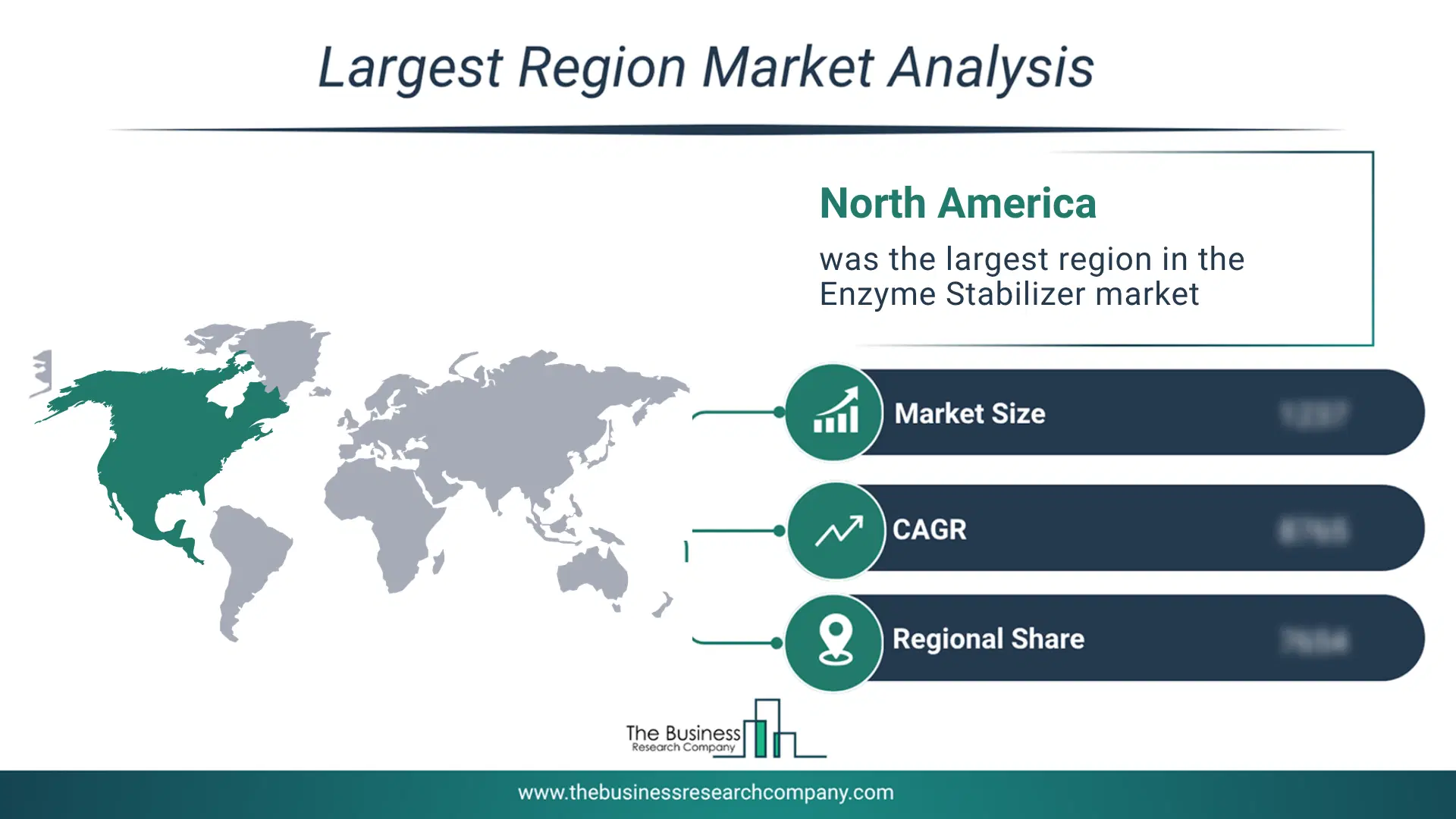
Regional Outlook
North America was the largest region in the enzyme stabilizer market in 2025. Asia-Pacific is expected to be the fastest-growing region in the forecast period. The regions covered in this market report are Asia-Pacific, South East Asia, Western Europe, Eastern Europe, North America, South America, Middle East, Africa The countries covered in this market report are Australia, Brazil, China, France, Germany, India, Indonesia, Japan, Taiwan, Russia, South Korea, UK, USA, Canada, Italy, Spain.What Defines the Enzyme Stabilizer Market?
The enzyme stabilizer market consists of sales of chelating agents, organic solvents, mannitol, and sorbitol. Values in this market are ‘factory gate’ values, that is, the value of goods sold by the manufacturers or creators of the goods, whether to other entities (including downstream manufacturers, wholesalers, distributors, and retailers) or directly to end customers. The value of goods in this market includes related services sold by the creators of the goods.How is Market Value Defined and Measured?
The market value is defined as the revenues that enterprises gain from the sale of goods and/or services within the specified market and geography through sales, grants, or donations in terms of the currency (in USD unless otherwise specified). The revenues for a specified geography are consumption values that are revenues generated by organizations in the specified geography within the market, irrespective of where they are produced. It does not include revenues from resales along the supply chain, either further along the supply chain or as part of other products.
This chart presents market attractiveness based on a quantitative evaluation of growth, competition, strategic alignment, and risk, offering a clear view of opportunity areas for decision-making. This chart is for illustrative purposes; the full report contains the complete analysis.

This chart highlights the Total Addressable Market (TAM) by estimating the maximum revenue opportunity using an assumption-driven approach, supporting strategic planning and opportunity sizing across markets. The chart is illustrative; the full report provides a more comprehensive analysis.
What Key Data and Analysis Are Included in the Enzyme Stabilizer Market Report 2026?
The enzyme stabilizer market research report is one of a series of new reports from The Business Research Company that provides market statistics, including industry global market size, regional shares, competitors with the market share, detailed market segments, market trends and opportunities, and any further data you may need to thrive in the enzyme stabilizer industry. The market research report delivers a complete perspective of everything you need, with an in-depth analysis of the current and future state of the industry.Enzyme Stabilizer Market Report Forecast Analysis
| Report Attribute | Details |
|---|---|
| Market Size Value In 2026 | $3.86 billion |
| Revenue Forecast In 2030 | $5 billion |
| Growth Rate | CAGR of 6.7% from 2026 to 2030 |
| Base Year For Estimation | 2025 |
| Actual Estimates/Historical Data | 2020-2025 |
| Forecast Period | 2026 - 2030 |
| Market Representation | Revenue in USD Billion and CAGR from 2026 to 2030 |
| Segments Covered | Type, Stabilization Mechanism, Target, Application, End Use |
| Regional Scope | Asia-Pacific, Western Europe, Eastern Europe, North America, South America, Middle East, Africa |
| Key Companies Profiled | Novozymes A/S, DSM-Firmenich N.V., DuPont de Nemours Inc., BASF SE, Kerry Group plc, Chr. Hansen Holding A/S, AB Enzymes GmbH, Amano Enzyme Inc., Biocatalysts Ltd., Codexis Inc., Specialty Enzymes and Probiotics LLC, Dyadic International Inc., Megazyme Ltd., Enzyme Innovation Inc., Maps Enzymes Ltd., Laffort SA, Sorachim SA, Creative Enzymes Inc., Advanced Enzyme Technologies Ltd., Sunson Industry Group Co. Ltd., Jiangsu Boli Bioproducts Co. Ltd., Enzymatic Solutions Inc., Aumgene Biosciences Inc. |
| Customization Scope | Request for Customization |
| Pricing And Purchase Options | Explore Purchase Options |