
Eosinophilic Granulomatosis With Polyangiitis Treatment Market Report 2026
Global Outlook – By Drug Class (Steroids, Immunosuppressant, Biologics, Immune Globulins), By Route Of Administration (Oral, Intravenous, Intramuscular), By Distribution Channel (Online Pharmacies, Hospital Pharmacies, Drug Stores, Retail Pharmacies), By End User (Hospitals, Clinics, Home Healthcare) - Market Size, Trends, Strategies, and Forecast to 2030
Eosinophilic Granulomatosis With Polyangiitis Treatment Market Overview
• Eosinophilic Granulomatosis With Polyangiitis Treatment market size has reached to $1.41 billion in 2025 • Expected to grow to $2.22 billion in 2030 at a compound annual growth rate (CAGR) of 9.6% • Growth Driver: Rising Asthma Prevalence Among The Elderly Fueling Market Growth Due To Increasing Susceptibility Of Aging Populations To Respiratory Conditions • Market Trend: Clinical Trials Driving Innovations In Treatment Advancements • North America was the largest region in 2025 and Asia-Pacific is the fastest growing region.What Is Covered Under Eosinophilic Granulomatosis With Polyangiitis Treatment Market?
Eosinophilic granulomatosis with polyangiitis (EGPA) treatment refers to medical approaches used to manage this rare autoimmune disease, which causes inflammation of small blood vessels. The treatment focuses on reducing inflammation, controlling symptoms, and preventing disease progression. The main classes of drugs in the eosinophilic granulomatosis with polyangiitis treatment market are steroids, immunosuppressants, biologics, and immune globulins. Steroids refer to a class of organic compounds that include hormones and synthetic drugs with anti-inflammatory and immunosuppressive properties. They are administered through several routes including oral, intravenous, and intramuscular. The different distribution channels include online pharmacies, hospital pharmacies, drug stores, and retail pharmacies, and various end users encompass hospitals, clinics, and home healthcare.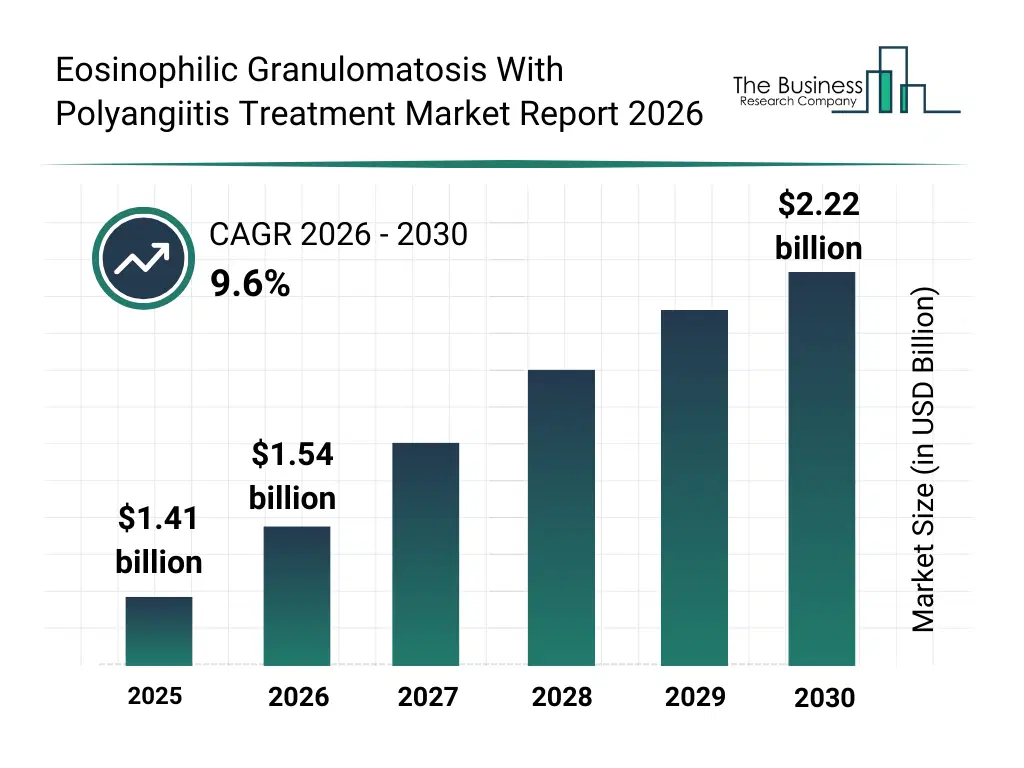
What Is The Eosinophilic Granulomatosis With Polyangiitis Treatment Market Size and Share 2026?
The eosinophilic granulomatosis with polyangiitis treatment market size has grown strongly in recent years. It will grow from $1.41 billion in 2025 to $1.54 billion in 2026 at a compound annual growth rate (CAGR) of 9.8%. The growth in the historic period can be attributed to autoimmune disease awareness, corticosteroid reliance, rare disease diagnosis improvements, hospital-based immunology care, inflammation management needs.What Is The Eosinophilic Granulomatosis With Polyangiitis Treatment Market Growth Forecast?
The eosinophilic granulomatosis with polyangiitis treatment market size is expected to see strong growth in the next few years. It will grow to $2.22 billion in 2030 at a compound annual growth rate (CAGR) of 9.6%. The growth in the forecast period can be attributed to biologic drug innovation, rare disease funding support, personalized autoimmune treatment, specialty clinic growth, early intervention protocols. Major trends in the forecast period include rising use of targeted biologic therapies, increased focus on rare autoimmune diseases, growth in long-term immunosuppressive treatment, expansion of specialty autoimmune care, emphasis on early disease control.
Global Eosinophilic Granulomatosis With Polyangiitis Treatment Market Segmentation
1) By Drug Class: Steroids, Immunosuppressant, Biologics, Immune Globulins 2) By Route Of Administration: Oral, Intravenous, Intramuscular 3) By Distribution Channel: Online Pharmacies, Hospital Pharmacies, Drug Stores, Retail Pharmacies 4) By End User: Hospitals, Clinics, Home Healthcare Subsegments: 1) By Steroids: Glucocorticoids, Mineralocorticoids 2) By Immunosuppressants: Calcineurin Inhibitors, Antimetabolites, Alkylating Agents 3) By Biologics: Interleukin Inhibitors, Monoclonal Antibodies, TNF-alpha Inhibitors 4) By Immune Globulins: Intravenous Immunoglobulin (IVIG), Subcutaneous Immunoglobulin (SCIG)What Are The Drivers Of The Eosinophilic Granulomatosis With Polyangiitis Treatment Market?
The rising incidence of asthma among the aging population is expected to propel the growth of the eosinophilic granulomatosis with polyangiitis (EGPA) treatment market going forward. Asthma is a condition that makes it difficult to breathe because the airways in the lungs become swollen and narrow. The incidence of asthma among the aging population is growing due to declining lung function. As lungs lose elasticity and airway muscles weaken, breathing becomes more difficult. This makes older adults more susceptible to inflammation and respiratory conditions. The rise in asthma among older people leads to more cases being checked for related conditions such as eosinophilic granulomatosis with polyangiitis, which often begins with asthma, so this increases the demand for its treatment. For instance, in 2024, according to the Global Initiative for Asthma, a US-based medical organization, asthma is a prevalent chronic non-communicable disease, impacting over 260 million people globally and causing more than 450,000 deaths annually. Therefore, the rising prevalence of asthma among the aging population is driving the growth of the eosinophilic granulomatosis with polyangiitis (EGPA) treatment market. The rising prevalence of allergic reactions is expected to propel the growth of the eosinophilic granulomatosis with polyangiitis treatment market going forward. Allergic reactions are on the rise due to increasing air pollution. Pollutants such as smoke, dust, and chemicals in the air can irritate the immune system, making people more sensitive to allergens. As allergic reactions become more common, more people develop conditions linked to immune system overactivity, such as eosinophilic granulomatosis with polyangiitis. This increases the demand for effective treatments to manage inflammation and related symptoms. For instance, in 2024, according to PubMed, the US-based National Institutes of Health, the most common allergic comorbidities reported by patients with food allergies were atopic dermatitis (48%), asthma (46%), and allergic rhinitis (39%). Further, many patients experienced more than 1 food-related allergic reaction per year (42%), with 46% experiencing food-induced anaphylaxis. Therefore, the increasing prevalence of allergic reactions is driving the growth of the eosinophilic granulomatosis with polyangiitis treatment industry.Key Players In The Global Eosinophilic Granulomatosis With Polyangiitis Treatment Market
Major companies operating in the eosinophilic granulomatosis with polyangiitis treatment market are Pfizer Inc., Johnson & Johnson, Merck & Co. Inc., AbbVie Inc., Sanofi S.A., Bristol Myers Squibb, AstraZeneca plc, Novartis AG, GSK plc, Roche Holding AG, Takeda Pharmaceutical Company, Teva Pharmaceutical Industries, Intas Pharmaceuticals, Mylan N.V., Astellas Pharma Inc., Biogen Inc., Fresenius Kabi, Amgen Inc., Sun Pharmaceutical Industries, Apotex Inc., Cipla Ltd., Dr. Reddy’s Laboratories, Lupin Limited, Alkem Laboratories, NS Pharma
This chart is for illustrative purposes; the full report includes a detailed competitor analysis and comprehensive overview of the top 10 companies in the market.
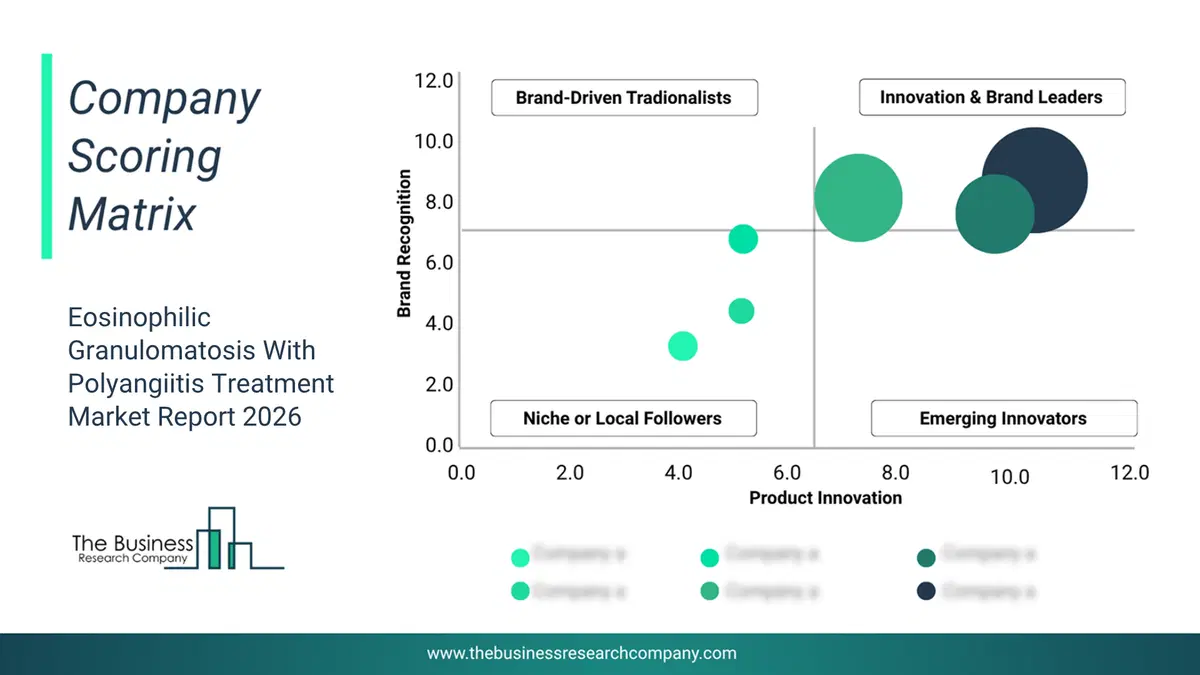
This chart maps companies by product innovation and brand strength, with bubble size indicating relative revenue, helping identify market leaders, challengers, and niche players. This is an illustrative chart; the full report provides a complete and accurate competitive analysis.
Global Eosinophilic Granulomatosis With Polyangiitis Treatment Market Trends and Insights
Major companies operating in the eosinophilic granulomatosis with polyangiitis (EGPA) treatment market are conducting clinical trials to assess the safety and effectiveness of new and existing therapies. Clinical trials aim to enhance treatment options, secure regulatory approvals, and improve patient care. For instance, in September 2024, AstraZeneca, a UK-based pharmaceutical and biotechnology company, announced positive results from the MANDARA Phase III trial. The trial demonstrated that Fasenra (benralizumab) is effective in inducing remission in patients with eosinophilic granulomatosis with polyangiitis. The results showed that benralizumab achieved remission rates comparable to those of mepolizumab, while also reducing the need for oral glucocorticoids. This advancement represents a significant step toward more targeted and steroid-sparing treatment approaches for eosinophilic granulomatosis with polyangiitis.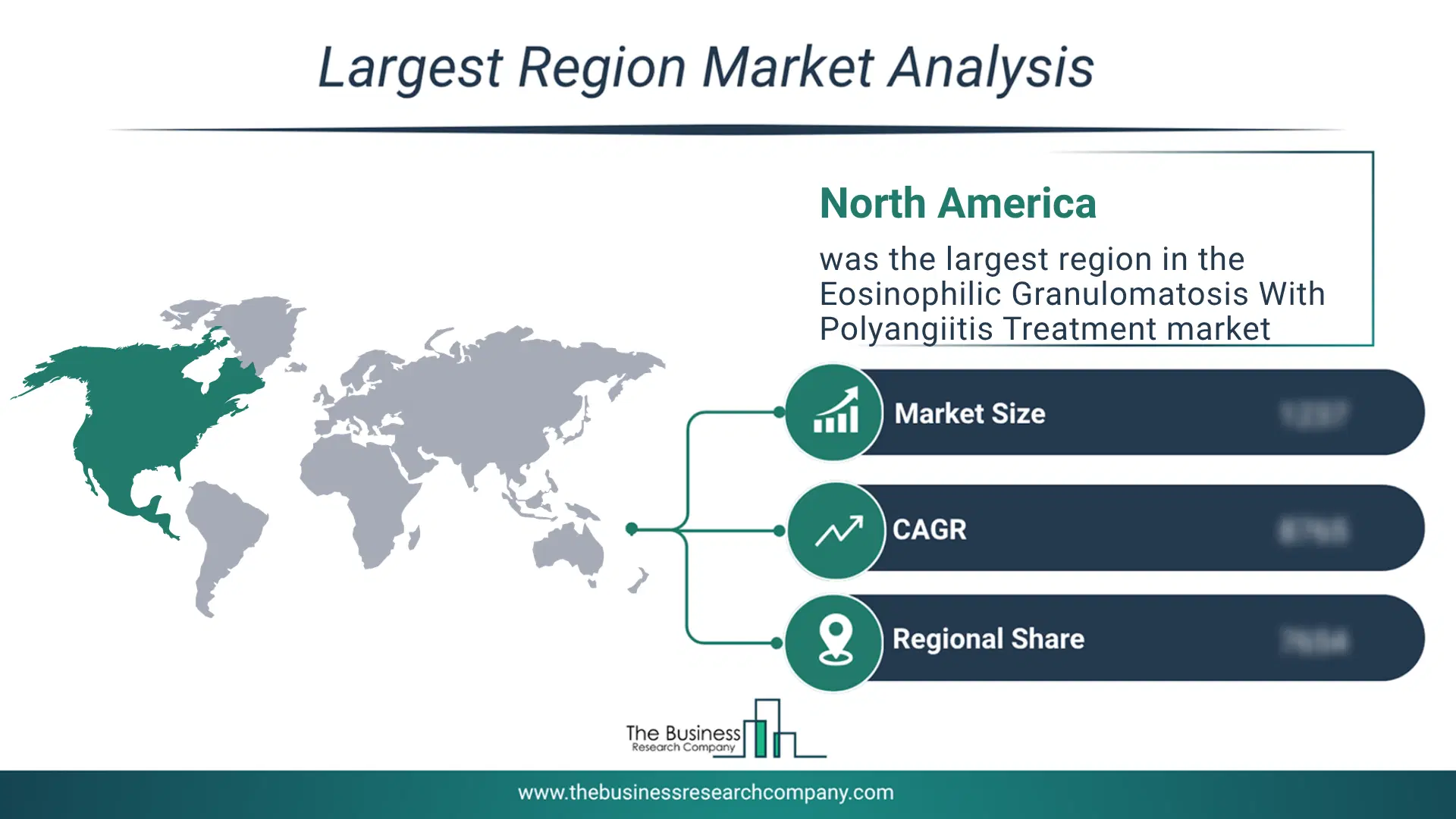
Regional Outlook
North America was the largest region in the eosinophilic granulomatosis with polyangiitis (EGPA) treatment market in 2025. Asia-Pacific is expected to be the fastest-growing region in the forecast period. The regions covered in this market report are Asia-Pacific, South East Asia, Western Europe, Eastern Europe, North America, South America, Middle East, Africa. The countries covered in this market report are Australia, Brazil, China, France, Germany, India, Indonesia, Japan, Taiwan, Russia, South Korea, UK, USA, Canada, Italy, Spain.What Defines the Eosinophilic Granulomatosis With Polyangiitis Treatment Market?
The eosinophilic granulomatosis with polyangiitis treatment market consists of sales of azathioprine, corticosteroids, methotrexate, and monoclonal antibodies such as mepolizumab. Values in this market are ‘factory gate’ values, that is the value of goods sold by the manufacturers or creators of the goods, whether to other entities (including downstream manufacturers, wholesalers, distributors and retailers) or directly to end customers. The value of goods in this market includes related services sold by the creators of the goods.How is Market Value Defined and Measured?
The market value is defined as the revenues that enterprises gain from the sale of goods and/or services within the specified market and geography through sales, grants, or donations in terms of the currency (in USD unless otherwise specified). The revenues for a specified geography are consumption values that are revenues generated by organizations in the specified geography within the market, irrespective of where they are produced. It does not include revenues from resales along the supply chain, either further along the supply chain or as part of other products.
This chart presents market attractiveness based on a quantitative evaluation of growth, competition, strategic alignment, and risk, offering a clear view of opportunity areas for decision-making. This chart is for illustrative purposes; the full report contains the complete analysis.

This chart highlights the Total Addressable Market (TAM) by estimating the maximum revenue opportunity using an assumption-driven approach, supporting strategic planning and opportunity sizing across markets. The chart is illustrative; the full report provides a more comprehensive analysis.
What Key Data and Analysis Are Included in the Eosinophilic Granulomatosis With Polyangiitis Treatment Market Report 2026?
The eosinophilic granulomatosis with polyangiitis treatment market research report is one of a series of new reports from The Business Research Company that provides market statistics, including industry global market size, regional shares, competitors with the market share, detailed market segments, market trends and opportunities, and any further data you may need to thrive in the eosinophilic granulomatosis with polyangiitis treatment industry. The market research report delivers a complete perspective of everything you need, with an in-depth analysis of the current and future state of the industry.Eosinophilic Granulomatosis With Polyangiitis Treatment Market Report Forecast Analysis
| Report Attribute | Details |
|---|---|
| Market Size Value In 2026 | $1.54 billion |
| Revenue Forecast In 2030 | $2.22 billion |
| Growth Rate | CAGR of 9.6% from 2026 to 2030 |
| Base Year For Estimation | 2025 |
| Actual Estimates/Historical Data | 2020-2025 |
| Forecast Period | 2026 - 2030 |
| Market Representation | Revenue in USD Billion and CAGR from 2026 to 2030 |
| Segments Covered | Drug Class, Route Of Administration, Distribution Channel, End User |
| Regional Scope | Asia-Pacific, Western Europe, Eastern Europe, North America, South America, Middle East, Africa |
| Country Scope | The countries covered in the report are Australia, Brazil, China, France, Germany, India, Indonesia, Japan, Taiwan, Russia, South Korea, UK, USA, Canada, Italy, Spain |
| Key Companies Profiled | Pfizer Inc., Johnson & Johnson, Merck & Co. Inc., AbbVie Inc., Sanofi S.A., Bristol Myers Squibb, AstraZeneca plc, Novartis AG, GSK plc, Roche Holding AG, Takeda Pharmaceutical Company, Teva Pharmaceutical Industries, Intas Pharmaceuticals, Mylan N.V., Astellas Pharma Inc., Biogen Inc., Fresenius Kabi, Amgen Inc., Sun Pharmaceutical Industries, Apotex Inc., Cipla Ltd., Dr. Reddy’s Laboratories, Lupin Limited, Alkem Laboratories, NS Pharma |
| Customization Scope | Request for Customization |
| Pricing And Purchase Options | Explore Purchase Options |