

Epigenetic Reprogramming Longevity Therapeutics Market Report 2026
Global Outlook – By Therapy Type (Partial Cellular Reprogramming Therapies, Full Cellular Reprogramming Technologies, Epigenetic Drug Therapies, Gene Editing Therapies, Ribonucleic Acid Based Therapeutics, Stem Cell Based Rejuvenation Therapies), By Technology Platform (Yamanaka Factor Reprogramming Platforms, Artificial Intelligence Driven Drug Discovery Platforms, Single Cell Omics Technologies, Deoxyribonucleic Acid Methylation Technologies, Histone Modification Technologies, Transcriptomics And Multi Omics Platforms), By Delivery Mechanism (Non Integrative Viral Vectors, Lipid Nanoparticles And Extracellular Vesicles, Ex Vivo Cell Therapy Modification), By Application (Age Related Disease Treatment, Regenerative Medicine, Neurodegenerative Disorders, Cardiovascular Aging Disorders, Musculoskeletal Degeneration, Metabolic And Endocrine Disorders), By End User (Biotechnology Companies, Pharmaceutical Companies, Research Institutes And Universities, Specialty Longevity Clinics, Contract Research Organizations, Hospitals And Regenerative Medicine Centers) – Market Size, Trends, Strategies, and Forecast to 2030
Epigenetic Reprogramming Longevity Therapeutics Market Report 2026 Market Overview
• Epigenetic Reprogramming Longevity Therapeutics Market Report 2026 market size has reached to $7.89 billion in 2025 • Expected to grow to $16.14 billion in 2030 at a compound annual growth rate (CAGR) of 15.3% • Growth Driver: The Rising Prevalence Of Age-Related Chronic Diseases Driving The Growth Of The Market Due To Increasing Life Expectancy • Market Trend: First-In-Class Therapy Targets Age-Related Cellular Damage Through Controlled Reprogramming Approach • North America was the largest region in 2025 and Asia-Pacific is the fastest growing region.What Is Covered Under Epigenetic Reprogramming Longevity Therapeutics Market?
Epigenetic reprogramming longevity therapeutics refers to medical and biotechnological approaches that aim to restore or reset the epigenetic marks on deoxyribonucleic acid, such as methylation patterns and histone modifications, to a more youthful state. These therapies seek to slow, halt, or potentially reverse aspects of biological aging by improving cellular function without altering the underlying genetic code. The main therapy types of epigenetic reprogramming longevity therapeutics include partial cellular reprogramming therapies, full cellular reprogramming technologies, epigenetic drug therapies, gene editing therapies, ribonucleic acid based therapeutics, and stem cell based rejuvenation therapies. Partial cellular reprogramming therapies refer to advanced biological interventions designed to reset age-related epigenetic markers while preserving cellular identity to promote rejuvenation and improve tissue function. These therapies are developed using technology platforms such as Yamanaka factor reprogramming platforms, artificial intelligence driven drug discovery platforms, single cell omics technologies, deoxyribonucleic acid methylation technologies, histone modification technologies, and transcriptomics and multi omics platforms and are delivered through mechanisms including non integrative viral vectors, lipid nanoparticles and extracellular vesicles, and ex vivo cell therapy modification. The key applications of age related disease treatment, regenerative medicine, neurodegenerative disorders, cardiovascular aging disorders, musculoskeletal degeneration, and metabolic and endocrine disorders, while the end-users biotechnology companies, pharmaceutical companies, research institutes and universities, specialty longevity clinics, contract research organizations, and hospitals and regenerative medicine centers.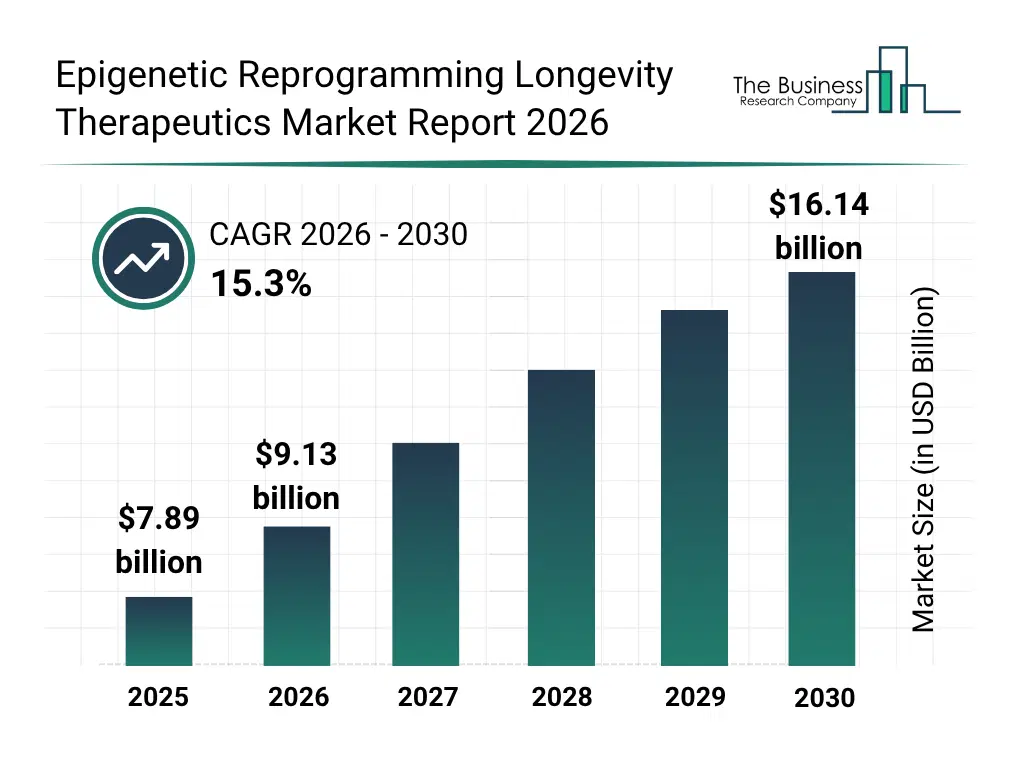
What Is The Epigenetic Reprogramming Longevity Therapeutics Market Size and Share 2026?
The epigenetic reprogramming longevity therapeutics market size has grown rapidly in recent years. It will grow from $7.89 billion in 2025 to $9.13 billion in 2026 at a compound annual growth rate (CAGR) of 15.7%. The growth in the historic period can be attributed to advancements in dna methylation research, expansion of regenerative medicine studies, increasing investment in biotechnology startups, growing prevalence of age related diseases, improved understanding of histone modification mechanisms.What Is The Epigenetic Reprogramming Longevity Therapeutics Market Growth Forecast?
The epigenetic reprogramming longevity therapeutics market size is expected to see rapid growth in the next few years. It will grow to $16.14 billion in 2030 at a compound annual growth rate (CAGR) of 15.3%. The growth in the forecast period can be attributed to rise of precision longevity medicine adoption, breakthroughs in partial cellular reprogramming techniques, integration of AI in drug discovery workflows, expansion of clinical trials in anti aging therapies, growth in personalized epigenetic treatment approaches. Major trends in the forecast period include AI driven epigenetic reprogramming simulation models for aging prediction, multi omics integration platforms for precision longevity therapeutics, single cell epigenomic mapping for cellular age reversal targeting, synthetic biology enabled epigenetic circuit engineering for controlled reprogramming, biomarker based epigenetic age diagnostics for therapeutic optimization.
Global Epigenetic Reprogramming Longevity Therapeutics Market Segmentation
1) By Therapy Type: Partial Cellular Reprogramming Therapies, Full Cellular Reprogramming Technologies, Epigenetic Drug Therapies, Gene Editing Therapies, Ribonucleic Acid Based Therapeutics, Stem Cell Based Rejuvenation Therapies 2) By Technology Platform: Yamanaka Factor Reprogramming Platforms, Artificial Intelligence Driven Drug Discovery Platforms, Single Cell Omics Technologies, Deoxyribonucleic Acid Methylation Technologies, Histone Modification Technologies, Transcriptomics And Multi Omics Platforms 3) By Delivery Mechanism: Non Integrative Viral Vectors, Lipid Nanoparticles And Extracellular Vesicles, Ex Vivo Cell Therapy Modification 4) By Application: Age Related Disease Treatment, Regenerative Medicine, Neurodegenerative Disorders, Cardiovascular Aging Disorders, Musculoskeletal Degeneration, Metabolic And Endocrine Disorders 5) By End User: Biotechnology Companies, Pharmaceutical Companies, Research Institutes And Universities, Specialty Longevity Clinics, Contract Research Organizations, Hospitals And Regenerative Medicine Centers Subsegments: 1) By Partial Cellular Reprogramming Therapies: Transient Reprogramming, Cyclic Reprogramming, In Vivo Reprogramming, Ex Vivo Reprogramming, Induced Pluripotent Stem Cell Reprogramming 2) By Full Cellular Reprogramming Technologies: Somatic Cell Nuclear Transfer, Induced Pluripotent Stem Cell Generation, Embryonic Stem Cell Reprogramming, Direct Lineage Conversion, Dedifferentiation Therapy 3) By Epigenetic Drug Therapies: Histone Deacetylase Inhibitors, Deoxyribonucleic Acid Methyltransferase Inhibitors, Histone Methyltransferase Inhibitors, Bromodomain And Extra Terminal Inhibitors, Chromatin Remodeling Agents 4) By Gene Editing Therapies: Clustered Regularly Interspaced Short Palindromic Repeats Based Editing, Transcription Activator Like Effector Nuclease Editing, Zinc Finger Nuclease Editing, Base Editing, Prime Editing 5) By Ribonucleic Acid Based Therapeutics: Messenger Ribonucleic Acid Therapeutics, Small Interfering Ribonucleic Acid Therapeutics, Micro Ribonucleic Acid Therapeutics, Antisense Oligonucleotide Therapeutics, Long Non Coding Ribonucleic Acid Therapeutics 6) By Stem Cell Based Rejuvenation Therapies: Mesenchymal Stem Cell Therapy, Embryonic Stem Cell Therapy, Induced Pluripotent Stem Cell Therapy, Hematopoietic Stem Cell Therapy, Neural Stem Cell TherapyWhat Are The Drivers Of The Epigenetic Reprogramming Longevity Therapeutics Market?
The rising prevalence of age-related chronic diseases is expected to propel the growth of the epigenetic reprogramming longevity therapeutics market going forward. Age-related chronic diseases refer to long-term medical conditions that develop or worsen with advancing age due to cumulative biological damage, reduced cellular repair capacity, and age-associated decline in organ and immune function, such as cardiovascular diseases, metabolic disorders, and neurodegenerative diseases. The rising prevalence of age-related chronic diseases is due to increasing life expectancy, as more people are living longer and therefore have a greater cumulative risk of developing conditions such as cardiovascular, metabolic, and neurodegenerative disorders over time. Epigenetic reprogramming longevity therapeutics helps age-related chronic diseases by restoring youthful gene expression patterns, improving cellular repair mechanisms, and reversing epigenetic damage that drives conditions such as cardiovascular diseases, metabolic disorders, and neurodegenerative diseases. For instance, in March 2025, according to the Joint Strategic Needs Assessment, a UK-based community health center, the number of deaths caused by cardiovascular disease (CVD) was 185 in 2023, compared to 178 recorded in 2022. Therefore, the rising prevalence of age-related chronic diseases is driving the growth of the epigenetic reprogramming longevity therapeutics industry. The rising healthcare expenditure is expected to propel the growth of the epigenetic reprogramming longevity therapeutics market going forward. Healthcare expenditure refers to the total amount of financial resources spent on medical services, healthcare infrastructure, medications, preventive care, and related health activities within a specific period. Healthcare expenditure is rising due to the increasing prevalence of chronic diseases, which requires long-term medical treatment, frequent hospital visits, advanced diagnostic services, and continuous patient care. Higher healthcare expenditure supports epigenetic reprogramming-based longevity therapeutics by increasing funding for high-cost biomedical research and development, and clinical trials, which accelerates the translation of epigenetic reprogramming approaches from experimental models into scalable, regulated anti-aging therapies. For instance, in April 2025, according to the Office for National Statistics, a UK-based government agency, healthcare spending increased by 6.5% from 2023 to 2024, higher than the 6.3% growth recorded during 2023. Therefore, the rising healthcare expenditure is driving the growth of the epigenetic reprogramming longevity therapeutics industry.Key Players In The Global Epigenetic Reprogramming Longevity Therapeutics Market
Major companies operating in the epigenetic reprogramming longevity therapeutics market report are Retro Biosciences Inc., Altos Labs Inc., NewLimit Inc., Life Biosciences Inc., Serina Therapeutics Inc., CellCuRex, Clock Health Limited, Junevity Inc., LIVIUS PTE. LTD., Rejuvenate Bio Inc., SENISCA Limited, Shift Bioscience Limited, Turn Biotechnologies Inc., Genflow Biosciences PLC, YouthBio Therapeutics Inc., Calico Life Sciences LLC, Unity Biotechnology Inc., Cyclarity Therapeutics, Oisin Biotechnologies, Cellular Longevity Inc.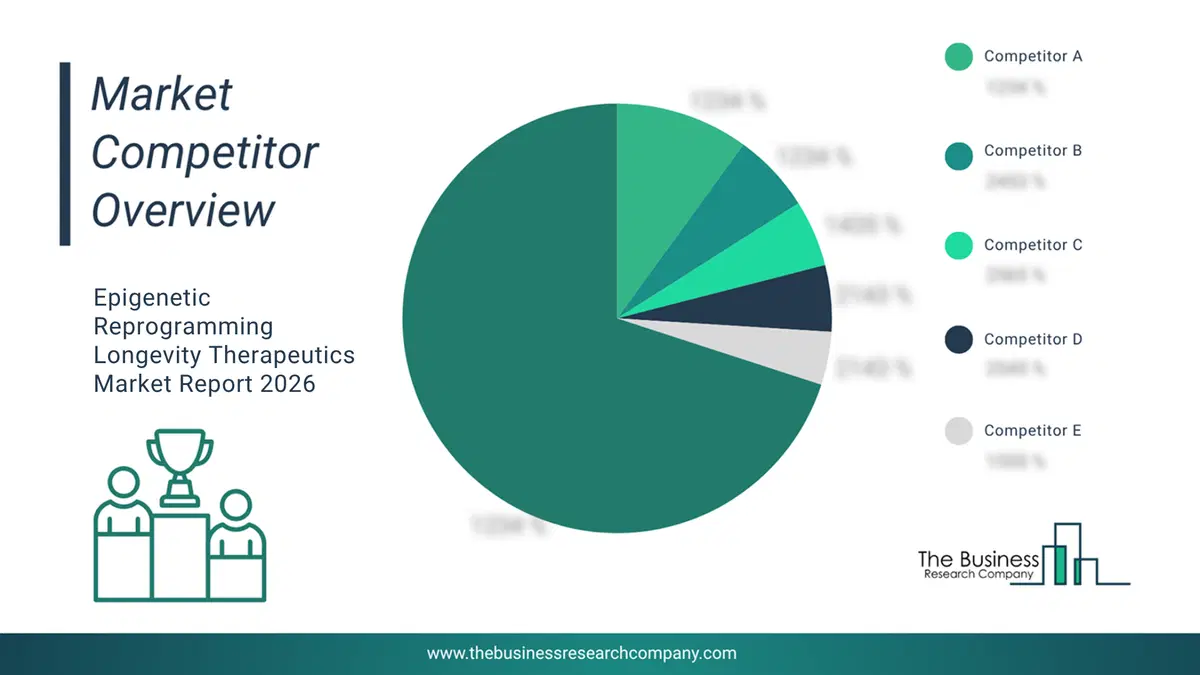
This chart is for illustrative purposes; the full report includes a detailed competitor analysis and comprehensive overview of the top 10 companies in the market.
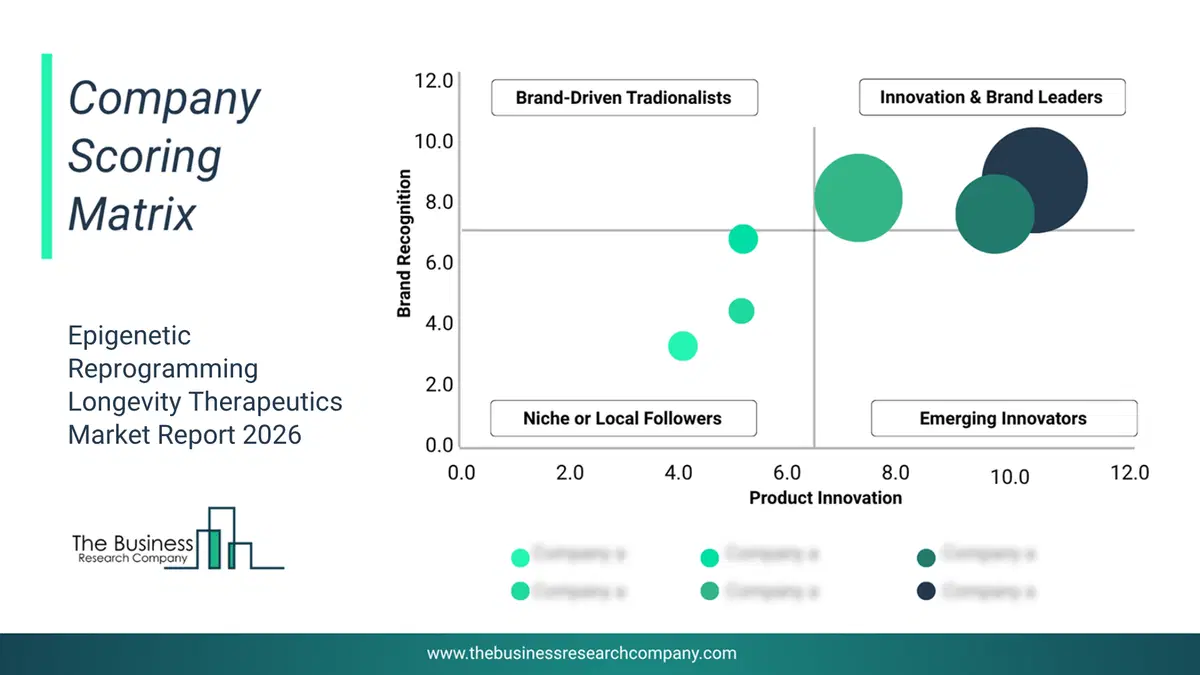
This chart maps companies by product innovation and brand strength, with bubble size indicating relative revenue, helping identify market leaders, challengers, and niche players. This is an illustrative chart; the full report provides a complete and accurate competitive analysis.
Global Epigenetic Reprogramming Longevity Therapeutics Market Trends and Insights
Major companies operating in the epigenetic reprogramming longevity therapeutics market are focusing on developing innovative therapeutics, such as partial epigenetic reprogramming gene therapies to restore youthful cellular function while preserving cell identity. Partial epigenetic reprogramming gene therapies refer to therapeutic approaches that temporarily activate selected reprogramming factors to reverse age-related cellular damage without fully converting mature cells into stem cells. For instance, in January 2026, Life Biosciences LLC, a US-based biotechnology company, received approval from the U.S. Food and Drug Administration (FDA) for investigational therapy ER-100, marking the first-ever cellular rejuvenation therapy using partial epigenetic reprogramming to advance to human clinical trials. This milestone positions ER-100 as a first-in-class investigational approach aiming to partially reset cellular aging signatures while preserving cell identity through controlled epigenetic reprogramming. If successful in early-stage trials, the therapy could help establish proof-of-concept that aging-related cellular dysfunction is reversible in humans. However, its safety, durability of effect, and clinical benefits will only be confirmed through multi-phase human trials over the coming years.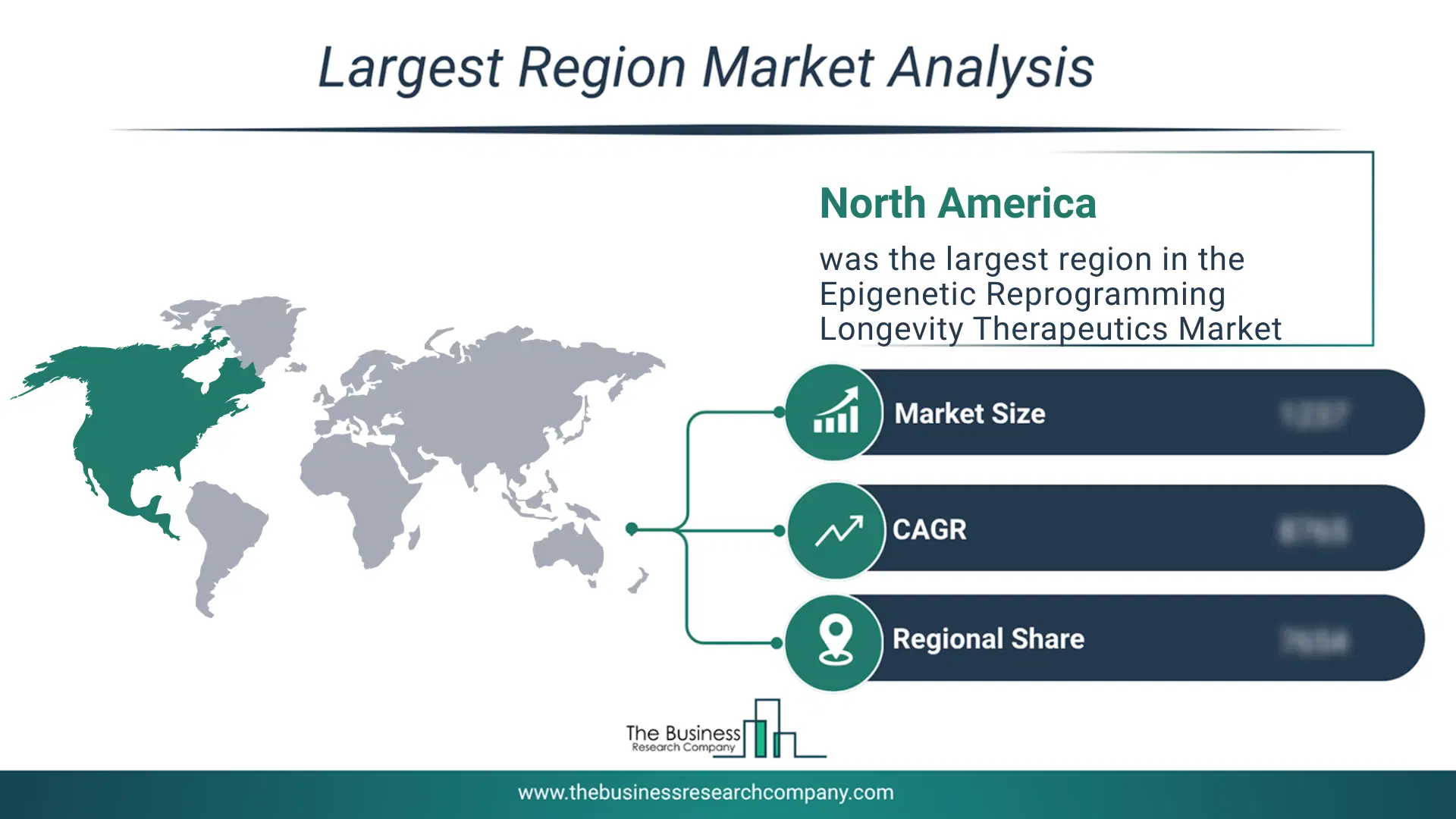
Regional Outlook
North America was the largest region in the epigenetic reprogramming longevity therapeutics market in 2025. Asia-Pacific is expected to be the fastest-growing region in the forecast period. The regions covered in this market report are Asia-Pacific, South East Asia, Western Europe, Eastern Europe, North America, South America, Middle East, Africa. The countries covered in this market report are Australia, Brazil, China, France, Germany, India, Indonesia, Japan, Taiwan, Russia, South Korea, UK, USA, Canada, Italy, Spain.What Defines the Epigenetic Reprogramming Longevity Therapeutics Market?
The epigenetic reprogramming longevity therapeutics market consists of revenues earned by entities by providing services such as cellular rejuvenation therapies, epigenetic modulation services, regenerative medicine solutions, and biological age assessment. The market value includes the value of related goods sold by the service provider or included within the service offering. The epigenetic reprogramming longevity therapeutics market also includes sales of viral and non-viral delivery vectors, senolytic therapeutics, and biological aging clocks. Values in this market are ‘factory gate’ values, that is the value of goods sold by the manufacturers or creators of the goods, whether to other entities (including downstream manufacturers, wholesalers, distributors and retailers) or directly to end customers. The value of goods in this market includes related services sold by the creators of the goods.How is Market Value Defined and Measured?
The market value is defined as the revenues that enterprises gain from the sale of goods and/or services within the specified market and geography through sales, grants, or donations in terms of the currency (in USD unless otherwise specified). The revenues for a specified geography are consumption values that are revenues generated by organizations in the specified geography within the market, irrespective of where they are produced. It does not include revenues from resales along the supply chain, either further along the supply chain or as part of other products.
This chart presents market attractiveness based on a quantitative evaluation of growth, competition, strategic alignment, and risk, offering a clear view of opportunity areas for decision-making. This chart is for illustrative purposes; the full report contains the complete analysis.

This chart highlights the Total Addressable Market (TAM) by estimating the maximum revenue opportunity using an assumption-driven approach, supporting strategic planning and opportunity sizing across markets. The chart is illustrative; the full report provides a more comprehensive analysis.
What Key Data and Analysis Are Included in the Epigenetic Reprogramming Longevity Therapeutics Market Report 2026?
The epigenetic reprogramming longevity therapeutics market research report is one of a series of new reports from The Business Research Company that provides market statistics, including industry global market size, regional shares, competitors with the market share, detailed market segments, market trends and opportunities, and any further data you may need to thrive in the epigenetic reprogramming longevity therapeutics industry. The market research report delivers a complete perspective of everything you need, with an in-depth analysis of the current and future state of the industry.Epigenetic Reprogramming Longevity Therapeutics Market Report Forecast Analysis
| Report Attribute | Details |
|---|---|
| Market Size Value In 2026 | $9.13 billion |
| Revenue Forecast In 2030 | $16.14 billion |
| Growth Rate | CAGR of 15.3% from 2026 to 2030 |
| Base Year For Estimation | 2025 |
| Actual Estimates/Historical Data | 2020-2025 |
| Forecast Period | 2026 - 2030 |
| Market Representation | Revenue in USD Billion and CAGR from 2026 to 2030 |
| Segments Covered | Therapy Type, Technology Platform, Delivery Mechanism, Application, End User |
| Regional Scope | Asia-Pacific, Western Europe, Eastern Europe, North America, South America, Middle East, Africa |
| Country Scope | The countries covered in the report are Australia, Brazil, China, France, Germany, India, Indonesia, Japan, Taiwan, Russia, South Korea, UK, USA, Canada, Italy, Spain. |
| Key Companies Profiled | Retro Biosciences Inc., Altos Labs Inc., NewLimit Inc., Life Biosciences Inc., Serina Therapeutics Inc., CellCuRex, Clock Health Limited, Junevity Inc., LIVIUS PTE. LTD., Rejuvenate Bio Inc., SENISCA Limited, Shift Bioscience Limited, Turn Biotechnologies Inc., Genflow Biosciences PLC, YouthBio Therapeutics Inc., Calico Life Sciences LLC, Unity Biotechnology Inc., Cyclarity Therapeutics, Oisin Biotechnologies, Cellular Longevity Inc. |
| Customization Scope | Request for Customization |
| Pricing And Purchase Options | Explore Purchase Options |