

Episodic Ataxia Treatment Market Report 2026
Global Outlook – By Type (Ataxia Telangiectasia, Episodic Ataxia, Spinocerebellar Ataxia, Friedreich’s Ataxia, Other Types), By Treatment (Medications, Levodopa, Pramipexole, Venlafaxine, Other Treatments), By Route Of Administration (Oral, Parenteral, Other Routes Of Administrations), By Distribution Channel (Direct Tender, Retail Sales, Other Distribution Channels), By End User (Hospital, Clinics, Home Healthcare, Other End Users) - Market Size, Trends, Strategies, and Forecast to 2030
Episodic Ataxia Treatment Market Overview
• Episodic Ataxia Treatment market size has reached to $11.78 billion in 2025 • Expected to grow to $16.02 billion in 2030 at a compound annual growth rate (CAGR) of 6.3% • Growth Driver: The Increasing Prevalence Of Neurological Disorders Fuels Growth In The Episodic Ataxia Treatment Market • Market Trend: Innovative Treatments For Episodic Ataxia Targeting Neurodegenerative Disorders • North America was the largest region in 2025 and Asia-Pacific is the fastest growing region.What Is Covered Under Episodic Ataxia Treatment Market?
Episodic ataxia treatment refers to the medical approaches used to manage and alleviate symptoms of episodic ataxia, a rare neurological disorder characterized by intermittent episodes of poor coordination, balance problems, and sometimes vertigo. It involves the use of medications, therapies, and lifestyle modifications to control symptoms and improve the quality of life for individuals affected by episodic ataxia. The main types of episodic ataxia treatment are ataxia telangiectasia, episodic ataxia, spinocerebellar ataxia, and Friedreich’s ataxia. Ataxia telangiectasia is a rare, inherited disorder that affects the nervous system and immune system. It is characterized by progressive movement problems, an increased risk of cancer, and other health issues. The various treatments include levodopa, pramipexole, venlafaxine, and others, and are used through several routes of administration including oral, parenteral, and others. The multiple distribution channels include direct tender, retail sales, and others, and are used by various end users such as direct tender, retail sales, and others.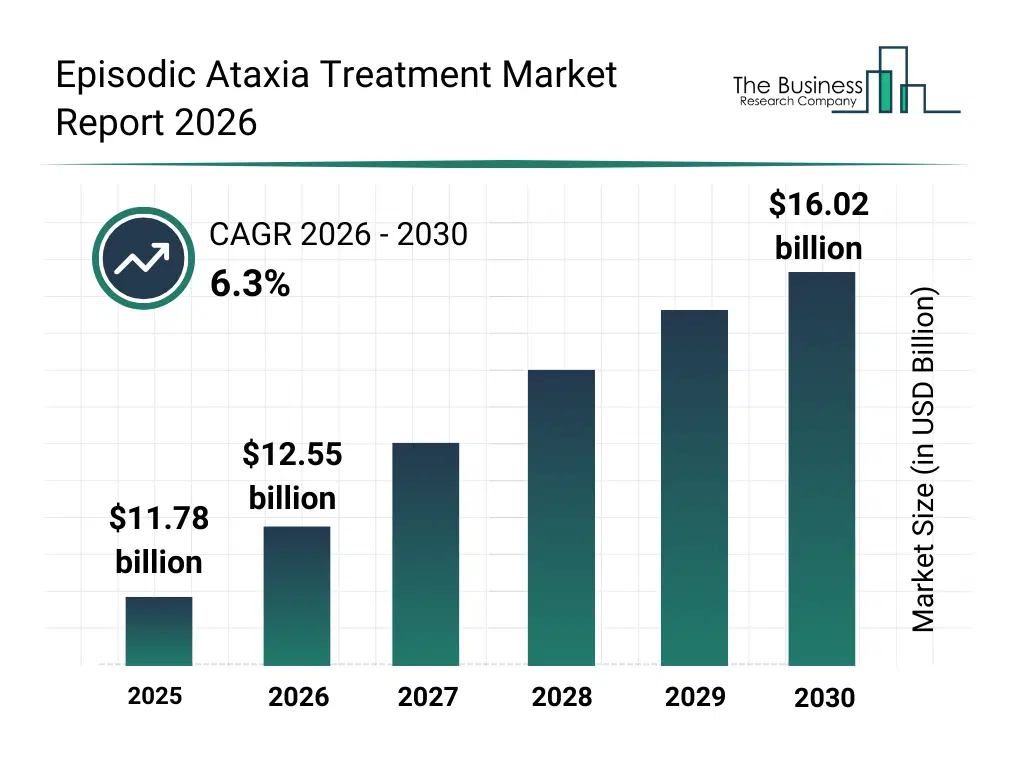
What Is The Episodic Ataxia Treatment Market Size and Share 2026?
The episodic ataxia treatment market size has grown strongly in recent years. It will grow from $11.78 billion in 2025 to $12.55 billion in 2026 at a compound annual growth rate (CAGR) of 6.5%. The growth in the historic period can be attributed to limited treatment options, neurologist awareness growth, rare disease diagnosis rates, medication-based symptom control, hospital-based neurology care.What Is The Episodic Ataxia Treatment Market Growth Forecast?
The episodic ataxia treatment market size is expected to see strong growth in the next few years. It will grow to $16.02 billion in 2030 at a compound annual growth rate (CAGR) of 6.3%. The growth in the forecast period can be attributed to genetic research advancements, orphan drug development, personalized neurology therapies, homecare treatment expansion, early diagnostic improvements. Major trends in the forecast period include growing focus on rare neurological disorders, increased use of symptom-control medications, expansion of long-term disease management, rising adoption of personalized treatment plans, emphasis on supportive and rehabilitative care.
Global Episodic Ataxia Treatment Market Segmentation
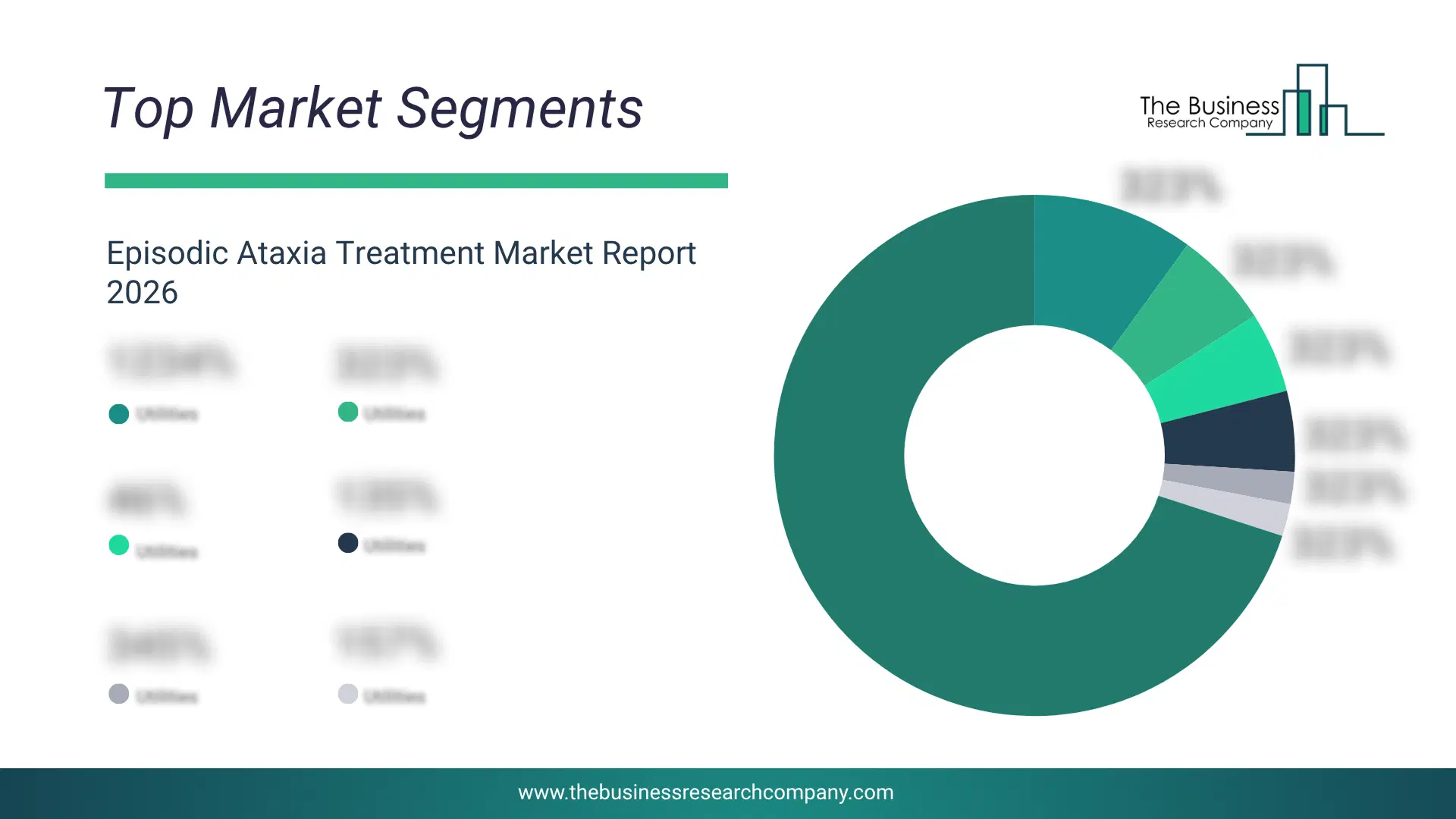
1) By Type: Ataxia Telangiectasia, Episodic Ataxia, Spinocerebellar Ataxia, Friedreich’s Ataxia, Other Types 2) By Treatment: Medications, Levodopa, Pramipexole, Venlafaxine, Other Treatments 3) By Route Of Administration: Oral, Parenteral, Other Routes Of Administrations 4) By Distribution Channel: Direct Tender, Retail Sales, Other Distribution Channels 5) By End User: Hospital, Clinics, Home Healthcare, Other End Users Subsegments: 1) By Ataxia Telangiectasia: Classic Ataxia Telangiectasia, Variant Ataxia Telangiectasia, Early-Onset Ataxia Telangiectasia, Late-Onset Ataxia Telangiectasia 2) By Episodic Ataxia: Episodic Ataxia Type 1 (EA1), Episodic Ataxia Type 2 (EA2), Episodic Ataxia Type 3 (EA3), Other Episodic Ataxias 3) By Spinocerebellar Ataxia: SCA Type 1, SCA Type 2, SCA Type 3, SCA Type 6 4) By Friedreich’s Ataxia: Classic Friedreich’s Ataxia, Late-Onset Friedreich’s Ataxia, Atypical Friedreich’s Ataxia 5) By Other Types: Secondary Ataxias, Metabolic Ataxias, Drug-Induced Ataxias, Trauma-Induced AtaxiasWhat Are The Drivers Of The Episodic Ataxia Treatment Market?
The increasing prevalence of neurological disorders is expected to propel the growth of the episodic ataxia treatment market going forward. Neurological disorders are diseases that affect the central and peripheral nervous systems, including the brain, spinal cord, cranial and peripheral nerves, autonomic nervous system, nerve roots, neuromuscular junction, and muscles. The increasing prevalence of neurological disorders can be attributed to several factors, including the aging population, genetic factors, and infectious diseases. Episodic ataxia treatment is used in neurological disorders to address the symptoms and improve the management of conditions involving intermittent loss of coordination and balance. For instance, in April 2024, according to the Alzheimer's Association, a US-based nonprofit organization, in 2023, more than 11 million family members and other unpaid caregivers provided an estimated 18.4 billion hours of care to people with Alzheimer's or other dementias.This number could grow to 13.8 million by 2060, barring the development of medical breakthroughs to prevent or cure AD. Therefore, the increasing prevalence of neurological disorders is driving the episodic ataxia treatment industry. The increasing healthcare spending is expected to propel the growth of the episodic ataxia treatment market going forward. Healthcare spending refers to the total expenditure on medical services, treatments, and prescription drugs by governments, insurers, and individuals. Healthcare spending is increasing as more governments, insurers, and individuals recognize the need for advanced treatments and specialized therapies, and prioritize funding to improve patient care and access to medical services. Episodic ataxia treatments play a crucial role in increasing healthcare spending by providing specialized therapies for rare neurological disorders, improving patient outcomes, and driving demand for advanced medical care. For instance, according to Centers for Medicare & Medicaid Services, a U.S-based government agency reported that, medicare spending grew 8.1% to $1,029.8 billion in 2023, or 21 percent of total NHE. Further, prescription drug spending increased 11.4% to $449.7 billion in 2023, faster than the 7.8% growth in 2022. Therefore, increasing healthcare spendingis driving the growth of the episodic ataxia treatment industry.Key Players In The Global Episodic Ataxia Treatment Market
Major companies operating in the episodic ataxia treatment market are BioMarin Pharmaceutical Inc., Neurocrine Biosciences Inc., PTC Therapeutics Inc., Catalyst Pharmaceuticals Inc., Design Therapeutics Inc., Larimar Therapeutics Inc., Voyager Therapeutics Inc., Capsida Biotherapeutics Inc., Adverum Biotechnologies Inc., CRISPR Therapeutics AG, Banner Health, Biogen Inc., Reata Pharmaceuticals Inc., Minoryx Therapeutics, EryDel, Matrix Biomed, IntraBio, Biohaven Pharmaceuticals Ltd., Stealth BioTherapeutics Inc., Acasti Pharma, Seelos Therapeutics Inc., Q‑State Biosciences, Locanabio, Lexeo Therapeutics, Retrotope Inc., Ionis Pharmaceuticals Inc.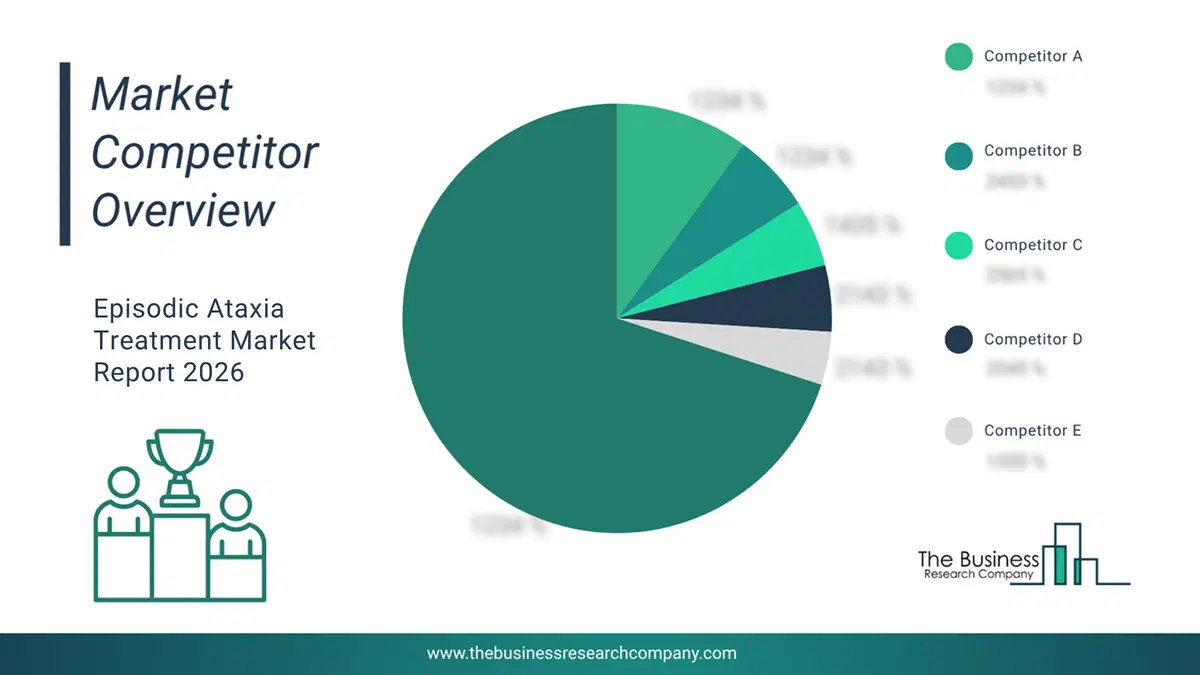
This chart is for illustrative purposes; the full report includes a detailed competitor analysis and comprehensive overview of the top 10 companies in the market.
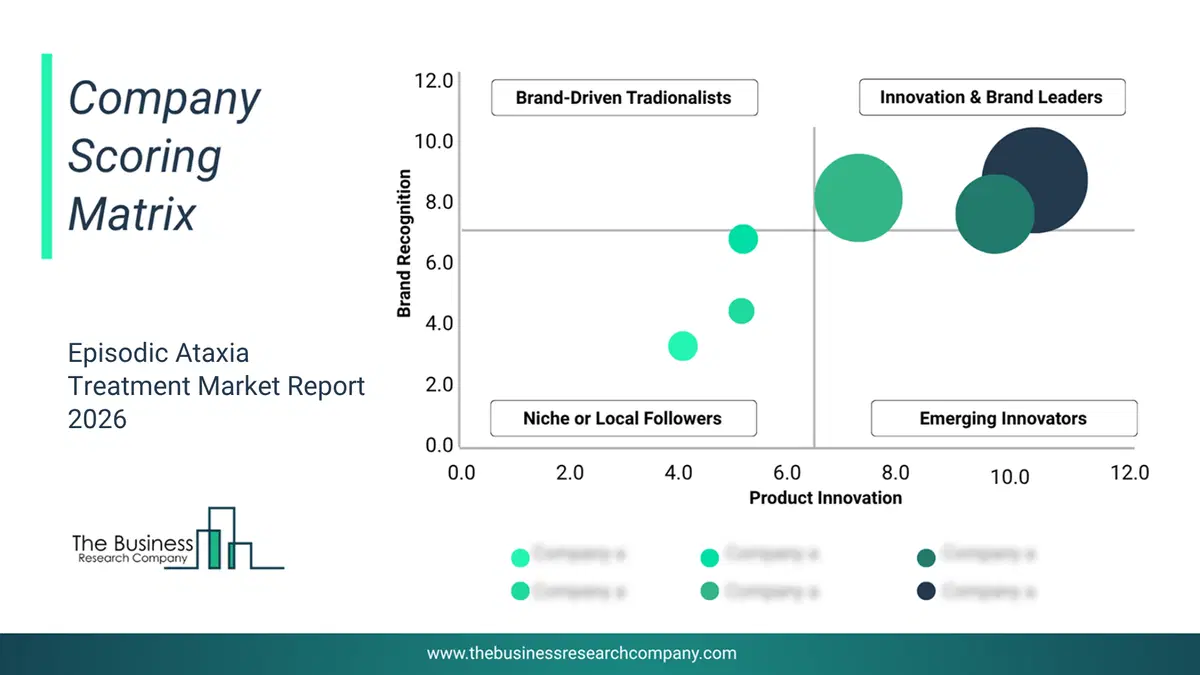
This chart maps companies by product innovation and brand strength, with bubble size indicating relative revenue, helping identify market leaders, challengers, and niche players. This is an illustrative chart; the full report provides a complete and accurate competitive analysis.
Global Episodic Ataxia Treatment Market Trends and Insights
Major companies operating in the episodic ataxia treatment market are focused on developing innovative solutions, such as Friedreich's ataxia (FA) treatment, to enhance patient outcomes and address the unmet needs associated with this rare neurological condition. Episodic ataxia (EA) is a rare neurological disorder characterized by intermittent episodes of ataxia and a lack of voluntary coordination of muscle movements. These episodes can be brief or prolonged and vary in frequency and severity. For instance, in February 2024, Biogen Inc., a US-based biotechnology company, announced the approval of SKYCLARYS (omaveloxolone) for treating Friedreich's ataxia (FA). Omaveloxolone addresses the underlying mitochondrial dysfunction associated with FA, potentially altering the disease's progression rather than merely alleviating symptoms. The therapy acts as a potent transcriptional modulator, which helps restore mitochondrial function and cellular energy production.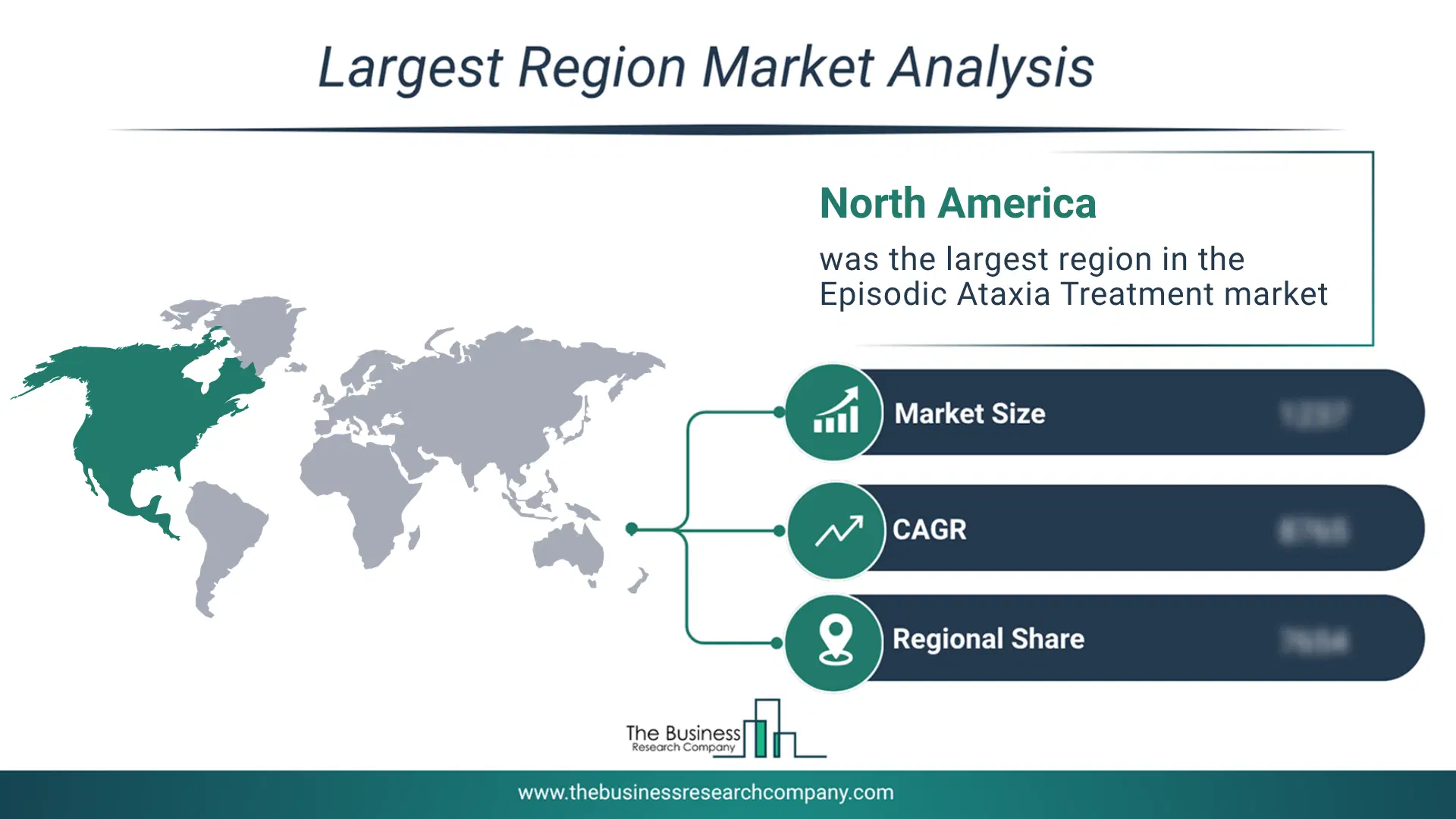
Regional Outlook
North America was the largest region in the episodic ataxia treatment market in 2025. Asia-Pacific is expected to be the fastest-growing region in the forecast period. The regions covered in this market report are Asia-Pacific, South East Asia, Western Europe, Eastern Europe, North America, South America, Middle East, Africa. The countries covered in this market report are Australia, Brazil, China, France, Germany, India, Indonesia, Japan, Taiwan, Russia, South Korea, UK, USA, Canada, Italy, Spain.What Defines the Episodic Ataxia Treatment Market?
The episodic ataxia treatment market consists of revenues earned by entities by providing services such as genetic counseling, physical therapy, and occupational therapy. The market value includes the value of related goods sold by the service provider or included within the service offering. The episodic ataxia treatment market also includes sales of antiepileptic drugs, beta-blockers, genetic testing kits, and wearable health monitors. Values in this market are ‘factory gate’ values, that is, the value of goods sold by the manufacturers or creators of the goods, whether to other entities (including downstream manufacturers, wholesalers, distributors, and retailers) or directly to end customers. The value of goods in this market includes related services sold by the creators of the goods.How is Market Value Defined and Measured?
The market value is defined as the revenues that enterprises gain from the sale of goods and/or services within the specified market and geography through sales, grants, or donations in terms of the currency (in USD unless otherwise specified). The revenues for a specified geography are consumption values that are revenues generated by organizations in the specified geography within the market, irrespective of where they are produced. It does not include revenues from resales along the supply chain, either further along the supply chain or as part of other products.
This chart presents market attractiveness based on a quantitative evaluation of growth, competition, strategic alignment, and risk, offering a clear view of opportunity areas for decision-making. This chart is for illustrative purposes; the full report contains the complete analysis.

This chart highlights the Total Addressable Market (TAM) by estimating the maximum revenue opportunity using an assumption-driven approach, supporting strategic planning and opportunity sizing across markets. The chart is illustrative; the full report provides a more comprehensive analysis.
What Key Data and Analysis Are Included in the Episodic Ataxia Treatment Market Report 2026?
The episodic ataxia treatment market research report is one of a series of new reports from The Business Research Company that provides market statistics, including industry global market size, regional shares, competitors with the market share, detailed market segments, market trends and opportunities, and any further data you may need to thrive in the episodic ataxia treatment industry. The market research report delivers a complete perspective of everything you need, with an in-depth analysis of the current and future state of the industry.Episodic Ataxia Treatment Market Report Forecast Analysis
| Report Attribute | Details |
|---|---|
| Market Size Value In 2026 | $12.55 billion |
| Revenue Forecast In 2030 | $16.02 billion |
| Growth Rate | CAGR of 6.3% from 2026 to 2030 |
| Base Year For Estimation | 2025 |
| Actual Estimates/Historical Data | 2020-2025 |
| Forecast Period | 2026 - 2030 |
| Market Representation | Revenue in USD Billion and CAGR from 2026 to 2030 |
| Segments Covered | Type, Treatment, Route Of Administration, Distribution Channel, End User |
| Regional Scope | Asia-Pacific, Western Europe, Eastern Europe, North America, South America, Middle East, Africa |
| Country Scope | The countries covered in the report are Australia, Brazil, China, France, Germany, India, Indonesia, Japan, Taiwan, Russia, South Korea, UK, USA, Canada, Italy, Spain |
| Key Companies Profiled | BioMarin Pharmaceutical Inc., Neurocrine Biosciences Inc., PTC Therapeutics Inc., Catalyst Pharmaceuticals Inc., Design Therapeutics Inc., Larimar Therapeutics Inc., Voyager Therapeutics Inc., Capsida Biotherapeutics Inc., Adverum Biotechnologies Inc., CRISPR Therapeutics AG, Banner Health, Biogen Inc., Reata Pharmaceuticals Inc., Minoryx Therapeutics, EryDel, Matrix Biomed, IntraBio, Biohaven Pharmaceuticals Ltd., Stealth BioTherapeutics Inc., Acasti Pharma, Seelos Therapeutics Inc., Q‑State Biosciences, Locanabio, Lexeo Therapeutics, Retrotope Inc., Ionis Pharmaceuticals Inc. |
| Customization Scope | Request for Customization |
| Pricing And Purchase Options | Explore Purchase Options |