

Epoxy Composite Market Report 2026
Global Outlook – By Fiber Type (Glass Fiber, Carbon Fiber, Other Fiber Types), By Manufacturing Process (Lay-up, Compression Molding, Resin Injection, Resin Transfer Molding, Filament Winding, Pultrusion), By End User (Aerospace And Defense, Automotive, Electrical And Electronics, Wind Energy, Sporting Goods, Marine, Piping, Other End Users) – Market Size, Trends, Strategies, and Forecast to 2030
Epoxy Composite Market Overview
• Epoxy Composite market size has reached to $39.79 billion in 2025 • Expected to grow to $57.54 billion in 2030 at a compound annual growth rate (CAGR) of 7.8% • Growth Driver: Expanding Automotive Industry Boosts Epoxy Composite Market Growth For Lightweight, High-Performance Components • Market Trend: Innovative Bio-Based Resin Systems Enhance Strength, Durability, And Sustainability In Composites • Asia-Pacific was the largest region and fastest growing region.What Is Covered Under Epoxy Composite Market?
Epoxy composite is a polymer material that uses epoxy resin to create a polymer matrix reinforced with fibers or other materials. They offer low densities relative to metals and high strength-to-weight ratios, making them ideal for aerospace and automotive applications. The main types of fibers included in epoxy composites are glass fiber, carbon fiber and others. Glass fiber refers to a type of reinforced fiber made from fine strands of glass. The types of manufacturing processes are lay-up, compression molding, resin injection, resin transfer molding, filament winding and pultrusion, used by various end users, including aerospace and defense, automotive, electrical and electronics, wind energy, sporting goods, marine, piping and others.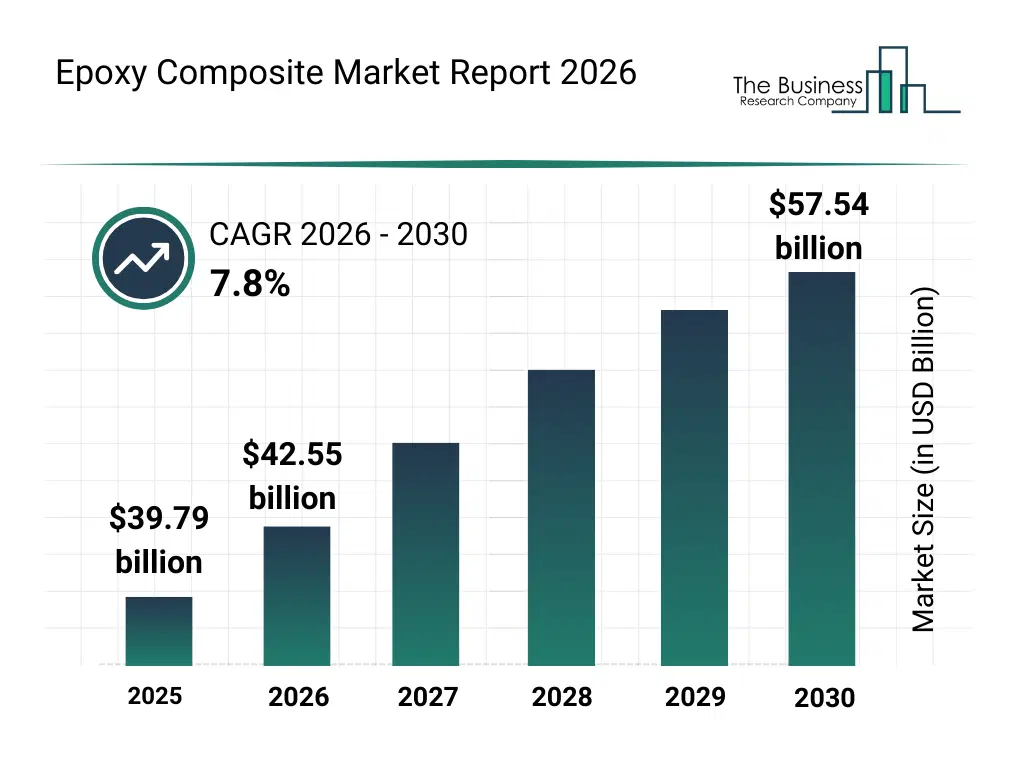
What Is The Epoxy Composite Market Size and Share 2026?
The epoxy composite market size has grown strongly in recent years. It will grow from $39.79 billion in 2025 to $42.55 billion in 2026 at a compound annual growth rate (CAGR) of 6.9%. The growth in the historic period can be attributed to growth in aerospace manufacturing, expansion of automotive lightweighting, increased wind energy installations, availability of epoxy resin systems, demand for high strength materials.What Is The Epoxy Composite Market Growth Forecast?
The epoxy composite market size is expected to see strong growth in the next few years. It will grow to $57.54 billion in 2030 at a compound annual growth rate (CAGR) of 7.8%. The growth in the forecast period can be attributed to growth of electric vehicles, rising aircraft production, expansion of renewable energy projects, advancements in composite manufacturing processes, increasing demand for fuel efficiency. Major trends in the forecast period include increasing use in lightweight automotive components, rising adoption in aerospace structures, growing demand for high strength materials, expansion of wind energy composite applications, increasing focus on durability and performance.
Global Epoxy Composite Market Segmentation
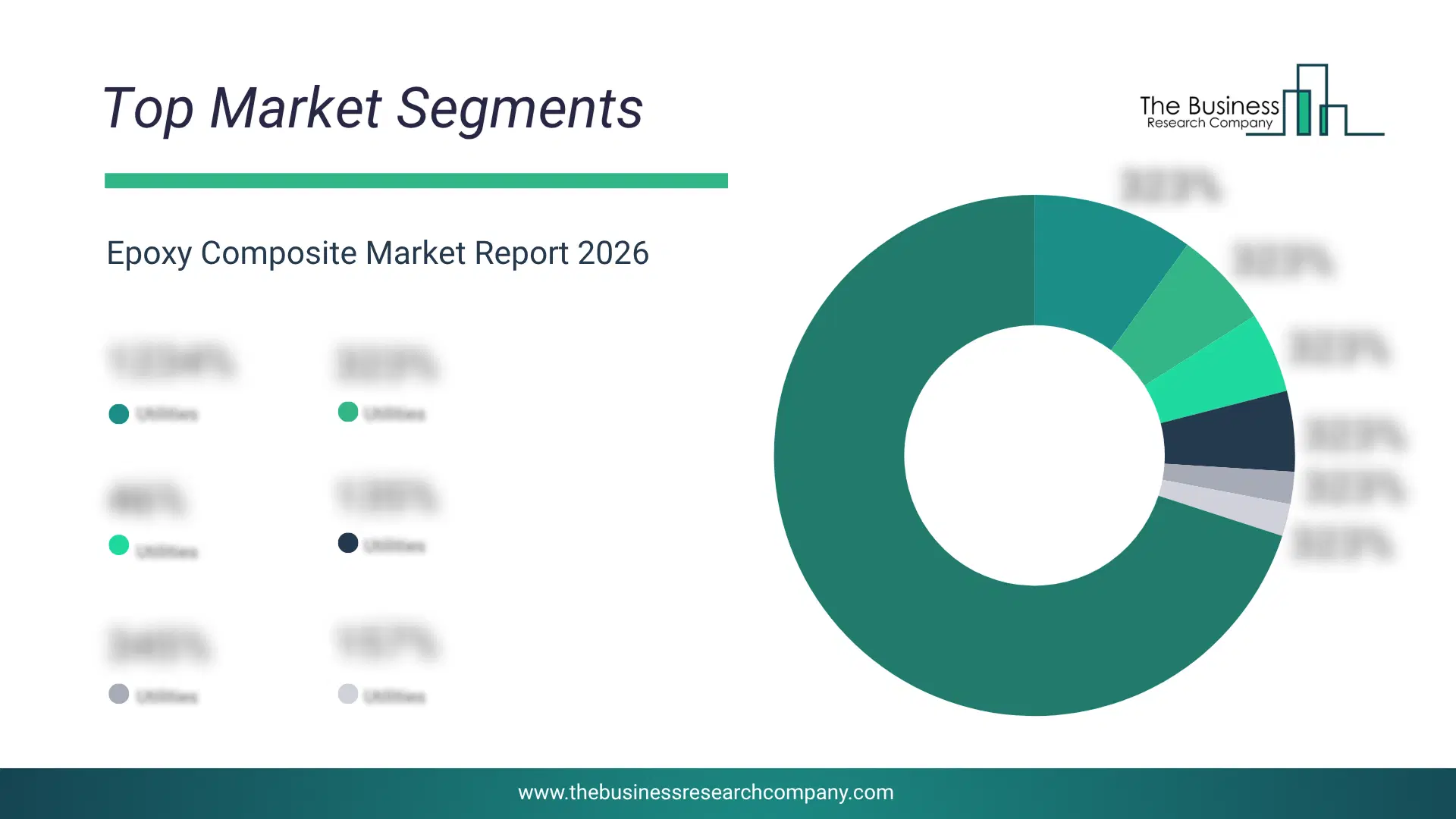
1) By Fiber Type: Glass Fiber, Carbon Fiber, Other Fiber Types 2) By Manufacturing Process: Lay-up, Compression Molding, Resin Injection, Resin Transfer Molding, Filament Winding, Pultrusion 3) By End User: Aerospace And Defense, Automotive, Electrical And Electronics, Wind Energy, Sporting Goods, Marine, Piping, Other End Users Subsegments: 1) By Glass Fiber: E-Glass Fiber, S-Glass Fiber, C-Glass Fiber 2) By Carbon Fiber: High-Strength Carbon Fiber, Intermediate Modulus Carbon Fiber, High Modulus Carbon Fiber 3) By Other Fiber Types: Aramid Fiber, Natural Fiber, Basalt FiberWhat Is The Driver Of The Epoxy Composite Market?
The growing automotive industry is expected to propel the growth of the epoxy composite market going forward. The automotive industry refers to a broad range of businesses and organizations involved in designing, developing, producing and modifying motor vehicles. The growing automotive industry is primarily due to rising consumer demand for advanced, efficient, and affordable vehicles driven by increasing incomes and evolving mobility needs. Epoxy composites are used in the automotive industry to manufacture safe, fuel-efficient vehicles with better performance and design options. These composites are lightweight and have high specific stiffness, making them ideal for automotive components. For instance, in April 2024, according to the Serbian Association of Vehicle and Parts Importers, a Serbia-based professional automotive organization, 93,546,599 vehicles (including 67,133,570 passenger vehicles) were produced worldwide in 2023, up from 84,830,376 vehicles in 2022. Therefore, the growing automotive industry is driving the growth of the epoxy composite industry.Key Players In The Global Epoxy Composite Market
Major companies operating in the epoxy composite market are Mitsubishi Chemical Corporation, Toray Industries Inc., Westlake Epoxy Inc., Arkema S.A., Nanya Plastics Corporation, Owens Corning, Sika AG, Huntsman Corp. LLC, Teijin Ltd., Aditya Birla Chemicals, Sumitomo Bakelite Co. Ltd., Hexcel Corp., Solvay S.A., SGL Carbon, Koninklijke Ten Cate B.V., Gurit Holding, Scott Bader Company Ltd., RAMPF Group, L&L Products India Pvt. Ltd., Composite One LLC, Park Aerospace Corp., Hindoostan Composite Solutions, Axiom Materials Inc., Gordon Composites Inc., Barrday Inc., Quantum Composites, Sanders Composites, Copps Industries Inc.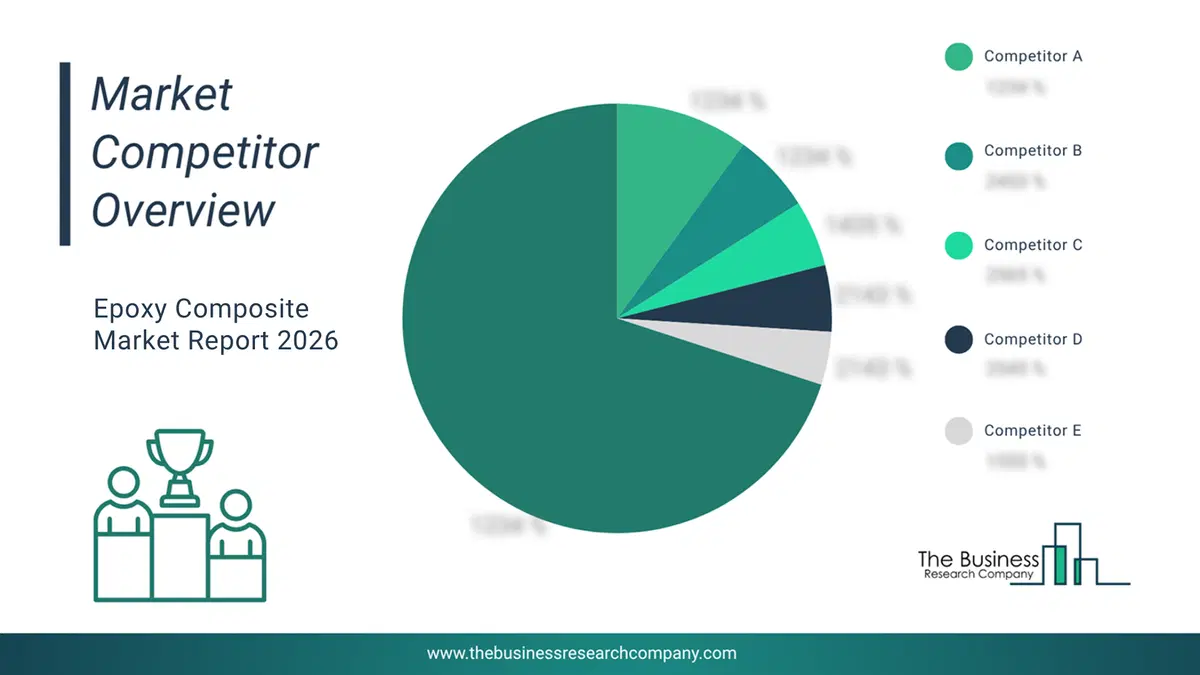
This chart is for illustrative purposes; the full report includes a detailed competitor analysis and comprehensive overview of the top 10 companies in the market.
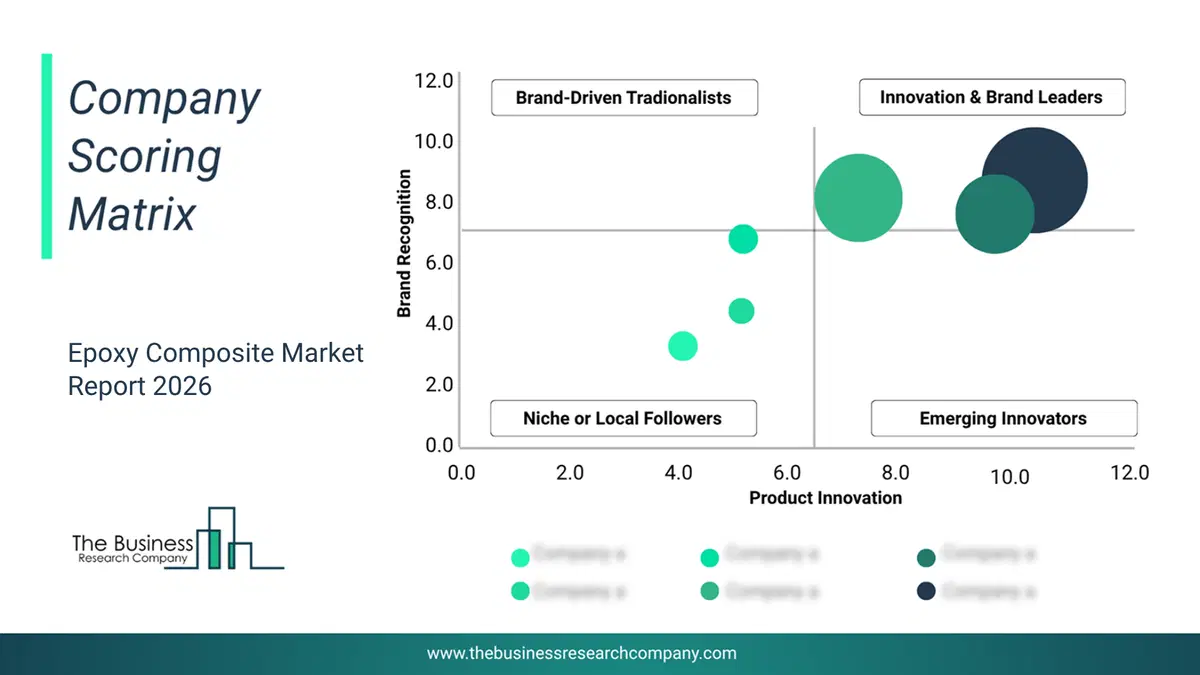
This chart maps companies by product innovation and brand strength, with bubble size indicating relative revenue, helping identify market leaders, challengers, and niche players. This is an illustrative chart; the full report provides a complete and accurate competitive analysis.
Global Epoxy Composite Market Trends and Insights
Major companies operating in the epoxy composite market are focusing on developing innovative solutions such as advanced high-performance resin formulations to enhance strength, durability, and sustainability in composite applications. Advanced high-performance resin formulations are specially engineered epoxy or polymer systems designed to provide superior mechanical strength, thermal stability, and chemical resistance for demanding composite applications. For instance, in September 2025, Cristex Composite Materials Ltd., a UK-based composite materials supplier and solutions company, launched a new range of bio-based epoxy resin and hardener systems to support the production of sustainable composites. The new systems include formulations suitable for both hand-lamination and infusion processes, offering bio-based content ranging from 28% to 46%. These resins are compatible with a variety of reinforcements, including carbon, glass, and natural fibers, enabling manufacturers to create high-performance, eco-friendly composite structures across marine, automotive, renewable energy, and sporting goods applications.What Are Latest Mergers And Acquisitions In The Epoxy Composite Market?
In December 2025, Cambium Biomaterials Inc. a US-based technology company, acquired SHD Group for an undisclosed amount. With this acquisition, Cambium aims to combine its AI‑driven materials innovation capabilities with SHD’s established composite manufacturing capacity to accelerate development and global production of high‑performance composite materials. SHD Group is a UK–based company that provides a variety of epoxy composite prepreg materials.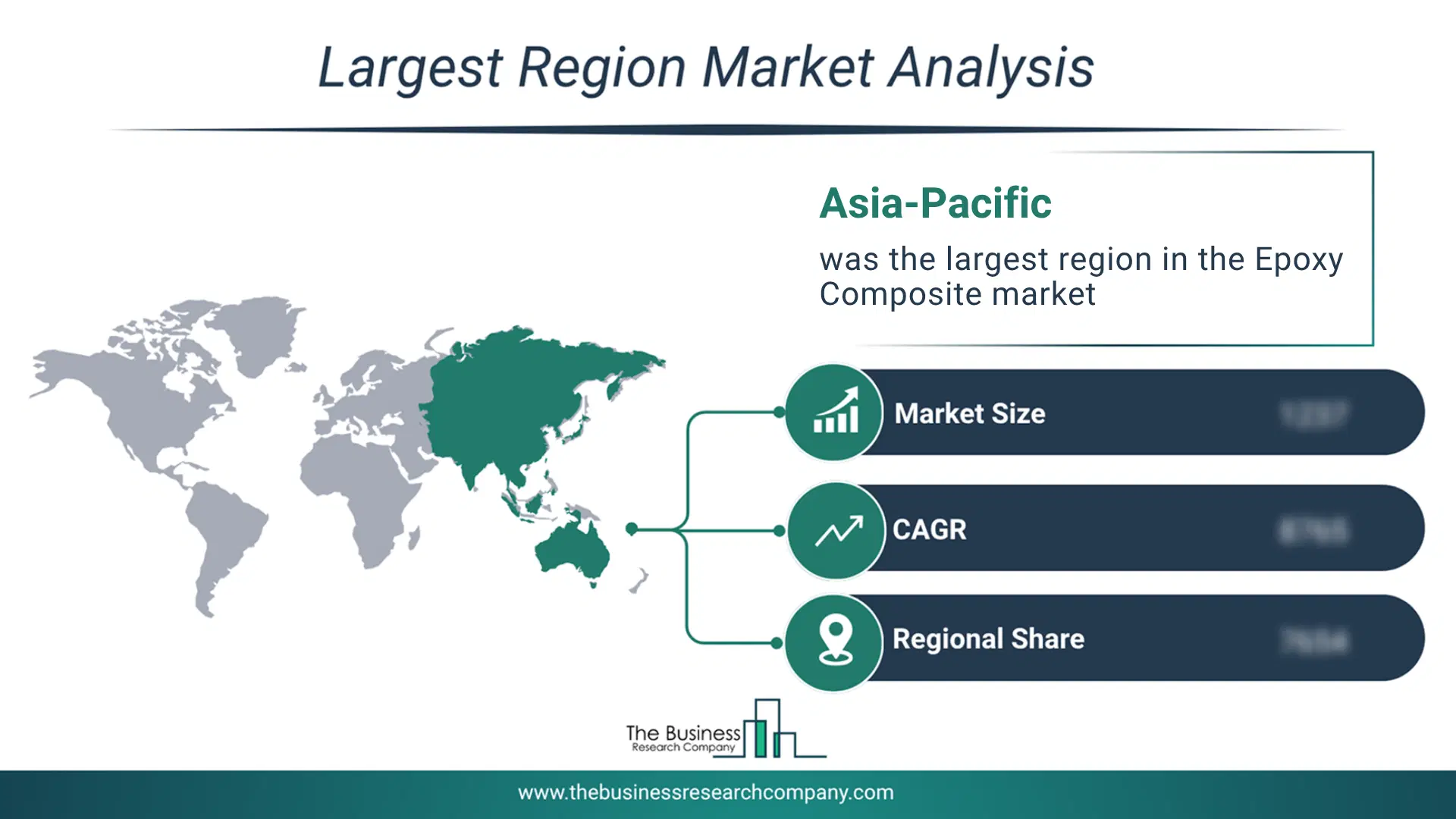
Regional Insights
Asia-Pacific was the largest region in the epoxy composite market in 2025. It is expected to be the fastest-growing region in the forecast period. The regions covered in this market report are Asia-Pacific, South East Asia, Western Europe, Eastern Europe, North America, South America, Middle East, Africa The countries covered in this market report are Australia, Brazil, China, France, Germany, India, Indonesia, Japan, Taiwan, Russia, South Korea, UK, USA, Canada, Italy, SpainWhat Defines the Epoxy Composite Market?
The epoxy composite market consists of sales of adhesives, epoxy-based coatings, wind turbine blades and sports equipment. Values in this market are ‘factory gate’ values, that is, the value of goods sold by the manufacturers or creators of the goods, whether to other entities (including downstream manufacturers, wholesalers, distributors and retailers) or directly to end customers. The value of goods in this market includes related services sold by the creators of the goods.How is Market Value Defined and Measured?
The market value is defined as the revenues that enterprises gain from the sale of goods and/or services within the specified market and geography through sales, grants, or donations in terms of the currency (in USD unless otherwise specified). The revenues for a specified geography are consumption values that are revenues generated by organizations in the specified geography within the market, irrespective of where they are produced. It does not include revenues from resales along the supply chain, either further along the supply chain or as part of other products.
This chart presents market attractiveness based on a quantitative evaluation of growth, competition, strategic alignment, and risk, offering a clear view of opportunity areas for decision-making. This chart is for illustrative purposes; the full report contains the complete analysis.

This chart highlights the Total Addressable Market (TAM) by estimating the maximum revenue opportunity using an assumption-driven approach, supporting strategic planning and opportunity sizing across markets. The chart is illustrative; the full report provides a more comprehensive analysis.
What Key Data and Analysis Are Included in the Epoxy Composite Market Report 2026?
The epoxy composite market research report is one of a series of new reports from The Business Research Company that provides market statistics, including industry global market size, regional shares, competitors with the market share, detailed market segments, market trends and opportunities, and any further data you may need to thrive in the epoxy composite industry. The market research report delivers a complete perspective of everything you need, with an in-depth analysis of the current and future state of the industry.Epoxy Composite Market Report Forecast Analysis
| Report Attribute | Details |
|---|---|
| Market Size Value In 2026 | $42.55 billion |
| Revenue Forecast In 2030 | $57.54 billion |
| Growth Rate | CAGR of 6.9% from 2026 to 2030 |
| Base Year For Estimation | 2025 |
| Actual Estimates/Historical Data | 2020-2025 |
| Forecast Period | 2026 - 2030 |
| Market Representation | Revenue in USD Billion and CAGR from 2026 to 2030 |
| Segments Covered | Fiber Type, Manufacturing Process, End User |
| Regional Scope | Asia-Pacific, Western Europe, Eastern Europe, North America, South America, Middle East, Africa |
| Country Scope | The countries covered in this market report are Australia, Brazil, China, France, Germany, India, Indonesia, Japan, Taiwan, Russia, South Korea, UK, USA, Canada, Italy, Spain |
| Key Companies Profiled | Mitsubishi Chemical Corporation, Toray Industries Inc., Westlake Epoxy Inc., Arkema S.A., Nanya Plastics Corporation, Owens Corning, Sika AG, Huntsman Corp. LLC, Teijin Ltd., Aditya Birla Chemicals, Sumitomo Bakelite Co. Ltd., Hexcel Corp., Solvay S.A., SGL Carbon, Koninklijke Ten Cate B.V., Gurit Holding, Scott Bader Company Ltd., RAMPF Group, L&L Products India Pvt. Ltd., Composite One LLC, Park Aerospace Corp., Hindoostan Composite Solutions, Axiom Materials Inc., Gordon Composites Inc., Barrday Inc., Quantum Composites, Sanders Composites, Copps Industries Inc. |
| Customization Scope | Request for Customization |
| Pricing And Purchase Options | Explore Purchase Options |