

Esophageal Dilator Market Report 2026
Global Outlook – By Dilator Type (Balloon Dilators, Mechanical Dilators, Hydrostatic Dilators), By Material (Plastic, Metal, Other Materials), By Esophageal Disease (Achalasia, Esophageal Strictures, Zenker's Diverticulum, Esophageal Cancer), By End User (Hospitals, Ambulatory Surgical Centers, Clinics, Doctors' Offices) – Market Size, Trends, Strategies, and Forecast to 2030
Esophageal Dilator Market Overview
• Esophageal Dilator market size has reached to $1.57 billion in 2025 • Expected to grow to $1.99 billion in 2030 at a compound annual growth rate (CAGR) of 4.8% • Growth Driver: Rising Incidence of Esophageal Disorders Driving Market Growth for Esophageal Dilators • North America was the largest region in 2025.What Is Covered Under Esophageal Dilator Market?
An esophageal dilator is a medical device used to stretch or widen the esophagus, the muscular tube that carries food and liquids from the throat to the stomach. This procedure is typically performed when the esophagus becomes narrowed (a condition called esophageal stricture), which can cause difficulty in swallowing (dysphagia), pain, or other complications. The primary purpose of esophageal dilators is to treat or relieve obstructions or narrowing in the esophagus, improving the patient's ability to swallow. The main types of dilators in the esophageal dilator market are balloon dilators, mechanical dilators, and hydrostatic dilators. Balloon esophageal dilators are medical devices used to widen or expand the esophagus. The dilators are made from materials such as plastic, metal, and other substances. They are utilized to address several esophageal conditions, including achalasia, esophageal strictures, zenker's diverticulum, and esophageal cancer. The primary end users of these dilators are hospitals, ambulatory surgical centers, clinics, and doctors' offices.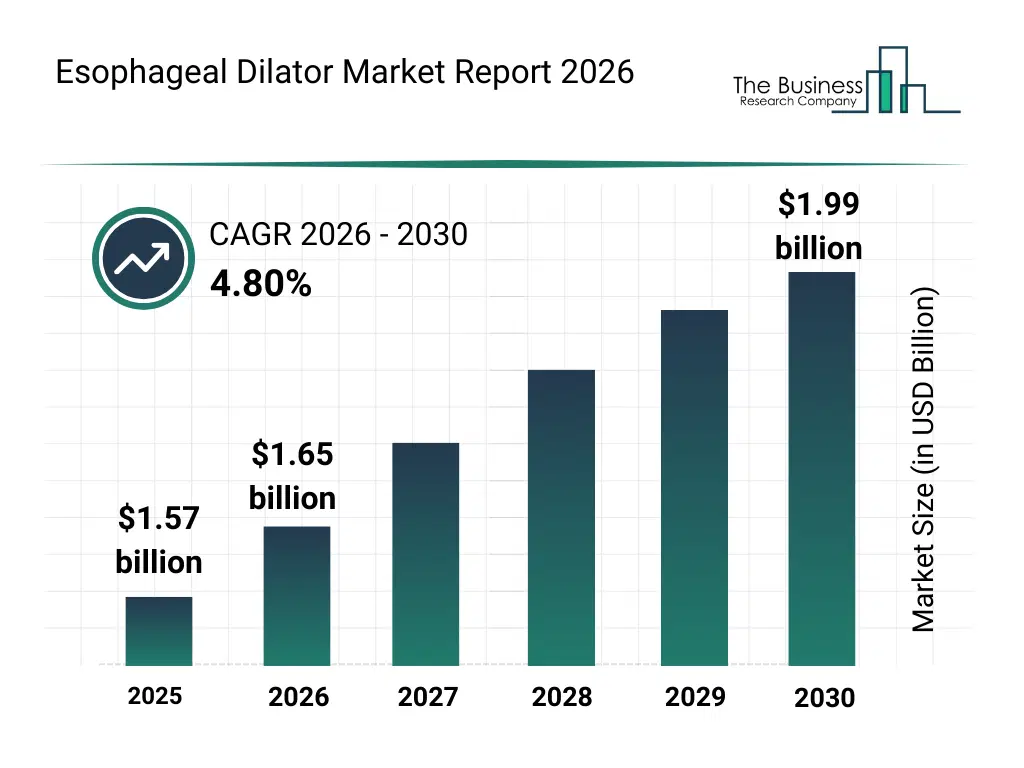
What Is The Esophageal Dilator Market Size and Share 2026?
The esophageal dilator market size has grown strongly in recent years. It will grow from $1.57 billion in 2025 to $1.65 billion in 2026 at a compound annual growth rate (CAGR) of 5.2%. The growth in the historic period can be attributed to limited availability of advanced esophageal dilators, reliance on conventional mechanical dilators, increasing awareness of esophageal disorders, growing hospital and clinic infrastructure, adoption of standard surgical procedures.What Is The Esophageal Dilator Market Growth Forecast?
The esophageal dilator market size is expected to see steady growth in the next few years. It will grow to $1.99 billion in 2030 at a compound annual growth rate (CAGR) of 4.8%. The growth in the forecast period can be attributed to development of controlled-release and pre-loaded balloon dilators, rising use of flexible and hydrostatic dilators, expansion of ambulatory surgical centers, increasing geriatric population with esophageal conditions, advancements in materials and guided procedure technologies. Major trends in the forecast period include rising demand for minimally invasive esophageal procedures, increased adoption of balloon and hydrostatic dilators, growing prevalence of esophageal disorders, focus on patient safety and procedure accuracy, integration of advanced materials for durability and flexibility.
Global Esophageal Dilator Market Segmentation
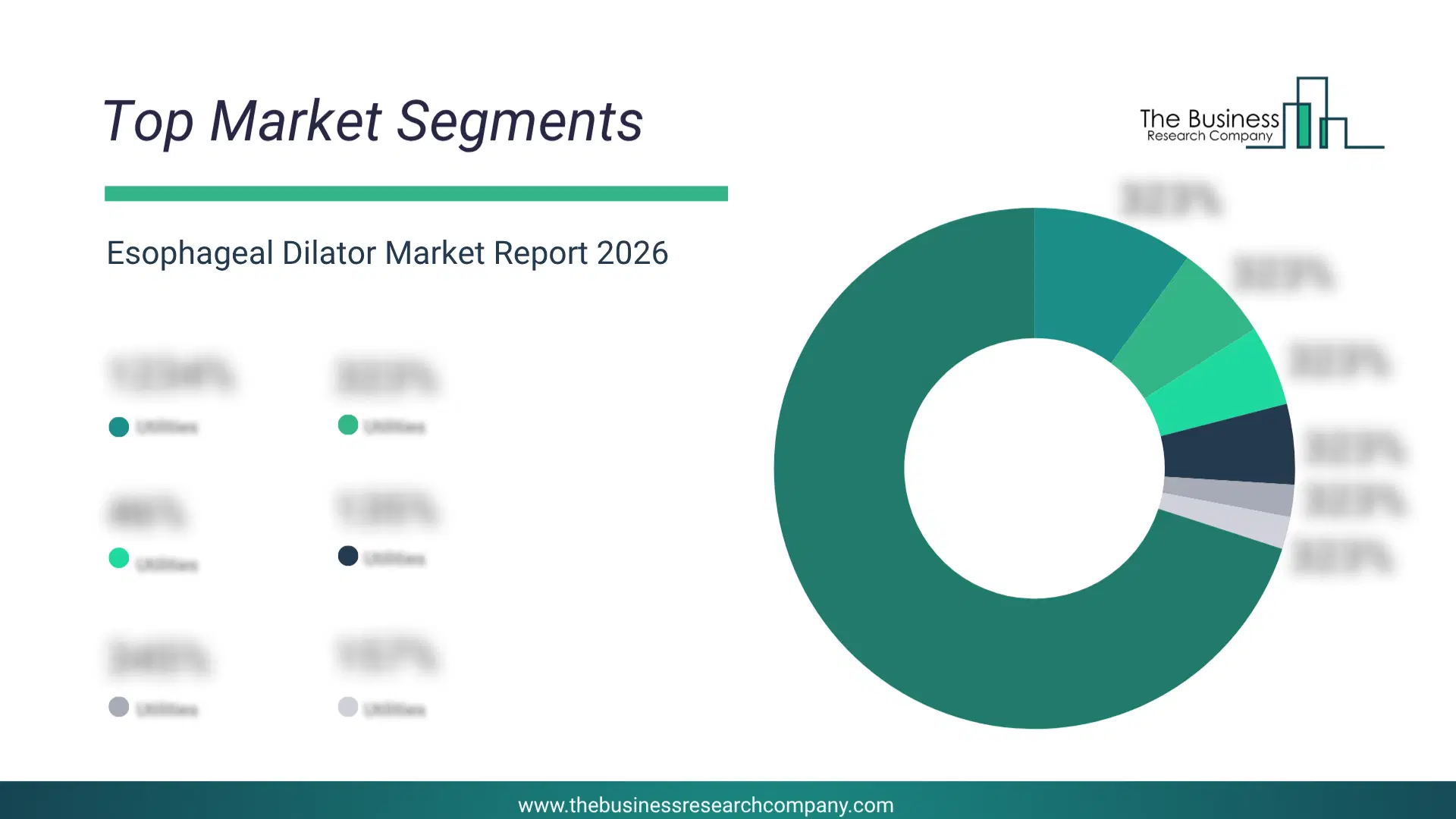
1) By Dilator Type: Balloon Dilators, Mechanical Dilators, Hydrostatic Dilators 2) By Material: Plastic, Metal, Other Materials 3) By Esophageal Disease: Achalasia, Esophageal Strictures, Zenker's Diverticulum, Esophageal Cancer 4) By End User: Hospitals, Ambulatory Surgical Centers, Clinics, Doctors' Offices Subsegments: 1) By Balloon Dilators: Inflatable Balloon Dilators, Non-Inflatable Balloon Dilators, Pre-loaded Balloon Dilators, Controlled-Release Balloon Dilators 2) By Mechanical Dilators: Bougie Dilators, Metal Dilators, Flexible Mechanical Dilators, Rigid Mechanical Dilators 3) By Hydrostatic Dilators: Fluid-Filled Hydrostatic Dilators, High-Pressure Hydrostatic Dilators, Low-Pressure Hydrostatic Dilators, Hydrostatic Dilators With Guide WireWhat Are The Drivers Of The Esophageal Dilator Market?
The rising incidence of esophageal disorders is expected to propel the growth of the esophageal dilator market going forward. Esophageal disorders encompass a range of conditions affecting the esophagus, the tube responsible for transporting food and liquids from the mouth to the stomach. The increasing prevalence of esophageal disorders is attributed to factors such as rising rates of gastroesophageal reflux disease (GERD), obesity, and lifestyle changes. Esophageal dilators address symptoms by widening the esophagus's constricted sections, improving swallowing, and reducing discomfort. For instance, in January 2024, according to the American Cancer Society, a US-based organization, in 2023, there were 16,120 new deaths from esophageal cancer, and this number is projected to rise to 16,130 in 2024. Therefore, the rising incidence of esophageal disorders is driving the growth of esophageal dilator industry. Increasing adoption of minimally invasive procedures is expected to propel the growth of the esophageal dilator market going forward. Minimally invasive procedures are medical treatments done through small incisions using specialized tools to reduce pain, recovery time, and tissue damage. Minimally invasive procedures are rising due to increasing patient demand for faster recovery with less postoperative pain. Esophageal dilators are used in minimally invasive procedures to gently widen narrowed sections of the esophagus to restore smooth swallowing. For instance, in June 2024, according to the American Society of Plastic Surgeons, a US-based organization, reported that minimally invasive procedures increased by 7% in 2023, outpacing the growth of surgical procedures by 2%. Therefore, the increasing adoption of minimally invasive procedures is driving the growth of the esophageal dilator industry.Key Players In The Global Esophageal Dilator Market
Major companies operating in the esophageal dilator market are Medtronic plc, Boston Scientific Corporation, Olympus Corporation, Cook Medical, Karl Storz SE & Co. KG, Micro‑Tech Endoscopy, Endo‑med Technologies Private Limited, Shaili Endoscopy, Bard Medical, GE Healthcare, Telemed Systems, Fiagon AG, Crospon Ltd., MFI Medical Equipments, Merit Medical Systems Inc., Becton Dickinson and Company, PENTAX Medical, M I Tech Co. Ltd., ELLA‑CS, Taewoong Medical Co. Ltd., Albyn Medical, Ankon Medical, Alton Shanghai Medical Instruments, Anrei Medical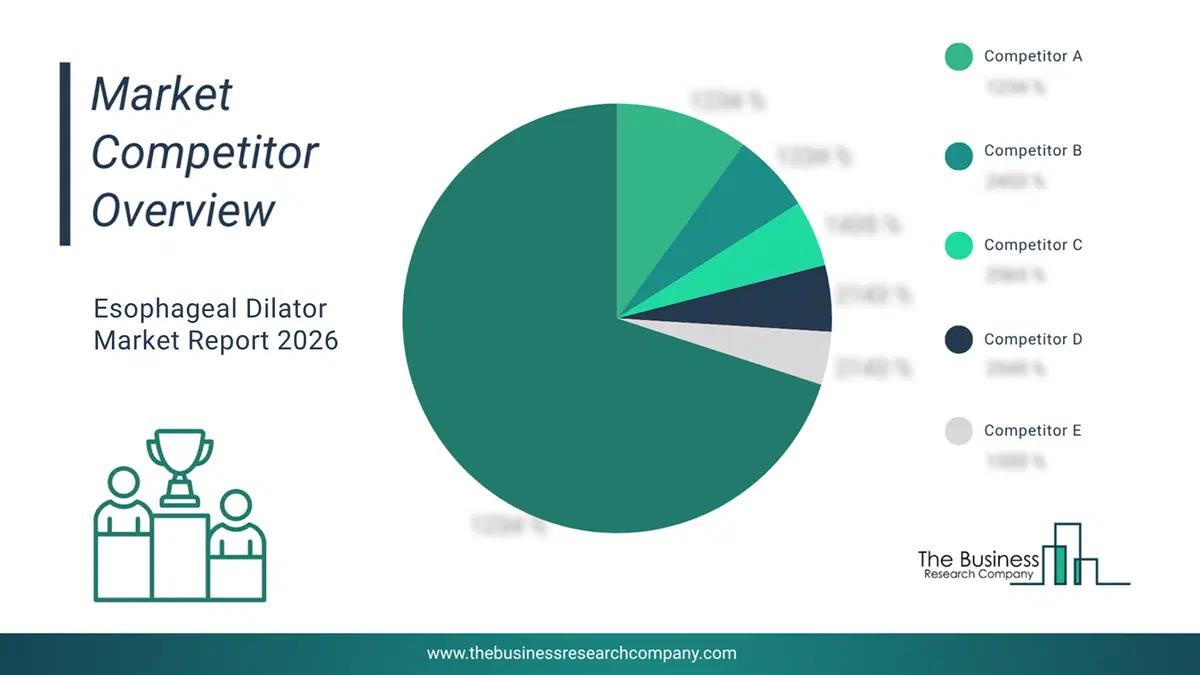
This chart is for illustrative purposes; the full report includes a detailed competitor analysis and comprehensive overview of the top 10 companies in the market.
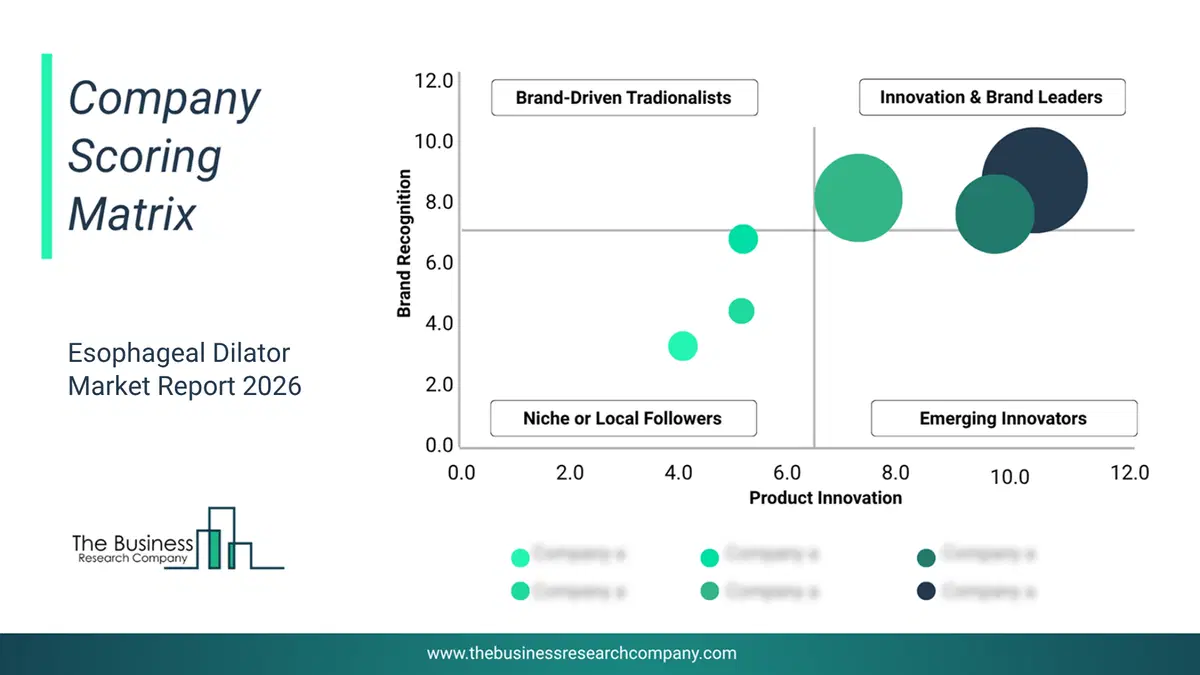
This chart maps companies by product innovation and brand strength, with bubble size indicating relative revenue, helping identify market leaders, challengers, and niche players. This is an illustrative chart; the full report provides a complete and accurate competitive analysis.
What Are Latest Mergers And Acquisitions In The Esophageal Dilator Market?
In March 2024, Scivita Medical Technology Co. Ltd., a China-based medical equipment manufacturing company, partnered with Boston Scientific Corporation. The partnership focuses on the co-development of future endoscopic devices, which may include innovative esophageal catheters designed for minimally invasive procedures, improving patient outcomes and procedural efficiency. Boston Scientific Corporation is a US-based manufacturing company specializing in medical devices, including esophageal dilators used in endoscopic procedures.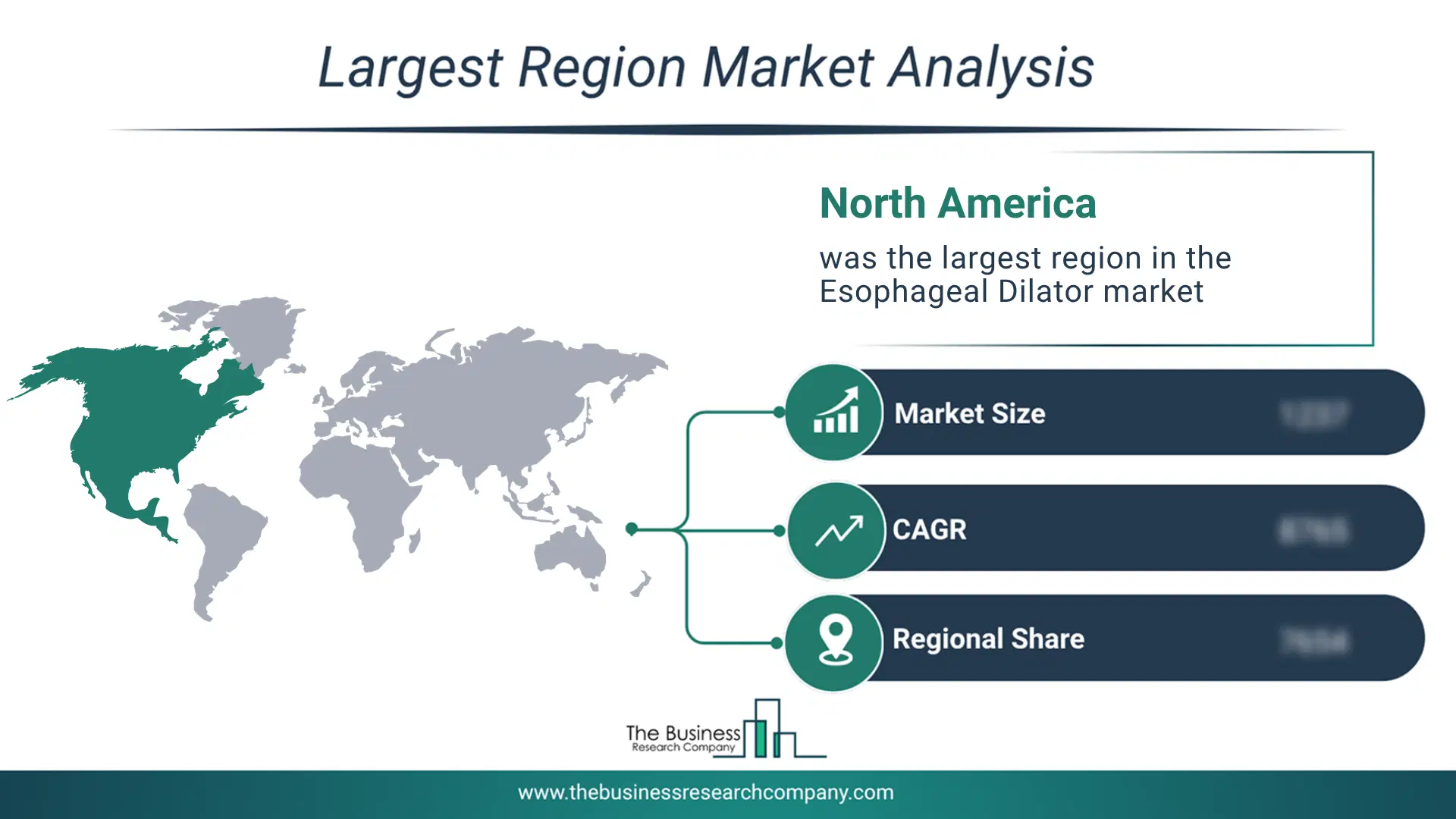
Regional Outlook
North America was the largest region in the esophageal dilator market in 2025. The regions covered in this market report are Asia-Pacific, South East Asia, Western Europe, Eastern Europe, North America, South America, Middle East, Africa. The countries covered in this market report are Australia, Brazil, China, France, Germany, India, Indonesia, Japan, Taiwan, Russia, South Korea, UK, USA, Canada, Italy, SpainWhat Defines the Esophageal Dilator Market?
The esophageal dilator market consists of sales of wire-guided polyvinyl chloride (PVC) dilators, through-the-scope (TTS) balloon dilators, and savary-gilliard dilators. Values in this market are ‘factory gate’ values, that is the value of goods sold by the manufacturers or creators of the goods, whether to other entities (including downstream manufacturers, wholesalers, distributors and retailers) or directly to end customers. The value of goods in this market includes related services sold by the creators of the goods.How is Market Value Defined and Measured?
The market value is defined as the revenues that enterprises gain from the sale of goods and/or services within the specified market and geography through sales, grants, or donations in terms of the currency (in USD unless otherwise specified). The revenues for a specified geography are consumption values that are revenues generated by organizations in the specified geography within the market, irrespective of where they are produced. It does not include revenues from resales along the supply chain, either further along the supply chain or as part of other products.
This chart presents market attractiveness based on a quantitative evaluation of growth, competition, strategic alignment, and risk, offering a clear view of opportunity areas for decision-making. This chart is for illustrative purposes; the full report contains the complete analysis.

This chart highlights the Total Addressable Market (TAM) by estimating the maximum revenue opportunity using an assumption-driven approach, supporting strategic planning and opportunity sizing across markets. The chart is illustrative; the full report provides a more comprehensive analysis.
What Key Data and Analysis Are Included in the Esophageal Dilator Market Report 2026?
The esophageal dilator market research report is one of a series of new reports from The Business Research Company that provides market statistics, including industry global market size, regional shares, competitors with the market share, detailed market segments, market trends and opportunities, and any further data you may need to thrive in the esophageal dilator industry. The market research report delivers a complete perspective of everything you need, with an in-depth analysis of the current and future state of the industry.Esophageal Dilator Market Report Forecast Analysis
| Report Attribute | Details |
|---|---|
| Market Size Value In 2026 | $1.65 billion |
| Revenue Forecast In 2030 | $1.99 billion |
| Growth Rate | CAGR of 4.8% from 2026 to 2030 |
| Base Year For Estimation | 2025 |
| Actual Estimates/Historical Data | 2020-2025 |
| Forecast Period | 2026 - 2030 |
| Market Representation | Revenue in USD Billion and CAGR from 2026 to 2030 |
| Segments Covered | Dilator Type, Material, Esophageal Disease, End User |
| Regional Scope | Asia-Pacific, Western Europe, Eastern Europe, North America, South America, Middle East, Africa |
| Country Scope | The countries covered in the report are Australia, Brazil, China, France, Germany, India, Indonesia, Japan, Taiwan, Russia, South Korea, UK, USA, Canada, Italy, Spain. |
| Key Companies Profiled | Medtronic plc, Boston Scientific Corporation, Olympus Corporation, Cook Medical, Karl Storz SE & Co. KG, Micro‑Tech Endoscopy, Endo‑med Technologies Private Limited, Shaili Endoscopy, Bard Medical, GE Healthcare, Telemed Systems, Fiagon AG, Crospon Ltd., MFI Medical Equipments, Merit Medical Systems Inc., Becton Dickinson and Company, PENTAX Medical, M I Tech Co. Ltd., ELLA‑CS, Taewoong Medical Co. Ltd., Albyn Medical, Ankon Medical, Alton Shanghai Medical Instruments, Anrei Medical |
| Customization Scope | Request for Customization |
| Pricing And Purchase Options | Explore Purchase Options |