

Events Industry Global Market Opportunities And Strategies To 2035
By Type (Music Concerts, Festivals, Sports, Exhibitions And Conferences, Corporate Events And Seminar, Other Types), By Age Group (Below 20 Years, 21–40 Years, Above 40 Years), By Revenue Source (Ticket Sale, Sponsorship, Food And Beverage, Other Revenue Sources), And By Region, Opportunities And Strategies – Global Forecast To 2035
Events Industry Market Definition
The events industry refers to the sector responsible for planning, organizing, managing, and executing a wide range of live and virtual gatherings such as corporate conferences, trade shows, exhibitions, festivals, weddings, sports events, and entertainment programs. It encompasses various services including venue management, event marketing, logistics coordination, audiovisual production, and attendee engagement. The primary purpose of the events industry is to bring people together to achieve specific objectives, such as knowledge sharing, business networking, brand promotion, celebration, or cultural exchange, while creating structured, memorable, and impactful experiences. The events industry market consists of sales by entities (organizations, sole traders and partnerships) of events that are organized by individuals, businesses, governments and organizations for purposes such as entertainment, networking, marketing, knowledge sharing and brand promotion. Events are typically held on specific dates or over defined periods, often aligned with cultural calendars, business cycles or seasonal demand patterns.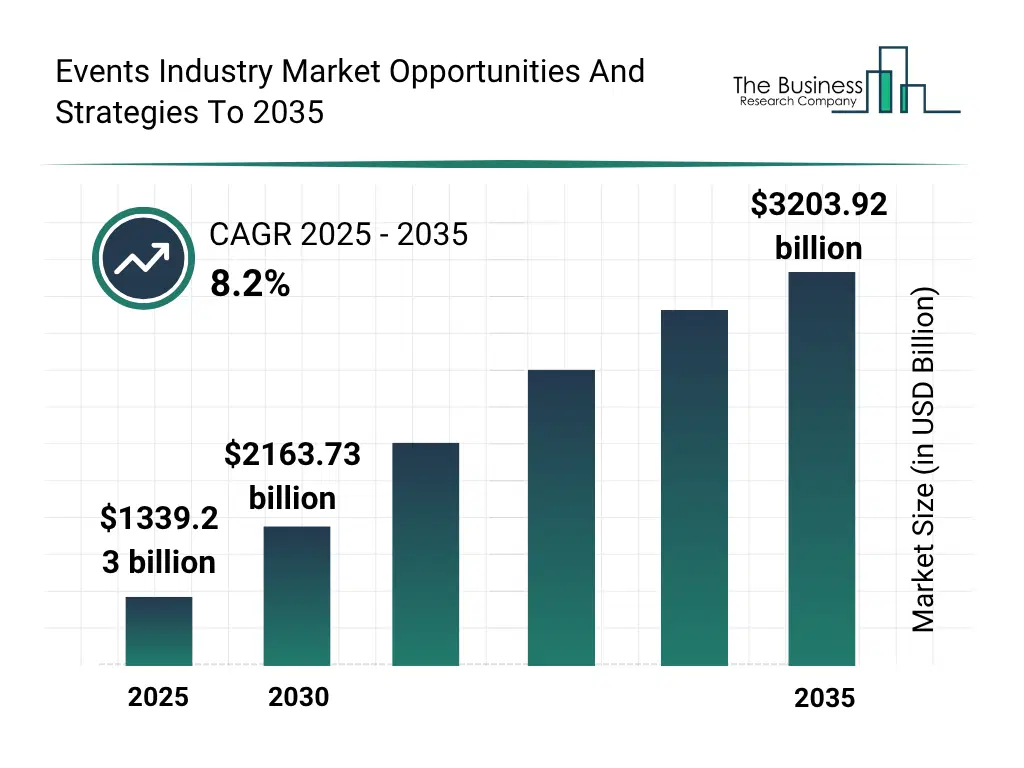
Events Industry Market Size
The global events industry market reached a value of nearly $1,339,229.1 million in 2025, having grown at a compound annual growth rate (CAGR) of 14.5% since 2020. The market is expected to grow from $1,339,229.1 million in 2025 to $2,163,732.5 million in 2030 at a rate of 10.1%. The market is then expected to grow at a CAGR of 8.2% from 2030 and reach $3,203,920.5 million in 2035. Growth in the historic period resulted from increasing demand for live entertainment, increase in corporate events, government and destination marketing support for MICE tourism and growth in sponsorship and brand activation spending. Factors that negatively affected growth in the historic period were staffing shortages and workforce gaps and high operational and logistics costs. Going forward, growth in sports events and leagues, higher spending on weddings and social events, rising disposable income and consumer spending on leisure and growth in trade shows and exhibitions will drive the growth. Factors that could hinder the growth of the events industry market in the future include seasonality and demand volatility, intense market competition and price pressure and impact of trade wars and tariffs.
Events Industry Market Segmentation
The events industry market is segmented by type, by age group, and by revenue source.
By Type –
The events industry market is segmented by type into:
By Age Group –
The events industry market is segmented by age group into:
By Revenue Source –
The events industry market is segmented by revenue source into:
By Geography - The events industry market is segmented by geography into:
By Type –
The events industry market is segmented by type into:
- a) Music Concerts
- b) Festivals
- c) Sports
- d) Exhibitions And Conferences
- e) Corporate Events And Seminar
- F) Other Types
By Age Group –
The events industry market is segmented by age group into:
- a) Below 20 Years
- b) 21–40 Years
- c) Above 40 Years
By Revenue Source –
The events industry market is segmented by revenue source into:
- a) Ticket Sale
- b) Sponsorship
- c) Food And Beverage
- d) Other Revenue Sources
By Geography - The events industry market is segmented by geography into:
- China
- India
- Japan
- Australia
- Indonesia
- South Korea
- USA
- Canada
- Brazil
- France
- Germany
- UK
- Italy
- Spain
- Russia
-
o Asia Pacific
o Africa