
Exanthema Market Report 2026
Global Outlook – By Types (Bacterial, Viral, Other Types), By Treatment (Topical Treatments, Systemic Treatments, Supportive Care), By Diagnosis Method (Clinical Examination, Laboratory Tests, Imaging Techniques), By Application (Rubeola, Rubella, Erythema Infectiosum, Roseola Infantum), By End-Users (Hospitals, Homecare, Specialty Centers, Other End-Users) - Market Size, Trends, Strategies, and Forecast to 2030
Exanthema Market Overview
• Exanthema market size has reached to $2.26 billion in 2025 • Expected to grow to $2.76 billion in 2030 at a compound annual growth rate (CAGR) of 4.1% • Growth Driver: Surge In Viral Infections Driving Growth Of The Market Due To Increasing Disease Prevalence And Diagnostic Needs • Market Trend: Advancements In Intramuscular Vaccine Administration For Viral Infections • North America was the largest region in 2025 and Asia-Pacific is the fastest growing region.What Is Covered Under Exanthema Market?
Exanthema refers to a widespread rash or eruption on the skin, typically caused by a viral infection such as measles, rubella, or varicella (chickenpox). It is used for diagnosing and identifying viral diseases, as the appearance of the rash often helps healthcare providers determine the underlying infection and guide appropriate treatment and management strategies. The main types of exanthema include bacterial, viral, and others. Bacterial refers to exanthema caused by bacterial infections, presenting as skin rashes due to pathogens like Streptococcus or Staphylococcus species. Treatments include topical treatments, systemic treatments, and supportive care and several diagnostic methods include clinical examination, laboratory tests, and imaging techniques. The various applications involved are rubeola, rubella, erythema infectiosum, and roseola infantum, and are used by several end-users such as hospitals, homecare, specialty centers, and others.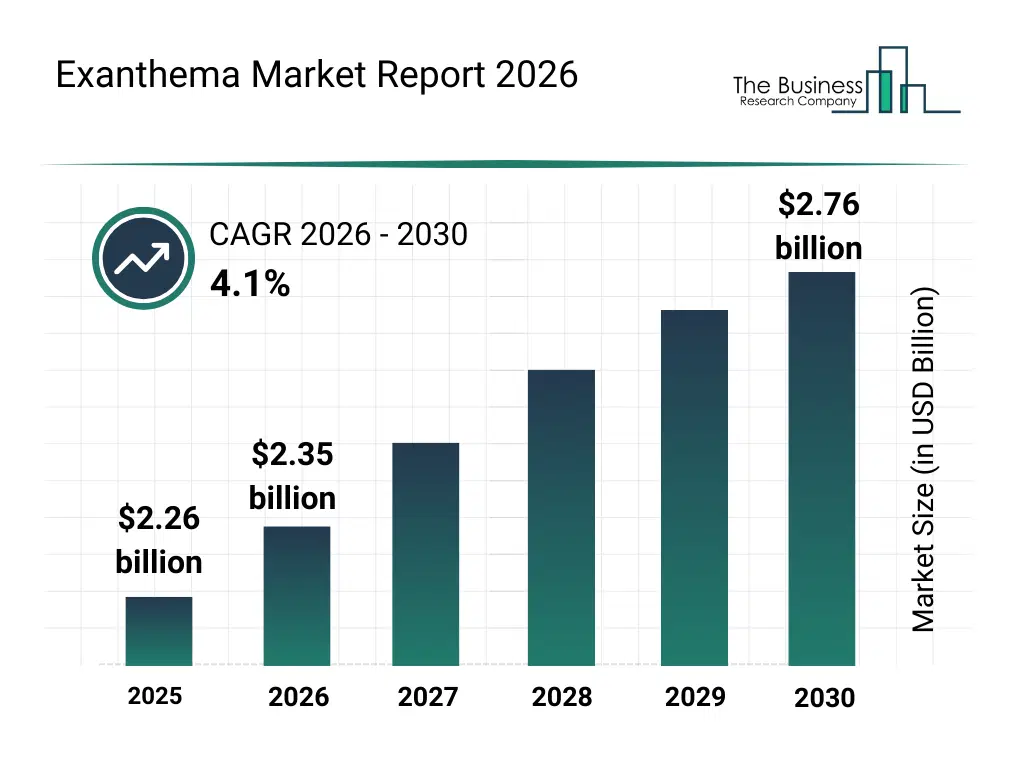
What Is The Exanthema Market Size and Share 2026?
The exanthema market size has grown steadily in recent years. It will grow from $2.26 billion in 2025 to $2.35 billion in 2026 at a compound annual growth rate (CAGR) of 4.1%. The growth in the historic period can be attributed to viral infection outbreaks, childhood disease prevalence, clinical diagnosis reliance, vaccination gaps, dermatology consultation growth.What Is The Exanthema Market Growth Forecast?
The exanthema market size is expected to see steady growth in the next few years. It will grow to $2.76 billion in 2030 at a compound annual growth rate (CAGR) of 4.1%. The growth in the forecast period can be attributed to improved diagnostic awareness, viral surveillance programs, pediatric healthcare expansion, early intervention protocols, infection control initiatives. Major trends in the forecast period include rising incidence of viral skin infections, increased focus on early clinical diagnosis, expansion of supportive care treatments, growth in pediatric rash management, emphasis on infection-specific treatment.
Global Exanthema Market Segmentation
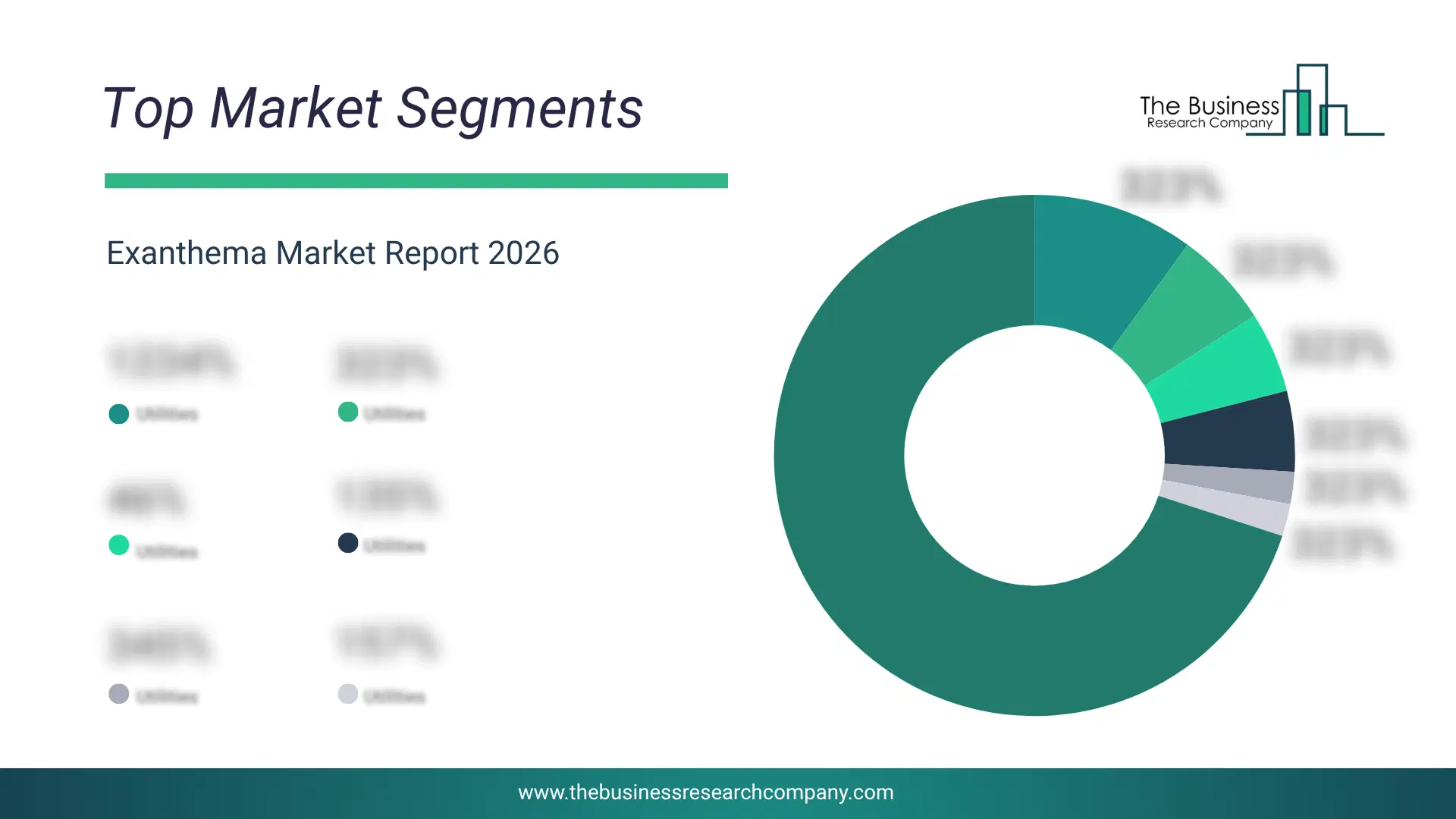
1) By Types: Bacterial, Viral, Other Types 2) By Treatment: Topical Treatments, Systemic Treatments, Supportive Care 3) By Diagnosis Method: Clinical Examination, Laboratory Tests, Imaging Techniques 4) By Application: Rubeola, Rubella, Erythema Infectiosum, Roseola Infantum 5) By End-Users: Hospitals, Homecare, Specialty Centers, Other End-Users Subsegments: 1) By Bacterial: Scarlet Fever, Meningococcemia, Staphylococcal Scalded Skin Syndrome (Ssss), Lyme Disease, Tuberculosis-Associated Exanthema 2) By Viral: Measles (Rubeola), Rubella (German Measles), Varicella (Chickenpox), Roseola (Exanthem Subitum), Hand, Foot, And Mouth Disease, Parvovirus B19, Dengue Fever Rash, Zika Virus Rash 3) By Other Types: Drug-Induced Exanthema (Hypersensitivity Reactions), Autoimmune-Related Exanthema (Lupus, Kawasaki Disease), Allergic Dermatitis-Related Exanthema, Fungal Infections Leading To Exanthema, Environmental And Toxin-Induced ExanthemaWhat Is The Driver Of The Exanthema Market?
The rising prevalence of viral infections is expected to propel the growth of the exanthema market going forward. Viral infections refer to illnesses caused by viruses that invade and multiply within the body's cells, leading to various symptoms and diseases. Viral infections are rising due to increasing global travel, urbanization, climate change, and weakened immunity in populations. Rising viral infections drive the demand for exanthema treatments as more cases present with skin rashes, increasing the need for effective management. Exanthema serves as a visible immune response to viral infections, helping to expel pathogens, signal immune activation, and aid in diagnosis by indicating the body's fight against the virus. For instance, in August 2024, according to the Centers for Disease Control and Prevention, a US-based government agency, in 2022–2024, the proportion of individuals with IgM antibodies, indicating a recent Parvovirus B19 infection, remained below 3% but surged to 10% by June 2024. The most significant rise was observed in children aged 5–9 years, where prevalence increased from 15% to 40% during this period. Therefore, the rising prevalence of viral infections is driving the growth of the exanthema industry.Key Players In The Global Exanthema Market
Major companies operating in the exanthema market are F. Hoffmann-La Roche Ltd., Merck & Co. Inc., Sanofi SA, Abbott Laboratories, GlaxoSmithKline plc, Serum Institute of India Pvt. Ltd., Takeda Pharmaceutical Company Limited, Amgen Inc., Daiichi Sankyo Company Limited, Biological E. Limited, Zydus Lifesciences Limited, Bio Farma, Meridian Bioscience Inc., West-Ward Pharmaceutical Corp., Trinity Biotech plc, Biosynth Srl, Creative Diagnostics, Taj Pharmaceuticals Limited, TestLine Clinical Diagnostics s.r.o., The Native Antigen Co. Ltd., QED Bioscience Inc.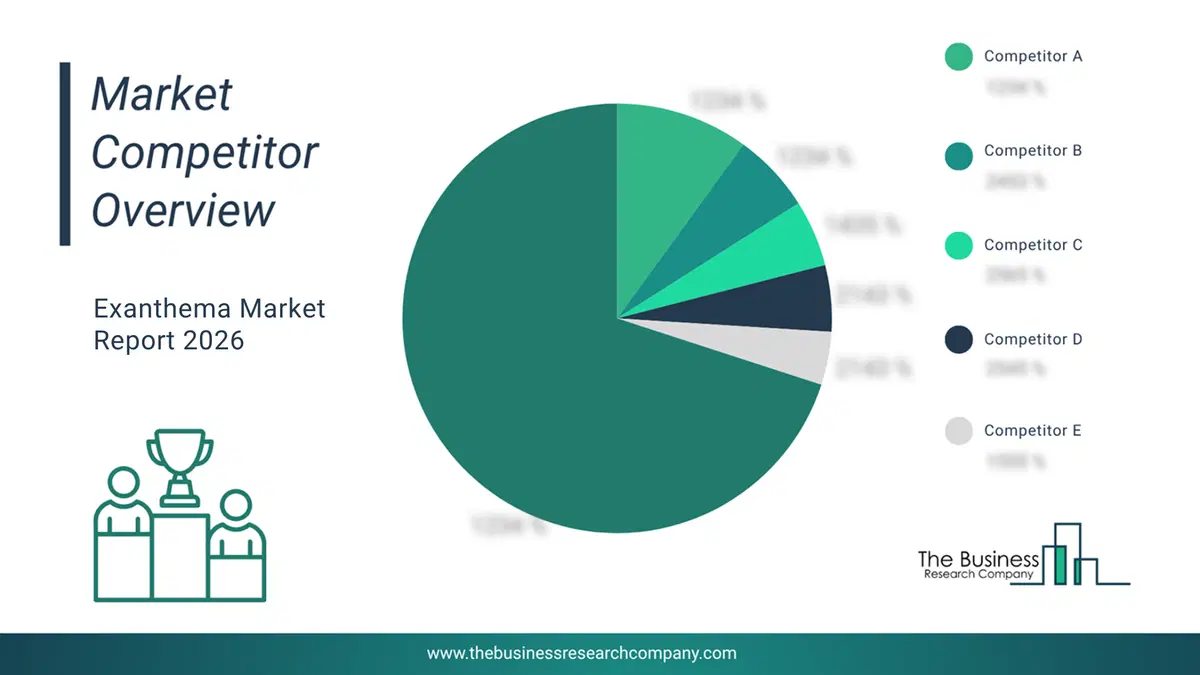
This chart is for illustrative purposes; the full report includes a detailed competitor analysis and comprehensive overview of the top 10 companies in the market.
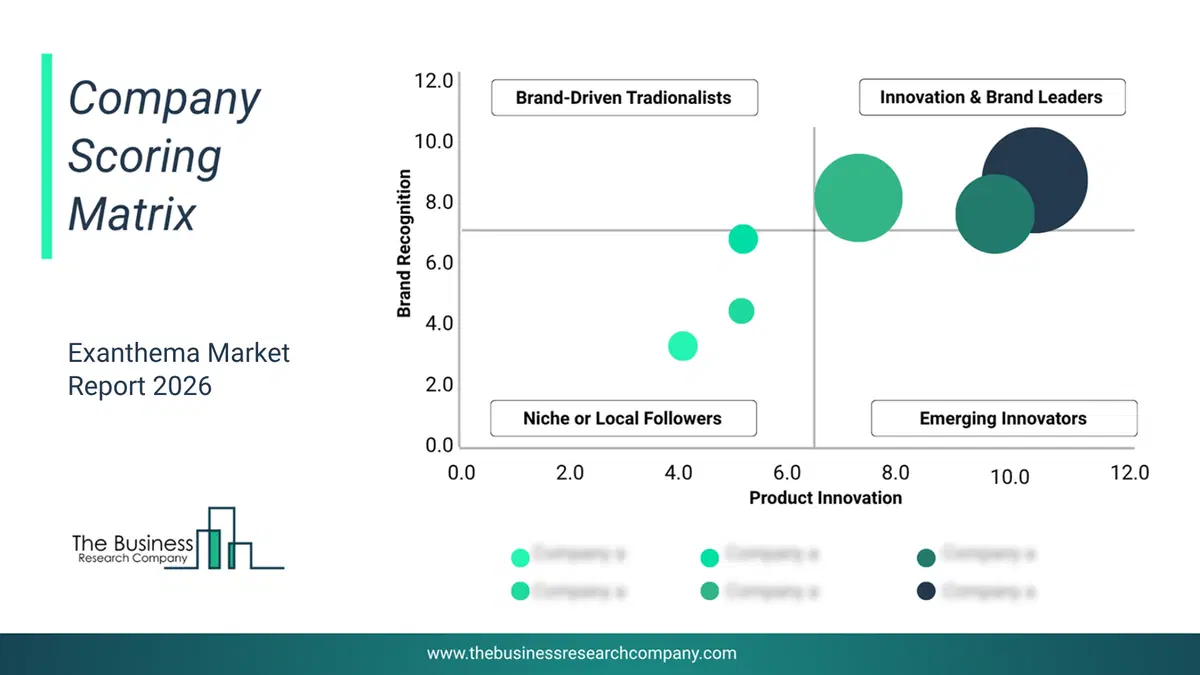
This chart maps companies by product innovation and brand strength, with bubble size indicating relative revenue, helping identify market leaders, challengers, and niche players. This is an illustrative chart; the full report provides a complete and accurate competitive analysis.
Global Exanthema Market Trends and Insights
Major companies operating in the exanthema market are focusing on developing novel therapeutics, such as the intramuscular (IM) administration of vaccines and antiviral treatments, to improve efficacy, reduce complications, and enhance patient outcomes in managing viral infections associated with exanthematous diseases. Intramuscular (IM) administration of vaccines and antiviral treatments refers to the delivery of medications or vaccines directly into the muscle tissue using a syringe and needle. This method ensures that the substances are absorbed quickly into the bloodstream, leveraging the rich blood supply in the muscles to prompt an immune response or therapeutic effect. For instance, in March 2023, Merck & Co. Inc., a US-based pharmaceutical company, announced that the FDA has approved the intramuscular (IM) administration route for its MMRV vaccines M-M-R II, VARIVAX, and ProQuad. The IM route is known to offer greater stability and efficacy for these live-virus vaccines compared to other administration methods, making it a crucial step in enhancing public health efforts in preventing these potentially severe viral infections.What Are Latest Mergers And Acquisitions In The Exanthema Market?
In September 2024, Organon, a US-based healthcare company, acquired Dermavant Sciences Ltd. for $1.2 billion. The acquisition strengthens Organon's position in dermatology, enhances its portfolio with innovative therapies, and aligns with its strategic objectives. Dermavant Sciences Ltd is a US-based clinical-stage biopharmaceutical company focused on developing innovative therapeutics in immunodermatology.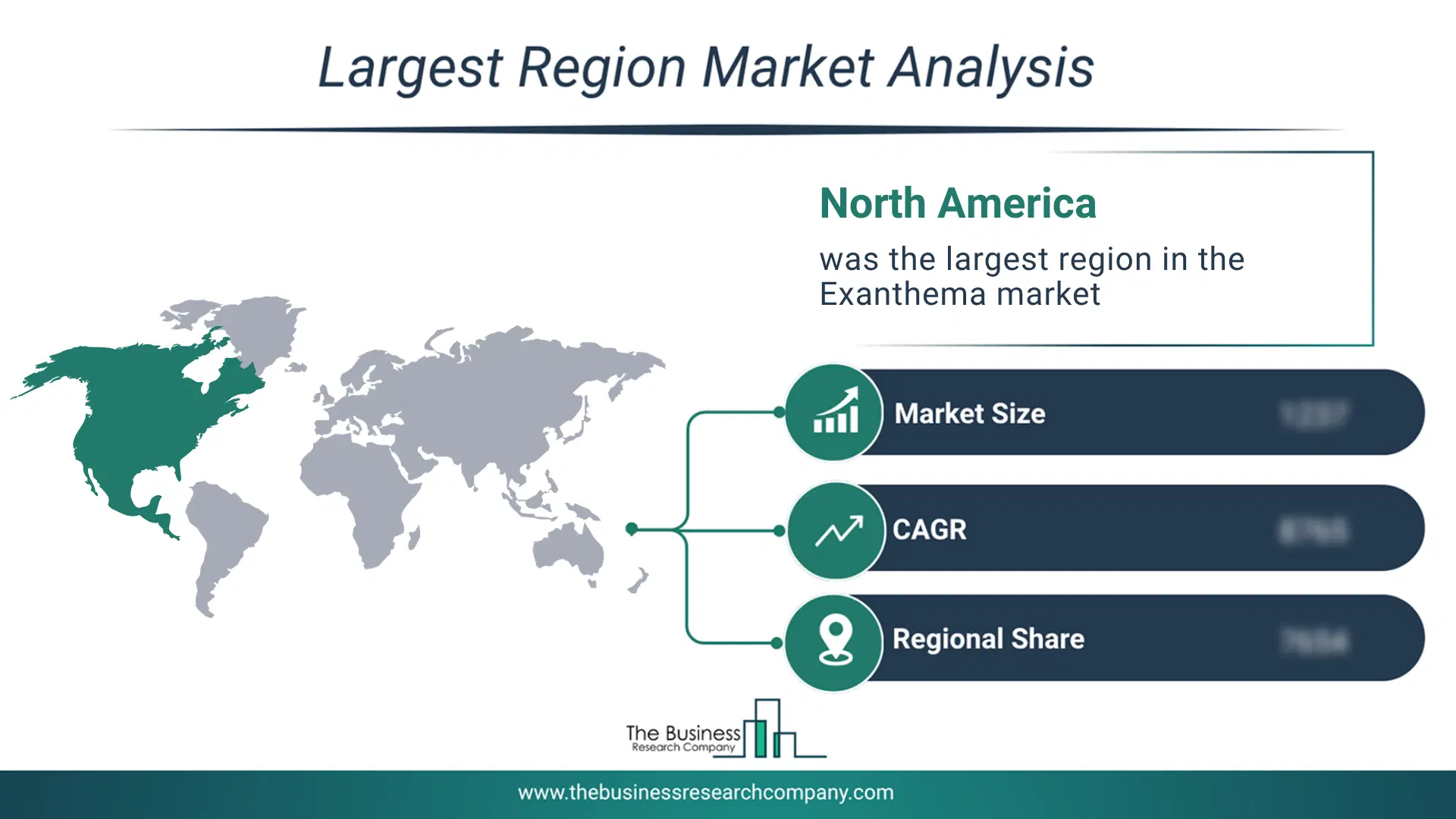
Regional Outlook
North America was the largest region in the exanthema market in 2025. Asia-Pacific is expected to be the fastest-growing region in the forecast period. The regions covered in this market report are Asia-Pacific, South East Asia, Western Europe, Eastern Europe, North America, South America, Middle East, Africa. The countries covered in this market report are Australia, Brazil, China, France, Germany, India, Indonesia, Japan, Taiwan, Russia, South Korea, UK, USA, Canada, Italy, Spain.What Defines the Exanthema Market?
The exanthema market consists of revenues earned by entities by providing services such as antiviral treatment services, vaccination services, and diagnostic services. The market value includes the value of related goods sold by the service provider or included within the service offering. The exanthema market also includes sales of topical corticosteroids, antihistamines, immunosuppressants, antiviral medications, and moisturizers. Values in this market are ‘factory gate’ values, that is the value of goods sold by the manufacturers or creators of the goods, whether to other entities (including downstream manufacturers, wholesalers, distributors and retailers) or directly to end customers. The value of goods in this market includes related services sold by the creators of the goods.How is Market Value Defined and Measured?
The market value is defined as the revenues that enterprises gain from the sale of goods and/or services within the specified market and geography through sales, grants, or donations in terms of the currency (in USD unless otherwise specified). The revenues for a specified geography are consumption values that are revenues generated by organizations in the specified geography within the market, irrespective of where they are produced. It does not include revenues from resales along the supply chain, either further along the supply chain or as part of other products.
This chart presents market attractiveness based on a quantitative evaluation of growth, competition, strategic alignment, and risk, offering a clear view of opportunity areas for decision-making. This chart is for illustrative purposes; the full report contains the complete analysis.

This chart highlights the Total Addressable Market (TAM) by estimating the maximum revenue opportunity using an assumption-driven approach, supporting strategic planning and opportunity sizing across markets. The chart is illustrative; the full report provides a more comprehensive analysis.
What Key Data and Analysis Are Included in the Exanthema Market Report 2026?
The exanthema market research report is one of a series of new reports from The Business Research Company that provides market statistics, including industry global market size, regional shares, competitors with the market share, detailed market segments, market trends and opportunities, and any further data you may need to thrive in the exanthema industry. The market research report delivers a complete perspective of everything you need, with an in-depth analysis of the current and future state of the industry.Exanthema Market Report Forecast Analysis
| Report Attribute | Details |
|---|---|
| Market Size Value In 2026 | $2.35 billion |
| Revenue Forecast In 2030 | $2.76 billion |
| Growth Rate | CAGR of 4.1% from 2026 to 2030 |
| Base Year For Estimation | 2025 |
| Actual Estimates/Historical Data | 2020-2025 |
| Forecast Period | 2026 - 2030 |
| Market Representation | Revenue in USD Billion and CAGR from 2026 to 2030 |
| Segments Covered | Types, Treatment, Diagnosis Method, Application, End-Users |
| Regional Scope | Asia-Pacific, Western Europe, Eastern Europe, North America, South America, Middle East, Africa |
| Country Scope | The countries covered in the report are Australia, Brazil, China, France, Germany, India, Indonesia, Japan, Taiwan, Russia, South Korea, UK, USA, Canada, Italy, Spain |
| Key Companies Profiled | F. Hoffmann-La Roche Ltd., Merck & Co. Inc., Sanofi SA, Abbott Laboratories, GlaxoSmithKline plc, Serum Institute of India Pvt. Ltd., Takeda Pharmaceutical Company Limited, Amgen Inc., Daiichi Sankyo Company Limited, Biological E. Limited, Zydus Lifesciences Limited, Bio Farma, Meridian Bioscience Inc., West-Ward Pharmaceutical Corp., Trinity Biotech plc, Biosynth Srl, Creative Diagnostics, Taj Pharmaceuticals Limited, TestLine Clinical Diagnostics s.r.o., The Native Antigen Co. Ltd., QED Bioscience Inc. |
| Customization Scope | Request for Customization |
| Pricing And Purchase Options | Explore Purchase Options |