

Exhibition Market Report 2026
Global Outlook – By Exhibition (Traditional Exhibitions, Virtual Exhibitions, Hybrid Exhibitions), By Revenue Stream (Exhibitor Fee, Sponsorship Fee, Entrance Fee, Services), By Enterprise Size (Large Enterprise, Small And Midsize Enterprise (SME)), By Industry (Consumer Goods And Retail Sector, Hospitality Sector, ART Fuel Forum (AFF) And Energy Sector, Automotive And Transportation Sector, Industrial Sector, Entertainment Sector, Other Industries) – Market Size, Trends, Strategies, and Forecast to 2030
Exhibition Market Overview
• Exhibition market size has reached to $70.64 billion in 2025 • Expected to grow to $92.7 billion in 2030 at a compound annual growth rate (CAGR) of 5.6% • Growth Driver: Driving Growth In The Exhibition Market Through Expanding Arts And Cultural Industries • Market Trend: Advancements In Exhibition Planning With Mobile App Enhances Attendee Engagement And Streamlines Operations • North America was the largest region in 2025 and Asia-Pacific is the fastest growing region.Market Gains By 2030 – Top Opportunities By Segment
Market Gain identifies the most promising market opportunities by highlighting the segments or products expected to generate the highest incremental revenue growth over the next five years.
What Is Covered Under Exhibition Market?
Exhibition refers to an organized event where companies, organizations, and individuals display their products, services, or work to the public or to industry professionals. It serves as a platform for businesses to showcase innovations, establish connections, and generate leads. Exhibitions are critical for networking, brand building, and staying competitive in the market. The main types of exhibitions are traditional exhibitions, virtual exhibitions, and hybrid exhibitions. Traditional exhibitions refer to physical events where exhibitors set up booths and displays in a venue to showcase their products and services. The revenue stream includes exhibitor fees, sponsorship fees, entrance fees, and services, and the enterprise sizes are large enterprises and small and midsize enterprises (SMEs). The different industries are the consumer goods and retail sector, hospitality sector, art fuel forum (AFF) and energy sector, automotive and transportation sector, industrial sector, entertainment sector, and others.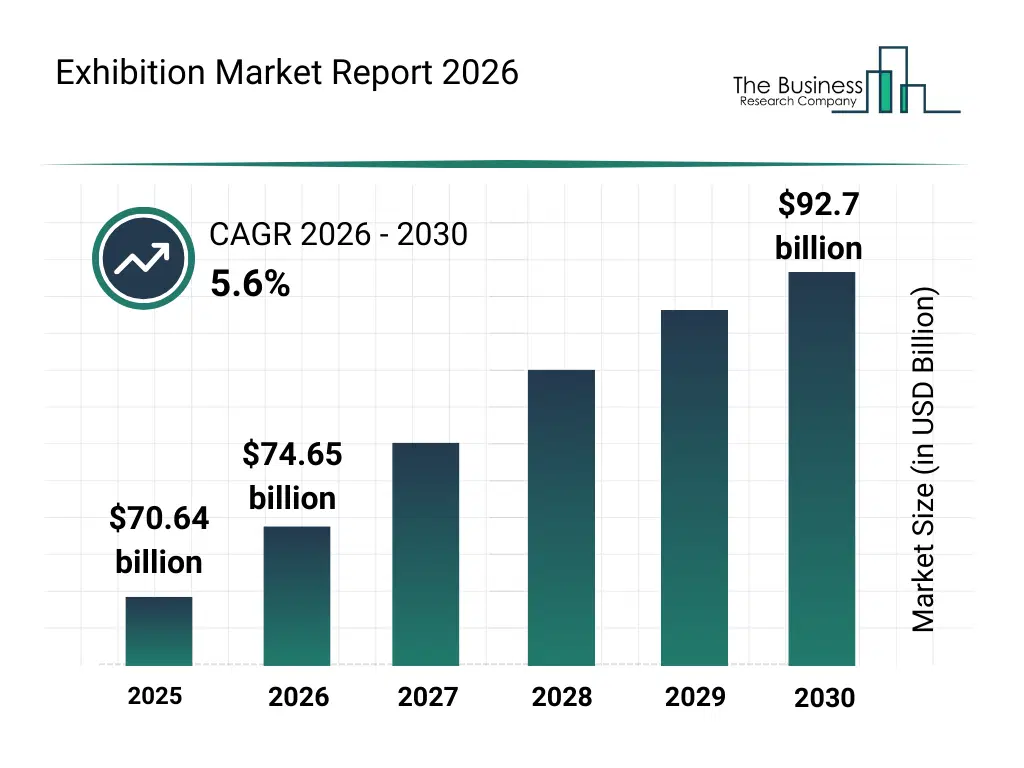
What Is The Exhibition Market Size and Share 2026?
The exhibition market size has grown strongly in recent years. It will grow from $70.64 billion in 2025 to $74.65 billion in 2026 at a compound annual growth rate (CAGR) of 5.7%. The growth in the historic period can be attributed to rising global business expansion activities, increasing need for product exposure, growing culture of trade showcasing, expansion of event hosting infrastructure, rising industry networking needs.What Is The Exhibition Market Growth Forecast?
The exhibition market size is expected to see strong growth in the next few years. It will grow to $92.7 billion in 2030 at a compound annual growth rate (CAGR) of 5.6%. The growth in the forecast period can be attributed to increasing global marketing initiatives, rising demand for interactive exhibition platforms, growing corporate participation in international expos, expansion of themed exhibition categories, rising focus on experiential marketing. Major trends in the forecast period include increasing organization of large scale public and industry exhibitions, rising emphasis on product showcasing for market visibility, growing participation of businesses in global exhibition platforms, expansion of specialized and niche exhibition categories, strengthening focus on audience engagement and brand interaction.
Global Exhibition Market Segmentation
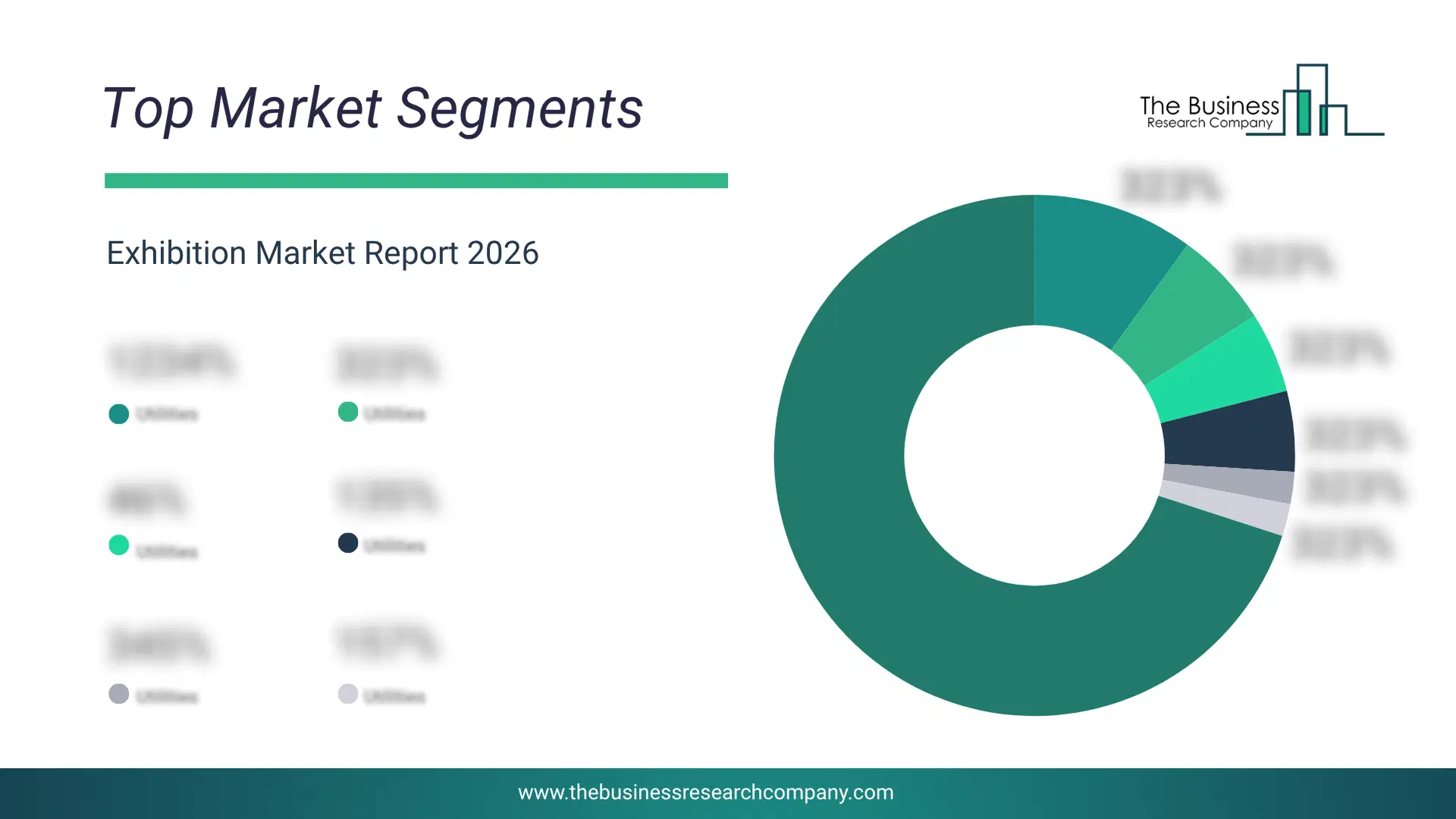
1) By Exhibition: Traditional Exhibitions, Virtual Exhibitions, Hybrid Exhibitions 2) By Revenue Stream: Exhibitor Fee, Sponsorship Fee, Entrance Fee, Services 3) By Enterprise Size: Large Enterprise, Small And Midsize Enterprise (SME) 4) By Industry: Consumer Goods And Retail Sector, Hospitality Sector, ART Fuel Forum (AFF) And Energy Sector, Automotive And Transportation Sector, Industrial Sector, Entertainment Sector, Other Industries Subsegments: 1) By Traditional Exhibitions: In-Person Trade Shows, Industry-Specific Expos and Conferences, Product and Service Showcases, Cultural and Art Exhibitions, Local and Regional Exhibitions, International Exhibitions and Fairs 2) By Virtual Exhibitions: Online Trade Shows, Virtual Product Launch Events, Web-Based Industry Conferences, Virtual Art and Cultural Exhibitions, Digital Networking Events, Virtual Job Fairs and Career Expos 3) By Hybrid Exhibitions: Hybrid Trade Shows (In-Person And Online), Hybrid Conferences with Virtual and Physical Components, Hybrid Product Demos and Showcases, Hybrid Networking and B2B Meetings, Hybrid Art and Cultural Events, Hybrid Education and Training Exhibitions The top segments in the exhibition market will be: • Large Enterprise will reach $64020.49 Million by 2030. • Traditional Exhibitions will reach $52710.93 Million by 2030. • Exhibitor Fee will reach $42573.56 Million by 2030. • Small And Midsize Enterprise (SME) will reach $34951.2 Million by 2030. • Consumer Goods And Retail Sector will reach $26574.29 Million by 2030.What Is The Driver Of The Exhibition Market?
Growing arts and cultural industries are expected to propel the growth of the exhibition market going forward. The arts and cultural industry refers to a broad sector that encompasses activities and organizations involved in the creation, production, distribution, and promotion of cultural and artistic products and experiences. The growth of the arts and cultural industries is fueled by rising disposable incomes and changing spending patterns, allowing greater investment in cultural and artistic experiences. Exhibitions are vital for the arts and cultural industry as they provide a platform for showcasing and promoting artistic works, engaging the public, facilitating cultural exchange, offering educational opportunities, supporting market development, and strengthening community connections. For instance, in April 2025, according to the Bureau of Economic Analysis (BEA), US-Based government agency, Inflation-adjusted economic activity in the arts and cultural sector grew by 6.6 percent in 2023, following a 3.8 percent increase in 2022. Therefore, growing arts and cultural industries will drive the exhibition industry.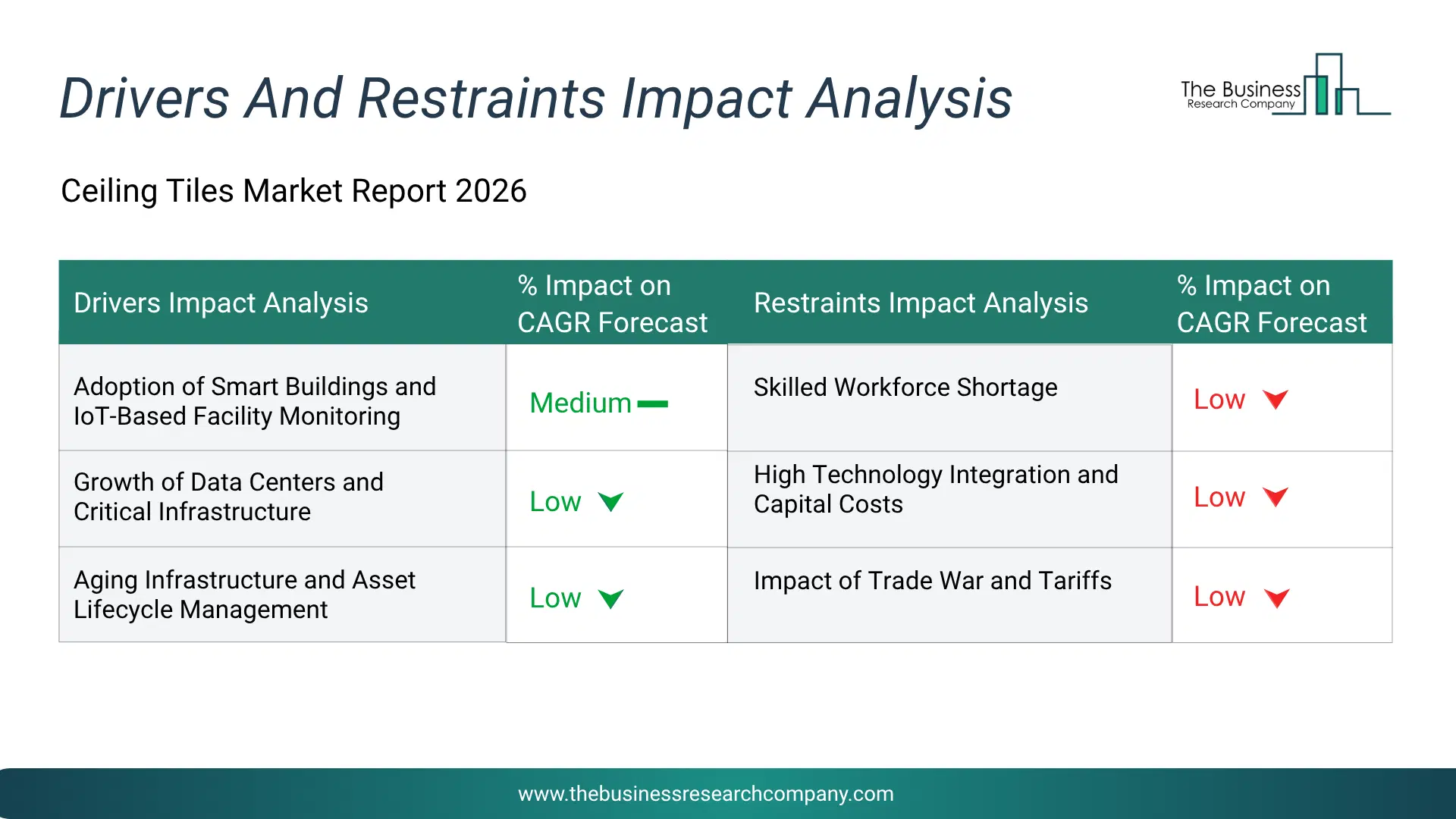
Infographic Chart Showing Key Market Drivers Analysis And Restraints For Exhibition Market
The chart presents an impact analysis of key drivers and restraints, quantifying their relative influence on the market's growth rate and helping assess the balance between growth enablers and limiting factors. This chart offers a high-level perspective; the full report contains more detailed insights.
How Will The Drivers Impact Growth In The Global Exhibition Market?
• Globalization Of Businesses (Medium) – During the forecast period, the globalization of businesses will become a key driver of growth in the exhibition market by 2030. exhibitions provide structured environments where global suppliers, buyers, distributors and investors can connect efficiently under one platform, reducing the complexity of entering new markets. as businesses pursue international sourcing, distribution and collaboration strategies, demand for exhibitions that attract multinational participation is anticipated to rise. this trend will support growth in international trade shows, increase exhibitor diversity and strengthen the role of exhibitions as gateways for global market access and business expansion. as a result, increasing demand for globalization of businesses contributing to a 1.5% annual growth in the market. • Growth In Small And Medium Enterprises Participation (Medium) – During the forecast period, the growth in small and medium enterprises participation is expected to be a key driver of the growth of the exhibition market in the forecast period. smes increasingly view exhibitions as high-impact channels for brand visibility, customer acquisition and partnership development without the need for extensive marketing infrastructure. as exhibition organizers introduce flexible booth formats, digital participation options and targeted sector showcases, smes are anticipated to engage more actively in exhibitions. this rising participation will contribute to higher exhibitor volumes, diversified offerings and sustained growth across both physical and hybrid exhibition formats. consequently, the accelerating adoption of growth in small and medium enterprises participation is projected to contributing to a 1.3% annual growth in the market. • Rise In Demand For Experiential Marketing (Low) – During the forecast period, the rising demand for experiential marketing will propel the growth of the exhibition market. exhibitions provide ideal environments for live product demonstrations, interactive displays and hands-on brand experiences that allow visitors to evaluate offerings more deeply. as companies shift away from passive promotional methods toward experience-led marketing strategies, investments in innovative booth designs, live showcases and technology-enabled engagement tools are anticipated to grow. this evolution will enhance visitor engagement, increase dwell time and strengthen the commercial effectiveness of exhibitions as experiential marketing platforms. therefore, this rising demand for experiential marketing is projected to supporting to a 1.0% annual growth in the market. • Cultural Tourism Growth (Low) – During the forecast period, the cultural tourism growth will propel the growth of the exhibition market. As travelers increasingly seek meaningful, knowledge-driven and culturally enriched travel experiences, exhibitions tied to creative industries, design, art, lifestyle and regional craftsmanship are anticipated to attract broader audiences. This trend supports higher visitor turnout, international participation and destination appeal for exhibition-hosting cities. Cultural tourism growth is expected to strengthen collaboration between exhibition organizers, tourism bodies and local industries, thereby supporting sustained demand for exhibitions as both commercial and experiential platforms. The cultural tourism growth contribution during the forecast period in 2025 is 0.8%.How Will The Restraints Impact Growth In The Global Exhibition Market?
• High Cost Of Organizing Exhibitions (Medium) – During the forecast period, high cost of organizing exhibitions is restricting the growth of the exhibition market during the forecast period. expenses related to venue rental, stand construction, logistics, staffing, technology integration, marketing and compliance can make exhibitions capital-intensive to plan and execute. these high upfront and operational costs limit the ability of smaller organizers to launch new exhibitions and discourage exhibitors, especially smes, from participating regularly. as a result, organizers may reduce event frequency, scale, or geographic expansion, while exhibitors become more selective about participation, slowing overall market momentum. growth affected by high cost of organizing exhibitions during the forecast period in 2025 is -1.5%. • Competition From Digital Marketing And Virtual Events (Medium) – During the forecast period, competition from digital marketing and virtual events is restricting the growth of the exhibition market during the forecast period. online campaigns, webinars and virtual showcases allow companies to reach global audiences without the expenses associated with physical exhibitions. as some businesses shift marketing budgets toward digital-first strategies, demand for traditional exhibition participation may weaken. although hybrid formats mitigate this impact, competition from digital alternatives continues to pressure organizers to justify the cost and value of physical exhibitions. growth affected by competition from digital marketing and virtual events during the forecast period in 2025 is -1.0%. • Impact Of Trade War And Tariff (Low) – During the forecast period, the impact of the trade war and tariffs is restricting the growth of the exhibition market during the forecast period. higher tariffs, trade restrictions and geopolitical tensions can discourage companies from expanding into new markets or showcasing products internationally. this leads to reduced participation from exporters, importers and multinational exhibitors, particularly in trade-focused exhibitions. such conditions also affect sponsorship spending and long-term exhibition planning, limiting the growth of internationally oriented exhibitions and reducing overall market stability. growth affected by the impact of the trade war and tariffs during the forecast period in 2025 is -0.3%.Key Players In The Global Exhibition Market
Major companies operating in the exhibition market report are Reed Exhibitions, Informa Markets, GL Events, Ascential plc, MCH Group, Emerald Expositions, Messe München, Clarion Events, Fiera Milano SpA, NürnbergMesse, Artexis Easyfairs, Comexposium, dmg events, Hyve Group, Tüyap Fairs and Exhibitions Organization Inc., Koelnmesse, RAI Amsterdam, Fira Barcelona, Pico Global, Tarsus Group, Messe Düsseldorf, Messe Frankfurt, ITE Group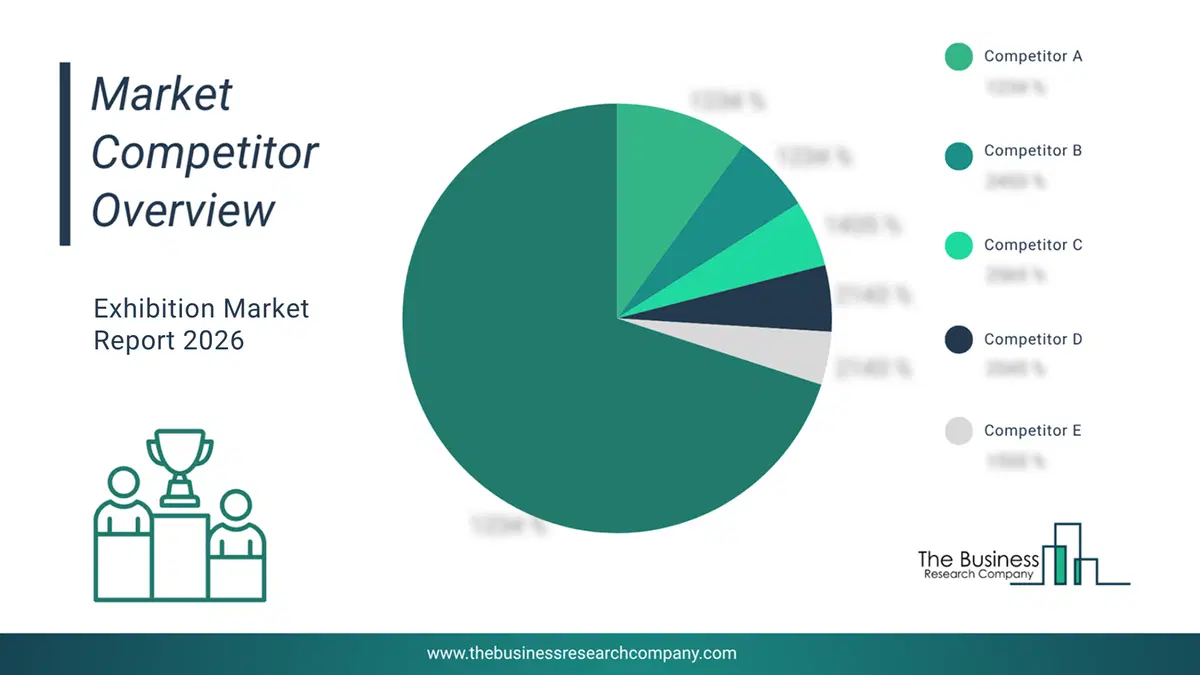
This chart is for illustrative purposes; the full report includes a detailed competitor analysis and comprehensive overview of the top 10 companies in the market.
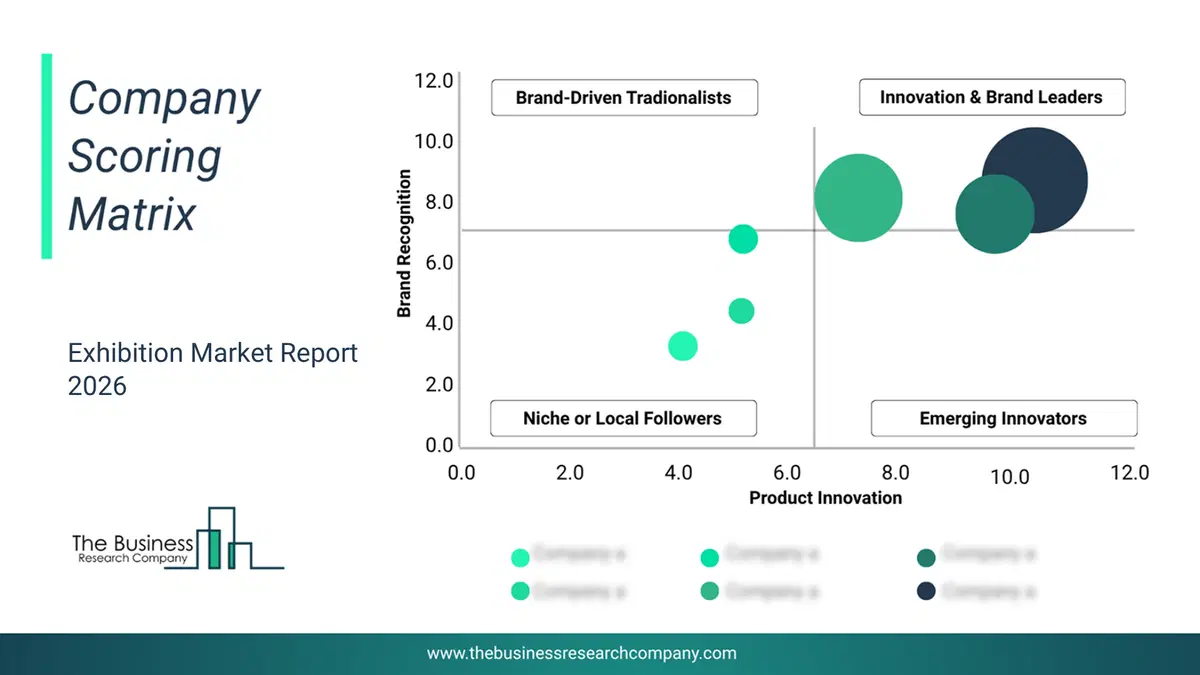
This chart maps companies by product innovation and brand strength, with bubble size indicating relative revenue, helping identify market leaders, challengers, and niche players. This is an illustrative chart; the full report provides a complete and accurate competitive analysis.
Global Exhibition Market Trends and Insights
Major companies operating in the exhibition market are focused on developing digitally advanced event and exhibition planning products, such as mobile applications (apps), to enhance attendee engagement, streamline operations, and offer innovative solutions for a seamless event experience. Mobile apps provide comprehensive tools for managing event schedules, exhibitor logistics, attendee registration, and interactive features to streamline the planning and execution of exhibitions and events. For instance, in November 2023, Simpleview, a US-based provider of marketing software, introduced the Eventsforce mobile app, designed as a cost-effective solution for tourism event organizations aiming to enhance attendee engagement. The app offers user-friendly features for attendees, exhibitors, sponsors, and organizers, including seamless integration with major association management systems (AMS) or customer relationship management (CRM) and event management systems, mobile and desktop access, advanced QR code scanning, and gamification tools to boost engagement.What Are Latest Mergers And Acquisitions In The Exhibition Market?
In April 2024, CloserStill Media, a UK-based media company, acquired Elite Exhibition for an undisclosed amount. The acquisition aims to enhance CloserStill's portfolio in the cruise ship sector, complementing its existing events in the transportation and design industries. Elite Exhibitions is a UK-based exhibition and conference organizer company.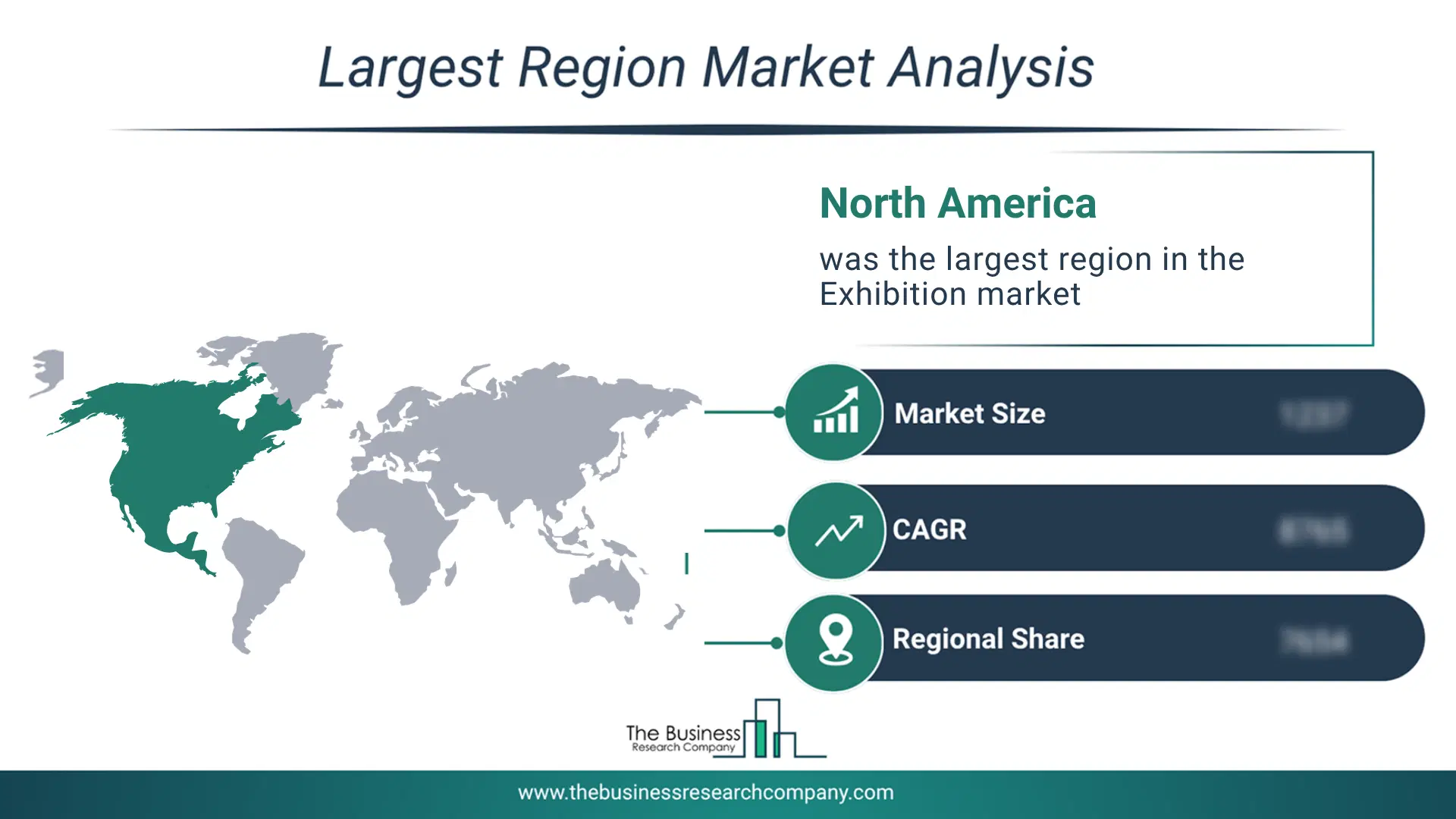
Regional Outlook
North America was the largest region in the exhibition market in 2025. Asia-Pacific is expected to be the fastest-growing region in the forecast period. The regions covered in this market report are Asia-Pacific, South East Asia, Western Europe, Eastern Europe, North America, South America, Middle East, Africa. The countries covered in this market report are Australia, Brazil, China, France, Germany, India, Indonesia, Japan, Taiwan, Russia, South Korea, UK, USA, Canada, Italy, SpainWhat Defines the Exhibition Market?
The exhibition market includes revenues earned by entities by providing services such as event organization, exhibitor space rental, sponsorship opportunities, ticket sales, and ancillary services. The market value includes the value of related goods sold by the service provider or included within the service offering. Only goods and services traded between entities or sold to end consumers are included.How is Market Value Defined and Measured?
The market value is defined as the revenues that enterprises gain from the sale of goods and/or services within the specified market and geography through sales, grants, or donations in terms of the currency (in USD unless otherwise specified). The revenues for a specified geography are consumption values that are revenues generated by organizations in the specified geography within the market, irrespective of where they are produced. It does not include revenues from resales along the supply chain, either further along the supply chain or as part of other products.
This chart presents market attractiveness based on a quantitative evaluation of growth, competition, strategic alignment, and risk, offering a clear view of opportunity areas for decision-making. This chart is for illustrative purposes; the full report contains the complete analysis.

This chart highlights the Total Addressable Market (TAM) by estimating the maximum revenue opportunity using an assumption-driven approach, supporting strategic planning and opportunity sizing across markets. The chart is illustrative; the full report provides a more comprehensive analysis.
What Key Data and Analysis Are Included in the Exhibition Market Report 2026?
The exhibition market research report is one of a series of new reports from The Business Research Company that provides market statistics, including industry global market size, regional shares, competitors with the market share, detailed market segments, market trends and opportunities, and any further data you may need to thrive in the exhibition industry. The market research report delivers a complete perspective of everything you need, with an in-depth analysis of the current and future state of the industry.Exhibition Market Report Forecast Analysis
| Report Attribute | Details |
|---|---|
| Market Size Value In 2026 | $74.65 billion |
| Revenue Forecast In 2030 | $92.7 billion |
| Growth Rate | CAGR of 5.7% from 2026 to 2030 |
| Base Year For Estimation | 2025 |
| Actual Estimates/Historical Data | 2020-2025 |
| Forecast Period | 2026 - 2030 - 2035 |
| Market Representation | Revenue in USD Billion and CAGR from 2026 to 2030 |
| Segments Covered | Exhibition, Revenue Stream, Enterprise Size, Industry |
| Regional Scope | Asia-Pacific, Western Europe, Eastern Europe, North America, South America, Middle East, Africa |
| Country Scope | The countries covered in the report are Australia, Brazil, China, France, Germany, India, Indonesia, Japan, Taiwan, Russia, South Korea, UK, USA, Canada, Italy, Spain. |
| Key Companies Profiled | Reed Exhibitions, Informa Markets, GL Events, Ascential plc, MCH Group, Emerald Expositions, Messe München, Clarion Events, Fiera Milano SpA, NürnbergMesse, Artexis Easyfairs, Comexposium, dmg events, Hyve Group, Tüyap Fairs and Exhibitions Organization Inc., Koelnmesse, RAI Amsterdam, Fira Barcelona, Pico Global, Tarsus Group, Messe Düsseldorf, Messe Frankfurt, ITE Group |
| Customization Scope | Request for Customization |
| Pricing And Purchase Options | Explore Purchase Options |