
Expanded Carrier Screening Market Report 2026
Global Outlook – By Type (Customized Panel Testing, Predesigned Panel Testing), By Technology (Deoxyribonucleic Acid Sequencing, Polymerase Chain Reaction, Microarrays, Other Technologies), By Application (Preconception, Prenatal, Other Applications), By End-User (Hospitals, Diagnostic Laboratories, Research Laboratories, Specialty Clinics, Other End-Users) - Market Size, Trends, And Global Forecast 2026-2030
Expanded Carrier Screening Market Overview
• Expanded Carrier Screening market size has reached to $2.46 billion in 2025 • Expected to grow to $5.28 billion in 2030 at a compound annual growth rate (CAGR) of 16.4% • Growth Driver: The Rise In Genetic Diseases Is Driving The Growth Of The Market Due To Improved Detection And Reproductive Planning • Market Trend: Advancing Genetic Testing With High-Accuracy Multi-Gene Panels For Inherited Disorder Detection • North America was the largest region in 2025 and Asia Pacific is the fastest growing region.Market Gains By 2030 – Top Opportunities By Segment
Market Gain identifies the most promising market opportunities by highlighting the segments or products expected to generate the highest incremental revenue growth over the next five years.
What Is Covered Under Expanded Carrier Screening Market?
Expanded carrier screening refers to a type of genetic test that analyzes a broad panel of genes to identify whether individuals carry mutations associated with inherited genetic disorders. It is typically used before or during pregnancy to assess the risk of passing genetic conditions to offspring, regardless of ethnicity or family history. The main types of expanded carrier screening are customized panel testing and pre-designed panel testing. Customized panel testing refers to genetic tests tailored to an individual's specific family history, ethnicity, or medical needs to identify potential carrier risks. This testing employs various technologies, such as deoxyribonucleic acid (DNA) sequencing, polymerase chain reaction (PCR), microarrays, and others, which are used for a range of applications, including preconception and prenatal screening. The key end users include hospitals, diagnostic laboratories, research laboratories, specialty clinics, and others.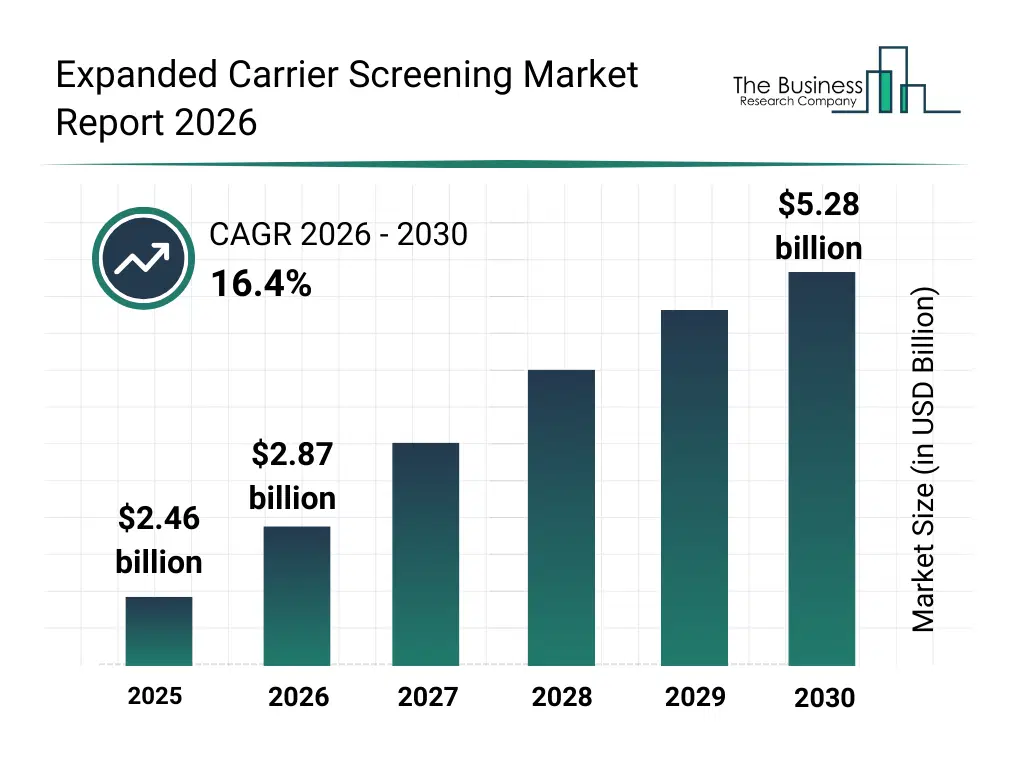
What Is The Expanded Carrier Screening Market Size and Share 2026?
The expanded carrier screening market size has grown rapidly in recent years. It will grow from $2.46 billion in 2025 to $2.87 billion in 2026 at a compound annual growth rate (CAGR) of 16.7%. The growth in the historic period can be attributed to increasing awareness of inherited genetic disorders, expansion of prenatal screening programs, improvements in genetic sequencing accuracy, growing availability of diagnostic laboratories, rising clinician adoption of carrier screening tools.What Is The Expanded Carrier Screening Market Growth Forecast?
The expanded carrier screening market size is expected to see rapid growth in the next few years. It will grow to $5.28 billion in 2030 at a compound annual growth rate (CAGR) of 16.4%. The growth in the forecast period can be attributed to increasing demand for personalized reproductive health solutions, rising integration of ai-based variant interpretation, expansion of population-wide screening initiatives, growing investments in genomic data platforms, increased focus on preventive genetic healthcare. Major trends in the forecast period include increasing adoption of pan-ethnic genetic screening panels, rising demand for preconception carrier testing, growing use of next-generation sequencing technologies, expansion of direct-to-provider genetic testing services, enhanced focus on genetic counseling integration.
Global Expanded Carrier Screening Market Segmentation
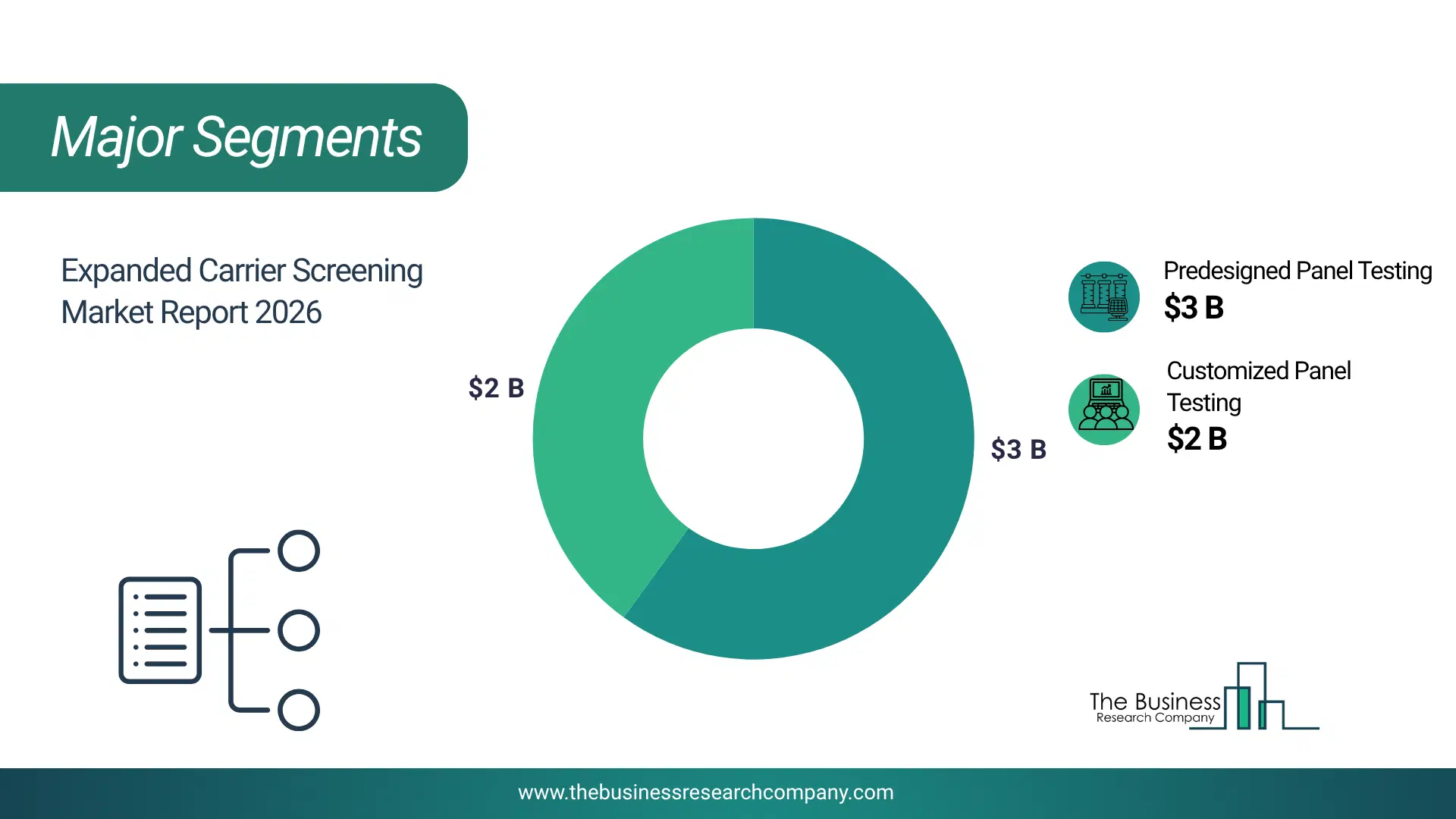
1) By Type: Customized Panel Testing, Predesigned Panel Testing 2) By Technology: Deoxyribonucleic Acid Sequencing, Polymerase Chain Reaction, Microarrays, Other Technologies 3) By Application: Preconception, Prenatal, Other Applications 4) By End-User: Hospitals, Diagnostic Laboratories, Research Laboratories, Specialty Clinics, Other End-Users Subsegments: 1) By Customized Panel Testing: Single Gene Testing, Multi-Gene Panel Testing, Ethnicity-Based Custom Panels, Condition-Specific Custom Panels, Family History-Based Custom Panels 2) By Predesigned Panel Testing: Pan-Ethnic Panels, Universal Carrier Panels, Population-Specific Panels, Disorder-Focused Panels, Expanded Predefined Panels The top segments in the expanded carrier screening market will be: • Predesigned Panel Testing will reach $3.3 Billion by 2030. • Customized Panel Testing will reach $1.98 Billion by 2030.What Is The Driver Of The Expanded Carrier Screening Market?
The rising prevalence of genetic diseases is expected to propel the growth of the expanded carrier screening market going forward. Genetic diseases are disorders caused by abnormalities or mutations in an individual's DNA, which can be inherited or occur spontaneously. The prevalence of genetic diseases is increasing as advancements in diagnostic technologies, particularly next-generation sequencing and other genomic tools, have significantly improved the ability to detect and identify a wide range of genetic disorders that previously went undiagnosed or were misclassified. Expanded carrier screening helps identify carriers of genetic disorders before symptoms appear, enabling informed reproductive decisions and reducing the risk of passing inherited conditions to future generations. For instance, in October 2024, according to the Cystic Fibrosis Trust, a UK-based charity dedicated to supporting people with cystic fibrosis, in 2022, 11,148 cystic fibrosis patients were registered, and this number grew to 11,318 in 2023, reflecting a 1.5% increase in patient registrations year-over-year. Therefore, the rising prevalence of genetic diseases is driving the growth of the carrier screening market.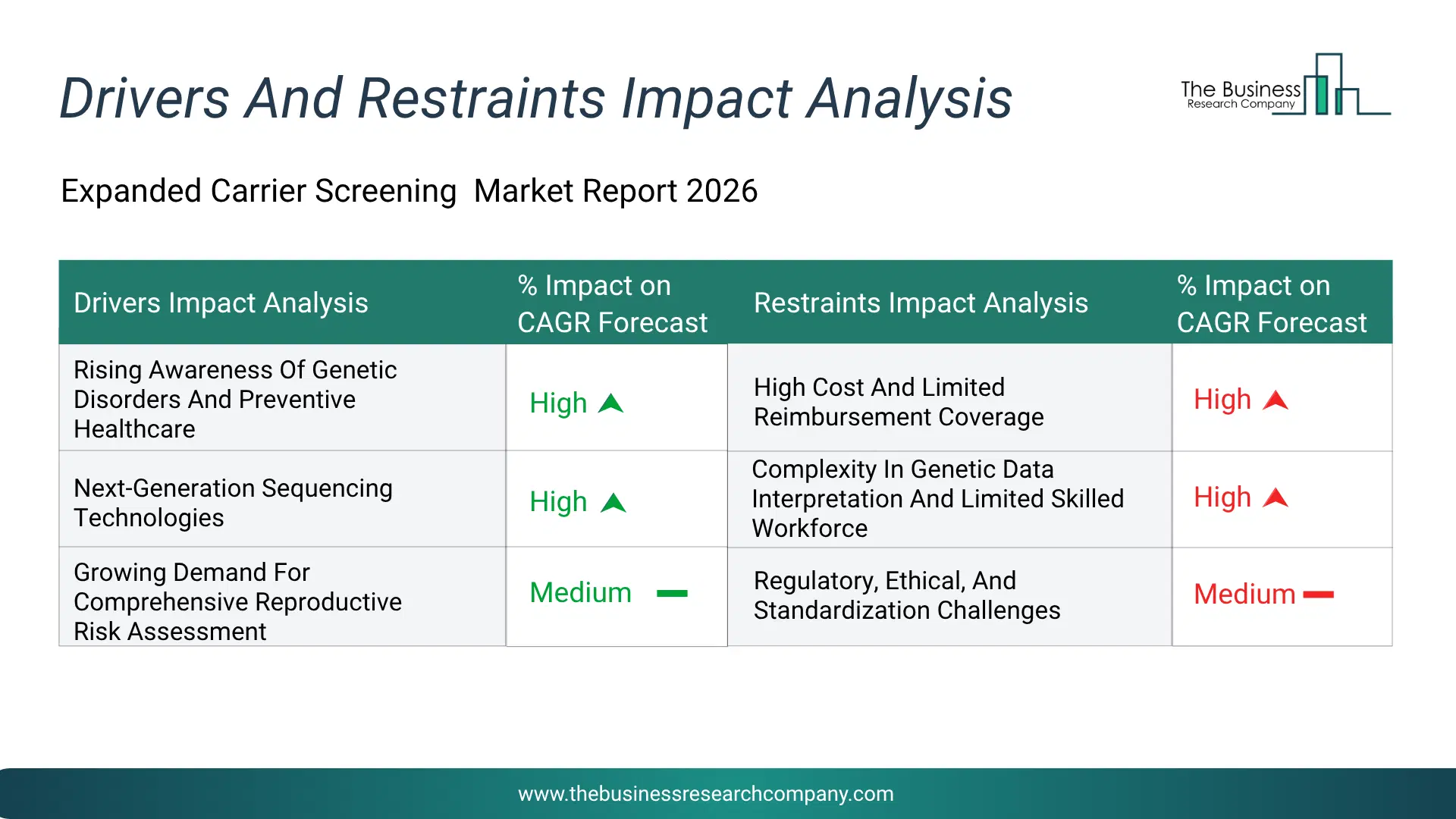
Infographic Chart Showing Key Market Drivers Analysis And Restraints For Expanded Carrier Screening Market
The chart presents an impact analysis of key drivers and restraints, quantifying their relative influence on the market's growth rate and helping assess the balance between growth enablers and limiting factors. This chart offers a high-level perspective; the full report contains more detailed insights.
How Will The Drivers Impact Growth In The Global Expanded Carrier Screening Market?
• Rising Awareness Of Genetic Disorders And Preventive Healthcare (High) – During the forecast period, the rising awareness of genetic disorders and preventive healthcare is expected to become a key growth driver for the expanded carrier screening market by 2030. Increasing public health initiatives, educational campaigns, and physician-led counselling are improving understanding of inherited conditions and the importance of early detection. Prospective parents are increasingly opting for screening to identify potential genetic risks before conception or during early pregnancy. This shift toward proactive healthcare is strengthening the adoption of screening programs across both developed and emerging markets. • Next-Generation Sequencing Technologies (High) – During the forecast period, the advancement of next-generation sequencing technologies is expected to emerge as a major factor driving the expansion of the expanded carrier screening market by 2030. These technologies enable high-throughput analysis of multiple genes simultaneously, improving detection rates and expanding the scope of screening panels. Continuous innovation is enhancing scalability, reducing per-test costs, and enabling broader clinical implementation. Laboratories are increasingly adopting these platforms to deliver more comprehensive and reliable results. • Growing Demand For Comprehensive Reproductive Risk Assessment (Medium) – During the forecast period, the growing demand for comprehensive reproductive risk assessment is expected to act as a key growth catalyst for the expanded carrier screening market by 2030. Couples are seeking detailed insights into potential genetic risks to support informed family planning decisions. Healthcare providers are increasingly recommending expanded panels that cover a wide range of conditions, beyond traditional single-gene testing approaches. This trend is supported by evolving clinical practices that emphasize personalized and preventive care.How Will The Restraints Impact Growth In The Global Expanded Carrier Screening Market?
• High Cost And Limited Reimbursement Coverage (High) – During the forecast period, high cost and limited reimbursement coverage are restricting the growth of the expanded carrier screening market. Expensive genetic testing procedures and limited insurance coverage are increasing out-of-pocket expenses for patients, thereby reducing accessibility and adoption of screening services • Complexity In Genetic Data Interpretation And Limited Skilled Workforce (High) – During the forecast period, complexity in genetic data interpretation and limited skilled workforce is restricting the growth of the expanded carrier screening market. Challenges in analyzing complex genetic variants along with shortage of trained genetic counselors and specialists are hindering accurate diagnosis and effective utilization of screening solutions • Regulatory, Ethical, And Standardization Challenges (Medium) – During the forecast period, regulatory, ethical, and standardization challenges are restricting the growth of the expanded carrier screening market. Evolving regulatory frameworks, ethical concerns related to genetic data usage, and lack of standardized testing guidelines are creating compliance complexities and limiting market expansionKey Players In The Global Expanded Carrier Screening Market
Major companies operating in the expanded carrier screening market are Thermo Fisher Scientific Inc., Labcorp Holdings Inc., Quest Diagnostics Incorporated, Eurofins Scientific SE, Illumina Inc., Natera Inc., Myriad Genetics Inc., Fulgent Genetics Inc., BGI Genomics Co. Ltd., Ambry Genetics Corporation, GeneDx Inc., BillionToOne Inc., MedGenome Labs Ltd., Centogene N.V., Baylor Miraca Genetics Laboratories LLC, Victorian Clinical Genetics Services, Pathkind Diagnostics Private Limited, Medicover Genetics GmbH, NxGen MDx LLC, GeneTech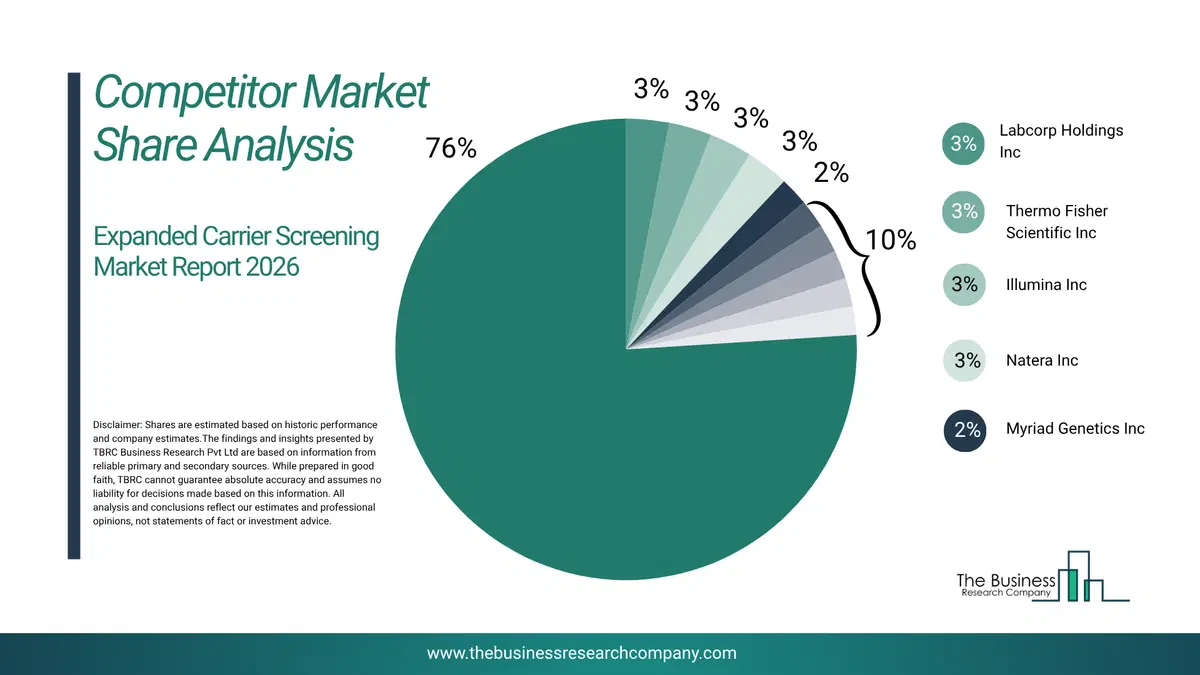
This chart is for illustrative purposes; the full report includes a detailed competitor analysis and comprehensive overview of the top 10 companies in the market.
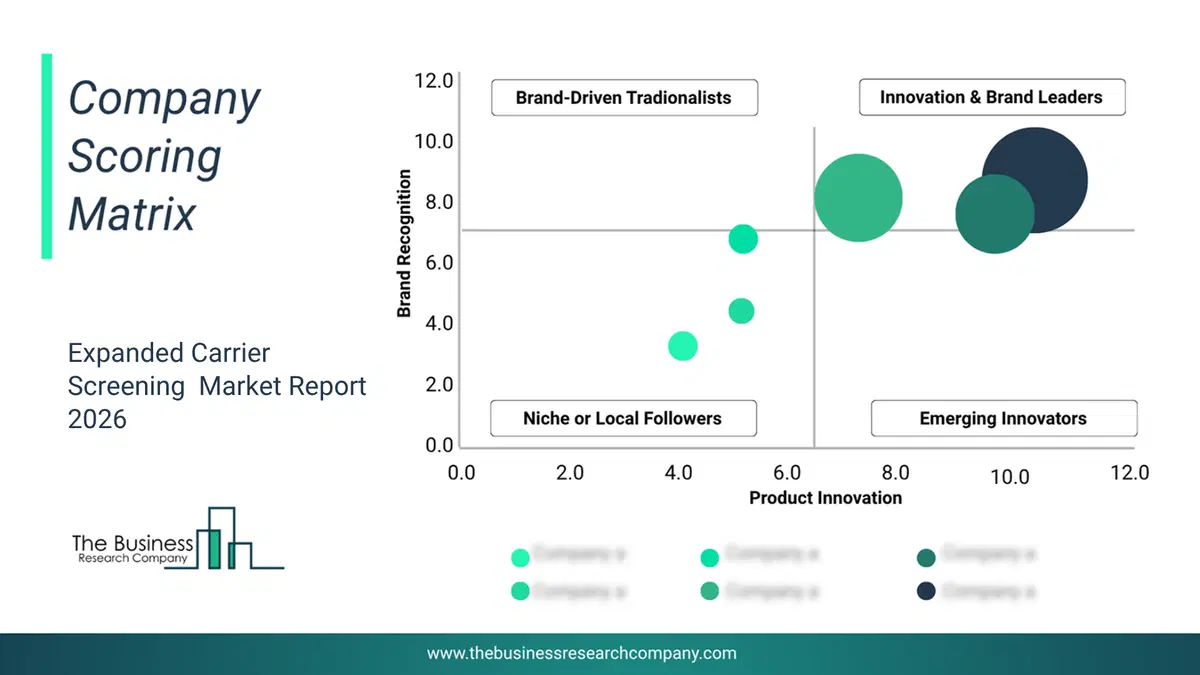
This chart maps companies by product innovation and brand strength, with bubble size indicating relative revenue, helping identify market leaders, challengers, and niche players. This is an illustrative chart; the full report provides a complete and accurate competitive analysis.
Global Expanded Carrier Screening Market Trends and Insights
Major companies operating in the expanded carrier screening market are focusing on developing innovative solutions, such as comprehensive next-generation sequencing-based panels, to detect a wide range of genetic conditions with greater accuracy and efficiency. Comprehensive next-generation sequencing (NGS)-based panels are advanced genetic tests that analyze multiple genes simultaneously to identify a broad spectrum of inherited disorders with high accuracy and speed. For instance, in February 2023, Fulgent Genetics Inc., a US-based genomic testing company, launched the Beacon787 Expanded Carrier Screening Panel, designed to evaluate 787 genes linked to severe inherited conditions. This panel offers extensive coverage of over 700 autosomal recessive and X-linked disorders, including all Tier 3 genes. This leverages advanced next-generation sequencing technology that provides high analytical accuracy, a pan-ethnic approach, and a quick turnaround time of 2–3 weeks, positioning it as one of the most comprehensive and precise reproductive carrier screening solutions available.What Are Latest Mergers And Acquisitions In The Expanded Carrier Screening Market?
In January 2024, Natera Inc., a US-based genetic testing company, acquired reproductive health assets from Invitae Corporation for $52.5 million. With this acquisition, Natera aims to expand its reproductive health portfolio by integrating Invitae’s carrier screening and non-invasive prenatal testing services, while Invitae streamlines operations and focuses on its core oncology and rare disease genetic testing. Invitae Corporation is a US-based genetic information company providing comprehensive genetic testing services, including carrier screening, diagnostic testing, and hereditary disease analysis.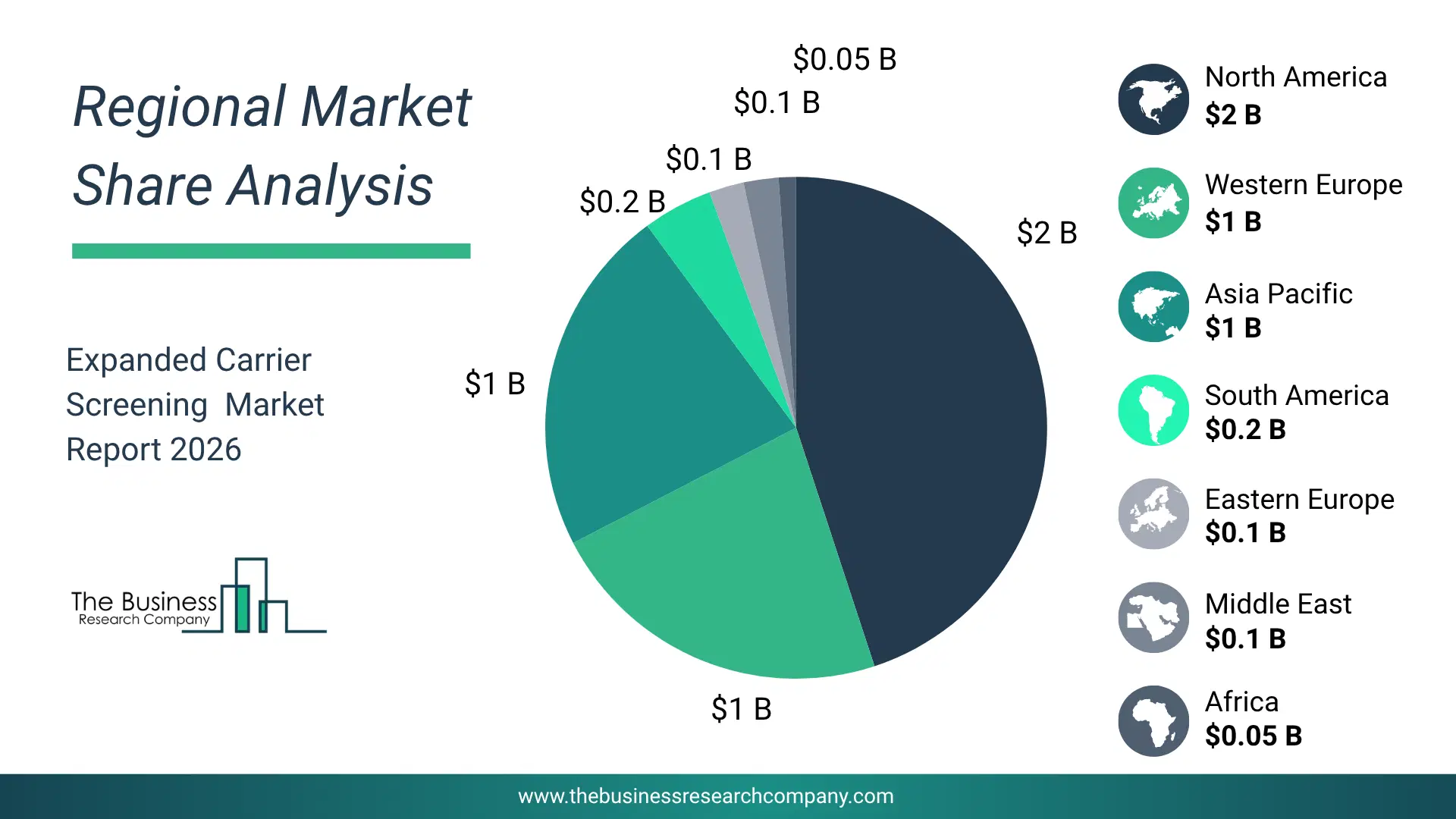
Regional Outlook
North America was the largest region in the expanded carrier screening market in 2025. Asia-Pacific is expected to be the fastest-growing region in the forecast period. The regions covered in this market report are Asia-Pacific, South East Asia, Western Europe, Eastern Europe, North America, South America, Middle East, Africa. The countries covered in this market report are Australia, Brazil, China, France, Germany, India, Indonesia, Japan, Taiwan, Russia, South Korea, UK, USA, Canada, Italy, Spain.What Defines the Expanded Carrier Screening Market?
The expanded carrier screening market consists of revenues earned by entities by providing services such as genetic panel testing, counseling services, bioinformatics analysis, sample collection and processing, and customized panel design. The market value includes the value of related goods sold by the service provider or included within the service offering. The expanded carrier screening market also includes sales of next-generation sequencing (NGS) panels, microarray-based screening kits, sample collection kits, lab automation systems, and genotyping assays. Values in this market are ‘factory gate’ values; that is, the value of goods sold by the manufacturers or creators of the goods, whether to other entities (including downstream manufacturers, wholesalers, distributors, and retailers) or directly to end customers. The value of goods in this market includes related services sold by the creators of the goods.How is Market Value Defined and Measured?
The market value is defined as the revenues that enterprises gain from the sale of goods and/or services within the specified market and geography through sales, grants, or donations in terms of the currency (in USD unless otherwise specified). The revenues for a specified geography are consumption values that are revenues generated by organizations in the specified geography within the market, irrespective of where they are produced. It does not include revenues from resales along the supply chain, either further along the supply chain or as part of other products.
This chart presents market attractiveness based on a quantitative evaluation of growth, competition, strategic alignment, and risk, offering a clear view of opportunity areas for decision-making. This chart is for illustrative purposes; the full report contains the complete analysis.

This chart highlights the Total Addressable Market (TAM) by estimating the maximum revenue opportunity using an assumption-driven approach, supporting strategic planning and opportunity sizing across markets. The chart is illustrative; the full report provides a more comprehensive analysis.
What Key Data and Analysis Are Included in the Expanded Carrier Screening Market Report 2026?
The expanded carrier screening market research report is one of a series of new reports from The Business Research Company that provides market statistics, including industry global market size, regional shares, competitors with the market share, detailed market segments, market trends and opportunities, and any further data you may need to thrive in the expanded carrier screening industry. The market research report delivers a complete perspective of everything you need, with an in-depth analysis of the current and future state of the industry.Expanded Carrier Screening Market Report Forecast Analysis
| Report Attribute | Details |
|---|---|
| Market Size Value In 2026 | $2.87 billion |
| Revenue Forecast In 2030 | $5.28 billion |
| Growth Rate | CAGR of 16.7% from 2026 to 2030 |
| Base Year For Estimation | 2025 |
| Actual Estimates/Historical Data | 2020-2025 |
| Forecast Period | 2026 - 2030 |
| Market Representation | Revenue in USD Billion and CAGR from 2026 to 2030 |
| Segments Covered | Type, Technology, Application, End-User |
| Regional Scope | Asia-Pacific, Western Europe, Eastern Europe, North America, South America, Middle East, Africa |
| Country Scope | The countries covered in the report are Australia, Brazil, China, France, Germany, India, Indonesia, Japan, Taiwan, Russia, South Korea, UK, USA, Canada, Italy, Spain. |
| Key Companies Profiled | Thermo Fisher Scientific Inc., Labcorp Holdings Inc., Quest Diagnostics Incorporated, Eurofins Scientific SE, Illumina Inc., Natera Inc., Myriad Genetics Inc., Fulgent Genetics Inc., BGI Genomics Co. Ltd., Ambry Genetics Corporation, GeneDx Inc., BillionToOne Inc., MedGenome Labs Ltd., Centogene N.V., Baylor Miraca Genetics Laboratories LLC, Victorian Clinical Genetics Services, Pathkind Diagnostics Private Limited, Medicover Genetics GmbH, NxGen MDx LLC, GeneTech |
| Customization Scope | Request for Customization |
| Pricing And Purchase Options | Explore Purchase Options |