
Extended Producer Responsibility Apparel Market Report 2026
Global Outlook – By Product Type (Apparel And Clothing, Footwear, Home Textiles, Fashion Accessories), By Material (Natural Fibers, Synthetic Fibers, Blended Materials), By Distribution Channel (Online, Offline), By End User (Men, Women, Children) – Market Size, Trends, Strategies, and Forecast to 2035
Extended Producer Responsibility Apparel Market Overview
• Extended Producer Responsibility Apparel market size has reached to $1.38 billion in 2025 • Expected to grow to $2.63 billion in 2030 at a compound annual growth rate (CAGR) of 13.8% • Growth Driver: Expansion Of Mandatory Textile EPR Regulations Fueling The Growth Of The Market Due To Increasing Producer Responsibility For Textile Waste • Market Trend: Strengthening Extended Producer Responsibility (EPR) Frameworks To Accelerate Circular Textile Management • Europe was the largest region in 2025 and Asia-Pacific is the fastest growing region.What Is Covered Under Extended Producer Responsibility Apparel Market?
Extended producer responsibility apparel refers to policy and regulatory frameworks that assign apparel manufacturers, brands, importers, or other designated producers responsibility for managing or financing certain environmental impacts associated with clothing products, particularly after consumer use. Depending on the applicable jurisdiction, these frameworks may require producers to support the collection, sorting, reuse, recycling, recovery, or proper disposal of discarded textiles and garments. Apparel EPR aims to reduce textile waste, promote circular economy practices, and encourage more sustainable product design. The main product types of extended producer responsibility apparel include apparel and clothing, footwear, home textiles, and fashion accessories. Apparel and clothing refers to garments covered under extended producer responsibility frameworks that require producers to manage the environmental impacts associated with products throughout their lifecycle. These products are made from natural fibers, synthetic fibers, and blended materials. They are distributed through online and offline channels and are used by several end users such as men, women, and children.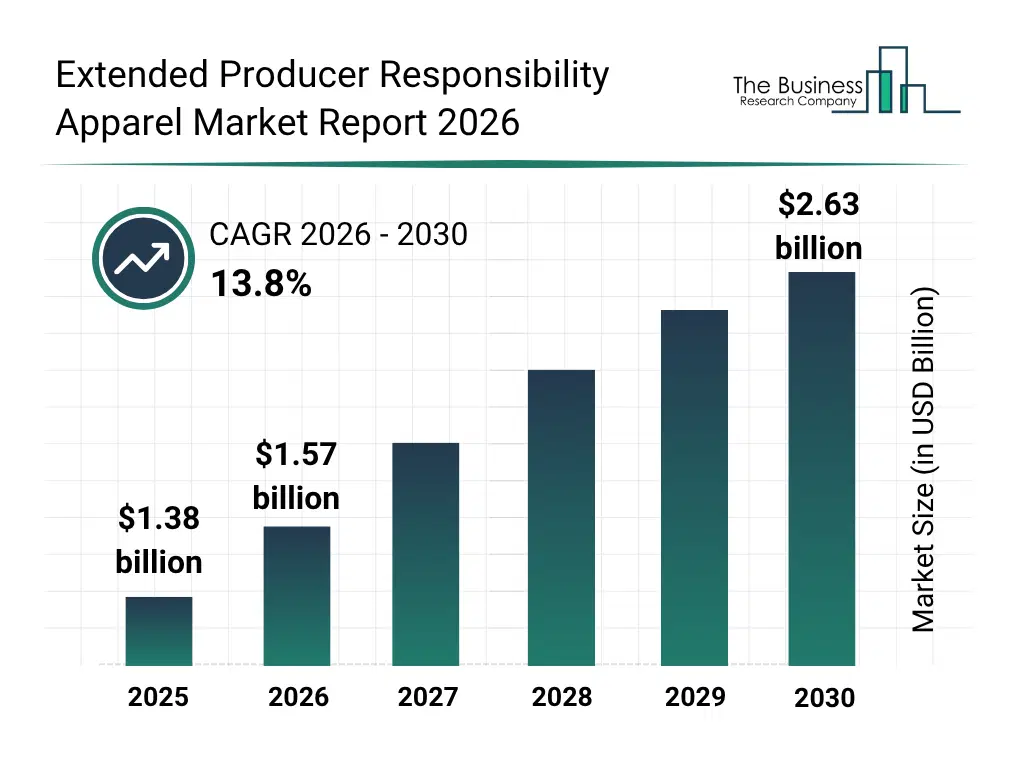
What Is The Extended Producer Responsibility Apparel Market Size and Share 2026?
The extended producer responsibility apparel market size has grown rapidly in recent years. It will grow from $1.38 billion in 2025 to $1.57 billion in 2026 at a compound annual growth rate (CAGR) of 14.2%. The growth in the historic period can be attributed to increasing textile waste generation from growing apparel consumption, rising regulatory pressure to improve post-consumer textile waste management, growing adoption of producer responsibility schemes across apparel supply chains, increasing consumer awareness of clothing waste and sustainable disposal, expanding textile collection and recycling infrastructure.What Is The Extended Producer Responsibility Apparel Market Growth Forecast?
The extended producer responsibility apparel market size is expected to see rapid growth in the next few years. It will grow to $2.63 billion in 2030 at a compound annual growth rate (CAGR) of 13.8%. The growth in the forecast period can be attributed to increasing implementation of mandatory EPR requirements for apparel and textiles, rising producer fees linked to textile waste generation and product characteristics, growing demand for apparel designed for reuse and recyclability, expanding investment in textile sorting and recycling capacity, increasing cross-border regulatory alignment on textile waste and circularity. Major trends in the forecast period include increasing adoption of textile collection and take-back systems to support post-consumer apparel recovery, rising implementation of producer-funded textile sorting and recycling programs, growing emphasis on apparel durability and recyclability to reduce lifecycle waste, increasing use of recycled textile materials in apparel and fashion product manufacturing, expanding collaboration between apparel producers, textile recyclers, municipalities, and waste management organizations.Tariff Impact On Extended Producer Responsibility Apparel Market
Tariffs are impacting the extended producer responsibility apparel market by increasing the cost of imported apparel, textile materials, recycling equipment, and waste management technologies required to support producer responsibility programs. This is raising compliance and operational costs for apparel manufacturers, brands, and importers, particularly in regions dependent on international textile supply chains such as Europe, North America, and Asia-Pacific. Apparel and clothing, synthetic fiber, and imported finished garment segments are most affected due to their exposure to cross-border trade and material costs. However, tariffs are also encouraging regional textile sourcing, domestic recycling capacity, localized collection systems, and greater investment in circular apparel supply chains, strengthening long-term market resilience.
Global Extended Producer Responsibility Apparel Market Segmentation
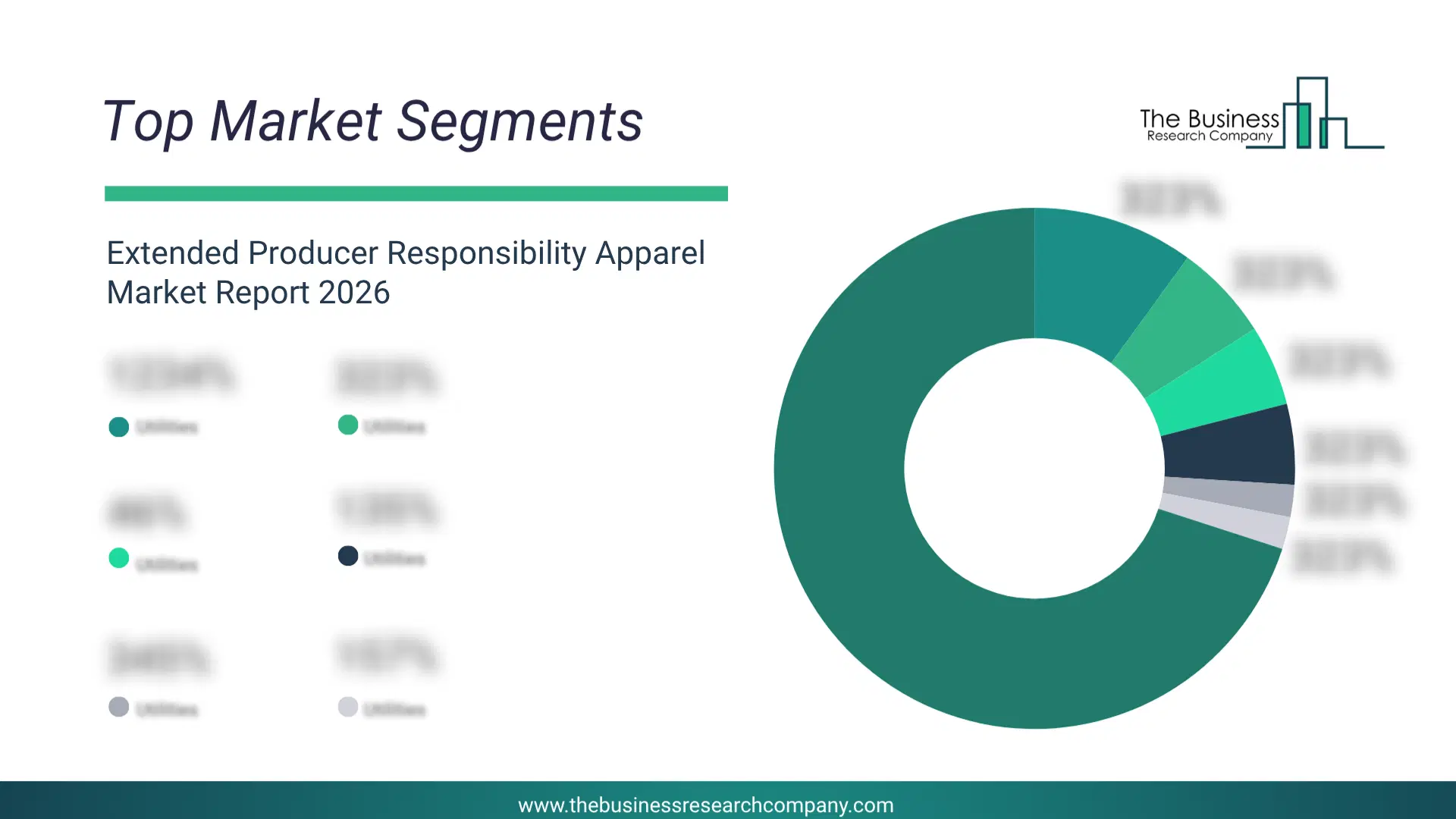
2) By Material: Natural Fibers, Synthetic Fibers, Blended Materials 3) By Distribution Channel: Online, Offline 4) By End User: Men, Women, Children Subsegments: 1) By Apparel And Clothing: Casual Wear, Formal Wear, Sportswear, Outerwear, Innerwear, Children’s Wear, Workwear, Luxury Apparel 2) By Footwear: Athletic Footwear, Casual Footwear, Formal Footwear, Sandals And Slippers, Boots, Children’s Footwear, Safety Footwear 3) By Home Textiles: Bed Linen, Bath Linen, Curtains And Drapes, Upholstery Fabrics, Carpets And Rugs, Kitchen Linen, Cushions And Covers 4) By Fashion Accessories: Bags And Handbags, Belts, Scarves And Shawls, Hats And Caps, Gloves, WalletsWhat Is The Driver Of The Extended Producer Responsibility Apparel Market?
The expansion of mandatory textile extended producer responsibility (EPR) regulations are expected to propel the growth of the extended producer responsibility apparel market going forward. Textile extended producer responsibility (EPR) regulations are policies that require apparel and textile producers to take financial and/or operational responsibility for the collection, reuse, recycling, and disposal of their products after consumers discard them. Rising textile waste and its environmental impact are driving governments to introduce and expand EPR regulations, requiring apparel producers to contribute to the collection, reuse, sorting, and recycling of discarded textiles. Mandatory EPR regulations require apparel producers to finance the collection, sorting, reuse, and recycling of discarded textiles, increasing the need for EPR-related services and infrastructure. For instance, in February 2025, according to the European Commission, a Belgium-based EU government institution, each EU Member State is required to establish Extended Producer Responsibility (EPR) schemes for textile and footwear products, under which producers contribute to the management of used and waste textiles. The schemes are expected to foster investment in separate collection, sorting, reuse, and recycling capacities, helping reduce the amount of textile waste sent for incineration or landfill. Therefore, the expansion of mandatory textile extended producer responsibility (EPR) regulations are driving the growth of the extended producer responsibility apparel industry.Key Players In The Global Extended Producer Responsibility Apparel Market
Major companies operating in the extended producer responsibility apparel market are LVMH Moët Hennessy Louis Vuitton SE, Industria de Diseño Textil S.A., NIKE Inc., Roadget Business Pte. Ltd., adidas AG, Fast Retailing Co. Ltd., Kering SA, Decathlon SE, H & M Hennes & Mauritz AB (publ), Gap Inc., VF Corporation, Zalando SE, PUMA SE, PVH Corp., Primark Limited, Levi Strauss & Co., LPP S.A., Punto Fa S.L., Burberry Group plc, Patagonia Inc., Eileen Fisher Inc., Stella McCartney Ltd., MUD Jeans International B.V.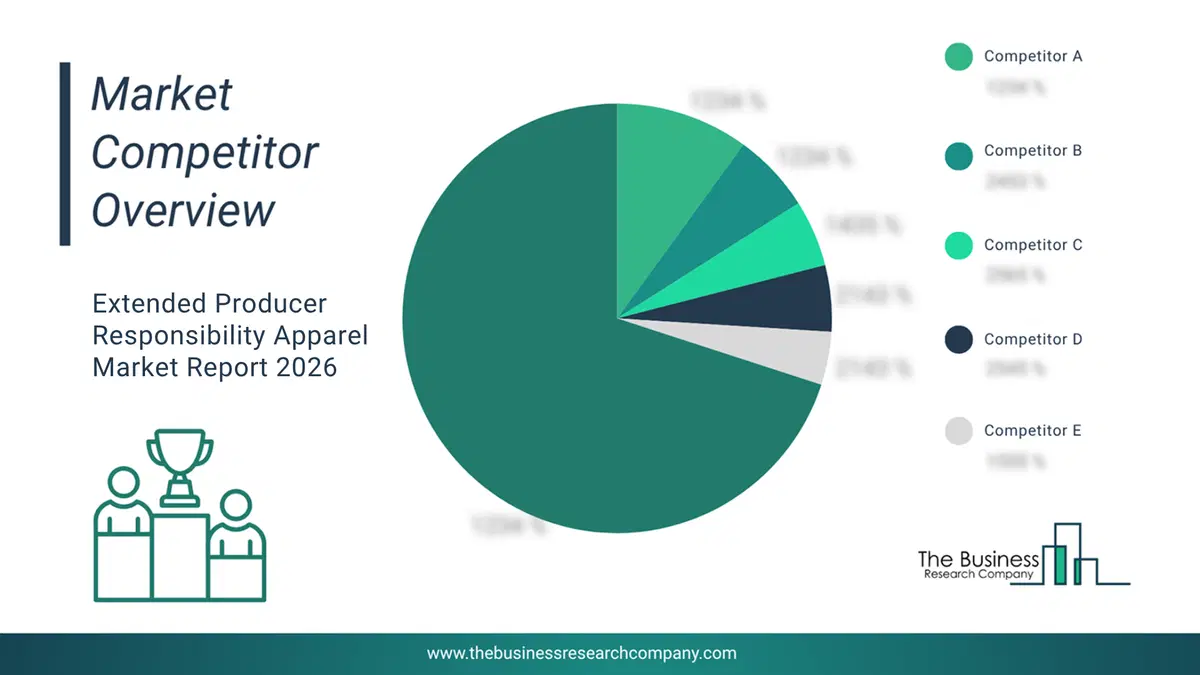
This chart is for illustrative purposes; the full report includes a detailed competitor analysis and comprehensive overview of the top 10 companies in the market.
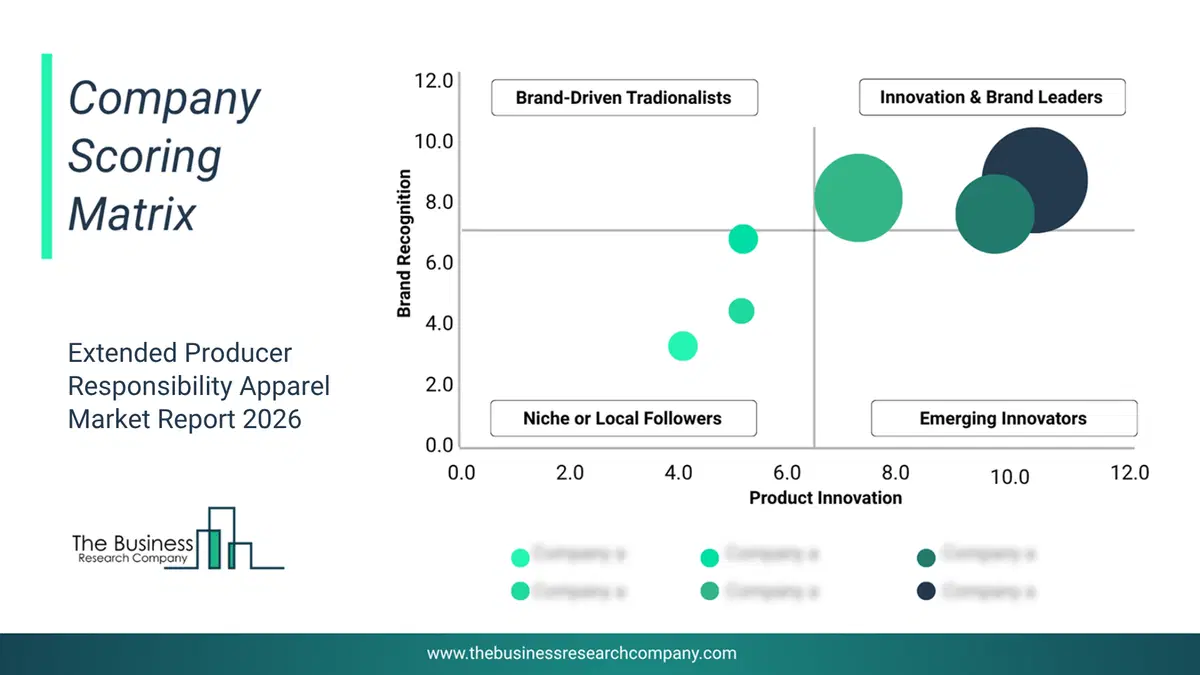
This chart maps companies by product innovation and brand strength, with bubble size indicating relative revenue, helping identify market leaders, challengers, and niche players. This is an illustrative chart; the full report provides a complete and accurate competitive analysis.
Global Extended Producer Responsibility Apparel Market Trends and Insights
Major companies operating in the extended producer responsibility apparel market are focusing on developing advanced policy frameworks, such as textile product stewardship frameworks, to enhance textile waste accountability, producer responsibility, resource recovery, and circularity across the apparel value chain. A textile product stewardship framework is a policy and operational approach that makes producers responsible for managing textiles throughout their entire lifecycle, including collection, reuse, recycling, and end-of-life disposal. For instance, in September 2025, the British Fashion Council (BFC), a UK-based fashion industry organization, launched Extended Producer Responsibility (EPR) for Textiles and Fashion to enhance producer accountability for textile waste, strengthen collection and recycling systems, promote circular business models, and improve resource efficiency across the UK fashion and textile industry. It proposes a mandatory, eco-modulated Extended Producer Responsibility (EPR) framework, where producer fees are linked to product sustainability, rewarding durable and recyclable textiles while discouraging less sustainable designs.What Are Latest Mergers And Acquisitions In The Extended Producer Responsibility Apparel Market?
In April 2025, Reju, a France-based textile-to-textile regeneration company, partnered with Rematrix to secure a compliant and sustainable supply of end-of-life textiles for Reju’s regeneration hubs. Through this partnership, Reju and Rematrix aim to strengthen textile collection, reuse, recycling, traceability, and compliance with Extended Producer Responsibility regulations, supporting the development of circular textile supply chains. Rematrix is an Italy-based Producer Responsibility Organization providing end-of-life textile management and EPR compliance services relevant to extended producer responsibility apparel.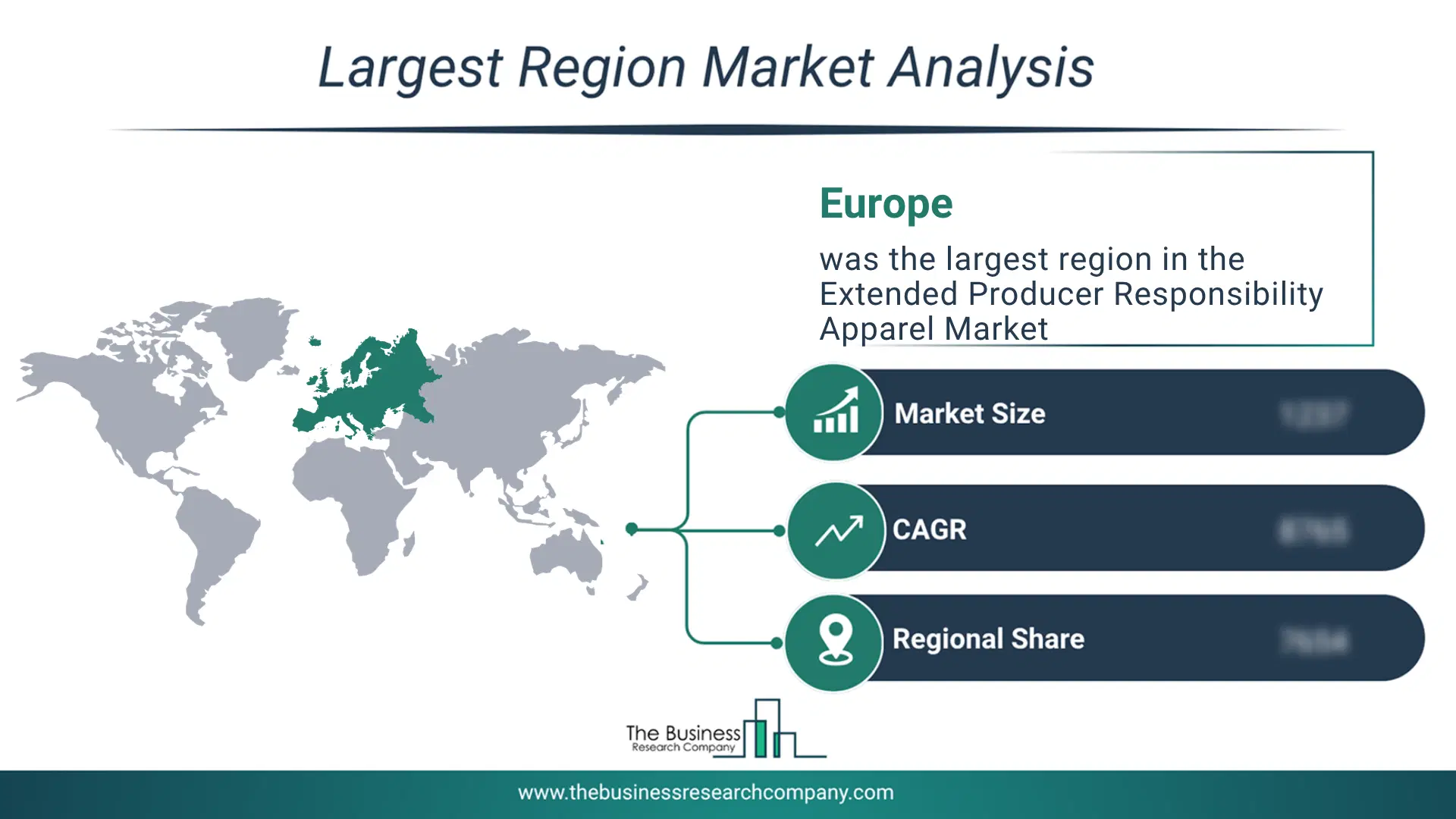
Regional Outlook/Insights
Europe was the largest region in the extended producer responsibility apparel market in 2025. Asia-Pacific is expected to be the fastest-growing region in the forecast period. The regions covered in this market report are Asia-Pacific, South East Asia, Western Europe, Eastern Europe, North America, South America, Middle East, Africa. The countries covered in this market report are Australia, Brazil, China, France, Germany, India, Indonesia, Japan, Taiwan, Russia, South Korea, UK, USA, Canada, Italy, Spain.What Defines the Extended Producer Responsibility Apparel Market?
The extended producer responsibility apparel market includes revenue earned by entities by providing services such as textile collection solutions, apparel recycling services, textile waste management systems, recycled textile materials, sustainability compliance solutions, and circular fashion support services. The market value includes the value of related goods sold by the service provider or included within the service offering. Only goods and services traded between entities or sold to end consumers are included.How is Market Value Defined and Measured?
The market value is defined as the revenues that enterprises gain from the sale of goods and/or services within the specified market and geography through sales, grants, or donations in terms of the currency (in USD unless otherwise specified). The revenues for a specified geography are consumption values that are revenues generated by organizations in the specified geography within the market, irrespective of where they are produced. It does not include revenues from resales along the supply chain, either further along the supply chain or as part of other products.
This chart presents market attractiveness based on a quantitative evaluation of growth, competition, strategic alignment, and risk, offering a clear view of opportunity areas for decision-making. This chart is for illustrative purposes; the full report contains the complete analysis.

This chart highlights the Total Addressable Market (TAM) by estimating the maximum revenue opportunity using an assumption-driven approach, supporting strategic planning and opportunity sizing across markets. The chart is illustrative; the full report provides a more comprehensive analysis.
What Key Data and Analysis Are Included in the Extended Producer Responsibility Apparel Market Report 2026?
The extended producer responsibility apparel market research report is one of a series of new reports from The Business Research Company that provides market statistics, including industry global market size, regional shares, competitors with the market share, detailed market segments, market trends and opportunities, and any further data you may need to thrive in the extended producer responsibility apparel industry. The market research report delivers a complete perspective of everything you need, with an in-depth analysis of the current and future state of the industry.Extended Producer Responsibility Apparel Market Report Forecast Analysis
| Report Attribute | Details |
|---|---|
| Market Size Value In 2026 | $1.57 billion |
| Revenue Forecast In 2030 | $2.63 billion |
| Growth Rate | CAGR of 13.8% from 2026 to 2035 |
| Base Year For Estimation | 2025 |
| Actual Estimates/Historical Data | 2020-2025 |
| Forecast Period | 2026 - 2030 |
| Market Representation | Revenue in USD Billion and CAGR from 2026 to 2030 |
| Segments Covered | Product Type, Material, Distribution Channel, End User |
| Regional Scope | Asia-Pacific, Western Europe, Eastern Europe, North America, South America, Middle East, Africa |
| Country Scope | The countries covered in the report are Australia, Brazil, China, France, Germany, India, Indonesia, Japan, Taiwan, Russia, South Korea, UK, USA, Canada, Italy, Spain. |
| Customization Scope | Request for Customization |
| Pricing And Purchase Options | Explore Purchase Options |