

External Blinds Market Report 2026
Global Outlook – By Product Type (Roller Blinds, Venetian Blinds), By Material Type (Metal, Plastic, Other Materials), By Operating System (Automatic, Manual), By Installation (New Construction, Retro-Fit), By Application (Residential, Commercial) – Market Size, Trends, Strategies, and Forecast to 2030
External Blinds Market Overview
• External Blinds market size has reached to $14.54 billion in 2025 • Expected to grow to $21.32 billion in 2030 at a compound annual growth rate (CAGR) of 7.9% • Growth Driver: Impact Of Increasing Residential Constructions On The External Blinds Market • Market Trend: Innovations in External Blinds To Advance Offerings • North America was the largest region in 2025 and Asia-Pacific is the fastest growing region.Market Gains By 2030 – Top Opportunities By Segment
Market Gain identifies the most promising market opportunities by highlighting the segments or products expected to generate the highest incremental revenue growth over the next five years.
What Is Covered Under External Blinds Market?
External blinds are window coverings installed outside a building to block sun rays, reduce heat and glare, and protect furnishings from UV damage. They enhance energy efficiency by minimizing the need for air conditioning and provide additional privacy and weather protection. External blinds also improve the aesthetic appeal of the building's exterior. The main types of products in the external blinds market are roller blinds, venetian blinds, vertical blinds, panel blinds, corded blinds, and others. Roller blinds are a type of window covering made from a single piece of fabric that wraps around a cylindrical tube. The various types of materials include metal, wood, plastic, and others. It includes operating systems such as automatic and manual. They can be installed in new construction and retro-fit residential and commercial premises.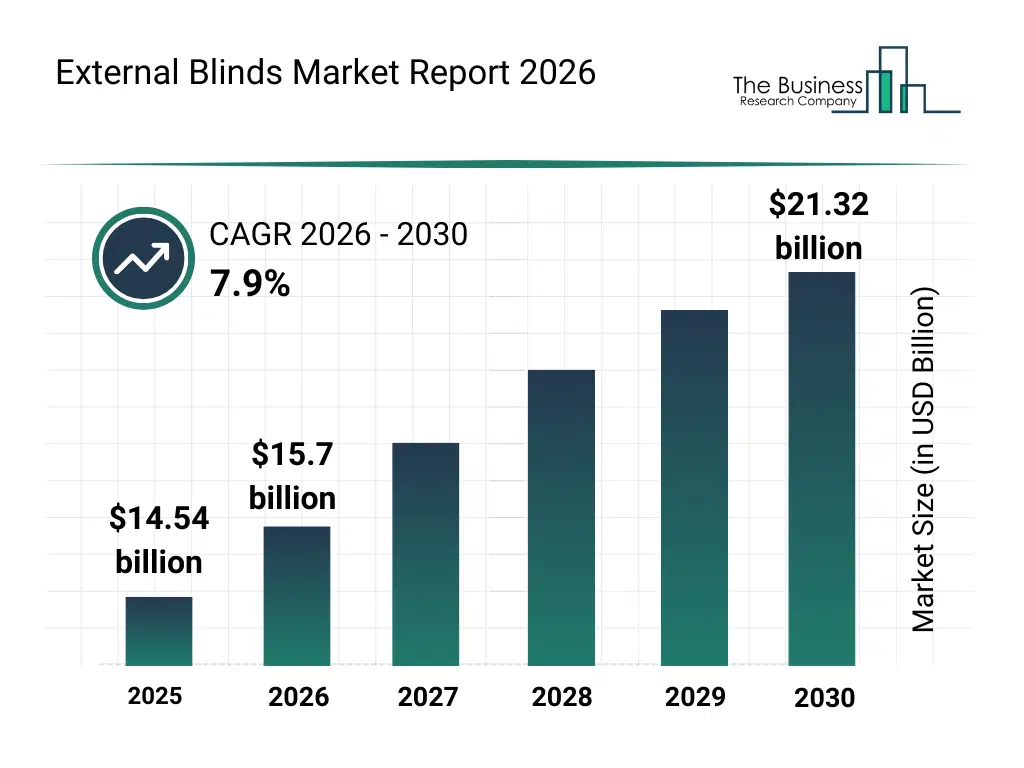
What Is The External Blinds Market Size and Share 2026?
The external blinds market size has grown strongly in recent years. It will grow from $14.54 billion in 2025 to $15.7 billion in 2026 at a compound annual growth rate (CAGR) of 8.0%. The growth in the historic period can be attributed to growth in residential construction activities, increasing awareness of energy-efficient buildings, expansion of commercial real estate projects, rising demand for solar heat control solutions, availability of diverse blind materials.What Is The External Blinds Market Growth Forecast?
The external blinds market size is expected to see strong growth in the next few years. It will grow to $21.32 billion in 2030 at a compound annual growth rate (CAGR) of 7.9%. The growth in the forecast period can be attributed to growing adoption of smart building technologies, rising focus on passive cooling solutions, expansion of green building standards, increasing demand for automated shading systems, technological advancements in durable outdoor materials. Major trends in the forecast period include increasing adoption of motorized external blinds, rising demand for energy-efficient shading solutions, growing integration with smart home systems, expansion of retrofit installation projects, enhanced focus on weather-resistant materials.
Global External Blinds Market Segmentation
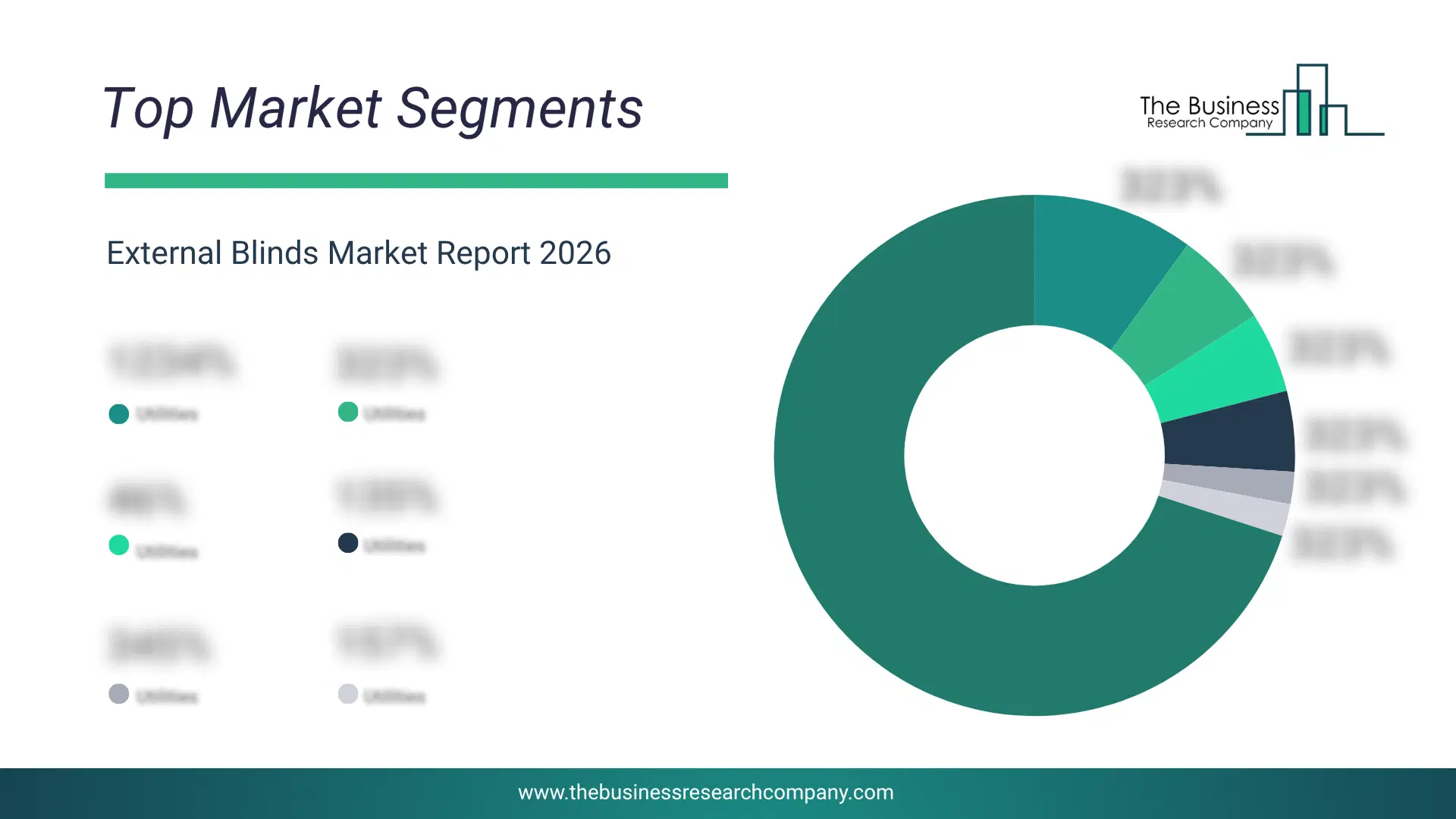
1) By Product Type: Roller Blinds, Venetian Blinds 2) By Material Type: Metal, Plastic, Other Materials 3) By Operating System: Automatic, Manual 4) By Installation: New Construction, Retro-Fit 5) By Application: Residential, Commercial Subsegments: 1) By Roller Blinds: Manual Roller Blinds, Motorized Roller Blinds, Blackout Roller Blinds, Sunscreen Roller Blinds, Fabric Roller Blinds, Transparent Roller Blinds 2) By Venetian Blinds: Aluminum Venetian Blinds, Wooden Venetian Blinds, Faux Wood Venetian Blinds, PVC Venetian Blinds The top segments in the external blinds market will be: • Venetian Blinds will reach $14.57 Billion by 2030. • Roller Blinds will reach $8.82 Billion by 2030.What Is The Driver Of The External Blinds Market?
The increasing residential constructions is expected to propel the growth of the external blinds market. Population growth and urbanization have a significant impact on residential construction. With the increase in population, particularly in cities, there is a growing demand for housing. Furthermore, low interest rates make mortgages cheaper, encouraging more people to buy homes. External blinds help in controlling the amount of sunlight entering a room and provide a more comfortable indoor environment. It also enhances energy efficiency, comfort, privacy, and security by blocking heat, reducing glare, preventing outside visibility, and protecting windows from weather damage. For instance, in November 2024, according to the Office for National Statistics, A UK-based government department, in 2023, the value of new construction work in Great Britain rose by 4.2% in current prices, reaching a record high of £139, 029 million (US$175.2 billion). Therefore, increasing residential constructions is driving the growth of the external blinds industry.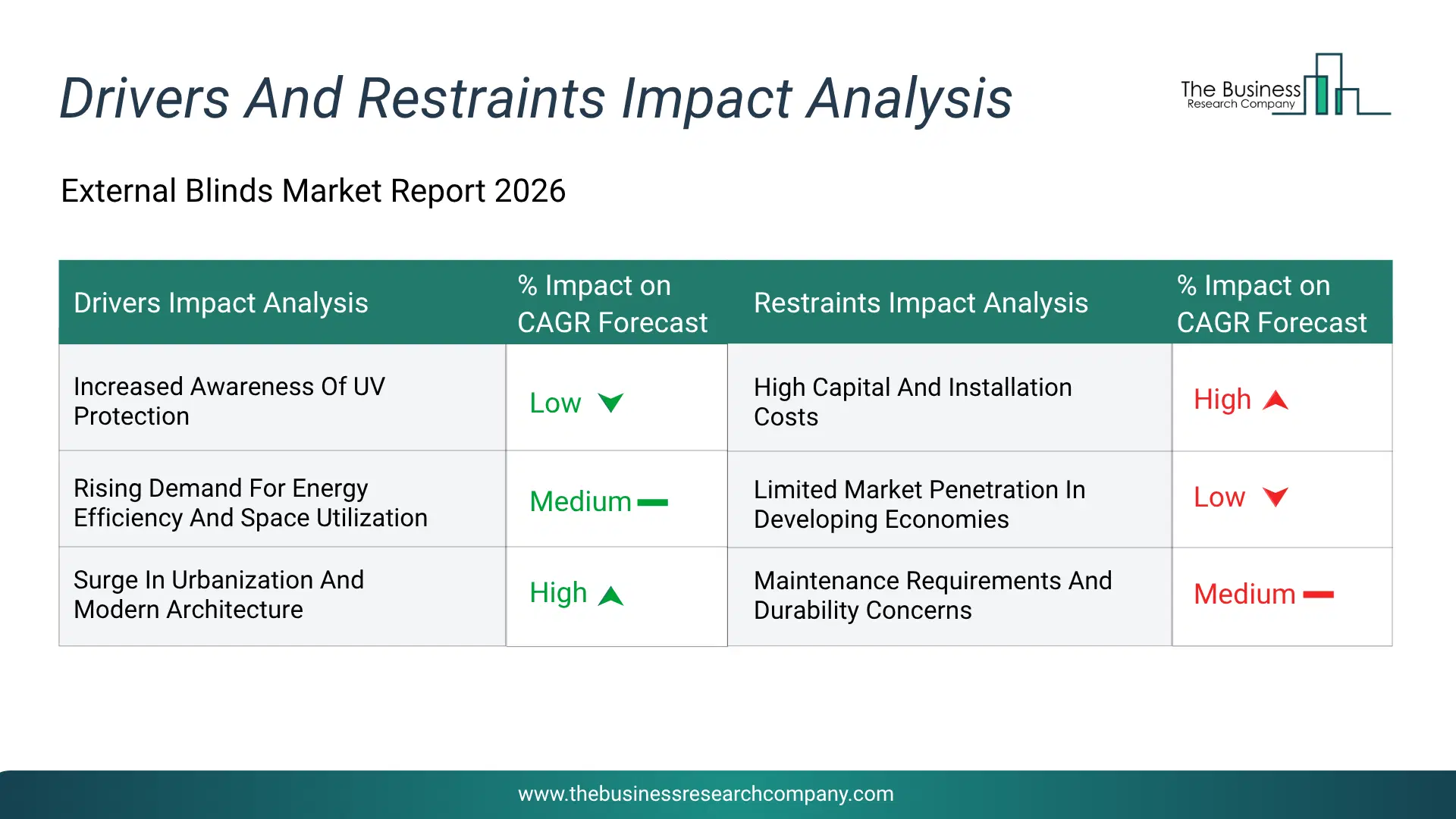
Infographic Chart Showing Key Market Drivers Analysis And Restraints For External Blinds Market
The chart presents an impact analysis of key drivers and restraints, quantifying their relative influence on the market's growth rate and helping assess the balance between growth enablers and limiting factors. This chart offers a high-level perspective; the full report contains more detailed insights.
How Will The Drivers Impact Growth In The Global External Blinds Market?
• Increased Awareness Of UV Protection (Low) – During the forecast period, the increased awareness of UV protection is expected to become a key growth driver for the external blinds market by 2030. Increased awareness of UV protection is a significant driver for the External Blinds Market as consumers are becoming more conscious of the harmful effects of prolonged ultraviolet (UV) exposure. External blinds help block a substantial portion of UV rays before they enter buildings, protecting occupants, furniture, flooring, and interior décor from damage and fading. Growing awareness of skin health and indoor comfort encourages residential and commercial property owners to invest in effective shading solutions. Additionally, organizations are adopting UV-protection measures to create safer indoor environments for employees and visitors. The rising emphasis on preventive building solutions further supports product adoption. As awareness campaigns and educational initiatives expand, demand for external blinds continues to increase across various end-use sectors. • Rising Demand For Energy Efficiency And Space Utilization (Medium) – During the forecast period, the rising demand for energy efficiency and space utilization is expected to emerge as a major factor driving the expansion of the external blinds market by 2030. Rising demand for energy efficiency and space utilization is driving the External Blinds Market by encouraging the adoption of solutions that reduce energy consumption and improve building performance. External blinds minimize solar heat gain, helping maintain comfortable indoor temperatures and lowering reliance on air conditioning systems. This contributes to reduced electricity costs and supports sustainability goals for both residential and commercial buildings. Efficient temperature regulation also enhances occupant comfort throughout the year. Furthermore, external blinds enable better utilization of indoor spaces by reducing glare and creating more functional environments. As energy-saving regulations become stricter and utility costs rise, demand for external blinds continues to grow. Their role in improving building efficiency makes them an attractive investment for modern infrastructure projects. • Surge In Urbanization And Modern Architecture (High) – During the forecast period, the surge in urbanization and modern architecture is expected to act as a key growth catalyst for the external blinds market by 2030. Surge In urbanization and modern architecture acts as a major driver for the External Blinds Market due to the rapid development of residential complexes, commercial buildings, and high-rise structures. Modern architectural designs often incorporate large glass facades and expansive windows that require effective shading systems. External blinds provide an ideal solution by enhancing aesthetics while controlling sunlight and heat penetration. Urban populations increasingly seek comfortable and visually appealing living and working spaces, boosting the demand for advanced exterior shading products. Architects and developers are integrating external blinds into building designs to improve energy performance and occupant comfort. The continuous expansion of urban infrastructure projects further creates opportunities for market growth.How Will The Restraints Impact Growth In The Global External Blinds Market?
• High Capital And Installation Costs (Low) – During the forecast period, the high Capital And Installation Costs act as a significant restraint on the External Blinds Market by increasing the overall investment required for adoption. External blinds, particularly automated and smart systems, involve substantial expenses related to product procurement, customization, and professional installation. Many residential consumers and small businesses may find these upfront costs difficult to justify, especially when operating within limited budgets. The additional costs associated with maintenance, repairs, and system integration can further discourage potential buyers. In price-sensitive markets, customers often prefer lower-cost alternatives such as internal blinds or curtains. This cost barrier can slow purchasing decisions and reduce market penetration. As a result, high capital and installation expenses continue to limit the widespread adoption of external blinds. • Limited Market Penetration In Developing Economies (Medium) – During the forecast period, the limited Market Penetration In Developing Economies restrains the growth of the External Blinds Market due to lower awareness and adoption of advanced shading solutions. In many developing regions, consumers prioritize essential construction and furnishing needs over premium exterior shading products. Limited availability of specialized suppliers and installation services also restricts market expansion. Additionally, lower disposable incomes make customers more sensitive to product pricing, reducing demand for external blinds. Traditional shading methods are often preferred because they are more affordable and widely accessible. The lack of strong building efficiency regulations in some countries further reduces the urgency for adopting external blinds. Consequently, slow market penetration across developing economies remains a challenge for overall industry growth. • Maintenance Requirements And Durability Concerns (High) – During the forecast period, the maintenance requirements and durability concerns act as a significant restraint for the External Blinds market because outdoor shading systems are exposed to weather conditions such as rain, wind, dust, and sunlight, which can affect their performance and lifespan. Automated and motorized external blinds require additional maintenance for mechanical and electronic components. Repair costs and replacement requirements may increase the total ownership expense for users. These concerns can discourage customers from adopting external blinds, especially in regions with harsh environmental conditions. Consequently, durability and maintenance challenges limit wider market penetration.Key Players In The Global External Blinds Market
Major companies operating in the external blinds market are Hunter Douglas N.V., WAREMA Renkhoff SE, Griesser AG, Somfy Systems Inc., Renson, Hella Sonnen- Und Wetterschutztechnik GmbH, Levolux Inc., Brustor NV, Winsol NV, Aluprof SA, Dickson Constant, Insolroll Inc., Rolletna, Persianas Canet, Kresta Holdings Limited, Mechoshade Systems LLC, Shadescape Limited, Coulisse B.V., Roll-A-Shade Inc., QMotion EMEA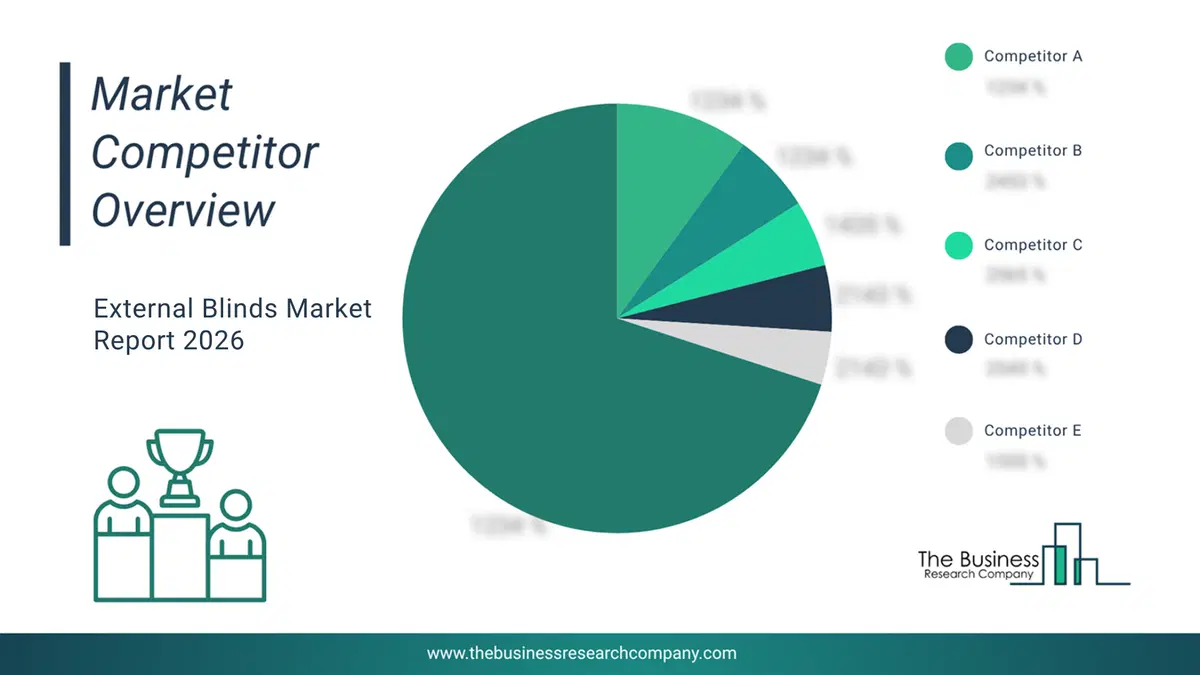
This chart is for illustrative purposes; the full report includes a detailed competitor analysis and comprehensive overview of the top 10 companies in the market.
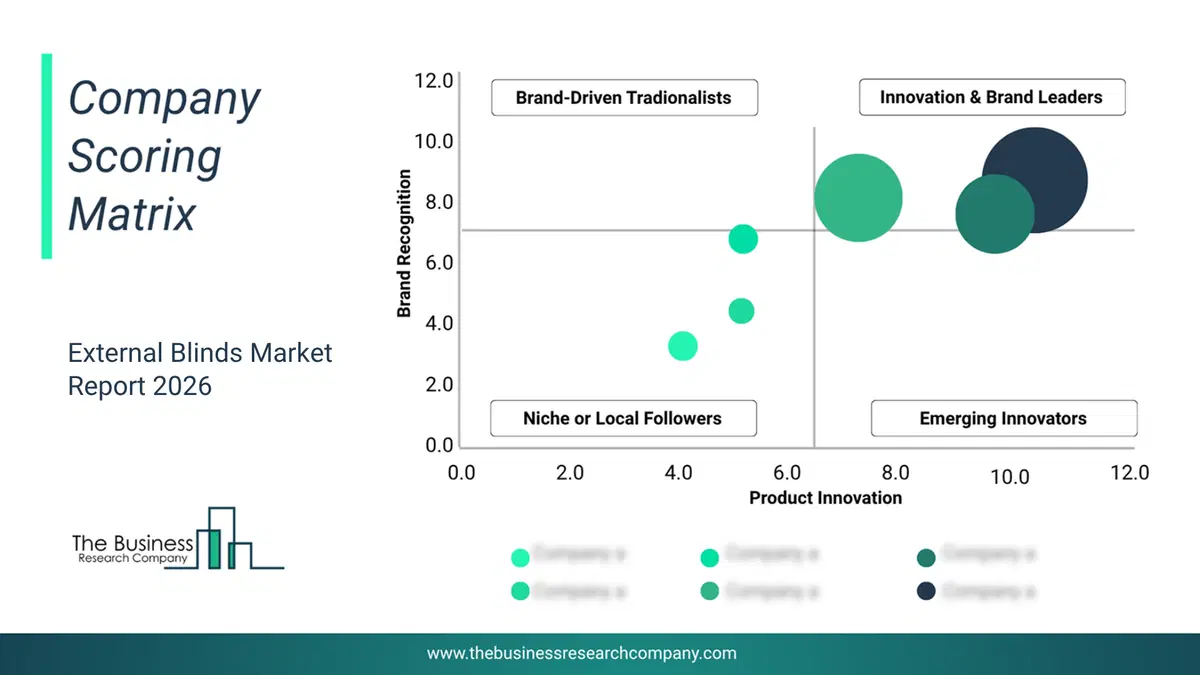
This chart maps companies by product innovation and brand strength, with bubble size indicating relative revenue, helping identify market leaders, challengers, and niche players. This is an illustrative chart; the full report provides a complete and accurate competitive analysis.
Global External Blinds Market Trends and Insights
Major companies operating in the external blinds market are developing exterior solar recharged zipshades to improve energy efficiency, reduce dependency on electrical power, and enhance user convenience with sustainable, self-sustaining technology. Solar-recharged zipshades use integrated photovoltaic panels to capture sunlight, convert it into electrical energy, and store it in a battery, which powers the motor to control the shade's movement autonomously. For instance, in August 2023, ROLL-A-SHADE, a US-based external blinds company, launched a solar zipshade. It is an innovative exterior shade system that uses solar power for autonomous control, featuring a solar cell on the head box to provide energy. It simplifies installation without needing electrical work, saving time and resources during setup.What Are Latest Mergers And Acquisitions In The External Blinds Market?
In February 2025, Universal Electronics Inc., a US-based company specializing in universal control and smart home solutions, partnered with Somfy SA to collaborate on the design of a new range of smart home control products. With this partnership, Universal Electronics Inc. and Somfy SA aim to deliver integrated, user-friendly control solutions that enhance motorized window coverings and smart home experiences by combining Universal Electronics’ control and connectivity expertise with Somfy’s leadership in automated shading and opening systems. Somfy SA is a France-based company that specializes in motorization and automation solutions for window coverings and building openings.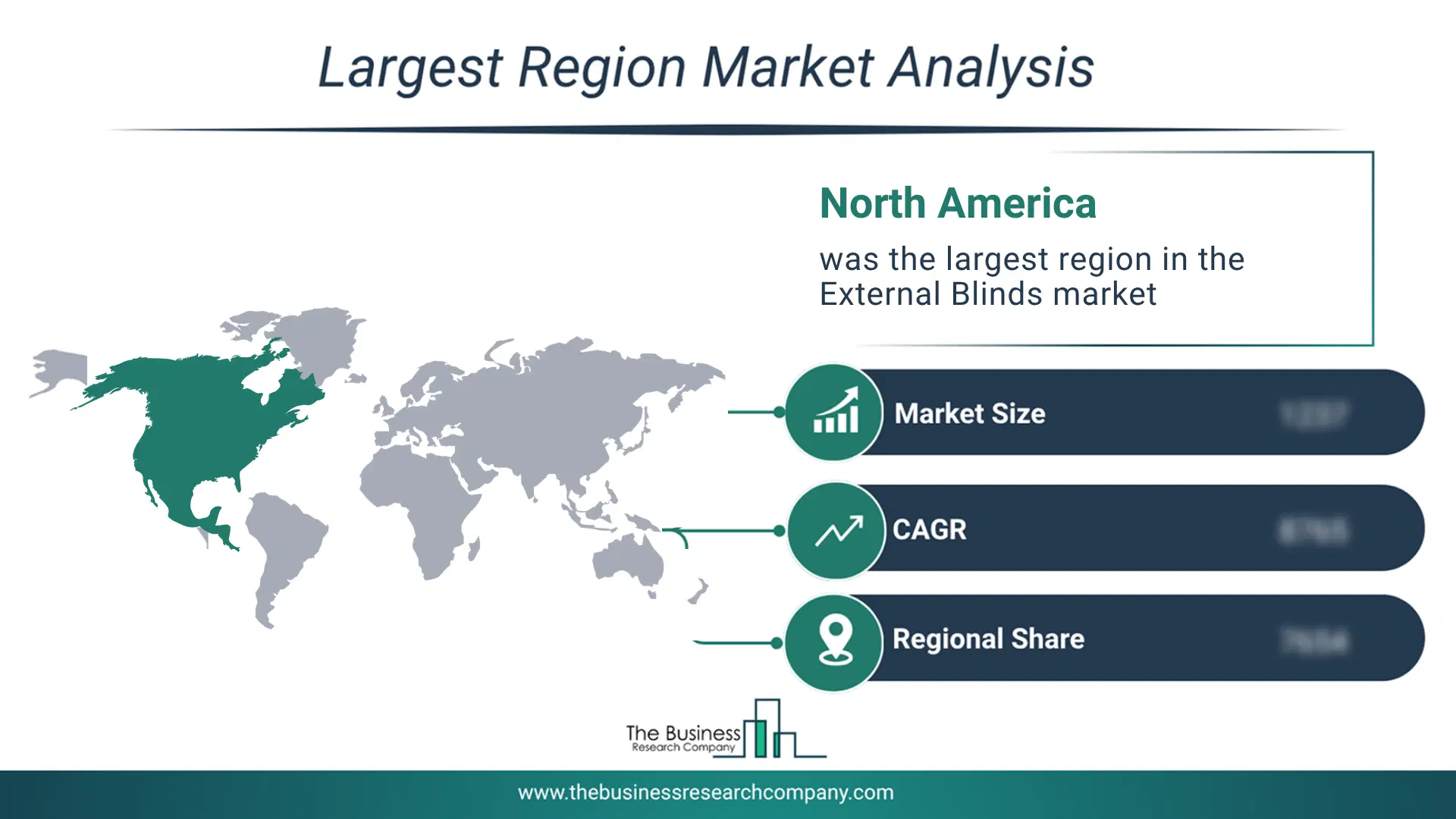
Regional Outlook
North America was the largest region in the external blinds market in 2025. Asia-Pacific is expected to be the fastest-growing region in the forecast period. The regions covered in this market report are Asia-Pacific, South East Asia, Western Europe, Eastern Europe, North America, South America, Middle East, Africa. The countries covered in this market report are Australia, Brazil, China, France, Germany, India, Indonesia, Japan, Taiwan, Russia, South Korea, UK, USA, Canada, Italy, Spain.What Defines the External Blinds Market?
The external blinds market consists of sales of venetian, roller, vertical, pleated, awnings, external shutters, motorized and remote-controlled blinds. Values in this market are ‘factory gate’ values, that is the value of goods sold by the manufacturers or creators of the goods, whether to other entities (including downstream manufacturers, wholesalers, distributors and retailers) or directly to end customers. The value of goods in this market includes related services sold by the creators of the goods.How is Market Value Defined and Measured?
The market value is defined as the revenues that enterprises gain from the sale of goods and/or services within the specified market and geography through sales, grants, or donations in terms of the currency (in USD unless otherwise specified). The revenues for a specified geography are consumption values that are revenues generated by organizations in the specified geography within the market, irrespective of where they are produced. It does not include revenues from resales along the supply chain, either further along the supply chain or as part of other products.
This chart presents market attractiveness based on a quantitative evaluation of growth, competition, strategic alignment, and risk, offering a clear view of opportunity areas for decision-making. This chart is for illustrative purposes; the full report contains the complete analysis.

This chart highlights the Total Addressable Market (TAM) by estimating the maximum revenue opportunity using an assumption-driven approach, supporting strategic planning and opportunity sizing across markets. The chart is illustrative; the full report provides a more comprehensive analysis.
What Key Data and Analysis Are Included in the External Blinds Market Report 2026?
The external blinds market research report is one of a series of new reports from The Business Research Company that provides market statistics, including Market Report 2026?global market size, regional shares, competitors with the market share, detailed market segments, market trends and opportunities, and any further data you may need to thrive in the external blinds Market Report 2026? The market research report delivers a complete perspective of everything you need, with an in-depth analysis of the current and future state of the Market Report 2026?External Blinds Market Report Forecast Analysis
| Report Attribute | Details |
|---|---|
| Market Size Value In 2026 | $15.7 billion |
| Revenue Forecast In 2030 | $21.32 billion |
| Growth Rate | CAGR of 8.0% from 2026 to 2030 |
| Base Year For Estimation | 2025 |
| Actual Estimates/Historical Data | 2020-2025 |
| Forecast Period | 2026 - 2030 |
| Market Representation | Revenue in USD Billion and CAGR from 2026 to 2030 |
| Segments Covered | Product Type, Material Type, Operating System, Installation, Application |
| Regional Scope | Asia-Pacific, Western Europe, Eastern Europe, North America, South America, Middle East, Africa |
| Country Scope | The countries covered in the report are Australia, Brazil, China, France, Germany, India, ... |
| Key Companies Profiled | Hunter Douglas N.V., WAREMA Renkhoff SE, Griesser AG, Somfy Systems Inc., Renson, Hella Sonnen- Und Wetterschutztechnik GmbH, Levolux Inc., Brustor NV, Winsol NV, Aluprof SA, Dickson Constant, Insolroll Inc., Rolletna, Persianas Canet, Kresta Holdings Limited, Mechoshade Systems LLC, Shadescape Limited, Coulisse B.V., Roll-A-Shade Inc., QMotion EMEA |
| Customization Scope | Request for Customization |
| Pricing And Purchase Options | Explore Purchase Options |