
Faba Beans Market Report 2026
Global Outlook – By Nature (Organic Faba Beans, Conventional Faba Beans), By End Use (Food Processing, Animal Feed, Nutraceuticals, Sports Nutrition, Infant Nutrition), By Distribution Channel (Supermarkets/Hypermarkets, Convenience Stores, Specialty Stores, Online Retailers, Other Distribution Channels) – Market Size, Trends, Strategies, and Forecast to 2030
Faba Beans Market Overview
• Faba Beans market size has reached to $3.58 billion in 2025 • Expected to grow to $4.45 billion in 2030 at a compound annual growth rate (CAGR) of 4.5% • Growth Driver: Meeting The Demand For Plant-Based Proteins Drives Faba Beans Market Growth • Market Trend: Innovative Product Development • Asia-Pacific was the largest region in 2025.What Is Covered Under Faba Beans Market?
The faba bean is a common legume cultivated for its edible seeds or beans. Some varieties of faba beans are used as a source of protein for livestock. Faba beans are also widely used in the production of products such as protein powders and custom blends. The main types of faba beans are organic and conventional faba beans. Organic faba beans are produced using natural principles such as biodiversity and composting. Conventional faba beans are grown using high-input modern agriculture with synthetic chemical fertilisers, fungicides, insecticides and others. Faba beans are used in food processing, animal feed, nutraceuticals, sports nutrition, and infant nutrition. These are made available to the end-users through supermarkets, hypermarkets, convenience stores, speciality stores, online retailers and other channels.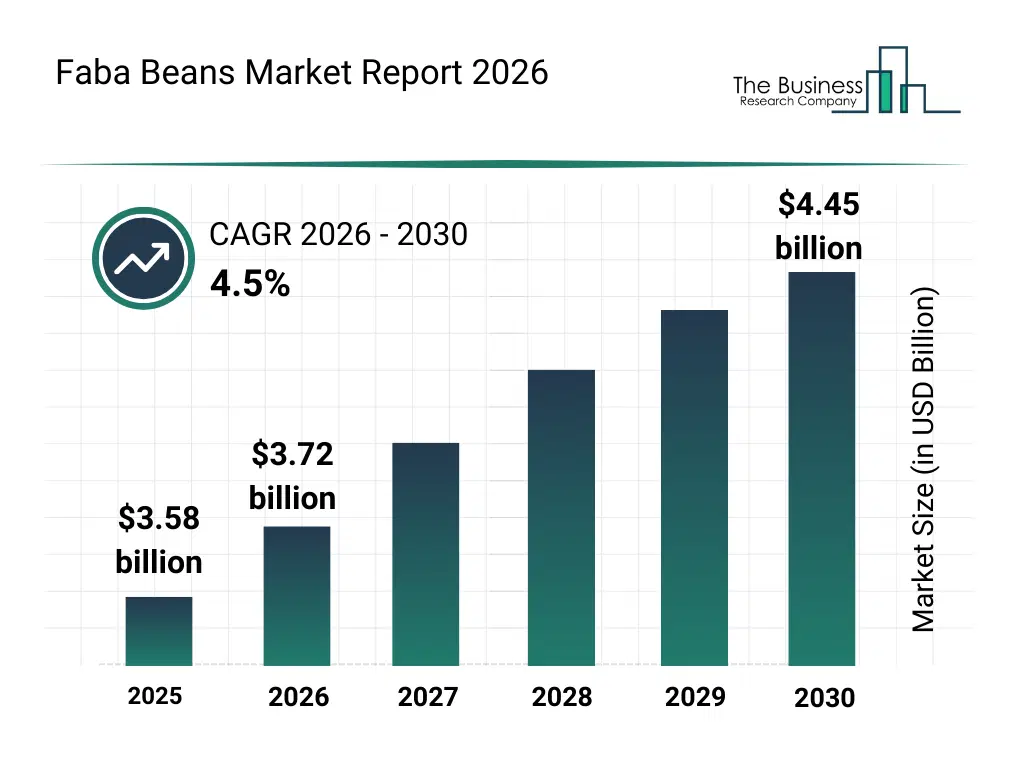
What Is The Faba Beans Market Size and Share 2026?
The faba beans market size has grown steadily in recent years. It will grow from $3.58 billion in 2025 to $3.72 billion in 2026 at a compound annual growth rate (CAGR) of 4.0%. The growth in the historic period can be attributed to expansion of pulse crop cultivation, rising demand for plant-based proteins, growth in livestock feed protein demand, increasing use in food processing, availability of conventional faba bean varieties.What Is The Faba Beans Market Growth Forecast?
The faba beans market size is expected to see steady growth in the next few years. It will grow to $4.45 billion in 2030 at a compound annual growth rate (CAGR) of 4.5%. The growth in the forecast period can be attributed to increasing adoption of alternative protein products, rising demand for organic pulses, expansion of sports and nutraceutical nutrition markets, growing investments in sustainable agriculture, increasing use of faba beans in protein blends. Major trends in the forecast period include increasing use of faba beans as plant protein source, rising demand for sustainable protein ingredients, growing application in animal feed formulations, expansion of organic faba bean cultivation, enhanced focus on traceable supply chains.
Global Faba Beans Market Segmentation
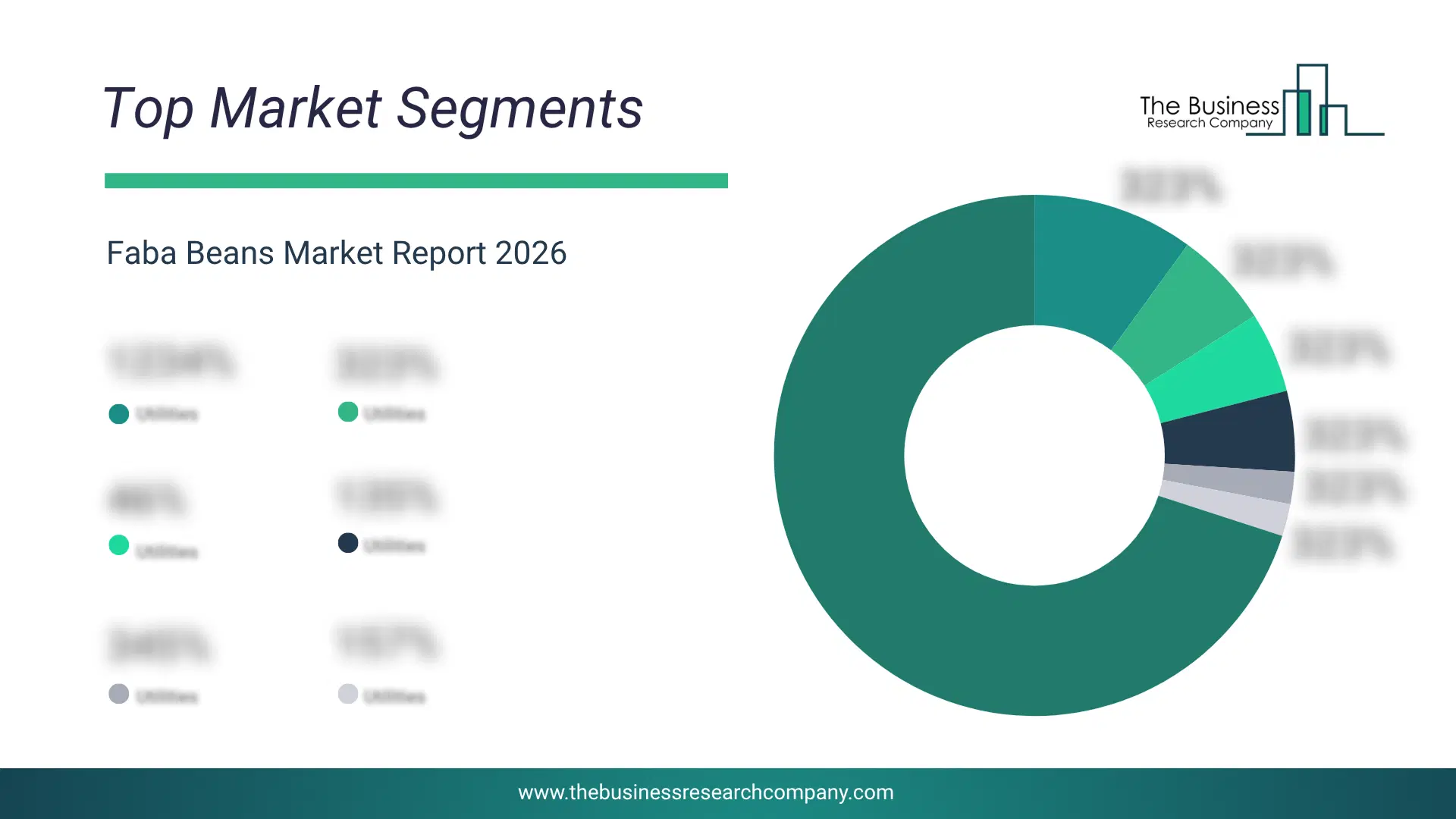
1) By Nature: Organic Faba Beans, Conventional Faba Beans 2) By End Use: Food Processing, Animal Feed, Nutraceuticals, Sports Nutrition, Infant Nutrition 3) By Distribution Channel: Supermarkets/Hypermarkets, Convenience Stores, Specialty Stores, Online Retailers, Other Distribution Channels Subsegments: 1) By Organic Faba Beans: Certified Organic Faba Beans, Transitional Organic Faba Beans 2) By Conventional Faba Beans: Non-GMO Conventional Faba Beans, Standard Conventional Faba BeansWhat Is The Driver Of The Faba Beans Market?
The increasing shift towards veganism boosted the growth of the faba beans market during the historic period. Veganism involves abstaining from animal products, particularly in an individual's diet. For instance, in March 2023, according to the World Animal Foundation, a US-based digital platform that advocates for animal rights, in 2023, approximately 4% of the U.S. population, equating to around 13.4 million people, identify as vegan. However, data on plant protein indicates that over 6% of U.S. consumers, which translates to more than 15.5 million individuals, adhere to a vegan lifestyle. Consumers are rapidly moving toward veganism in many parts of the world, resulting in a significant increase in demand for plant-based proteins, which will drive the need for faba beans over the forecast period.Key Players In The Global Faba Beans Market
Major companies operating in the faba beans market are Prairie Fava Ltd, Unigrain Pty Ltd, Roland Beans, Alberta Pulse Growers Commission, Stamp Seeds Inc, Pawnee Buttes Seed Inc, Archer Daniels Midland Company, Cargill Incorporated, Bunge Limited, AGT Food and Ingredients Inc, SunOpta Inc, The Scoular Company, Roquette Frères, Verdient Foods Inc, Best Cooking Pulses Inc, The Andersons Inc, Bonduelle Group, Dakota Dry Bean Inc, Bean Growers Australia, Mercer Foods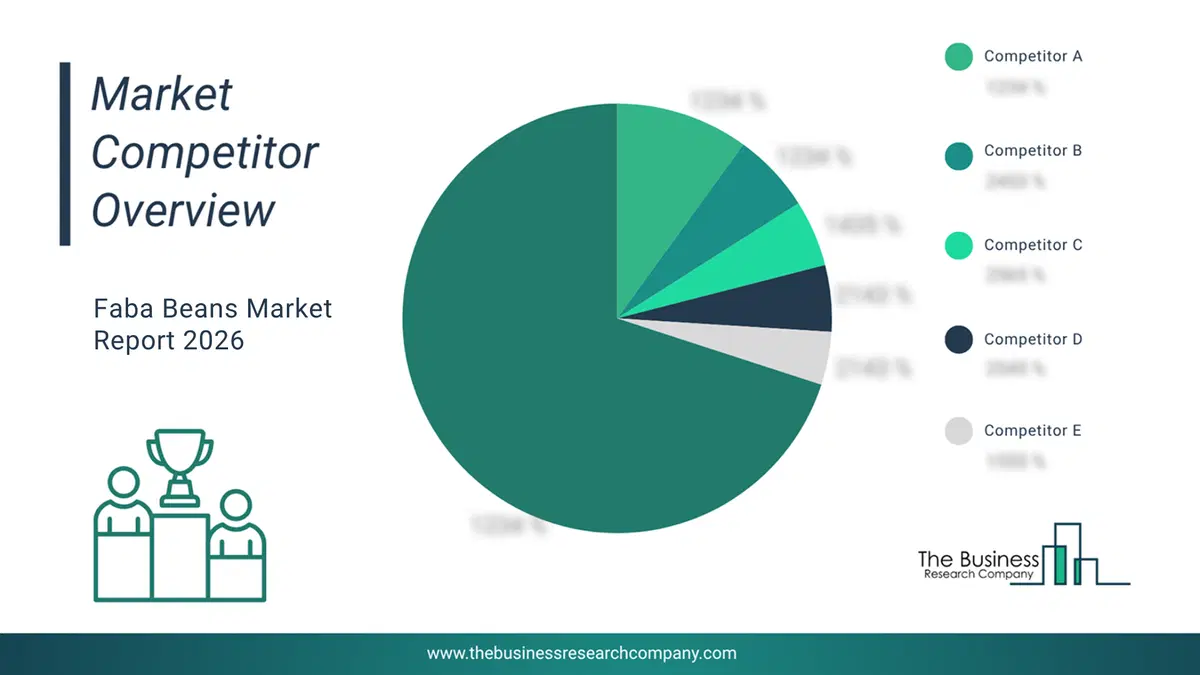
This chart is for illustrative purposes; the full report includes a detailed competitor analysis and comprehensive overview of the top 10 companies in the market.
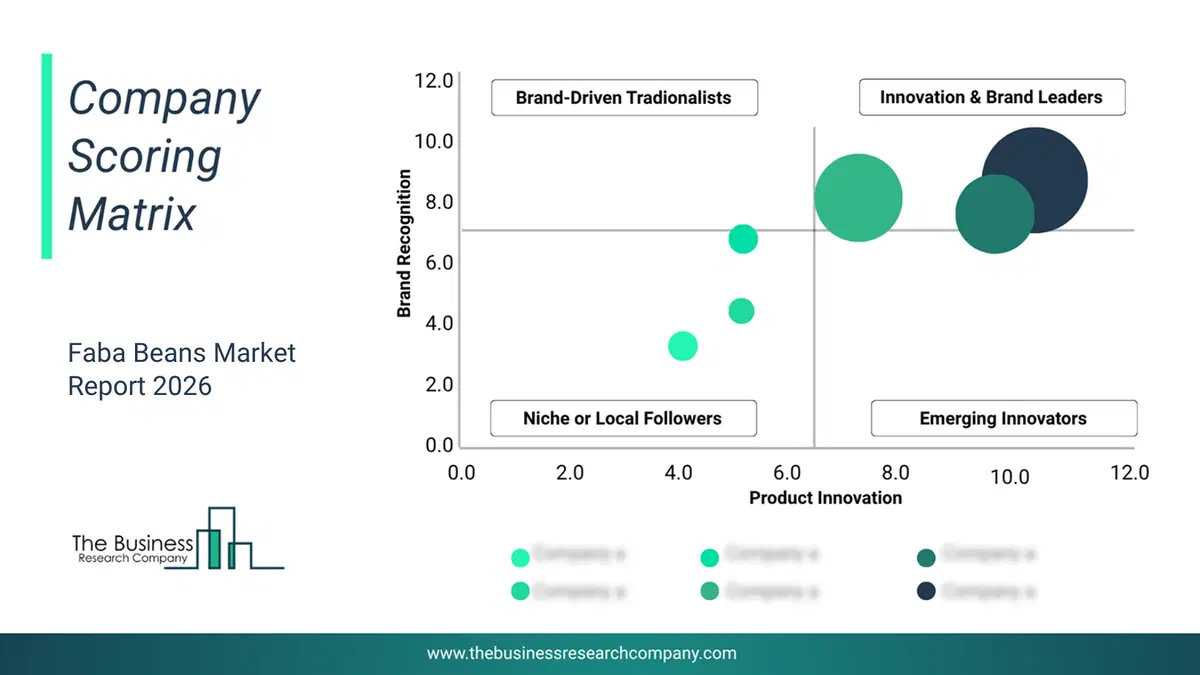
This chart maps companies by product innovation and brand strength, with bubble size indicating relative revenue, helping identify market leaders, challengers, and niche players. This is an illustrative chart; the full report provides a complete and accurate competitive analysis.
Global Faba Beans Market Trends and Insights
Major companies operating in the faba beans market are focusing on developing innovative products such as plant-based food and beverage products to meet the rising demand for sustainable and high-protein alternatives. Plant-based beverages made from faba beans are dairy-free milk alternatives that leverage the natural protein content of fava beans combined with complementary ingredients such as oats to deliver a smooth texture, mild nutty flavor, and balanced nutritional profile. For instance, in March 2023, Nestlé S.A., a Switzerland-based food and beverage company, developed a new plant-based beverage combining oats and fava beans. This milk alternative offers a smooth texture and mild, nutty taste derived from both fava beans and oats, making it suitable for consumption on its own, in smoothies, or with cereal at any time of the day.What Are Latest Mergers And Acquisitions In The Faba Beans Market?
In February 2025, Valio, a Finland-based food company, acquired the plant protein business of Raisio plc, including the Härkis and Beanit faba bean brands, for approximately US$0.00756 billion (€7 million). Through this acquisition, Valio aims to strengthen its plant-based protein offerings by integrating Raisio’s faba bean–derived products and associated manufacturing assets. Raisio’s plant protein business is a Finland-based company that provides faba bean–derived plant-protein products and related production capacity.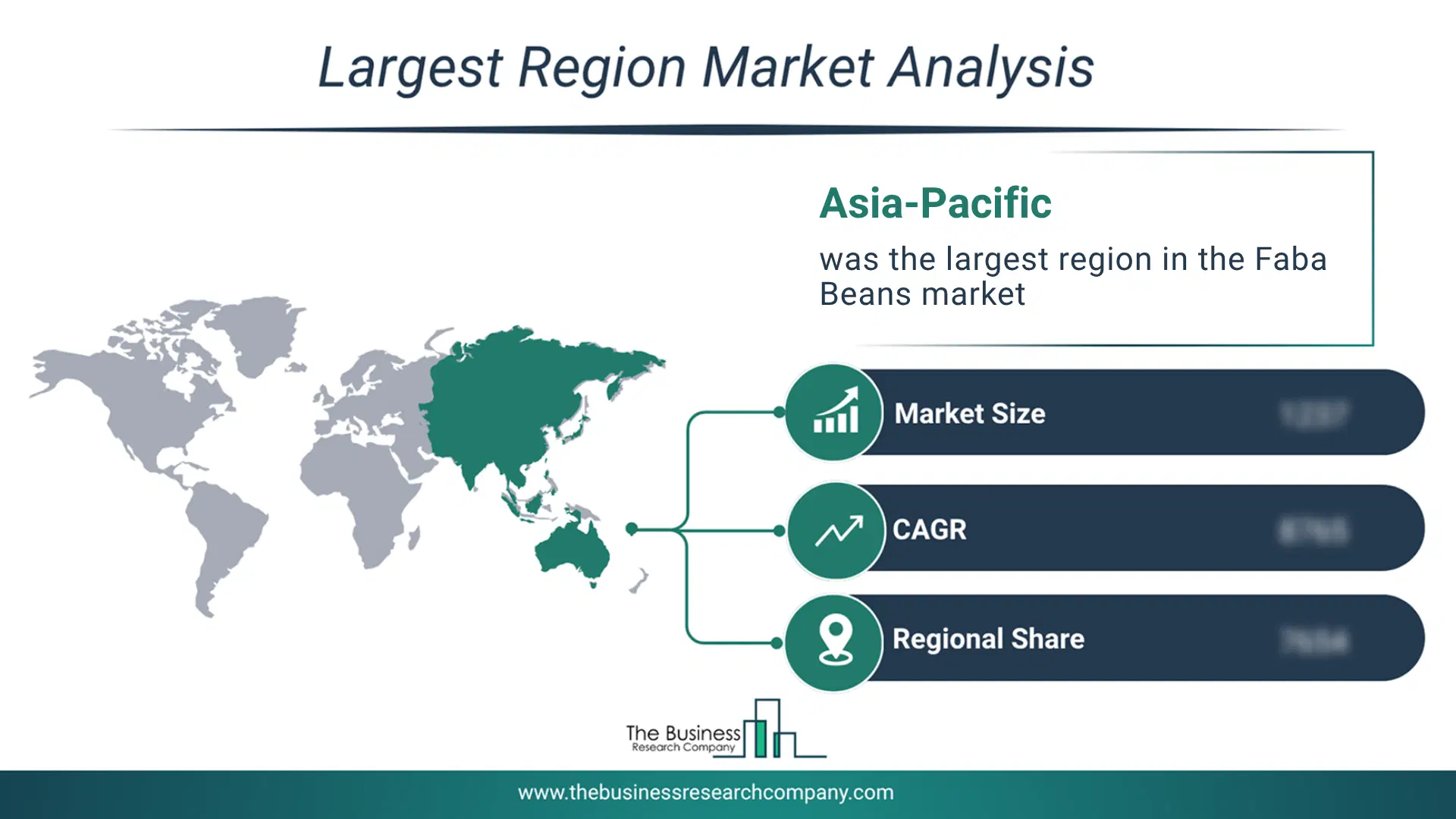
Regional Outlook
Asia-Pacific was the largest region in the faba beans market in 2025. The regions covered in this market report are Asia-Pacific, South East Asia, Western Europe, Eastern Europe, North America, South America, Middle East and Africa. The countries covered in this market report are Australia, Brazil, China, France, Germany, India, Indonesia, Japan, Taiwan, Russia, South Korea, UK, USA, Italy, Spain, CanadaWhat Defines the Faba Beans Market?
The faba beans market consists of sales of organic faba beans and conventional faba beans. Values in this market are ‘factory gate’ values, that is the value of goods sold by the manufacturers or creators of the goods, whether to other entities (including downstream manufacturers, wholesalers, distributors and retailers) or directly to end customers. The value of goods in this market includes related services sold by the creators of the goods.How is Market Value Defined and Measured?
The market value is defined as the revenues that enterprises gain from the sale of goods and/or services within the specified market and geography through sales, grants, or donations in terms of the currency (in USD unless otherwise specified). The revenues for a specified geography are consumption values that are revenues generated by organizations in the specified geography within the market, irrespective of where they are produced. It does not include revenues from resales along the supply chain, either further along the supply chain or as part of other products.
This chart presents market attractiveness based on a quantitative evaluation of growth, competition, strategic alignment, and risk, offering a clear view of opportunity areas for decision-making. This chart is for illustrative purposes; the full report contains the complete analysis.

This chart highlights the Total Addressable Market (TAM) by estimating the maximum revenue opportunity using an assumption-driven approach, supporting strategic planning and opportunity sizing across markets. The chart is illustrative; the full report provides a more comprehensive analysis.
What Key Data and Analysis Are Included in the Faba Beans Market Report 2026?
The faba beans market research report is one of a series of new reports from The Business Research Company that provides market statistics, including industry global market size, regional shares, competitors with the market share, detailed market segments, market trends and opportunities, and any further data you may need to thrive in the faba beans industry. The market research report delivers a complete perspective of everything you need, with an in-depth analysis of the current and future state of the industry.Faba Beans Market Report Forecast Analysis
| Report Attribute | Details |
|---|---|
| Market Size Value In 2026 | $3.72 billion |
| Revenue Forecast In 2030 | $4.45 billion |
| Growth Rate | CAGR of 4.0% from 2026 to 2030 |
| Base Year For Estimation | 2025 |
| Actual Estimates/Historical Data | 2020-2025 |
| Forecast Period | 2026 - 2030 |
| Market Representation | Revenue in USD Billion and CAGR from 2026 to 2030 |
| Segments Covered | Nature, End Use, Distribution Channel |
| Regional Scope | Asia-Pacific, Western Europe, Eastern Europe, North America, South America, Middle East, Africa |
| Country Scope | The countries covered in the report are Australia, Brazil, China, France, Germany, India, Indonesia, Japan, Taiwan, Russia, South Korea, UK, USA, Canada, Italy, Spain. |
| Key Companies Profiled | Prairie Fava Ltd, Unigrain Pty Ltd, Roland Beans, Alberta Pulse Growers Commission, Stamp Seeds Inc, Pawnee Buttes Seed Inc, Archer Daniels Midland Company, Cargill Incorporated, Bunge Limited, AGT Food and Ingredients Inc, SunOpta Inc, The Scoular Company, Roquette Frères, Verdient Foods Inc, Best Cooking Pulses Inc, The Andersons Inc, Bonduelle Group, Dakota Dry Bean Inc, Bean Growers Australia, Mercer Foods |
| Customization Scope | Request for Customization |
| Pricing And Purchase Options | Explore Purchase Options |