

Fabric Antibacterial Spray Market Report 2026
Global Outlook – By Type (Scented Fabric Antibacterial Spray, Unscented Fabric Antibacterial Spray), By Application (Clothing, Upholstery, Bedding, Curtains, Carpets), By Distribution Channel (Online Retail, Supermarkets, Hypermarkets, Specialty Stores), By End-User (Residential, Commercial ) – Market Size, Trends, Strategies, and Forecast to 2030
Fabric Antibacterial Spray Market Overview
• Fabric Antibacterial Spray market size has reached to $0.9 billion in 2025 • Expected to grow to $1.68 billion in 2030 at a compound annual growth rate (CAGR) of 13.3% • Growth Driver: Hospital Infection Control Enhancing Safety With Fabric Antibacterial Sprays • Market Trend: Innovative Plant Extracts Revolutionize Fabric Antibacterial Market • North America was the largest region in 2025 and Asia-Pacific is the fastest growing region.What Is Covered Under Fabric Antibacterial Spray Market?
Fabric antibacterial spray is a specialized cleaning product designed to kill or inhibit the growth of bacteria on fabric surfaces. These sprays are formulated with antimicrobial agents that target and neutralize harmful microorganisms, helping to maintain hygiene and freshness. The main purposes of fabric antibacterial sprays include sanitization, odor control, and fabric care. The main types of fabric antibacterial spray are scented fabric antibacterial spray and unscented fabric antibacterial spray. Scented fabric antibacterial spray is a type of spray designed to both freshen fabrics with a pleasant fragrance and kill bacteria, helping to sanitize the material. These are used in various applications such as clothing, upholstery, bedding, curtains, and carpets. These are distributed through various distribution channels such as online retail, supermarkets, hypermarkets, and specialty stores and are used by various end-users such as residential, and commercial.
What Is The Fabric Antibacterial Spray Market Size and Share 2026?
The fabric antibacterial spray market size has grown rapidly in recent years. It will grow from $0.9 billion in 2025 to $1.02 billion in 2026 at a compound annual growth rate (CAGR) of 13.3%. The growth in the historic period can be attributed to awareness of hygiene standards, growth of home care products, demand for fabric protection, expansion of retail distribution, urban lifestyle changes.What Is The Fabric Antibacterial Spray Market Growth Forecast?
The fabric antibacterial spray market size is expected to see rapid growth in the next few years. It will grow to $1.68 billion in 2030 at a compound annual growth rate (CAGR) of 13.3%. The growth in the forecast period can be attributed to increased health consciousness, growth in commercial laundry services, innovation in antimicrobial agents, rising hospitality sector demand, expansion of e commerce platforms. Major trends in the forecast period include rising demand for fabric hygiene products, growing use of antimicrobial home care solutions, expansion of odor control and sanitization products, increasing preference for hypoallergenic formulations, growth of online retail sales channels.
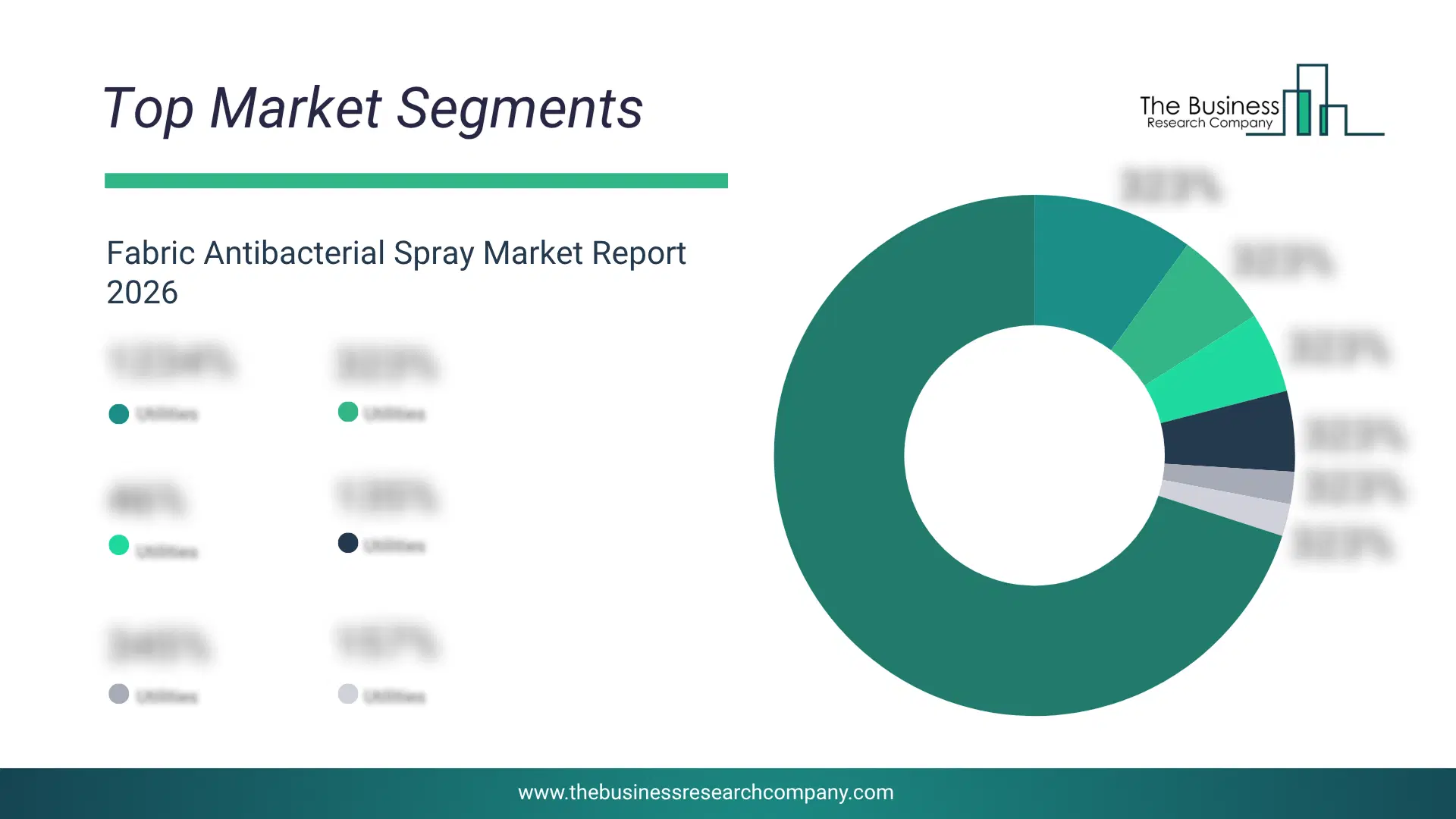
Global Fabric Antibacterial Spray Market Segmentation
1) By Type: Scented Fabric Antibacterial Spray, Unscented Fabric Antibacterial Spray 2) By Application: Clothing, Upholstery, Bedding, Curtains, Carpets 3) By Distribution Channel: Online Retail, Supermarkets, Hypermarkets, Specialty Stores 4) By End-User: Residential, Commercial Subsegments: 1) By Scented Fabric Antibacterial Spray: Floral Scent, Fresh Linen Scent, Citrus Scent, Other Scented Variants 2) By Unscented Fabric Antibacterial Spray: Regular Unscented, Hypoallergenic FormulationWhat Is The Driver Of The Fabric Antibacterial Spray Market?
The increase in hospital-acquired infections is expected to propel the growth of the fabric antibacterial spray market going forward. Hospital-acquired infections (HAIs), also known as healthcare-associated infections, are infections that patients acquire while receiving medical care in a healthcare facility, such as a hospital and these infections are not present or incubating at the time of admission and typically develop 48 hours or more after being admitted to the healthcare setting. The increase in hospital-acquired infections (HAIs) is primarily due to factors such as antibiotic resistance among pathogens and lapses in infection control practices within healthcare facilities. Fabric antibacterial sprays can help reduce hospital-acquired infections (HAIs) by effectively disinfecting textiles and surfaces, thereby minimizing the transmission of pathogens in healthcare environments, this can complement existing infection control measures and contribute to a safer hospital environment for patients and staff. For instance, in September 2025, according to GOV.UK, a UK-based government agency, reported that a total of 13,438 cases of Klebsiella species (Klebsiella spp.) bacteraemia were reported by NHS acute trusts in England in FY 2024 to 2025, an increase of 2.5% from FY 2023 to 2024. Therefore, the increase in hospital-acquired infections drives the fabric antibacterial spray industry.Key Players In The Global Fabric Antibacterial Spray Market
Major companies operating in the fabric antibacterial spray market are The Procter and Gamble Company, Reckitt Benckiser Group PLC, S. C. Johnson & Son Inc., The Clorox Company, Ecolab Inc., Unilever PLC, Lion Corporation, Church & Dwight Co., Inc., Henkel AG & Co. KGaA, Colgate-Palmolive Company, Seventh Generation Inc., Method Products PBC, Godrej Consumer Products Limited, Kao Corporation, LG Household & Health Care Ltd., SCG Chemicals, Nice Group, Blue Moon Group Holdings, Reckitt Hygiene Malaysia Sdn Bhd, Marico Limited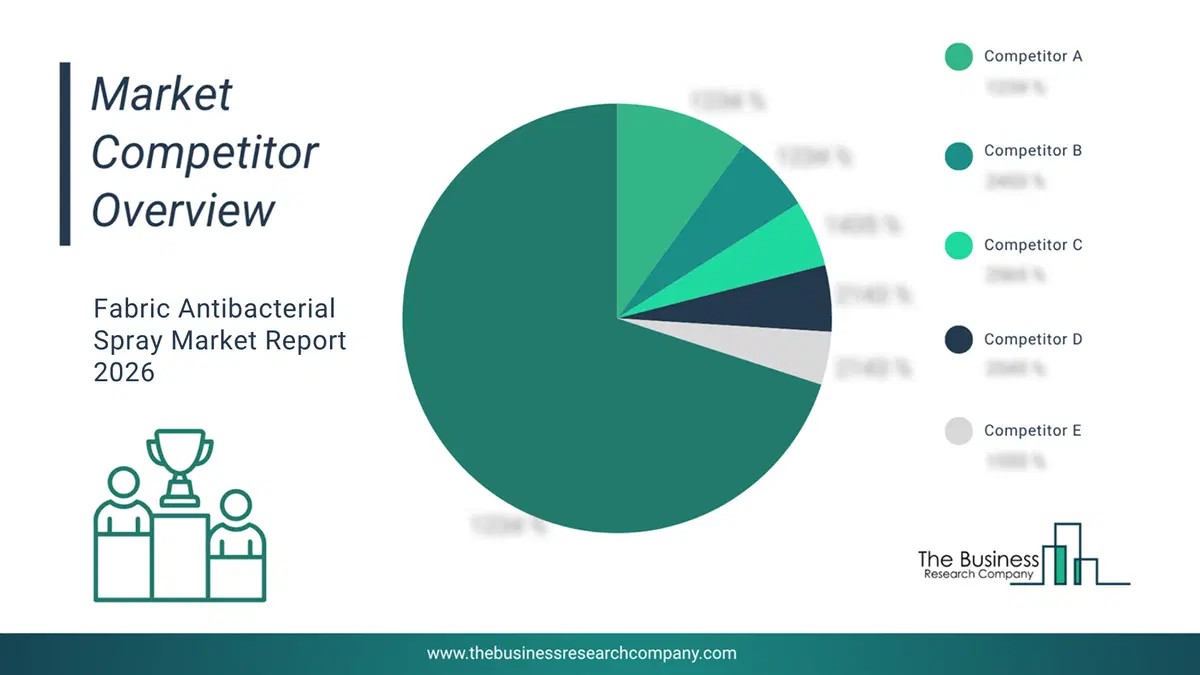
This chart is for illustrative purposes; the full report includes a detailed competitor analysis and comprehensive overview of the top 10 companies in the market.
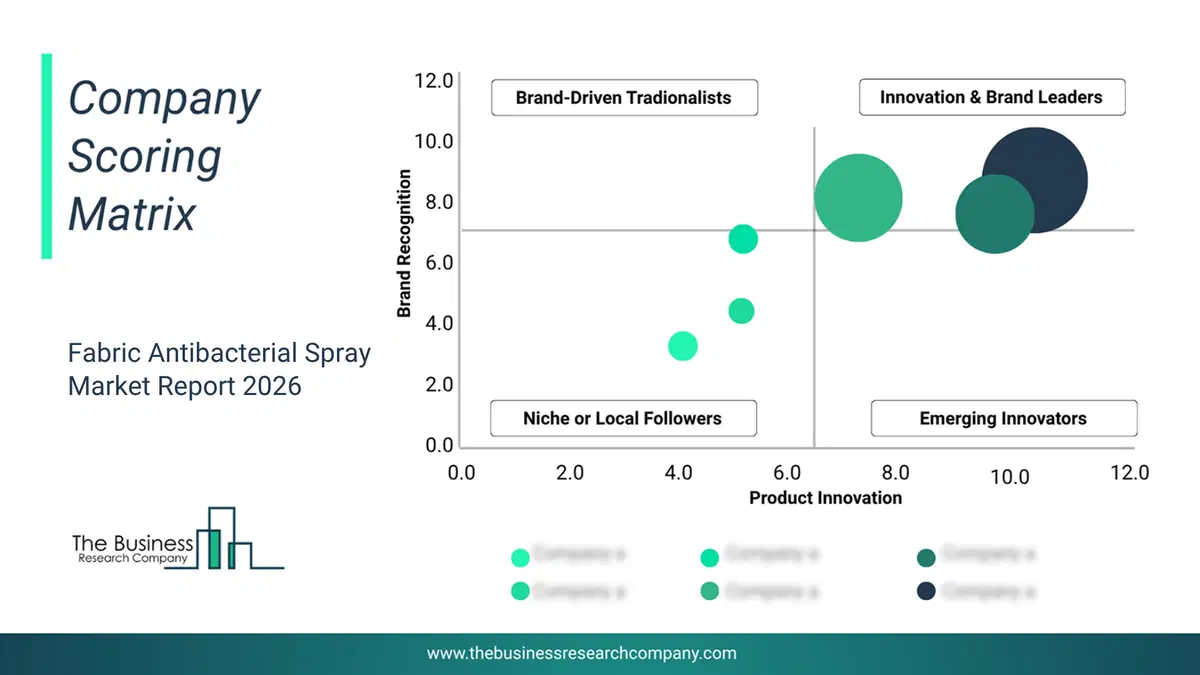
This chart maps companies by product innovation and brand strength, with bubble size indicating relative revenue, helping identify market leaders, challengers, and niche players. This is an illustrative chart; the full report provides a complete and accurate competitive analysis.
Global Fabric Antibacterial Spray Market Trends and Insights
Major companies operating in the fabric antibacterial spray market focus on using plant-based extracts of thymol and citric acid to differentiate their products. Plant-based extracts serve as natural antimicrobial agents that are both effective and environmentally friendly, and appealing to eco-conscious consumers catering to growing consumer preferences for sustainable products. For instance, in December 2023, Polygiene Group, a Sweden-based provider of odor control and fabric protection solutions, launched a new plant-based antimicrobial treatment called StayFreshBIO. The product utilizes a blend of natural plant extracts to provide long-lasting antibacterial protection for textiles without the use of synthetic chemicals. StayFreshBIO has been tested and proven to maintain its antibacterial properties through multiple wash cycles, ensuring long-lasting protection for fabrics treated with the product.What Are Latest Mergers And Acquisitions In The Fabric Antibacterial Spray Market?
In April 2024, Medline Industries, a US-based provider of medical supplies, equipment, and clinical solutions, acquired Ecolab Inc. for an undisclosed amount. With this acquisition, Medline Industries significantly expands its innovative sterile drape solutions for surgeons, patients, and operating room equipment, as well as Ecolab's fluid temperature management system. Ecolab Inc. is a US-based company that manufactures fabric antibacterial sprays.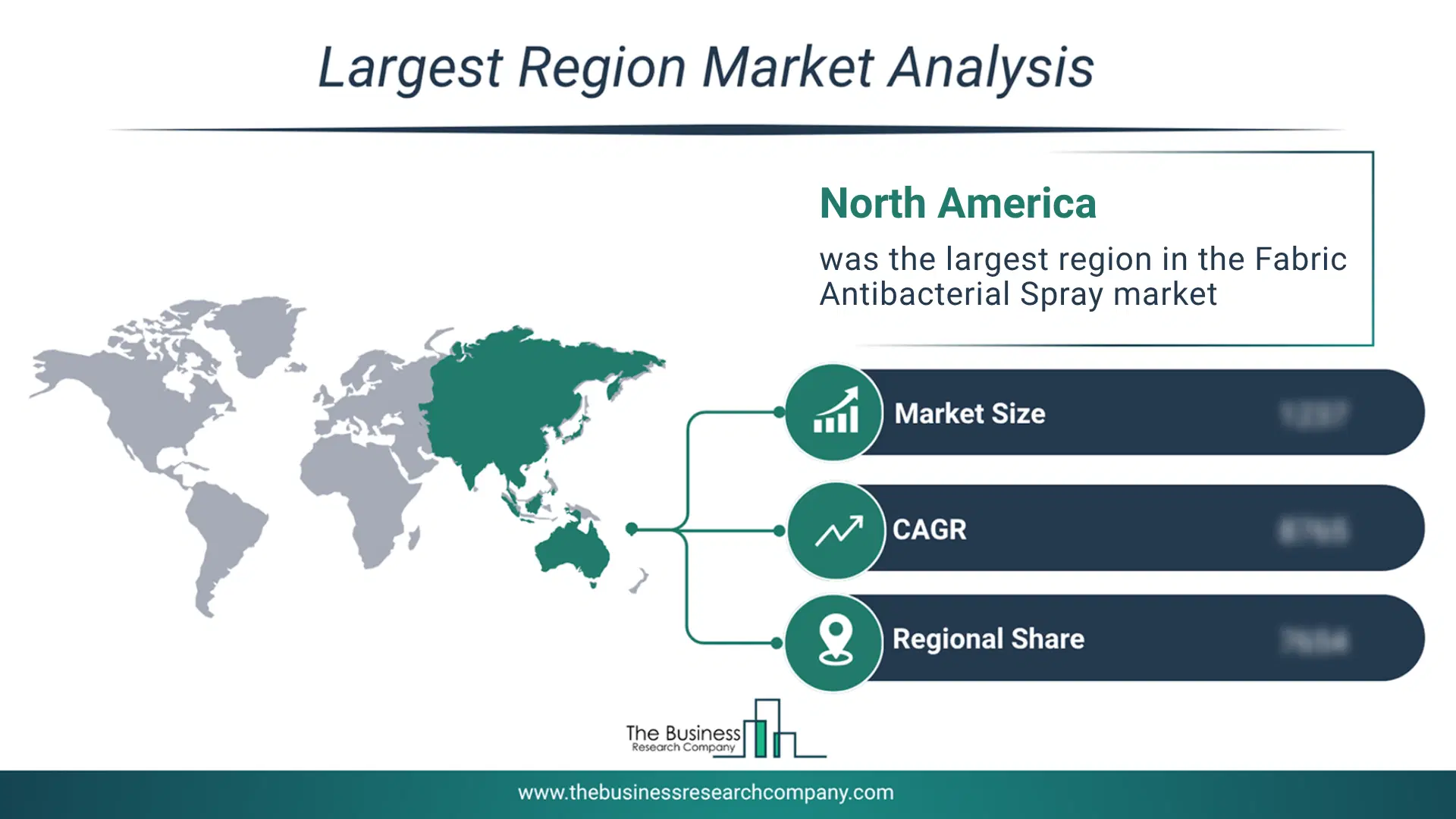
Regional Insights
North America was the largest region in the fabric antibacterial spray market in 2025. The regions covered in this market report are Asia-Pacific, South East Asia, Western Europe, Eastern Europe, North America, South America, Middle East, Africa The countries covered in this market report are Australia, Brazil, China, France, Germany, India, Indonesia, Japan, Taiwan, Russia, South Korea, UK, USA, Canada, Italy, SpainWhat Defines the Fabric Antibacterial Spray Market?
The fabric antibacterial spray market consists of sales of household fabric sprays, laundry additives, personal use sprays, activewear sprays, and pet-safe fabric sprays. Values in this market are ‘factory gate’ values, that is the value of goods sold by the manufacturers or creators of the goods, whether to other entities (including downstream manufacturers, wholesalers, distributors, and retailers) or directly to end customers. The value of goods in this market includes related services sold by the creators of the goods.How is Market Value Defined and Measured?
The market value is defined as the revenues that enterprises gain from the sale of goods and/or services within the specified market and geography through sales, grants, or donations in terms of the currency (in USD unless otherwise specified). The revenues for a specified geography are consumption values that are revenues generated by organizations in the specified geography within the market, irrespective of where they are produced. It does not include revenues from resales along the supply chain, either further along the supply chain or as part of other products.
This chart presents market attractiveness based on a quantitative evaluation of growth, competition, strategic alignment, and risk, offering a clear view of opportunity areas for decision-making. This chart is for illustrative purposes; the full report contains the complete analysis.

This chart highlights the Total Addressable Market (TAM) by estimating the maximum revenue opportunity using an assumption-driven approach, supporting strategic planning and opportunity sizing across markets. The chart is illustrative; the full report provides a more comprehensive analysis.
What Key Data and Analysis Are Included in the Fabric Antibacterial Spray Market Report 2026?
The fabric antibacterial spray market research report is one of a series of new reports from The Business Research Company that provides market statistics, including industry global market size, regional shares, competitors with the market share, detailed market segments, market trends and opportunities, and any further data you may need to thrive in the fabric antibacterial spray industry. The market research report delivers a complete perspective of everything you need, with an in-depth analysis of the current and future state of the industry.Fabric Antibacterial Spray Market Report Forecast Analysis
| Report Attribute | Details |
|---|---|
| Market Size Value In 2026 | $1.02 billion |
| Revenue Forecast In 2030 | $1.68 billion |
| Growth Rate | CAGR of 13.3% from 2026 to 2030 |
| Base Year For Estimation | 2025 |
| Actual Estimates/Historical Data | 2020-2025 |
| Forecast Period | 2026 - 2030 |
| Market Representation | Revenue in USD Billion and CAGR from 2026 to 2030 |
| Segments Covered | Type, Application, Distribution Channel, End-User |
| Regional Scope | Asia-Pacific, Western Europe, Eastern Europe, North America, South America, Middle East, Africa |
| Country Scope | The countries covered in this market report are Australia, Brazil, China, France, Germany, India, Indonesia, Japan, Taiwan, Russia, South Korea, UK, USA, Canada, Italy, Spain |
| Key Companies Profiled | The Procter and Gamble Company, Reckitt Benckiser Group PLC, S. C. Johnson & Son Inc., The Clorox Company, Ecolab Inc., Unilever PLC, Lion Corporation, Church & Dwight Co., Inc., Henkel AG & Co. KGaA, Colgate-Palmolive Company, Seventh Generation Inc., Method Products PBC, Godrej Consumer Products Limited, Kao Corporation, LG Household & Health Care Ltd., SCG Chemicals, Nice Group, Blue Moon Group Holdings, Reckitt Hygiene Malaysia Sdn Bhd, Marico Limited |
| Customization Scope | Request for Customization |
| Pricing And Purchase Options | Explore Purchase Options |