

Facial Injectable Market Report 2026
Global Outlook – By Type (Botulinum Toxin, Collagen, Hyaluronic Acid, Calcium Hydroxyapatite, Polylactic Acid, Polymethyl-Methacrylate Microspheres (PMMA), Fat Injection, Other Types), By Application (Wrinkle Reduction, Facelift, Acne Scar Treatment, Lipoatrophy Treatment, Lip Enhancement, Other Applications), By End-User (Hospitals And Ambulatory Surgery Centers, Dermatology And Cosmetic Clinics, Other End-Users) - Market Size, Trends, And Global Forecast 2026-2030
Facial Injectable Market Overview
• Facial Injectable market size has reached to $14.95 billion in 2025 • Expected to grow to $23.14 billion in 2030 at a compound annual growth rate (CAGR) of 8.8% • Growth Driver: Surging Demand For Cosmetic Procedures Fuels Growth In The Facial Injectable Market • Market Trend: Long-lasting Hyaluronic Fillers Transforming The Facial Injectable Market • North America was the largest region in 2025 and Asia-Pacific is the fastest growing region.Market Gains By 2030 – Top Opportunities By Segment
Market Gain identifies the most promising market opportunities by highlighting the segments or products expected to generate the highest incremental revenue growth over the next five years.
What Is Covered Under Facial Injectable Market?
Facial injectables refer to non-surgical cosmetic procedures involving the injection of substances into the facial tissues to enhance facial features, reduce wrinkles, restore volume, or improve overall appearance. These treatments are often used to address signs of aging or to achieve specific aesthetic goals, providing temporary or semi-permanent results. The main types of facial injectables are botulinum toxin, collagen, hyaluronic acid, calcium hydroxyapatite, polylactic acid, polymethyl-methacrylate microspheres (PMMA), fat injection, and others. Botulinum toxin refers to a neurotoxic protein used in cosmetic procedures to temporarily paralyze muscle activity, primarily utilized for reducing wrinkles and fine lines on the face. These injectables are used in various applications, such as wrinkle reduction, facelift, acne scar treatment, lipoatrophy treatment, lip enhancement, and others, by a variety of end-users, including hospitals and ambulatory surgery centers, dermatology and cosmetic clinics, and others.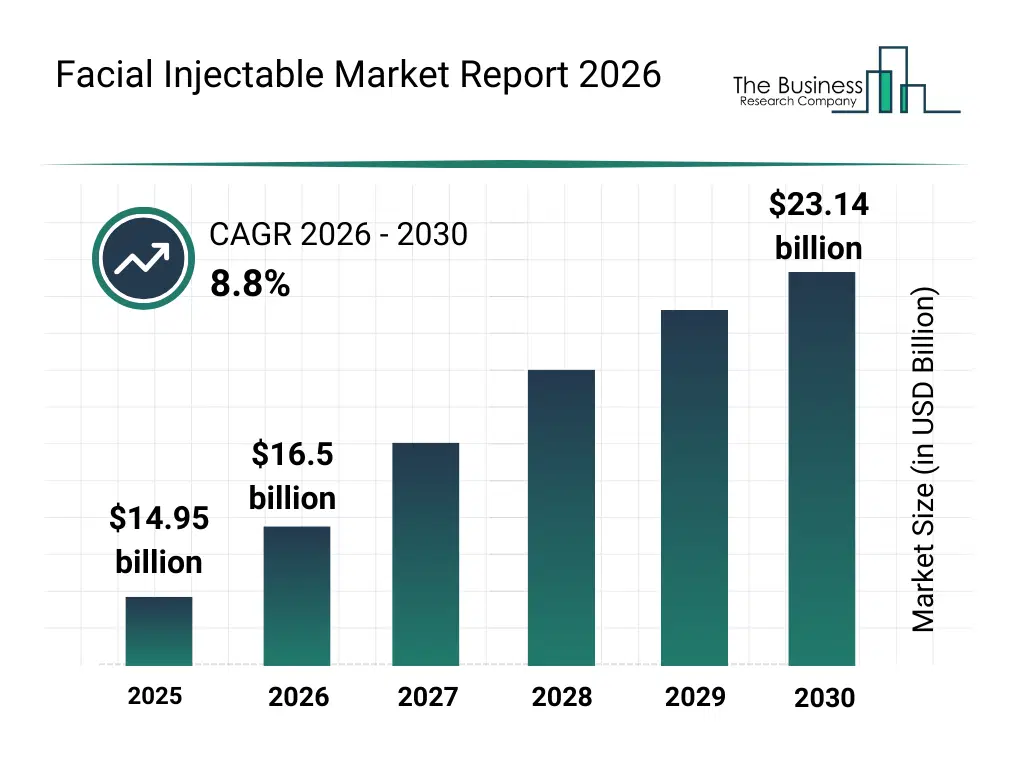
What Is The Facial Injectable Market Size and Share 2026?
The facial injectable market size has grown rapidly in recent years. It will grow from $14.95 billion in 2025 to $16.5 billion in 2026 at a compound annual growth rate (CAGR) of 10.3%. The growth in the historic period can be attributed to increasing aesthetic awareness, growth in disposable income, expansion of cosmetic clinics, social media influence, advancements in injectable formulations.What Is The Facial Injectable Market Growth Forecast?
The facial injectable market size is expected to see strong growth in the next few years. It will grow to $23.14 billion in 2030 at a compound annual growth rate (CAGR) of 8.8%. The growth in the forecast period can be attributed to rising demand for personalized aesthetics, innovation in long-lasting fillers, increasing male patient adoption, growth in medical tourism, expansion of minimally invasive cosmetic procedures. Major trends in the forecast period include rising demand for non-surgical aesthetic procedures, growing popularity of hyaluronic acid fillers, increased adoption among younger demographics, expansion of dermatology and cosmetic clinics, preference for minimally invasive facial enhancements.
Global Facial Injectable Market Segmentation
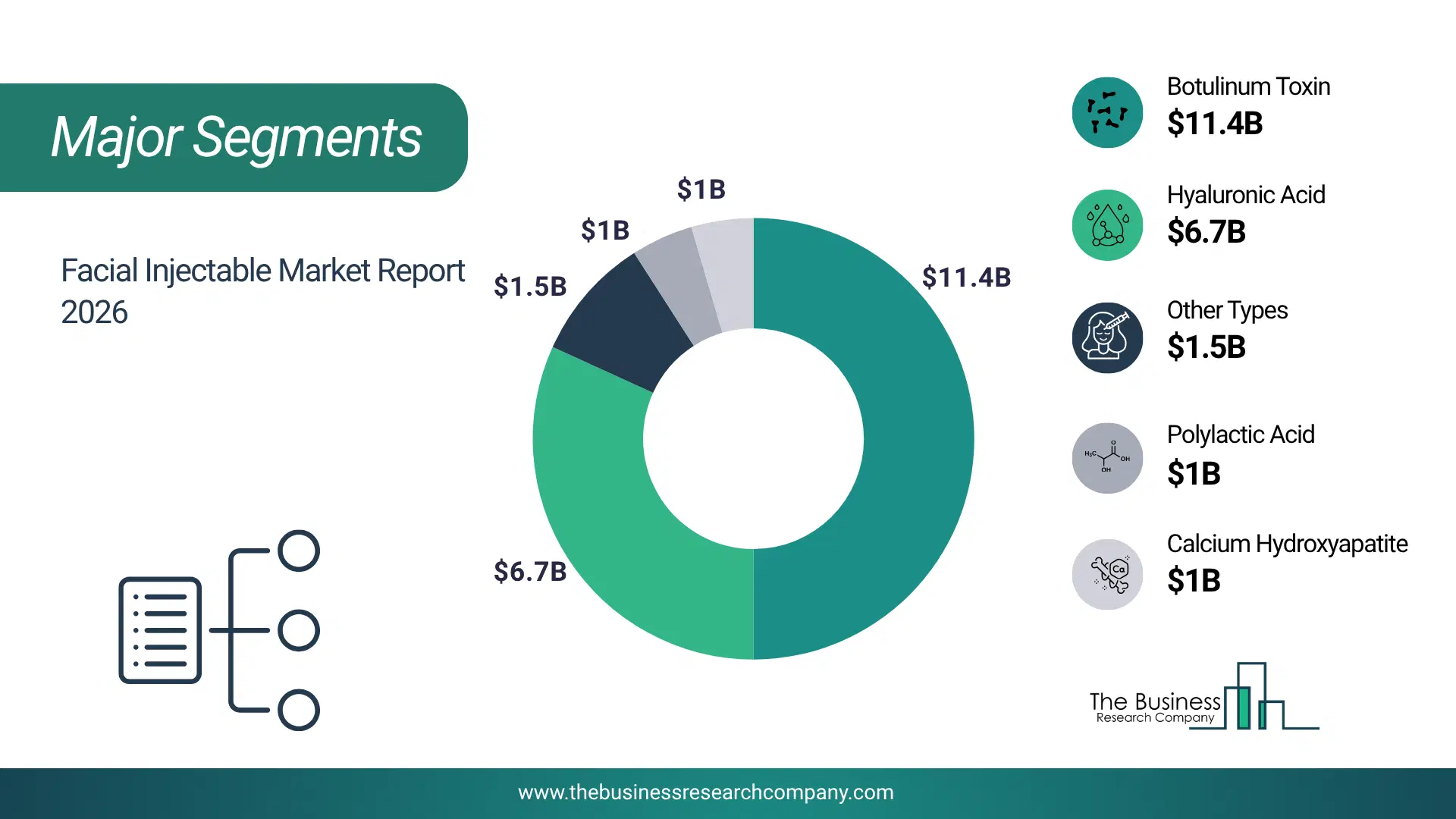
1) By Type: Botulinum Toxin, Collagen, Hyaluronic Acid, Calcium Hydroxyapatite, Polylactic Acid, Polymethyl-Methacrylate Microspheres (PMMA), Fat Injection, Other Types 2) By Application: Wrinkle Reduction, Facelift, Acne Scar Treatment, Lipoatrophy Treatment, Lip Enhancement, Other Applications 3) By End-User: Hospitals And Ambulatory Surgery Centers, Dermatology And Cosmetic Clinics, Other End-Users Subsegments: 1) By Botulinum Toxin: Botulinum Toxin Type A (Botox, Dysport, Xeomin), Botulinum Toxin Type B (Myobloc, Neurobloc) 2) By Collagen: Bovine Collagen, Human Collagen, Synthetic Collagen 3) By Hyaluronic Acid: Cross-linked Hyaluronic Acid, Non-Cross-Linked Hyaluronic Acid 4) By Calcium Hydroxyapatite: Radiesse (Calcium Hydroxyapatite-Based Fillers) 5) By Polylactic Acid: Sculptra (Polylactic Acid-Based Fillers) 6) By Polymethyl Methacrylate Microspheres (PMMA): Artefill (PMMA-Based Fillers) 7) By Fat Injection: Autologous Fat Transfer (Liposuction And Injection), Fat Grafting For Volume Restoration 8) By Other Types: Poly-L-Lactic Acid, Polycaprolactone-Based Fillers, Other Emerging Injectable Fillers The top segments in the facial injectable market will be: • Botulinum Toxin will reach $11.34 billion by 2030. • Hyaluronic Acid will reach $6.63 billion by 2030. • Other Types will reach $1.43 billion by 2030. • Polylactic Acid will reach $1 billion by 2030. • Calcium Hydroxyapatite will reach $0.96 billion by 2030.What Is The Driver Of The Facial Injectable Market?
The increasing demand for cosmetic procedures is expected to propel the growth of the facial injectable market going forward. Cosmetic procedures refer to medical treatments or interventions that aim to enhance one's appearance with minimal disruption to the body's natural structure, typically involving procedures that are less invasive than traditional surgeries and often performed on an outpatient basis. The demand for cosmetic procedures is rising due to increasing societal emphasis on appearance, advancements in medical technology making procedures safer and more accessible, and a growing desire for self-improvement and confidence enhancement. Facial injectables are used in cosmetic procedures to temporarily reduce wrinkles, add volume to certain areas, and enhance facial contours through the precise injection of substances such as botulinum toxin or dermal fillers. For instance, in June 2024, according to the American Society of Plastic Surgeons (ASPS), a US-based professional association, in 2023, minimally invasive cosmetic procedures grew by 7 percent year-on-year. Therefore, the increasing demand for cosmetic procedures is driving the growth of the facial injectable industry.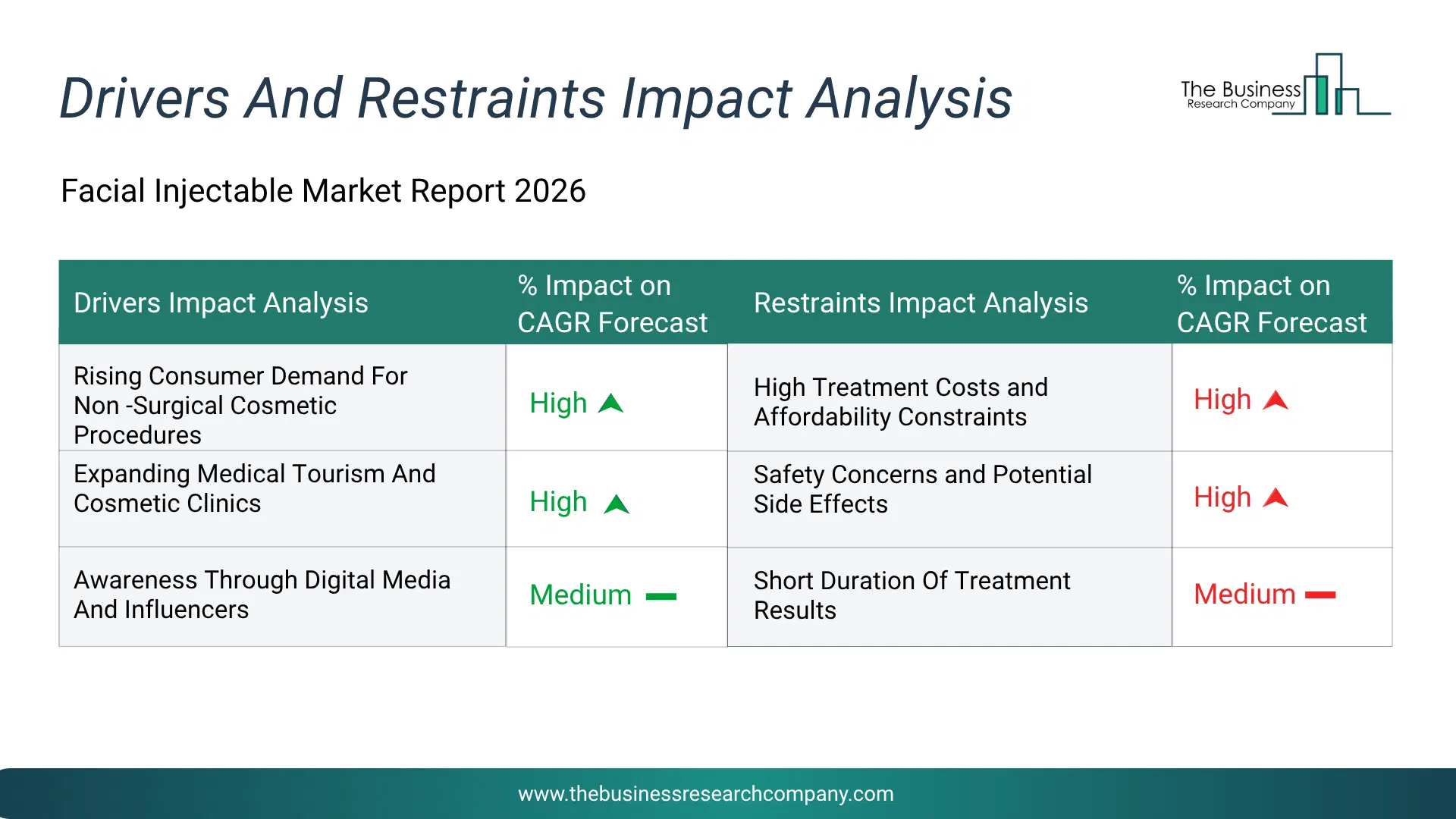
Infographic Chart Showing Key Market Drivers Analysis And Restraints For Facial Injectable Market
The chart presents an impact analysis of key drivers and restraints, quantifying their relative influence on the market's growth rate and helping assess the balance between growth enablers and limiting factors. This chart offers a high-level perspective; the full report contains more detailed insights.
How Will The Drivers Impact Growth In The Global Facial Injectable Market?
• Rising Consumer Demand For Non -Surgical Cosmetic Procedures (High) – During the forecast period, the rising consumer demand for non -surgical cosmetic procedures is expected to become a key growth driver for the facial injectable market by 2030. Increasing consumer preference for minimally invasive cosmetic treatments is driving growth in the facial injectables market. Procedures such as botulinum toxin injections, dermal fillers, and collagen stimulators provide anti -aging, wrinkle reduction, and facial contouring benefits without the need for surgery. The quick results, reduced recovery time, and lower procedural risks compared to surgical interventions make facial injectables highly appealing. Growing aesthetic awareness and a focus on personal appearance are fueling adoption across all age groups, particularly among millennials and aging populations. • Expanding Medical Tourism And Cosmetic Clinics (High) – During the forecast period, the expanding medical tourism and cosmetic clinics is expected to emerge as a major factor driving the expansion of the facial injectable market by 2030. The proliferation of specialized aesthetic clinics, dermatology centers, and medical tourism destinations offering facial injectable treatments is increasing accessibility for consumers. Countries with advanced cosmetic surgery infrastructure, affordable treatments, and skilled practitioners are attracting international patients seeking high-quality services at lower costs. The rise of medical tourism, along with the expansion of clinics in urban and semi-urban areas, facilitates higher adoption rates and drives market growth globally. • Awareness Through Digital Media And Influencers (Medium) – During the forecast period, the awareness through digital media and influencers is expected to act as a key growth catalyst for the facial injectable market by 2030. Digital media platforms, social media influencers, and beauty bloggers play a crucial role in educating consumers about facial injectables and their benefits. Online content highlighting results, safety, and procedure insights is enhancing consumer confidence and encouraging adoption. Interactive marketing campaigns, before-and-after visual content, and influencer endorsements are shaping perceptions and increasing demand, especially among younger demographics who are more active on digital platforms. This growing awareness is a key driver for the facial injectables market.How Will The Restraints Impact Growth In The Global Facial Injectable Market?
• High Treatment Costs and Affordability Constraints (High) – During the forecast period, the facial injectable procedures, particularly those using premium botulinum toxins or high-end dermal fillers, involve substantial costs. Repeated treatments are often required to maintain results, further increasing expenses. High treatment prices may limit adoption in price-sensitive regions or among middle-income groups. These affordability challenges act as a significant restraint on the widespread growth of the facial injectables market. • Safety Concerns and Potential Side Effects (High) – During the forecast period, the though minimally invasive, facial injectables carry risks such as allergic reactions, bruising, swelling, or infection if not administered correctly. Concerns about side effects, practitioner skill, and treatment safety can deter potential patients. Strict regulations, medical guidelines, and the need for certified professionals are critical, but these safety concerns still act as a restraint to market expansion, particularly in developing regions with limited regulatory enforcement. • Short Duration Of Treatment Results (Medium) – During the forecast period, the many facial injectable treatments provide temporary results that require regular maintenance procedures to sustain desired outcomes. Repeat treatments increase the overall cost burden for consumers over time. Some patients may be discouraged by the need for ongoing appointments and expenditures. This limitation can affect long-term adoption and treatment frequency.Key Players In The Global Facial Injectable Market
Major companies operating in the facial injectable market are AbbVie Inc., Ipsen Pharma, Galderma S.A., Merz Pharma GmbH & Co. KGaA, Sinclair Pharma Plc, Revance Therapeutics Inc., Suneva Medical Inc., Prollenium Medical Technologies, Anteis S.A., Anika Therapeutics Inc., Q‑Med AB, Bloomage BioTechnology, Medytox Inc., Teoxane Laboratories, Alphaeon Corporation, Hugel Inc., Evolus Inc., Croma‑Pharma GmbH, Sientra Inc., Grex Pharma SaS, Daewoong Pharmaceuticals, LG Life Sciences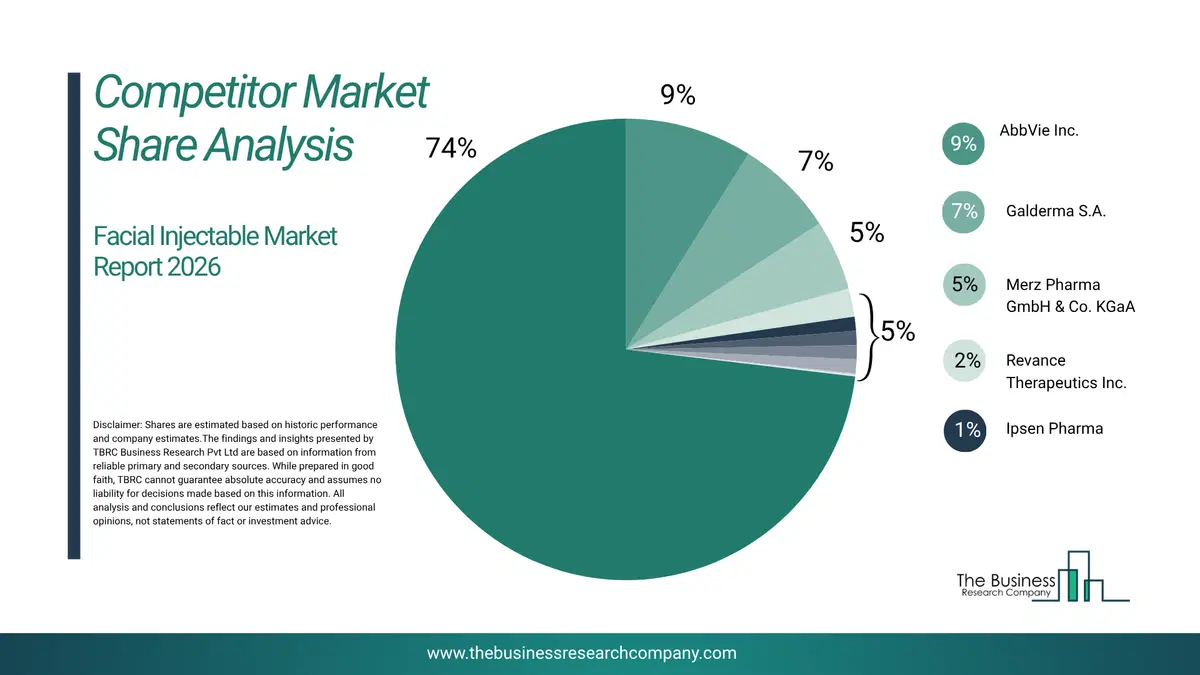
This chart is for illustrative purposes; the full report includes a detailed competitor analysis and comprehensive overview of the top 10 companies in the market.
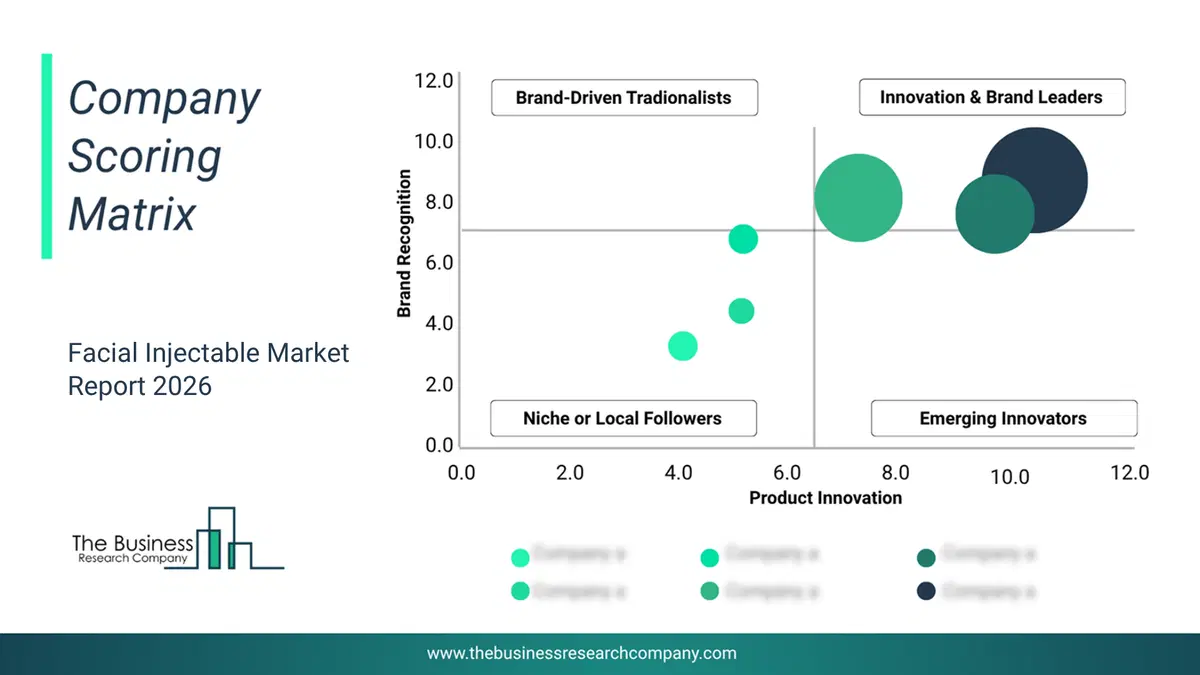
This chart maps companies by product innovation and brand strength, with bubble size indicating relative revenue, helping identify market leaders, challengers, and niche players. This is an illustrative chart; the full report provides a complete and accurate competitive analysis.
Global Facial Injectable Market Trends and Insights
Major companies operating in the facial injectable market are developing innovative products, such as long-lasting hyaluronic acid (HA) fillers, to meet the growing demand for minimally invasive aesthetic procedures that offer natural-looking and long-lasting results. Hyaluronic acid (HA) fillers are cosmetic injectables used to restore volume, smooth wrinkles, and enhance facial contours by replenishing the naturally occurring substances in the skin. For instance, in January 2023, Allergan plc, an Ireland-based pharmaceutical company, launched JUVEDERM VOLUX XC, a hyaluronic acid filler that is specifically designed to enhance jawline definition in individuals aged 21 and above who experience moderate to severe loss of contour. JUVEDERM VOLUX XC offers long-lasting effects for up to twelve months and focuses on providing natural-looking results. Its minimally invasive nature ensures minimal downtime for patients seeking non-surgical solutions. This innovative filler is backed by extensive research and high patient satisfaction rates, and it allows cosmetic specialists to design customized treatment plans.What Are Latest Mergers And Acquisitions In The Facial Injectable Market?
In February 2024, Crown Laboratories, Inc., a U.S.-based skincare and aesthetics company offering products, acquired Revance Therapeutics, Inc., for US$924 million. With this acquisition, Crown aimed to scale its aesthetics business by integrating Revance’s leading neuromodulator and dermal filler franchise into its existing product portfolio and distribution network. Revance is a US-based biotechnology company known for its DAXXIFY (daxibotulinumtoxinA) injectable neuromodulator and the RHA Collection of hyaluronic acid fillers.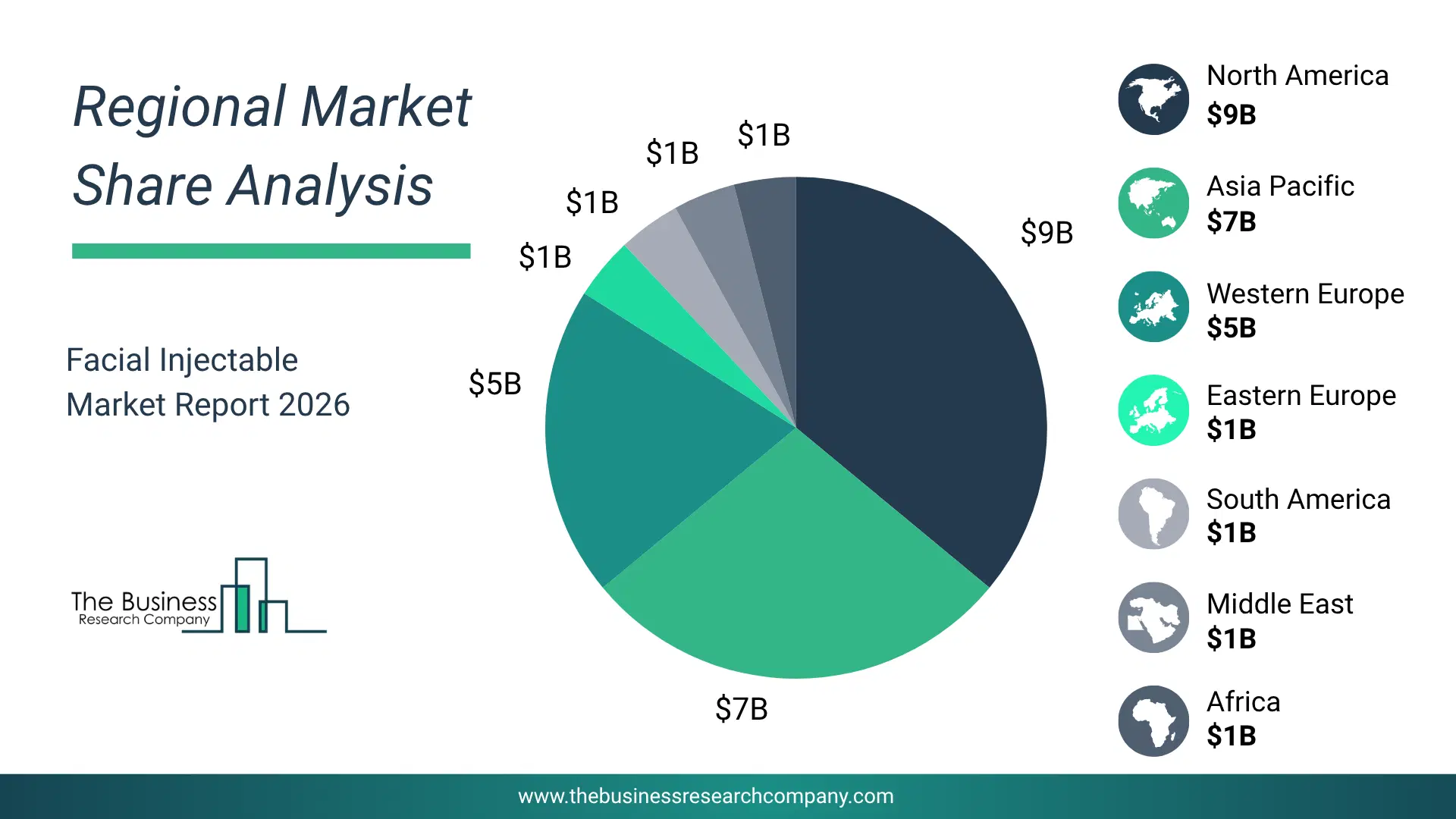
Regional Outlook
North America was the largest region in the facial injectable market in 2025. Asia-Pacific is expected to be the fastest-growing region in the forecast period. The regions covered in this market report are Asia-Pacific, South East Asia, Western Europe, Eastern Europe, North America, South America, Middle East, Africa. The countries covered in this market report are Australia, Brazil, China, France, Germany, India, Indonesia, Japan, Taiwan, Russia, South Korea, UK, USA, Canada, Italy, Spain.What Defines the Facial Injectable Market?
The facial injectable market consists of sales of platelet-rich plasma (PRP) injections, collagen stimulators, lip injections, and thread lifts. Values in this market are ‘factory gate’ values, that is the value of goods sold by the manufacturers or creators of the goods, whether to other entities (including downstream manufacturers, wholesalers, distributors and retailers) or directly to end customers. The value of goods in this market includes related services sold by the creators of the goods.How is Market Value Defined and Measured?
The market value is defined as the revenues that enterprises gain from the sale of goods and/or services within the specified market and geography through sales, grants, or donations in terms of the currency (in USD unless otherwise specified). The revenues for a specified geography are consumption values that are revenues generated by organizations in the specified geography within the market, irrespective of where they are produced. It does not include revenues from resales along the supply chain, either further along the supply chain or as part of other products.
This chart presents market attractiveness based on a quantitative evaluation of growth, competition, strategic alignment, and risk, offering a clear view of opportunity areas for decision-making. This chart is for illustrative purposes; the full report contains the complete analysis.

This chart highlights the Total Addressable Market (TAM) by estimating the maximum revenue opportunity using an assumption-driven approach, supporting strategic planning and opportunity sizing across markets. The chart is illustrative; the full report provides a more comprehensive analysis.
What Key Data and Analysis Are Included in the Facial Injectable Market Report 2026?
The facial injectable market research report is one of a series of new reports from The Business Research Company that provides market statistics, including industry global market size, regional shares, competitors with the market share, detailed market segments, market trends and opportunities, and any further data you may need to thrive in the facial injectable industry. The market research report delivers a complete perspective of everything you need, with an in-depth analysis of the current and future state of the industry.Facial Injectable Market Report Forecast Analysis
| Report Attribute | Details |
|---|---|
| Market Size Value In 2026 | $16.5 billion |
| Revenue Forecast In 2030 | $23.14 billion |
| Growth Rate | CAGR of 8.8% from 2026 to 2030 |
| Base Year For Estimation | 2025 |
| Actual Estimates/Historical Data | 2020-2025 |
| Forecast Period | 2026 - 2030 |
| Market Representation | Revenue in USD Billion and CAGR from 2026 to 2030 |
| Segments Covered | Type, Application, End-User |
| Regional Scope | Asia-Pacific, Western Europe, Eastern Europe, North America, South America, Middle East, Africa |
| Country Scope | The countries covered in the report are Australia, Brazil, China, France, Germany, India, ... |
| Key Companies Profiled | AbbVie Inc., Ipsen Pharma, Galderma S.A., Merz Pharma GmbH & Co. KGaA, Sinclair Pharma Plc, Revance Therapeutics Inc., Suneva Medical Inc., Prollenium Medical Technologies, Anteis S.A., Anika Therapeutics Inc., Q‑Med AB, Bloomage BioTechnology, Medytox Inc., Teoxane Laboratories, Alphaeon Corporation, Hugel Inc., Evolus Inc., Croma‑Pharma GmbH, Sientra Inc., Grex Pharma SaS, Daewoong Pharmaceuticals, LG Life Sciences |
| Customization Scope | Request for Customization |
| Pricing And Purchase Options | Explore Purchase Options |