

Facial Paralysis Market Report 2026
Global Outlook – By Type (Bell’s Palsy, Ramsay Hunt Syndrome), By Diagnosis (Electromyography, Computerized Tomography), By Treatment (Medications, Physical Therapy), By End-User (Hospitals, Specialty Centers) - Market Size, Trends, Strategies, and Forecast to 2030
Facial Paralysis Market Overview
• Facial Paralysis market size has reached to $2.4 billion in 2025 • Expected to grow to $3.05 billion in 2030 at a compound annual growth rate (CAGR) of 4.9% • Growth Driver: Viral Infections On The Growth Of The Facial Paralysis Market • Market Trend: Innovative Technologies And Less Invasive Solutions In Facial Paralysis Market • North America was the largest region in 2025 and Asia-Pacific is the fastest growing region.What Is Covered Under Facial Paralysis Market?
Facial paralysis refers to the inability or difficulty in moving the muscles of the face due to damage or dysfunction of the facial nerve. This condition affects one or both sides of the face and may result in various degrees of weakness or loss of movement, including difficulty closing the eye, smiling, or making facial expressions. Facial paralysis can occur suddenly (acute) or gradually (chronic) and can be caused by conditions such as Bell's palsy, stroke, trauma, infections, tumors, or neurological disorders. The main types of the facial paralysis market are Bell’s palsy and Ramsay hunt syndrome. Bell’s palsy is a condition characterized by sudden, temporary weakness or paralysis of the muscles on one side of the face. The various diagnosis includes electromyography and computerized tomography, and different treatments include medications and physical therapy. The several end-users including hospitals and specialty centers.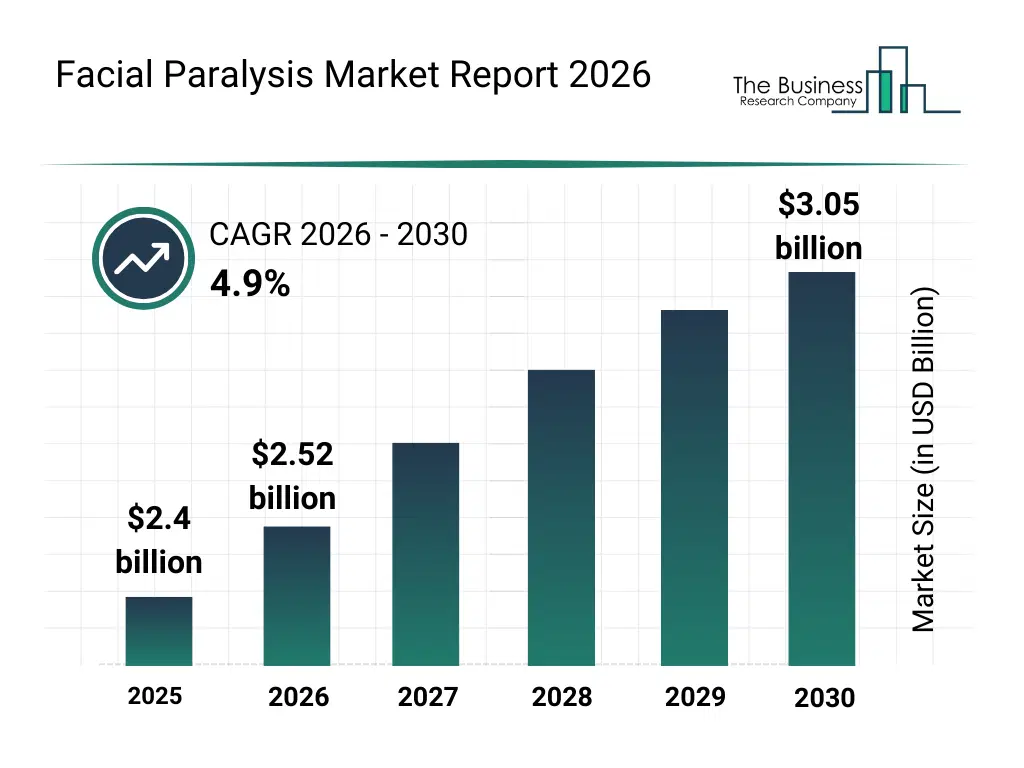
What Is The Facial Paralysis Market Size and Share 2026?
The facial paralysis market size has grown strongly in recent years. It will grow from $2.4 billion in 2025 to $2.52 billion in 2026 at a compound annual growth rate (CAGR) of 5.1%. The growth in the historic period can be attributed to increasing incidence of bell’s palsy, growth in neurological disorders, improved diagnostic tools, expansion of rehabilitation centers, rising healthcare awareness.What Is The Facial Paralysis Market Growth Forecast?
The facial paralysis market size is expected to see steady growth in the next few years. It will grow to $3.05 billion in 2030 at a compound annual growth rate (CAGR) of 4.9%. The growth in the forecast period can be attributed to advancements in nerve regeneration therapies, growth in neuromuscular rehabilitation, rising demand for early intervention, expansion of specialty care centers, improved diagnostic imaging. Major trends in the forecast period include rising awareness of early facial paralysis diagnosis, increased use of physical and rehabilitation therapies, growing adoption of electrophysiological diagnostics, expansion of multidisciplinary treatment approaches, improved access to neurological care.
Global Facial Paralysis Market Segmentation
1) By Type: Bell’s Palsy, Ramsay Hunt Syndrome 2) By Diagnosis: Electromyography, Computerized Tomography 3) By Treatment: Medications, Physical Therapy 4) By End-User: Hospitals, Specialty Centers Subsegments: 1) By Bell’s Palsy: Idiopathic Bell's Palsy, Postpartum Bell's Palsy, Bell's Palsy in Children 2) By Ramsay Hunt Syndrome: Type 1 (Herpes Zoster Oticus), Type 2 (Varicella-Zoster Virus)What Are The Drivers Of The Facial Paralysis Market?
The rising implications of viral infections are expected to propel the growth of the facial paralysis market going forward. Viral infections are caused by microscopic organisms that can infect various parts of the body, leading to a wide range of symptoms and health effects. The rise in viral infections is due to global trends in travel, environmental changes, antimicrobial resistance, socioeconomic factors, and viral evolution. A viral infection can cause facial paralysis by inflaming and damaging the facial nerve, which disrupts the nerve’s ability to control facial muscles, leading to temporary or permanent weakness or paralysis. For instance, in May 2023, according to JAMA Otolaryngology a US-based medical journal Head & Neck Surgery, an international research team reported that SARS-CoV-2 infection increased Bell’s palsy risk by 3.23-fold compared with SARS-CoV-2 vaccination. Therefore, the rising implications of viral infections drive growth in the facial paralysis industry. Increasing healthcare spending is expected to propel the growth of the facial paralysis market going forward. Healthcare spending refers to the total amount of money that individuals, insurers, and governments allocate to medical goods and services. Spending is rising because more people are gaining insurance coverage and access to health services. Increasing demand for facial paralysis treatments, including surgeries, therapies, and rehabilitation, contributes to higher overall healthcare spending by requiring more medical services and resources. For instance, in December 2024, according to the Centers for Medicare & Medicaid Services (CMS), a US federal government agency, national health expenditure increased 7.5 percent in 2023 compared to 4.6 percent in 2022. Therefore, increasing healthcare spending is expected to drive the growth of the facial paralysis industry.Key Players In The Global Facial Paralysis Market
Major companies operating in the facial paralysis market are Pfizer Inc., Johnson & Johnson, Merck & Co. Inc., Sanofi SA, Abbott Laboratories, GlaxoSmithKline Plc, Medtronic plc, Ipsen S.A., Merz Pharma GmbH & Co. KGaA, Revance Therapeutics Inc., Novartis AG, Biogen Inc, Teva Pharmaceutical Industries Ltd, Sun Pharmaceutical Industries Ltd, Cadila Healthcare Ltd, Galderma Laboratories L.P., Medytox Inc, Evolus Inc, Suneva Medical Inc, Sinclair Pharmaceuticals Ltd, Axogen Inc, Integra LifeSciences Holdings Corporation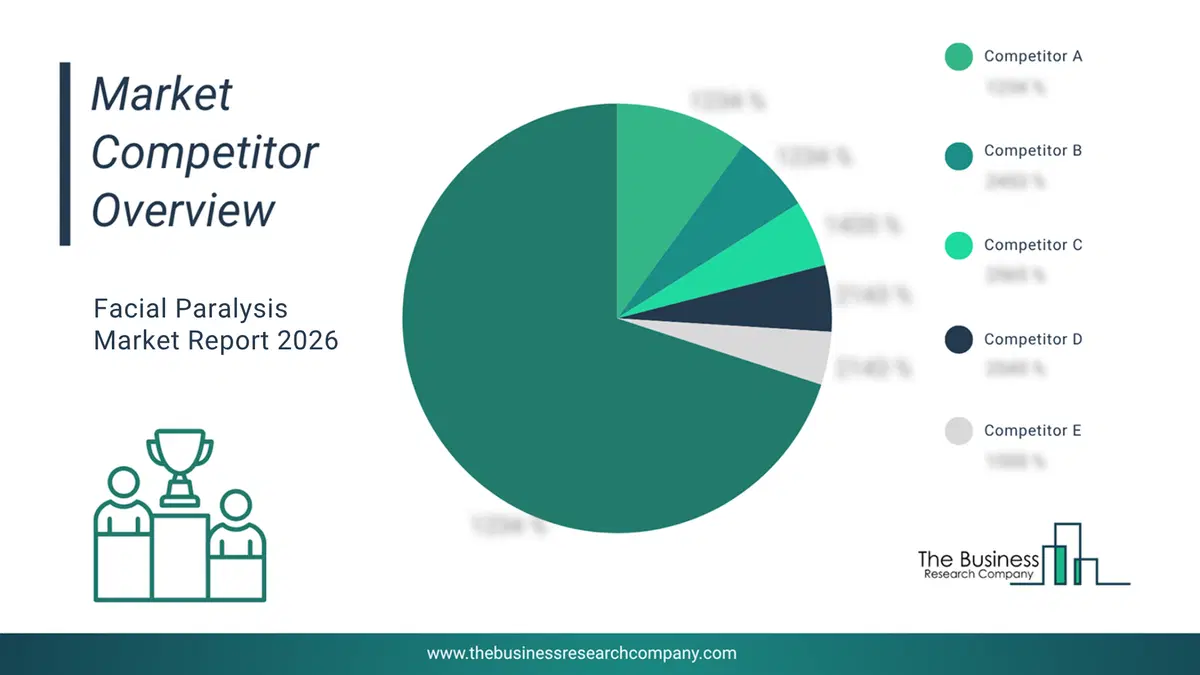
This chart is for illustrative purposes; the full report includes a detailed competitor analysis and comprehensive overview of the top 10 companies in the market.
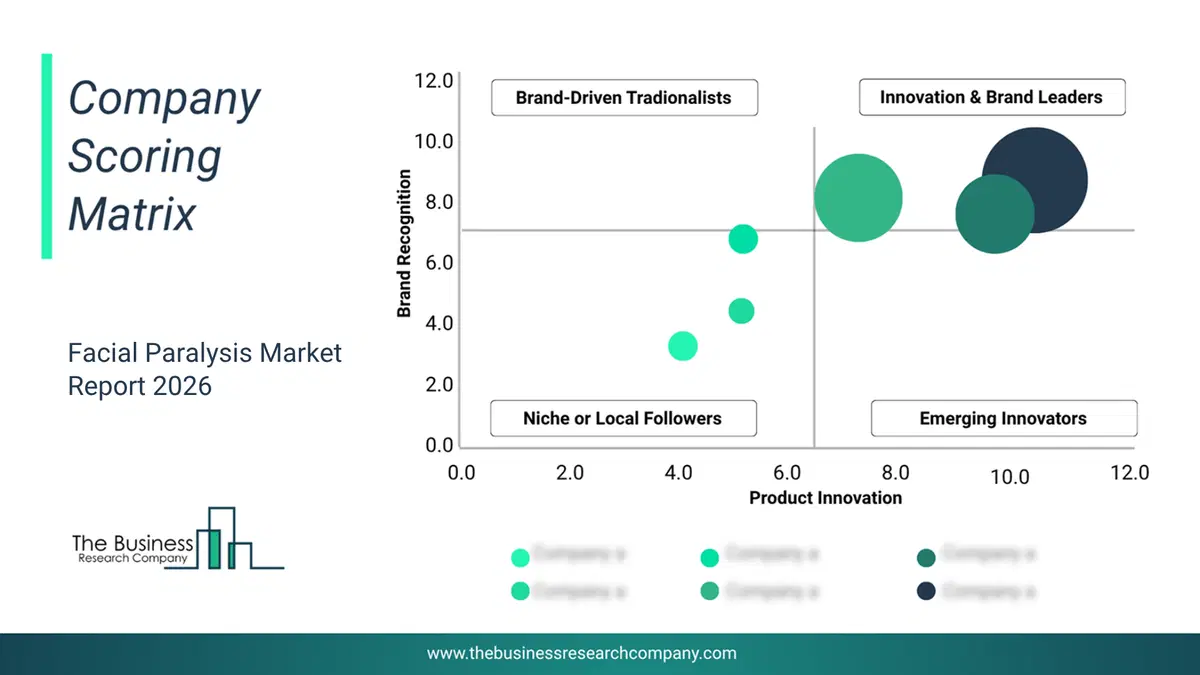
This chart maps companies by product innovation and brand strength, with bubble size indicating relative revenue, helping identify market leaders, challengers, and niche players. This is an illustrative chart; the full report provides a complete and accurate competitive analysis.
Global Facial Paralysis Market Trends and Insights
Major companies operating in the facial paralysis market are focusing on developing innovative solutions, such as exosome-based nerve regeneration therapy, to gain a competitive advantage. This therapy uses extracellular vesicles derived from cells to deliver molecular payloads that promote axonal regrowth and restore function in damaged facial nerves. For instance, in April 2025, NurExone Biologic, a Canada-based biotech company, introduced its lead candidate, ExoPTEN, showing in a preclinical facial nerve injury model that it significantly enhances functional recovery and nerve regeneration by downregulating PTEN. Unique features of ExoPTEN include its minimally invasive delivery via exosomes, its ability to target multiple high-value indications (e.g., spinal cord and optic nerve), and its scalable manufacturing process using a single platform. This innovation could transform the facial paralysis market by addressing root cause nerve damage rather than merely managing symptoms, although long-term safety and clinical validation remain to be demonstrated.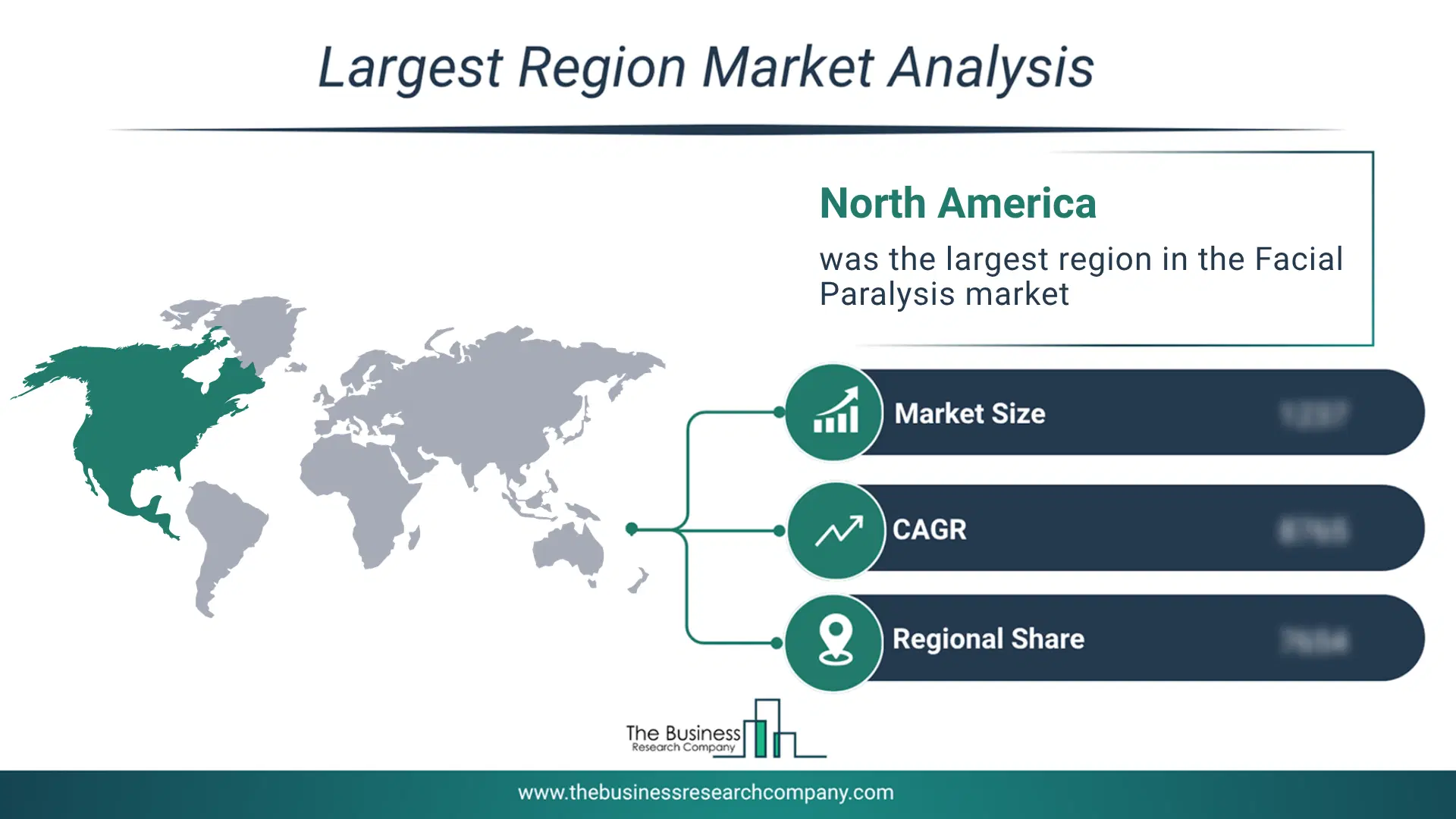
Regional Outlook
North America was the largest region in the facial paralysis market in 2025. Asia-Pacific is expected to be the fastest-growing region in the market going forward. The regions covered in this market report are Asia-Pacific, South East Asia, Western Europe, Eastern Europe, North America, South America, Middle East, Africa. The countries covered in this market report are Australia, Brazil, China, France, Germany, India, Indonesia, Japan, Taiwan, Russia, South Korea, UK, USA, Canada, Italy, Spain.What Defines the Facial Paralysis Market?
The facial paralysis market consists of revenues earned by entities by providing services such as surgical interventions, nerve grafts, consultations, diagnostic tests, and muscle transfers procedures. The market value includes the value of related goods sold by the service provider or included within the service offering. The facial paralysis market also includes sales of electromyography machines, TENS units, facial rehabilitation devices, botox injections, nerve graft materials, and facial implants. Values in this market are ‘factory gate’ values, that is the value of goods sold by the manufacturers or creators of the goods, whether to other entities (including downstream manufacturers, wholesalers, distributors and retailers) or directly to end customers. The value of goods in this market includes related services sold by the creators of the goods.How is Market Value Defined and Measured?
The market value is defined as the revenues that enterprises gain from the sale of goods and/or services within the specified market and geography through sales, grants, or donations in terms of the currency (in USD unless otherwise specified). The revenues for a specified geography are consumption values that are revenues generated by organizations in the specified geography within the market, irrespective of where they are produced. It does not include revenues from resales along the supply chain, either further along the supply chain or as part of other products.
This chart presents market attractiveness based on a quantitative evaluation of growth, competition, strategic alignment, and risk, offering a clear view of opportunity areas for decision-making. This chart is for illustrative purposes; the full report contains the complete analysis.

This chart highlights the Total Addressable Market (TAM) by estimating the maximum revenue opportunity using an assumption-driven approach, supporting strategic planning and opportunity sizing across markets. The chart is illustrative; the full report provides a more comprehensive analysis.
What Key Data and Analysis Are Included in the Facial Paralysis Market Report 2026?
The facial paralysis market research report is one of a series of new reports from The Business Research Company that provides market statistics, including industry global market size, regional shares, competitors with the market share, detailed market segments, market trends and opportunities, and any further data you may need to thrive in the facial paralysis industry. The market research report delivers a complete perspective of everything you need, with an in-depth analysis of the current and future state of the industry.Facial Paralysis Market Report Forecast Analysis
| Report Attribute | Details |
|---|---|
| Market Size Value In 2026 | $2.52 billion |
| Revenue Forecast In 2030 | $3.05 billion |
| Growth Rate | CAGR of 4.9% from 2026 to 2030 |
| Base Year For Estimation | 2025 |
| Actual Estimates/Historical Data | 2020-2025 |
| Forecast Period | 2026 - 2030 |
| Market Representation | Revenue in USD Billion and CAGR from 2026 to 2030 |
| Segments Covered | Type, Diagnosis, Treatment, End-User |
| Regional Scope | Asia-Pacific, Western Europe, Eastern Europe, North America, South America, Middle East, Africa |
| Country Scope | The countries covered in the report are Australia, Brazil, China, France, Germany, India, Indonesia, Japan, Taiwan, Russia, South Korea, UK, USA, Canada, Italy, Spain |
| Key Companies Profiled | Pfizer Inc., Johnson & Johnson, Merck & Co. Inc., Sanofi SA, Abbott Laboratories, GlaxoSmithKline Plc, Medtronic plc, Ipsen S.A., Merz Pharma GmbH & Co. KGaA, Revance Therapeutics Inc., Novartis AG, Biogen Inc, Teva Pharmaceutical Industries Ltd, Sun Pharmaceutical Industries Ltd, Cadila Healthcare Ltd, Galderma Laboratories L.P., Medytox Inc, Evolus Inc, Suneva Medical Inc, Sinclair Pharmaceuticals Ltd, Axogen Inc, Integra LifeSciences Holdings Corporation |
| Customization Scope | Request for Customization |
| Pricing And Purchase Options | Explore Purchase Options |