

Factory Automation Market Report 2026
Global Outlook – By Component (Sensors, Controllers, Switches And Relays, Industrial Robots, Drives), By Factory Automation Technology (Supervisory Control And Data Acquisition (SCADA), Programmable Automation Controller (PAC), Programmable Logic Controller (PLC), Distributed Control System (DCS), Human Machine Interface (HMI)), By End-User (Manufacturing, Automotive, Packaging And Processing, Semiconductor And Electronics, Printing And Converting) – Market Size, Trends, Strategies, and Forecast to 2030
Factory Automation Market Overview
• Factory Automation market size has reached to $310.46 billion in 2025 • Expected to grow to $544.59 billion in 2030 at a compound annual growth rate (CAGR) of 11.9% • Growth Driver: Impact Of Artificial Intelligence On The Growth Of The Factory Automation Market • Market Trend: Innovative Ballbar Devices By Market Leaders In Factory Automation For Enhanced Metrology And Process Accuracy • North America was the largest region in 2025.Market Gains By 2030 – Top Opportunities By Segment
Market Gain identifies the most promising market opportunities by highlighting the segments or products expected to generate the highest incremental revenue growth over the next five years.
What Is Covered Under Factory Automation Market?
Factory automation refers to the use of advanced technologies and systems to streamline and optimize manufacturing processes within a factory or industrial facility. It integrates various technologies like robotics, sensors, and data analytics to achieve tasks such as production, assembly, and quality control in industrial settings. The main types of factory automation components are sensors, controllers, switches and relays, industrial robots, drives, and others. Sensors are devices that detect changes in the environment or machinery, converting physical signals into electrical signals for monitoring and control purposes. The various factory automation technologies include supervisory control and data acquisition (SCADA), programmable automation controller (PAC), programmable logic controller (PLC), distributed control system (DCS), and human-machine interface (HMI), which are used by several end-users, such as manufacturing, automotive, packaging and processing, energy and power, semiconductors and electronics, printing and converting, and others.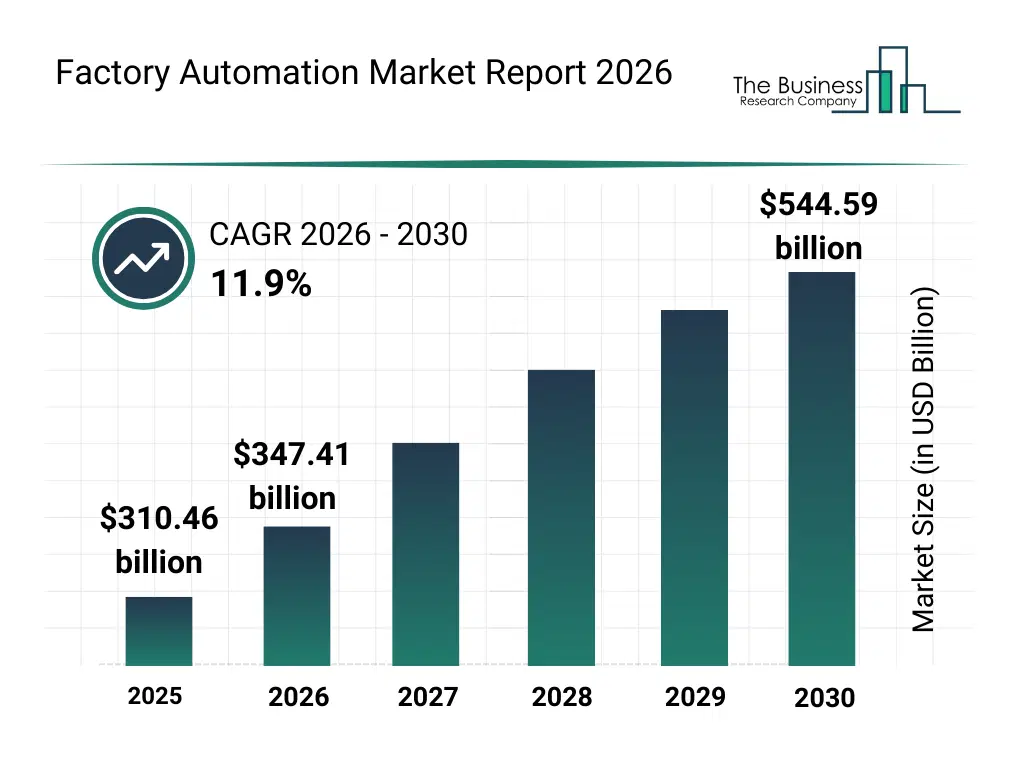
What Is The Factory Automation Market Size and Share 2026?
The factory automation market size has grown rapidly in recent years. It will grow from $310.46 billion in 2025 to $347.41 billion in 2026 at a compound annual growth rate (CAGR) of 11.9%. The growth in the historic period can be attributed to expansion of mass manufacturing industries, rising labor cost pressures, increasing demand for consistent product quality, growth of electronics and automotive manufacturing, availability of programmable automation technologies.What Is The Factory Automation Market Growth Forecast?
The factory automation market size is expected to see rapid growth in the next few years. It will grow to $544.59 billion in 2030 at a compound annual growth rate (CAGR) of 11.9%. The growth in the forecast period can be attributed to increasing adoption of ai-enabled automation systems, expansion of smart factories, rising demand for customized production runs, growing focus on operational efficiency, increasing investments in industrial digitalization. Major trends in the forecast period include increasing deployment of industrial robots in production lines, rising adoption of smart sensors and controllers, expansion of data-driven predictive maintenance systems, growing integration of plc and scada platforms, enhanced focus on flexible manufacturing systems.
Global Factory Automation Market Segmentation
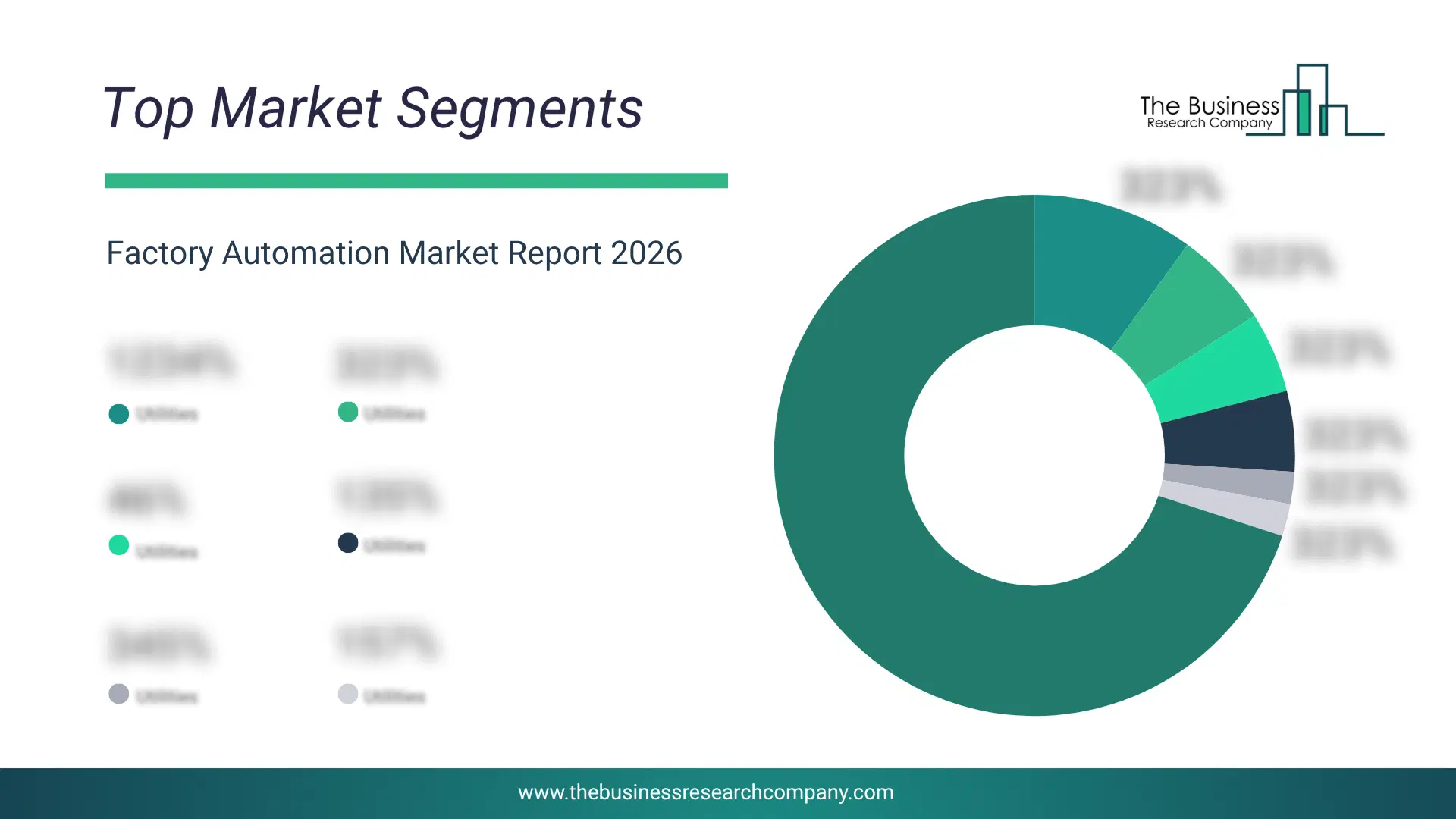
1) By Component: Sensors, Controllers, Switches And Relays, Industrial Robots, Drives 2) By Factory Automation Technology: Supervisory Control And Data Acquisition (SCADA), Programmable Automation Controller (PAC), Programmable Logic Controller (PLC), Distributed Control System (DCS), Human Machine Interface (HMI) 3) By End-User: Manufacturing, Automotive, Packaging And Processing, Semiconductor And Electronics, Printing And Converting Subsegments: 1) By Sensors: Proximity Sensors, Vision Sensors, Temperature Sensors, Pressure Sensors, Level Sensors, Flow Sensors, Position Sensors 2) By Controllers: Programmable Logic Controllers (PLCs), Distributed Control Systems (DCS), Human-Machine Interface (HMI), Motion Controllers, Embedded Controllers 3) By Switches And Relays: Limit Switches, Push Button Switches, Safety Switches, Electromechanical Relays, Solid-State Relays 4) By Industrial Robots: Articulated Robots, SCARA Robots, Cartesian Robots, Collaborative Robots (Cobots), Delta Robots 5) By Drives: AC Drives, DC Drives, Servo Drives, Variable Frequency Drives (VFDs), Stepper Drives The top segments in the factory automation market will be: • Manufacturing will reach $96096.29 Million by 2025. • Industrial Robots will reach $83582.66 Million by 2025. • Automotive will reach $80536.41 Million by 2025. • Supervisory Control and Data Acquisition System (SCADA) will reach $80233.64 Million by 2025. • Controllers will reach $72158.04 Million by 2025.What Is The Driver Of The Factory Automation Market?
The adoption of artificial intelligence is expected to propel the growth of the factory automation market. Artificial intelligence refers to the simulation of human intelligence processes by machines, typically through computer systems, enabling them to perform tasks that traditionally require human intelligence, such as learning, reasoning, and problem-solving. The rising adoption of AI is driven by advancements in technology, increased data availability, industry demand for automation and efficiency, and growing investment and research. Integrating artificial intelligence into factory automation systems enables manufacturers to achieve higher efficiency, productivity, quality, flexibility, and safety levels, leading to competitive advantages and improved business outcomes. For instance, according to theEurostat, a Belgium based government agency, in 2024, 13% of EU businesses used artificial intelligence (AI) technologies. Therefore, the adoption of artificial intelligence is driving the growth of the factory automation industry.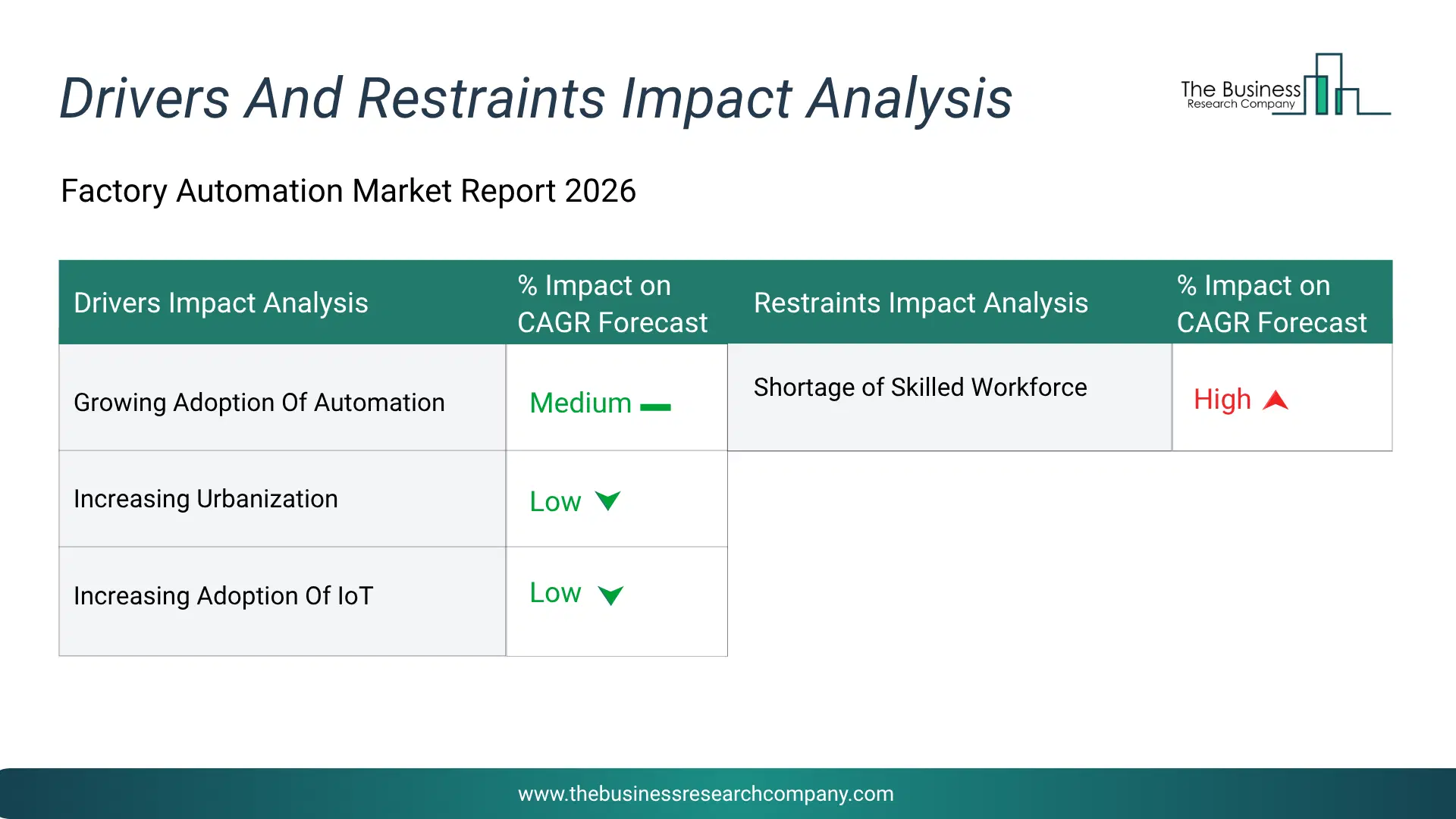
Infographic Chart Showing Key Market Drivers Analysis And Restraints For Factory Automation Market
The chart presents an impact analysis of key drivers and restraints, quantifying their relative influence on the market's growth rate and helping assess the balance between growth enablers and limiting factors. This chart offers a high-level perspective; the full report contains more detailed insights.
How Will The Drivers Impact Growth In The Global Factory Automation Market?
• Growing Adoption Of Automation (Medium) – The growing adoption of automation will become a key driver of growth in the factory automation market by 2030. As companies embrace smart manufacturing solutions, the demand for automated processes and robotics will expand, further accelerating the market's development. Additionally, advancements in AI and machine learning will enable more sophisticated automation, leading to increased productivity and innovation in manufacturing environments. As a result, the growing adoption of automation is anticipated to contributing to annual growth in the market. • Increasing Urbanization (Low) – The increasing urbanization will serve as a key growth catalyst for the factory automation market by 2030. With more people living in cities, industries will rely on automation to optimize manufacturing processes, meet higher consumer demand and ensure sustainability. This will drive the adoption of advanced technologies in factories to keep pace with the rapid urban expansion. As a result, the increasing urbanization is anticipated to contributing to annual growth in the market. • Increasing Adoption Of IoT (Low) – The increasing adoption of internet of things (IoT) will become a significant driver contributing to the growth of the factory automation market by 2030. As IoT devices and sensors become more integrated into manufacturing processes, factories will benefit from enhanced connectivity, predictive maintenance and optimized operations. This will lead to greater efficiency, reduced downtime and improved decision-making, driving further investment in automation technologies. As a result, the increasing adoption of internet of things (IoT) is anticipated to contributing to annual growth in the market. • Favorable Government Initiatives (Low) – The favorable government initiatives will emerge as a major factor driving the expansion of the factory automation market by 2030. These efforts will encourage industries to integrate smart manufacturing systems, leading to enhanced productivity, efficiency and competitiveness. Also, regulatory support for innovation and sustainability will accelerate the shift toward automated processes in factories globally. As a result, the favorable government initiatives is anticipated to contributing to annual growth in the market.How Will The Restraints Impact Growth In The Global Factory Automation Market?
• Shortage of Skilled Workforce (Medium) – Shortage of Skilled Workforce will restrict the growth of the Factory Automation market during the forecast period. Factory automation implementation requires specialized skills in robotics, PLC programming, and system integration. The shortage of qualified automation engineers and technicians limits the capacity of manufacturers to adopt and maintain automated systems. This skill gap can lead to implementation challenges, underutilization of automation equipment, and slower adoption rates, affecting market growth.Key Players In The Global Factory Automation Market
Major companies operating in the factory automation market are Siemens AG, Mitsubishi Electric Corporation, Schneider Electric SE, Honeywell International Inc., ABB Ltd., Toshiba Corporation, Eaton Corporation, Parker Hannifin Corporation, Emerson Electric Co., Danfoss, Rockwell Automation Inc., Bosch Rexroth AG, Omron Corporation, Keyence Corporation, Fanuc Corporation, SMC Corporation, Yaskawa Electric Corporation, Festo, KUKA Robotics, Phoenix Contact, Endress+Hauser Group, Beckhoff Automation, Yokogawa Electric Corporation, Advantech Co. Ltd., WAGO GmbH & Co. KG, Pepperl+Fuchs GmbH, Pilz GmbH & Co. KG, HIMA Paul Hildebrandt GmbH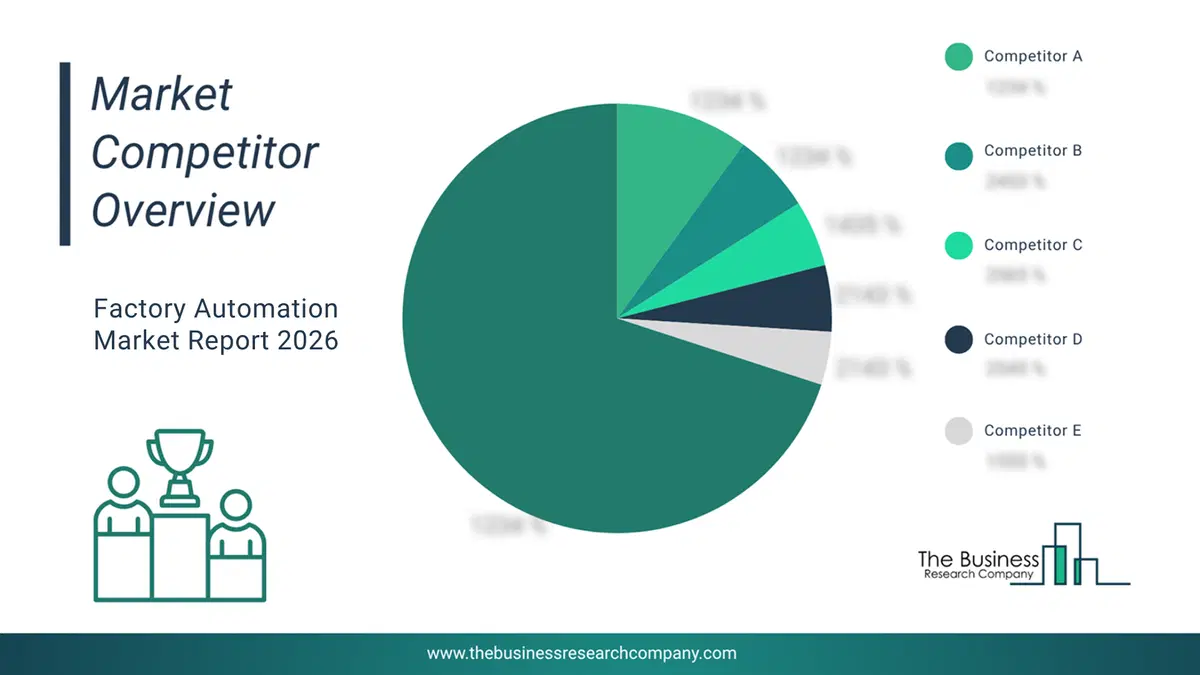
This chart is for illustrative purposes; the full report includes a detailed competitor analysis and comprehensive overview of the top 10 companies in the market.
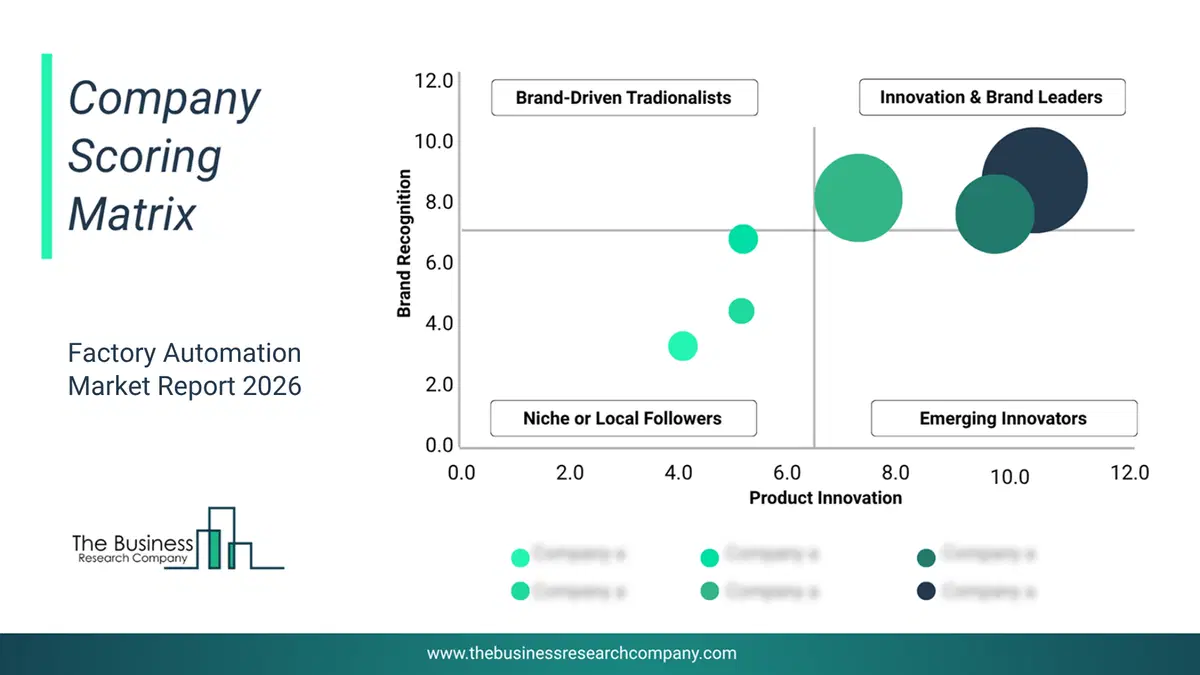
This chart maps companies by product innovation and brand strength, with bubble size indicating relative revenue, helping identify market leaders, challengers, and niche players. This is an illustrative chart; the full report provides a complete and accurate competitive analysis.
Global Factory Automation Market Trends and Insights
Major companies operating in the factory automation market are developing innovative products, such as ballbar devices, to sustain their position in the market. Ballbar devices, also known as ballbar systems or ballbar testers, are precision measurement tools used in the fields of metrology and precision engineering. In factory automation, these devices are used to ensure the quality and precision of machined parts by detecting errors and deviations in the machine's motion and positioning. For instance, in May 2023, Renishaw plc, a UK-based engineering company, launched an RCS product line that includes three products: RCS L-90, RCS T-90, and RCS P-series, all supported by a dedicated software suite. The RCS L-90 is a ball-bar device that uses simple processes managed by its companion software suite to monitor robot health, save deployment times, and increase robot system accuracy. The tri-ballbar RCS T-90 system helps users of robots pinpoint the underlying reasons for subpar performance. It also conducts extensive tests to gather vital robot data, including master-recovery procedures, plotting 3D path performance, and remastering joint offsets to calculated positions. The RCS P-series applies in-process metrology and automatic recovery to automation processes by integrating a permanent Renishaw probing solution within a robot cell.What Are Latest Mergers And Acquisitions In The Factory Automation Market?
In July 2024, Lear Corporation, a US-based manufacturing company, acquired WIP Industrial Automation for an undisclosed amount. The acquisition of WIP enables Lear to streamline its operations, improving overall efficiency. This enhanced efficiency helps the company better manage current macroeconomic challenges, including elevated wage inflation. WIP Industrial Automation is a Spain-based company specializes in providing automation solutions and technologies for various industries.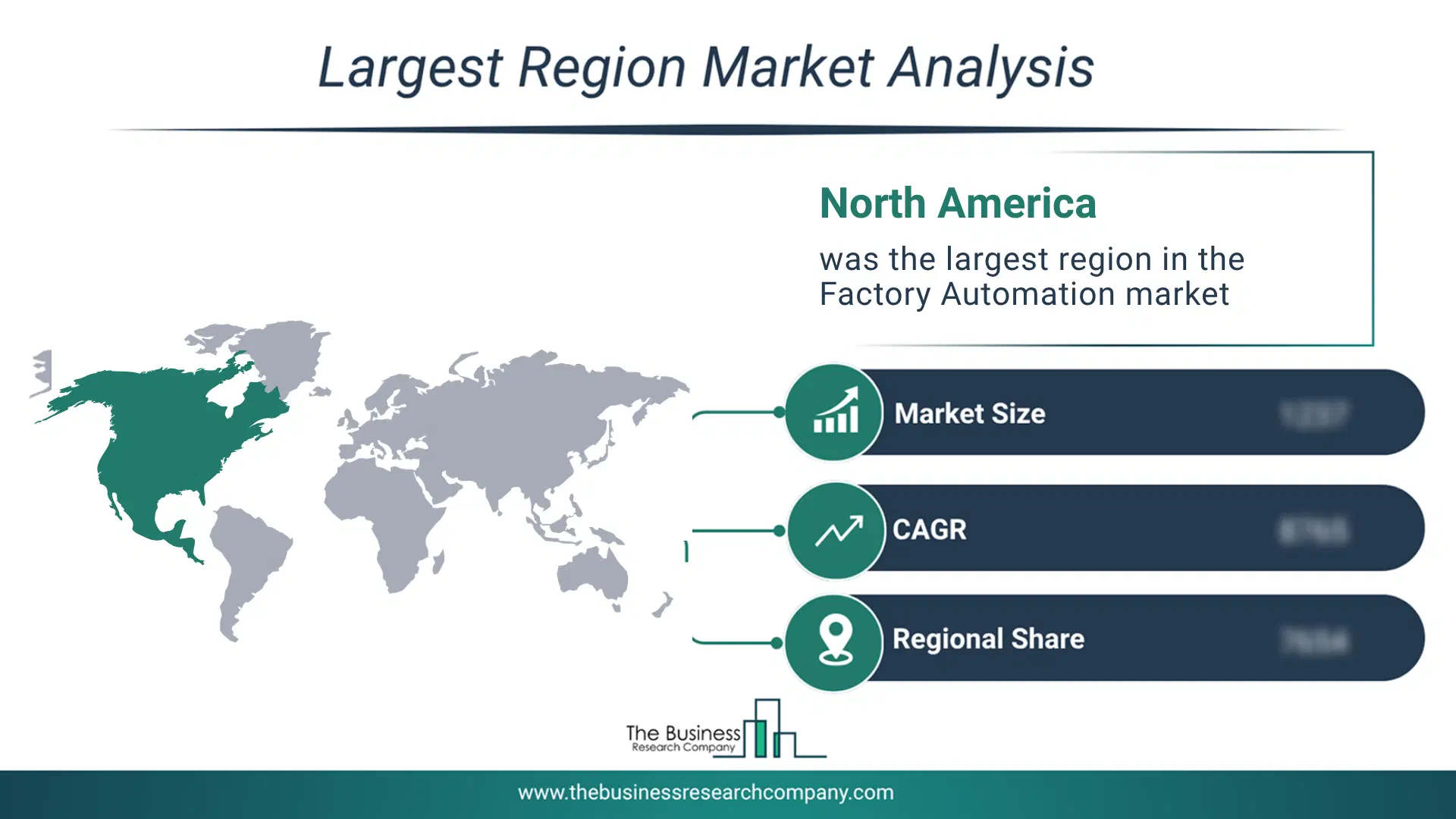
Regional Outlook
North America was the largest region in the factory automation market in 2025. The regions covered in this market report are Asia-Pacific, South East Asia, Western Europe, Eastern Europe, North America, South America, Middle East, Africa The countries covered in this market report are Australia, Brazil, China, France, Germany, India, Indonesia, Japan, Taiwan, Russia, South Korea, UK, USA, Canada, Italy, Spain.What Defines the Factory Automation Market?
The factory automation market consists of revenues earned by entities by providing services, such as consultation and assessment services, customized solution design, installation and integration services, training and support services, remote monitoring and management, and data analytics and optimization. The market value includes the value of related goods sold by the service provider or included within the service offering. The factory automation market also includes sales of sensors and vision systems, motion control systems, human-machine interface (HMI) devices, industrial Internet of Things (IIoT) devices, and automated storage and retrieval systems (AS/RS). Values in this market are ‘factory gate’ values, that is the value of goods sold by the manufacturers or creators of the goods, whether to other entities (including downstream manufacturers, wholesalers, distributors and retailers) or directly to end customers. The value of goods in this market includes related services sold by the creators of the goods.How is Market Value Defined and Measured?
The market value is defined as the revenues that enterprises gain from the sale of goods and/or services within the specified market and geography through sales, grants, or donations in terms of the currency (in USD unless otherwise specified). The revenues for a specified geography are consumption values that are revenues generated by organizations in the specified geography within the market, irrespective of where they are produced. It does not include revenues from resales along the supply chain, either further along the supply chain or as part of other products.
This chart presents market attractiveness based on a quantitative evaluation of growth, competition, strategic alignment, and risk, offering a clear view of opportunity areas for decision-making. This chart is for illustrative purposes; the full report contains the complete analysis.

This chart highlights the Total Addressable Market (TAM) by estimating the maximum revenue opportunity using an assumption-driven approach, supporting strategic planning and opportunity sizing across markets. The chart is illustrative; the full report provides a more comprehensive analysis.
What Key Data and Analysis Are Included in the Factory Automation Market Report 2026?
The factory automation market research report is one of a series of new reports from The Business Research Company that provides market statistics, including industry global market size, regional shares, competitors with the market share, detailed market segments, market trends and opportunities, and any further data you may need to thrive in the factory automation industry. The market research report delivers a complete perspective of everything you need, with an in-depth analysis of the current and future state of the industry.Factory Automation Market Report Forecast Analysis
| Report Attribute | Details |
|---|---|
| Market Size Value In 2026 | $347.41 billion |
| Revenue Forecast In 2030 | $544.59 billion |
| Growth Rate | CAGR of 11.9% from 2026 to 2030 |
| Base Year For Estimation | 2025 |
| Actual Estimates/Historical Data | 2020-2025 |
| Forecast Period | 2026 - 2030 |
| Market Representation | Revenue in USD Billion and CAGR from 2026 to 2030 |
| Segments Covered | Component, Factory Automation Technology, End-User |
| Regional Scope | Asia-Pacific, Western Europe, Eastern Europe, North America, South America, Middle East, Africa |
| Country Scope | The countries covered in the report are Australia, Brazil, China, France, Germany, India, Indonesia, Japan, Taiwan, Russia, South Korea, UK, USA, Canada, Italy, Spain. |
| Key Companies Profiled | Siemens AG, Mitsubishi Electric Corporation, Schneider Electric SE, Honeywell International Inc., ABB Ltd., Toshiba Corporation, Eaton Corporation, Parker Hannifin Corporation, Emerson Electric Co., Danfoss, Rockwell Automation Inc., Bosch Rexroth AG, Omron Corporation, Keyence Corporation, Fanuc Corporation, SMC Corporation, Yaskawa Electric Corporation, Festo, KUKA Robotics, Phoenix Contact, Endress+Hauser Group, Beckhoff Automation, Yokogawa Electric Corporation, Advantech Co. Ltd., WAGO GmbH & Co. KG, Pepperl+Fuchs GmbH, Pilz GmbH & Co. KG, HIMA Paul Hildebrandt GmbH |
| Customization Scope | Request for Customization |
| Pricing And Purchase Options | Explore Purchase Options |