
Faecal Extraction Systems Market Report 2026
Global Outlook – By Assay (Calprotectin, Hemoglobin), By Analysis Test (Microscopic, Chemical, Immunological, Microbiological), By Indication (Parasitic Infection, Bacterial Indication, Poor Nutrient Absorption), By End-Use (Diagnostic Centers, Hospitals And Clinics) – Market Size, Trends, Strategies, and Forecast to 2030
Faecal Extraction Systems Market Overview
• Faecal Extraction Systems market size has reached to $1.7 billion in 2025 • Expected to grow to $2.21 billion in 2030 at a compound annual growth rate (CAGR) of 5.4% • Growth Driver: The Impact Of Rising Inflammatory Bowel Disease Prevalence On The Faecal Extraction Systems Market • Market Trend: Innovations In Faecal Extraction Systems Market With The Introduction Of Blood-Based CRC Screening Tests • North America was the largest region in 2025.What Is Covered Under Faecal Extraction Systems Market?
A faecal extraction system is a device or instrument that collects faeces samples to identify pathogens, microbes, or parasite particles that could be present inside the stool. The main types of assays in faecal extraction systems are calprotectin, albumin, hemoglobin, and bile acids. Calprotectin is a biochemical measurement of protein in stools, used to detect inflammation in the intestines. The analysis tests include microscopic, chemical, immunological, and microbiological for indications such as parasitic infection, viral infection, bacterial indication, and poor nutrient absorption. These are used by various end users such as diagnostic centers, hospitals, clinics, ambulatory clinics, and research centers.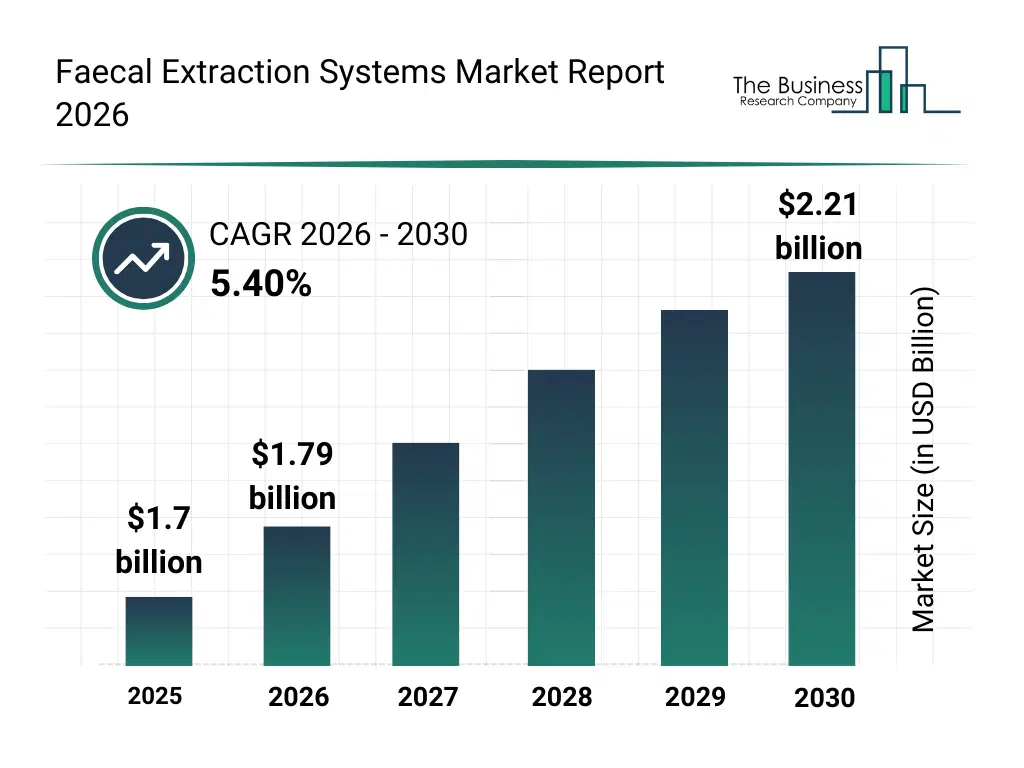
What Is The Faecal Extraction Systems Market Size and Share 2026?
The faecal extraction systems market size has grown strongly in recent years. It will grow from $1.7 billion in 2025 to $1.79 billion in 2026 at a compound annual growth rate (CAGR) of 5.5%. The growth in the historic period can be attributed to increasing incidence of gastrointestinal infections, expansion of diagnostic laboratory networks, rising adoption of fecal biomarker testing, growth in parasitic disease screening, improved clinical awareness of gut health.What Is The Faecal Extraction Systems Market Growth Forecast?
The faecal extraction systems market size is expected to see strong growth in the next few years. It will grow to $2.21 billion in 2030 at a compound annual growth rate (CAGR) of 5.4%. The growth in the forecast period can be attributed to increasing demand for early disease detection, rising investments in advanced diagnostic assays, expansion of outpatient diagnostic services, growing focus on preventive healthcare, increasing adoption of automated laboratory workflows. Major trends in the forecast period include increasing adoption of automated sample collection systems, rising demand for rapid stool diagnostics, growing use of immunological and molecular assays, expansion of point-of-care testing solutions, enhanced focus on diagnostic accuracy and hygiene.
Global Faecal Extraction Systems Market Segmentation
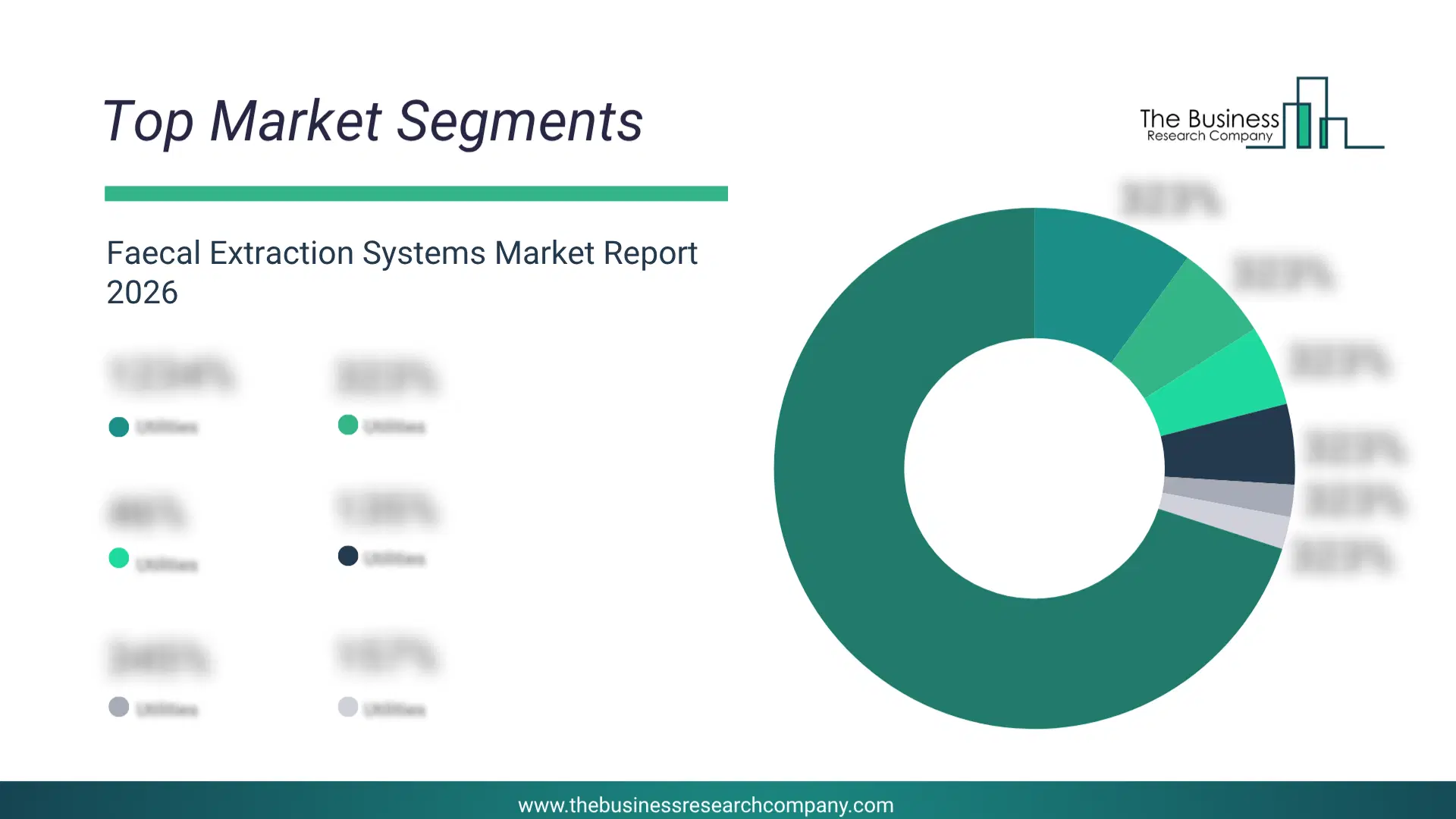
1) By Assay: Calprotectin, Hemoglobin 2) By Analysis Test: Microscopic, Chemical, Immunological, Microbiological 3) By Indication: Parasitic Infection, Bacterial Indication, Poor Nutrient Absorption 4) By End-Use: Diagnostic Centers, Hospitals And Clinics Subsegments: 1) By Calprotectin: Quantitative Calprotectin Assays, Qualitative Calprotectin Assays 2) By Hemoglobin: Fecal Occult Blood Tests (FOBT), Immunochemical Fecal Hemoglobin TestsWhat Is The Driver Of The Faecal Extraction Systems Market?
The increasing prevalence of inflammatory bowel disease is expected to propel the growth of the faecal extraction systems market going forward. Inflammatory bowel disease (IBD) is a category of illnesses characterized by long-term (chronic) inflammation of digestive system tissues. Faecal extraction systems are used for the diagnosis, monitoring of disease activity, treatment guidance, and prediction of disease relapse and post-operative recurrence in inflammatory bowel disease, as a result, the increasing prevalence of inflammatory bowel disease increases the demand for faecal extraction systems. For instance, in September 2023, according to the Impact of IBD Report 2023 published by the IBD Clinical and Research Centre, a Canada-based organization that aims to improve the lives of patients with Crohn's disease and ulcerative colitis, with a prevalence of 825 per 100,000 in 2023, over 320,000 people in Canada have inflammatory bowel disease (IBD), and as the prevalence is expected to increase by 2.44% annually, 1.1% of the population, or 470,000 Canadians, is projected to be living with IBD by 2035. Therefore, the increasing prevalence of inflammatory bowel disease in faecal extraction systems is expected drives the growth of the faecal extraction systems industry.Key Players In The Global Faecal Extraction Systems Market
Major companies operating in the faecal extraction systems market are Alpha Laboratories Ltd., Arbor Assays, Buhlmann Laboratories AG, Calpro AS, DRG Instruments GmbH, Biohit Healthcare Ltd., Meridian Bioscience Inc., Quidel Corporation, DiaSorin SpA, Sekisui Diagnostics LLC, Abbott Laboratories, Roche Diagnostics Corporation, Randox Laboratories Ltd., Trinity Biotech plc, bioMérieux SA, Werfen SA, Mobidiag Oy, Hologic Inc., Siemens Healthineers, Beckman Coulter Inc., Thermo Fisher Scientific Inc.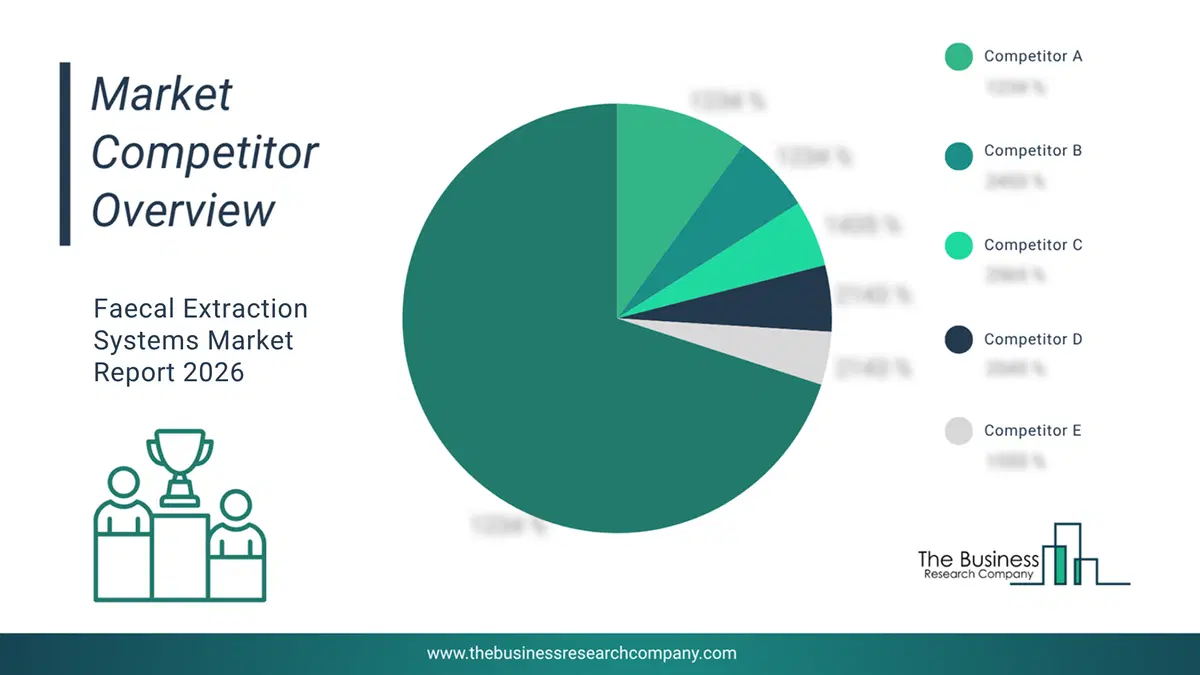
This chart is for illustrative purposes; the full report includes a detailed competitor analysis and comprehensive overview of the top 10 companies in the market.
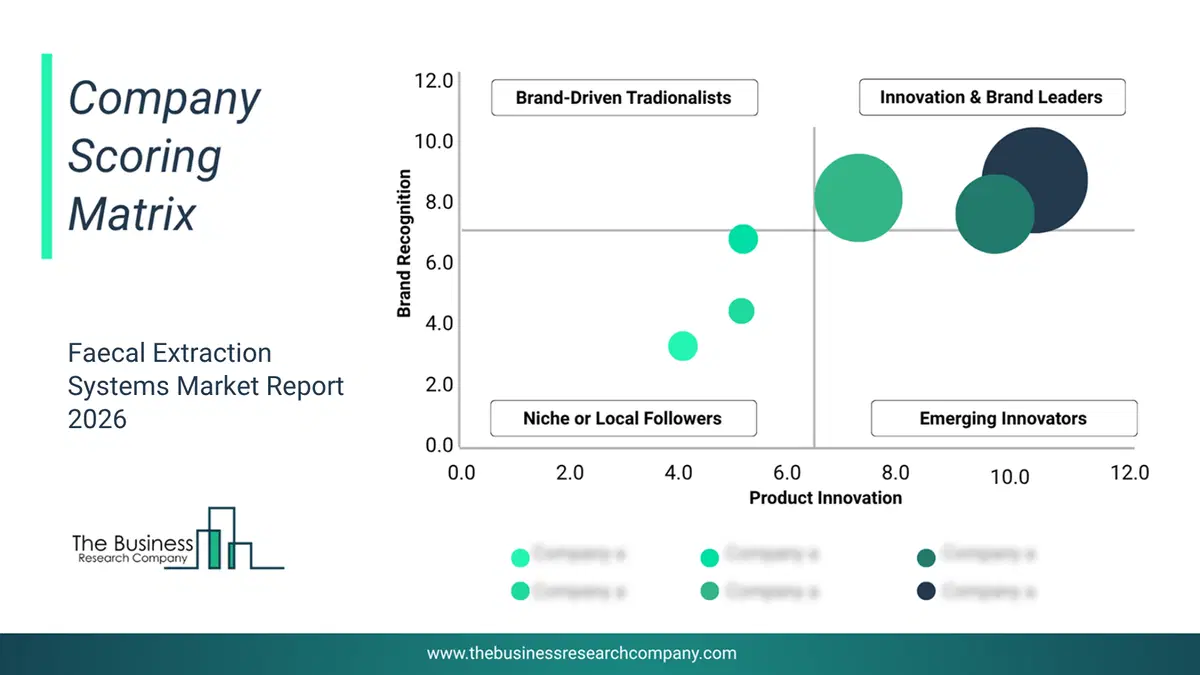
This chart maps companies by product innovation and brand strength, with bubble size indicating relative revenue, helping identify market leaders, challengers, and niche players. This is an illustrative chart; the full report provides a complete and accurate competitive analysis.
Global Faecal Extraction Systems Market Trends and Insights
Major companies operating in the faecal extraction system market are developing innovative products such as colorectal cancer (CRC) screening tests to meet larger customer bases, more sales, and increase revenue. Colorectal cancer (CRC) screening tests refer to diagnostic procedures designed to detect the presence of colorectal cancer or precancerous conditions in individuals who may not have symptoms. For instance, in November 2023, Guardant Health, a US-based diagnostics company, launched Shield, a blood-based colorectal cancer (CRC) screening test. Specifically, Shield assay distinguishes itself by identifying particular DNA characteristics that could signify the presence of cancer. Its efficacy in detecting colorectal cancer in average-risk individuals was substantiated through the ECLIPSE registrational study, involving over 20,000 participants in the United States.What Are Latest Mergers And Acquisitions In The Faecal Extraction Systems Market?
In March 2023, BGI Genomics Co., Ltd., a China-based healthcare technology company, partnered with Zentya to launch COLOTECT 1.0, a non-invasive fecal DNA test for colorectal cancer screening in Slovakia. With this partnership, BGI Genomics Co., Ltd. aimed to expand its colorectal cancer screening market presence in Slovakia and the wider Central/Eastern Europe region while increasing early-detection access through a locally distributed, non-invasive test. Zentya is a Slovakia-based healthcare solution provider that specializes in bringing the latest genetic-screening technologies to patients to help identify and facilitate timely treatment of genetic diseases.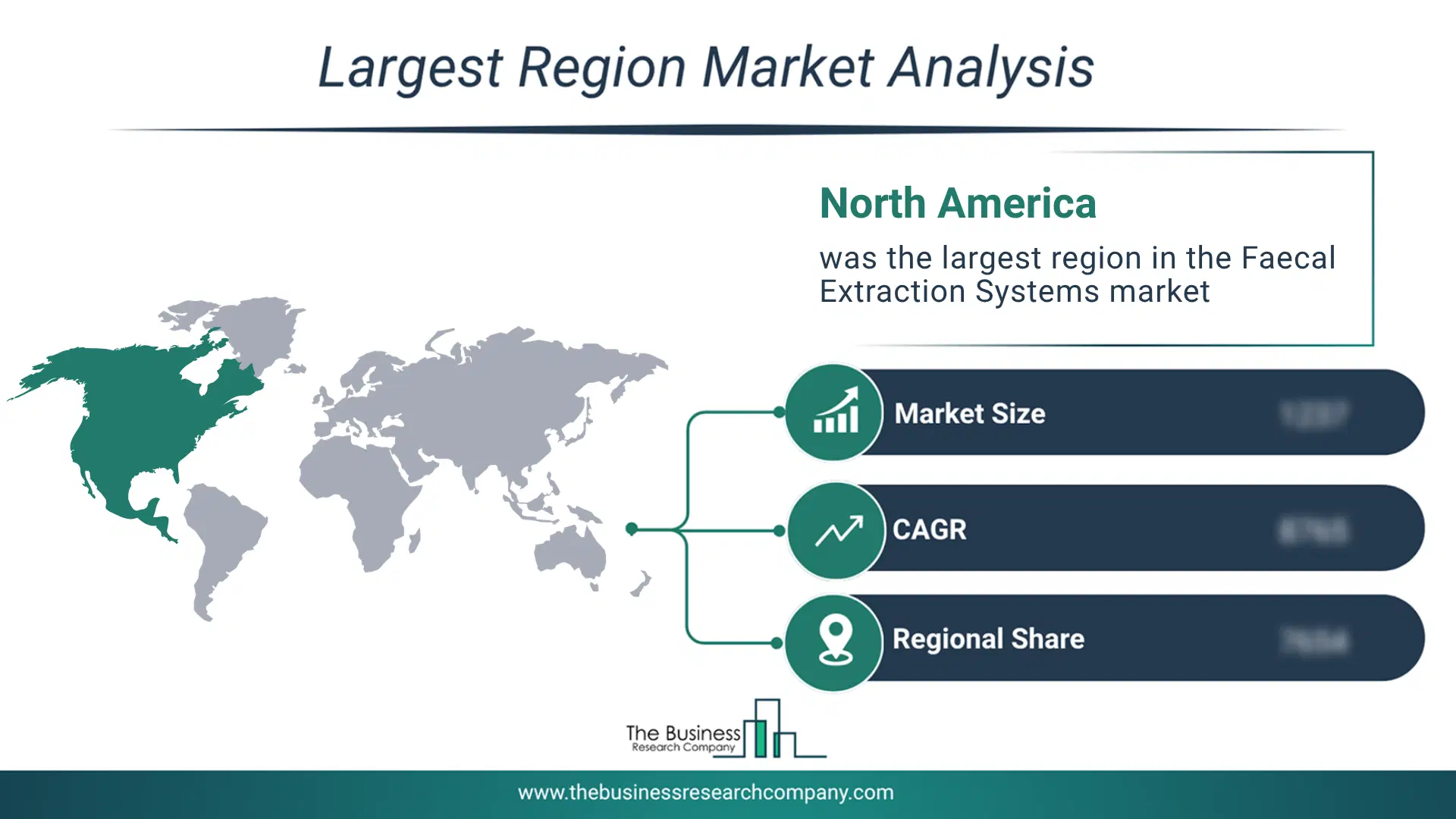
Regional Outlook
North America was the largest region in the faecal extraction systems market in 2025. The regions covered in this market report are Asia-Pacific, South East Asia, Western Europe, Eastern Europe, North America, South America, Middle East, Africa. The countries covered in this market report are Australia, Brazil, China, France, Germany, India, Indonesia, Japan, Taiwan, Russia, South Korea, UK, USA, Canada, Italy, SpainWhat Defines the Faecal Extraction Systems Market?
The faecal extraction system market consists of sales of stool pre-processing devices, and stool extraction devices. Values in this market are ‘factory gate’ values, that is the value of goods sold by the manufacturers or creators of the goods, whether to other entities (including downstream manufacturers, wholesalers, distributors, and retailers) or directly to end customers. The value of goods in this market includes related services sold by the creators of the goods.How is Market Value Defined and Measured?
The market value is defined as the revenues that enterprises gain from the sale of goods and/or services within the specified market and geography through sales, grants, or donations in terms of the currency (in USD unless otherwise specified). The revenues for a specified geography are consumption values that are revenues generated by organizations in the specified geography within the market, irrespective of where they are produced. It does not include revenues from resales along the supply chain, either further along the supply chain or as part of other products.
This chart presents market attractiveness based on a quantitative evaluation of growth, competition, strategic alignment, and risk, offering a clear view of opportunity areas for decision-making. This chart is for illustrative purposes; the full report contains the complete analysis.

This chart highlights the Total Addressable Market (TAM) by estimating the maximum revenue opportunity using an assumption-driven approach, supporting strategic planning and opportunity sizing across markets. The chart is illustrative; the full report provides a more comprehensive analysis.
What Key Data and Analysis Are Included in the Faecal Extraction Systems Market Report 2026?
The faecal extraction systems market research report is one of a series of new reports from The Business Research Company that provides market statistics, including industry global market size, regional shares, competitors with the market share, detailed market segments, market trends and opportunities, and any further data you may need to thrive in the faecal extraction systems industry. The market research report delivers a complete perspective of everything you need, with an in-depth analysis of the current and future state of the industry.Faecal Extraction Systems Market Report Forecast Analysis
| Report Attribute | Details |
|---|---|
| Market Size Value In 2026 | $1.79 billion |
| Revenue Forecast In 2030 | $2.21 billion |
| Growth Rate | CAGR of 5.4% from 2026 to 2030 |
| Base Year For Estimation | 2025 |
| Actual Estimates/Historical Data | 2020-2025 |
| Forecast Period | 2026 - 2030 |
| Market Representation | Revenue in USD Billion and CAGR from 2026 to 2030 |
| Segments Covered | Assay, Analysis Test, Indication, End-Use |
| Regional Scope | Asia-Pacific, Western Europe, Eastern Europe, North America, South America, Middle East, Africa |
| Country Scope | The countries covered in the report are Australia, Brazil, China, France, Germany, India, Indonesia, Japan, Taiwan, Russia, South Korea, UK, USA, Canada, Italy, Spain. |
| Key Companies Profiled | Alpha Laboratories Ltd., Arbor Assays, Buhlmann Laboratories AG, Calpro AS, DRG Instruments GmbH, Biohit Healthcare Ltd., Meridian Bioscience Inc., Quidel Corporation, DiaSorin SpA, Sekisui Diagnostics LLC, Abbott Laboratories, Roche Diagnostics Corporation, Randox Laboratories Ltd., Trinity Biotech plc, bioMérieux SA, Werfen SA, Mobidiag Oy, Hologic Inc., Siemens Healthineers, Beckman Coulter Inc., Thermo Fisher Scientific Inc. |
| Customization Scope | Request for Customization |
| Pricing And Purchase Options | Explore Purchase Options |