

Familial Amyloid Polyneuropathy Market Report 2026
Global Outlook – By Treatment (Medication, Gene Therapy, Supportive Care, Pain Management, Symptomatic Treatment), By Diagnosis (Genetic Testing, Biopsy, Imaging, Other Diagnosis), By Patient Age Group (Pediatric, Adult, Geriatric), By Distribution Channel (Hospital Pharmacies, Retail Pharmacies, Online Pharmacies, Specialty Pharmacies, Direct Sales), By End-User (Hospitals, Specialty Clinics, Research Institutes, Other End-Users) – Market Size, Trends, Strategies, and Forecast to 2030
Familial Amyloid Polyneuropathy Market Overview
• Familial Amyloid Polyneuropathy market size has reached to $1.65 billion in 2025 • Expected to grow to $2.43 billion in 2030 at a compound annual growth rate (CAGR) of 8% • Growth Driver: The Rising Focus On Gene Therapy Is Fueling The Growth Of The Market Due To Its Ability To Target And Correct Defective Genes For Lasting Familial Amyloid Polyneuropathy Treatment • Market Trend: Advancements In RNAi Therapeutics Transform Familial Amyloid Polyneuropathy Treatment • North America was the largest region in 2025 and Asia-Pacific is the fastest growing region.What Is Covered Under Familial Amyloid Polyneuropathy Market?
Familial amyloid polyneuropathy (FAP) is a rare genetic disorder caused by mutations in the transthyretin (TTR) gene, resulting in the accumulation of amyloid proteins in peripheral nerves and key organs. This progressive disease mainly targets the nervous system, leading to sensory, motor, and autonomic dysfunction. Early diagnosis and effective management aim to slow disease progression, alleviate symptoms, and enhance the patient’s quality of life. The main types of familial amyloid polyneuropathy treatment are medication, gene therapy, supportive care, pain management, and symptomatic treatment. Medication helps manage familial amyloid polyneuropathy by slowing disease progression, relieving symptoms, and improving patients' quality of life. It is diagnosed by various methods, including genetic testing, biopsy, imaging, and others, for different patient age groups, including pediatric, adult, and geriatric. It is distributed through several distribution channels, such as hospital pharmacies, retail pharmacies, online pharmacies, specialty pharmacies, and direct sales, and is used by several end-users, including hospitals, specialty clinics, research institutes, and others.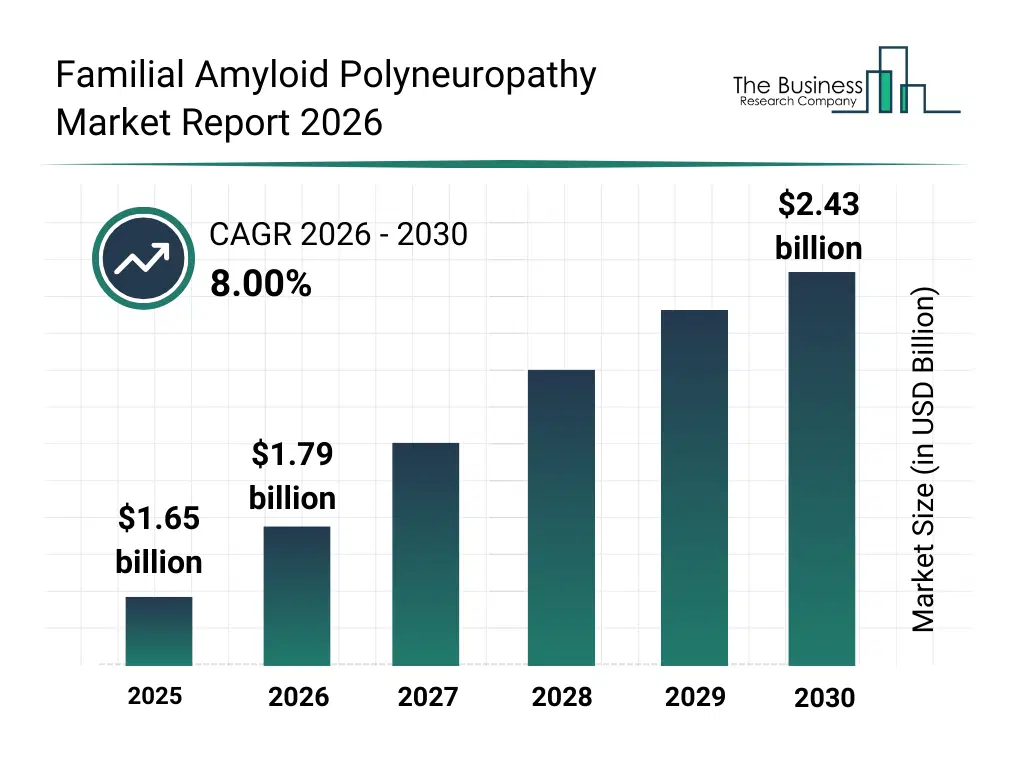
What Is The Familial Amyloid Polyneuropathy Market Size and Share 2026?
The familial amyloid polyneuropathy market size has grown strongly in recent years. It will grow from $1.65 billion in 2025 to $1.79 billion in 2026 at a compound annual growth rate (CAGR) of 8.3%. The growth in the historic period can be attributed to rare disease diagnosis, genetic disorder awareness, transplant medicine development, neurology research, supportive care adoption.What Is The Familial Amyloid Polyneuropathy Market Growth Forecast?
The familial amyloid polyneuropathy market size is expected to see strong growth in the next few years. It will grow to $2.43 billion in 2030 at a compound annual growth rate (CAGR) of 8.0%. The growth in the forecast period can be attributed to gene therapy innovation, early genetic testing, rare disease funding, precision medicine adoption, specialty pharmacy growth. Major trends in the forecast period include growing adoption of ttr stabilizers, expansion of gene silencing therapies, increased genetic screening, rising focus on rare disease treatment, growth of specialty care centers.
Global Familial Amyloid Polyneuropathy Market Segmentation
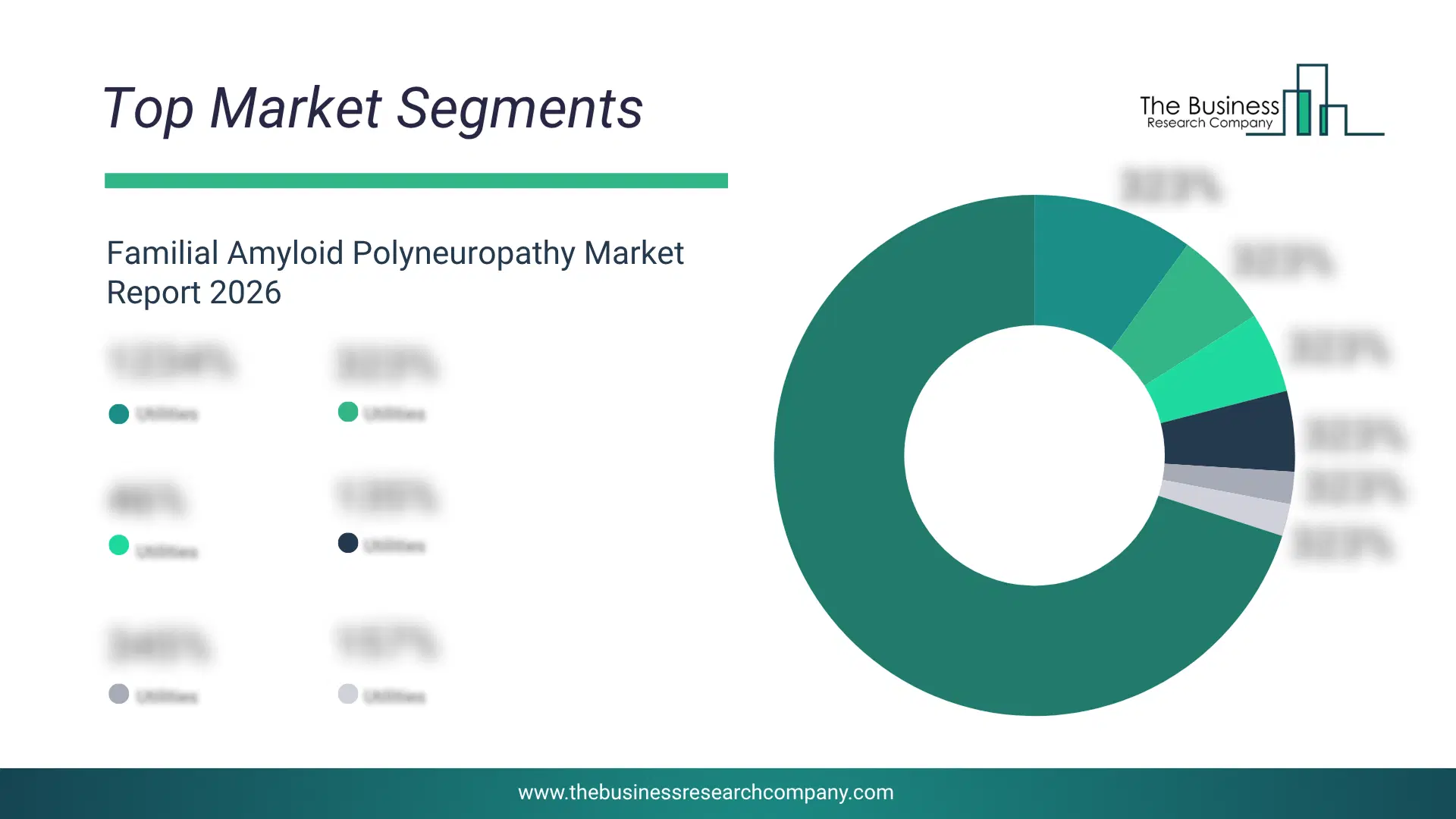
1) By Treatment: Medication, Gene Therapy, Supportive Care, Pain Management, Symptomatic Treatment 2) By Diagnosis: Genetic Testing, Biopsy, Imaging, Other Diagnosis 3) By Patient Age Group: Pediatric, Adult, Geriatric 4) By Distribution Channel: Hospital Pharmacies, Retail Pharmacies, Online Pharmacies, Specialty Pharmacies, Direct Sales 5) By End-User: Hospitals, Specialty Clinics, Research Institutes, Other End-Users Subsegments: 1) By Medication: Transthyretin (TTR) Stabilizers, Transthyretin (TTR) Gene Silencers, Tafamidis, Diflunisal, Patisiran 2) By Gene Therapy: Clustered Regularly Interspaced Short Palindromic Repeats (CRISPR) Or Cas9-Based Therapy, RNA Interference (RNAi) Therapy, Antisense Oligonucleotides (ASO) Therapy 3) By Supportive Care: Physical Therapy, Occupational Therapy, Nutritional Support, Psychological Counseling 4) By Pain Management: Non-Steroidal Anti-Inflammatory Drugs (NSAIDs), Opioids, Antidepressants, Anticonvulsants 5) By Symptomatic Treatment: Gastrointestinal Symptom Management, Cardiovascular Symptom Management, Autonomic Dysfunction Management, Orthostatic Hypotension TreatmentWhat Is The Driver Of The Familial Amyloid Polyneuropathy Market?
The rising focus on gene therapy is expected to propel the growth of the familial amyloid polyneuropathy market going forward. Gene therapy is a treatment method that modifies or replaces defective genes to address the underlying cause of diseases. Gene therapy is gaining momentum as it targets and fixes faulty genes, offering lasting or permanent cures rather than just symptom relief. Gene therapy for familial amyloid polyneuropathy focuses on correcting or silencing the defective transthyretin (TTR) gene to prevent harmful amyloid protein formation. This helps reduce amyloid deposits, slowing disease progression and preserving nerve function. For instance, in July 2023, according to the American Society of Gene & Cell Therapy (ASGCT), a US-based professional membership organization, and Citeline, a US-based provider of drugs and devices, at the end of the first quarter of 2023, there were 247 gene therapies in Phase II, this number rose by 5% to reach 260 by the end of the second quarter. Therefore, the rising focus on gene therapy is driving the growth of the familial amyloid polyneuropathy industry.Key Players In The Global Familial Amyloid Polyneuropathy Market
Major companies operating in the familial amyloid polyneuropathy market are Pfizer Inc., AstraZeneca plc, Novo Nordisk A/S, Regeneron Pharmaceuticals Inc., NYU Langone Hospitals, Alexion Pharmaceuticals Inc., Mount Sinai Medical Center, PTC Therapeutics Inc., Mayo Foundation for Medical Education and Research, Arcturus Therapeutics Inc., Precision BioSciences Inc., Creative Biolabs, Stanford Health Care, Duke University Health System, YolTech Therapeutics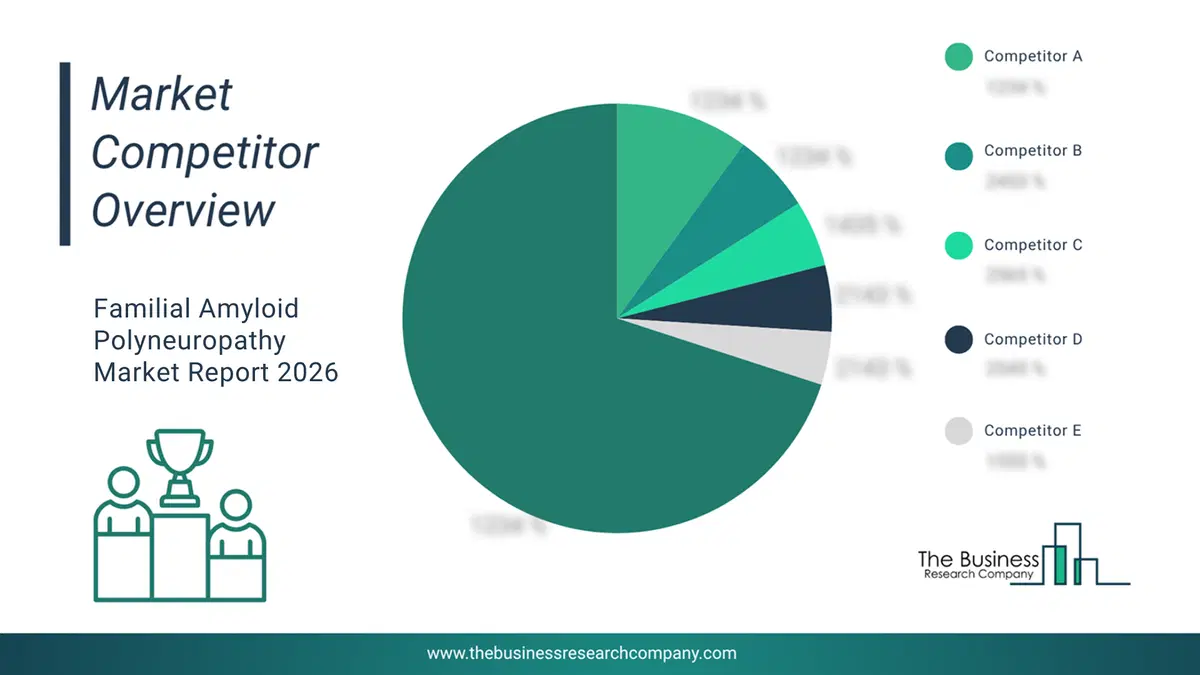
This chart is for illustrative purposes; the full report includes a detailed competitor analysis and comprehensive overview of the top 10 companies in the market.
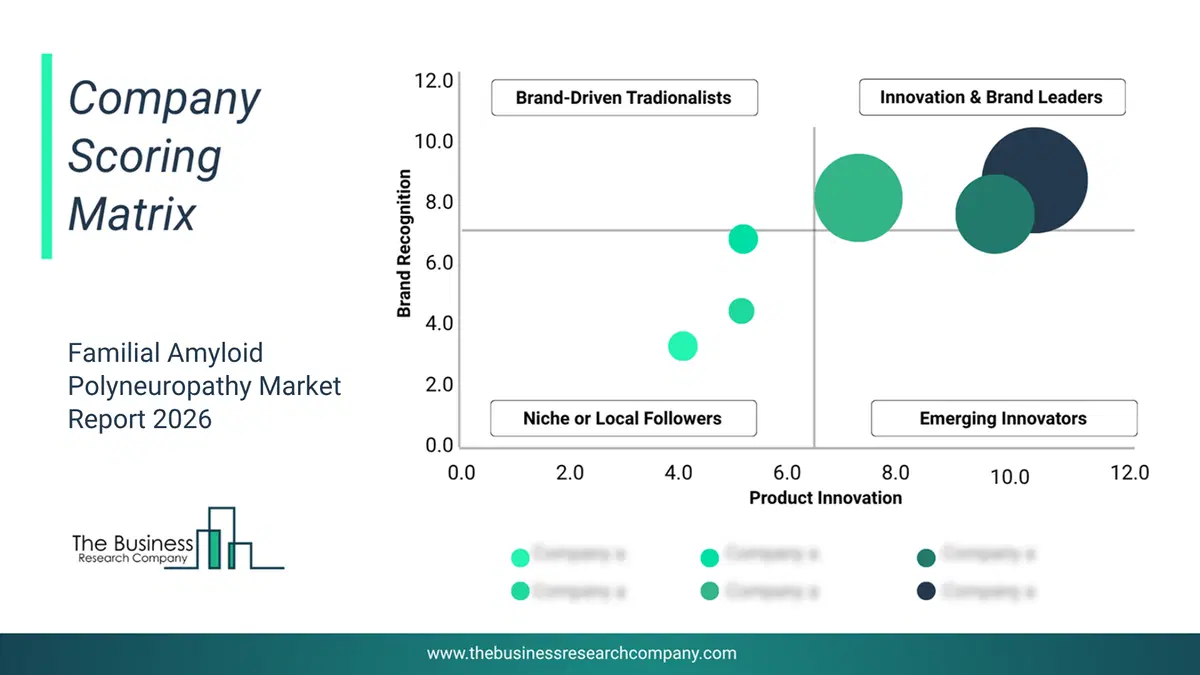
This chart maps companies by product innovation and brand strength, with bubble size indicating relative revenue, helping identify market leaders, challengers, and niche players. This is an illustrative chart; the full report provides a complete and accurate competitive analysis.
Global Familial Amyloid Polyneuropathy Market Trends and Insights
Major companies operating in the familial amyloid polyneuropathy market are focused on developing advanced treatment solutions, such as RNA interference (RNAi) therapeutics, to slow disease progression and improve patient outcomes. RNA interference (RNAi) therapeutics are advanced treatments that silence disease-causing genes by targeting their messenger RNA (mRNA). This approach blocks the production of harmful proteins, addressing genetic diseases at their source. For instance, in March 2025, Alnylam Pharmaceuticals, a US-based biopharmaceutical company, launched AMVUTTRA (vutrisiran), which received approval from the Food and Drug Administration (FDA) for treating cardiomyopathy caused by wild-type or hereditary transthyretin-mediated amyloidosis (ATTR-CM) in adults. It is administered as four subcutaneous doses per year and designed to treat both ATTR-CM and the polyneuropathy of hereditary transthyretin-mediated amyloidosis (hATTR-PN). By reducing the production of transthyretin (TTR) protein, the root cause of the disease, it significantly lowers cardiovascular mortality, hospitalizations, and urgent heart failure visits, as demonstrated in the HELIOS-B Phase 3 clinical trial.What Are Latest Mergers And Acquisitions In The Familial Amyloid Polyneuropathy Market?
In March 2023, Alnylam Pharmaceuticals, a US-based provider of RNAi therapeutics for treating hereditary transthyretin-mediated amyloidosis, partnered with Medison Pharma to expand access to innovative RNAi therapies worldwide. The partnership aims to accelerate and broaden global patient access to Alnylam’s RNAi therapeutics for rare and severe diseases by leveraging Medison Pharma’s unified commercialization platform across international regions. Medison Pharma is an Israel-based pharmaceutical company.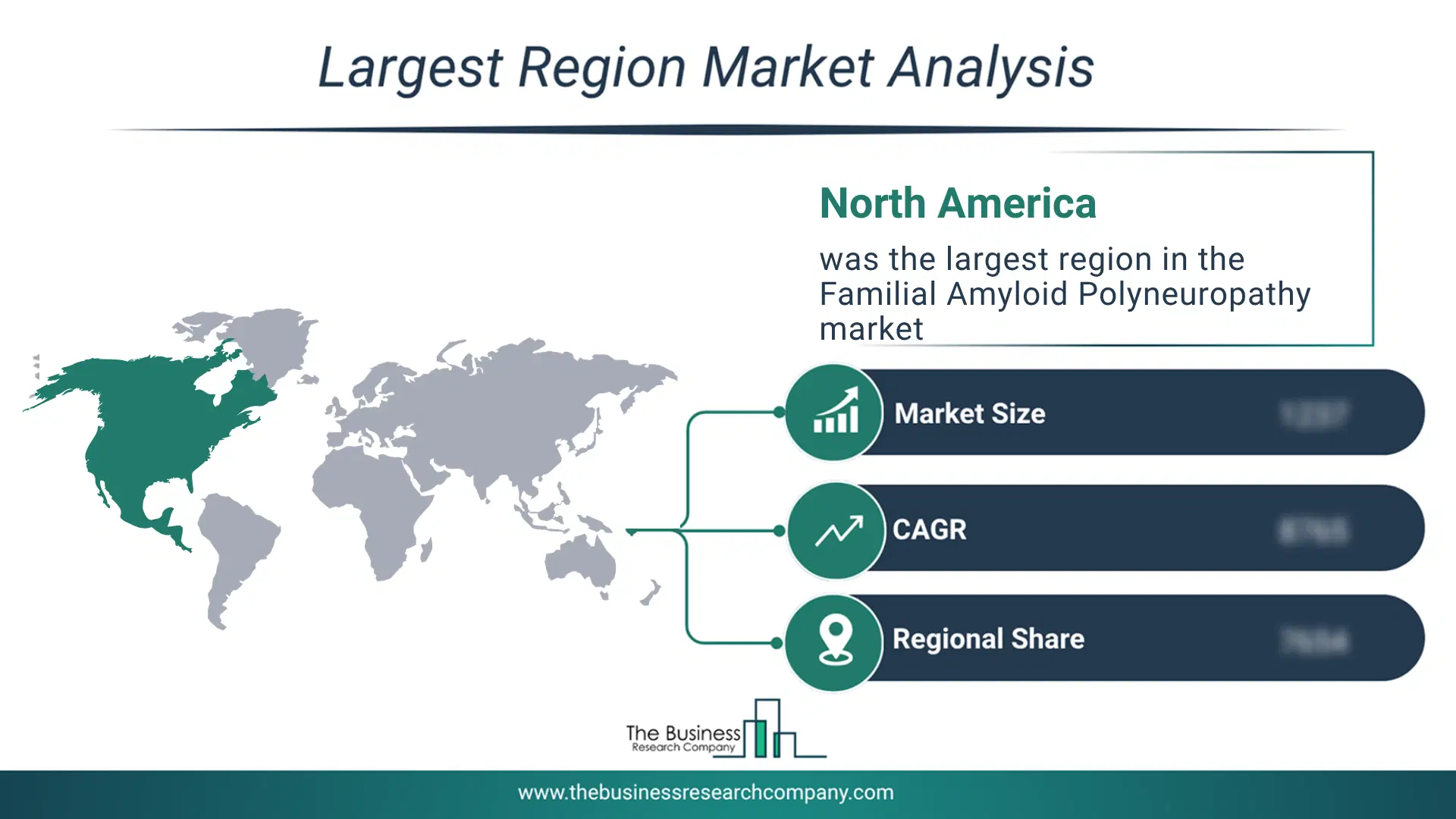
Regional Insights
North America was the largest region in the familial amyloid polyneuropathy market in 2025. Asia-Pacific is expected to be the fastest-growing region in the forecast period. The regions covered in this market report are Asia-Pacific, South East Asia, Western Europe, Eastern Europe, North America, South America, Middle East, Africa. The countries covered in this market report are Australia, Brazil, China, France, Germany, India, Indonesia, Japan, Taiwan, Russia, South Korea, UK, USA, Canada, Italy, Spain.What Defines the Familial Amyloid Polyneuropathy Market?
The familial amyloid polyneuropathy market consists of revenues earned by entities providing services such as disease monitoring, patient support and education, neurological assessment, and genetic counseling. The market value includes the value of related goods sold by the service provider or included within the service offering. The familial amyloid polyneuropathy market also includes sales of transthyretin stabilizers, diagnostic kits, and monitoring equipment. Values in this market are ‘factory gate’ values, that is, the value of goods sold by the manufacturers or creators of the goods, whether to other entities (including downstream manufacturers, wholesalers, distributors, and retailers) or directly to end customers. The value of goods in this market includes related services sold by the creators of the goods.How is Market Value Defined and Measured?
The market value is defined as the revenues that enterprises gain from the sale of goods and/or services within the specified market and geography through sales, grants, or donations in terms of the currency (in USD unless otherwise specified). The revenues for a specified geography are consumption values that are revenues generated by organizations in the specified geography within the market, irrespective of where they are produced. It does not include revenues from resales along the supply chain, either further along the supply chain or as part of other products.
This chart presents market attractiveness based on a quantitative evaluation of growth, competition, strategic alignment, and risk, offering a clear view of opportunity areas for decision-making. This chart is for illustrative purposes; the full report contains the complete analysis.

This chart highlights the Total Addressable Market (TAM) by estimating the maximum revenue opportunity using an assumption-driven approach, supporting strategic planning and opportunity sizing across markets. The chart is illustrative; the full report provides a more comprehensive analysis.
What Key Data and Analysis Are Included in the Familial Amyloid Polyneuropathy Market Report 2026?
The familial amyloid polyneuropathy market research report is one of a series of new reports from The Business Research Company that provides market statistics, including industry global market size, regional shares, competitors with the market share, detailed market segments, market trends and opportunities, and any further data you may need to thrive in the familial amyloid polyneuropathy industry. The market research report delivers a complete perspective of everything you need, with an in-depth analysis of the current and future state of the industry.Familial Amyloid Polyneuropathy Market Report Forecast Analysis
| Report Attribute | Details |
|---|---|
| Market Size Value In 2026 | $1.79 billion |
| Revenue Forecast In 2030 | $2.43 billion |
| Growth Rate | CAGR of 8.3% from 2026 to 2030 |
| Base Year For Estimation | 2025 |
| Actual Estimates/Historical Data | 2020-2025 |
| Forecast Period | 2026 - 2030 |
| Market Representation | Revenue in USD Billion and CAGR from 2026 to 2030 |
| Segments Covered | Treatment, Diagnosis, Patient Age Group, Distribution Channel, End-User |
| Regional Scope | Asia-Pacific, Western Europe, Eastern Europe, North America, South America, Middle East, Africa |
| Country Scope | The countries covered in the report are Australia, Brazil, China, France, Germany, India, Indonesia, Japan, Taiwan, Russia, South Korea, UK, USA, Canada, Italy, Spain. |
| Key Companies Profiled | Pfizer Inc., AstraZeneca plc, Novo Nordisk A/S, Regeneron Pharmaceuticals Inc., NYU Langone Hospitals, Alexion Pharmaceuticals Inc., Mount Sinai Medical Center, PTC Therapeutics Inc., Mayo Foundation for Medical Education and Research, Arcturus Therapeutics Inc., Precision BioSciences Inc., Creative Biolabs, Stanford Health Care, Duke University Health System, YolTech Therapeutics |
| Customization Scope | Request for Customization |
| Pricing And Purchase Options | Explore Purchase Options |