

Family-Building Benefits Insurance Market Report 2026
Global Outlook – By Product Type (Fertility Benefits, Adoption Assistance, Surrogacy Benefits, Maternity And Paternity Support, Other Product Types), By Coverage Type (Individual, Group Or Employer Sponsored), By Plan Type (Fully Insured, Self Insured, Hybrid Or Employer Funded), By Distribution Channel (Insurance Brokers, Direct Sales, Online Platforms, Other Distribution Channels), By End User (Corporates, Small And Medium Sized Enterprises, Individuals, Other End Users) – Market Size, Trends, Strategies, and Forecast to 2030
Family-Building Benefits Insurance Market Overview
• Family-Building Benefits Insurance market size has reached to $7.7 billion in 2025 • Expected to grow to $14.15 billion in 2030 at a compound annual growth rate (CAGR) of 13% • Growth Driver: Growing Adoption Of In Vitro Fertilization (IVF) Driving The Market Growth Due To Increasing Infertility Rates And Delayed Parenthood Trends • Market Trend: Technological Advancements In Employer-Funded Fertility And Family-Building Insurance Solutions • North America was the largest region in 2025 and Asia-Pacific is the fastest growing region.What Is Covered Under Family-Building Benefits Insurance Market?
Family-building benefits insurance refers to a category of insurance coverage designed to support individuals and families in managing the financial risks and costs associated with family planning and building activities. It provides structured financial protection and reimbursement mechanisms for services and procedures related to fertility treatment, reproductive health support, surrogacy arrangements, and adoption-related expenses. It helps improve access to family-building options by reducing the economic burden associated with medically assisted and non-traditional pathways to parenthood. The main product types of family-building benefits insurance include fertility benefits, adoption assistance, surrogacy benefits, maternity and paternity support, and other product types. Fertility benefits refer to insurance coverage that helps individuals or employees manage the costs associated with fertility evaluation, treatment, and assisted reproductive technologies. These plans are available as individual and group or employer sponsored coverage and are offered through fully insured, self insured, and hybrid or employer funded plan types. They are distributed through insurance brokers, direct sales, online platforms, and others and serving end users including corporates, small and medium sized enterprises, individuals, and others.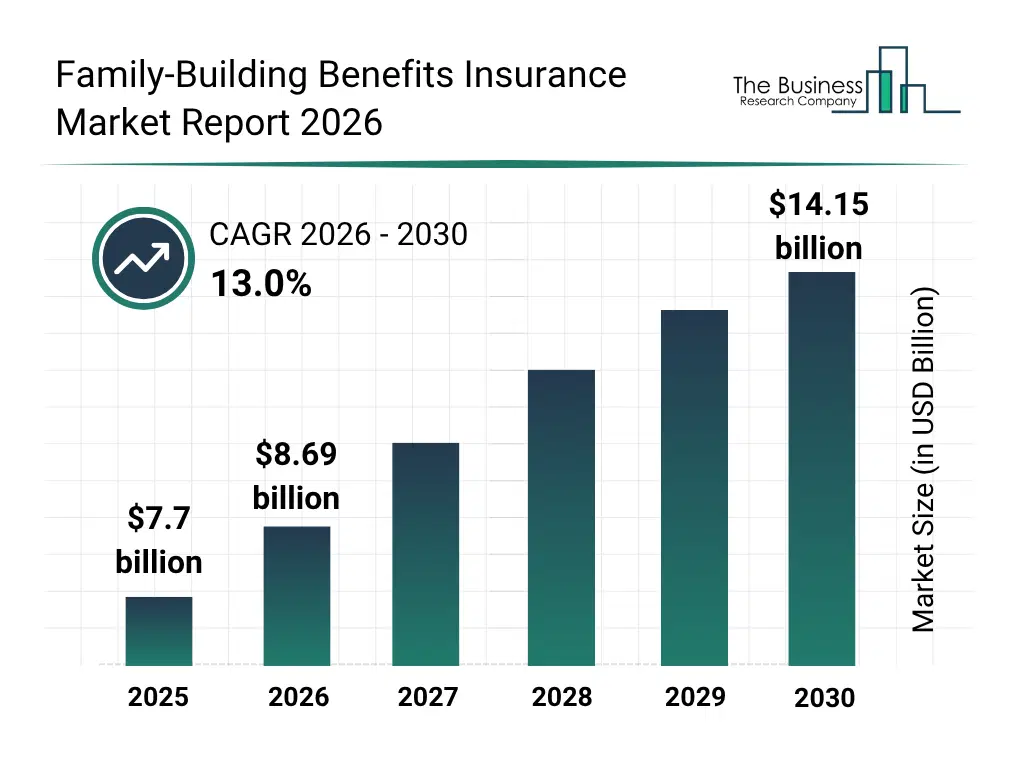
What Is The Family-Building Benefits Insurance Market Size and Share 2026?
The family-building benefits insurance market size has grown rapidly in recent years. It will grow from $7.7 billion in 2025 to $8.69 billion in 2026 at a compound annual growth rate (CAGR) of 12.7%. The growth in the historic period can be attributed to increasing infertility prevalence, growing employer focus on employee wellness benefits, rising awareness of assisted reproductive services, expanding adoption of family-friendly workplace policies, increasing demand for financial protection against fertility treatment costs.What Is The Family-Building Benefits Insurance Market Growth Forecast?
The family-building benefits insurance market size is expected to see rapid growth in the next few years. It will grow to $14.15 billion in 2030 at a compound annual growth rate (CAGR) of 13.0%. The growth in the forecast period can be attributed to growing demand for inclusive reproductive healthcare benefits, increasing employer competition through family-building benefits, rising expansion of fertility and surrogacy insurance coverage, growing investment in personalized family-building insurance products, increasing awareness of non-traditional pathways to parenthood. Major trends in the forecast period include increasing expansion of employer sponsored family-building benefit programs, growing coverage for fertility treatments and reproductive health services, rising adoption of surrogacy and adoption reimbursement benefits, increasing inclusion of maternity and paternity financial support plans, growing demand for comprehensive family planning insurance solutions.
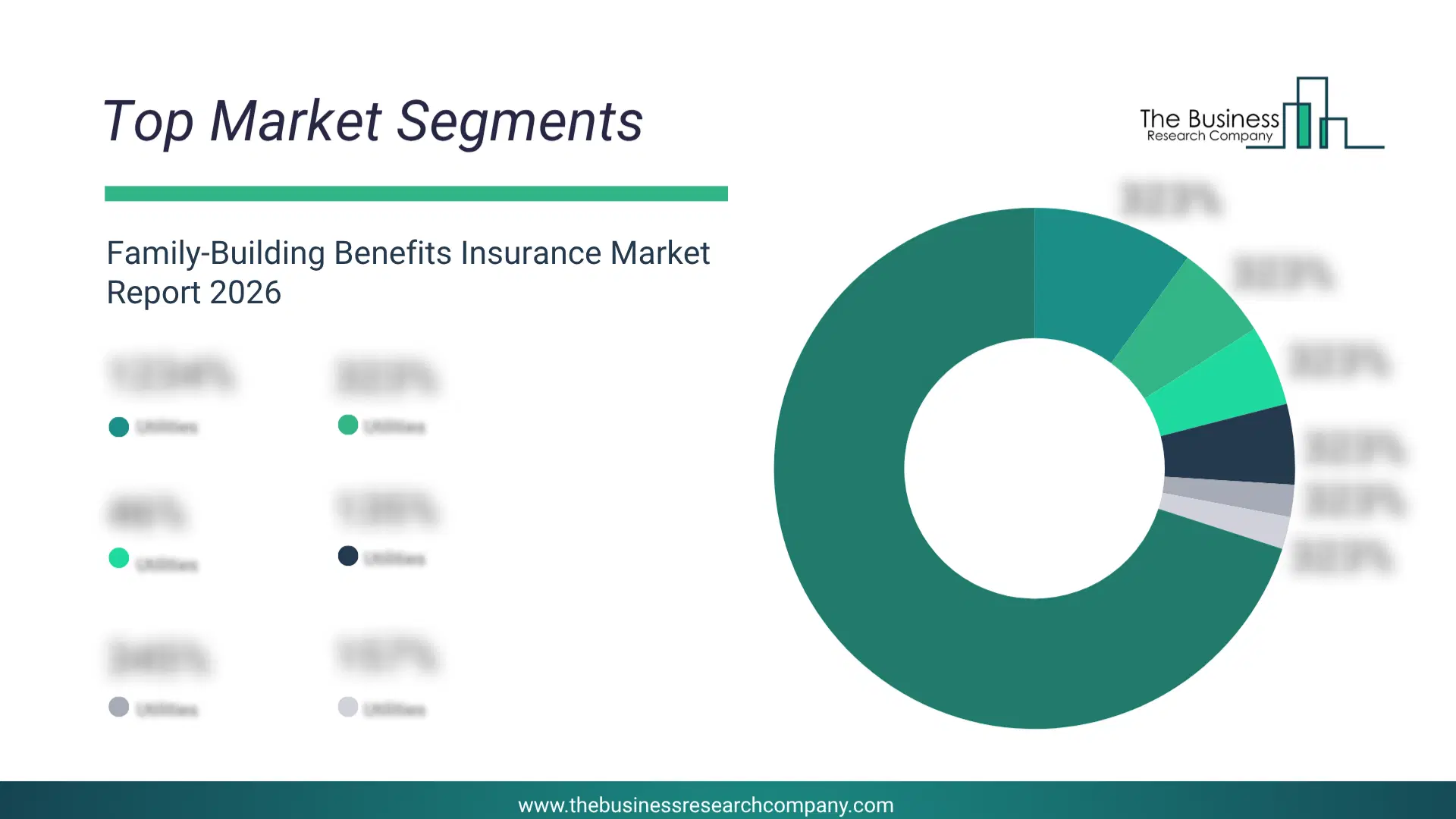
Global Family-Building Benefits Insurance Market Segmentation
2) By Coverage Type: Individual, Group Or Employer Sponsored 3) By Plan Type: Fully Insured, Self Insured, Hybrid Or Employer Funded 4) By Distribution Channel: Insurance Brokers, Direct Sales, Online Platforms, Other Distribution Channels 5) By End User: Corporates, Small And Medium Sized Enterprises, Individuals, Other End Users Subsegments: 1) By Fertility Benefits: In Vitro Fertilization Coverage Benefits, Fertility Preservation Benefits, Ovulation And Hormone Treatment Coverage, Fertility Counseling And Diagnostics Benefits 2) By Adoption Assistance: Domestic Adoption Assistance Benefits, International Adoption Assistance Benefits, Legal Expense Coverage For Adoption, Financial Reimbursement Adoption Benefits 3) By Surrogacy Benefits: Gestational Surrogacy Coverage Benefits, Traditional Surrogacy Support Benefits, Medical Expense Surrogacy Coverage, Legal And Agency Fee Surrogacy Benefits 4) By Maternity And Paternity Support: Maternity Leave Financial Benefits, Paternity Leave Compensation Benefits, Newborn Care And Wellness Benefits, Parental Counseling And Support Programs 5) By Other Product Types: Family Planning Wellness Benefits, Postpartum Mental Health Support Benefits, Childcare Assistance Benefits, Egg And Sperm Donation Support BenefitsWhat Is The Driver Of The Family-Building Benefits Insurance Market?
The growing adoption of in vitro fertilization (IVF) is expected to propel the growth of the family-building benefits insurance market going forward. In vitro fertilization (IVF) is a medical assisted reproductive technology in which an egg is fertilized by sperm outside the body in a laboratory setting and then implanted into the uterus to achieve pregnancy. The adoption of IVF is increasing due to rising infertility rates caused by factors such as lifestyle changes, stress, and underlying medical conditions, along with a growing trend of delayed parenthood as individuals prioritize education, careers, and financial stability before starting families. Family-building benefits insurance supports individuals and employees by covering or subsidizing the high costs associated with IVF treatments and other assisted reproductive services, improving access to fertility care and reducing the financial burden on prospective parents. For instance, in June 2025, according to the American Society for Reproductive Medicine, a US-based non-profit organization, IVF births increased in 2023 from 91,771 in 2022 to 95,860 in the latest reporting period, accounting for 2.6% of all births in the United States. Therefore, the growing adoption of in vitro fertilization (IVF) is driving the growth of the family-building benefits insurance industry.Key Players In The Global Family-Building Benefits Insurance Market
Major companies operating in the family-building benefits insurance market are Progyny Inc., Maven Clinic Co., Carrot Fertility Inc., Kindbody Inc., Stork Club Inc., Fertifa Ltd., Gaia Family Inc., ARC Fertility Inc., Future Family Inc.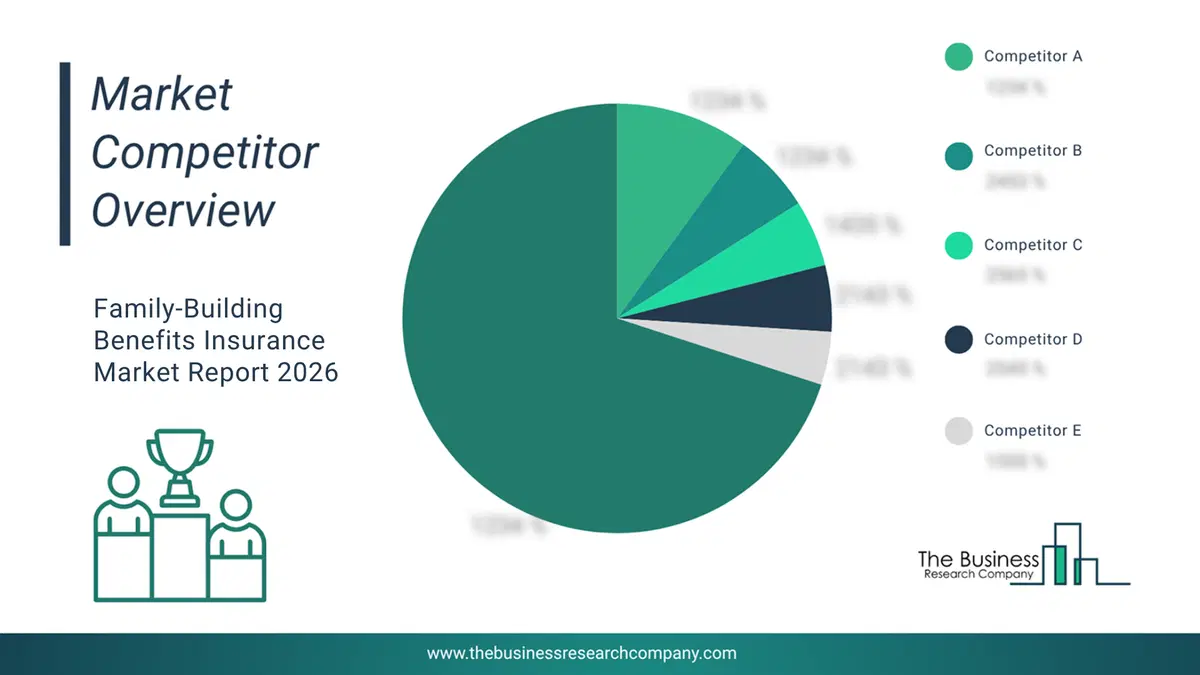
This chart is for illustrative purposes; the full report includes a detailed competitor analysis and comprehensive overview of the top 10 companies in the market.
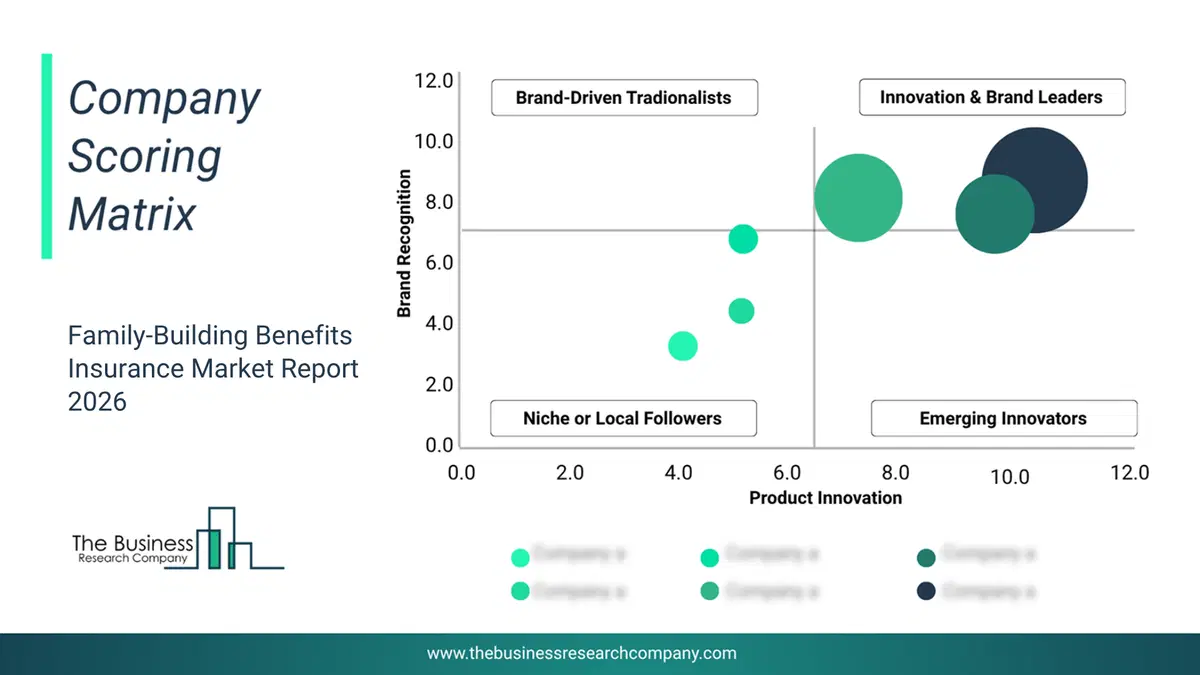
This chart maps companies by product innovation and brand strength, with bubble size indicating relative revenue, helping identify market leaders, challengers, and niche players. This is an illustrative chart; the full report provides a complete and accurate competitive analysis.
Global Family-Building Benefits Insurance Market Trends and Insights
Major companies operating in the family-building benefits insurance market are focusing on developing innovative solutions, such as integrated digital insurance platforms to improve access to fertility care, streamline benefit management, and enhance employee support for reproductive health services. Integrated digital insurance platforms are technology-driven systems that combine insurance coverage, claims processing, and healthcare support services in a single online ecosystem, helping users simplify benefit access, improve transparency, and receive faster, more coordinated support for fertility and family-building healthcare needs. For instance, in April 2026, EIR Försäkring, a Sweden-based insurance provider, in partnership with Onuava, a Germany-based healthcare consulting firm, launched Fertility+, a corporate health insurance solution for the German market focused on fertility and family-building benefits. The offering combines insurance coverage with digital health support to improve access to reproductive care and simplify employee benefit utilization through an integrated platform. It provides employer-funded coverage for treatments such as IVF, ICSI, insemination, and social egg freezing, along with financial subsidies and structured reimbursement options. In addition to medical coverage, the platform delivers personalized fertility guidance, webinars, psychological counseling, and access to reproductive health specialists, creating a holistic support ecosystem for employees. The solution is designed to be inclusive, with no waiting periods or medical underwriting, and coverage starting from day one, aiming to reduce financial barriers and improve access to fertility care in Germany’s partially covered healthcare system.What Are Latest Mergers And Acquisitions In The Family-Building Benefits Insurance Market?
In July 2023, Quantum Health, a US-based healthcare navigation and care coordination company, partnered with Progyny Inc. to expand access to fertility and family-building benefits for employer-sponsored healthcare programs. Through this collaboration, Quantum Health and Progyny aim to enhance employer benefits offerings by integrating fertility and reproductive health services into Quantum Health’s Comprehensive Care Solutions platform, improve employee access to specialized family-building support such as egg freezing and fertility treatments, and streamline care navigation through coordinated digital and concierge support services. Progyny Inc. is a US-based fertility benefits management company providing family-building benefits insurance.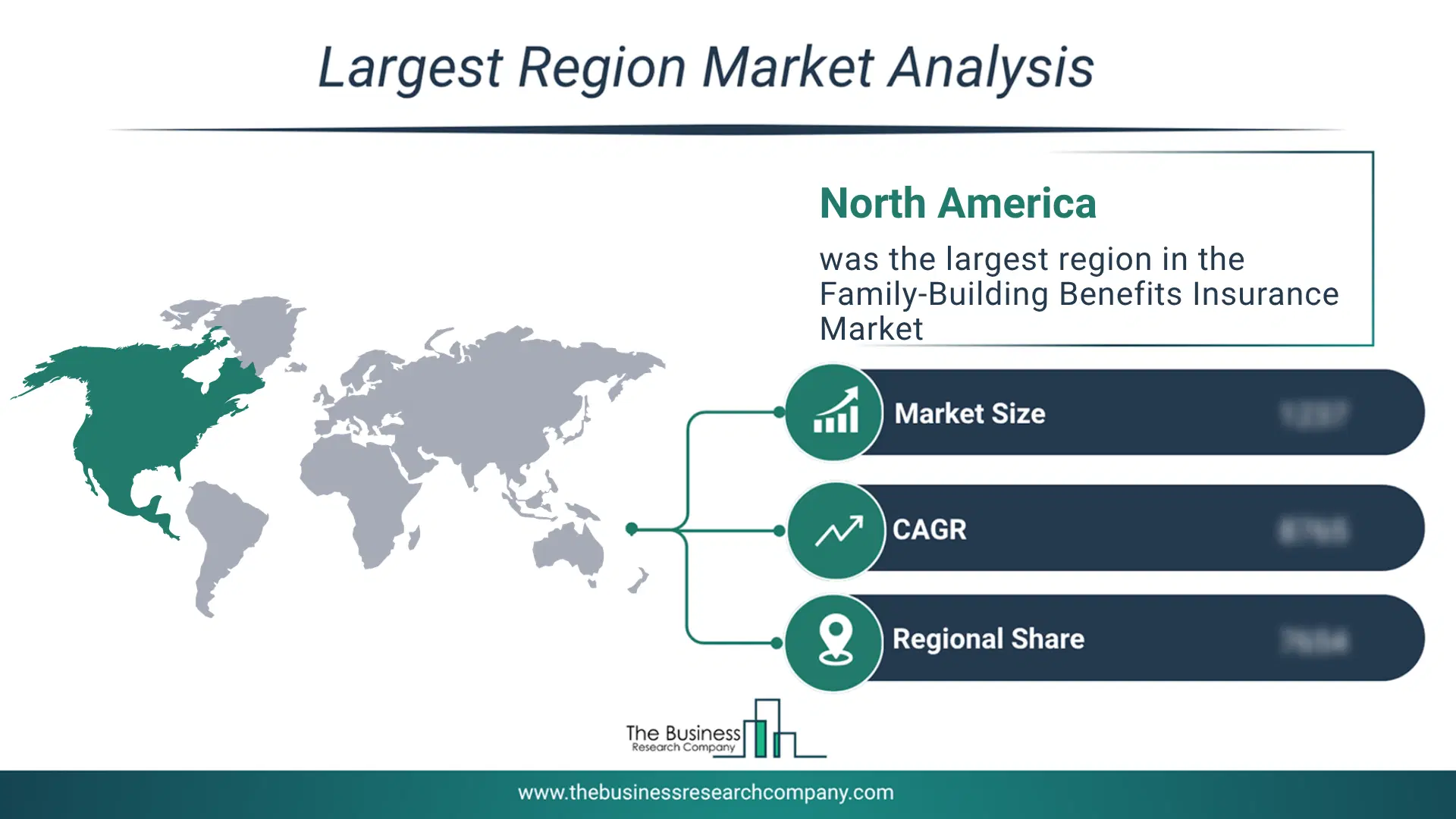
Regional Outlook/Insights
North America was the largest region in the family-building benefits insurance market in 2025. Asia-Pacific is expected to be the fastest-growing region in the forecast period. The regions covered in this market report are Asia-Pacific, South East Asia, Western Europe, Eastern Europe, North America, South America, Middle East, Africa. The countries covered in this market report are Australia, Brazil, China, France, Germany, India, Indonesia, Japan, Taiwan, Russia, South Korea, UK, USA, Canada, Italy, Spain.What Defines the Family-Building Benefits Insurance Market?
The family-building benefits insurance market includes revenues earned by entities by providing services such as fertility treatment coverage administration, in vitro fertilization (IVF) insurance plans, surrogacy cost coverage, adoption assistance benefits, reproductive health benefit design, claims processing, eligibility verification, employer-sponsored benefits program management, counseling support services, and policy underwriting for family-building coverage. The market value includes the value of related goods and services sold by the service provider or included within the service offering. Only goods and services traded between entities or sold to end consumers are included.How is Market Value Defined and Measured?
The market value is defined as the revenues that enterprises gain from the sale of goods and/or services within the specified market and geography through sales, grants, or donations in terms of the currency (in USD unless otherwise specified). The revenues for a specified geography are consumption values that are revenues generated by organizations in the specified geography within the market, irrespective of where they are produced. It does not include revenues from resales along the supply chain, either further along the supply chain or as part of other products.
This chart presents market attractiveness based on a quantitative evaluation of growth, competition, strategic alignment, and risk, offering a clear view of opportunity areas for decision-making. This chart is for illustrative purposes; the full report contains the complete analysis.

This chart highlights the Total Addressable Market (TAM) by estimating the maximum revenue opportunity using an assumption-driven approach, supporting strategic planning and opportunity sizing across markets. The chart is illustrative; the full report provides a more comprehensive analysis.
What Key Data and Analysis Are Included in the Family-Building Benefits Insurance Market Report 2026?
The family-building benefits insurance market research report is one of a series of new reports from The Business Research Company that provides family-building benefits insurance market statistics, including family-building benefits insurance industry global market size, regional shares, competitors with a family-building benefits insurance market share, detailed family-building benefits insurance market segments, market trends and opportunities, and any further data you may need to thrive in the family-building benefits insurance industry. This family-building benefits insurance market research report delivers a complete perspective of everything you need, with an in-depth analysis of the current and future scenario of the industry.Family-Building Benefits Insurance Market Report Forecast Analysis
| Report Attribute | Details |
|---|---|
| Market Size Value In 2026 | $8.69 billion |
| Revenue Forecast In 2030 | $14.15 billion |
| Growth Rate | CAGR of 13% from 2026 to 2030 |
| Base Year For Estimation | 2025 |
| Actual Estimates/Historical Data | 2020-2025 |
| Forecast Period | 2026 - 2030 |
| Market Representation | Revenue in USD Billion and CAGR from 2026 to 2030 |
| Segments Covered | Product Type, Coverage Type, Plan Type, Distribution Channel, End User |
| Regional Scope | Asia-Pacific, Western Europe, Eastern Europe, North America, South America, Middle East, Africa |
| Country Scope | The countries covered in the report are Australia, Brazil, China, France, Germany, India, Indonesia, Japan, Taiwan, Russia, South Korea, UK, USA, Canada, Italy, Spain. |
| Key Companies Profiled | Progyny Inc., Maven Clinic Co., Carrot Fertility Inc., Kindbody Inc., Stork Club Inc., Fertifa Ltd., Gaia Family Inc., ARC Fertility Inc., Future Family Inc. |
| Customization Scope | Request for Customization |
| Pricing And Purchase Options | Explore Purchase Options |