
Farber's Disease Market Report 2026
Global Outlook – By Type Of Farber's Disease (Classical Farber's Disease, Non-Classical Farber's Disease), By Treatment (Enzyme Replacement Therapy, Symptomatic Treatment, Gene Therapy, Bone Marrow Transplant, Supportive Care), By Clinical Symptoms (Joint Involvement And Deformities, Hearing Loss, Respiratory Distress, Dermatological Manifestations), By End-User (Hospitals, Specialty Clinics, Diagnostic Centers, Other End-Users) – Market Size, Trends, Strategies, and Forecast to 2030
Farber's Disease Market Overview
• Farber's Disease market size has reached to $1.98 billion in 2025 • Expected to grow to $2.61 billion in 2030 at a compound annual growth rate (CAGR) of 5.6% • Growth Driver: Surge In Prevalence Of Rare Genetic Diseases Fueling The Growth Of The Market Due To Improving Diagnostics And Increasing Awareness • North America was the largest region in 2025 and Asia-Pacific is the fastest growing region.What Is Covered Under Farber's Disease Market?
Farber's disease refers to a rare genetic disorder caused by a deficiency of the enzyme acid ceramidase, leading to the accumulation of fatty materials in the body's tissues. It is inherited in an autosomal recessive manner and typically presents in infancy. Symptoms include joint deformities, subcutaneous nodules, and progressive neurological decline. The disease is progressive and often life-threatening, requiring multidisciplinary care and symptom management. The main types of farber's disease include classical farber's disease and non-classical farber's disease. Classical farber's disease refers to the typical form of the disorder characterized by early-onset symptoms such as joint deformities, subcutaneous nodules, and progressive neurological decline. Treatments include enzyme replacement therapy, symptomatic treatment, gene therapy, bone marrow transplant, and supportive care for clinical symptoms such as joint involvement and deformities, hearing loss, respiratory distress, and dermatological manifestations. The key end-users are hospitals, specialty clinics, diagnostic centers, and others.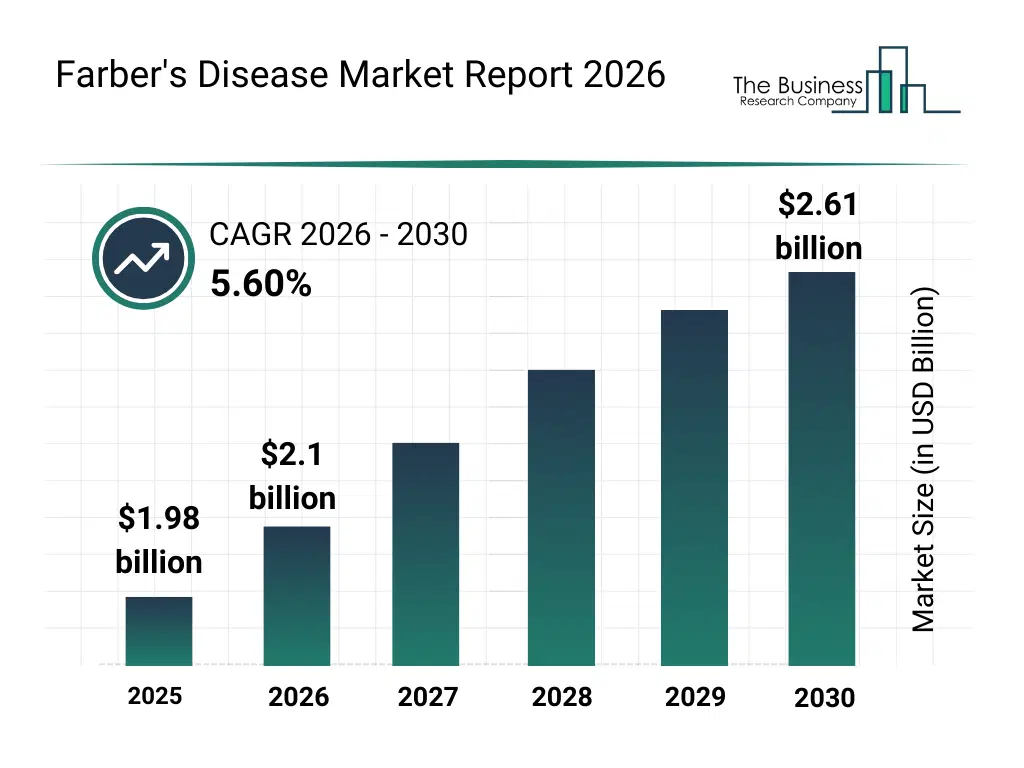
What Is The Farber's Disease Market Size and Share 2026?
The farber's disease market size has grown strongly in recent years. It will grow from $1.98 billion in 2025 to $2.1 billion in 2026 at a compound annual growth rate (CAGR) of 5.9%. The growth in the historic period can be attributed to rare disease identification, pediatric genetic testing, supportive care protocols, hospital specialization, research funding.What Is The Farber's Disease Market Growth Forecast?
The farber's disease market size is expected to see strong growth in the next few years. It will grow to $2.61 billion in 2030 at a compound annual growth rate (CAGR) of 5.6%. The growth in the forecast period can be attributed to gene therapy pipelines, orphan drug incentives, early diagnosis programs, rare disease registries, advanced genetic tools. Major trends in the forecast period include increased focus on rare pediatric disorders, expansion of gene therapy research, growing supportive care adoption, multidisciplinary treatment approaches, improved genetic diagnostics.
Global Farber's Disease Market Segmentation
1) By Type Of Farber's Disease: Classical Farber's Disease, Non-Classical Farber's Disease 2) By Treatment: Enzyme Replacement Therapy, Symptomatic Treatment, Gene Therapy, Bone Marrow Transplant, Supportive Care 3) By Clinical Symptoms: Joint Involvement And Deformities, Hearing Loss, Respiratory Distress, Dermatological Manifestations 4) By End-User: Hospitals, Specialty Clinics, Diagnostic Centers, Other End-Users Subsegments: 1) By Classical Farber's Disease: Type 1 Severe Infantile Form, Type 2 Intermediate Childhood Form, Type 3 Juvenile-Onset Form 2) By Non-Classical Farber's Disease: Type 4 Neurological Predominant Form, Type 5 Visceral Predominant Form, Type 6 Cardiopulmonary Involvement FormWhat Are The Drivers Of The Farber's Disease Market?
The growing prevalence of rare genetic diseases is expected to propel the growth of the farber’s disease market going forward. Rare genetic diseases refer to inherited disorders caused by mutations in a person’s DNA that affect a very small percentage of the population. The growing prevalence of rare genetic diseases is due to improved diagnostic technologies, which enable earlier and more accurate identification of these conditions that were previously undiagnosed or misdiagnosed. Farber’s disease is useful in meeting the growing prevalence of rare genetic diseases by serving as a model for developing targeted therapies and advancing research in enzyme replacement treatments for ultra-rare conditions. For instance, in February 2023, according to the European Commission (EC), a Belgium-based government entity, up to 36 million people in the European Union live with a rare disease; there are more than 6,000 distinct rare diseases in the EU, and around 80% of rare diseases are of genetic origin. Therefore, the growing prevalence of rare genetic diseases is driving the growth of the farber’s disease market. The increasing investment in clinical trials is expected to propel the growth of the farber’s disease market going forward. Clinical trials refer to research studies conducted in humans to evaluate the safety, effectiveness, and outcomes of medical interventions such as drugs, treatments, or devices. The increasing investment in clinical trials is due to the growing demand for innovative treatments, which is driven by advancements in medical science, personalized medicine, and the urgent need to address unmet healthcare needs. Farber’s disease helps address the increasing investment in clinical trials by highlighting the urgent need for research into rare and underserved genetic disorders. For instance, in October 2024, according to Citeline, a US-based pharma intelligence solutions provider, TrialTrove captured 9,959 Phase I–III clinical trials with a 2024 start date investigating at least one drug, a 9.4% increase from 2023. Therefore, the increasing investment in clinical trials is driving the growth of the farber’s disease market. The rising adoption of home-care and telehealth models is expected to propel the growth of the farber's disease market going forward. Home-care and telehealth models refer to healthcare delivery systems that provide medical services, monitoring, and treatment to patients in their residences through in-person nursing visits or remote digital consultations, reducing the need for hospital-based care. The increasing adoption of home-care and telehealth models is driven by healthcare system efforts to reduce costs and improve patient convenience following pandemic-era digital health expansions, as healthcare providers and insurers recognize that delivering care in home settings and through virtual platforms can lower facility expenses while maintaining quality outcomes for patients with chronic and rare conditions. Rising home-care and telehealth adoption directly supports expanded access to specialized treatments and regular monitoring for rare disease patients who require continuous medical oversight but may face challenges traveling to distant specialty centers for frequent consultations. For instance, in April 2023, according to FAIR Health Inc., a US-based non-profit organization, in 2023, national telehealth use increased by 7.3%, rising from 5.5% of medical claim lines in December 2022 to 5.9% in January 2023. Therefore, the rising adoption of home-care and telehealth models is driving the growth of the Farber's disease industry.Key Players In The Global Farber's Disease Market
Major companies operating in the farber's disease market are National Institutes of Health (NIH), U.S. National Institute of Neurological Disorders and Stroke (NINDS), Mount Sinai Icahn School of Medicine, Cincinnati Children’s Hospital Medical Center, University of Pennsylvania Gene Therapy Program, Seattle Children’s Research Institute, Genethon (AFM-Téléthon), Sarepta Therapeutics Inc., REGENXBIO Inc., Abeona Therapeutics Inc., Rocket Pharmaceuticals Inc., Passage Bio Inc., Spark Therapeutics Inc., Takeda Rare Disease Research, Orchard Therapeutics plc, Avrobio Inc., bluebird bio Inc., JCR Pharmaceuticals Co. Ltd., Protalix BioTherapeutics Inc., Ultragenyx Pharmaceutical Inc., BioMarin Pharmaceutical Inc., Amicus Therapeutics Inc.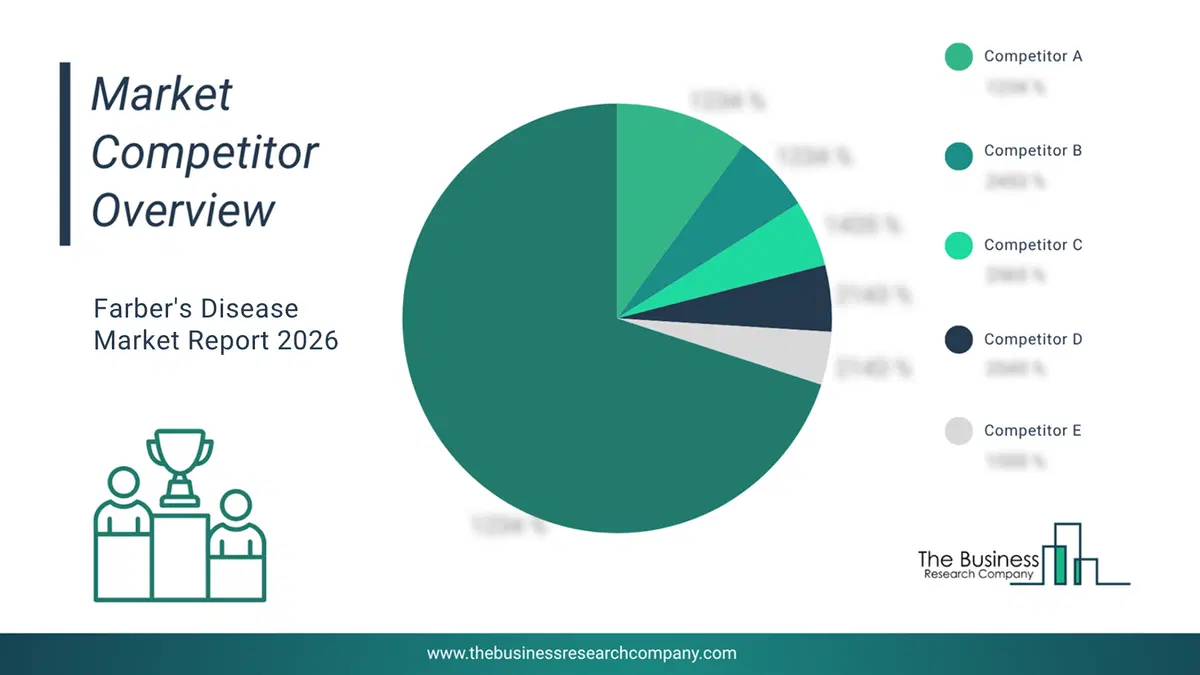
This chart is for illustrative purposes; the full report includes a detailed competitor analysis and comprehensive overview of the top 10 companies in the market.
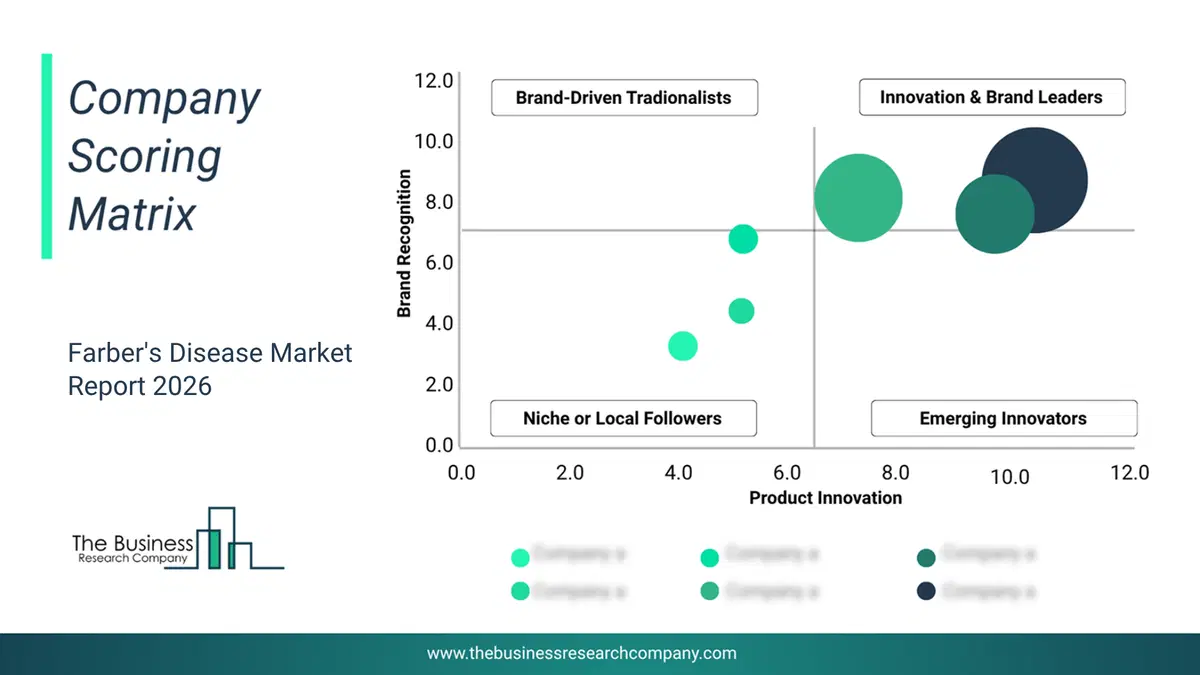
This chart maps companies by product innovation and brand strength, with bubble size indicating relative revenue, helping identify market leaders, challengers, and niche players. This is an illustrative chart; the full report provides a complete and accurate competitive analysis.
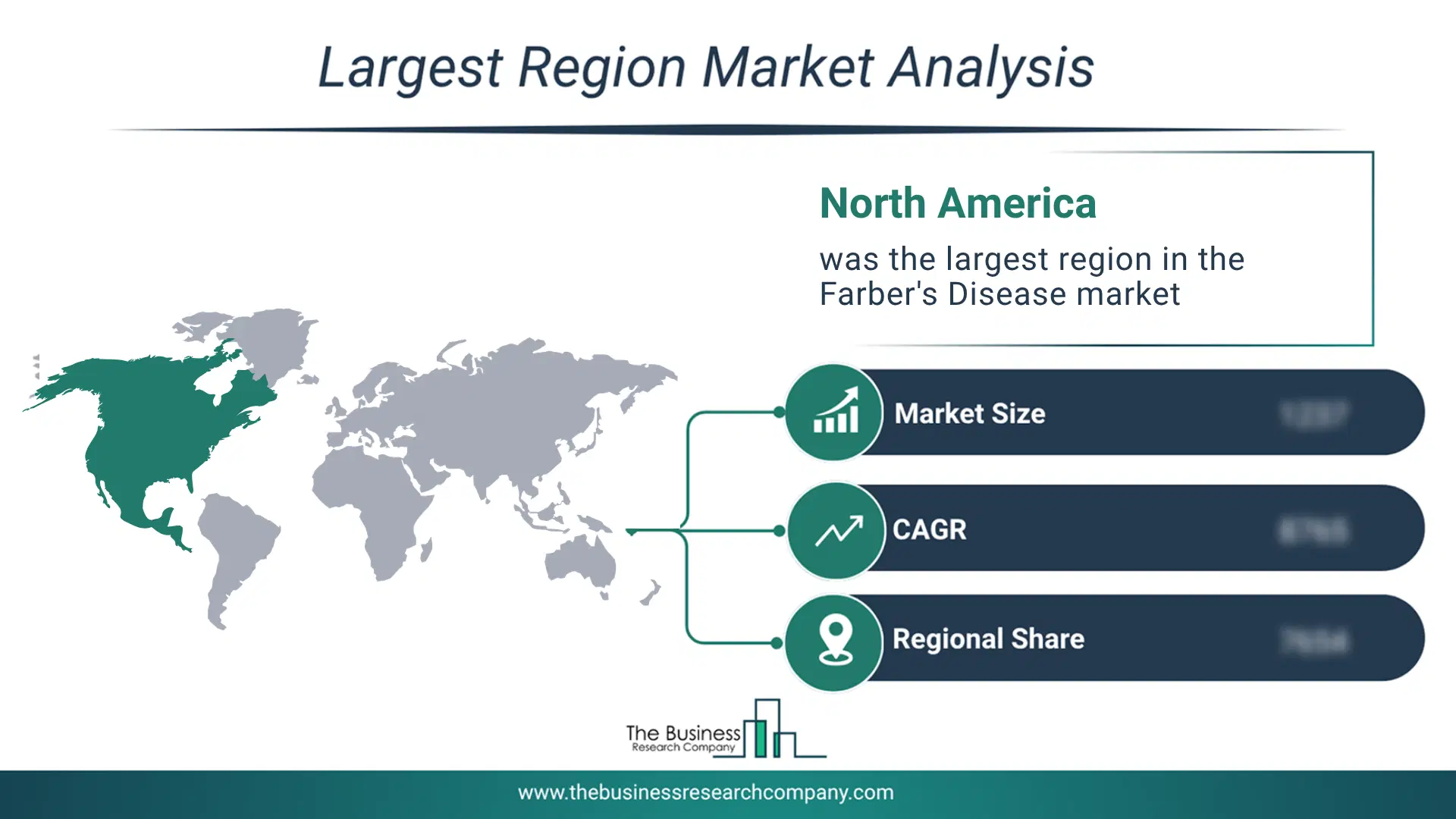
Regional Insights
North America was the largest region in the farber's disease market in 2025. Asia-Pacific is expected to be the fastest-growing region in the forecast period. The regions covered in the farber's disease market report are Asia-Pacific, South East Asia, Western Europe, Eastern Europe, North America, South America, Middle East, Africa. The countries covered in the farber's disease market report are Australia, Brazil, China, France, Germany, India, Indonesia, Japan, Taiwan, Russia, South Korea, UK, USA, Canada, Italy, Spain.What Defines the Farber's Disease Market?
The farber's disease market includes revenues earned by rehabilitation services, nutritional support services, and clinical trial access services. The market value includes the value of related goods sold by the service provider or included within the service offering. Only goods and services traded between entities or sold to end consumers are included.How is Market Value Defined and Measured?
The market value is defined as the revenues that enterprises gain from the sale of goods and/or services within the specified market and geography through sales, grants, or donations in terms of the currency (in USD unless otherwise specified). The revenues for a specified geography are consumption values that are revenues generated by organizations in the specified geography within the market, irrespective of where they are produced. It does not include revenues from resales along the supply chain, either further along the supply chain or as part of other products.
This chart presents market attractiveness based on a quantitative evaluation of growth, competition, strategic alignment, and risk, offering a clear view of opportunity areas for decision-making. This chart is for illustrative purposes; the full report contains the complete analysis.

This chart highlights the Total Addressable Market (TAM) by estimating the maximum revenue opportunity using an assumption-driven approach, supporting strategic planning and opportunity sizing across markets. The chart is illustrative; the full report provides a more comprehensive analysis.
What Key Data and Analysis Are Included in the Farber's Disease Market Report 2026?
The farber's disease market research report is one of a series of new reports from The Business Research Company that provides market statistics, including industry global market size, regional shares, competitors with the market share, detailed market segments, market trends and opportunities, and any further data you may need to thrive in the farber's disease industry. The market research report delivers a complete perspective of everything you need, with an in-depth analysis of the current and future state of the industry.Farber's Disease Market Report Forecast Analysis
| Report Attribute | Details |
|---|---|
| Market Size Value In 2026 | $2.1 billion |
| Revenue Forecast In 2030 | $2.61 billion |
| Growth Rate | CAGR of 5.9% from 2026 to 2030 |
| Base Year For Estimation | 2025 |
| Actual Estimates/Historical Data | 2020-2025 |
| Forecast Period | 2026 - 2030 |
| Market Representation | Revenue in USD Billion and CAGR from 2026 to 2030 |
| Segments Covered | Type Of Farber's Disease, Treatment, Clinical Symptoms, End-User |
| Regional Scope | Asia-Pacific, Western Europe, Eastern Europe, North America, South America, Middle East, Africa |
| Country Scope | The countries covered in the report are Australia, Brazil, China, France, Germany, India, Indonesia, Japan, Taiwan, Russia, South Korea, UK, USA, Canada, Italy, Spain. |
| Key Companies Profiled | National Institutes of Health (NIH), U.S. National Institute of Neurological Disorders and Stroke (NINDS), Mount Sinai Icahn School of Medicine, Cincinnati Children’s Hospital Medical Center, University of Pennsylvania Gene Therapy Program, Seattle Children’s Research Institute, Genethon (AFM-Téléthon), Sarepta Therapeutics Inc., REGENXBIO Inc., Abeona Therapeutics Inc., Rocket Pharmaceuticals Inc., Passage Bio Inc., Spark Therapeutics Inc., Takeda Rare Disease Research, Orchard Therapeutics plc, Avrobio Inc., bluebird bio Inc., JCR Pharmaceuticals Co. Ltd., Protalix BioTherapeutics Inc., Ultragenyx Pharmaceutical Inc., BioMarin Pharmaceutical Inc., Amicus Therapeutics Inc. |
| Customization Scope | Request for Customization |
| Pricing And Purchase Options | Explore Purchase Options |