
Fatty Acid Oxidation Disorders (FAODs) Market Report 2026
Global Outlook – By Type (Long Chain, Short Chain), By Drug Type (Levocarnitine, Dextrose, Riboflavin, Other Drug Types), By Route of Administration (Oral, Intravenous), By Distribution Channel (Hospital Pharmacies, Retail Pharmacies, Drug Stores, Online Stores), By End User (Hospitals, Clinics, Pharmaceutical Companies) - Market Size, Trends, Strategies, and Forecast to 2030
Fatty Acid Oxidation Disorders (FAODs) Market Overview
• Fatty Acid Oxidation Disorders (FAODs) market size has reached to $10.23 billion in 2025 • Expected to grow to $14.69 billion in 2030 at a compound annual growth rate (CAGR) of 7.5% • Growth Driver: Rising Demand For Gene Therapy Driving The Growth Of The Market Due To Advancements In Biotechnology And Targeted Treatments • Market Trend: Innovative Approaches In Regulating Lipid Metabolism Through PPAR-δ • Asia-Pacific was the largest region in 2025.What Is Covered Under Fatty Acid Oxidation Disorders (FAODs) Market?
Fatty acid oxidation disorders (FAODs) are a group of rare genetic metabolic disorders that impair the body’s ability to convert fats into energy due to a deficiency or absence of specific enzymes required for fatty acid breakdown. Fatty acid oxidation disorders lead to an accumulation of fatty acids in the body, which can cause severe energy deficiency, hypoglycemia, muscle weakness, and potential organ damage, particularly during periods of fasting or illness. The main types of fatty acid oxidation disorders (FAODs) are long-chain and short-chain disorders. Long-chain fatty acid oxidation disorders (LC-FAODs) are metabolic conditions in which the body cannot break down long-chain fatty acids for energy, leading to energy deficiencies and metabolic dysfunction. Treatments include drugs such as levocarnitine, dextrose, riboflavin, and other drug types, which are administered through various routes, including oral and intravenous. These drugs are distributed through hospital pharmacies, retail pharmacies, drug stores, and online stores and are used by various end users, including hospitals, clinics, and pharmaceutical companies.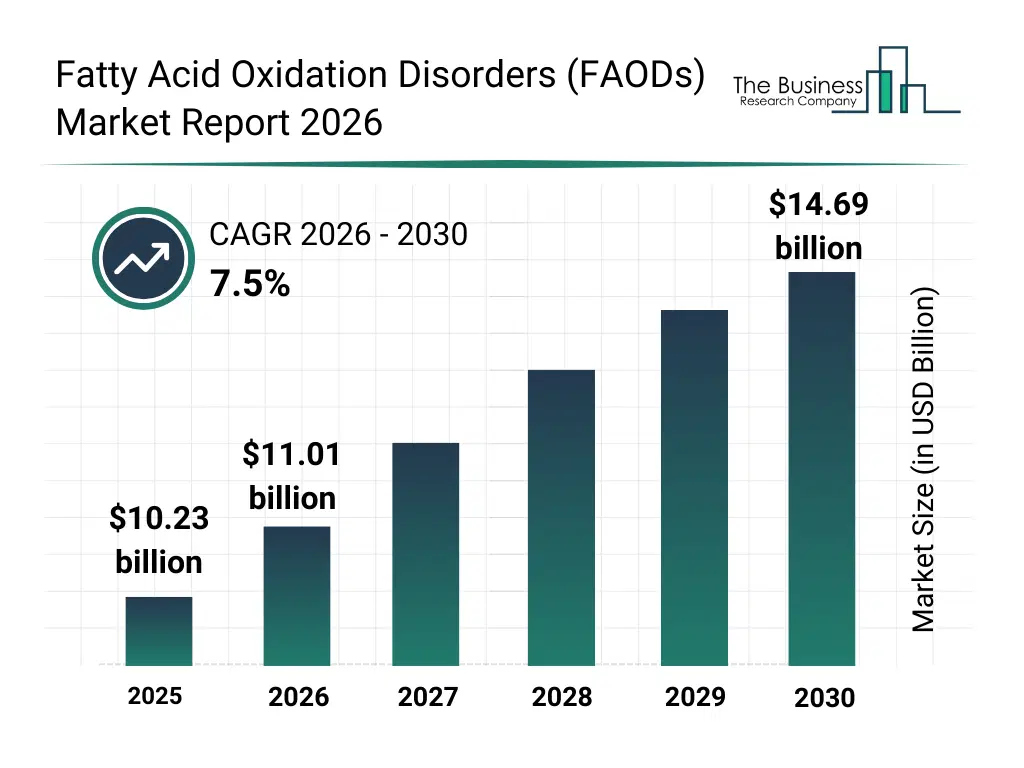
What Is The Fatty Acid Oxidation Disorders (FAODs) Market Size and Share 2026?
The fatty acid oxidation disorders (faods) market size has grown strongly in recent years. It will grow from $10.23 billion in 2025 to $11.01 billion in 2026 at a compound annual growth rate (CAGR) of 7.6%. The growth in the historic period can be attributed to implementation of neonatal screening initiatives, increased diagnosis of inherited metabolic disorders, improved clinical awareness, expansion of hospital-based metabolic clinics, availability of supportive drug therapies.What Is The Fatty Acid Oxidation Disorders (FAODs) Market Growth Forecast?
The fatty acid oxidation disorders (faods) market size is expected to see strong growth in the next few years. It will grow to $14.69 billion in 2030 at a compound annual growth rate (CAGR) of 7.5%. The growth in the forecast period can be attributed to advancements in enzyme replacement therapies, expansion of genetic research, growth in personalized nutrition plans, improved rare disease reimbursement policies, increased government support for early screening. Major trends in the forecast period include rising adoption of newborn screening programs, increased focus on early metabolic disorder diagnosis, growing use of nutritional and dietary management, expansion of rare disease treatment awareness, improved access to metabolic disorder therapies.
Global Fatty Acid Oxidation Disorders (FAODs) Market Segmentation
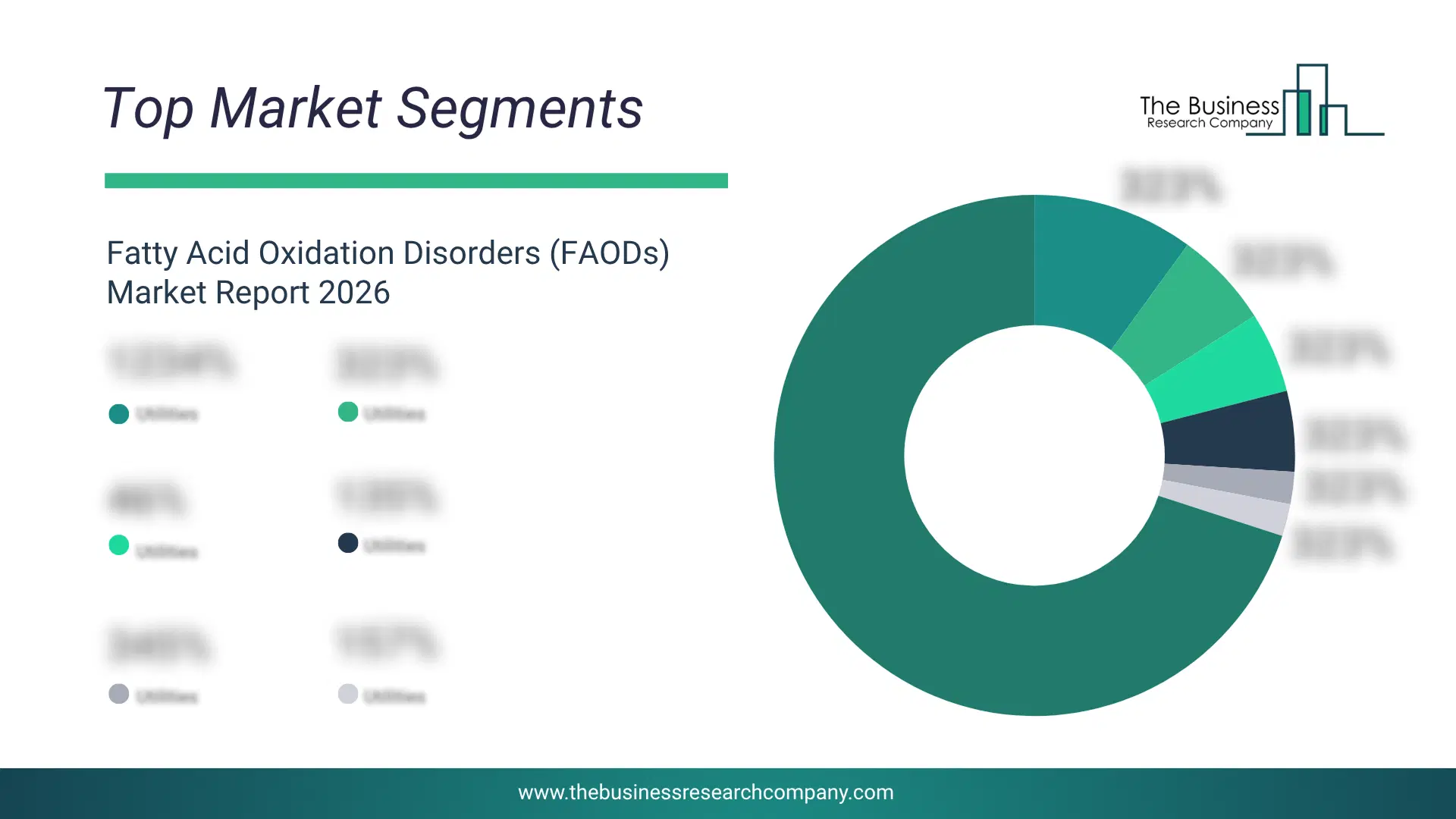
1) By Type: Long Chain, Short Chain 2) By Drug Type: Levocarnitine, Dextrose, Riboflavin, Other Drug Types 3) By Route of Administration: Oral, Intravenous 4) By Distribution Channel: Hospital Pharmacies, Retail Pharmacies, Drug Stores, Online Stores 5) By End User: Hospitals, Clinics, Pharmaceutical Companies Subsegments: 1) By Long Chain: Very Long-Chain Acyl-CoA Dehydrogenase Deficiency (VLCAD), Long-Chain 3-Hydroxyacyl-CoA Dehydrogenase Deficiency (LCHAD), Trifunctional Protein Deficiency (TFP), Carnitine Palmitoyltransferase II Deficiency (CPT II) 2) By Short Chain: Medium-Chain Acyl-CoA Dehydrogenase Deficiency (MCAD), Short-Chain Acyl-CoA Dehydrogenase Deficiency (SCAD), Carnitine Uptake Defect (CUD)What Is The Driver Of The Fatty Acid Oxidation Disorders (FAODs) Market?
The increasing demand for gene therapy is expected to propel the growth of the fatty acid oxidation disorders (FAODs) market going forward. Gene therapy refers to a medical technique that involves modifying or replacing defective genes to treat or prevent diseases. The increasing demand for gene therapy is attributed to its potential to treat genetic disorders, cancer, and rare diseases by targeting the underlying genetic causes, leading to significant investments and advancements in biotechnology. Gene therapy seeks to correct metabolic deficiencies caused by fatty acid oxidation disorders by delivering functional genes, restoring enzymatic activity, enhancing energy production, and preventing disease complications. For instance, in 2024, the American Society of Gene & Cell Therapy (ASGCT), a US-based, nonprofit, professional medical and scientific organization, reports that the global pipeline of gene, cell, and RNA therapies rose from 3,483 in Q4 2022 to 3,951 in Q4 2023, reaching 4,238 in Q4 2024. Therefore, the increasing demand for gene therapy is driving the growth of the fatty acid oxidation disorders (FAODs) industry.Key Players In The Global Fatty Acid Oxidation Disorders (FAODs) Market
Major companies operating in the fatty acid oxidation disorders (faods) market are Takeda Pharmaceutical Company Limited, Ultragenyx Pharmaceutical Inc, Sanofi SA, Novo Nordisk A S, Pfizer Inc, Merck & Co Inc, AstraZeneca PLC, Amgen Inc, AbbVie Inc, BioMarin Pharmaceutical Inc, PTC Therapeutics Inc, Horizon Therapeutics PLC, Recordati Rare Diseases SpA, Orphazyme A S, Mitsubishi Tanabe Pharma Corporation, Alexion Pharmaceuticals Inc (AstraZeneca Rare Disease), REGENXBIO Inc, Avrobio Inc, Homology Medicines Inc, Abeona Therapeutics Inc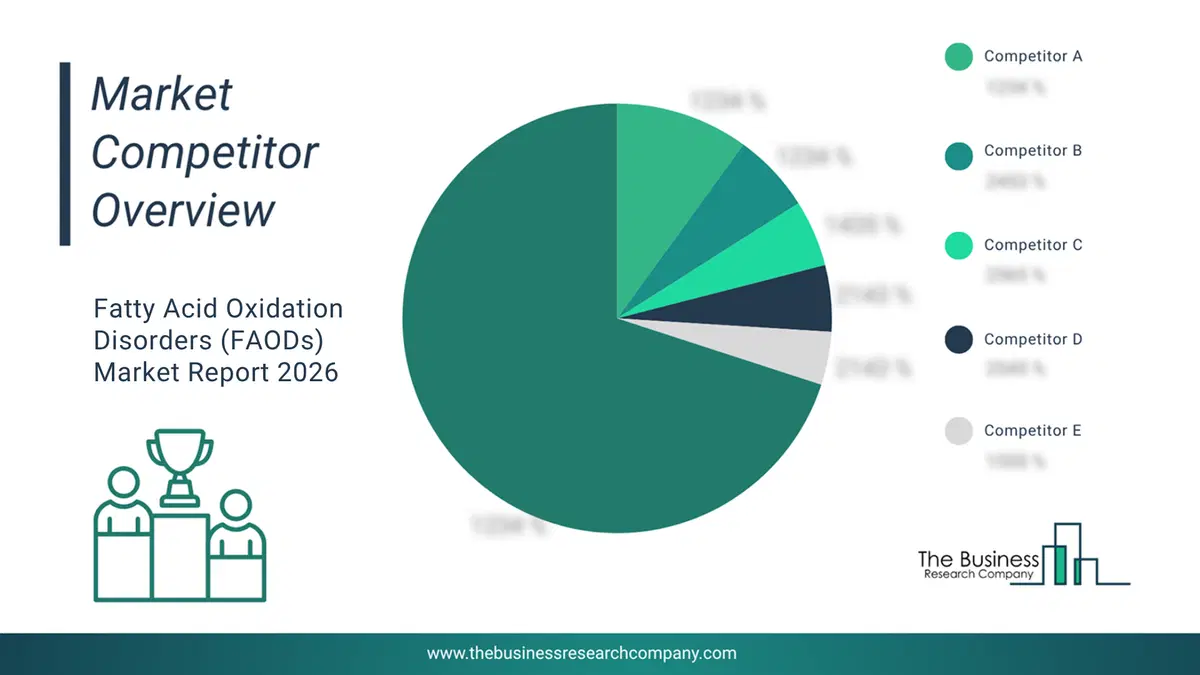
This chart is for illustrative purposes; the full report includes a detailed competitor analysis and comprehensive overview of the top 10 companies in the market.
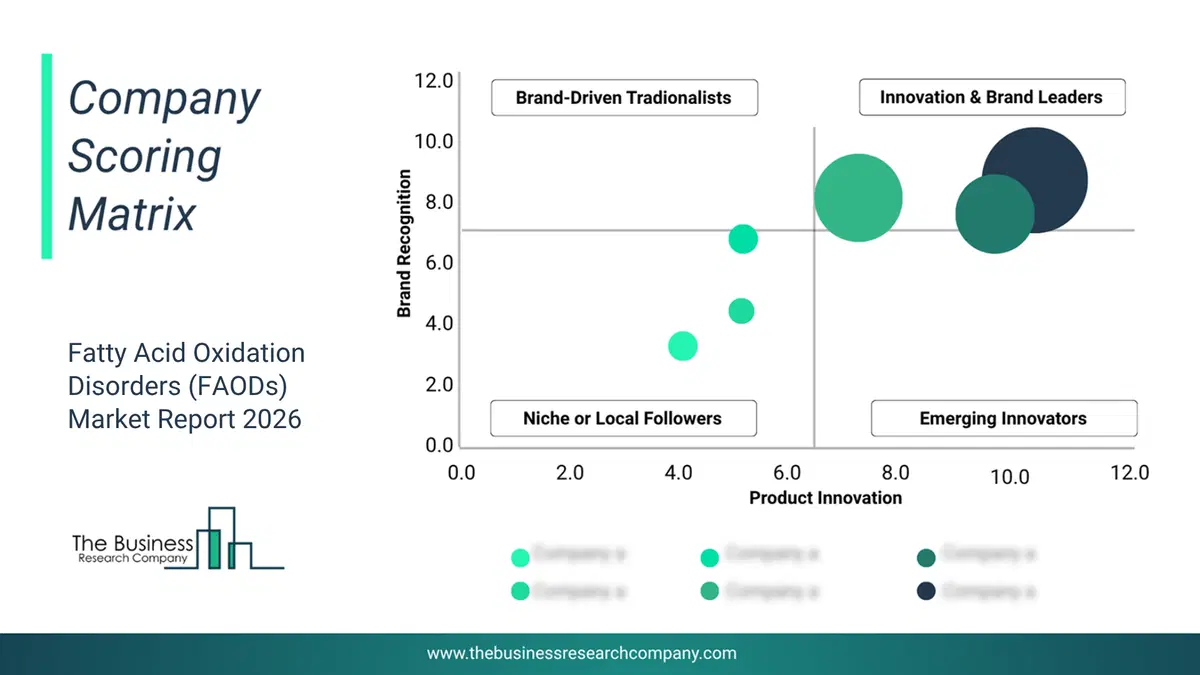
This chart maps companies by product innovation and brand strength, with bubble size indicating relative revenue, helping identify market leaders, challengers, and niche players. This is an illustrative chart; the full report provides a complete and accurate competitive analysis.
Global Fatty Acid Oxidation Disorders (FAODs) Market Trends and Insights
Major companies operating in the fatty acid oxidation disorders (FAODs) market are focusing on developing innovative solutions such as peroxisome proliferator-activated receptor delta (PPARδ) agonists to enhance metabolic control and improve treatment outcomes for patients with FAODs. A peroxisome proliferator-activated receptor delta (PPARδ) agonist is a substance that activates the PPARδ receptor, which is involved in regulating lipid metabolism, inflammation, and energy balance, and may provide therapeutic advantages for metabolic disorders and cardiovascular diseases. For instance, in January 2023, Reneo Pharmaceuticals Inc., a US-based clinical-stage pharmaceutical company, received Fast Track designation from the U.S. Food and Drug Administration (FDA) for its investigational drug, Mavodelpar (REN001), which targets long-chain 3-hydroxyacyl-CoA dehydrogenase (LCHAD) deficiency, a genotype associated with long-chain fatty acid oxidation disorder (LC-FAOD). By activating PPARδ, mavodelpar aims to enhance mitochondrial function, improve energy metabolism, and reduce symptoms associated with LC-FAOD.What Are Latest Mergers And Acquisitions In The Fatty Acid Oxidation Disorders (FAODs) Market?
In October 2024, OnKure Therapeutics Inc., a US-based pharmaceutical company, merged with Reneo Pharmaceuticals Inc. for an undisclosed amount. This merger aims to leverage OnKure’s expertise in precision oncology alongside Reneo’s resources to accelerate the development of targeted therapies for oncogenic PI3Kα mutations, specifically through mutant-selective PI3Kα inhibitors. Reneo Pharmaceuticals Inc. is a US-based pharmaceutical company specializing in developing treatments for fatty acid oxidation disorders.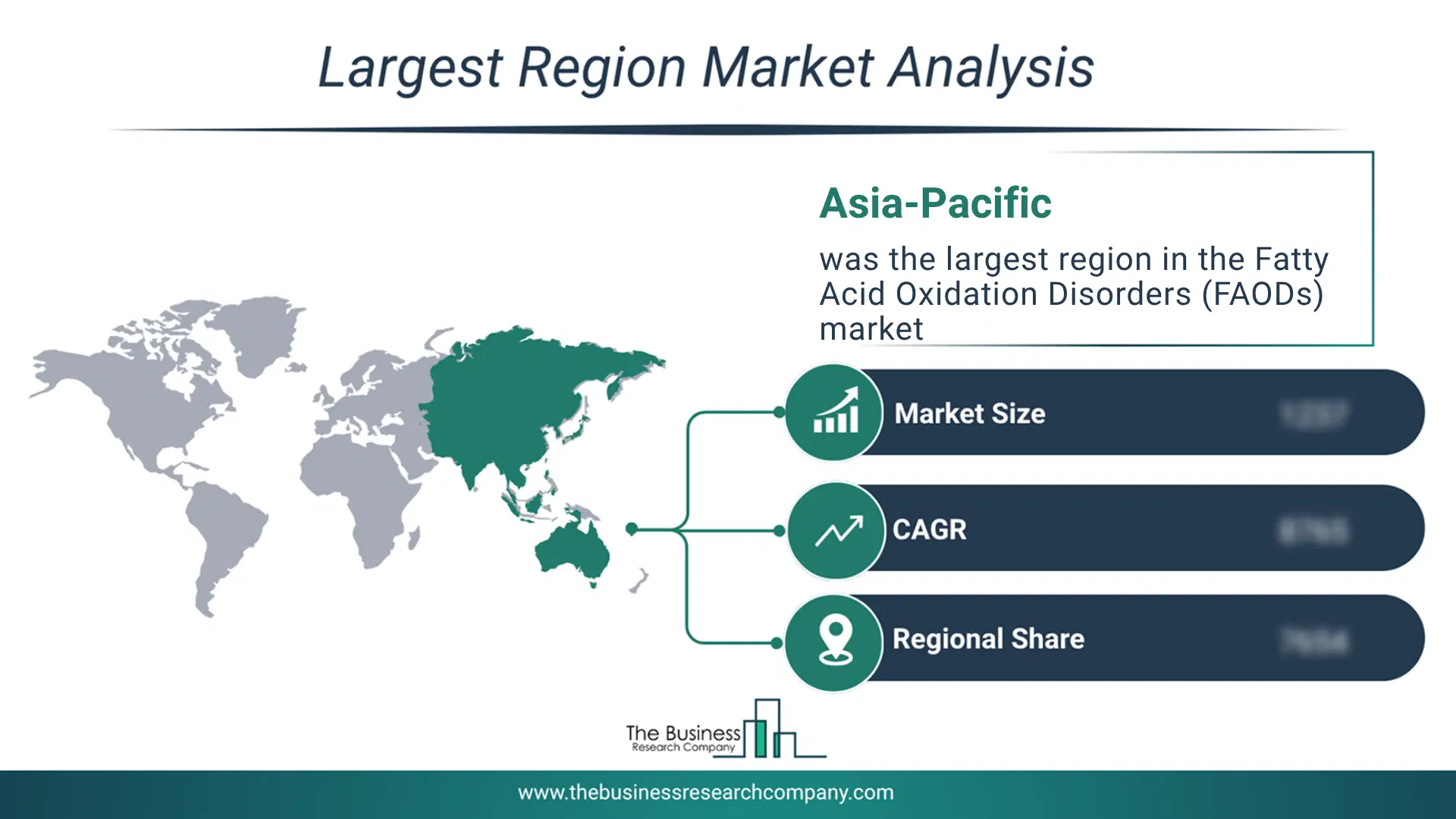
Regional Outlook
Asia-Pacific was the largest region in the fatty acid oxidation disorders (FAODs) market in 2025. The regions covered in this market report are Asia-Pacific, South East Asia, Western Europe, Eastern Europe, North America, South America, Middle East, Africa. The countries covered in this market report are Australia, Brazil, China, France, Germany, India, Indonesia, Japan, Taiwan, Russia, South Korea, UK, USA, Canada, Italy, Spain.What Defines the Fatty Acid Oxidation Disorders (FAODs) Market?
The fatty acid oxidation disorders (FAODs) market consists of revenues earned by entities by providing services such as newborn screening and genetic testing, nutritional therapy, remote monitoring, and patient support. The market value includes the value of related goods sold by the service provider or included within the service offering. The fatty acid oxidation disorders (FAODs) market also includes sales of medical foods and supplements, diagnostic and genetic testing kits, and nutritional supplements. Values in this market are ‘factory gate’ values, that is the value of goods sold by the manufacturers or creators of the goods, whether to other entities (including downstream manufacturers, wholesalers, distributors and retailers) or directly to end customers. The value of goods in this market includes related services sold by the creators of the goods.How is Market Value Defined and Measured?
The market value is defined as the revenues that enterprises gain from the sale of goods and/or services within the specified market and geography through sales, grants, or donations in terms of the currency (in USD unless otherwise specified). The revenues for a specified geography are consumption values that are revenues generated by organizations in the specified geography within the market, irrespective of where they are produced. It does not include revenues from resales along the supply chain, either further along the supply chain or as part of other products.
This chart presents market attractiveness based on a quantitative evaluation of growth, competition, strategic alignment, and risk, offering a clear view of opportunity areas for decision-making. This chart is for illustrative purposes; the full report contains the complete analysis.

This chart highlights the Total Addressable Market (TAM) by estimating the maximum revenue opportunity using an assumption-driven approach, supporting strategic planning and opportunity sizing across markets. The chart is illustrative; the full report provides a more comprehensive analysis.
What Key Data and Analysis Are Included in the Fatty Acid Oxidation Disorders (FAODs) Market Report 2026?
The fatty acid oxidation disorders (faods) market research report is one of a series of new reports from The Business Research Company that provides market statistics, including industry global market size, regional shares, competitors with the market share, detailed market segments, market trends and opportunities, and any further data you may need to thrive in the fatty acid oxidation disorders (faods) industry. The market research report delivers a complete perspective of everything you need, with an in-depth analysis of the current and future state of the industry.Fatty Acid Oxidation Disorders (FAODs) Market Report Forecast Analysis
| Report Attribute | Details |
|---|---|
| Market Size Value In 2026 | $11.01 billion |
| Revenue Forecast In 2030 | $14.69 billion |
| Growth Rate | CAGR of 7.5% from 2026 to 2030 |
| Base Year For Estimation | 2025 |
| Actual Estimates/Historical Data | 2020-2025 |
| Forecast Period | 2026 - 2030 |
| Market Representation | Revenue in USD Billion and CAGR from 2026 to 2030 |
| Segments Covered | Type, Drug Type, Route of Administration, Distribution Channel, End User |
| Regional Scope | Asia-Pacific, Western Europe, Eastern Europe, North America, South America, Middle East, Africa |
| Country Scope | The countries covered in the report are Australia, Brazil, China, France, Germany, India, Indonesia, Japan, Taiwan, Russia, South Korea, UK, USA, Canada, Italy, Spain |
| Key Companies Profiled | Takeda Pharmaceutical Company Limited, Ultragenyx Pharmaceutical Inc, Sanofi SA, Novo Nordisk A S, Pfizer Inc, Merck & Co Inc, AstraZeneca PLC, Amgen Inc, AbbVie Inc, BioMarin Pharmaceutical Inc, PTC Therapeutics Inc, Horizon Therapeutics PLC, Recordati Rare Diseases SpA, Orphazyme A S, Mitsubishi Tanabe Pharma Corporation, Alexion Pharmaceuticals Inc (AstraZeneca Rare Disease), REGENXBIO Inc, Avrobio Inc, Homology Medicines Inc, Abeona Therapeutics Inc |
| Customization Scope | Request for Customization |
| Pricing And Purchase Options | Explore Purchase Options |