

Fertility Benefits Management Market Report 2026
Global Outlook – By Service Type (Benefit Plan Administration, Fertility Care Navigation, Claims Processing, Provider Network Management, Treatment Coordination, Reimbursement Management), By Coverage Type (Diagnostic Testing Coverage, In Vitro Fertilization Coverage, Fertility Medication Coverage, Egg Preservation Coverage, Sperm Preservation Coverage, Donor Services Coverage, Other Reproductive Care Coverage), By Delivery Mode (Digital Platforms, Telehealth Based Services, In Person Support Services), By Enterprise Size (Small And Medium Enterprises, Large Enterprises), By End User (Employers, Insurance Providers, Third Party Administrators, Healthcare Providers, Individuals And Families) – Market Size, Trends, Strategies, and Forecast to 2030
Fertility Benefits Management Market Overview
• Fertility Benefits Management market size has reached to $2.76 billion in 2025 • Expected to grow to $5.42 billion in 2030 at a compound annual growth rate (CAGR) of 14.4% • Growth Driver: Increasing Prevalence Of Infertility Driving The Market Growth Due To Rising Rates Of Delayed Childbearing And Age-Related Fertility Decline • Market Trend: New Fertility Pharmacy Solutions Are Reducing Treatment Costs And Simplifying Medication Access For Assisted Reproductive Care • North America was the largest region in 2025 and Asia-Pacific is the fastest growing region.What Is Covered Under Fertility Benefits Management Market?
Fertility benefits management refers to the administration of employer or insurer-sponsored programs that help individuals access and finance fertility-related healthcare services. It involves coordinating benefits, managing provider relationships, and overseeing approvals and payments for reproductive care while ensuring cost efficiency and regulatory compliance. The main service types of fertility benefits management include benefit plan administration, fertility care navigation, claims processing, provider network management, treatment coordination, and reimbursement management. Benefit plan administration refers to services that help organizations design, manage, and oversee fertility-related employee benefit programs while ensuring smooth access to reproductive healthcare services. These services support coverage types such as diagnostic testing coverage, in vitro fertilization coverage, fertility medication coverage, egg preservation coverage, sperm preservation coverage, donor services coverage, and other reproductive care coverage and are delivered through digital platforms, telehealth based services, and in person support services. They are adopted by small and medium enterprises and large enterprises and are utilized by end users including employers, insurance providers, third party administrators, healthcare providers, and individuals and families.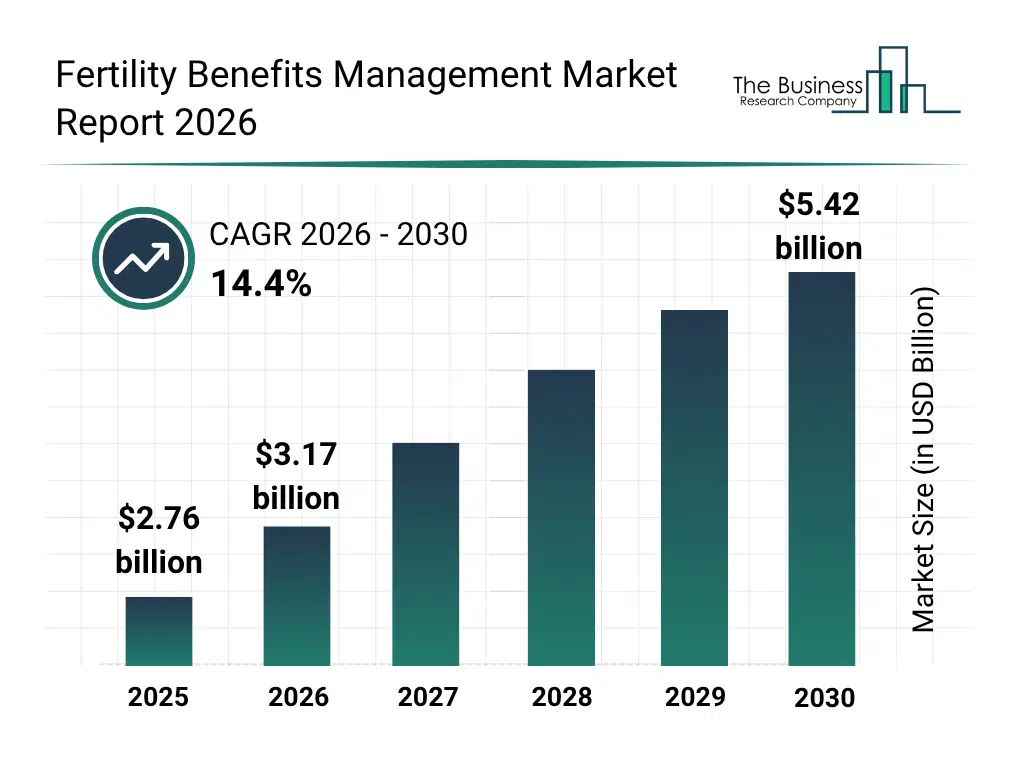
What Is The Fertility Benefits Management Market Size and Share 2026?
The fertility benefits management market size has grown rapidly in recent years. It will grow from $2.76 billion in 2025 to $3.17 billion in 2026 at a compound annual growth rate (CAGR) of 14.8%. The growth in the historic period can be attributed to increasing awareness of fertility healthcare benefits, growing employer initiatives for employee healthcare support, rising demand for reproductive healthcare services, increasing adoption of insurance-based fertility coverage, growing focus on improving healthcare accessibility.What Is The Fertility Benefits Management Market Growth Forecast?
The fertility benefits management market size is expected to see rapid growth in the next few years. It will grow to $5.42 billion in 2030 at a compound annual growth rate (CAGR) of 14.4%. The growth in the forecast period can be attributed to increasing demand for digital fertility benefits management platforms, growing adoption of telehealth-based fertility support services, rising need for personalized fertility care coordination, increasing focus on value-based reproductive healthcare management, growing demand for transparent fertility cost management solutions. Major trends in the forecast period include increasing adoption of fertility benefits programs by employers and insurers, growing demand for personalized fertility care navigation services, rising focus on cost management and affordability of reproductive healthcare, increasing integration of coordinated fertility provider networks, growing demand for comprehensive reproductive care coverage solutions.
Global Fertility Benefits Management Market Segmentation
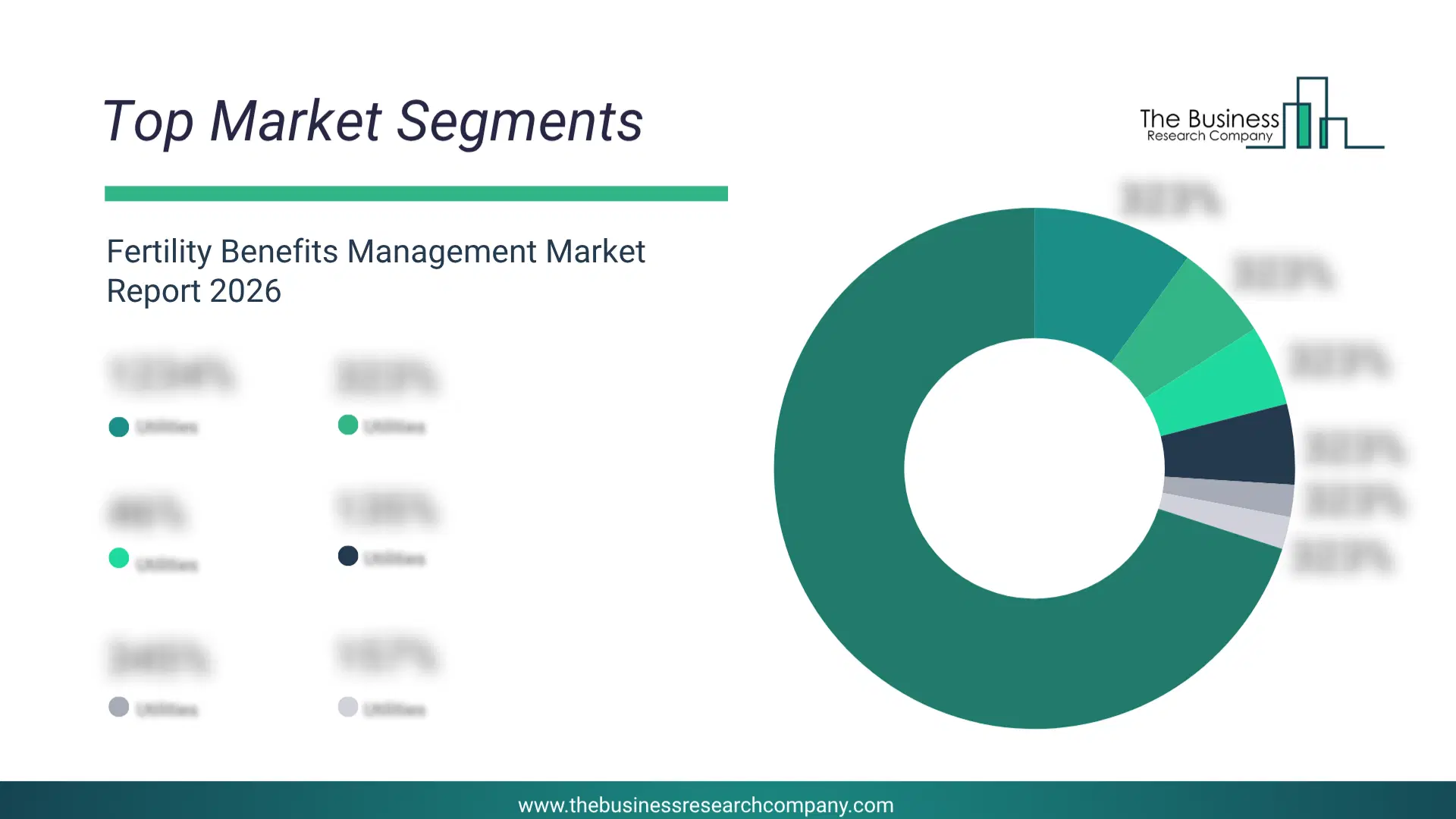
1) By Service Type: Benefit Plan Administration, Fertility Care Navigation, Claims Processing, Provider Network Management, Treatment Coordination, Reimbursement Management 2) By Coverage Type: Diagnostic Testing Coverage, In Vitro Fertilization Coverage, Fertility Medication Coverage, Egg Preservation Coverage, Sperm Preservation Coverage, Donor Services Coverage, Other Reproductive Care Coverage 3) By Delivery Mode: Digital Platforms, Telehealth Based Services, In Person Support Services 4) By Enterprise Size: Small And Medium Enterprises, Large Enterprises 5) By End User: Employers, Insurance Providers, Third Party Administrators, Healthcare Providers, Individuals And Families Subsegments: 1) By Benefit Plan Administration: Eligibility Verification, Benefit Enrollment Management, Policy Configuration Management, Coverage Compliance Management, Employee Support Services, Reporting And Analytics 2) By Fertility Care Navigation: Personalized Care Guidance, Clinical Education Support, Provider Matching Services, Treatment Journey Planning, Emotional Wellness Support, Care Coordination Assistance 3) By Claims Processing: Claim Submission Management, Claim Verification Services, Payment Authorization Management, Claims Adjudication Services, Appeals And Resolution Management, Fraud Detection Review 4) By Provider Network Management: Provider Credentialing Services, Network Contract Management, Provider Performance Monitoring, Referral Network Coordination, Access And Availability Management, Provider Relationship Management 5) By Treatment Coordination: Appointment Scheduling Services, Diagnostic Test Coordination, Medication Management Support, Procedure Coordination Services, Follow Up Care Management, Patient Communication Services 6) By Reimbursement Management: Expense Reimbursement Processing, Invoice Verification Services, Out Of Pocket Cost Management, Direct Payment Administration, Reimbursement Tracking Services, Financial Reporting ManagementWhat Is The Driver Of The Fertility Benefits Management Market?
The increasing prevalence of infertility is expected to propel the growth of the fertility benefits management market going forward. Infertility is a medical condition characterized by the inability to achieve pregnancy after 12 months of regular unprotected intercourse, or physical difficulties in conceiving or carrying a pregnancy to live birth. The prevalence of infertility is increasing due to delayed childbearing trends, as more individuals postpone family planning until later reproductive years, when age-related declines in egg quality, ovarian reserve, and sperm parameters significantly reduce conception success rates. Fertility benefits management addresses infertility by improving access to timely diagnostic services, assisted reproductive treatments, medications, and coordinated care solutions, thereby reducing financial and logistical barriers to effective fertility treatment. For instance, in April 2023, according to the World Health Organization (WHO), a Switzerland-based intergovernmental organization, approximately 17.5% of the adult population, or about 1 in 6 people globally, face infertility, highlighting the pressing need to improve access to affordable, high-quality fertility care for those affected. Therefore, the increasing prevalence of infertility is driving the growth of the fertility benefits management industry.Key Players In The Global Fertility Benefits Management Market
Major companies operating in the fertility benefits management market are Alife Health Inc., Carrot Fertility Inc., Cleo Inc., Cofertility Inc., Fertifa Limited, Future Family Inc., Gaia Fertility Limited, KBI Services Inc., Maven Clinic Co., Peppy Health Ltd., Pinnacle Fertility LLC, Progyny Inc., Reframe Health Inc., Stork Club Inc., Univfy Inc., WINFertility LLC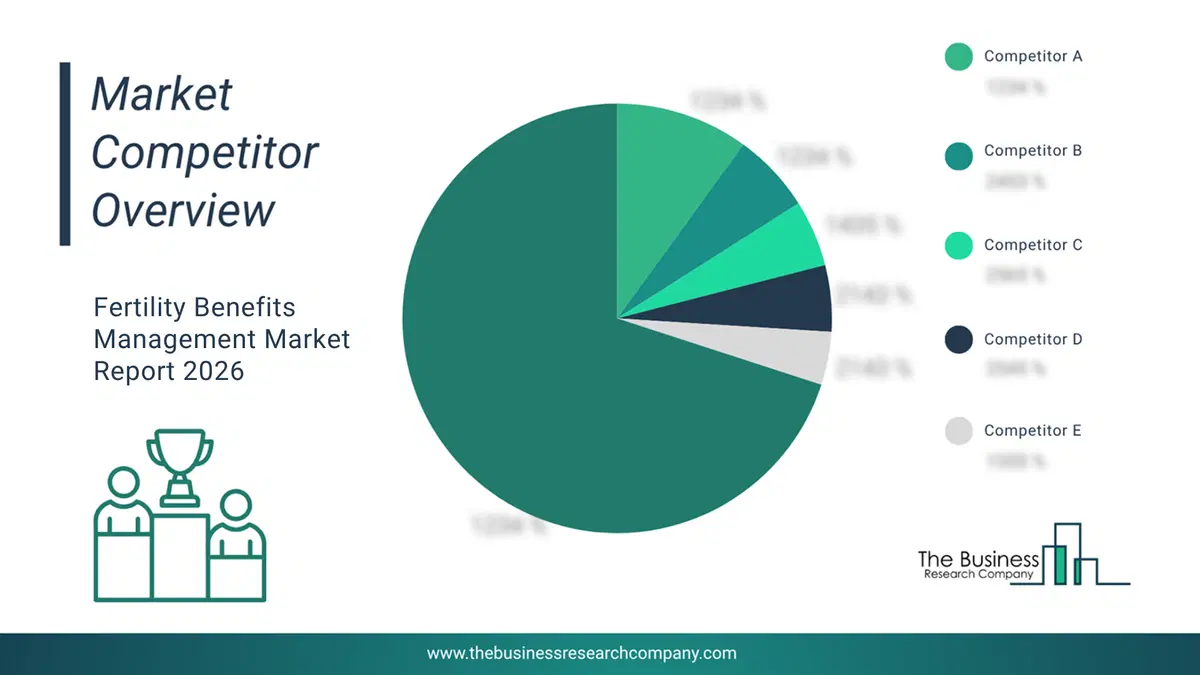
This chart is for illustrative purposes; the full report includes a detailed competitor analysis and comprehensive overview of the top 10 companies in the market.
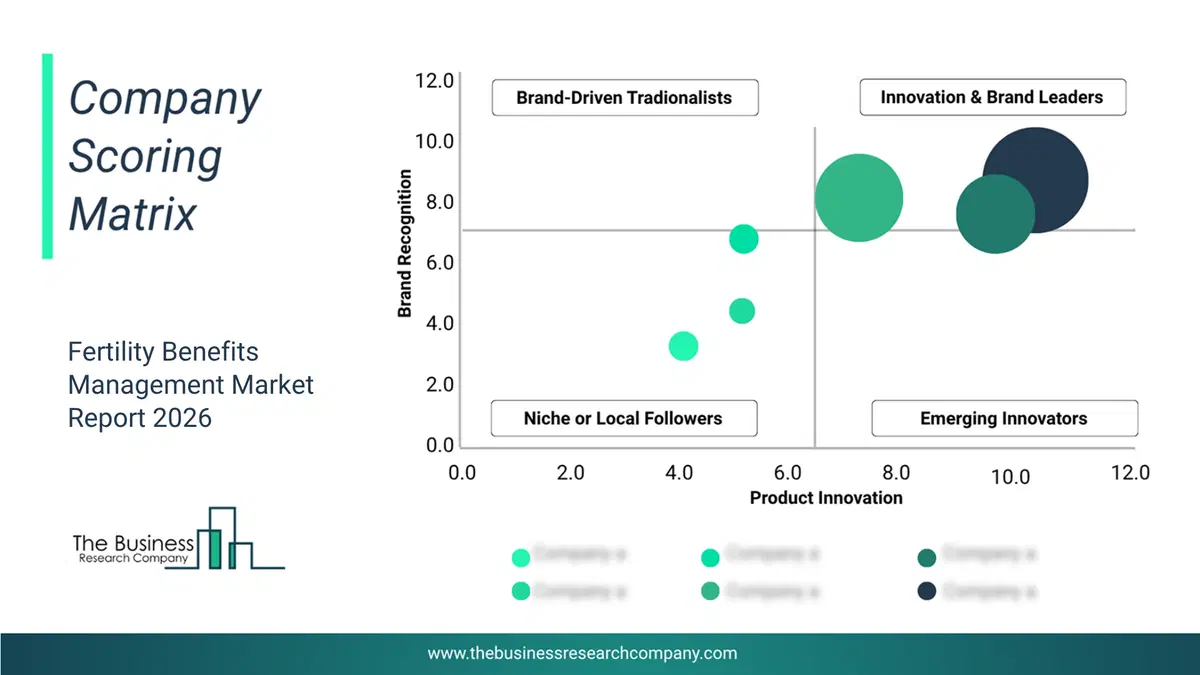
This chart maps companies by product innovation and brand strength, with bubble size indicating relative revenue, helping identify market leaders, challengers, and niche players. This is an illustrative chart; the full report provides a complete and accurate competitive analysis.
Global Fertility Benefits Management Market Trends and Insights
Major companies operating in the fertility benefits management market are focusing on developing innovative solutions, such as integrated fertility pharmacy benefit programs, to enhance affordability, improve medication access, and reduce the overall cost burden of assisted reproductive treatments like IVF. Integrated fertility pharmacy benefit programs are specialized healthcare benefit solutions that combine clinical fertility coverage with dedicated pharmacy services, enabling employers and employees to access discounted fertility medications, transparent pricing models, and coordinated care support that simplifies complex treatment pathways compared to traditional fragmented insurance and pharmacy reimbursement systems. For instance, in October 2025, Carrot Fertility Inc., a US-based fertility benefits management and digital healthcare services company, launched the Carrot Rx Flex Program designed to give U.S. employers access to more cost-effective fertility medication coverage. The program enables employers to integrate pharmacy benefits either alongside existing fertility medical coverage or as a standalone solution, offering transparent pricing, negotiated drug discounts, and enhanced member support for fertility treatments such as IVF. Additionally, it delivers significant cost reductions, often exceeding 50% savings on fertility medications, helping employers reduce expenses by thousands of dollars per treatment cycle while improving access to essential reproductive care across all 50 states.What Are Latest Mergers And Acquisitions In The Fertility Benefits Management Market?
In June 2024, Progyny Inc., a US-based benefits management company, acquired Apryl for an undisclosed amount. With this acquisition, Progyny aims to strengthen its international fertility benefits management capabilities and enhance support for multinational employers by improving employee access to fertility and family-building services across more than 100 countries. Apryl GmbH is a Germany-based fertility benefits management company specialising in digital fertility planning, employer-sponsored reproductive health benefits, and personalised fertility care navigation solutions.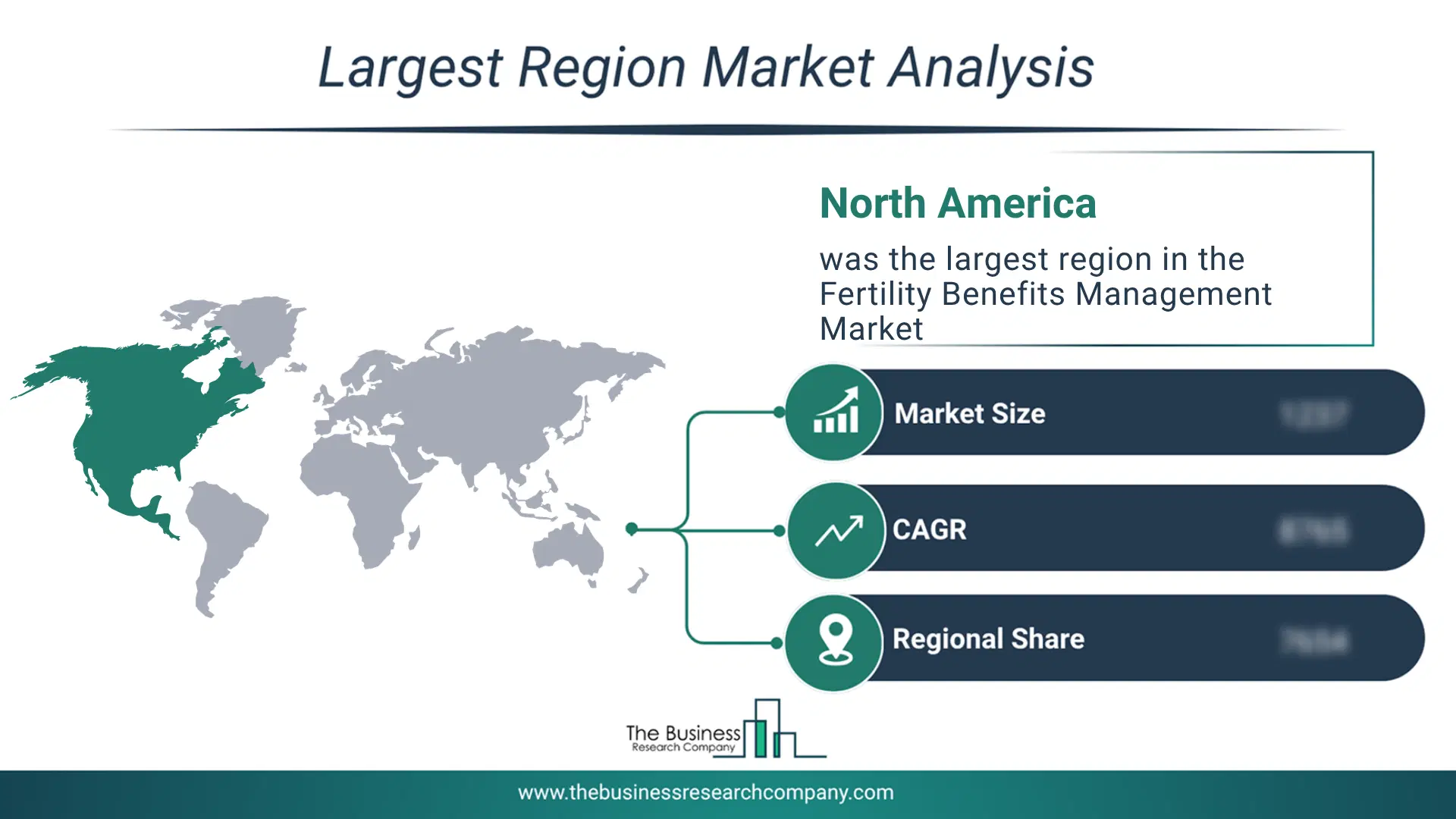
Regional Insights
North America was the largest region in the fertility benefits management market in 2025. Asia-Pacific is expected to be the fastest-growing region in the forecast period. The regions covered in this market report are Asia-Pacific, South East Asia, Western Europe, Eastern Europe, North America, South America, Middle East, Africa. The countries covered in this market report are Australia, Brazil, China, France, Germany, India, Indonesia, Japan, Taiwan, Russia, South Korea, UK, USA, Canada, Italy, Spain.What Defines the Fertility Benefits Management Market?
The fertility benefits management market includes revenues earned by entities through administration fees, claims processing services, program management, provider network coordination, and fertility benefits consulting. The market value includes the value of related goods sold by the service provider or included within the service offering. Only goods and services traded between entities or sold to end consumers are included.How is Market Value Defined and Measured?
The market value is defined as the revenues that enterprises gain from the sale of goods and/or services within the specified market and geography through sales, grants, or donations in terms of the currency (in USD unless otherwise specified). The revenues for a specified geography are consumption values that are revenues generated by organizations in the specified geography within the market, irrespective of where they are produced. It does not include revenues from resales along the supply chain, either further along the supply chain or as part of other products.
This chart presents market attractiveness based on a quantitative evaluation of growth, competition, strategic alignment, and risk, offering a clear view of opportunity areas for decision-making. This chart is for illustrative purposes; the full report contains the complete analysis.

This chart highlights the Total Addressable Market (TAM) by estimating the maximum revenue opportunity using an assumption-driven approach, supporting strategic planning and opportunity sizing across markets. The chart is illustrative; the full report provides a more comprehensive analysis.
What Key Data and Analysis Are Included in the Fertility Benefits Management Market Report 2026?
The fertility benefits management market research report is one of a series of new reports from The Business Research Company that provides market statistics, including industry global market size, regional shares, competitors with the market share, detailed market segments, market trends and opportunities, and any further data you may need to thrive in the fertility benefits management industry. The market research report delivers a complete perspective of everything you need, with an in-depth analysis of the current and future state of the industry.Fertility Benefits Management Market Report Forecast Analysis
| Report Attribute | Details |
|---|---|
| Market Size Value In 2026 | $3.17 billion |
| Revenue Forecast In 2030 | $5.42 billion |
| Growth Rate | CAGR of 14.4% from 2026 to 2030 |
| Base Year For Estimation | 2025 |
| Actual Estimates/Historical Data | 2020-2025 |
| Forecast Period | 2026 - 2030 |
| Market Representation | Revenue in USD Billion and CAGR from 2026 to 2030 |
| Segments Covered | Service Type, Coverage Type, Delivery Mode, Enterprise Size, End User |
| Regional Scope | Asia-Pacific, Western Europe, Eastern Europe, North America, South America, Middle East, Africa |
| Country Scope | The countries covered in the report are Australia, Brazil, China, France, Germany, India, Indonesia, Japan, Taiwan, Russia, South Korea, UK, USA, Canada, Italy, Spain. |
| Key Companies Profiled | Alife Health Inc., Carrot Fertility Inc., Cleo Inc., Cofertility Inc., Fertifa Limited, Future Family Inc., Gaia Fertility Limited, KBI Services Inc., Maven Clinic Co., Peppy Health Ltd., Pinnacle Fertility LLC, Progyny Inc., Reframe Health Inc., Stork Club Inc., Univfy Inc., WINFertility LLC |
| Customization Scope | Request for Customization |
| Pricing And Purchase Options | Explore Purchase Options |