
Fetal Monitoring Market Report 2026
Global Outlook – By Product (Ultrasound Devices, Electronic Maternal Or Fetal Monitors, Uterine Contraction Monitor, Fetal Electrodes, Fetal Doppler Devices, Telemetry Devices), By Method (Invasive, Non-Invasive), By Application (Intrapartum Fetal Monitoring, Antepartum Fetal Monitoring), By End-User (Diagnostic Laboratories, Hospitals And Clinics, Other End-Users) – Market Size, Trends, Strategies, and Forecast to 2030
Fetal Monitoring Market Overview
• Fetal Monitoring market size has reached to $4.05 billion in 2025 • Expected to grow to $6.24 billion in 2030 at a compound annual growth rate (CAGR) of 9.1% • Growth Driver: Positive Impact Of Rising Healthcare Expenditure On Fetal Monitoring Market Growth • Market Trend: AI-Powered Technology Enhances Remote Tracking and Early Detection of Fetal Heart Patterns • North America was the largest region in 2025 and Asia-Pacific is the fastest growing region.What Is Covered Under Fetal Monitoring Market?
Fetal monitoring is the process in which medical professionals use specialized equipment to monitor the mother's contractions and the heart rate of the fetus during birth. It is used to provide medical professionals with information that helps them decide whether to interfere in the birthing process. The main product types of fetal monitoring include ultrasound devices, electronic maternal or fetal monitors, uterine contraction monitors, fetal electrodes, fetal doppler devices, telemetry devices, accessories and consumables, and other products. An ultrasound device is a type of medical imaging technology that produces images of the inside of the body using high-frequency sound waves. These services are done using invasive and non-invasive methods and have applications in intrapartum fetal monitoring, and antepartum fetal monitoring in end-users such as diagnostic laboratories, hospitals and clinics, and others.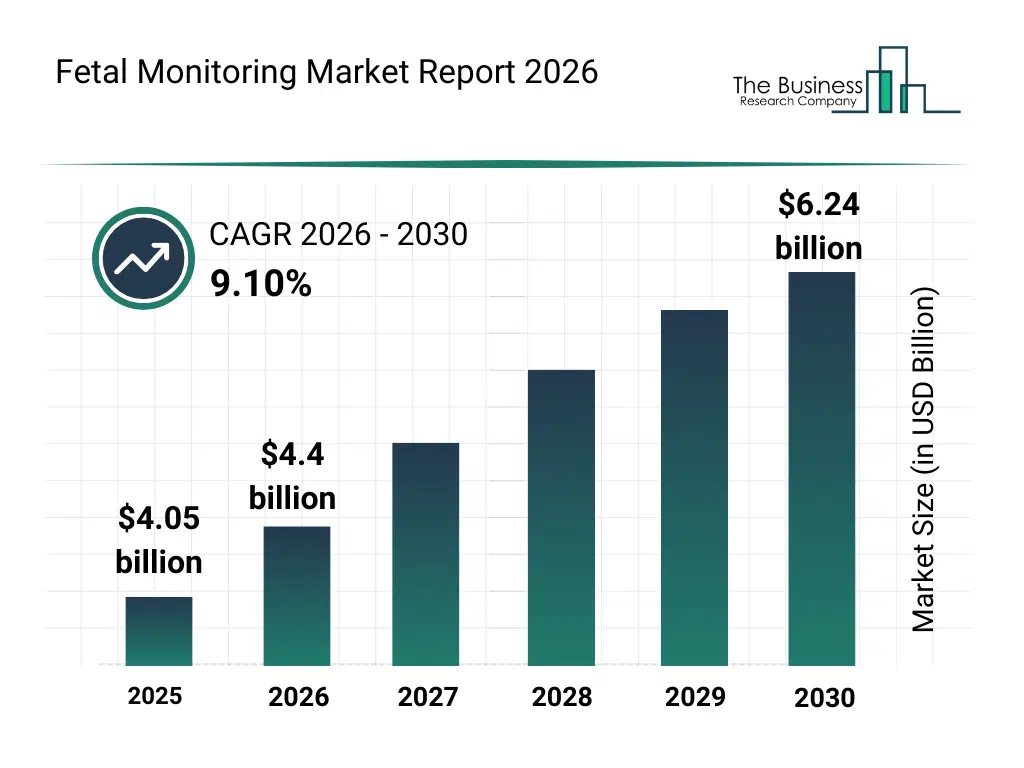
What Is The Fetal Monitoring Market Size and Share 2026?
The fetal monitoring market size has grown strongly in recent years. It will grow from $4.05 billion in 2025 to $4.4 billion in 2026 at a compound annual growth rate (CAGR) of 8.7%. The growth in the historic period can be attributed to rising hospital birth rates, expansion of obstetric care infrastructure, increasing use of electronic fetal monitoring, improvements in ultrasound imaging technologies, growing awareness of prenatal care standards.What Is The Fetal Monitoring Market Growth Forecast?
The fetal monitoring market size is expected to see strong growth in the next few years. It will grow to $6.24 billion in 2030 at a compound annual growth rate (CAGR) of 9.1%. The growth in the forecast period can be attributed to increasing demand for remote patient monitoring, rising adoption of digital maternity care solutions, expansion of telehealth-enabled fetal monitoring, growing focus on early risk detection, increasing investments in maternal healthcare technologies. Major trends in the forecast period include increasing adoption of wireless fetal monitoring systems, rising demand for continuous intrapartum monitoring, growing integration of ai-based risk assessment tools, expansion of portable and home-based monitoring devices, enhanced focus on maternal-fetal safety.
Global Fetal Monitoring Market Segmentation
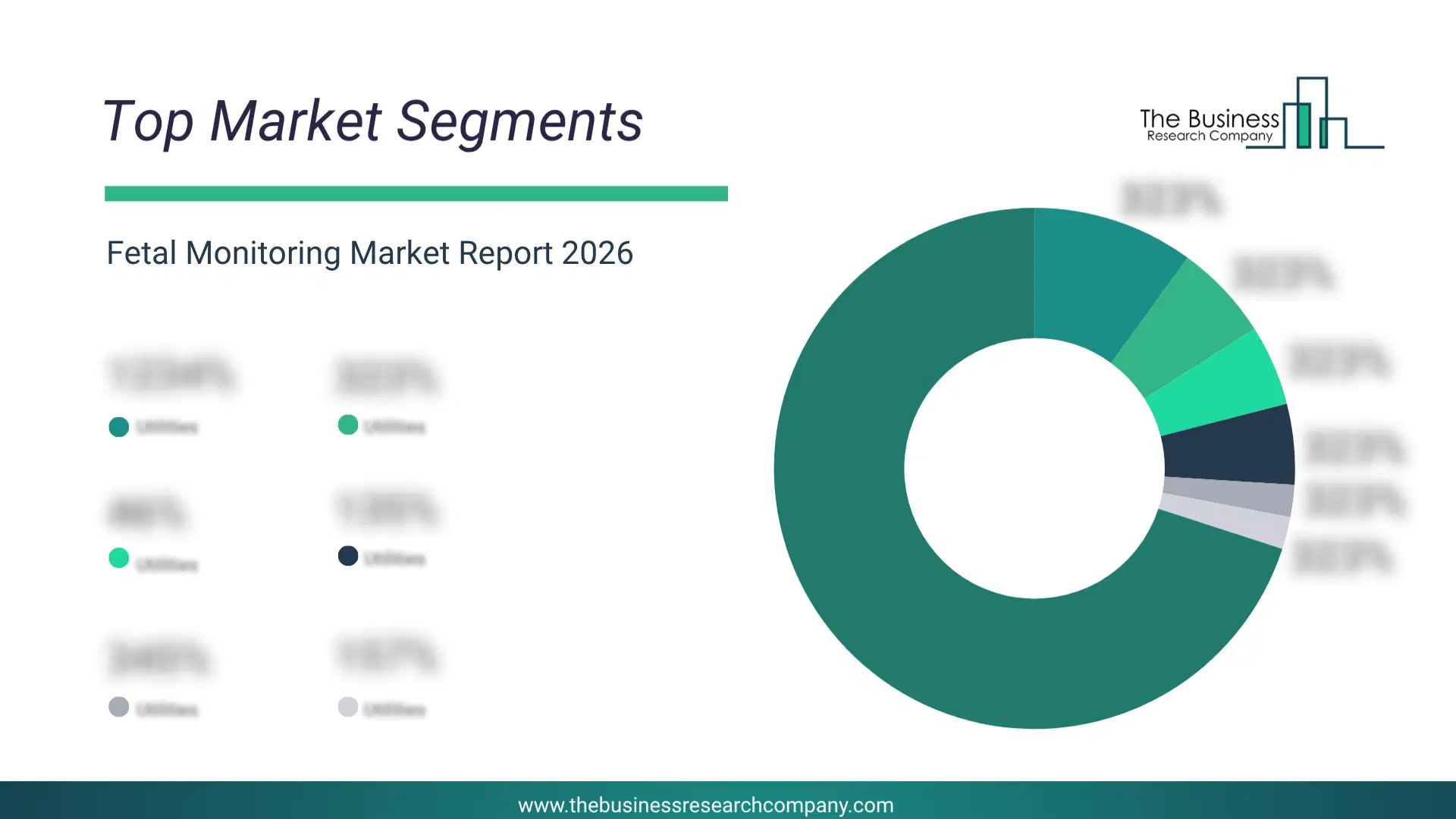
1) By Product: Ultrasound Devices, Electronic Maternal Or Fetal Monitors, Uterine Contraction Monitor, Fetal Electrodes, Fetal Doppler Devices, Telemetry Devices 2) By Method: Invasive, Non-Invasive 3) By Application: Intrapartum Fetal Monitoring, Antepartum Fetal Monitoring 4) By End-User: Diagnostic Laboratories, Hospitals And Clinics, Other End-Users Subsegments: 1) By Ultrasound Devices: 2D Ultrasound, 3D Or 4D Ultrasound, Doppler Ultrasound 2) By Electronic Maternal Or Fetal Monitors: Continuous Fetal Monitoring Systems, Wireless Fetal Monitoring Systems, Maternal Vital Signs Monitors 3) By Uterine Contraction Monitor: External Uterine Contraction Monitors, Internal Uterine Pressure Catheters 4) By Fetal Electrodes: Scalp Electrodes, Surface Electrodes 5) By Fetal Doppler Devices: Handheld Dopplers, Tabletop Dopplers 6) By Telemetry Devices: Wireless Telemetry Systems, Portable Monitoring SystemsWhat Is The Driver Of The Fetal Monitoring Market?
The rising healthcare expenditure is expected to boost the growth of the fetal monitoring market going forward. Healthcare expenditure refers to the total amount of resources, both financial and non-financial, that a country, government, organization, or individual allocates or spends on healthcare-related goods and services. Rising healthcare expenditure contributes to the growth of the fetal monitoring market by fostering technological advancements, improving accessibility, supporting research and development efforts, and promoting overall quality improvement in maternal and fetal healthcare services. For instance, in June 2025, according to the Centers for Medicare & Medicaid Services, a US-based government agency, in 2023, national health expenditures (NHE) grew by 7.5%, reaching $4.9 trillion, which averages $14,570 per person and represents 17.6% of the Gross Domestic Product (GDP). Spending on Medicare increased by 8.1% to $1,029.8 billion, making up 21% of total NHE. Therefore, the rising healthcare expenditure is driving the growth of the fetal monitoring industry.Key Players In The Global Fetal Monitoring Market
Major companies operating in the fetal monitoring market are Koninklijke Philips N.V., Medtronic plc, Drägerwerk AG & Co. KGaA, Mindray Medical International Limited, Masimo Corporation, Neoventa Medical AB, EDAN Instruments Inc., Shenzhen Comen Medical Instruments Co. Ltd., Contec Medical Systems Co. Ltd., Bionet Co. Ltd., Atom Medical Corporation, Bistos Inc., OBMedical Company, PeriGen Inc., Sunray Medical Apparatus Co. Ltd., Mediana Co. Ltd., Nonin Medical Inc., Analogic Corporation, Dixion Vertrieb medizinischer Geräte GmbH, Fisher & Paykel Healthcare Corporation Limited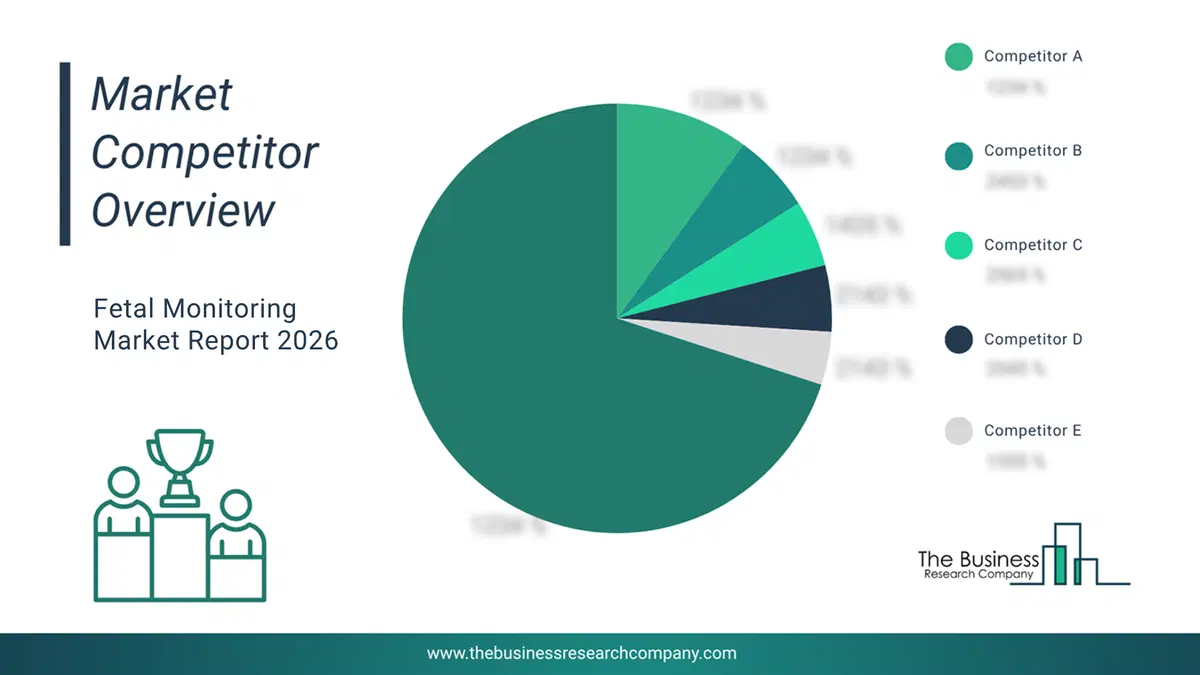
This chart is for illustrative purposes; the full report includes a detailed competitor analysis and comprehensive overview of the top 10 companies in the market.
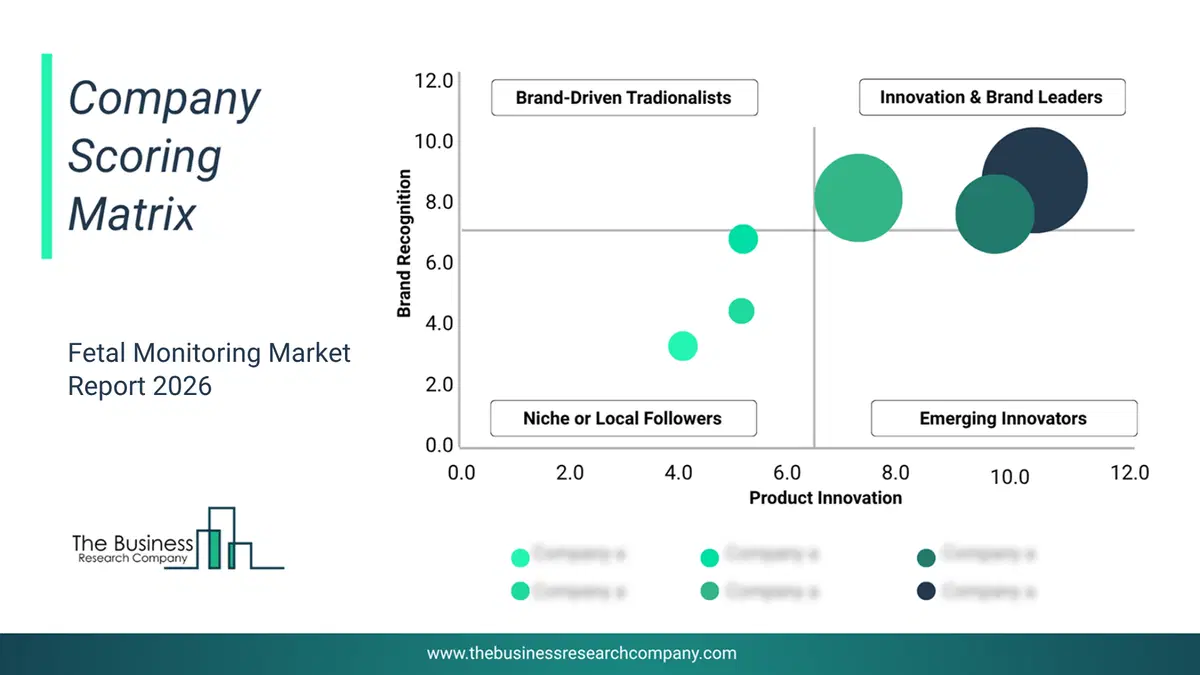
This chart maps companies by product innovation and brand strength, with bubble size indicating relative revenue, helping identify market leaders, challengers, and niche players. This is an illustrative chart; the full report provides a complete and accurate competitive analysis.
Global Fetal Monitoring Market Trends and Insights
Major companies operating in the fetal monitoring market are focusing on developing innovative solutions such as connected baby monitors to enable real-time remote monitoring and enhance neonatal care. A connected baby monitor is a smart device that continuously tracks a baby’s vital signs and sends real-time data to smartphones or cloud platforms for remote monitoring by parents or clinicians. For instance, in February 2025, Perigean Technologies LLC, a US-based technology company, received approval from the U.S. Food and Drug Administration (FDA) for Patterns 3.0, expanding the use of its proprietary fetal heart rate pattern recognition technology from 36 weeks to 32 weeks of gestation. The system leverages advanced AI algorithms, including Long Short-Term Memory (LSTM) neural networks, to detect, label, and quantify fetal heart rate patterns—such as accelerations, decelerations, baselines, and uterine contractions—from 32 weeks onward. Patterns 3.0 serves as an adjunct to clinical decision-making for both antepartum and intrapartum monitoring, providing early alerts for indeterminate and abnormal fetal heart rate patterns to support timely interventions in high-risk pregnancies. It can operate in networked or standalone environments, streamlining clinical workflows by delivering standardized, consistent analysis, enabling clinicians to focus more on patient care rather than manual data interpretation.What Are Latest Mergers And Acquisitions In The Fetal Monitoring Market?
In November 2023, Neoventa Medical AB, a Sweden-based medical device company, partnered with YMS Partners to introduce advanced fetal monitoring solutions in the South African market. This partnership aims to aiming to improve maternal and fetal care by providing state-of-the-art monitoring technology and clinical support. YMS Partners is a South African-based company that is a distributor and reseller of diverse medical supplies that facilitate Point of Care and quick access to quality health services.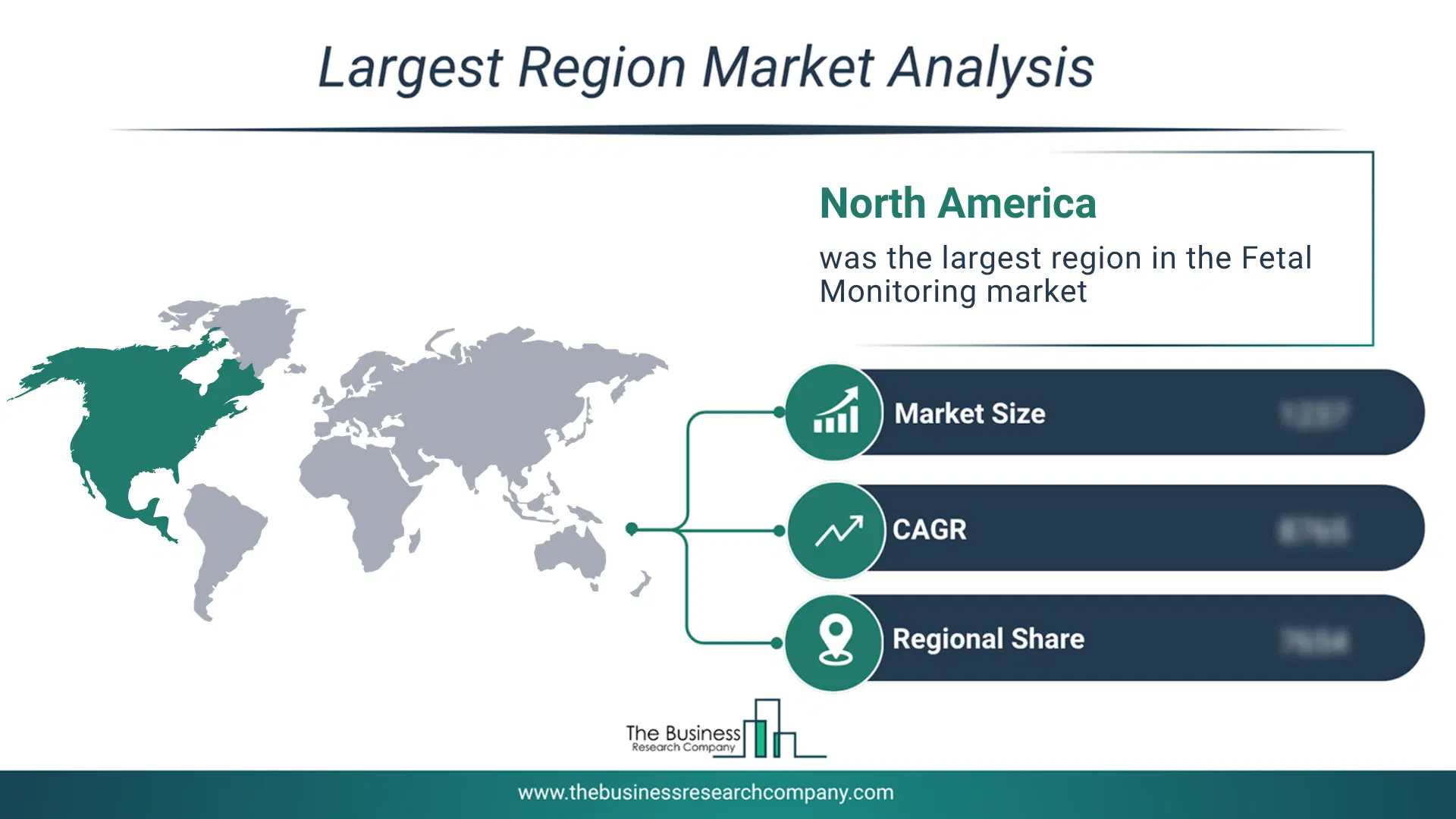
Regional Outlook
North America was the largest region in the fetal monitoring market in 2025. Asia-Pacific is expected to be the fastest-growing region in the global fetal monitoring market report forecast period. The regions covered in this market report are Asia-Pacific, South East Asia, Western Europe, Eastern Europe, North America, South America, Middle East, Africa. The countries covered in this market report are Australia, Brazil, China, France, Germany, India, Indonesia, Japan, Taiwan, Russia, South Korea, UK, USA, Canada, Italy, SpainWhat Defines the Fetal Monitoring Market?
The fetal monitoring market includes revenues earned by entities by providing continuous electronic fetal monitoring, central fetal monitoring and intermittent auscultation. The market value includes the value of related goods sold by the service provider or included within the service offering. The fetal monitoring market also includes sales of tocodynamometer, fetal scalp electrode and intrauterine pressure catheter. Values in this market are ‘factory gate’ values, that is the value of goods sold by the manufacturers or creators of the goods, whether to other entities (including downstream manufacturers, wholesalers, distributors and retailers) or directly to end customers. The value of goods in this market includes related services sold by the creators of the goods.How is Market Value Defined and Measured?
The market value is defined as the revenues that enterprises gain from the sale of goods and/or services within the specified market and geography through sales, grants, or donations in terms of the currency (in USD unless otherwise specified). The revenues for a specified geography are consumption values that are revenues generated by organizations in the specified geography within the market, irrespective of where they are produced. It does not include revenues from resales along the supply chain, either further along the supply chain or as part of other products.
This chart presents market attractiveness based on a quantitative evaluation of growth, competition, strategic alignment, and risk, offering a clear view of opportunity areas for decision-making. This chart is for illustrative purposes; the full report contains the complete analysis.

This chart highlights the Total Addressable Market (TAM) by estimating the maximum revenue opportunity using an assumption-driven approach, supporting strategic planning and opportunity sizing across markets. The chart is illustrative; the full report provides a more comprehensive analysis.
What Key Data and Analysis Are Included in the Fetal Monitoring Market Report 2026?
The fetal monitoring market research report is one of a series of new reports from The Business Research Company that provides market statistics, including industry global market size, regional shares, competitors with the market share, detailed market segments, market trends and opportunities, and any further data you may need to thrive in the fetal monitoring industry. The market research report delivers a complete perspective of everything you need, with an in-depth analysis of the current and future state of the industry.Fetal Monitoring Market Report Forecast Analysis
| Report Attribute | Details |
|---|---|
| Market Size Value In 2026 | $4.4 billion |
| Revenue Forecast In 2030 | $6.24 billion |
| Growth Rate | CAGR of 9.1% from 2026 to 2030 |
| Base Year For Estimation | 2025 |
| Actual Estimates/Historical Data | 2020-2025 |
| Forecast Period | 2026 - 2030 |
| Market Representation | Revenue in USD Billion and CAGR from 2026 to 2030 |
| Segments Covered | Product, Method, Application, End-User |
| Regional Scope | Asia-Pacific, Western Europe, Eastern Europe, North America, South America, Middle East, Africa |
| Country Scope | The countries covered in the report are Australia, Brazil, China, France, Germany, India, Indonesia, Japan, Taiwan, Russia, South Korea, UK, USA, Canada, Italy, Spain. |
| Key Companies Profiled | Koninklijke Philips N.V., Medtronic plc, Drägerwerk AG & Co. KGaA, Mindray Medical International Limited, Masimo Corporation, Neoventa Medical AB, EDAN Instruments Inc., Shenzhen Comen Medical Instruments Co. Ltd., Contec Medical Systems Co. Ltd., Bionet Co. Ltd., Atom Medical Corporation, Bistos Inc., OBMedical Company, PeriGen Inc., Sunray Medical Apparatus Co. Ltd., Mediana Co. Ltd., Nonin Medical Inc., Analogic Corporation, Dixion Vertrieb medizinischer Geräte GmbH, Fisher & Paykel Healthcare Corporation Limited |
| Customization Scope | Request for Customization |
| Pricing And Purchase Options | Explore Purchase Options |