
Fever Screening Systems Market Report 2026
Global Outlook – By Product Type (Infrared Thermography, Thermal Scanners, Non-Contact Thermometers, Other Product Types), By Technology (Fixed, Portable), By Application (Hospitals And Clinics, Airports, Public Places, Corporate Offices, Other Applications), By End-User (Healthcare, Transportation, Commercial, Industrial, Other End Users) – Market Size, Trends, Strategies, and Forecast to 2030
Fever Screening Systems Market Overview
• Fever Screening Systems market size has reached to $2.27 billion in 2025 • Expected to grow to $3.48 billion in 2030 at a compound annual growth rate (CAGR) of 9% • Growth Driver: Rising Concerns Over Infectious Diseases Driving The Market Growth Due To Increasing Incidence Of Contagious Illnesses • Asia-Pacific was the largest region and fastest growing region.What Is Covered Under Fever Screening Systems Market?
A fever screening system is a non-contact temperature monitoring solution that uses infrared or thermal sensing technology to rapidly assess body temperature, typically by measuring skin temperature on the face or forehead, to identify individuals who may have an elevated temperature. These systems are designed for quick, large-scale screening in public or clinical environments and automatically flag readings that exceed a predefined threshold, helping to detect potential fever cases. Fever screening systems serve as an initial screening tool rather than a diagnostic device and are commonly followed by confirmatory medical evaluation. The main product types of fever screening systems include infrared thermography, thermal scanners, non-contact thermometers, and other product types. Infrared thermography refers to systems that detect body temperature remotely using infrared imaging to identify individuals with elevated temperatures. The technologies include fixed and portable systems and find application in hospitals and clinics, airports, public places, corporate offices, and other applications, serving end users including healthcare, transportation, commercial, industrial, and other end users.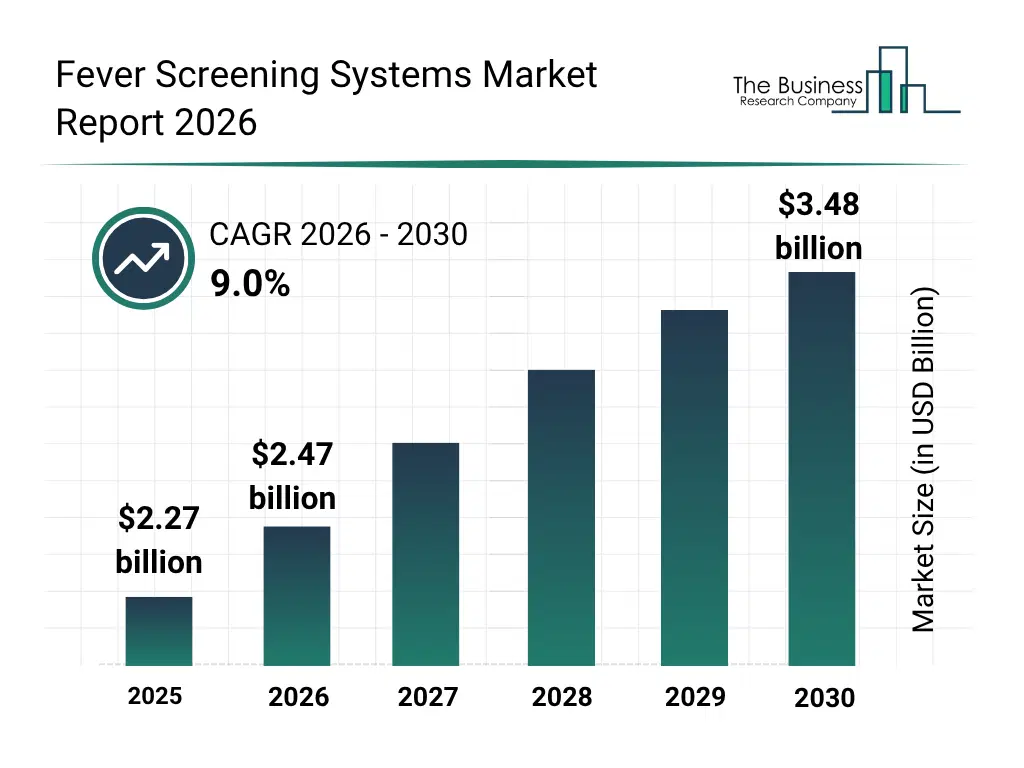
What Is The Fever Screening Systems Market Size and Share 2026?
The fever screening systems market size has grown strongly in recent years. It will grow from $2.27 billion in 2025 to $2.47 billion in 2026 at a compound annual growth rate (CAGR) of 8.8%. The growth in the historic period can be attributed to outbreak of global infectious diseases, increased public health surveillance measures, rising awareness of Infection Control, adoption of infrared thermography devices, government mandates for temperature screening.What Is The Fever Screening Systems Market Growth Forecast?
The fever screening systems market size is expected to see strong growth in the next few years. It will grow to $3.48 billion in 2030 at a compound annual growth rate (CAGR) of 9.0%. The growth in the forecast period can be attributed to growing investment in smart health infrastructure, increasing integration with access control systems, rising demand for real-time health monitoring, expansion of ai-based anomaly detection, increasing focus on workplace health safety standards. Major trends in the forecast period include increasing adoption of contactless temperature screening, growing deployment in high-traffic public areas, rising demand for portable screening devices, integration of automated alert and threshold systems, expansion of multi-person thermal scanning solutions.
Global Fever Screening Systems Market Segmentation
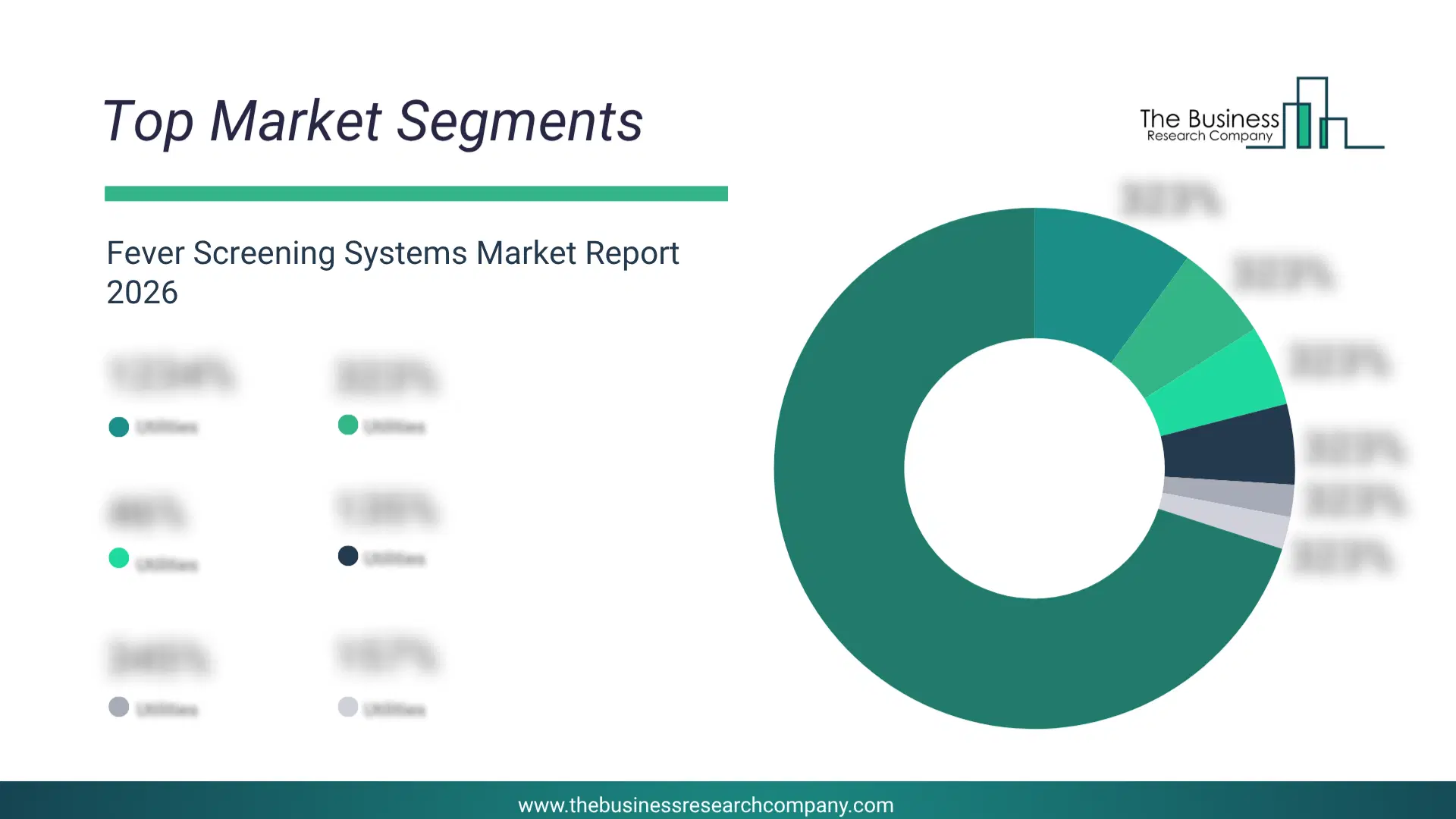
1) By Product Type: Infrared Thermography, Thermal Scanners, Non-Contact Thermometers, Other Product Types 2) By Technology: Fixed, Portable 3) By Application: Hospitals And Clinics, Airports, Public Places, Corporate Offices, Other Applications 4) By End-User: Healthcare, Transportation, Commercial, Industrial, Other End Users Subsegments: 1) By Infrared Thermography: Handheld Infrared Thermography Devices, Fixed Infrared Thermography Cameras, Portable Infrared Thermography Systems, Industrial Infrared Thermography Solutions, Medical Grade Infrared Thermography Devices 2) By Thermal Scanners: Handheld Thermal Scanners, Fixed Thermal Scanning Systems, Body Temperature Thermal Scanners, Industrial Thermal Scanners, High Resolution Thermal Scanners 3) By Non-Contact Thermometers: Digital Non-Contact Thermometers, Infrared Non-Contact Thermometers, Medical Non-Contact Thermometers, Industrial Non-Contact Thermometers, High Precision Non-Contact Thermometers 4) By Other Product Types: Temperature Screening Kiosks, Thermal Screening Gateways, Automated Fever Detection Systems, Wearable Temperature Monitoring Devices, Smart Fever Screening SolutionsWhat Are The Drivers Of The Fever Screening Systems Market?
The rising concerns over infectious diseases are expected to propel the growth of the fever screening systems market going forward. Infectious diseases are caused by harmful microorganisms such as bacteria, viruses, fungi, or parasites and can spread rapidly, particularly due to increasing urbanization and global travel. These factors have heightened public health awareness and demand for early detection tools in public and healthcare settings. Fever screening systems support infectious disease control efforts by enabling the rapid identification of individuals with elevated body temperatures, allowing for timely intervention and reducing the risk of widespread transmission. For instance, in June 2024, according to the UK Health Security Agency, a UK-based government agency, 1,681 patients were admitted to critical care with confirmed influenza in the UK between week 40 of 2022 and week 15 of 2023, highlighting the significant burden of infectious diseases and the growing need for preventive screening measures. Therefore, the rising concerns over infectious diseases is driving the growth of the fever screening systems industry. The increasing focus on preventive healthcare is expected to propel the growth of the fever screening systems market going forward. Preventive healthcare refers to actions taken to prevent diseases or detect them early before they become serious. Focus on preventive healthcare is growing due to rising healthcare costs and increasing awareness that early detection and disease prevention can reduce long-term medical expenses and improve overall health outcomes. A stronger focus on preventive healthcare increases the adoption of fever screening systems designed to quickly detect elevated body temperatures and enable timely identification of potential health risks. For instance, in October 2025, according to Eurostat, a Luxembourg-based government agency, preventive care was the next largest category, accounting for 3.7% of total healthcare expenditure in the EU in 2023, with the highest share recorded in the Netherlands at 5.2% and the lowest in Malta at 0.9%. Therefore, increasing focus on preventive healthcare is driving the growth of the fever screening systems industry. The increasing investments in healthcare infrastructure is expected to propel the growth of the fever screening systems market going forward. Healthcare infrastructure refers to the physical and organizational structures, facilities, equipment, and systems that support the delivery of healthcare services. Investments in healthcare infrastructure are growing due to rising healthcare demands and the need to modernize hospitals, clinics, and medical equipment to improve patient care and system efficiency. Investments in healthcare infrastructure enhance the capacity and technological readiness of hospitals, clinics, and public health facilities, enabling the deployment and effective operation of fever screening systems for early detection and monitoring of infectious diseases. For instance, in May 2023, according to the Department of Health and Social Care, a UK-based government department, the government has officially announced that, for the first time, the new hospital programme will be supported with $27.02 billion (£20 billion) in funding for hospital infrastructure. Therefore, the increasing investments in healthcare infrastructure is driving the growth of the fever screening systems industry.Key Players In The Global Fever Screening Systems Market
Major companies operating in the fever screening systems market are NEC Corporation, Leonardo S.p.A., Hikvision Digital Technology Co. Ltd., Ametek Land Inc., Omron Corporation, Dahua Technology Co. Ltd., Drägerwerk AG & Co. KGaA, Fluke Corporation, Testo SE & Co. KGaA, DALI Technology A/S, Mobotix AG, FLIR Systems Inc., Guangzhou SAT Infrared Technology Co. Ltd., Thermoteknix Systems Ltd., Vicon Industries Inc., Cantronic Systems (Canada) Inc., Infrared Cameras Inc., Omnisense Systems Ltd., Optotherm Inc., InfraTec GmbH, Guide Sensmart Tech Co. Ltd.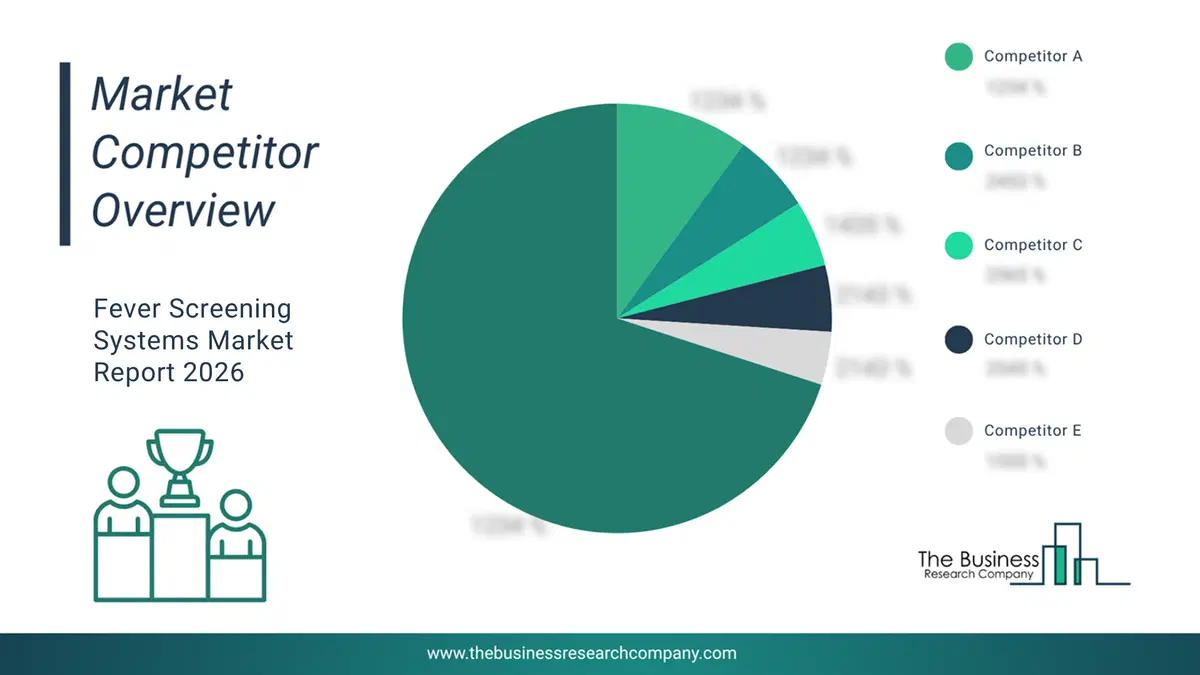
This chart is for illustrative purposes; the full report includes a detailed competitor analysis and comprehensive overview of the top 10 companies in the market.
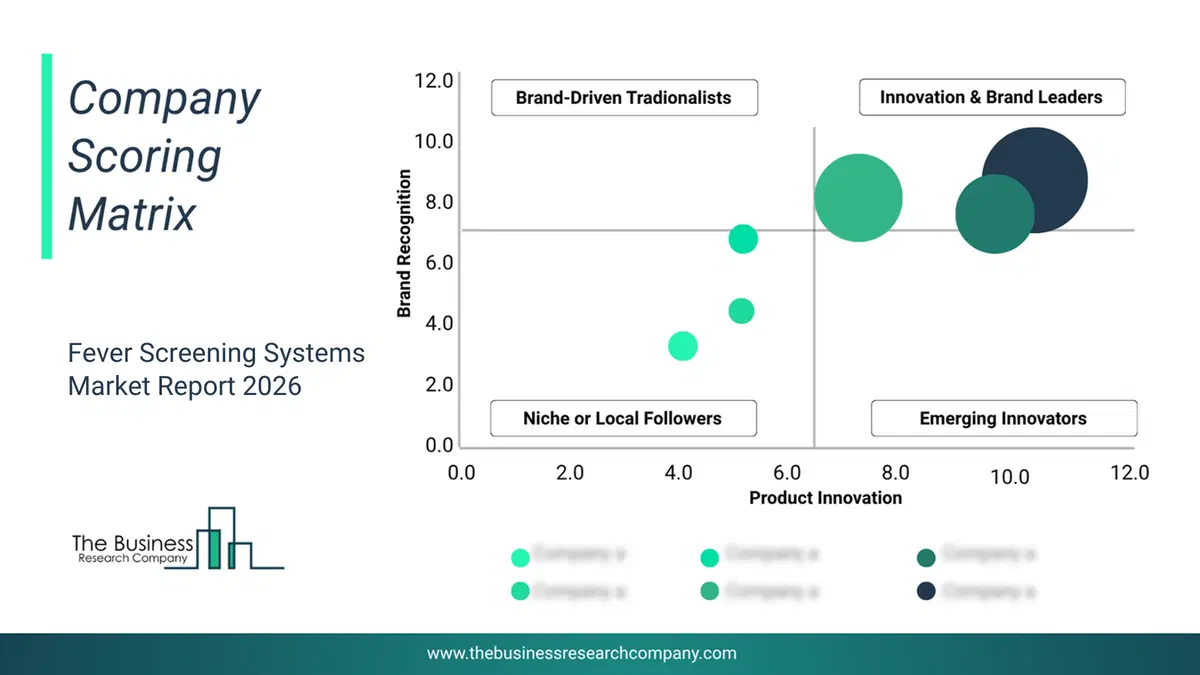
This chart maps companies by product innovation and brand strength, with bubble size indicating relative revenue, helping identify market leaders, challengers, and niche players. This is an illustrative chart; the full report provides a complete and accurate competitive analysis.
Regional Insights
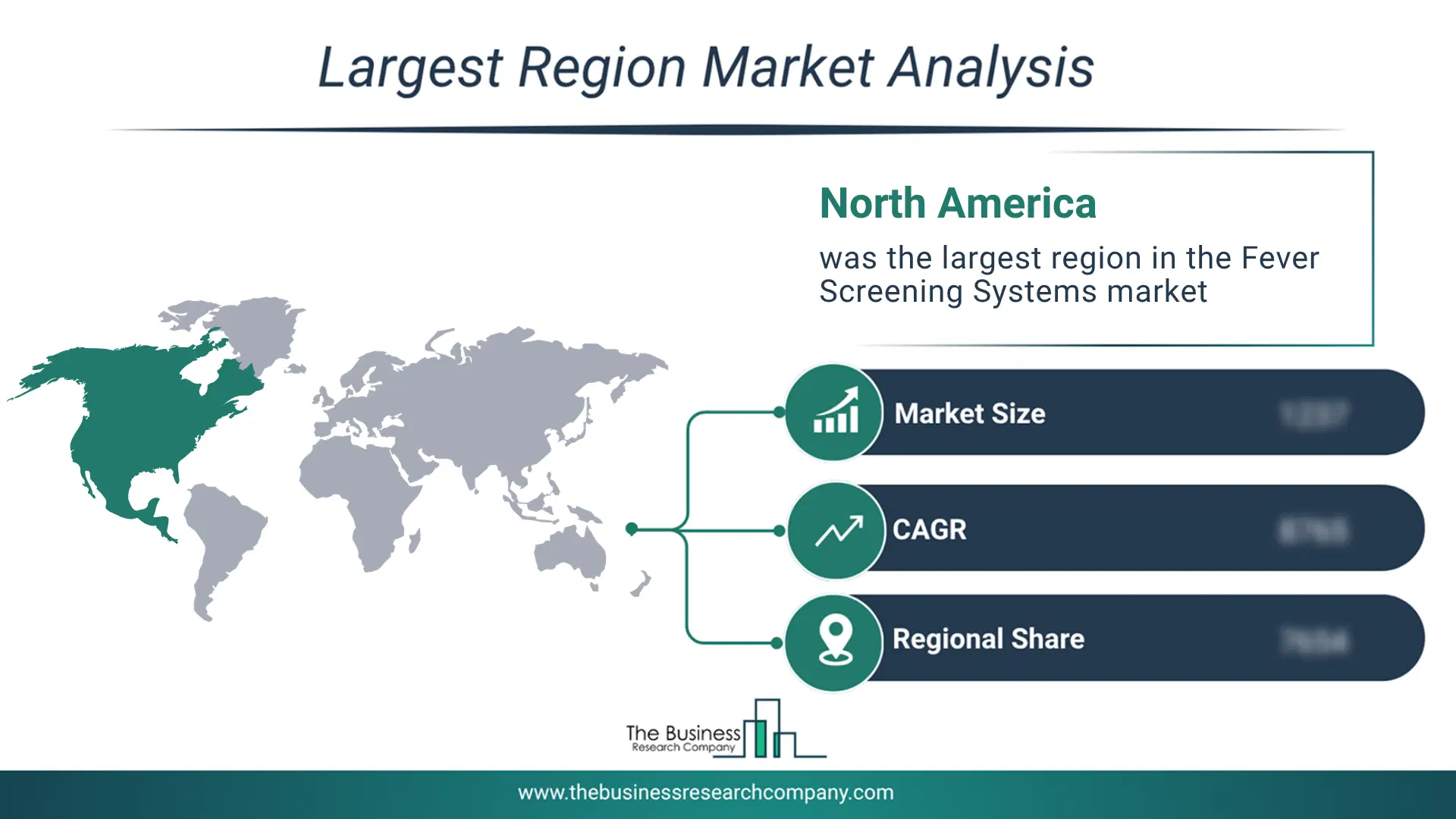
North America was the largest region in the fever screening systems market in 2025. Asia-Pacific is expected to be the fastest-growing region in the forecast period. The regions covered in this market report are Asia-Pacific, South East Asia, Western Europe, Eastern Europe, North America, South America, Middle East, Africa. The countries covered in this market report are Australia, Brazil, China, France, Germany, India, Indonesia, Japan, Taiwan, Russia, South Korea, UK, USA, Canada, Italy, Spain.What Defines the Fever Screening Systems Market?
The fever screening systems market consists of sales of temperature detection systems, integrated access control temperature devices, handheld digital temperature readers, and wearable temperature monitoring devices. Values in this market are ‘factory gate’ values, that is, the value of goods sold by the manufacturers or creators of the goods, whether to other entities (including downstream manufacturers, wholesalers, distributors, and retailers) or directly to end customers. The value of goods in this market includes related services sold by the creators of the goods.How is Market Value Defined and Measured?
The market value is defined as the revenues that enterprises gain from the sale of goods and/or services within the specified market and geography through sales, grants, or donations in terms of the currency (in USD unless otherwise specified). The revenues for a specified geography are consumption values that are revenues generated by organizations in the specified geography within the market, irrespective of where they are produced. It does not include revenues from resales along the supply chain, either further along the supply chain or as part of other products.
This chart presents market attractiveness based on a quantitative evaluation of growth, competition, strategic alignment, and risk, offering a clear view of opportunity areas for decision-making. This chart is for illustrative purposes; the full report contains the complete analysis.

This chart highlights the Total Addressable Market (TAM) by estimating the maximum revenue opportunity using an assumption-driven approach, supporting strategic planning and opportunity sizing across markets. The chart is illustrative; the full report provides a more comprehensive analysis.
What Key Data And Analysis Are Included In The Fever Screening Systems Market Report 2026?
The fever screening systems market research report is one of a series of new reports from The Business Research Company that provides market statistics, including industry global market size, regional shares, competitors with the market share, detailed market segments, market trends and opportunities, and any further data you may need to thrive in the fever screening systems industry. The market research report delivers a complete perspective of everything you need, with an in-depth analysis of the current and future state of the industry.Fever Screening Systems Market Report Forecast Analysis
| Report Attribute | Details |
|---|---|
| Market Size Value In 2026 | $2.47 billion |
| Revenue Forecast In 2030 | $3.48 billion |
| Growth Rate | CAGR of 9% from 2026 to 2030 |
| Base Year For Estimation | 2025 |
| Actual Estimates/Historical Data | 2020-2025 |
| Forecast Period | 2026 - 2030 |
| Market Representation | Revenue in USD Billion and CAGR from 2026 to 2030 |
| Segments Covered | Product Type, Technology, Application, End-User |
| Regional Scope | Asia-Pacific, Western Europe, Eastern Europe, North America, South America, Middle East, Africa |
| Country Scope | The countries covered in the report are Australia, Brazil, China, France, Germany, India, Indonesia, Japan, Taiwan, Russia, South Korea, UK, USA, Canada, Italy, Spain. |
| Key Companies Profiled | NEC Corporation, Leonardo S.p.A., Hikvision Digital Technology Co. Ltd., Ametek Land Inc., Omron Corporation, Dahua Technology Co. Ltd., Drägerwerk AG & Co. KGaA, Fluke Corporation, Testo SE & Co. KGaA, DALI Technology A/S, Mobotix AG, FLIR Systems Inc., Guangzhou SAT Infrared Technology Co. Ltd., Thermoteknix Systems Ltd., Vicon Industries Inc., Cantronic Systems (Canada) Inc., Infrared Cameras Inc., Omnisense Systems Ltd., Optotherm Inc., InfraTec GmbH, Guide Sensmart Tech Co. Ltd. |
| Customization Scope | Request for Customization |
| Pricing And Purchase Options | Explore Purchase Options |