
Fiber-To-The-Room (FTTR) Market Report 2026
Global Outlook – By Component (Optical Network Units, Optical Line Terminals, Cables, Other Components), By Service Type (Installation And Maintenance, Consulting, Other Service Types), By Deployment Mode (New Installations, Upgrades And Retrofits), By Application (Residential, Commercial, Hospitality, Education, Healthcare, Other Applications), By End-User (Individual Consumers, Enterprises, Service Providers) – Market Size, Trends, Strategies, and Forecast to 2030
Fiber-To-The-Room (FTTR) Market Overview
• Fiber-To-The-Room (FTTR) market size has reached to $2.77 billion in 2025 • Expected to grow to $7.07 billion in 2030 at a compound annual growth rate (CAGR) of 20.5% • Growth Driver: The Increasing Focus On Smart Homes Is Driving The Growth Of The Market Due To The Rising Demand For High-Speed Connectivity And Integrated Home Automation • Market Trend: Advancing Home Connectivity With AI-Enabled All-Optical Networks • North America was the largest region in 2025 and Asia-Pacific is the fastest growing region.Market Gains By 2030 – Top Opportunities By Segment
Market Gain identifies the most promising market opportunities by highlighting the segments or products expected to generate the highest incremental revenue growth over the next five years.
What Is Covered Under Fiber-To-The-Room (FTTR) Market?
Fiber-to-the-room (FTTR) is a network technology that delivers high-speed internet by extending fiber optic connections directly into individual rooms within a building. It transmits data through optical fibers to ensure ultra-fast connectivity and consistent performance. Fiber-to-the-room reduces latency and enhances stability, enabling seamless digital experiences. Its architecture supports future-proof scalability and efficient bandwidth utilization. The main component of the fiber-to-the-room (FTTR) are optical network units, optical line terminals, cables, and others. Optical network units are devices that connect optical fibers directly into individual rooms, providing ultra-fast and stable internet connectivity. The main service types are installation and maintenance, consulting, and others, and are deployed through several deployment modes, such as new installations, upgrades, and retrofits. It is applied in various applications, including residential, commercial, hospitality, education, healthcare, and others, and is used by several end-users, such as individual consumers, enterprises, and service providers.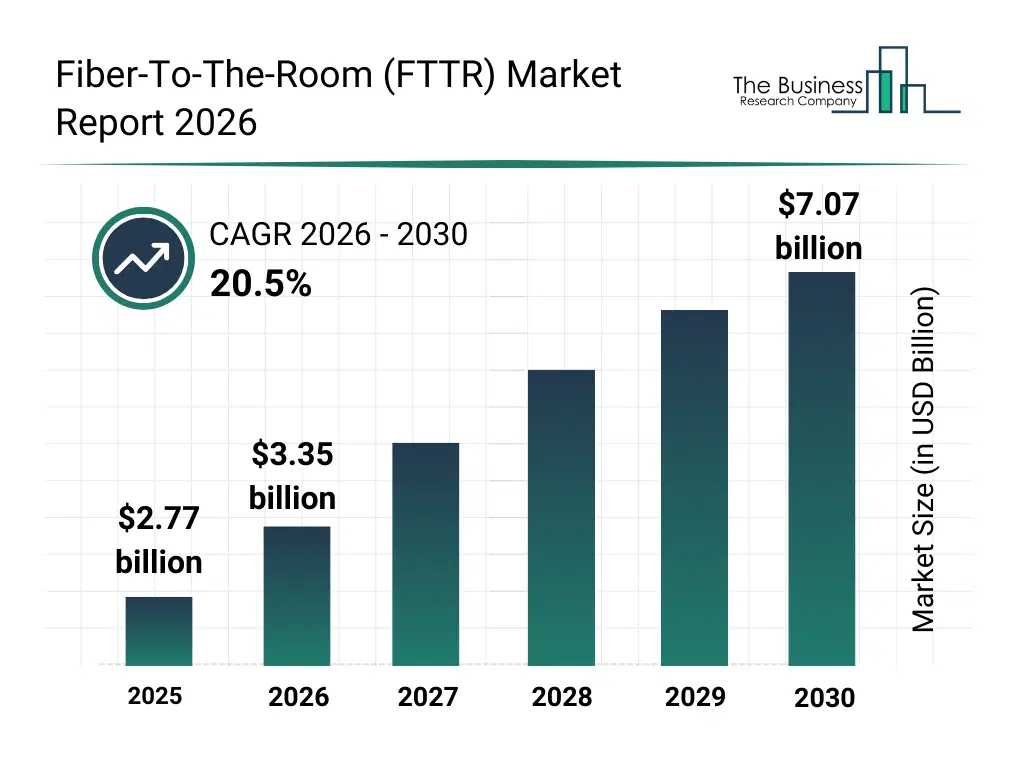
What Is The Fiber-To-The-Room (FTTR) Market Size and Share 2026?
The fiber-to-the-room (fttr) market size has grown exponentially in recent years. It will grow from $2.77 billion in 2025 to $3.35 billion in 2026 at a compound annual growth rate (CAGR) of 20.8%. The growth in the historic period can be attributed to reliance on wi-fi and copper cabling, inconsistent connectivity in rooms, high latency in multi-room setups, fragmented network infrastructure, limited bandwidth allocation.What Is The Fiber-To-The-Room (FTTR) Market Growth Forecast?
The fiber-to-the-room (fttr) market size is expected to see exponential growth in the next few years. It will grow to $7.07 billion in 2030 at a compound annual growth rate (CAGR) of 20.5%. The growth in the forecast period can be attributed to increasing demand for ultra-fast in-building connectivity, growth in residential and commercial smart buildings, adoption of high-speed fiber optics, rising need for scalable network solutions, expansion of digital services and applications. Major trends in the forecast period include high-speed in-room connectivity, low-latency data transmission, scalable fiber deployment, reliable bandwidth utilization, seamless digital experience.
Global Fiber-To-The-Room (FTTR) Market Segmentation
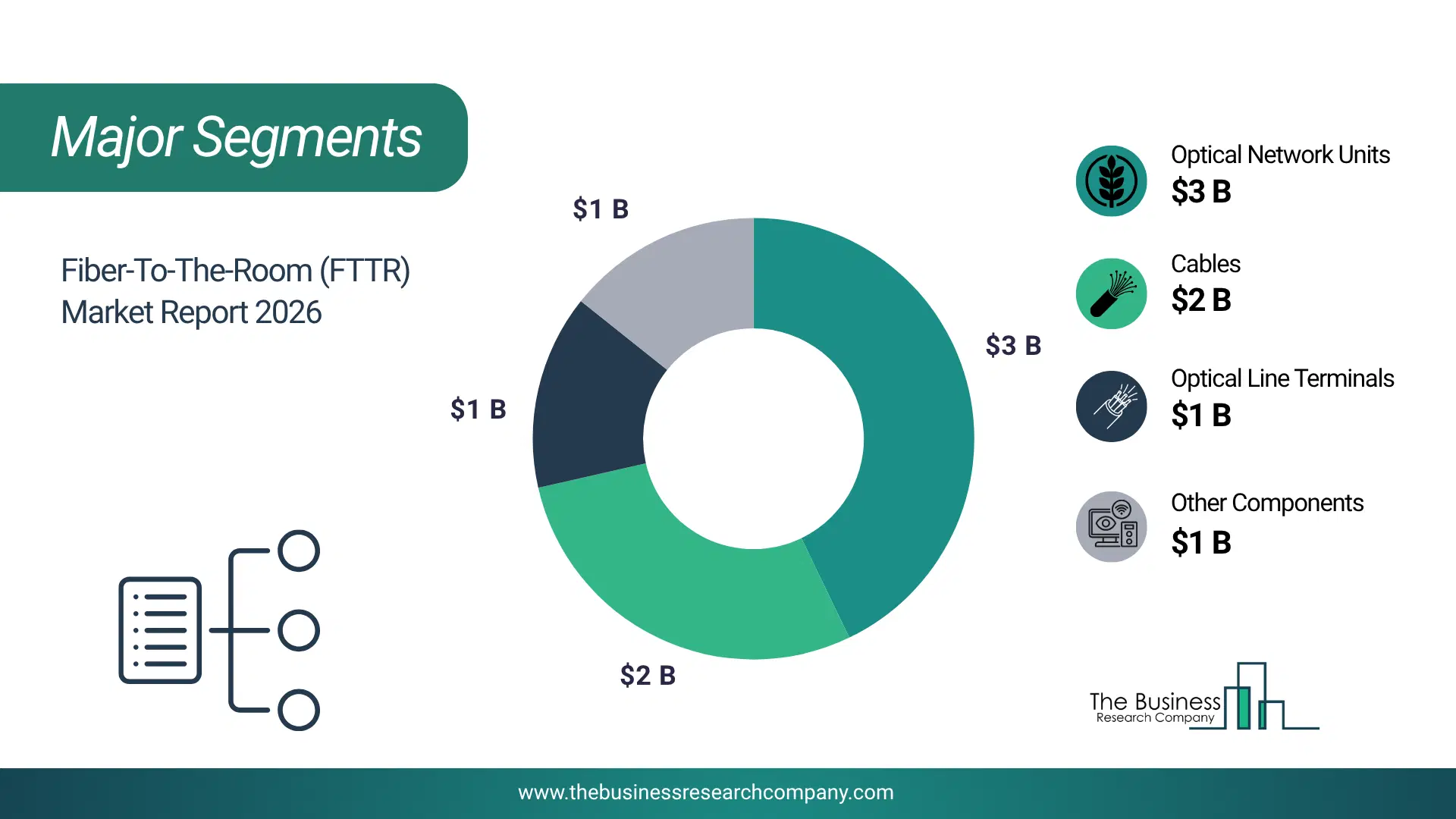
1) By Component: Optical Network Units, Optical Line Terminals, Cables, Other Components 2) By Service Type: Installation And Maintenance, Consulting, Other Service Types 3) By Deployment Mode: New Installations, Upgrades And Retrofits 4) By Application: Residential, Commercial, Hospitality, Education, Healthcare, Other Applications 5) By End-User: Individual Consumers, Enterprises, Service Providers Subsegments: 1) By Optical Network Units (ONU): Residential Optical Network Units (ONU), Enterprise Optical Network Units (ONU), Industrial Optical Network Units (ONU), Multi-Service Optical Network Units (ONU) 2) By Optical Line Terminals (OLT): Fixed Optical Line Terminals (OLT), Modular Optical Line Terminals (OLT), Chassis-Based Optical Line Terminals (OLT), Compact Optical Line Terminals (OLT) 3) By Cables: Single-Mode Fiber Cables (SMF), Multi-Mode Fiber Cables (MMF), Armored Fiber Cables, Indoor Fiber Cables, Outdoor Fiber Cables 4) By Other Components: Splitters, Optical Transceivers, Media Converters, Patch Panels, Connectors And Adapters The top segments in the fiber-to-the-room (fttr) market will be: • Optical Network Units will reach $2.68 Billion by 2030. • Cables will reach $1.62 Billion by 2030. • Optical Line Terminals will reach $1.09 Billion by 2030. • Other Components will reach $0.61 Billion by 2030.What Is The Driver Of The Fiber-To-The-Room (FTTR) Market?
The increasing focus on smart homes is expected to propel the growth of the fiber-to-the-room (FTTR) market going forward. A smart home is a living space featuring interconnected devices that manage, monitor, and automate systems to provide greater convenience, efficiency, and comfort. The increasing focus on smart homes is rising as digital lifestyles grow, with consumers seeking seamless connectivity and integrated home automation that relies on robust, high-speed internet infrastructure. Smart home adoption creates demand for ultra-high-speed, low-latency internet connections capable of supporting multiple connected devices simultaneously, driving the need for advanced fiber connectivity solutions that reach directly into individual rooms. For instance, in October 2024, according to the Central Statistics Office, an Ireland-based government agency, nearly 28% of internet users now use connected devices for home energy management, marking a 6-point increase compared to the same period in 2022. Therefore, increasing focus on smart homes is driving the growth of the fiber-to-the-room (FTTR) industry.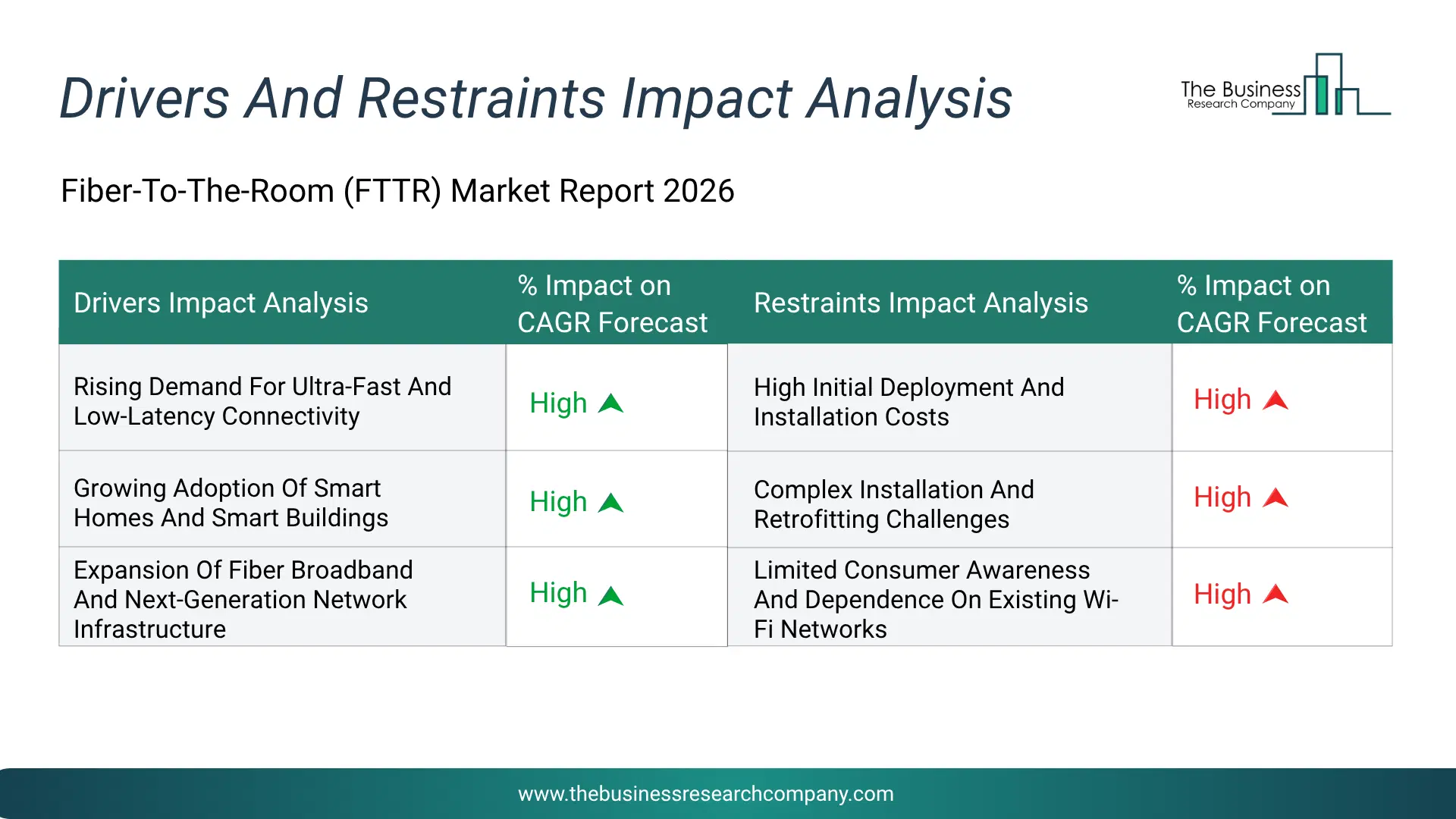
Infographic Chart Showing Key Market Drivers Analysis And Restraints For Fiber-To-The-Room (Fttr) Market
The chart presents an impact analysis of key drivers and restraints, quantifying their relative influence on the market's growth rate and helping assess the balance between growth enablers and limiting factors. This chart offers a high-level perspective; the full report contains more detailed insights.
How Will The Drivers Impact Growth In The Global Fiber-To-The-Room (FTTR) Market?
• Rising Demand For Ultra-Fast And Low-Latency Connectivity (High) – During the forecast period, the rising demand for ultra-fast and low-latency connectivity is expected to become a key growth driver for the fiber-to-the-room (FTTR) market by 2030. Increasing demand for ultra-fast and low-latency connectivity is driving the growth of the Fiber-to-the-Room (FTTR) market as consumers and enterprises increasingly require seamless high-bandwidth internet access for applications such as 8K video streaming, cloud gaming, virtual reality, video conferencing, and smart home automation. FTTR architecture delivers fiber-optic connectivity directly to individual rooms, ensuring stable gigabit-speed performance, reduced signal loss, and minimal latency compared to traditional Wi-Fi or copper-based networks, thereby supporting the growing need for uninterrupted digital experiences and next-generation connected environments. • Growing Adoption Of Smart Homes And Smart Buildings (High) – During the forecast period, the growing adoption of smart homes and smart buildings is expected to emerge as a major factor driving the expansion of the fiber-to-the-room (FTTR) market by 2030. The growing adoption of smart homes and smart buildings is accelerating the Fiber-to-the-Room (FTTR) market as connected devices, IoT systems, smart appliances, intelligent lighting, security surveillance, and building automation platforms require highly reliable, high-speed, and low-latency network infrastructure. FTTR enables seamless fiber-based connectivity across multiple rooms and devices, improving network stability, bandwidth capacity, and overall digital experience, making it an ideal solution for modern residential complexes, commercial buildings, hotels, and smart office environments. • Expansion Of Fiber Broadband And Next-Generation Network Infrastructure (High) – During the forecast period, the expansion of fiber broadband and next-generation network infrastructure is expected to act as a key growth catalyst for the fiber-to-the-room (FTTR) market by 2030. The expansion of fiber broadband and next-generation network infrastructure is significantly driving the Fiber-to-the-Room (FTTR) market as telecom operators and governments continue investing in gigabit fiber networks, F5G architecture, and high-capacity digital communication systems. FTTR supports these advancements by extending fiber connectivity directly to individual rooms, enabling faster data transmission, enhanced network reliability, and seamless coverage for bandwidth-intensive applications, thereby strengthening the development of smart homes, digital enterprises, and future-ready connected infrastructure.How Will The Restraints Impact Growth In The Global Fiber-To-The-Room (FTTR) Market?
• High Initial Deployment And Installation Costs (High) – During the forecast period, the high initial deployment and installation costs act as a major restraint for the Fiber-to-the-Room (FTTR) market because the technology requires extensive fiber-optic cabling, specialized networking equipment, and professional installation services across residential and commercial buildings. Retrofitting existing structures with fiber infrastructure can further increase labor and implementation expenses, making FTTR solutions less affordable for small-scale users and slowing adoption, particularly in cost-sensitive and developing markets. • Complex Installation And Retrofitting Challenges (High) – During the forecast period, the complex installation and retrofitting challenges restrain the growth of the Fiber-to-the-Room (FTTR) market because deploying fiber-optic infrastructure within existing residential and commercial buildings often requires structural modifications, advanced cabling work, and skilled technical expertise. Older buildings may lack the necessary pathways and network architecture for efficient fiber deployment, increasing installation time, operational complexity, and maintenance costs, which can delay or limit large-scale FTTR adoption. • Limited Consumer Awareness And Dependence On Existing Wi-Fi Networks (High) – During the forecast period, the limited consumer awareness and dependence on existing Wi-Fi networks restrain the growth of the Fiber-to-the-Room (FTTR) market as many users continue relying on conventional Wi-Fi routers and mesh systems without fully understanding the performance advantages of FTTR technology. Since existing wireless solutions are often perceived as sufficient for everyday connectivity needs, consumers may hesitate to invest in higher-cost fiber-based in-room networking infrastructure, thereby slowing the adoption of FTTR solutions across residential and small commercial environments.Key Players In The Global Fiber-To-The-Room (FTTR) Market
Major companies operating in the fiber-to-the-room (fttr) market are Huawei Technologies Co. Ltd., Sumitomo Electric Industries Ltd., Nokia Corporation, ZTE Corporation, TE Connectivity Ltd., Prysmian Group, Corning Incorporated, Amphenol Corporation, Furukawa Electric Co. Ltd., Fujikura Ltd., LS Cable & System Ltd., CommScope Holding Company Inc., FiberHome Telecommunication Technologies Co. Ltd., Belden Inc., Yangtze Optical Fibre and Cable Joint Stock Limited Company (YOFC), Huber+Suhner AG, OFS Fitel LLC, Sterlite Technologies Limited, Allied Telesis Holdings K.K., Reichle & De-Massari AG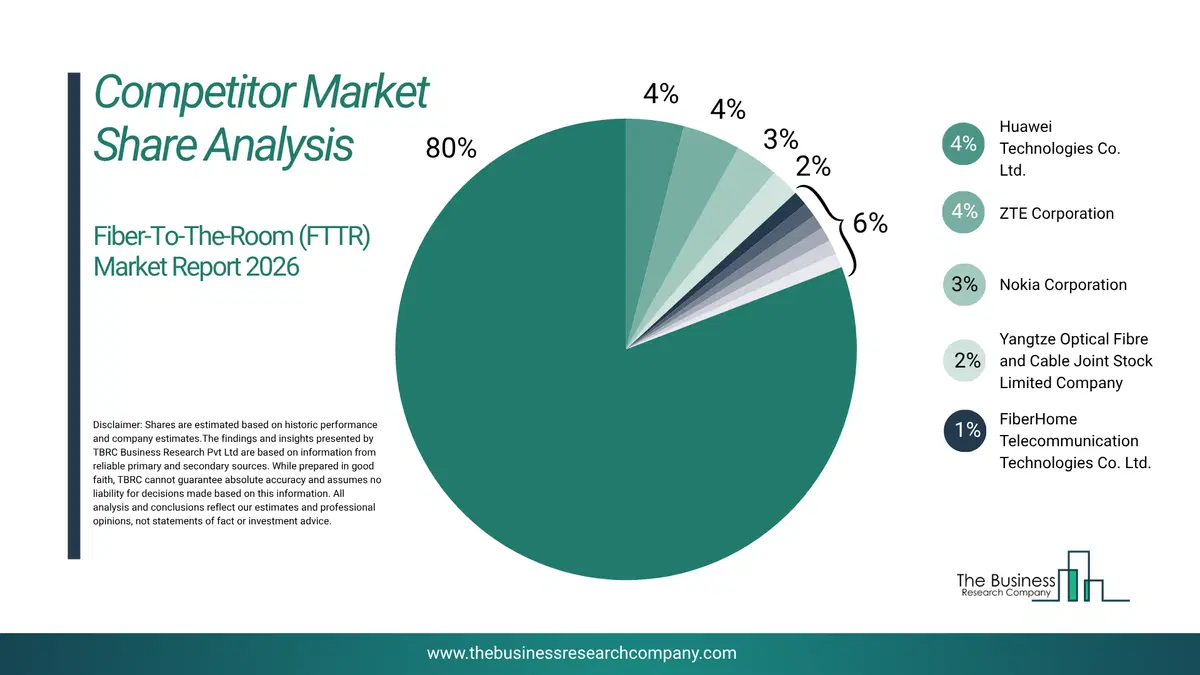
This chart is for illustrative purposes; the full report includes a detailed competitor analysis and comprehensive overview of the top 10 companies in the market.
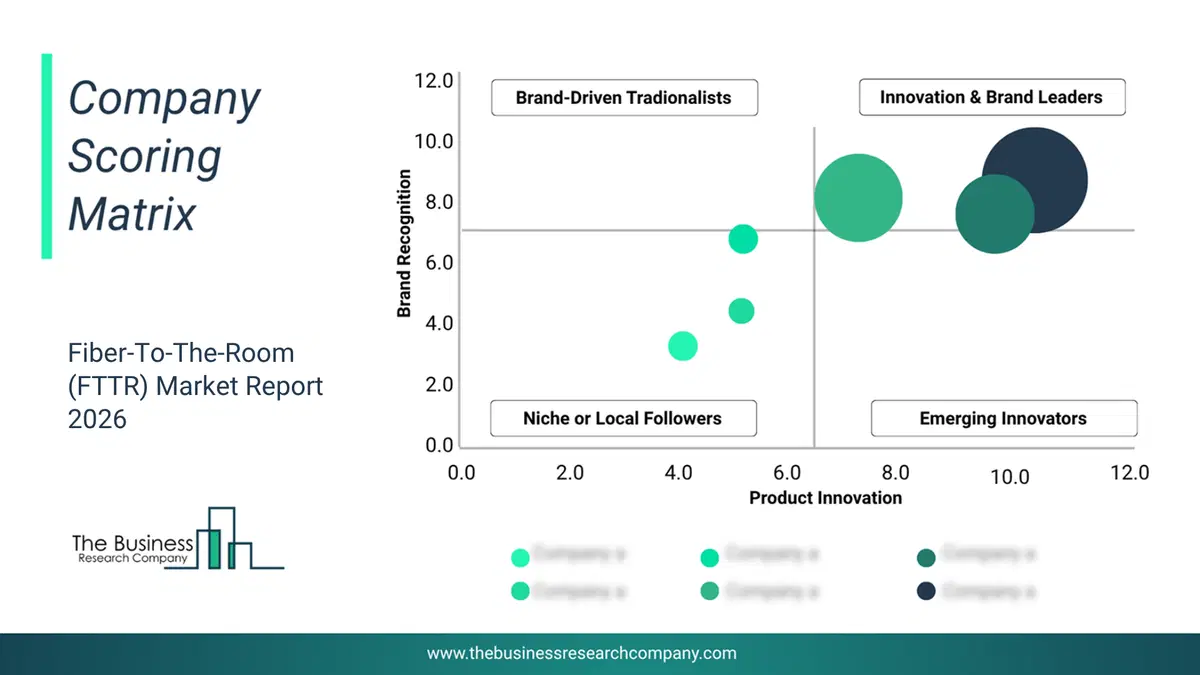
This chart maps companies by product innovation and brand strength, with bubble size indicating relative revenue, helping identify market leaders, challengers, and niche players. This is an illustrative chart; the full report provides a complete and accurate competitive analysis.
Global Fiber-To-The-Room (FTTR) Market Trends and Insights
Major companies operating in the fiber-to-the-room (FTTR) market are focusing on developing advanced products such as AI-enabled all-optical networks to enhance connectivity, storage, computing power, and user experience. AI-enabled all-optical networks utilize high-performance AI chips and symmetric 2.5G optical networks to deliver seamless connectivity and intelligent services. For instance, in September 2024, ZTE Corporation, a China-based telecommunications equipment company, launched Next-Gen FTTR series products featuring AI-enabled all-optical networks. These products utilize symmetric 2.5G optical networks and Wi-Fi 7 technology to achieve 3000 Mbps throughout the entire home, meeting future business development needs. The device features a six-antenna high-power layout and smart antenna algorithms that extend Wi-Fi coverage by 20%. Its D-WLAN architecture allows multiple access points (APs) to work together seamlessly, creating a unified home network with business-level latency as low as 10 ms. It boosts AP throughput by 10% to maintain smooth performance, and Wi-Fi sensing technology adds “invisible” monitoring, delivering high-precision care for private areas of the home.What Are Latest Mergers And Acquisitions In The Fiber-To-The-Room (FTTR) Market?
In September 2023, China Mobile Communications Corporation Co., Ltd., a China-based mobile telecommunications company, partnered with Huawei Corporation to deliver ultra-gigabit connectivity to the world’s highest and most remote locations. The partnership aims to provide reliable, high-speed FTTR-B network services for efficient communication, environmental monitoring, and business operations at extreme altitudes. Huawei Corporation is a China-based company that provides the fiber to the room (FTTR) solution.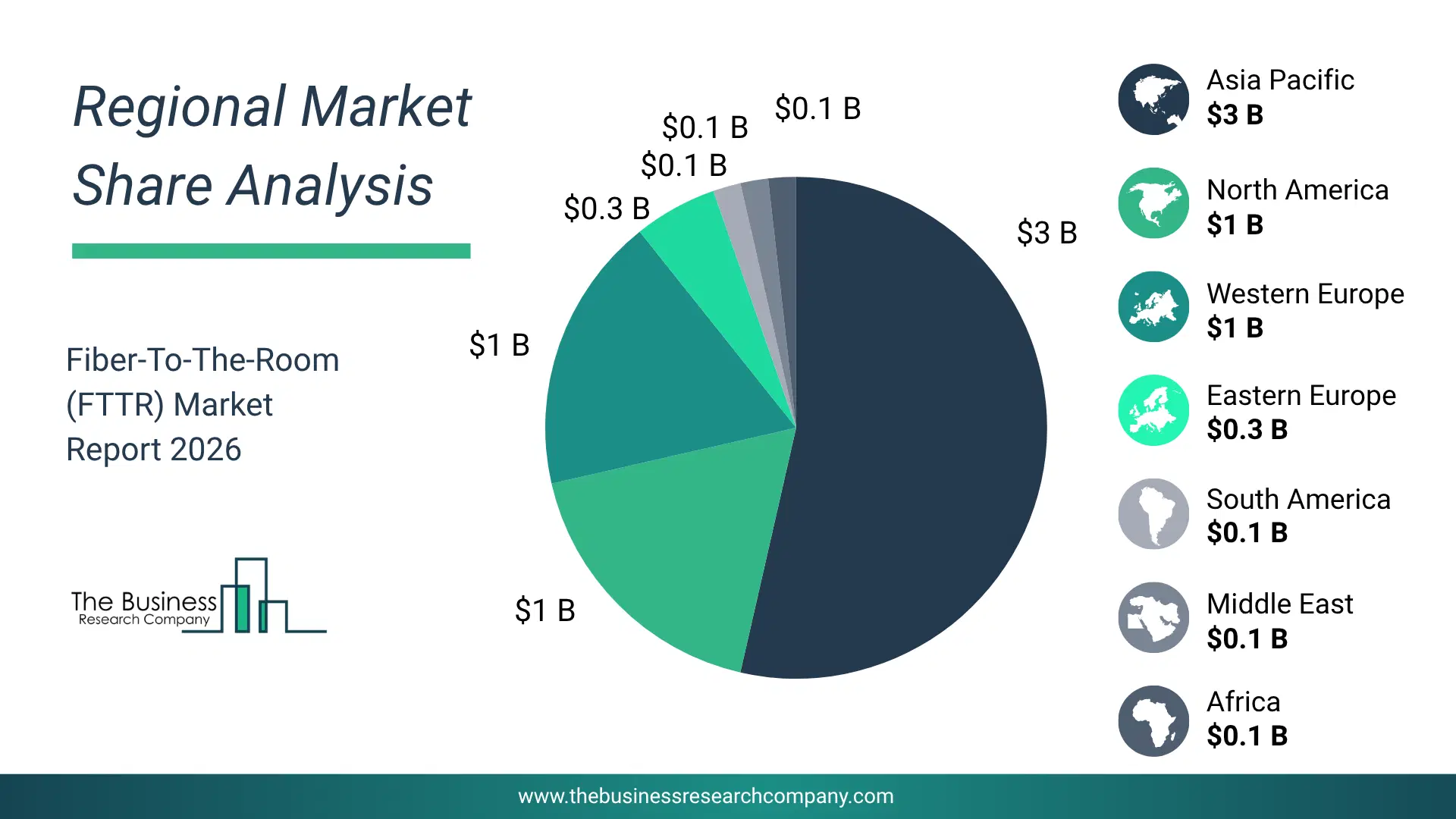
Regional Insights
North America was the largest region in the fiber-to-the-room (FTTR) market in 2025. Asia-Pacific is expected to be the fastest-growing region in the forecast period. The regions covered in this market report are Asia-Pacific, South East Asia, Western Europe, Eastern Europe, North America, South America, Middle East, Africa. The countries covered in this market report are Australia, Brazil, China, France, Germany, India, Indonesia, Japan, Taiwan, Russia, South Korea, UK, USA, Canada, Italy, Spain.What Defines the Fiber-To-The-Room (FTTR) Market?
The fiber-to-the-room (FTTR) market consists of revenues earned by entities by providing services such as low-latency connectivity, enterprise network services, reliable video and multimedia streaming, scalable network architecture, and secure data transmission. The market value includes the value of related goods sold by the service provider or included within the service offering. The fiber-to-the-room (FTTR) market also includes sales of fiber-optic splitters, connectors and adapters, patch panels, network interface devices, and distribution boxes. Values in this market are ‘factory gate’ values, that is, the value of goods sold by the manufacturers or creators of the goods, whether to other entities (including downstream manufacturers, wholesalers, distributors, and retailers) or directly to end customers. The value of goods in this market includes related services sold by the creators of the goods.How is Market Value Defined and Measured?
The market value is defined as the revenues that enterprises gain from the sale of goods and/or services within the specified market and geography through sales, grants, or donations in terms of the currency (in USD unless otherwise specified). The revenues for a specified geography are consumption values that are revenues generated by organizations in the specified geography within the market, irrespective of where they are produced. It does not include revenues from resales along the supply chain, either further along the supply chain or as part of other products.
This chart presents market attractiveness based on a quantitative evaluation of growth, competition, strategic alignment, and risk, offering a clear view of opportunity areas for decision-making. This chart is for illustrative purposes; the full report contains the complete analysis.

This chart highlights the Total Addressable Market (TAM) by estimating the maximum revenue opportunity using an assumption-driven approach, supporting strategic planning and opportunity sizing across markets. The chart is illustrative; the full report provides a more comprehensive analysis.
What Key Data and Analysis Are Included in the Fiber-To-The-Room (FTTR) Market Report 2026?
The fiber-to-the-room (fttr) market research report is one of a series of new reports from The Business Research Company that provides market statistics, including industry global market size, regional shares, competitors with the market share, detailed market segments, market trends and opportunities, and any further data you may need to thrive in the fiber-to-the-room (fttr) industry. The market research report delivers a complete perspective of everything you need, with an in-depth analysis of the current and future state of the industry.Fiber-To-The-Room (FTTR) Market Report Forecast Analysis
| Report Attribute | Details |
|---|---|
| Market Size Value In 2026 | $3.35 billion |
| Revenue Forecast In 2030 | $7.07 billion |
| Growth Rate | CAGR of 20.8% from 2026 to 2030 |
| Base Year For Estimation | 2025 |
| Actual Estimates/Historical Data | 2020-2025 |
| Forecast Period | 2026 - 2030 |
| Market Representation | Revenue in USD Billion and CAGR from 2026 to 2030 |
| Segments Covered | Component, Service Type, Deployment Mode, Application, End-User |
| Regional Scope | Asia-Pacific, Western Europe, Eastern Europe, North America, South America, Middle East, Africa |
| Country Scope | The countries covered in the report are Australia, Brazil, China, France, Germany, India, Indonesia, Japan, Taiwan, Russia, South Korea, UK, USA, Canada, Italy, Spain. |
| Key Companies Profiled | Huawei Technologies Co. Ltd., Sumitomo Electric Industries Ltd., Nokia Corporation, ZTE Corporation, TE Connectivity Ltd., Prysmian Group, Corning Incorporated, Amphenol Corporation, Furukawa Electric Co. Ltd., Fujikura Ltd., LS Cable & System Ltd., CommScope Holding Company Inc., FiberHome Telecommunication Technologies Co. Ltd., Belden Inc., Yangtze Optical Fibre and Cable Joint Stock Limited Company (YOFC), Huber+Suhner AG, OFS Fitel LLC, Sterlite Technologies Limited, Allied Telesis Holdings K.K., Reichle & De-Massari AG |
| Customization Scope | Request for Customization |
| Pricing And Purchase Options | Explore Purchase Options |