

Fibrocystic Breast Condition Market Report 2026
Global Outlook – By Treatment (Medication, Oral Contraceptives, Fine-Needle Aspiration, Other Treatments), By Diagnosis (Mammogram, Ultrasound, Clinical Breast Exam, Other Diagnosis), By End-Users (Hospital, Clinic, Other End-Users) - Market Size, Trends, Strategies, and Forecast to 2030
Fibrocystic Breast Condition Market Overview
• Fibrocystic Breast Condition market size has reached to $7.1 billion in 2025 • Expected to grow to $9.41 billion in 2030 at a compound annual growth rate (CAGR) of 5.8% • Growth Driver: Rising Prevalence Of Breast Cancer Driving The Growth Of The Market Due To Increasing Health Concerns And Risk Awareness • Market Trend: Advancements In Diagnostic Devices For Fibrocystic Breast Condition With IzoView • North America was the largest region in 2025.What Is Covered Under Fibrocystic Breast Condition Market?
Fibrocystic breast condition (FBC) refers to a noncancerous condition characterized by lumpiness, tenderness, and pain in one or both breasts due to fibrous tissue and fluid-filled cysts. It is a common benign breast disorder caused by hormonal fluctuations, primarily affecting women of reproductive age. Symptoms may vary throughout the menstrual cycle and typically resolve after menopause. The main types of treatment for fibrocystic breast condition include medication, oral contraceptives, fine-needle aspiration, and other treatments. Medications help relieve pain and tenderness and may include over-the-counter pain relievers or, in severe cases, hormonal therapies. This condition is diagnosed using various methods such as mammograms, ultrasounds, clinical breast exams, and other diagnostic techniques. It is used by various end-users, including hospitals, clinics, and others.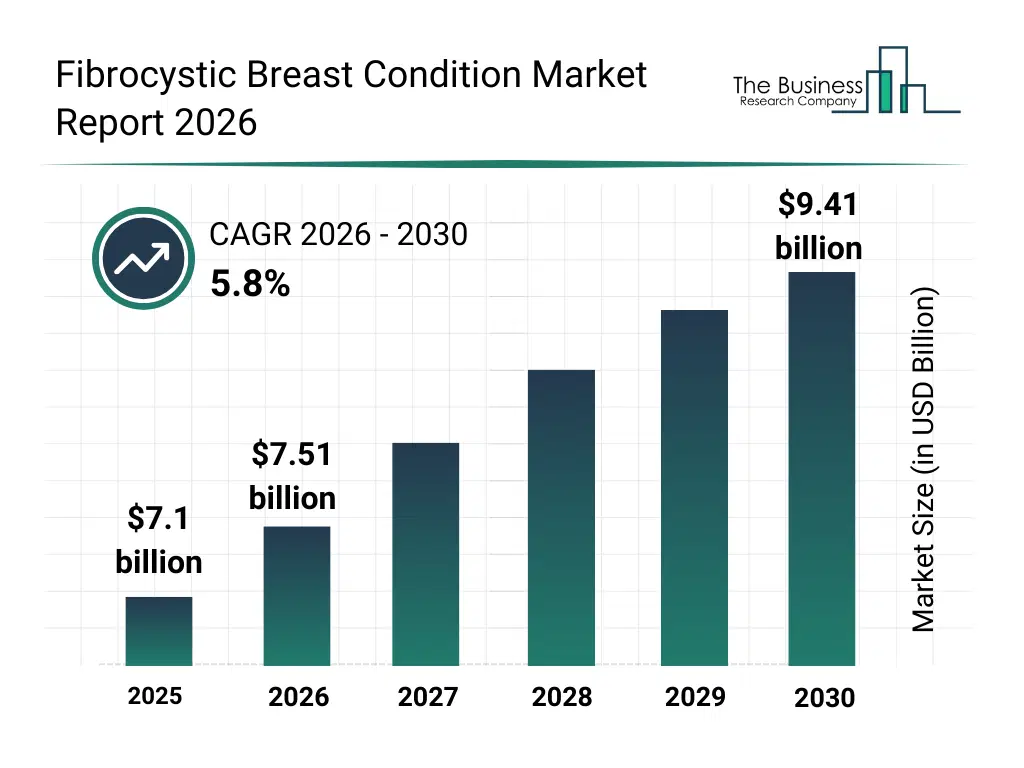
What Is The Fibrocystic Breast Condition Market Size and Share 2026?
The fibrocystic breast condition market size has grown strongly in recent years. It will grow from $7.1 billion in 2025 to $7.51 billion in 2026 at a compound annual growth rate (CAGR) of 5.8%. The growth in the historic period can be attributed to high prevalence among reproductive-age women, increased breast health awareness, availability of diagnostic imaging, expansion of women’s healthcare services, improved clinical examinations.What Is The Fibrocystic Breast Condition Market Growth Forecast?
The fibrocystic breast condition market size is expected to see strong growth in the next few years. It will grow to $9.41 billion in 2030 at a compound annual growth rate (CAGR) of 5.8%. The growth in the forecast period can be attributed to growth in preventive women’s healthcare, expansion of non-invasive diagnostics, increasing focus on hormonal balance management, rising patient education initiatives, advancement in breast imaging technologies. Major trends in the forecast period include rising awareness of benign breast disorders, increased use of non-invasive diagnostic techniques, growing preference for conservative and supportive treatments, expansion of women’s health clinics, integration of lifestyle and dietary management.
Global Fibrocystic Breast Condition Market Segmentation
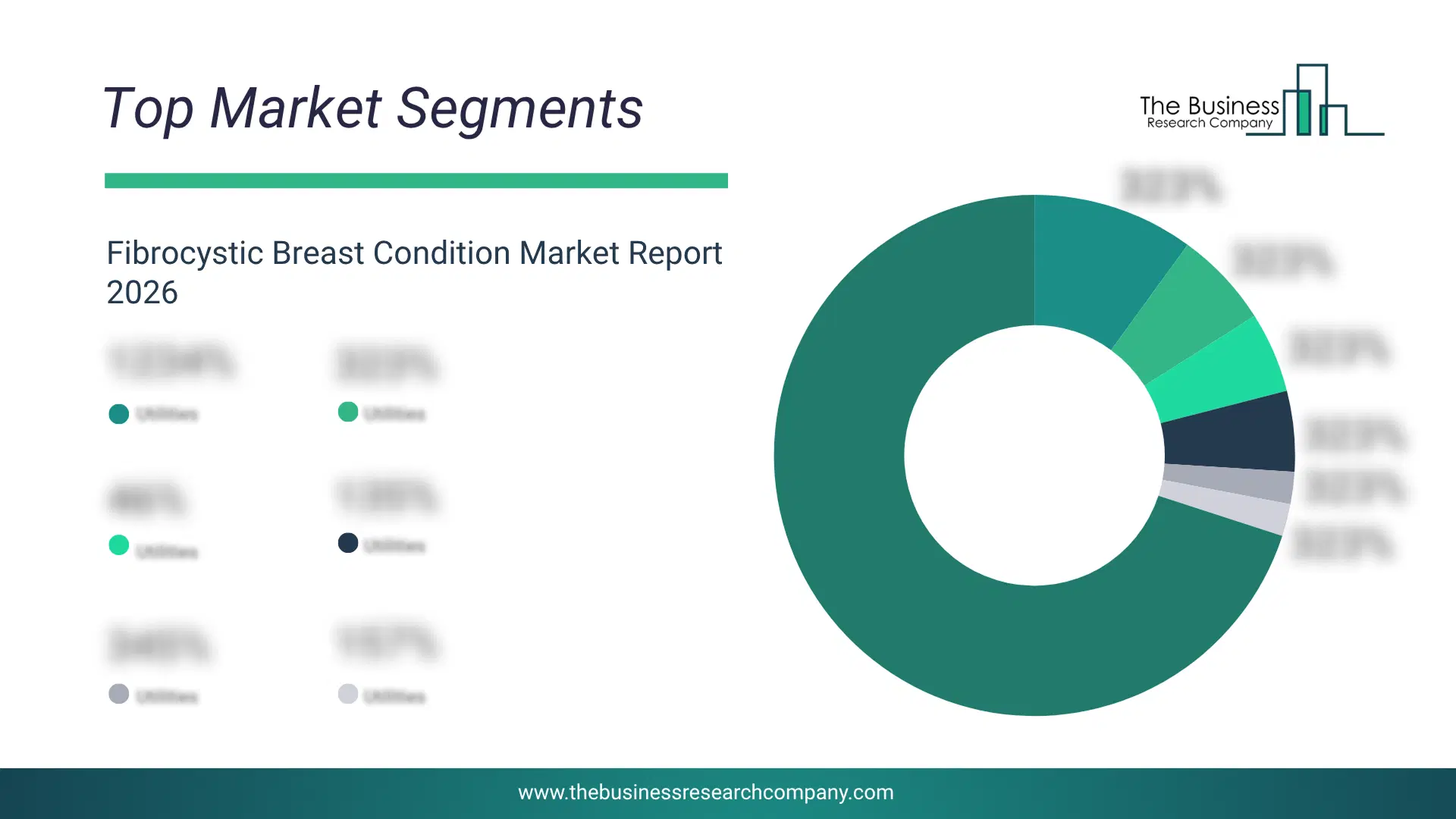
1) By Treatment: Medication, Oral Contraceptives, Fine-Needle Aspiration, Other Treatments 2) By Diagnosis: Mammogram, Ultrasound, Clinical Breast Exam, Other Diagnosis 3) By End-Users: Hospital, Clinic, Other End-Users Subsegments: 1) By Medication: Over-the-Counter (OTC) Pain Relievers, Prescription Pain Relievers, Hormonal Therapy 2) By Oral Contraceptives: Combination Pills, Progestin-Only Pills 3) By Fine-Needle Aspiration: Ultrasound-Guided Fine-Needle Aspiration, Manual Fine-Needle Aspiration 4) By Other Treatments: Lifestyle And Dietary Changes, Cyst Drainage Procedures, Supportive Therapy, Herbal And Dietary SupplementsWhat Are The Drivers Of The Fibrocystic Breast Condition Market?
The rising prevalence of breast cancer is expected to propel the growth of the fibrocystic breast condition market going forward. Breast cancer is a type of cancer that starts in the cells of the breast, most commonly affecting women. The rising prevalence of breast cancer is driven by factors such as an aging population, unhealthy lifestyles, genetic factors, increasing screening, and environmental exposures. Fibrocystic breast condition (FBC) may increase the risk of breast cancer by creating dense breast tissue, which can promote cellular changes, heightened hormone sensitivity, and prolonged inflammation, potentially creating an environment conducive to cancer development. For instance, in July 2024, according to the American Cancer Society Facts and Figures, a US-based professional organization, the number of new breast cancer cases in the United States is projected to increase from 300,590 in 2023 to 313,510 in 2024. Therefore, the increasing prevalence of breast cancer is driving the growth of the fibrocystic breast condition industry. Rising healthcare spending is expected to propel the growth of the fibrocystic breast condition market going forward. Healthcare spending refers to the total amount of money that individuals, insurers, and governments allocate to medical goods and services. Healthcare spending is rising because aging populations require more frequent and complex medical interventions that increase overall demand for healthcare services. The fibrocystic breast condition market supports rising healthcare spending by driving continuous investment in advanced technologies and treatments that expand care options and improve clinical outcomes. For instance, in December 2024, according to the Centers for Medicare & Medicaid Services (CMS), a US-based federal government agency, national health expenditure increased 7.5 percent in 2023 compared to 4.6 percent in 2022. Therefore, rising healthcare spending is expected to drive the growth of the fibrocystic breast condition industry.Key Players In The Global Fibrocystic Breast Condition Market
Major companies operating in the fibrocystic breast condition market are Pfizer Inc., Roche Diagnostics, Merck & Co Inc., Bayer AG, Sanofi SA, Novartis AG, GlaxoSmithKline plc, Eli Lilly and Company, Teva Pharmaceutical Industries Ltd, Hikma Pharmaceuticals plc, Steris Pharma, Lannett Company Inc., AdvaCare Pharma USA LLC, Siemens Healthineers AG, GE Healthcare Technologies Inc., Philips Healthcare, Fujifilm Holdings Corporation, Canon Medical Systems Corporation, Hologic Inc., Hitachi Medical Systems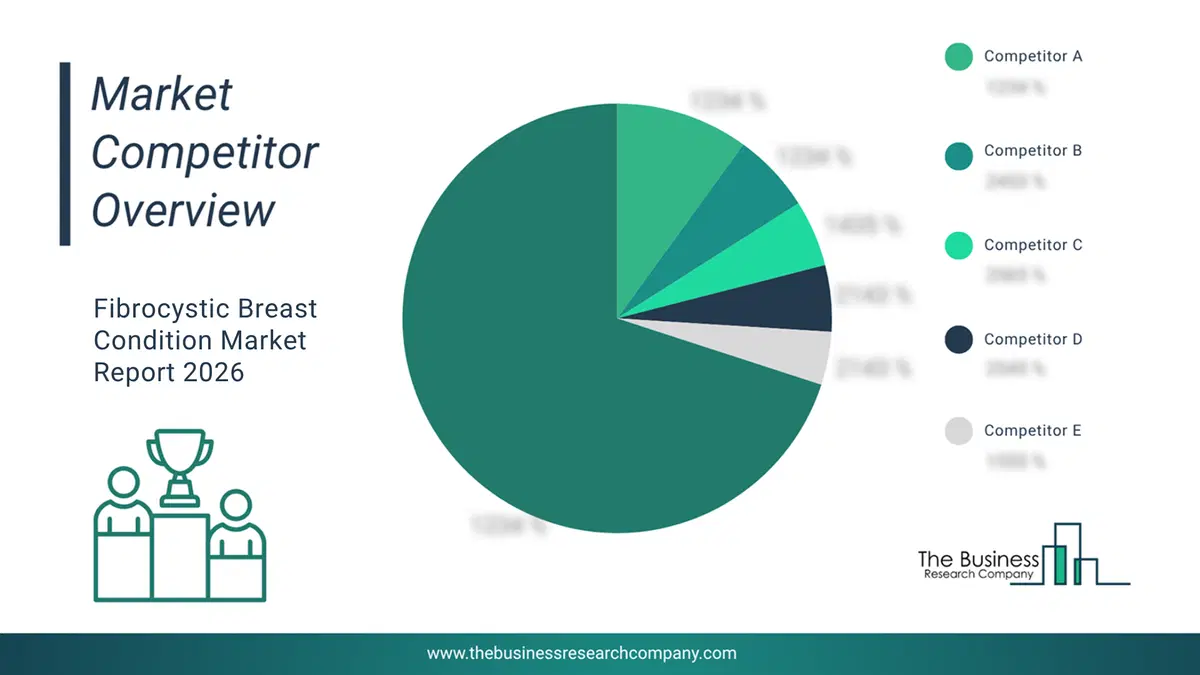
This chart is for illustrative purposes; the full report includes a detailed competitor analysis and comprehensive overview of the top 10 companies in the market.
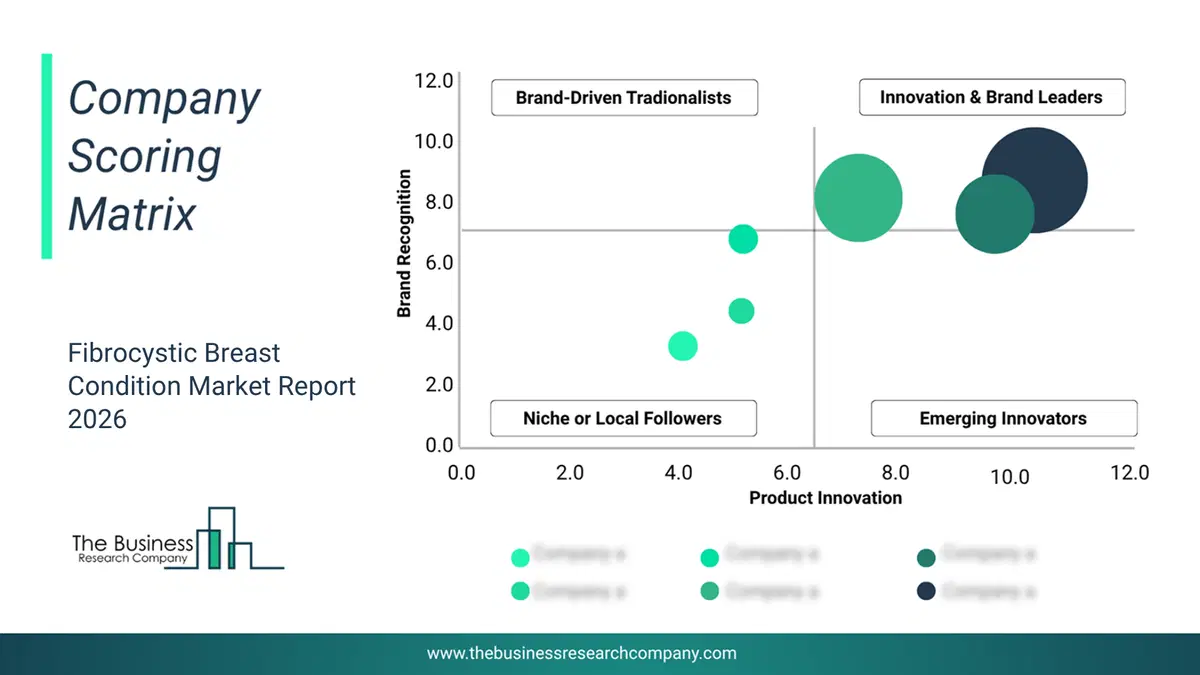
This chart maps companies by product innovation and brand strength, with bubble size indicating relative revenue, helping identify market leaders, challengers, and niche players. This is an illustrative chart; the full report provides a complete and accurate competitive analysis.
Global Fibrocystic Breast Condition Market Trends and Insights
Major companies operating in the fibrocystic breast condition market are developing advanced technologies, such as diagnostic devices, to improve diagnostic accuracy and treatment outcomes. A diagnostic device refers to any tool or instrument used to identify, detect, or assess the presence of a medical condition, disease, or health issue. For instance, in August 2024, Izotropic Corporation, a Canada-based medical device company, launched IzoView, a breast CT imaging system designed for diagnosing breast cancer in women with dense breast tissue. The company is pursuing regulatory approval based on a clinical study aimed at demonstrating IzoView's superiority when used alongside digital breast tomosynthesis (DBT), compared to DBT alone. With high-resolution 3D imaging capabilities and the benefit of not requiring breast compression, IzoView seeks to improve breast cancer detection rates in women with dense breast tissue, a group that is at a higher risk for developing the disease.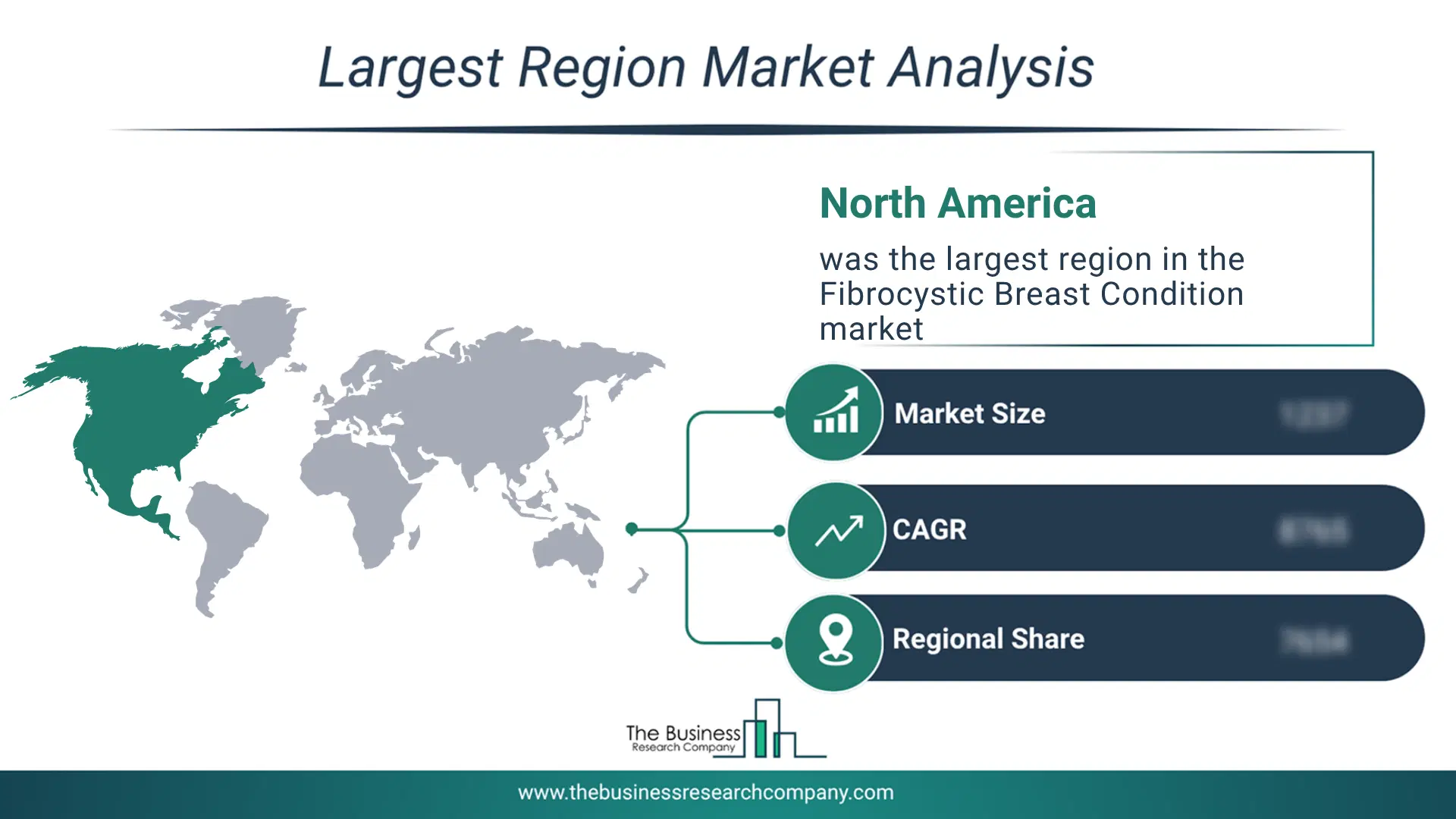
Regional Outlook
North America was the largest region in the fibrocystic breast condition market in 2025. The regions covered in this market report are Asia-Pacific, South East Asia, Western Europe, Eastern Europe, North America, South America, Middle East, Africa. The countries covered in this market report are Australia, Brazil, China, France, Germany, India, Indonesia, Japan, Taiwan, Russia, South Korea, UK, USA, Canada, Italy, Spain.What Defines the Fibrocystic Breast Condition Market?
The fibrocystic breast condition market consists of revenues earned by entities by providing services such as diagnosis and screening services, surgical interventions, healthcare consultations and follow-ups, medical treatments, and medications. The market value includes the value of related goods sold by the service provider or included within the service offering. The fibrocystic breast condition market also includes sales of hormonal therapies, ultrasound devices, cyst aspiration kits, vitamins, and supplements. Values in this market are ‘factory gate’ values, that is, the value of goods sold by the manufacturers or creators of the goods, whether to other entities (including downstream manufacturers, wholesalers, distributors, and retailers) or directly to end customers. The value of goods in this market includes related services sold by the creators of the goods.How is Market Value Defined and Measured?
The market value is defined as the revenues that enterprises gain from the sale of goods and/or services within the specified market and geography through sales, grants, or donations in terms of the currency (in USD unless otherwise specified). The revenues for a specified geography are consumption values that are revenues generated by organizations in the specified geography within the market, irrespective of where they are produced. It does not include revenues from resales along the supply chain, either further along the supply chain or as part of other products.
This chart presents market attractiveness based on a quantitative evaluation of growth, competition, strategic alignment, and risk, offering a clear view of opportunity areas for decision-making. This chart is for illustrative purposes; the full report contains the complete analysis.

This chart highlights the Total Addressable Market (TAM) by estimating the maximum revenue opportunity using an assumption-driven approach, supporting strategic planning and opportunity sizing across markets. The chart is illustrative; the full report provides a more comprehensive analysis.
What Key Data and Analysis Are Included in the Fibrocystic Breast Condition Market Report 2026?
The fibrocystic breast condition market research report is one of a series of new reports from The Business Research Company that provides market statistics, including industry global market size, regional shares, competitors with the market share, detailed market segments, market trends and opportunities, and any further data you may need to thrive in the fibrocystic breast condition industry. The market research report delivers a complete perspective of everything you need, with an in-depth analysis of the current and future state of the industry.Fibrocystic Breast Condition Market Report Forecast Analysis
| Report Attribute | Details |
|---|---|
| Market Size Value In 2026 | $7.51 billion |
| Revenue Forecast In 2030 | $9.41 billion |
| Growth Rate | CAGR of 5.8% from 2026 to 2030 |
| Base Year For Estimation | 2025 |
| Actual Estimates/Historical Data | 2020-2025 |
| Forecast Period | 2026 - 2030 |
| Market Representation | Revenue in USD Billion and CAGR from 2026 to 2030 |
| Segments Covered | Treatment, Diagnosis, End-Users |
| Regional Scope | Asia-Pacific, Western Europe, Eastern Europe, North America, South America, Middle East, Africa |
| Country Scope | The countries covered in the report are Australia, Brazil, China, France, Germany, India, Indonesia, Japan, Taiwan, Russia, South Korea, UK, USA, Canada, Italy, Spain |
| Key Companies Profiled | Pfizer Inc., Roche Diagnostics, Merck & Co Inc., Bayer AG, Sanofi SA, Novartis AG, GlaxoSmithKline plc, Eli Lilly and Company, Teva Pharmaceutical Industries Ltd, Hikma Pharmaceuticals plc, Steris Pharma, Lannett Company Inc., AdvaCare Pharma USA LLC, Siemens Healthineers AG, GE Healthcare Technologies Inc., Philips Healthcare, Fujifilm Holdings Corporation, Canon Medical Systems Corporation, Hologic Inc., Hitachi Medical Systems |
| Customization Scope | Request for Customization |
| Pricing And Purchase Options | Explore Purchase Options |