
Fifth Generation (5G) Tele-Mentored Robotic Surgery Market Report 2026
Global Outlook – By Component (Hardware, Software, Services), By Surgery Type (General Surgery, Orthopedic Surgery, Neurosurgery, Urology, Gynecology, Other Surgery Types), By Application (Training And Education, Remote Surgery, Consultation, Other Applications), By End-User (Hospitals, Ambulatory Surgical Centers, Specialty Clinics, Other End-Users) – Market Size, Trends, Strategies, and Forecast to 2030
Fifth Generation (5G) Tele-Mentored Robotic Surgery Market Overview
• Fifth Generation (5G) Tele-Mentored Robotic Surgery market size has reached to $1.95 billion in 2025 • Expected to grow to $6.15 billion in 2030 at a compound annual growth rate (CAGR) of 25.7% • Growth Driver: Growing Acceptance of Telemedicine Solutions Driving The Market Growth Due To Increasing Demand For Virtual Medical Services • Market Trend: Samsung Medison Strengthens Ultrasound Capabilities With Acquisition Of Sonio SAS • North America was the largest region in 2025 and Asia-Pacific is the fastest growing region.Market Gains By 2030 – Top Opportunities By Segment
Market Gain identifies the most promising market opportunities by highlighting the segments or products expected to generate the highest incremental revenue growth over the next five years.
What Is Covered Under Fifth Generation (5G) Tele-Mentored Robotic Surgery Market?
Fifth generation (5G) tele-mentored robotic surgery is a surgical approach that leverages 5G wireless technology to enable real-time guidance and support during robotic procedures. It allows expert surgeons to provide remote mentorship with minimal latency and high-definition visual feedback. This integration enhances precision, safety, and efficiency in complex surgical interventions, reduces the risk of complications, accelerates recovery times, and facilitates the adoption of advanced surgical techniques across diverse healthcare settings. The main components of fifth-generation (5G) tele-mentored robotic surgery are hardware, software, and services. Hardware refers to the physical devices that enable precise, real-time remote surgical operations. This type of surgery includes general surgery, orthopedic surgery, neurosurgery, urology, gynecology, and other surgical specialties. These systems are used for various applications, such as training and education, remote surgery, consultation, and other purposes, and are employed by different end-users, including hospitals, ambulatory surgical centers, specialty clinics, and others.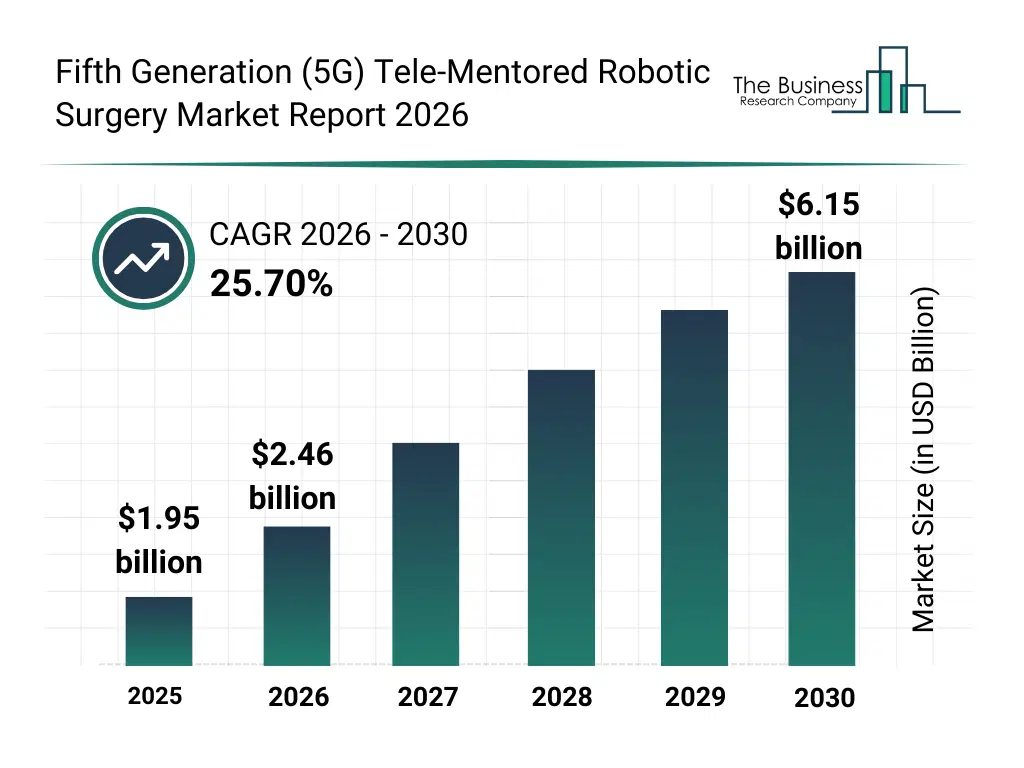
What Is The Fifth Generation (5G) Tele-Mentored Robotic Surgery Market Size and Share 2026?
The fifth generation (5g) tele-mentored robotic surgery market size has grown exponentially in recent years. It will grow from $1.95 billion in 2025 to $2.46 billion in 2026 at a compound annual growth rate (CAGR) of 26.0%. The growth in the historic period can be attributed to early telemedicine adoption, robotic surgery penetration, need for surgeon training, improvement in wireless networks, demand for surgical precision.What Is The Fifth Generation (5G) Tele-Mentored Robotic Surgery Market Growth Forecast?
The fifth generation (5g) tele-mentored robotic surgery market size is expected to see exponential growth in the next few years. It will grow to $6.15 billion in 2030 at a compound annual growth rate (CAGR) of 25.7%. The growth in the forecast period can be attributed to 5g-enabled low latency communication, global shortage of specialists, rising demand for advanced surgery, growth in surgical education platforms, investment in digital health. Major trends in the forecast period include remote expert surgical mentorship, real-time surgical skill transfer, expansion of virtual surgical training, increased adoption in complex procedures, growth of collaborative surgical networks.
Global Fifth Generation (5G) Tele-Mentored Robotic Surgery Market Segmentation
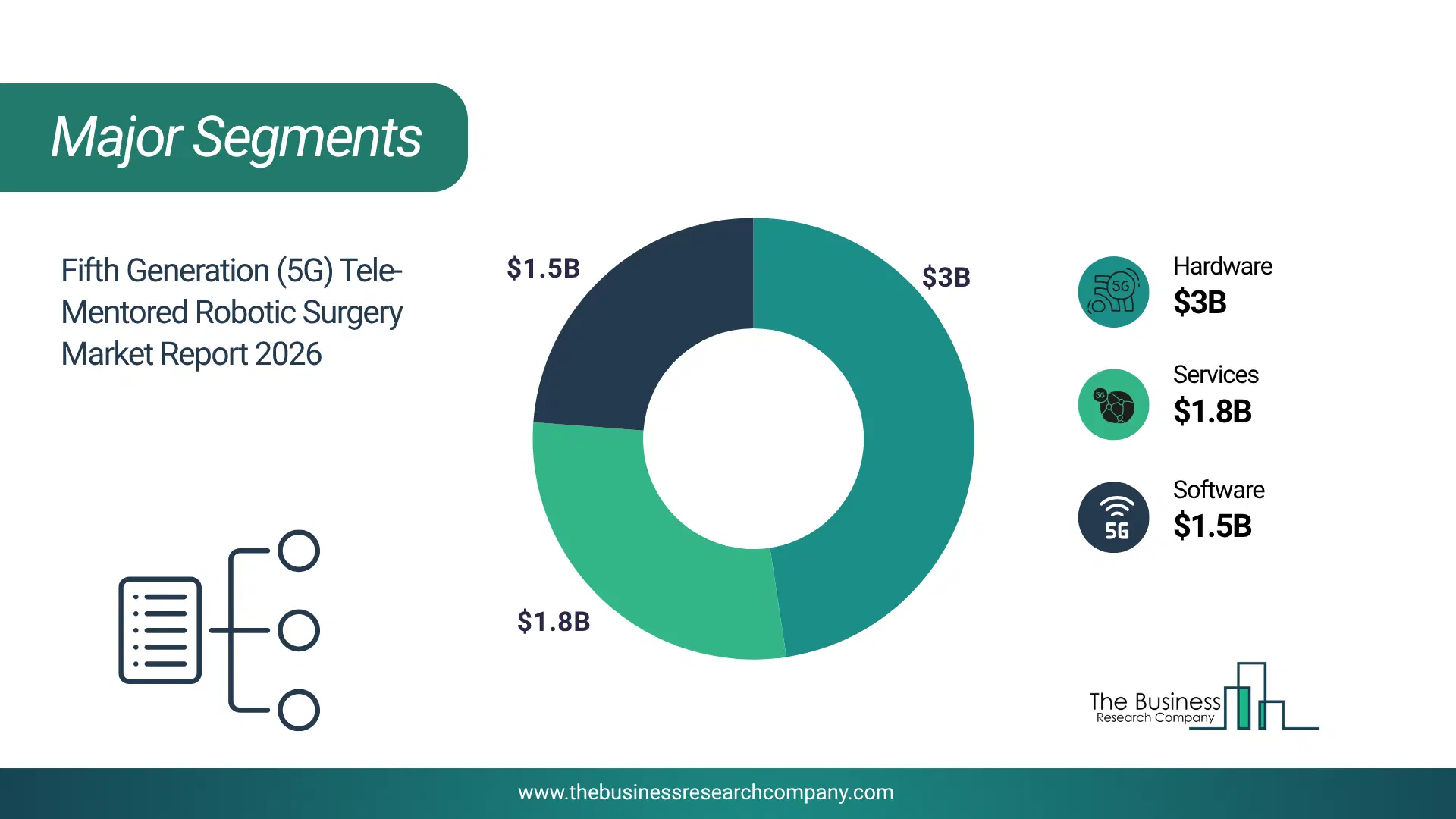
1) By Component: Hardware, Software, Services 2) By Surgery Type: General Surgery, Orthopedic Surgery, Neurosurgery, Urology, Gynecology, Other Surgery Types 3) By Application: Training And Education, Remote Surgery, Consultation, Other Applications 4) By End-User: Hospitals, Ambulatory Surgical Centers, Specialty Clinics, Other End-Users Subsegments: 1) By Hardware: Surgical Robots, Imaging Devices, Communication Devices, Haptic Devices, Sensors 2) By Software: Surgical Planning Software, Remote Monitoring Software, Data Analytics Software, Simulation Software, Control Software 3) By Services: Installation And Integration, Training And Education, Maintenance And Support, Consulting Services, Telecommunication Services The top segments in the fifth generation (5g) tele-mentored robotic surgery market will be: • Hardware will reach $2.91 billion by 2030. • Services will reach $1.79 billion by 2030. • Software will reach $1.41 billion by 2030.What Are The Drivers Of The Fifth Generation (5G) Tele-Mentored Robotic Surgery Market?
The growing acceptance of telemedicine solutions is expected to propel the growth of the fifth generation (5G) tele-mentored robotic surgery market going forward. Telemedicine solutions are healthcare services delivered remotely through digital communication technologies, enabling patient consultations and medical procedures without requiring physical presence. The growing acceptance of telemedicine is largely driven by healthcare system digitization, as integrated electronic health record systems and advanced communication infrastructure facilitate seamless virtual care delivery. The rising adoption of telemedicine solutions drives the need for 5G tele-mentored robotic surgery systems as medical professionals depend on ultra-fast, minimal-delay connectivity to provide instant surgical mentorship and accurate robotic operation guidance from remote locations. For instance, in April 2025, according to the American Hospital Association (AHA), a US-based national trade group, more than 12.6% of Medicare beneficiaries used telehealth services in the last quarter of 2023. Therefore, the growing acceptance of telemedicine solutions is driving the growth of the fifth generation (5G) tele-mentored robotic surgery industry. The increasing demand for minimally invasive procedures is expected to propel the growth of the fifth generation (5G) tele-mentored robotic surgery market going forward. Minimally invasive procedures are surgical techniques that limit the size and number of incisions, reducing trauma to the body. The rising demand for minimally invasive procedures is due to their reduced pain to patients, faster recovery times, and lower risk of complications compared to traditional open surgeries. Minimally invasive procedures enable surgeons to perform operations remotely with high precision, improving patient outcomes and expanding the adoption of tele-mentored robotic surgery. For instance, in June 2024, according to the American Society of Plastic Surgeons, a US-based non-profit organization, minimally invasive procedures increased by 7% in 2023, outpacing the growth rate of surgical procedures by 2%. Additionally, hand surgeries such as carpal tunnel, arthritis, and trigger finger totaled 207,887 procedures, a 2% rise from 2022. Therefore, the increasing demand for minimally invasive procedures is driving the growth of the fifth generation (5G) tele-mentored robotic surgery industry.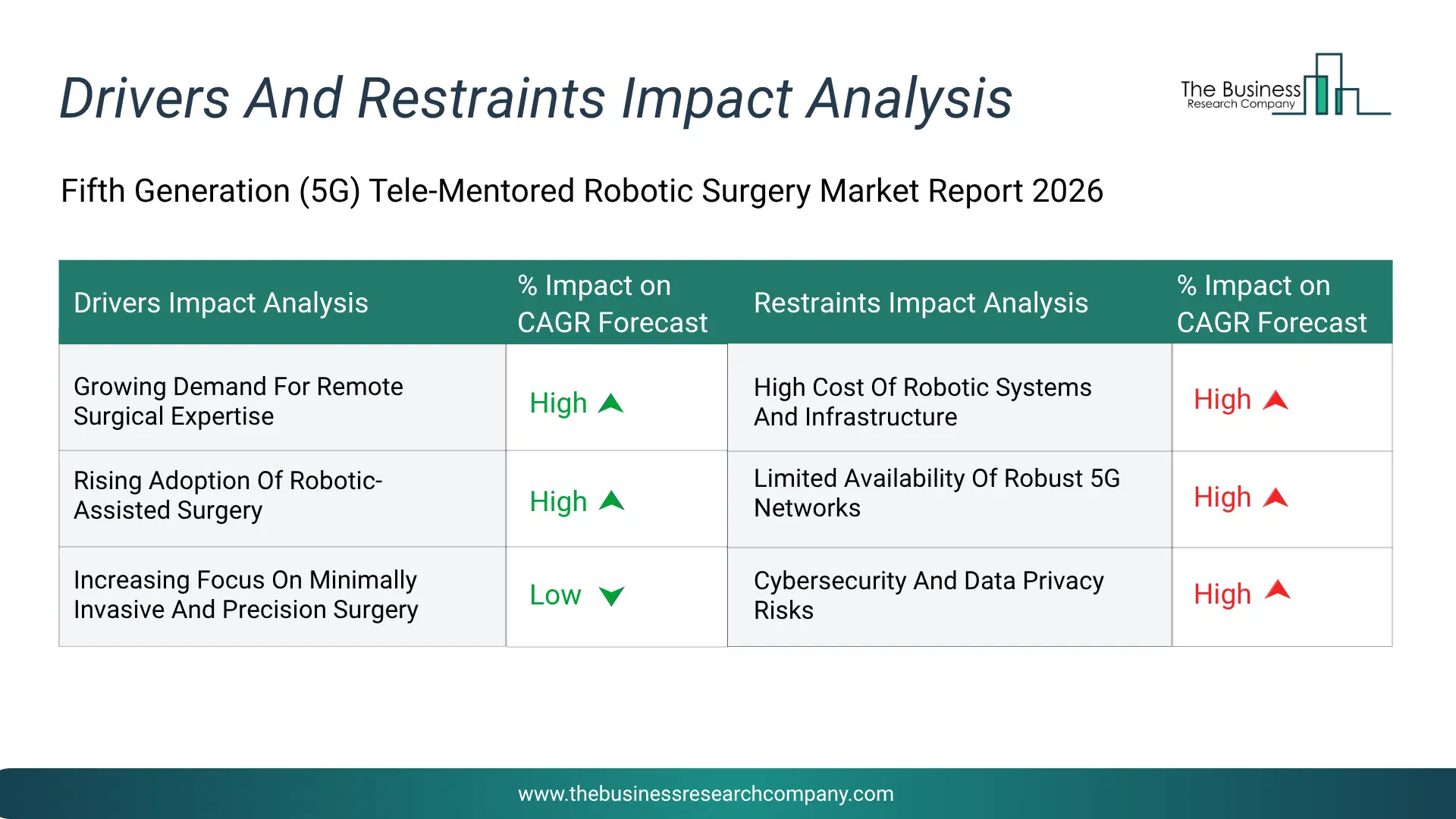
Infographic Chart Showing Key Market Drivers Analysis And Restraints For Fifth Generation (5G) Tele-Mentored Robotic Surgery Market
The chart presents an impact analysis of key drivers and restraints, quantifying their relative influence on the market's growth rate and helping assess the balance between growth enablers and limiting factors. This chart offers a high-level perspective; the full report contains more detailed insights.
How Will The Drivers Impact Growth In The Global Fifth Generation (5G) Tele-Mentored Robotic Surgery Market?
• Growing Demand For Remote Surgical Expertise (High) – During the forecast period, the growing demand for remote surgical expertise is expected to become a key growth driver for the fifth generation (5g) tele -mentored robotic surgery market by 2030. Healthcare providers are increasingly leveraging tele -mentoring capabilities to access specialized surgeons across geographic boundaries, particularly in rural and underserved regions. 5g -enabled low -latency communication allows real -time guidance and collaboration during complex procedures, improving surgical outcomes and reducing disparities in healthcare access. Hospitals and medical institutions are therefore investing in connected surgical ecosystems to enhance expertise sharing. • Rising Adoption Of Robotic-Assisted Surgery (High) – During the forecast period, the rising adoption of robotic-assisted surgery is expected to emerge as a major factor driving the expansion of the fifth generation (5g) tele-mentored robotic surgery market by 2030. The increasing preference for robotic systems in surgical procedures is driven by their ability to enhance precision, reduce human error, and improve patient recovery times. Integration of 5g connectivity further enhances the capabilities of robotic systems by enabling real-time data transmission and remote control functionalities. Healthcare providers are increasingly adopting these technologies to improve surgical efficiency and outcomes. • Increasing Focus On Minimally Invasive And Precision Surgery (Low) – During the forecast period, the increasing focus on minimally invasive and precision surgery is expected to act as a key growth catalyst for the fifth generation (5g) tele-mentored robotic surgery market by 2030. Patients and healthcare providers are prioritizing procedures that reduce surgical trauma, shorten hospital stays, and improve recovery times. 5g-enabled robotic systems support high-definition imaging, precise instrument control, and real-time feedback, enabling surgeons to perform complex procedures with enhanced accuracy. This shift toward precision-driven healthcare is encouraging investments in advanced surgical technologies and digital infrastructure.How Will The Restraints Impact Growth In The Global Fifth Generation (5G) Tele-Mentored Robotic Surgery Market?
• High Cost Of Robotic Systems And Infrastructure (High) – During the forecast period, the the high cost associated with robotic surgical systems and the supporting 5g-enabled infrastructure acts as a significant restraint on the growth of the 5g tele-mentored robotic surgery market. Advanced robotic platforms, along with integrated communication systems, imaging tools, and training modules, require substantial capital investment, making them less accessible to small and mid-sized healthcare facilities. In addition to the initial procurement costs, ongoing expenses related to maintenance, software upgrades, and staff training further increase the financial burden. The need for specialized infrastructure to support real-time data transmission and seamless connectivity also adds to deployment costs. As a result, many healthcare providers, particularly in developing regions, may delay or avoid adoption despite the clinical benefits. This cost barrier limits market penetration and slows the pace at which tele-mentored robotic surgery solutions can scale across diverse healthcare settings. • Limited Availability Of Robust 5G Networks (High) – During the forecast period, the the effectiveness of 5g tele-mentored robotic surgery heavily depends on the availability of reliable, high-speed, and low-latency 5g networks, making limited network coverage a key restraint for the market. While 5g deployment is expanding globally, it remains uneven, with many rural and remote areas lacking consistent connectivity. These gaps restrict the ability to perform real-time remote surgical mentoring and support, which are central to the market’s value proposition. Even in regions where 5g is available, network stability and bandwidth limitations can pose challenges for transmitting high-definition surgical video and control signals without delays. Any latency or disruption during a procedure can impact surgical precision and patient safety, making healthcare providers cautious about adoption. Consequently, the dependence on robust 5g infrastructure slows widespread implementation and creates regional disparities in market growth. • Cybersecurity And Data Privacy Risks (High) – During the forecast period, the cybersecurity and data privacy concerns represent another critical restraint for the 5g tele-mentored robotic surgery market. The technology relies on continuous transmission of sensitive patient data, real-time surgical video feeds, and control commands over networked systems, making it vulnerable to cyber threats. Unauthorized access, data breaches, or system disruptions could compromise patient confidentiality and, more critically, interfere with surgical procedures. The increasing sophistication of cyberattacks raises concerns among healthcare providers and regulators regarding the safety and reliability of connected surgical environments. Additionally, strict data protection regulations across different regions require compliance with complex legal frameworks, which can delay implementation and increase operational costs. These risks necessitate significant investment in secure communication protocols and cybersecurity infrastructure, which may deter adoption and slow market expansion.Key Players In The Global Fifth Generation (5G) Tele-Mentored Robotic Surgery Market
Major companies operating in the fifth generation (5g) tele-mentored robotic surgery market are Huawei Technologies Co. Ltd., Telefonaktiebolaget LM Ericsson (publ), Nokia Corporation, Siemens Healthineers AG, Stryker Corporation, Intuitive Surgical Inc., PT Telekomunikasi Selular, Karl Storz SE & Co. KG, CMR Surgical Limited, Proximie Ltd., Mentice AB, Tianjin Tinavi Medical Technology Co. Ltd., Sovato Inc., Virtual Incision Corporation, Avatera Medical GmbH, SS Innovations International Inc., Medicaroid Corporation, Shenzhen Edge Medical Co. Ltd., KangDuo Robot Co. Ltd., Sina Robotics Inc.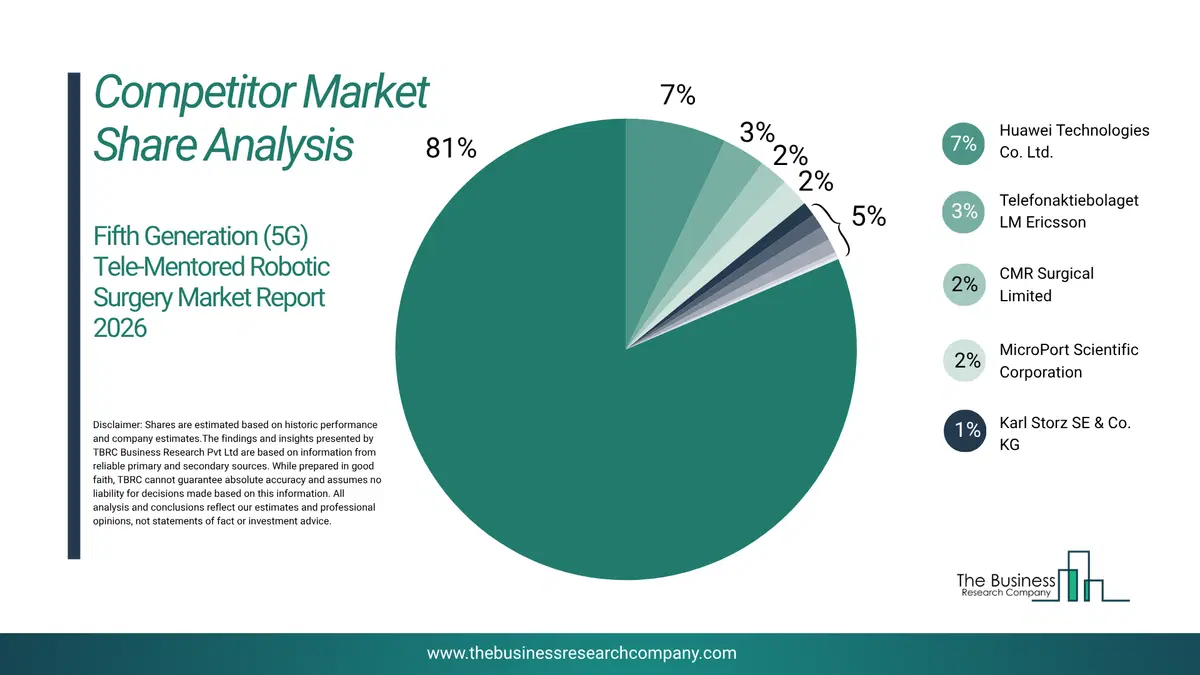
This chart is for illustrative purposes; the full report includes a detailed competitor analysis and comprehensive overview of the top 10 companies in the market.
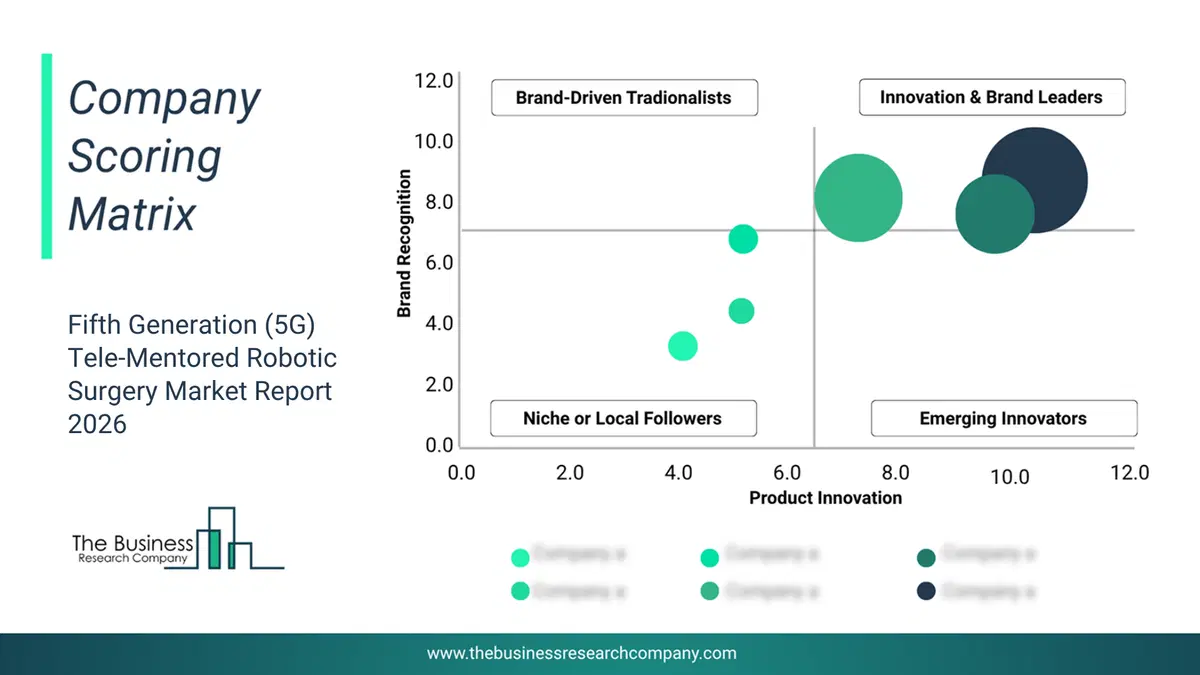
This chart maps companies by product innovation and brand strength, with bubble size indicating relative revenue, helping identify market leaders, challengers, and niche players. This is an illustrative chart; the full report provides a complete and accurate competitive analysis.
Global Fifth Generation (5G) Tele-Mentored Robotic Surgery Market Trends and Insights
Major companies operating in the fifth generation (5G) tele-mentored robotic surgery market are focusing on developing innovative solutions such as real-time force feedback systems to enhance surgical precision and provide tactile sensation to surgeons during remote procedures. Real-time force feedback systems are technologies that provide surgeons with instant tactile sensations from robotic instruments, simulating the feeling of touch during surgery, which helps improve precision, reduce tissue damage, and enhance safety in remote or minimally invasive procedures. For instance, in December 2024, Shanghai MicroPort MedBot (Group) Co., Ltd., a China-based manufacturing company, received market approval from Brazil’s National Health Surveillance Agency (ANVISA) for its Toumai Laparoscopic Surgical Robot. The Toumai Robot is equipped with real-time force-sensing technology, allowing surgeons to receive tactile feedback during procedures, which enhances precision and reduces tissue damage. It also supports remote surgeries over long distances, enabling intercontinental tele-mentored operations, and represents a major advancement in minimally invasive and 5G-enabled robotic surgical technology in Latin America, paving the way for broader adoption of remote surgical solutions, improving patient access to high-quality care, and setting a new benchmark for the integration of robotics, artificial intelligence, and advanced network technologies in modern healthcare systems.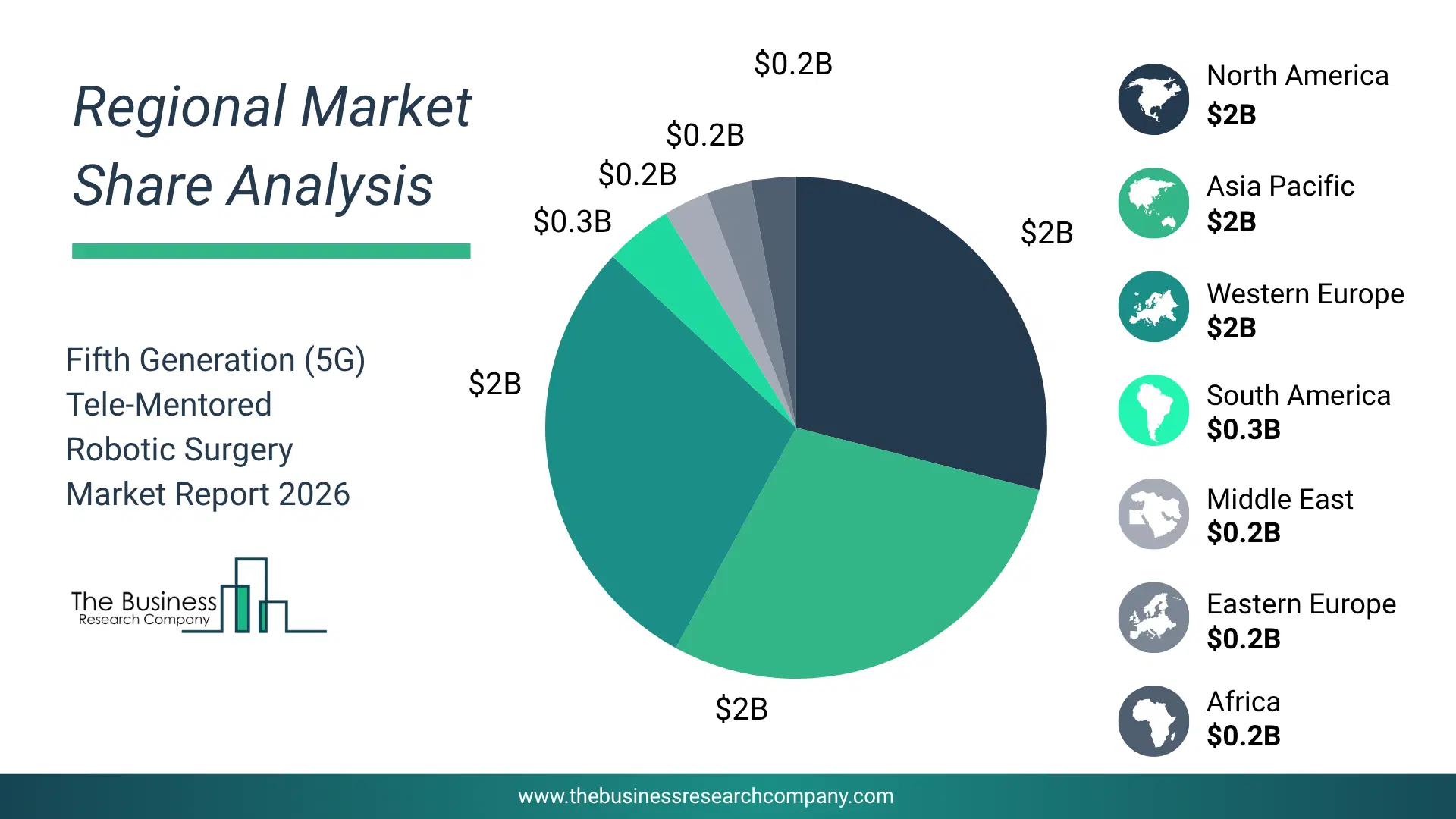
Regional Outlook
North America was the largest region in the fifth generation (5G) tele-mentored robotic surgery market in 2025. Asia-Pacific is expected to be the fastest-growing region in the forecast period. The regions covered in this market report are Asia-Pacific, South East Asia, Western Europe, Eastern Europe, North America, South America, Middle East, Africa. The countries covered in this market report are Australia, Brazil, China, France, Germany, India, Indonesia, Japan, Taiwan, Russia, South Korea, UK, USA, Canada, Italy, SpainWhat Defines the Fifth Generation (5G) Tele-Mentored Robotic Surgery Market?
The fifth generation (5G) tele-mentored robotic surgery market consists of revenues earned by entities by providing services such as remote robotic surgery, tele-mentoring and training for surgeons, pre-operative consultation and surgical planning, post-operative monitoring and support. The market value includes the value of related goods sold by the service provider or included within the service offering. The fifth generation (5G) tele-mentored robotic surgery market also includes sales of toumai surgical system, communication systems, real-time video conferencing tools, AR/VR surgical guidance systems, wearable patient monitoring devices, diagnostic imaging systems, surgical simulators, and online training modules. Values in this market are ‘factory gate’ values, that is the value of goods sold by the manufacturers or creators of the goods, whether to other entities (including downstream manufacturers, wholesalers, distributors and retailers) or directly to end customers. The value of goods in this market includes related services sold by the creators of the goods.How is Market Value Defined and Measured?
The market value is defined as the revenues that enterprises gain from the sale of goods and/or services within the specified market and geography through sales, grants, or donations in terms of the currency (in USD unless otherwise specified). The revenues for a specified geography are consumption values that are revenues generated by organizations in the specified geography within the market, irrespective of where they are produced. It does not include revenues from resales along the supply chain, either further along the supply chain or as part of other products.
This chart presents market attractiveness based on a quantitative evaluation of growth, competition, strategic alignment, and risk, offering a clear view of opportunity areas for decision-making. This chart is for illustrative purposes; the full report contains the complete analysis.

This chart highlights the Total Addressable Market (TAM) by estimating the maximum revenue opportunity using an assumption-driven approach, supporting strategic planning and opportunity sizing across markets. The chart is illustrative; the full report provides a more comprehensive analysis.
What Key Data and Analysis Are Included in the Fifth Generation (5G) Tele-Mentored Robotic Surgery Market Report 2026?
The fifth generation (5g) tele-mentored robotic surgery market research report is one of a series of new reports from The Business Research Company that provides market statistics, including industry global market size, regional shares, competitors with the market share, detailed market segments, market trends and opportunities, and any further data you may need to thrive in the fifth generation (5g) tele-mentored robotic surgery industry. The market research report delivers a complete perspective of everything you need, with an in-depth analysis of the current and future state of the industry.Fifth Generation (5G) Tele-Mentored Robotic Surgery Market Report Forecast Analysis
| Report Attribute | Details |
|---|---|
| Market Size Value In 2026 | $2.46 billion |
| Revenue Forecast In 2030 | $6.15 billion |
| Growth Rate | CAGR of 25.7% from 2026 to 2030 |
| Base Year For Estimation | 2025 |
| Actual Estimates/Historical Data | 2020-2025 |
| Forecast Period | 2026 - 2030 |
| Market Representation | Revenue in USD Billion and CAGR from 2026 to 2030 |
| Segments Covered | Component, Surgery Type, Application, End-User |
| Regional Scope | Asia-Pacific, Western Europe, Eastern Europe, North America, South America, Middle East, Africa |
| Country Scope | The countries covered in the report are Australia, Brazil, China, France, Germany, India, ... |
| Key Companies Profiled | Huawei Technologies Co. Ltd., Telefonaktiebolaget LM Ericsson (publ), Nokia Corporation, Siemens Healthineers AG, Stryker Corporation, Intuitive Surgical Inc., PT Telekomunikasi Selular, Karl Storz SE & Co. KG, CMR Surgical Limited, Proximie Ltd., Mentice AB, Tianjin Tinavi Medical Technology Co. Ltd., Sovato Inc., Virtual Incision Corporation, Avatera Medical GmbH, SS Innovations International Inc., Medicaroid Corporation, Shenzhen Edge Medical Co. Ltd., KangDuo Robot Co. Ltd., Sina Robotics Inc. |
| Customization Scope | Request for Customization |
| Pricing And Purchase Options | Explore Purchase Options |