
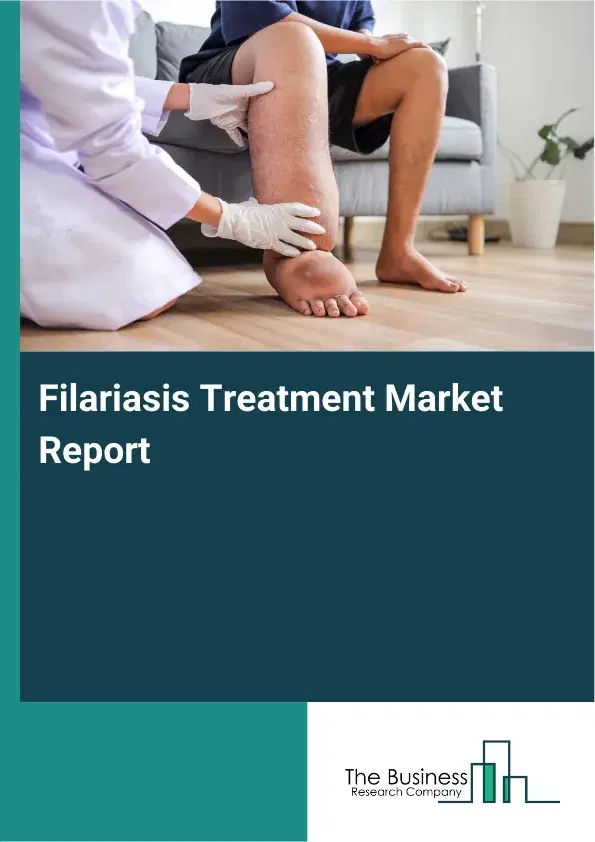
Filariasis Treatment Market Report 2026
Global Outlook – By Drug Type (Diethylcarbamazine, Ivermectin, Albendazole, Other Drug Types), By Treatment Type (Medication, Surgery, Other Treatment Types), By Distribution Channel (Hospital Pharmacies, Retail Pharmacies, Online Pharmacies, Other Distribution Channels), By End-User (Hospitals, Clinics, Ambulatory Surgical Centers, Other End-Users) - Market Size, Trends, Strategies, and Forecast to 2030
Filariasis Treatment Market Overview
• Filariasis Treatment market size has reached to $11.47 billion in 2025 • Expected to grow to $19.7 billion in 2030 at a compound annual growth rate (CAGR) of 11.4% • Growth Driver: Rising Incidence Of Elephantiasis Driving Growth In The Market • Asia-Pacific was the largest region and fastest growing region.What Is Covered Under Filariasis Treatment Market?
Filariasis treatment involves medical interventions aimed at managing and eliminating infections caused by filarial parasites, which are transmitted through mosquito bites. The treatment eradicates the infection, relieve symptoms, and prevent severe complications such as lymphedema (elephantiasis) and blindness. The main types of drugs for filariasis treatment are diethylcarbamazine, ivermectin, albendazole, and others. Diethylcarbamazine (DEC) is an antiparasitic medication that combats lymphatic filariasis by eliminating microfilariae and targeting certain adult worms. It provides various treatment types such as medication, surgery, and others and is distributed through several distribution channels, including hospital pharmacies, retail pharmacies, online pharmacies, and others. It is used by various end-users, such as hospitals, clinics, ambulatory surgical centers, and others.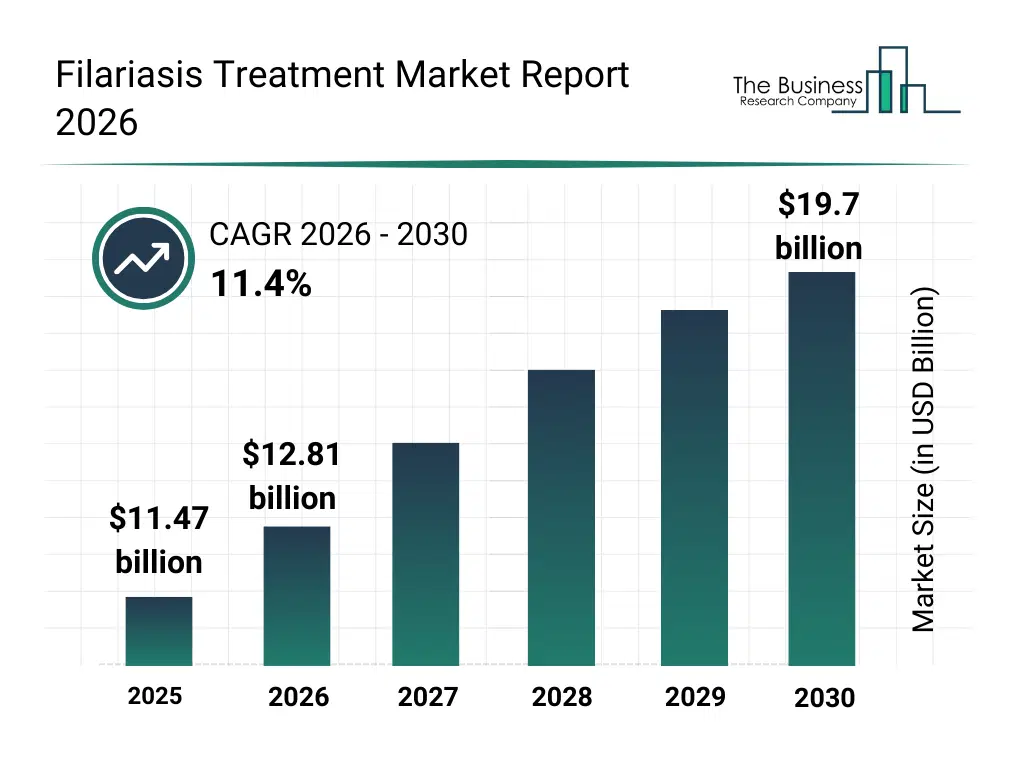
What Is The Filariasis Treatment Market Size and Share 2026?
The filariasis treatment market size has grown rapidly in recent years. It will grow from $11.47 billion in 2025 to $12.81 billion in 2026 at a compound annual growth rate (CAGR) of 11.7%. The growth in the historic period can be attributed to high disease prevalence in tropical regions, availability of antiparasitic drugs, global health initiatives, government funding programs, improved diagnosis.What Is The Filariasis Treatment Market Growth Forecast?
The filariasis treatment market size is expected to see rapid growth in the next few years. It will grow to $19.7 billion in 2030 at a compound annual growth rate (CAGR) of 11.4%. The growth in the forecast period can be attributed to development of advanced combination therapies, expansion of elimination programs, increased healthcare funding, improved drug distribution networks, rising global health partnerships. Major trends in the forecast period include expansion of mass drug administration programs, increased focus on parasite eradication therapies, growing government-led disease control initiatives, improved access to combination drug treatments, rising public health awareness campaigns.
Global Filariasis Treatment Market Segmentation
1) By Drug Type: Diethylcarbamazine, Ivermectin, Albendazole, Other Drug Types 2) By Treatment Type: Medication, Surgery, Other Treatment Types 3) By Distribution Channel: Hospital Pharmacies, Retail Pharmacies, Online Pharmacies, Other Distribution Channels 4) By End-User: Hospitals, Clinics, Ambulatory Surgical Centers, Other End-Users Subsegments: 1) By Diethylcarbamazine: Monotherapy, Combination Therapy 2) By Ivermectin: Single-Dose Therapy, Mass Drug Administration (MDA) 3) By Albendazole: Standalone Treatment, Combination With Other Anthelmintics 4) By Other Drug Types: Doxycycline Therapy, Antihistamines And Anti-Inflammatory DrugsWhat Are The Drivers Of The Filariasis Treatment Market?
The growing incidence of elephantiasis is expected to propel the growth of the filariasis treatment market going forward. Elephantiasis is a serious condition resulting from parasitic infections, causing intense swelling and thickening of the skin, usually in the arms and legs. The rise in elephantiasis cases can be attributed to several factors, such as poor sanitation and hygiene, lack of mass drug administration (MDA), poor vector control, and treatment. Filariasis treatment targets the underlying parasitic infection, reducing inflammation and preventing lymphatic damage that can lower the risk of developing elephantiasis and alleviate its severe symptoms. For instance, in November 2024, according to the World Health Organization, a Switzerland-based intergovernmental organization, in 2023, more than 657 million individuals across 39 countries continue to be at risk of lymphatic filariasis and need preventive treatment to halt the transmission of lymphatic filariasis disease. Therefore, the growing incidence of elephantiasis is driving the growth of the filariasis treatment industry. The improvement of healthcare facilities is expected to propel the growth of the filariasis treatment market going forward. Healthcare facilities are establishments that offer medical care and services, such as hospitals, clinics, and diagnostic centers, to treat and support patients. Healthcare facilities are improving due to several factors such as increased investment in healthcare infrastructure, a focus on patient-centered care, population growth, and aging. Enhancing healthcare facilities ensures access to advanced diagnostic tools, effective medications, and skilled healthcare professionals. This facilitates widespread screenings, timely treatments, and continuous care, improving patient outcomes and reducing the burden of filariasis diseases. For instance, in May 2023, according to the American Health Care Association, a US-based nonprofit organization, the United States had 6,129 hospitals, representing a 0.591% increase from the previous year when there were 6,093 hospitals. Therefore, the improvement of healthcare facilities is driving the growth of the filariasis treatment industry.Key Players In The Global Filariasis Treatment Market
Major companies operating in the filariasis treatment market are Merck & Co. Inc., GlaxoSmithKline plc, Eisai Co. Ltd., Pfizer Inc., Sanofi S.A., Bayer AG, Novartis AG, Johnson & Johnson, AstraZeneca plc, Dr Reddy’s Laboratories, Cipla Ltd., Sun Pharmaceutical Industries Ltd., Zydus Lifesciences Ltd., Ipca Laboratories Ltd., Mankind Pharma Ltd.
This chart is for illustrative purposes; the full report includes a detailed competitor analysis and comprehensive overview of the top 10 companies in the market.
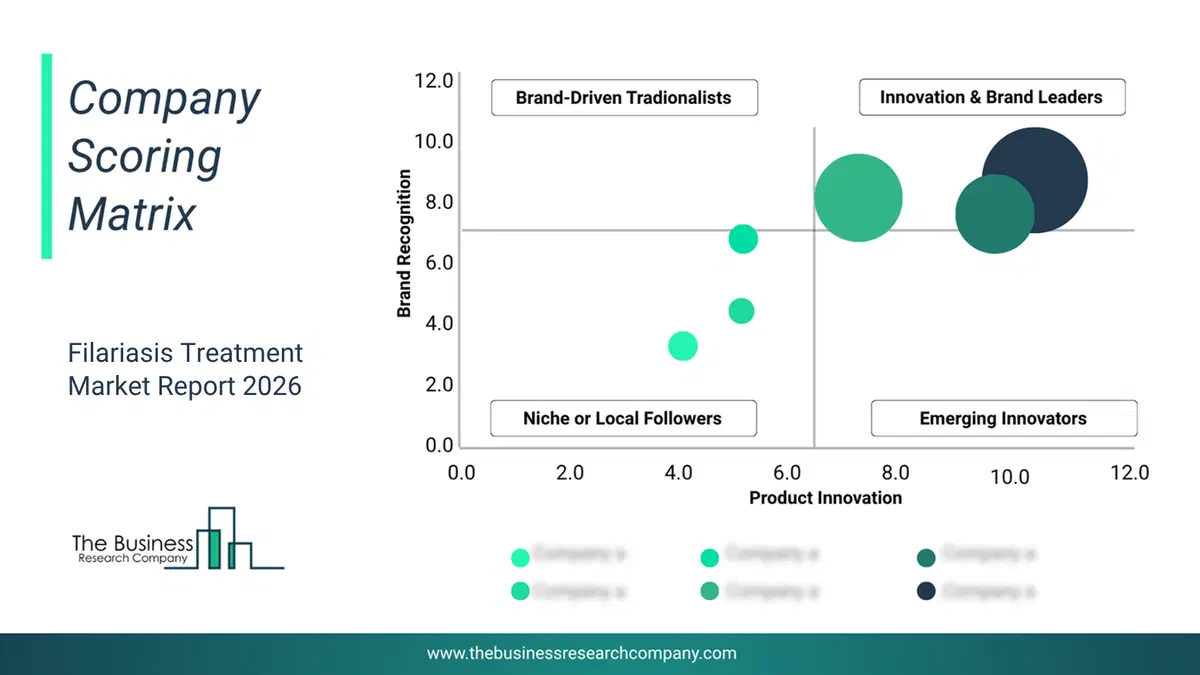
This chart maps companies by product innovation and brand strength, with bubble size indicating relative revenue, helping identify market leaders, challengers, and niche players. This is an illustrative chart; the full report provides a complete and accurate competitive analysis.
What Are Latest Mergers And Acquisitions In The Filariasis Treatment Market?
In May 2024, the German Center for Infection Research (DZIF), a Germany-based research institution focused on combating infectious diseases, partnered with Eisai Co., Ltd. to develop treatment for river blindness and lymphatic filariasis. The collaboration aims to provide much-needed solutions for affected populations in Africa and tropical regions. Eisai Co. Ltd. is a Japan-based pharmaceutical company that provides filariasis treatment such as diethylcarbamazine (DEC) tablets.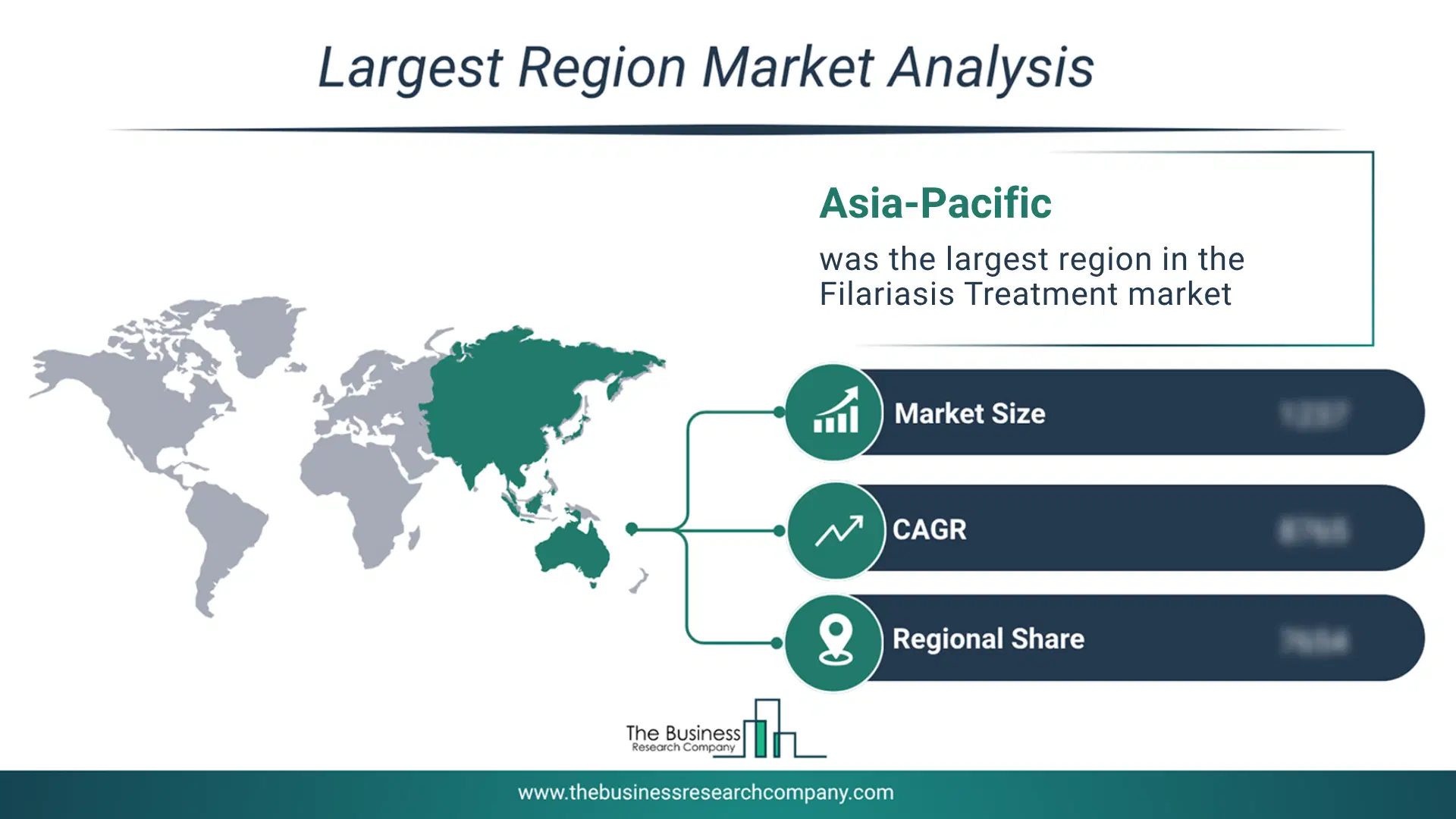
Regional Outlook
Asia-Pacific was the largest region in the filariasis treatment market in 2025. Asia-Pacific is expected to be the fastest-growing region in the forecast period. The regions covered in this market report are Asia-Pacific, South East Asia, Western Europe, Eastern Europe, North America, South America, Middle East, Africa. The countries covered in this market report are Australia, Brazil, China, France, Germany, India, Indonesia, Japan, Taiwan, Russia, South Korea, UK, USA, Canada, Italy, Spain.What Defines the Filariasis Treatment Market?
The filariasis treatment market consists of revenues earned by entities by providing services such as psychosocial and rehabilitation support, symptom management and supportive care, patient education, and community awareness. The market value includes the value of related goods sold by the service provider or included within the service offering. The filariasis treatment market also includes sales of antiparasitic medications, vector control products, compression garments, topical antibiotics, and antiseptics. Values in this market are ‘factory gate’ values, that is, the value of goods sold by the manufacturers or creators of the goods, whether to other entities (including downstream manufacturers, wholesalers, distributors, and retailers) or directly to end customers. The value of goods in this market includes related services sold by the creators of the goods.How is Market Value Defined and Measured?
The market value is defined as the revenues that enterprises gain from the sale of goods and/or services within the specified market and geography through sales, grants, or donations in terms of the currency (in USD unless otherwise specified). The revenues for a specified geography are consumption values that are revenues generated by organizations in the specified geography within the market, irrespective of where they are produced. It does not include revenues from resales along the supply chain, either further along the supply chain or as part of other products.
This chart presents market attractiveness based on a quantitative evaluation of growth, competition, strategic alignment, and risk, offering a clear view of opportunity areas for decision-making. This chart is for illustrative purposes; the full report contains the complete analysis.

This chart highlights the Total Addressable Market (TAM) by estimating the maximum revenue opportunity using an assumption-driven approach, supporting strategic planning and opportunity sizing across markets. The chart is illustrative; the full report provides a more comprehensive analysis.
What Key Data and Analysis Are Included in the Filariasis Treatment Market Report 2026?
The filariasis treatment market research report is one of a series of new reports from The Business Research Company that provides market statistics, including industry global market size, regional shares, competitors with the market share, detailed market segments, market trends and opportunities, and any further data you may need to thrive in the filariasis treatment industry. The market research report delivers a complete perspective of everything you need, with an in-depth analysis of the current and future state of the industry.Filariasis Treatment Market Report Forecast Analysis
| Report Attribute | Details |
|---|---|
| Market Size Value In 2026 | $12.81 billion |
| Revenue Forecast In 2030 | $19.7 billion |
| Growth Rate | CAGR of 11.4% from 2026 to 2030 |
| Base Year For Estimation | 2025 |
| Actual Estimates/Historical Data | 2020-2025 |
| Forecast Period | 2026 - 2030 |
| Market Representation | Revenue in USD Billion and CAGR from 2026 to 2030 |
| Segments Covered | Drug Type, Treatment Type, Distribution Channel, End-User |
| Regional Scope | Asia-Pacific, Western Europe, Eastern Europe, North America, South America, Middle East, Africa |
| Country Scope | The countries covered in the report are Australia, Brazil, China, France, Germany, India, Indonesia, Japan, Taiwan, Russia, South Korea, UK, USA, Canada, Italy, Spain |
| Key Companies Profiled | Merck & Co. Inc., GlaxoSmithKline plc, Eisai Co. Ltd., Pfizer Inc., Sanofi S.A., Bayer AG, Novartis AG, Johnson & Johnson, AstraZeneca plc, Dr Reddy’s Laboratories, Cipla Ltd., Sun Pharmaceutical Industries Ltd., Zydus Lifesciences Ltd., Ipca Laboratories Ltd., Mankind Pharma Ltd. |
| Customization Scope | Request for Customization |
| Pricing And Purchase Options | Explore Purchase Options |