
Firefighting Robots Market Report 2026
Global Outlook – By Robot Type (Tracked Firefighting Robots, Wheeled Firefighting Robots), By Payload (Fire Extinguishing Agents, Cameras And Sensors, Communication Equipment, Tools And Equipment ), By Autonomy Level (Teleoperated, Semi-Autonomous ), By Size (Small (Under 100 kg), Medium (100-500 kg), Large (Over 500 kg), ), By Application (Military And Defense, Industrial, Government) – Market Size, Trends, Strategies, and Forecast to 2030
Firefighting Robots Market Overview
• Firefighting Robots market size has reached to $3.18 billion in 2025 • Expected to grow to $5.71 billion in 2030 at a compound annual growth rate (CAGR) of 12.4% • Growth Driver: Increasing Industrial Fire Incidents Driving Market Growth Amid Rising Use Of Hazardous Materials And Aging Infrastructure • Market Trend: Explosion-Proof Robots Enhancing Safety And Efficiency In Hazardous Firefighting Operations • North America was the largest region in 2025.Market Gains By 2030 – Top Opportunities By Segment
Market Gain identifies the most promising market opportunities by highlighting the segments or products expected to generate the highest incremental revenue growth over the next five years.
What Is Covered Under Firefighting Robots Market?
Firefighting robots are specialized robotic systems designed to assist in fire suppression and rescue operations. These robots are equipped with advanced sensors, cameras, and firefighting tools to navigate hazardous environments, locate fires, and extinguish them efficiently. They can operate in extreme conditions, such as high temperatures, smoke, and limited visibility, where it may be dangerous or impossible for human firefighters to work. The main robot types of the firefighting robots include tracked firefighting robots, wheeled firefighting robots, and humanoid firefighting robots. Tracked firefighting robots use tracks for mobility, enabling them to navigate rugged or uneven terrain. They are equipped with firefighting tools and remotely controlled to tackle fires in hazardous environments. The various payloads involved fire extinguishing agents, cameras and sensors, communication equipment, and tools and equipment. The platforms are categorized by wheeled, tracked, legged, and unmanned aerial vehicles (UAVs), and autonomy levels include teleoperated, semi-autonomous, and autonomous in different sizes small (under 100 kg), medium (100-500 kg), and large (over 500 kg). The multiple applications include military and defense, industrial, residential, commercial, and government.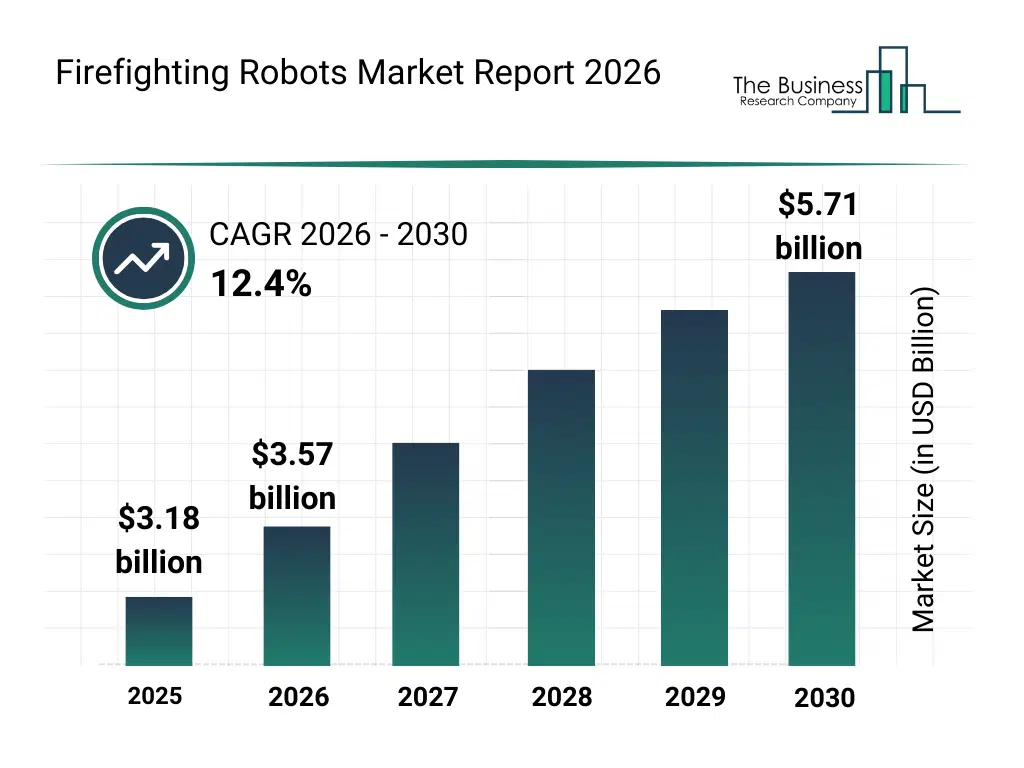
What Is The Firefighting Robots Market Size and Share 2026?
The firefighting robots market size has grown rapidly in recent years. It will grow from $3.18 billion in 2025 to $3.57 billion in 2026 at a compound annual growth rate (CAGR) of 12.5%. The growth in the historic period can be attributed to expansion of industrial safety automation, rising incidents in hazardous environments, increased defense sector adoption, growth in robotic emergency response systems, availability of rugged robotic platforms.What Is The Firefighting Robots Market Growth Forecast?
The firefighting robots market size is expected to see rapid growth in the next few years. It will grow to $5.71 billion in 2030 at a compound annual growth rate (CAGR) of 12.4%. The growth in the forecast period can be attributed to increasing adoption of fully autonomous robots, rising investments in smart city safety infrastructure, expansion of AI-driven navigation systems, growing demand for unmanned emergency solutions, increasing government support for robotics. Major trends in the forecast period include increasing deployment of autonomous firefighting robots, rising integration of advanced sensors and cameras, growing use in hazardous industrial environments, expansion of remote-controlled fire suppression systems, enhanced focus on human safety.
Global Firefighting Robots Market Segmentation
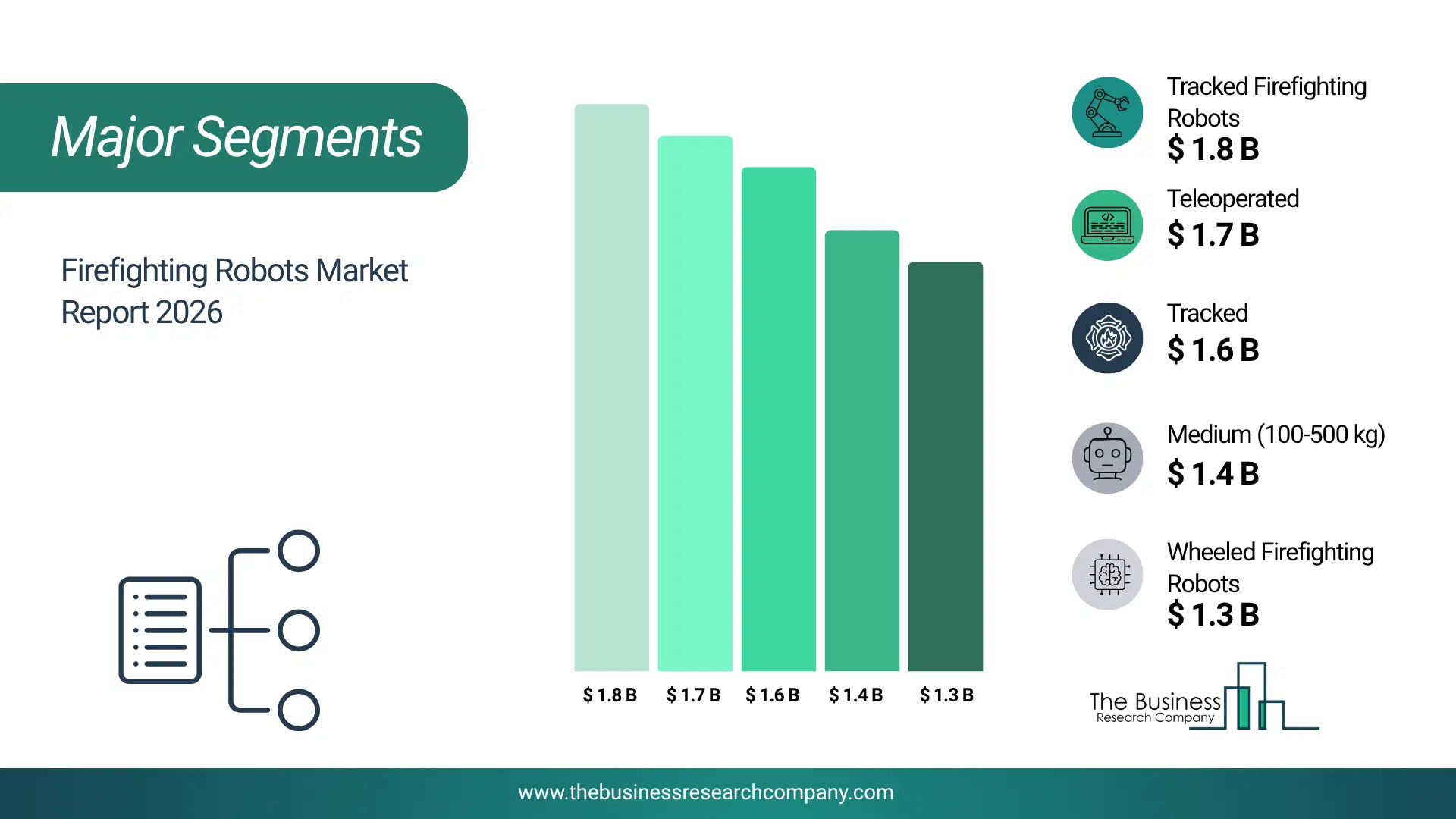
1) By Robot Type: Tracked Firefighting Robots, Wheeled Firefighting Robots 2) By Payload: Fire Extinguishing Agents, Cameras And Sensors, Communication Equipment, Tools And Equipment 3) By Autonomy Level: Teleoperated, Semi-Autonomous 4) By Size: Small (Under 100 kg), Medium (100-500 kg), Large (Over 500 kg), 5) By Application: Military And Defense, Industrial, Government Subsegments: 1) By Tracked Firefighting Robots: Remote-Controlled Tracked Firefighting Robots, Semi-Autonomous Tracked Firefighting Robots 2) By Wheeled Firefighting Robots: Four-Wheeled Firefighting Robots, Multi-Wheeled (6×6 / 8×8) Firefighting Robots The top segments in the firefighting robots market will be: • Tracked Firefighting Robots will reach $1819.62 Million by 2025. • Teleoperated will reach $1752.52 Million by 2025. • Tracked will reach $1603.31 Million by 2025. • Medium (100-500 kg) will reach $1427.22 Million by 2025. • Wheeled Firefighting Robots will reach $1358.03 Million by 2025.What Is The Driver Of The Firefighting Robots Market?
The increasing incidents of industrial fires are expected to propel the growth of the firefighting robots market going forward. Industrial fires are attributed to increased use of hazardous materials, aging infrastructure, inadequate safety protocols, and the growing complexity of industrial operations. Industrial fires are increasing due to factors such as the growing complexity of manufacturing processes, higher usage of flammable materials, aging infrastructure, inadequate fire safety measures, and the rising demand for energy-intensive operations, all of which heighten the risk of fire incidents across various sectors. Firefighting robots enhance industrial fire safety by providing rapid, remote-controlled intervention in hazardous environments, minimizing human risk, and ensuring efficient fire suppression with advanced sensors, autonomous navigation, and high-powered extinguishing systems. For instance, in January 2024, according to the report published by the UK government, a UK-based government department, in the year ending September 2023, there were 278 fire-related fatalities across 258 fatal fires, an increase from the 273 fatalities in 251 fatal fires reported in the previous year. Therefore, the rising number of industrial fire incidents is driving the growth of the firefighting robots industry.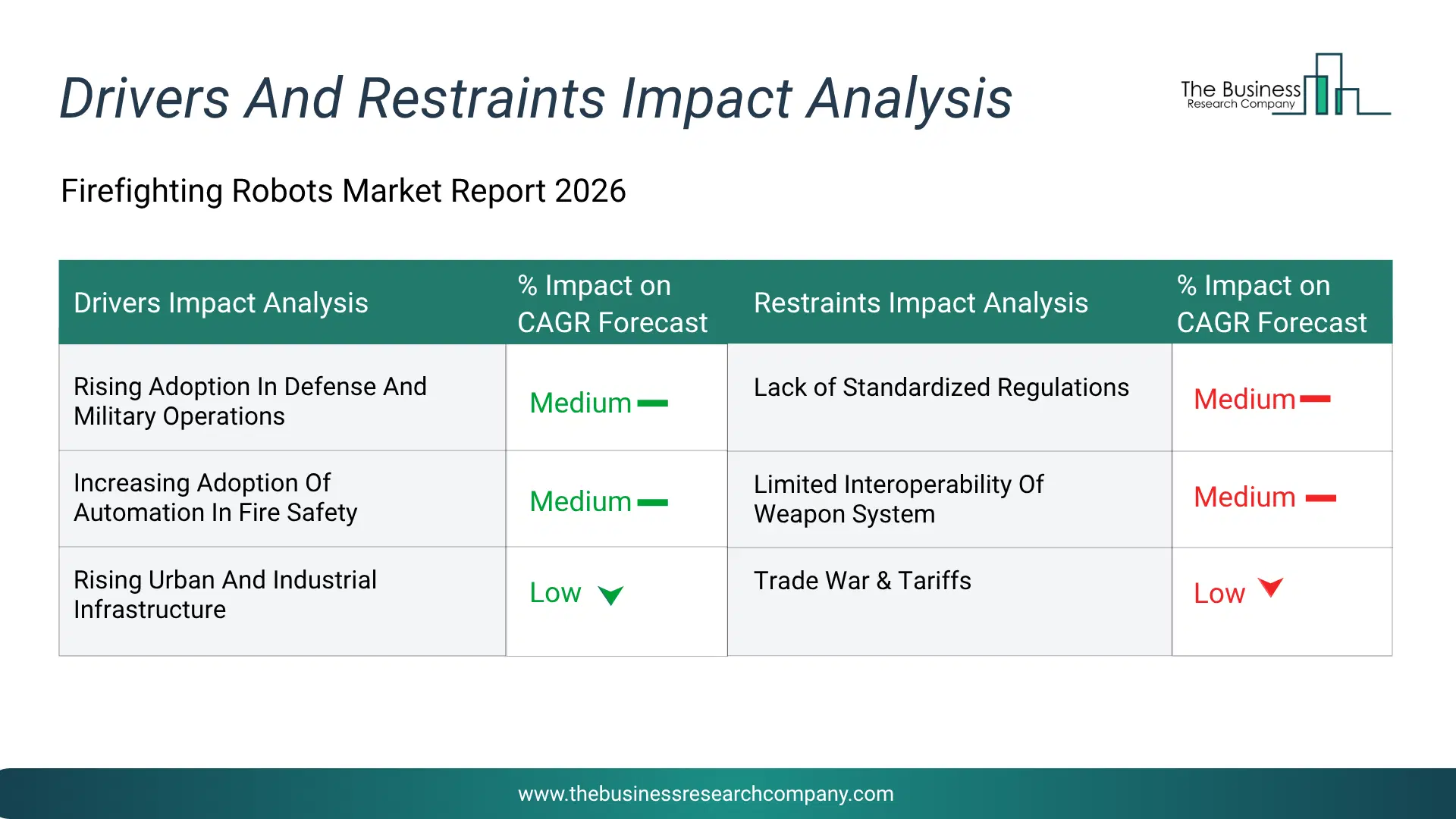
Infographic Chart Showing Key Market Drivers Analysis And Restraints For Firefighting Robots Market
The chart presents an impact analysis of key drivers and restraints, quantifying their relative influence on the market's growth rate and helping assess the balance between growth enablers and limiting factors. This chart offers a high-level perspective; the full report contains more detailed insights.
How Will The Drivers Impact Growth In The Global Firefighting Robots Market?
• Rising Adoption In Defense And Military Operations (Medium) – The rising adoption in defense and military operations will become a key driver of growth in the firefighting robots market by 2030. Defense forces and military installations often operate in environments where fires can be caused by munitions, fuel storage, aircraft operations, or combat-related damage, situations that are too dangerous for human firefighters to address directly. Firefighting robots equipped with advanced navigation, heat-resistant materials, and remote-controlled suppression systems will enable rapid response in these high-risk zones while minimizing personnel exposure. As militaries modernize and adopt advanced robotics for critical safety tasks, the demand for firefighting robots is likely to grow substantially, strengthening market expansion. As a result, the rising adoption in defense and military operations is anticipated to contributing to a 1.5% annual growth in the market. • Increasing Adoption Of Automation In Fire Safety (Medium) – The increasing adoption of automation in fire safety will emerge as a major factor driving the expansion of the firefighting robots market by 2030. As buildings, industrial facilities, and public infrastructure continue integrating advanced automation systems, fire safety solutions are becoming increasingly connected, intelligent, and capable of remote operations, creating fertile ground for robotic interventions. As automation becomes a cornerstone of modern fire safety infrastructure, the deployment of firefighting robots, designed to operate in hazardous zones with precision, speed, and integration to broader systems, is expected to accelerate, significantly boosting the market’s growth. Consequently, the increasing adoption of automation in fire safety capabilities is projected to contributing to a 1.0% annual growth in the market. • Rising Urban And Industrial Infrastructure (Low) – The rising urban and industrial infrastructure within digital manufacturing processes will serve as a key growth catalyst for the firefighting robots market by 2030, As urban and industrial landscapes grow more complex, firefighting robots, capable of operating in hazardous zones, navigating confined spaces, and integrating with smart city and industrial automation systems, will play a critical role in safeguarding assets and lives, thereby boosting the market’s growth. Therefore, this rising urban and industrial infrastructure across digital manufacturing operations is projected to supporting to a 1.8% annual growth in the market. • Favorable Governmental Initiatives (Low) – The favorable governmental initiatives will become a significant driver contributing to the growth of the firefighting robots market by 2030. Governmental initiatives not only lower adoption barriers but also accelerate large-scale implementation, positioning firefighting robots as a key component of future public safety infrastructure and thereby boosting market growth. Consequently, the favorable governmental initiatives is projected to contributing to a 0.5% annual growth in the market.How Will The Restraints Impact Growth In The Global Firefighting Robots Market?
• Lack of Standardized Regulations (Medium) – Lack of Standardized Regulations will restrict the growth of the Firefighting Robots market during the forecast period. The absence of universally accepted standards for firefighting robot safety, performance, and reliability creates uncertainty for manufacturers and end-users. Different regulatory requirements across regions complicate product development and market entry. This regulatory fragmentation increases compliance costs and may limit the adoption of firefighting robots in certain applications. • Limited Interoperability Of Weapon System (Medium) – Limited Interoperability Of Weapon System will restrict the growth of the Firefighting Robots market during the forecast period. Firefighting robots may face limitations in interoperability with existing firefighting equipment, communication systems, and operational protocols. Integration challenges can create compatibility issues, limiting the effectiveness of robots in coordinated firefighting operations. The lack of standardization in robot interfaces and communication protocols further complicates interoperability. • Trade War & Tariffs (Low) – Trade War & Tariffs will restrict the growth of the Firefighting Robots market during the forecast period. Firefighting robots depend on global supply chains for components including sensors, actuators, control systems, and batteries. Trade tariffs increase the cost of these components, raising overall robot prices. Trade barriers may also restrict the transfer of advanced robotics technologies between countries, affecting market development.Key Players In The Global Firefighting Robots Market
Major companies operating in the firefighting robots market are Shark Robotics, DOK-ING d.o.o., Howe & Howe Technologies, Mitsubishi Heavy Industries Ltd., ECA Group, LUF GmbH, Milrem Robotics (Milrem AS), Unifire AB, EmiControls, QinetiQ Group plc, Lockheed Martin Corporation, Thales Group, Hoya Robot Co. Ltd., HOPE Technik, LeoTronics Robotics, Parosha Innovators Pvt. Ltd., Tecdron Robotics, InRob Tech Ltd., Roboteam Ltd., Autonomous Solutions Inc.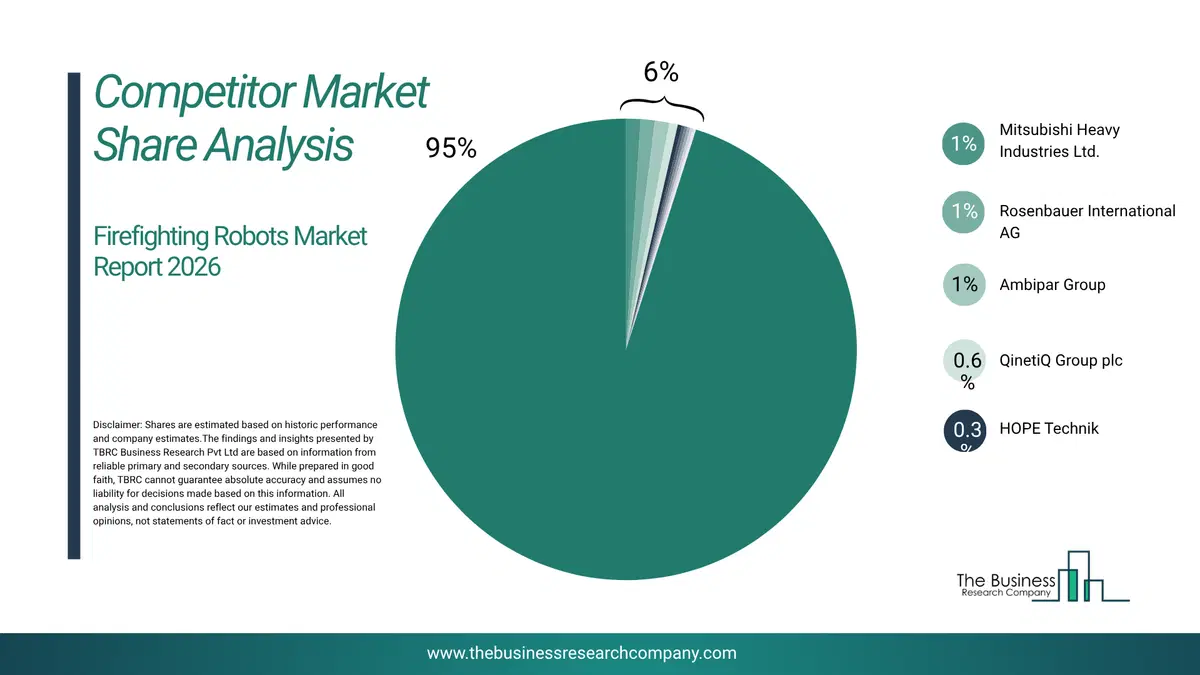
This chart is for illustrative purposes; the full report includes a detailed competitor analysis and comprehensive overview of the top 10 companies in the market.
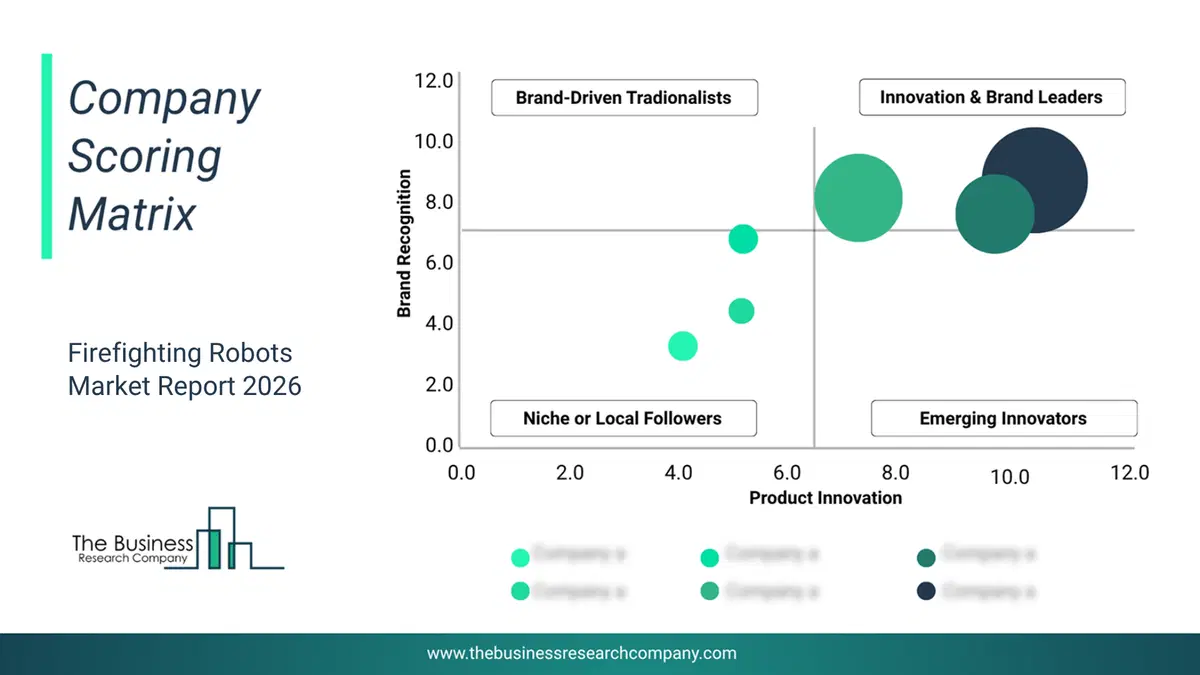
This chart maps companies by product innovation and brand strength, with bubble size indicating relative revenue, helping identify market leaders, challengers, and niche players. This is an illustrative chart; the full report provides a complete and accurate competitive analysis.
Global Firefighting Robots Market Trends and Insights
Major companies operating in the firefighting robot market are focusing on developing innovative technologies, such as explosion-proof robots, to enhance safety and operational efficiency in hazardous environments. Explosion-proof robots are designed to withstand extreme conditions, including high temperatures, toxic gases, and explosive materials, enabling them to quickly contain fires and mitigate further damage without endangering human lives. For instance, in May 2024, Shandong Guoxing Intelligent Technology Co., Ltd. launched the RXR-MC80BD firefighting robot. This explosion-proof robot is engineered to extinguish fires in dangerous disaster scenes, such as those involving flammable, explosive, toxic, or hypoxic conditions, as well as areas with thick smoke. It addresses the critical safety challenges faced by firefighters, ensuring more efficient and secure fire response operations.What Are Latest Mergers And Acquisitions In The Firefighting Robots Market?
In December 2024, The Collins Fire Department, a US-based company that develops fire protection systems, acquired the Thermite RS-3 firefighting robot from Howe & Howe Technologies for an undisclosed amount. This acquisition marks a significant step in enhancing firefighting capabilities through advanced robotic technology. The Thermite RS-3 is designed for high-volume firefighting and can operate in challenging environments, providing critical support to firefighters on the scene. Howe & Howe Technologies is a US-based company that manufactures advanced firefighting robots, including the Thermite series.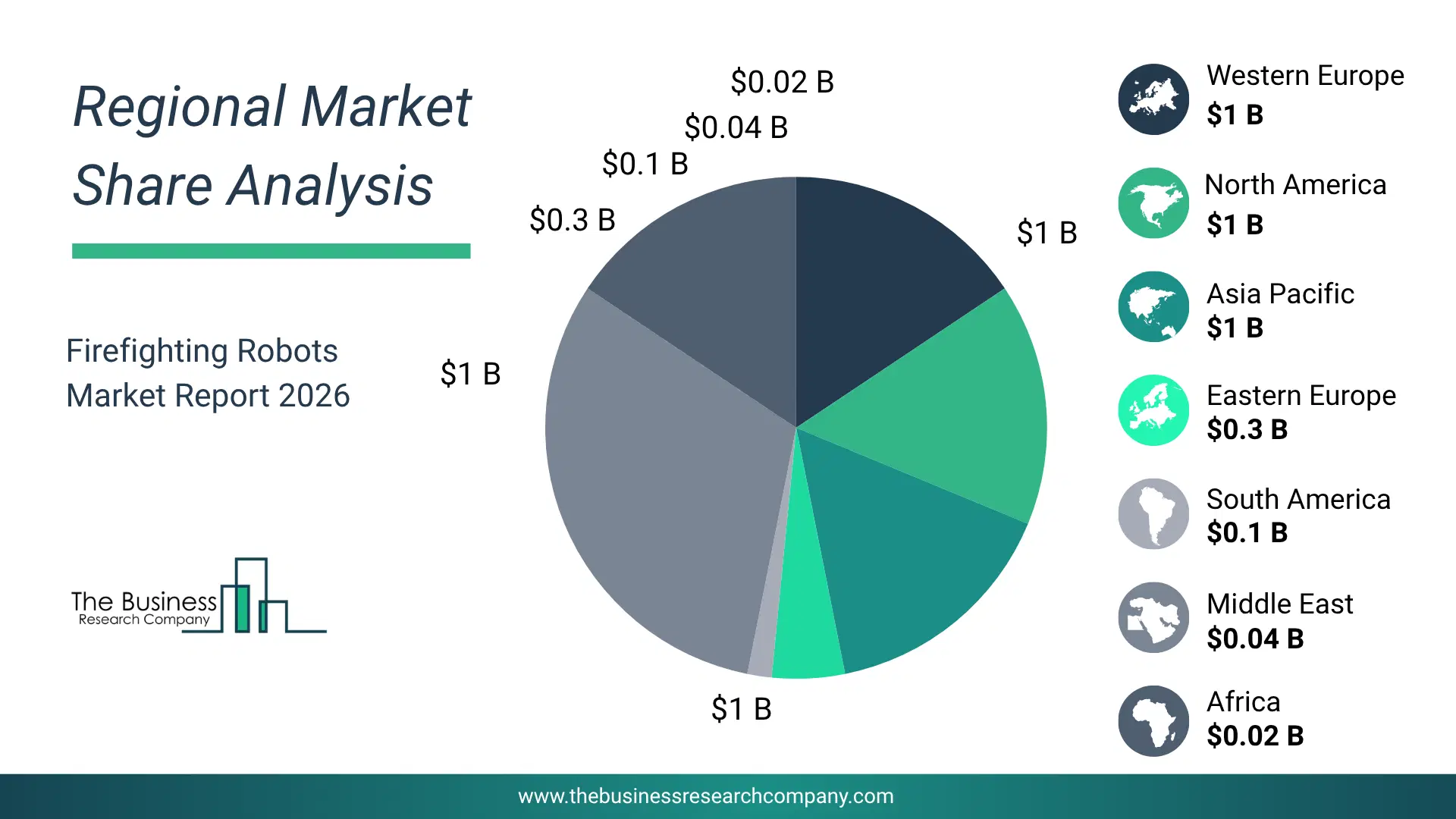
Regional Outlook
North America was the largest region in the firefighting robots market in 2025. The regions covered in this market report are Asia-Pacific, South East Asia, Western Europe, Eastern Europe, North America, South America, Middle East, Africa The countries covered in this market report are Australia, Brazil, China, France, Germany, India, Indonesia, Japan, Taiwan, Russia, South Korea, UK, USA, Canada, Italy, Spain.What Defines the Firefighting Robots Market?
The firefighting robots market consists of sales of aerial firefighting drones, autonomous firefighting systems, industrial firefighting robots, mobile fire monitors, and remote-controlled firefighting vehicles. Values in this market are ‘factory gate’ values, that is, the value of goods sold by the manufacturers or creators of the goods, whether to other entities (including downstream manufacturers, wholesalers, distributors, and retailers) or directly to end customers. The value of goods in this market includes related services sold by the creators of the goods.How is Market Value Defined and Measured?
The market value is defined as the revenues that enterprises gain from the sale of goods and/or services within the specified market and geography through sales, grants, or donations in terms of the currency (in USD unless otherwise specified). The revenues for a specified geography are consumption values that are revenues generated by organizations in the specified geography within the market, irrespective of where they are produced. It does not include revenues from resales along the supply chain, either further along the supply chain or as part of other products.
This chart presents market attractiveness based on a quantitative evaluation of growth, competition, strategic alignment, and risk, offering a clear view of opportunity areas for decision-making. This chart is for illustrative purposes; the full report contains the complete analysis.

This chart highlights the Total Addressable Market (TAM) by estimating the maximum revenue opportunity using an assumption-driven approach, supporting strategic planning and opportunity sizing across markets. The chart is illustrative; the full report provides a more comprehensive analysis.
What Key Data and Analysis Are Included in the Firefighting Robots Market Report 2026?
The firefighting robots market research report is one of a series of new reports from The Business Research Company that provides market statistics, including industry global market size, regional shares, competitors with the market share, detailed market segments, market trends and opportunities, and any further data you may need to thrive in the firefighting robots industry. The market research report delivers a complete perspective of everything you need, with an in-depth analysis of the current and future state of the industry.Firefighting Robots Market Report Forecast Analysis
| Report Attribute | Details |
|---|---|
| Market Size Value In 2026 | $3.57 billion |
| Revenue Forecast In 2030 | $5.71 billion |
| Growth Rate | CAGR of 12.5% from 2026 to 2030 |
| Base Year For Estimation | 2025 |
| Actual Estimates/Historical Data | 2020-2025 |
| Forecast Period | 2026 - 2030 |
| Market Representation | Revenue in USD Billion and CAGR from 2026 to 2030 |
| Segments Covered | Robot Type, Payload, Autonomy Level, Size, Application |
| Regional Scope | Asia-Pacific, Western Europe, Eastern Europe, North America, South America, Middle East, Africa |
| Country Scope | The countries covered in the report are Australia, Brazil, China, France, Germany, India, Indonesia, Japan, Taiwan, Russia, South Korea, UK, USA, Canada, Italy, Spain. |
| Key Companies Profiled | Shark Robotics, DOK-ING d.o.o., Howe & Howe Technologies, Mitsubishi Heavy Industries Ltd., ECA Group, LUF GmbH, Milrem Robotics (Milrem AS), Unifire AB, EmiControls, QinetiQ Group plc, Lockheed Martin Corporation, Thales Group, Hoya Robot Co. Ltd., HOPE Technik, LeoTronics Robotics, Parosha Innovators Pvt. Ltd., Tecdron Robotics, InRob Tech Ltd., Roboteam Ltd., Autonomous Solutions Inc. |
| Customization Scope | Request for Customization |
| Pricing And Purchase Options | Explore Purchase Options |