
Flax Proetin Market Report 2026
Global Outlook – By Nature (Organic, Conventional), By Source (Golden Flaxseed, Brown Flaxseed), By Distribution Channel (Supermarket Or Hypermarket, Specialty Stores, Convenience Stores, Online Sales, Other Distribution Channels), By Application (Food Processing, Animal Feed, Nutraceuticals, Sports Nutrition, Personal Care Products, Infant Nutrition, Other Applications) – Market Size, Trends, Strategies, and Forecast to 2030
Flax Proetin Market Overview
• Flax Proetin market size has reached to $41.36 billion in 2025 • Expected to grow to $59.55 billion in 2030 at a compound annual growth rate (CAGR) of 7.5% • Growth Driver: Growing Popularity Of Plant-Based Nutrition Driving Expansion Of The Market Amid Rising Health Awareness And Demand For Sustainable Food Alternatives • Market Trend: Launch Of New High-Protein Product Lines • North America was the largest region in 2025 and Asia-Pacific is the fastest growing region.What Is Covered Under Flax Proetin Market?
Flax protein is a plant-based protein derived from flaxseeds, known for its high amino acid content and digestibility. It is rich in essential nutrients, including omega-3 fatty acids and fiber, making it a popular choice for health-conscious diets. Flax protein is used in supplements, functional foods, and animal feed. The main natures of flax protein are organic and conventional. Organic flax protein is derived from flaxseeds grown without synthetic pesticides, fertilizers, or genetically modified organisms (GMOs), ensuring a natural and chemical-free protein source. It is sourced by various sources, including golden flaxseed and brown flaxseed. Available through multiple distribution channels such as supermarkets or hypermarkets, specialty stores, convenience stores, online sales, and others, flax protein serves diverse applications. It is widely used in food processing, animal feed, nutraceuticals, sports nutrition, personal care products, infant nutrition, and other industries.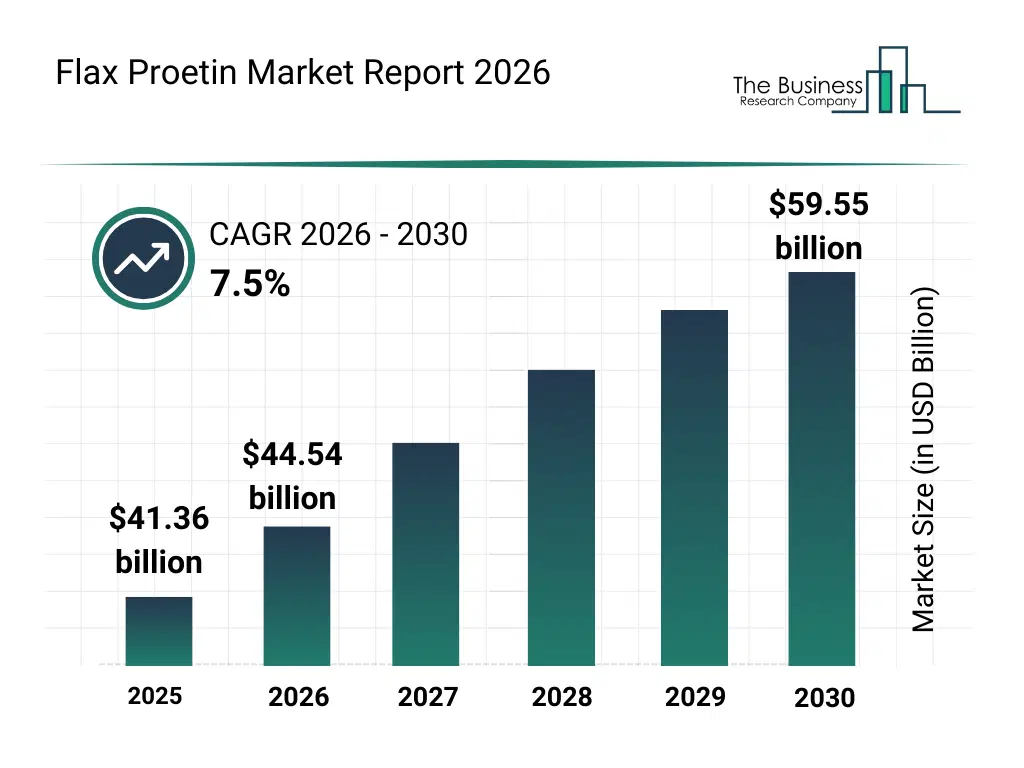
What Is The Flax Proetin Market Size and Share 2026?
The flax proetin market size has grown strongly in recent years. It will grow from $41.36 billion in 2025 to $44.54 billion in 2026 at a compound annual growth rate (CAGR) of 7.7%. The growth in the historic period can be attributed to growth of plant-based diets, increasing flaxseed cultivation, expansion of health food markets, advancements in protein extraction techniques, rising consumer focus on nutritional labeling.What Is The Flax Proetin Market Growth Forecast?
The flax proetin market size is expected to see strong growth in the next few years. It will grow to $59.55 billion in 2030 at a compound annual growth rate (CAGR) of 7.5%. The growth in the forecast period can be attributed to expansion of vegan and flexitarian populations, increasing use in infant and clinical nutrition, growth of sustainable ingredient sourcing, rising investments in alternative protein innovation, increasing demand from animal feed producers. Major trends in the forecast period include growing demand for plant-based protein alternatives, rising use in functional food formulations, expansion of clean-label protein ingredients, increased adoption in sports nutrition, diversification into personal care applications.
Global Flax Proetin Market Segmentation
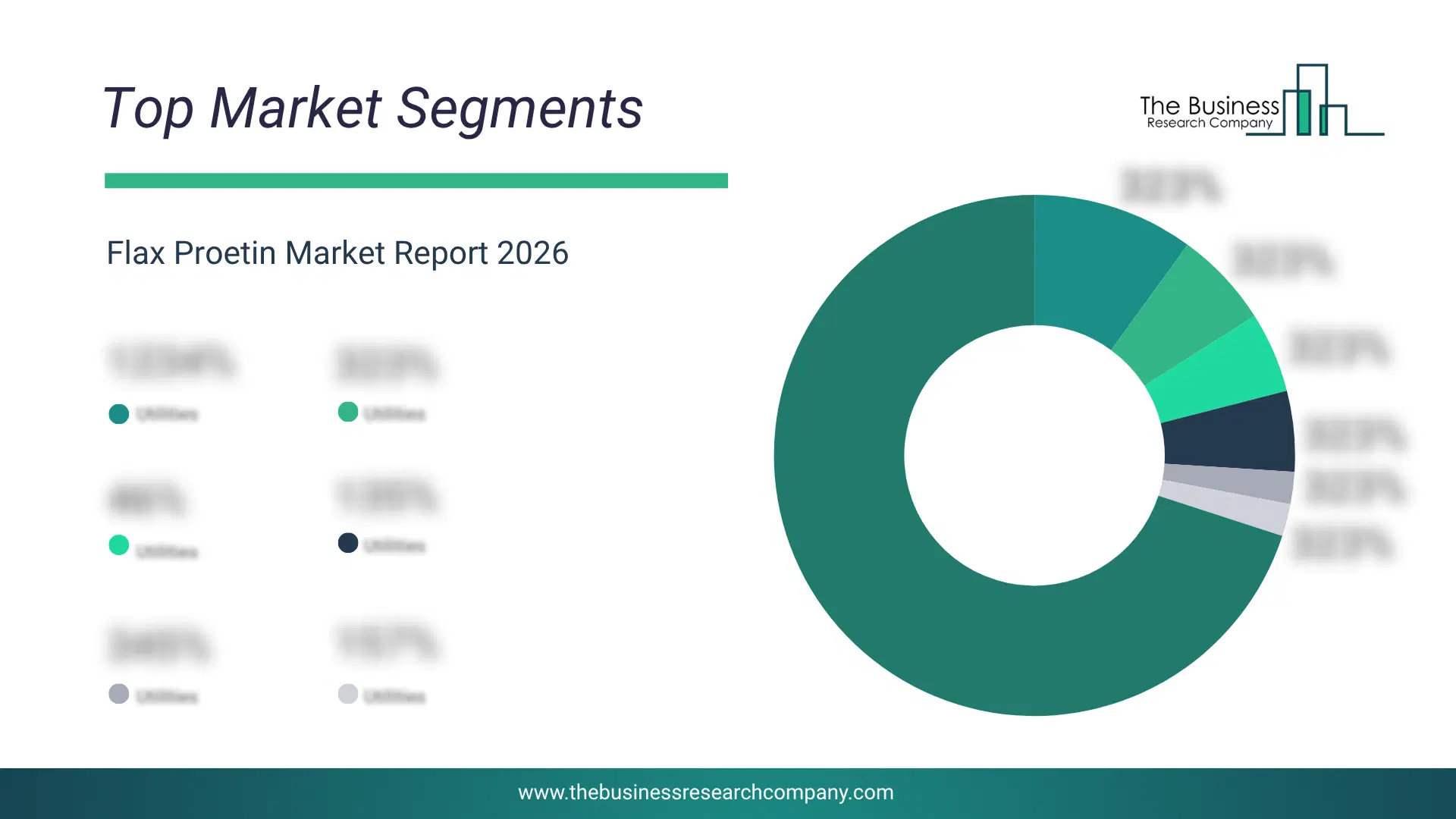
1) By Nature: Organic, Conventional 2) By Source: Golden Flaxseed, Brown Flaxseed 3) By Distribution Channel: Supermarket Or Hypermarket, Specialty Stores, Convenience Stores, Online Sales, Other Distribution Channels 4) By Application: Food Processing, Animal Feed, Nutraceuticals, Sports Nutrition, Personal Care Products, Infant Nutrition, Other Applications Subsegments: 1) By Organic: Cold-Pressed Organic Flax Protein, Sprouted Organic Flax Protein, Fermented Organic Flax Protein, Micro-Filtered Organic Flax Protein 2) By Conventional: Isolated Flax Protein, Concentrated Flax Protein, Hydrolyzed Flax Protein, Defatted Flax ProteinWhat Is The Driver Of The Flax Proetin Market?
The rising adoption of plant-based diets is expected to propel the flax protein market going forward. Plant-based diets refer to eating patterns centered on foods derived from plants, with minimal or no animal products. The rising adoption of plant-based diets is driven by health, sustainability, ethics, and growing plant-based food options. Flax protein boosts the adoption of plant-based diets by offering a sustainable, nutritious, and allergen-friendly protein source. For instance, in October 2024, according to the Good Food Institute, a US-based non-profit organization that promotes plant-based foods, a 7.1% increase in plant-based milk and dairy alternative sales to €2.2 billion ($2.27 billion) was reported from 2022 to 2023, with unit sales rising by 4.7% and volume by 5.2%. Therefore, the rising adoption of plant-based diets is driving the growth of the flax protein market.Key Players In The Global Flax Proetin Market
Major companies operating in the flax proetin market are Glanbia Nutritionals Inc., Grain Millers Inc., Myprotein Ltd., Linwoods Health Foods Ltd., Bioriginal Food & Science Corp., MediKonda Nutrients LLC, Shape Foods Inc., Lakeside Food Sales Inc., GFR Ingredients Inc., Acetar Bio-tech Inc., Onset Worldwide Inc., Stony Brook Wholehearted Foods Inc., Marroquin Organic International Inc., AlpenPower Inc., Austrade Inc., Schalk Mühle KG, Yupik Inc., VedaOils LLC, Naturaplaza B.V., AKI Organic Inc.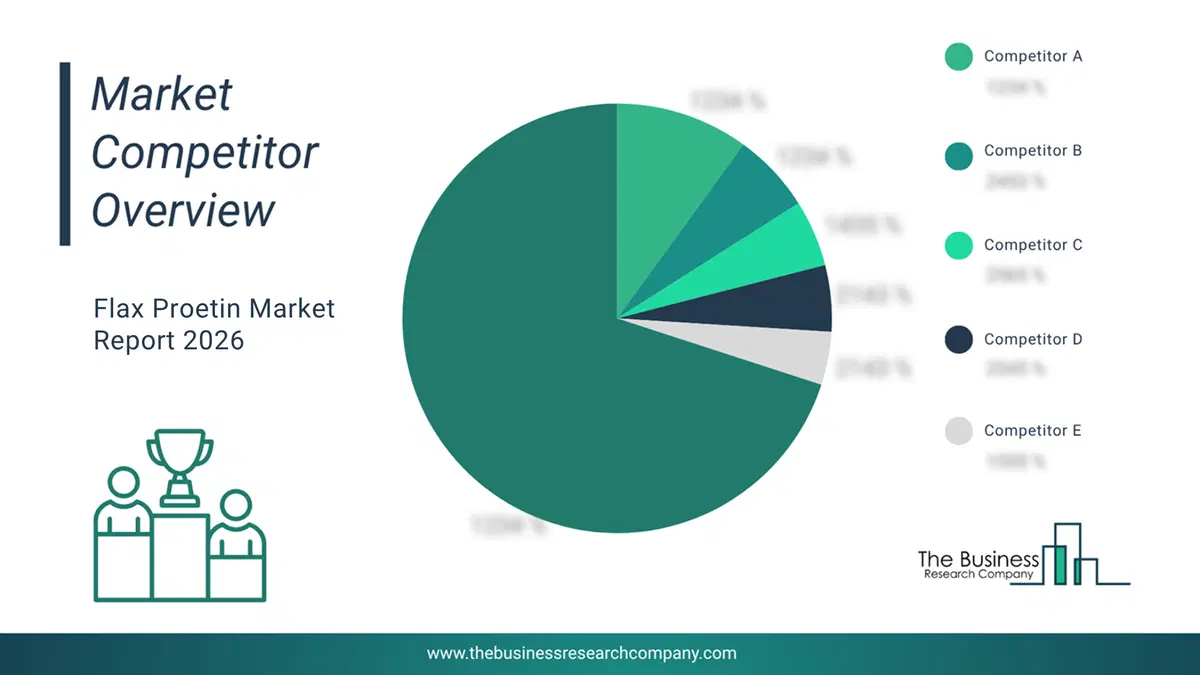
This chart is for illustrative purposes; the full report includes a detailed competitor analysis and comprehensive overview of the top 10 companies in the market.
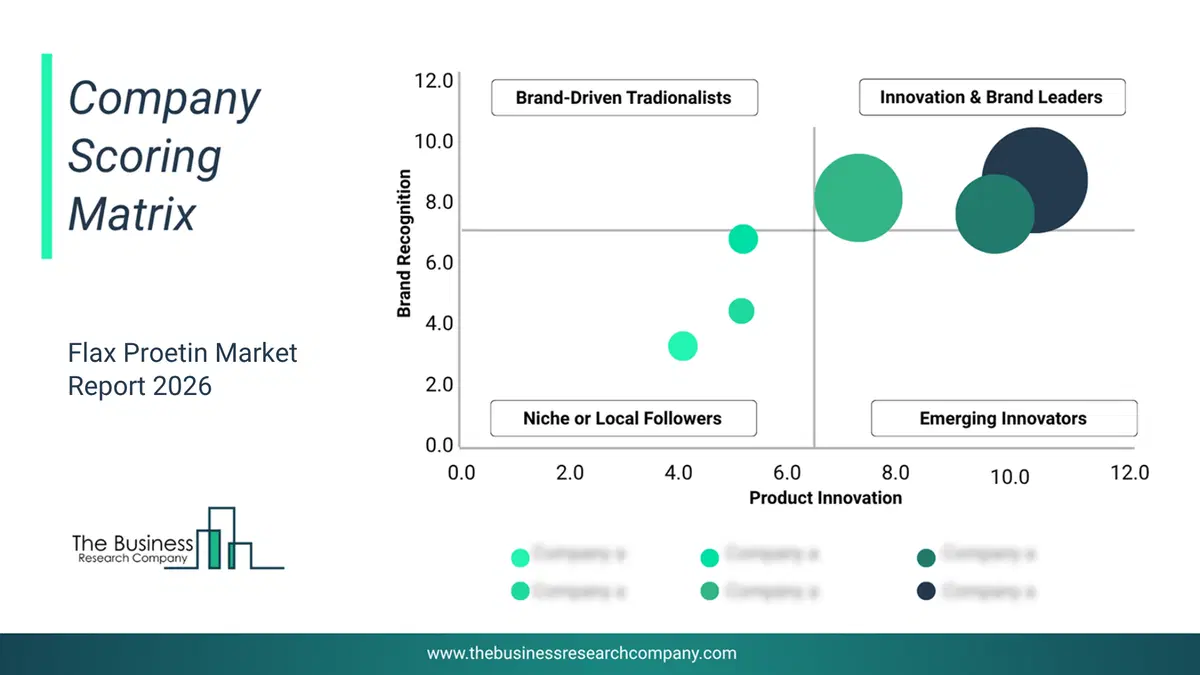
This chart maps companies by product innovation and brand strength, with bubble size indicating relative revenue, helping identify market leaders, challengers, and niche players. This is an illustrative chart; the full report provides a complete and accurate competitive analysis.
Global Flax Proetin Market Trends and Insights
Major companies operating in the flax protein market are focusing on a new line of high-protein products, such as smoothies, to meet the rising demand for plant-based nutrition and functional foods. A smoothie refers to a thick, blended beverage made from fruits, vegetables, yogurt, milk, or plant-based alternatives, often enriched with protein, nuts, or seeds. For instance, in January 2025, Daily Harvest, a US-based food manufacturing company, launched a new line of high-protein smoothies packed with USDA-certified organic ingredients. The smoothies are made with organic components such as flax seeds, ensuring high quality and sustainability. Each smoothie contains 20 grams of plant protein per serving, catering to those seeking protein-rich options. The product line includes three flavors, such as dark chocolate, vanilla bean, and mixed berry, each designed to offer a unique taste experience. The smoothies are packed with fruit and vegetable ingredients, avoiding common allergens and irritants like whey and nuts.What Are Latest Mergers And Acquisitions In The Flax Proetin Market?
In June 2024, Simply Good Foods, a US-based food manufacturer, acquired Only What You Need (OWYN) for $280 million. This acquisition aimed to expand Simply Good Foods' presence in the fast-growing health and wellness market by diversifying its product portfolio with high-protein, dairy-free beverages. These products appeal to consumers seeking clean-label, allergen-friendly nutrition options. Only What You Need (OWYN) is a US-based company specializing in plant-based protein products such as flax protein shakes.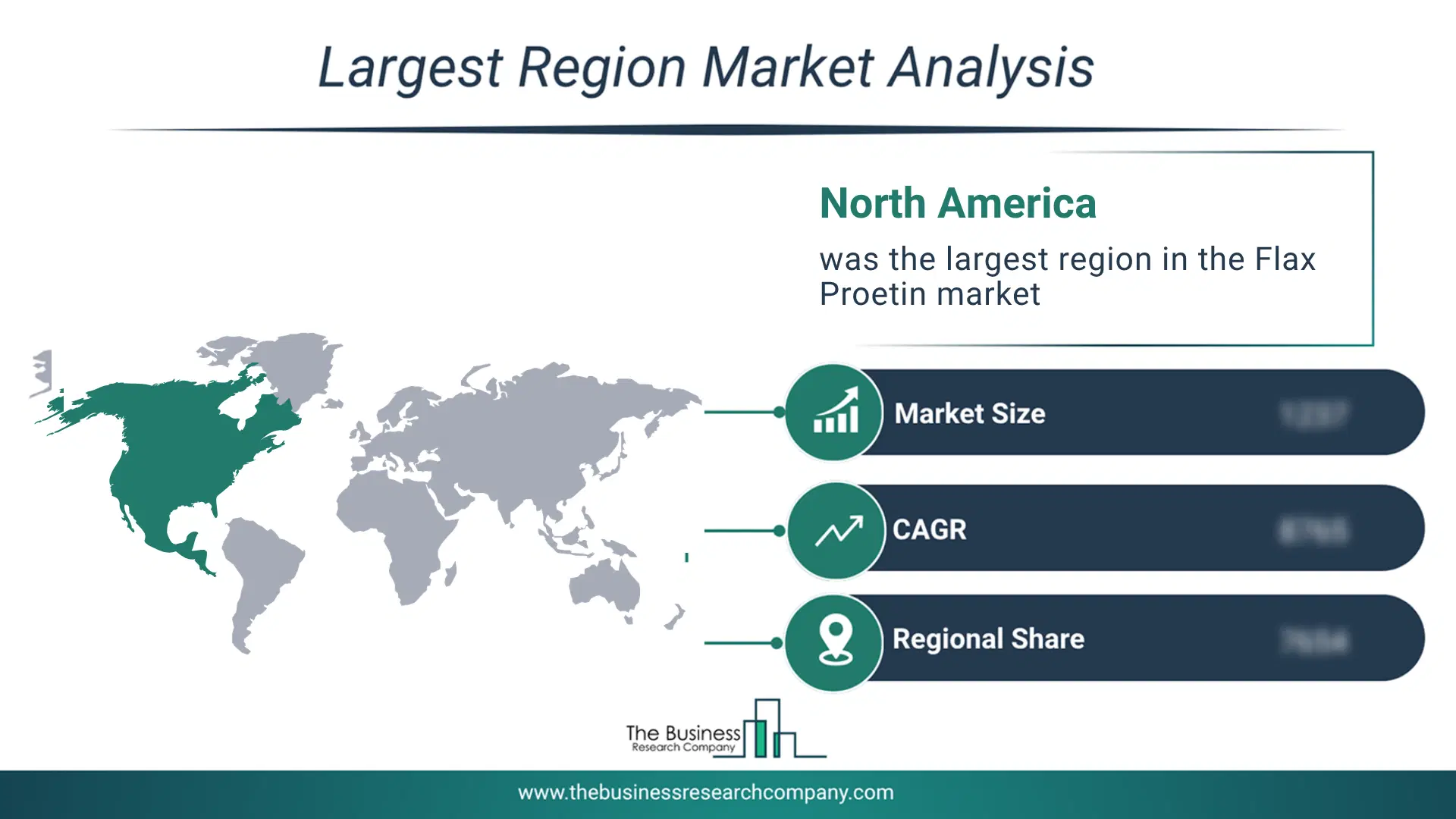
Regional Outlook
North America was the largest region in the flax protein market in 2025. Asia-Pacific is expected to be the fastest-growing region in the forecast period. The regions covered in this market report are Asia-Pacific, South East Asia, Western Europe, Eastern Europe, North America, South America, Middle East and Africa. The countries covered in this market report are Australia, Brazil, China, France, Germany, India, Indonesia, Japan, Taiwan, Russia, South Korea, UK, USA, Italy, Spain, CanadaWhat Defines the Flax Proetin Market?
The flax protein market consists of sales of flax protein powders, capsules, tablets, beverages, and gluten-free products. Values in this market are ‘factory gate’ values, that is, the value of goods sold by the manufacturers or creators of the goods, whether to other entities (including downstream manufacturers, wholesalers, distributors, and retailers) or directly to end customers. The value of goods in this market includes related services sold by the creators of the goods.How is Market Value Defined and Measured?
The market value is defined as the revenues that enterprises gain from the sale of goods and/or services within the specified market and geography through sales, grants, or donations in terms of the currency (in USD unless otherwise specified). The revenues for a specified geography are consumption values that are revenues generated by organizations in the specified geography within the market, irrespective of where they are produced. It does not include revenues from resales along the supply chain, either further along the supply chain or as part of other products.
This chart presents market attractiveness based on a quantitative evaluation of growth, competition, strategic alignment, and risk, offering a clear view of opportunity areas for decision-making. This chart is for illustrative purposes; the full report contains the complete analysis.

This chart highlights the Total Addressable Market (TAM) by estimating the maximum revenue opportunity using an assumption-driven approach, supporting strategic planning and opportunity sizing across markets. The chart is illustrative; the full report provides a more comprehensive analysis.
What Key Data and Analysis Are Included in the Flax Proetin Market Report 2026?
The flax proetin market research report is one of a series of new reports from The Business Research Company that provides market statistics, including industry global market size, regional shares, competitors with the market share, detailed market segments, market trends and opportunities, and any further data you may need to thrive in the flax proetin industry. The market research report delivers a complete perspective of everything you need, with an in-depth analysis of the current and future state of the industry.Flax Proetin Market Report Forecast Analysis
| Report Attribute | Details |
|---|---|
| Market Size Value In 2026 | $44.54 billion |
| Revenue Forecast In 2030 | $59.55 billion |
| Growth Rate | CAGR of 7.7% from 2026 to 2030 |
| Base Year For Estimation | 2025 |
| Actual Estimates/Historical Data | 2020-2025 |
| Forecast Period | 2026 - 2030 |
| Market Representation | Revenue in USD Billion and CAGR from 2026 to 2030 |
| Segments Covered | Nature, Source, Distribution Channel, Application |
| Regional Scope | Asia-Pacific, Western Europe, Eastern Europe, North America, South America, Middle East, Africa |
| Country Scope | The countries covered in the report are Australia, Brazil, China, France, Germany, India, Indonesia, Japan, Taiwan, Russia, South Korea, UK, USA, Canada, Italy, Spain. |
| Key Companies Profiled | Glanbia Nutritionals Inc., Grain Millers Inc., Myprotein Ltd., Linwoods Health Foods Ltd., Bioriginal Food & Science Corp., MediKonda Nutrients LLC, Shape Foods Inc., Lakeside Food Sales Inc., GFR Ingredients Inc., Acetar Bio-tech Inc., Onset Worldwide Inc., Stony Brook Wholehearted Foods Inc., Marroquin Organic International Inc., AlpenPower Inc., Austrade Inc., Schalk Mühle KG, Yupik Inc., VedaOils LLC, Naturaplaza B.V., AKI Organic Inc. |
| Customization Scope | Request for Customization |
| Pricing And Purchase Options | Explore Purchase Options |