
Flex Fuel Vehicle Market Report 2026
Global Outlook – By Ethanol Blend Type (E10 to E25, E25 to E85, E85 And Above), By Vehicle Type (Passenger Cars, Commercial Vehicles), By Fuel Type (Petrol, Diesel) – Market Size, Trends, Strategies, and Forecast to 2030
Flex Fuel Vehicle Market Overview
• Flex Fuel Vehicle market size has reached to $77.31 billion in 2025 • Expected to grow to $96.01 billion in 2030 at a compound annual growth rate (CAGR) of 4.5% • Growth Driver: Increasing Demand For Eco-Friendly Vehicles • Market Trend: Increasing Focus On Introducing Modified Engines With Flex Fuel Technology To Improve Profitability • North America was the largest region in 2025 and Asia-Pacific is the fastest growing region.What Is Covered Under Flex Fuel Vehicle Market?
Flex-fuel vehicles refer to vehicles with internal combustion engines designed to run on more than one type of fuel, usually gasoline blended with either ethanol or methanol fuel. These vehicles offer certain environmental benefits, as ethanol is often produced from renewable sources like corn or sugarcane, which can reduce the vehicle's overall carbon footprint. The main types of ethanol blend used in flex fuel vehicles are E10 to E25, E25 to E85, and E85 and above. E10 to E25 blend refers to an ethanol-gasoline mixture containing ethanol in the range of 10% to 25% by volume. Flex Fuel Vehicles use E10 to E26 blends, which reduce fossil fuel consumption, lower emissions of greenhouse gases, and enhance combustion efficiency. The various types of vehicles include passenger cars and commercial vehicles, with various types of fuel available, such as petrol and diesel.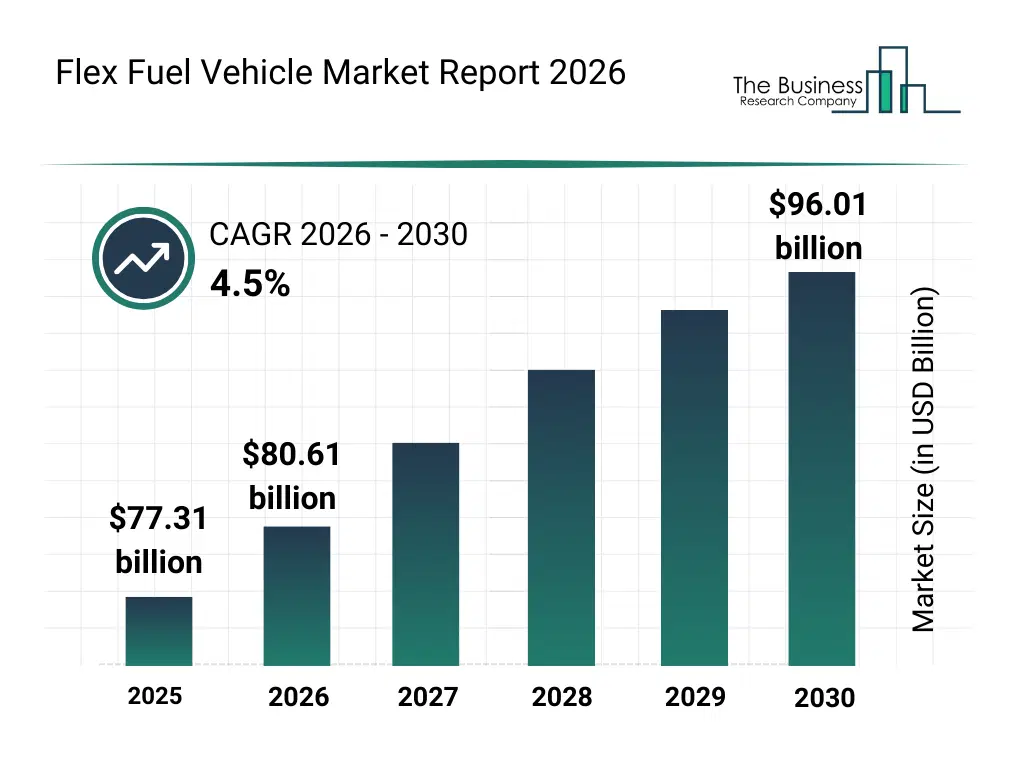
What Is The Flex Fuel Vehicle Market Size and Share 2026?
The flex fuel vehicle market size has grown steadily in recent years. It will grow from $77.31 billion in 2025 to $80.61 billion in 2026 at a compound annual growth rate (CAGR) of 4.3%. The growth in the historic period can be attributed to biofuel policy support, availability of ethanol blends, automotive engine adaptability, fuel cost volatility, emissions reduction initiatives.What Is The Flex Fuel Vehicle Market Growth Forecast?
The flex fuel vehicle market size is expected to see steady growth in the next few years. It will grow to $96.01 billion in 2030 at a compound annual growth rate (CAGR) of 4.5%. The growth in the forecast period can be attributed to higher ethanol blending mandates, renewable fuel investments, flex-fuel vehicle standardization, demand for lower emissions, energy security goals. Major trends in the forecast period include government promotion of ethanol blending, expansion of flex-fuel engine platforms, rising adoption in emerging markets, cost advantage over conventional fuels, oem focus on fuel compatibility.
Global Flex Fuel Vehicle Market Segmentation
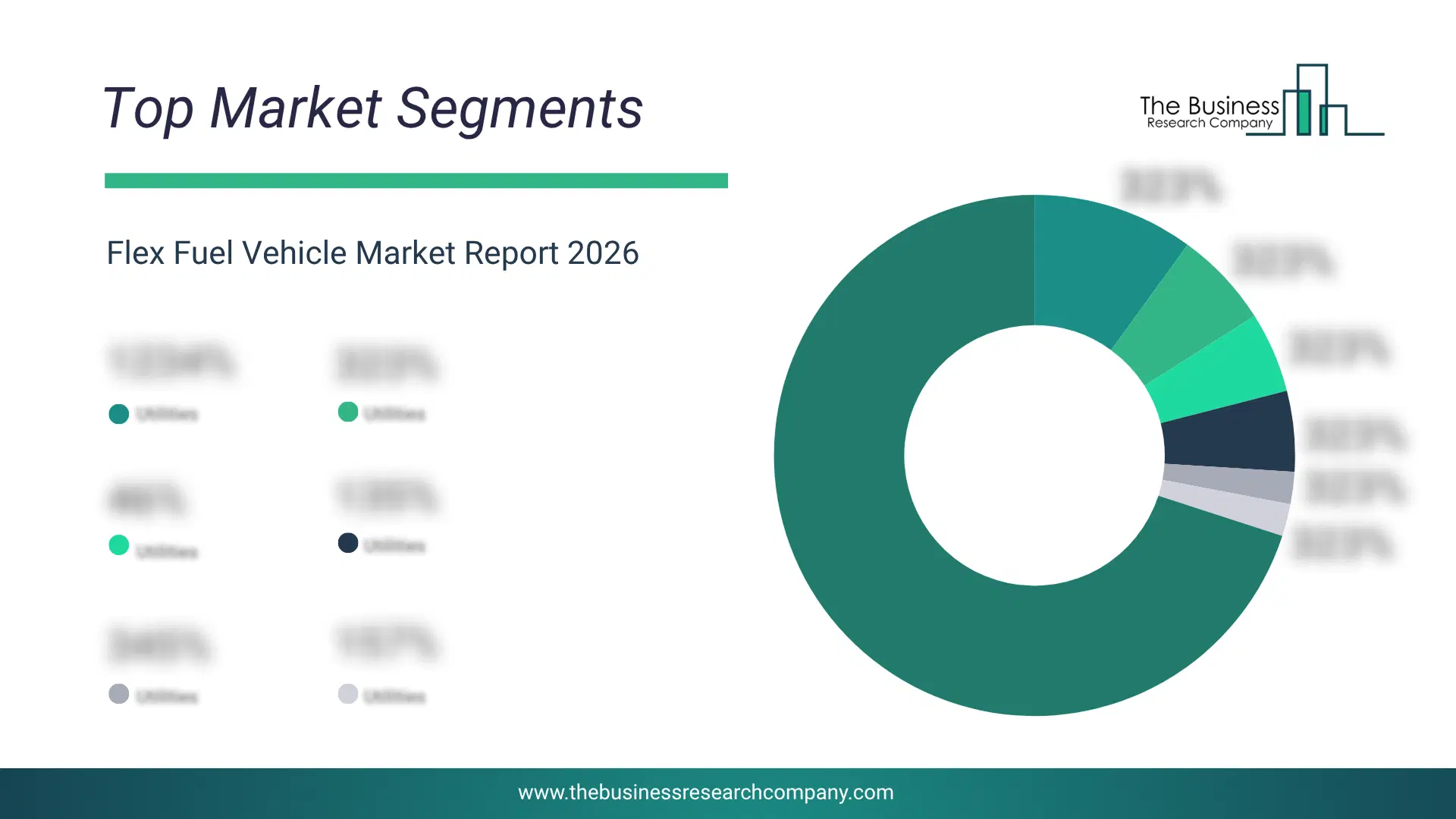
1) By Ethanol Blend Type: E10 to E25, E25 to E85, E85 And Above 2) By Vehicle Type: Passenger Cars, Commercial Vehicles 3) By Fuel Type: Petrol, Diesel Subsegments: 1) By E10 to E25: E10 Blend Vehicles, E15 Blend Vehicles, E20 Blend Vehicles, E25 Blend Vehicles 2) By E25 to E85: E25 Blend Vehicles, E30 Blend Vehicles, E40 Blend Vehicles, E50 Blend Vehicles, E85 Blend Vehicles 3) By E85 and Above: E85+ Blend Vehicles, E100 Blend VehiclesWhat Is The Driver Of The Flex Fuel Vehicle Market?
Increasing demand for eco-friendly vehicles is expected to propel the growth of the flex-fuel vehicle market going forward. Eco-friendly vehicles refer to vehicles designed to have a reduced negative impact on the environment compared to traditional internal combustion engine vehicles. These vehicles include electric vehicles, hybrid vehicles, hydrogen vehicles, and natural gas vehicles. Eco-friendly vehicles can utilize flex-fuel vehicle technology to reduce greenhouse gas emissions and promote environmental sustainability. Flex-fuel vehicles contribute fewer greenhouse gases, making them a more environmentally friendly option than traditional gasoline. For instance, in April 2024, according to the International Energy Agency (IEA), a France-based intergovernmental organization, in 2023 global sales of electric cars neared 14 million, representing 18% of all cars sold that year, up from 14% in 2022. Therefore, the increasing demand for eco-friendly vehicles is driving the growth of the flex-fuel vehicle market.Key Players In The Global Flex Fuel Vehicle Market
Major companies operating in the flex fuel vehicle market report include Volkswagen AG, Toyota Motor Corporation, Cummins Inc., Fiat Chrysler Automobiles, Stellantis N.V., Ford Motor Company, Mercedes-Benz, General Motors Corp., Mitsubishi Motors Corporation, Bayerische Motoren Werke AG, Honda Motor Co. Ltd., Hyundai Motor Company, Nissan Motor Co. Ltd., Kia Motors Corporation, Groupe Renault, Tata Motors Limited, Maruti Suzuki India Ltd., Volvo Group, Geely Automobile Holdings Limited, Great Wall Motors, Isuzu Motors Limited, Mahindra & Mahindra, Dongfeng Motor Corporation, JAC Motors, Ashok Leyland, Bajaj Auto Limited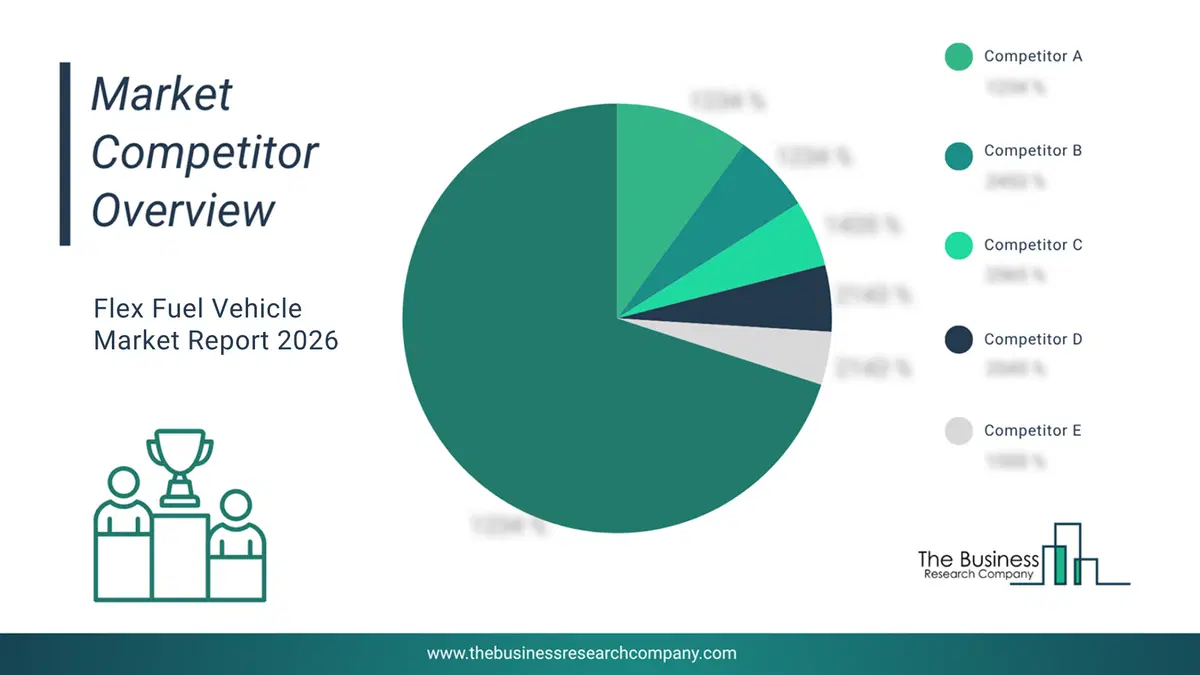
This chart is for illustrative purposes; the full report includes a detailed competitor analysis and comprehensive overview of the top 10 companies in the market.
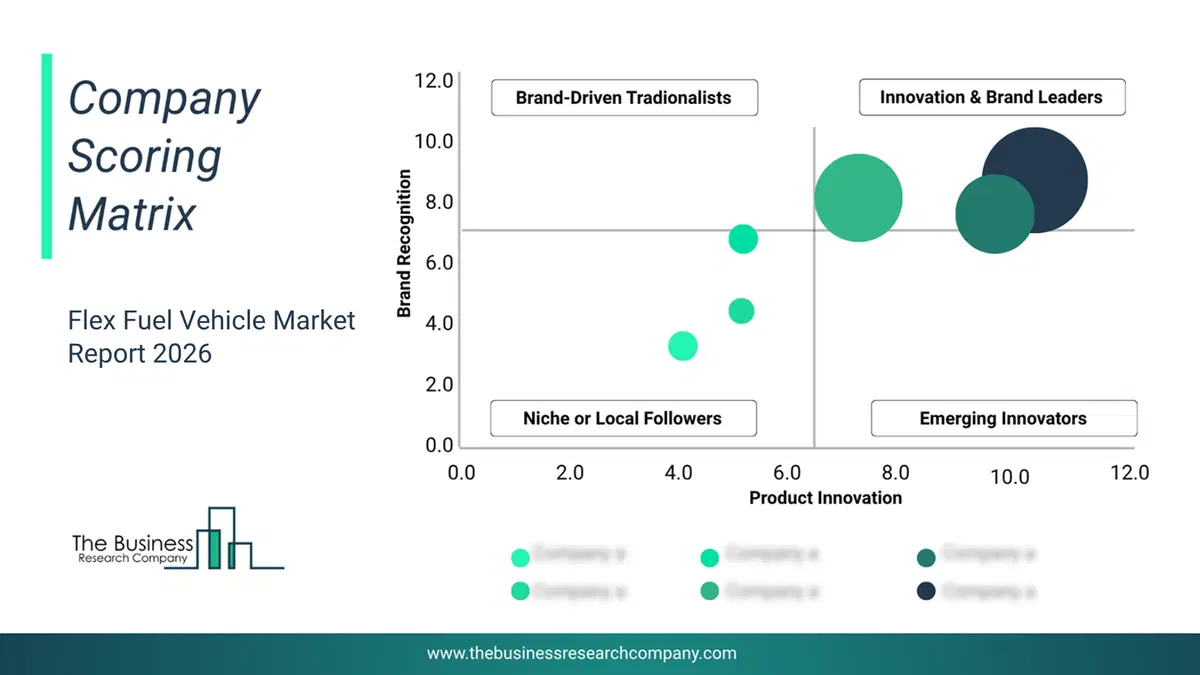
This chart maps companies by product innovation and brand strength, with bubble size indicating relative revenue, helping identify market leaders, challengers, and niche players. This is an illustrative chart; the full report provides a complete and accurate competitive analysis.
Global Flex Fuel Vehicle Market Trends and Insights
Major companies operating in the flex-fuel vehicle market are increasing their focus on developing modified engines with flex-fuel technology to improve their profitability in the market. Modified engines refer to internal combustion engines that have been altered or customized from their original factory specifications to enhance performance, power output, or other characteristics. For instance, in August 2023, Toyota Motor Corporation, a Japan-based automotive manufacturer, launched the electrified flex-fuel Innova HyCross car in India, the world's first fully ethanol-powered car equipped with a flex-fuel engine. The flex-fuel engine is a modified 2.0-liter, four-cylinder engine that runs on E85 fuel, a blend of 85% ethanol and 15% gasoline. The Innova HyCross flex-fuel model is expected to offer a fuel economy of up to 30% better than the standard Innova HyCross hybrid due to its use of E85 fuel. Additionally, the Innova HyCross flex-fuel has a self-charging lithium-ion battery that can power the vehicle in electric mode, providing a more environmentally friendly and fuel-efficient transportation option.What Are Latest Mergers And Acquisitions In The Flex Fuel Vehicle Market?
In July 2023, Molecular Energies PLC, a UK-based molecular energy company, acquired Dual Fuel Ltd. for an undisclosed amount. The acquisition is expected to strengthen Molecular Energies' position in the hydrogen mobility market and support the development of eco-friendly vehicles. Dual Fuel Ltd. is a US-based engineering company that specializes in converting conventional gasoline-powered vehicles to run on ethanol and other alternative fuels, which is a type of flex fuel technology.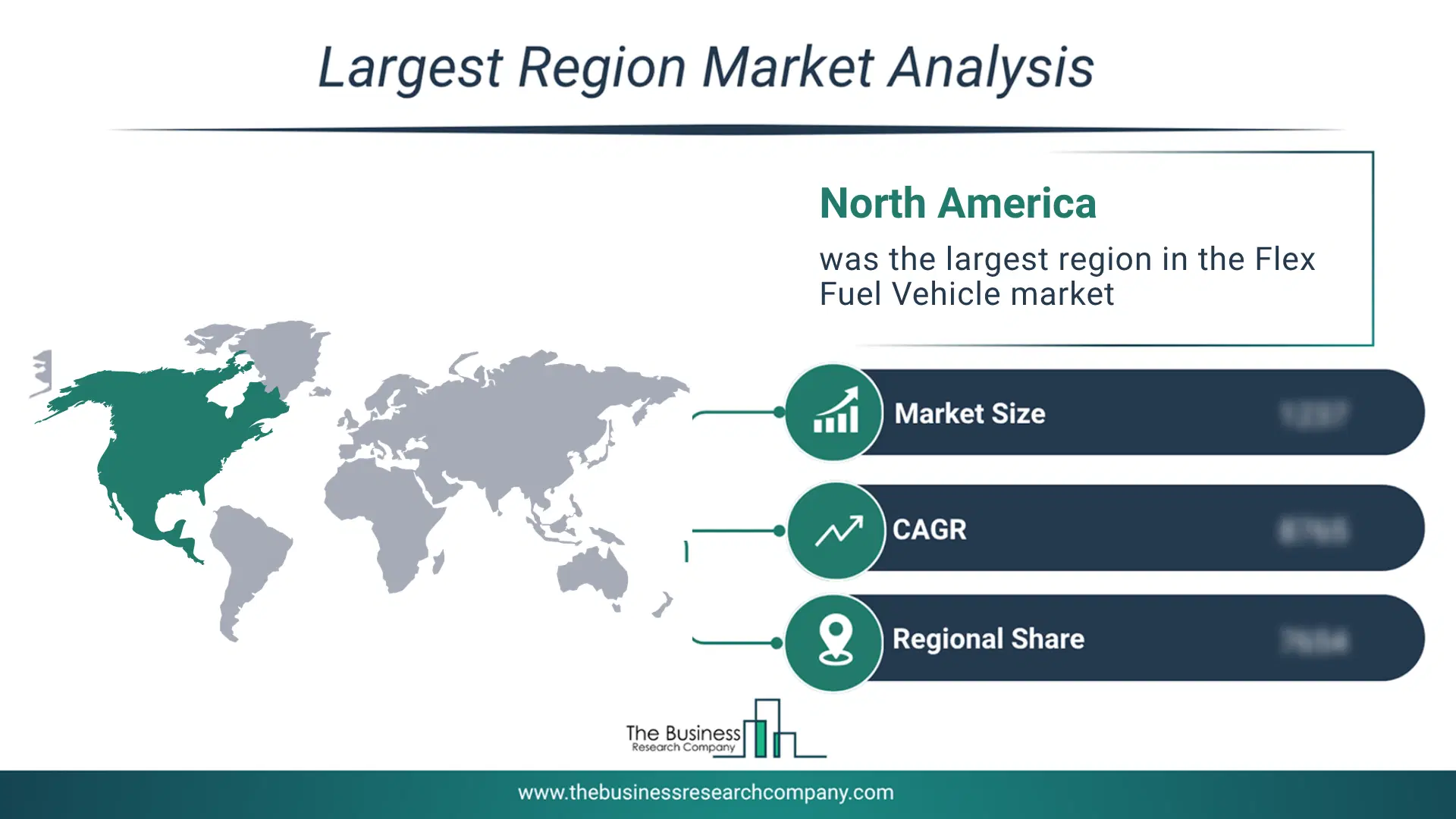
Regional Outlook
North America was the largest region in the flex fuel vehicle market in 2025. Asia-Pacific is expected to be the fastest-growing region in the forecast period. The regions covered in this market report include Asia-Pacific, South East Asia, Western Europe, Eastern Europe, North America, South America, Middle East, Africa. The countries covered in this market report include Australia, Brazil, China, France, Germany, India, Indonesia, Japan, Taiwan, Russia, South Korea, UK, USA, Canada, Italy, SpainWhat Defines the Flex Fuel Vehicle Market?
The flex fuel vehicle market consists of sales of fuel system components, engine control modules, engine oils, lubricants, and fuel conversion kits. Values in this market are ‘factory gate’ values, that is, the value of goods sold by the manufacturers or creators of the goods, whether to other entities (including downstream manufacturers, wholesalers, distributors, and retailers) or directly to end customers. The value of goods in this market includes related services sold by the creators of the goods.How is Market Value Defined and Measured?
The market value is defined as the revenues that enterprises gain from the sale of goods and/or services within the specified market and geography through sales, grants, or donations in terms of the currency (in USD unless otherwise specified). The revenues for a specified geography are consumption values that are revenues generated by organizations in the specified geography within the market, irrespective of where they are produced. It does not include revenues from resales along the supply chain, either further along the supply chain or as part of other products.
This chart presents market attractiveness based on a quantitative evaluation of growth, competition, strategic alignment, and risk, offering a clear view of opportunity areas for decision-making. This chart is for illustrative purposes; the full report contains the complete analysis.

This chart highlights the Total Addressable Market (TAM) by estimating the maximum revenue opportunity using an assumption-driven approach, supporting strategic planning and opportunity sizing across markets. The chart is illustrative; the full report provides a more comprehensive analysis.
What Key Data and Analysis Are Included in the Flex Fuel Vehicle Market Report 2026?
The flex fuel vehicle market research report is one of a series of new reports from The Business Research Company that provides market statistics, including industry global market size, regional shares, competitors with the market share, detailed market segments, market trends and opportunities, and any further data you may need to thrive in the flex fuel vehicle industry. The market research report delivers a complete perspective of everything you need, with an in-depth analysis of the current and future state of the industry.Flex Fuel Vehicle Market Report Forecast Analysis
| Report Attribute | Details |
|---|---|
| Market Size Value In 2026 | $80.61 billion |
| Revenue Forecast In 2030 | $96.01 billion |
| Growth Rate | CAGR of 4.3% from 2026 to 2030 |
| Base Year For Estimation | 2025 |
| Actual Estimates/Historical Data | 2020-2025 |
| Forecast Period | 2026 - 2030 - 2030 |
| Market Representation | Revenue in USD Billion and CAGR from 2026 to 2030 |
| Segments Covered | Ethanol Blend Type, Vehicle Type, Fuel Type |
| Regional Scope | Asia-Pacific, Western Europe, Eastern Europe, North America, South America, Middle East, Africa |
| Country Scope | The countries covered in the report are Australia, Brazil, China, France, Germany, India, Indonesia, Japan, Taiwan, Russia, South Korea, UK, USA, Canada, Italy, Spain. |
| Key Companies Profiled | Volkswagen AG, Toyota Motor Corporation, Cummins Inc., Fiat Chrysler Automobiles, Stellantis N.V., Ford Motor Company, Mercedes-Benz, General Motors Corp., Mitsubishi Motors Corporation, Bayerische Motoren Werke AG, Honda Motor Co. Ltd., Hyundai Motor Company, Nissan Motor Co. Ltd., Kia Motors Corporation, Groupe Renault, Tata Motors Limited, Maruti Suzuki India Ltd., Volvo Group, Geely Automobile Holdings Limited, Great Wall Motors, Isuzu Motors Limited, Mahindra & Mahindra, Dongfeng Motor Corporation, JAC Motors, Ashok Leyland, Bajaj Auto Limited |
| Customization Scope | Request for Customization |
| Pricing And Purchase Options | Explore Purchase Options |