
Flexographic Printing Technology Market Report 2026
Global Outlook – By Product Type (Inline Type Press, Stack Type Press, Central Impression Type Press), By Technology (Semi Automatic, Automatic), By Coloring Capacity (2 Color, 4 Color, 6 Color And Above), By Application (Print Media, Office And Admin, Industrial Applications) – Market Size, Trends, Strategies, and Forecast to 2030
Flexographic Printing Technology Market Overview
• Flexographic Printing Technology market size has reached to $2.74 billion in 2025 • Expected to grow to $3.82 billion in 2030 at a compound annual growth rate (CAGR) of 6.9% • Growth Driver: Impact Of Increasing Packaging Industry On Flexographic Technology Market • Market Trend: Innovative Technologies Drive Advancements In Flexographic Printing • North America was the largest region in 2025 and Asia Pacific is the fastest growing region.Market Gains By 2030 – Top Opportunities By Segment
Market Gain identifies the most promising market opportunities by highlighting the segments or products expected to generate the highest incremental revenue growth over the next five years.
What Is Covered Under Flexographic Printing Technology Market?
Flexographic printing technology is a modern printing technique that uses flexible plates to transfer ink onto various substrates. It's ideal for high-speed, large-volume printing on paper, plastics, and cardboard, commonly used in packaging and labeling. Flexographic printing technology is widely used across industries to produce labels, packaging materials, newspapers, and corrugated cardboard. The main product types of flexographic printing technology are the inline type press, stack type press, and central impression type press. An in-line press is a flexographic printing technology that integrates different printing modules into a single line, enhancing efficiency by reducing material handling and setup time. The technologies are categorized into semi-automatic and automatic with coloring capacities such as 2 colors, 4 colors, 6 colors, and above for several applications, including print media, office and admin, and industrial applications.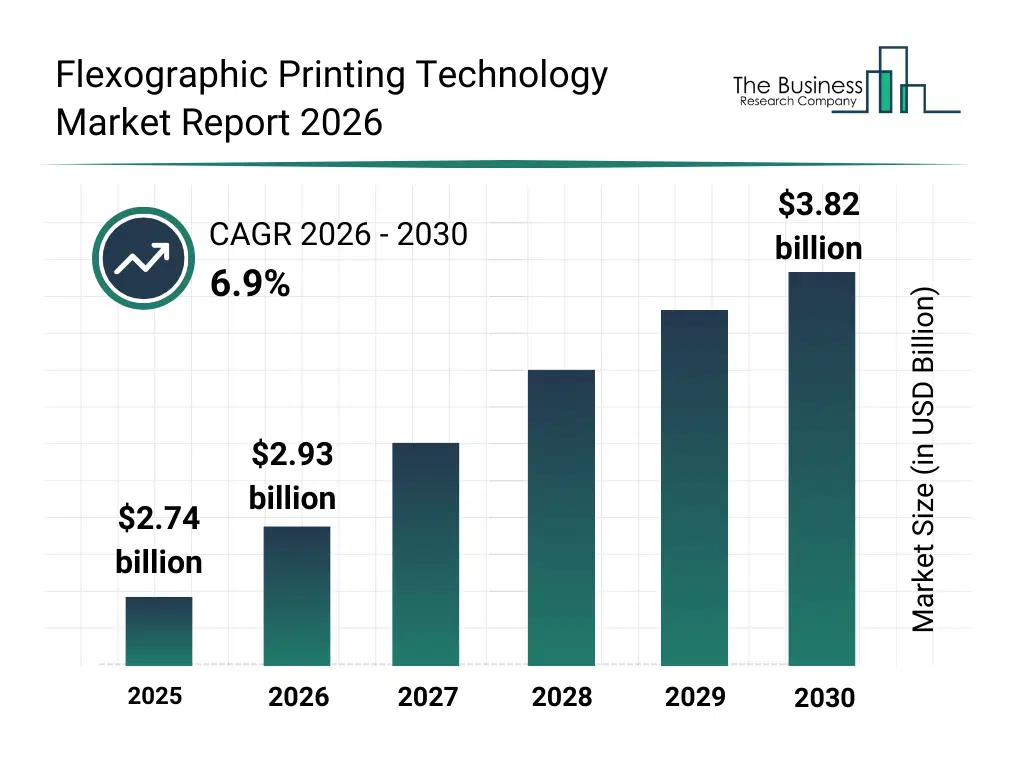
What Is The Flexographic Printing Technology Market Size and Share 2026?
The flexographic printing technology market size has grown strongly in recent years. It will grow from $2.74 billion in 2025 to $2.93 billion in 2026 at a compound annual growth rate (CAGR) of 6.9%. The growth in the historic period can be attributed to growth in packaging and labeling demand, widespread adoption of flexible packaging, need for cost-effective mass printing, expansion of consumer goods industries, early shift from traditional printing methods.What Is The Flexographic Printing Technology Market Growth Forecast?
The flexographic printing technology market size is expected to see strong growth in the next few years. It will grow to $3.82 billion in 2030 at a compound annual growth rate (CAGR) of 6.9%. The growth in the forecast period can be attributed to rising demand for sustainable packaging solutions, increasing adoption in corrugated packaging, growth of private label products, demand for faster production turnaround, expansion of industrial printing applications. Major trends in the forecast period include high-speed volume printing expansion, advanced ink transfer efficiency, multi-substrate printing compatibility, improved print consistency and quality, flexible plate technology advancements.
Global Flexographic Printing Technology Market Segmentation
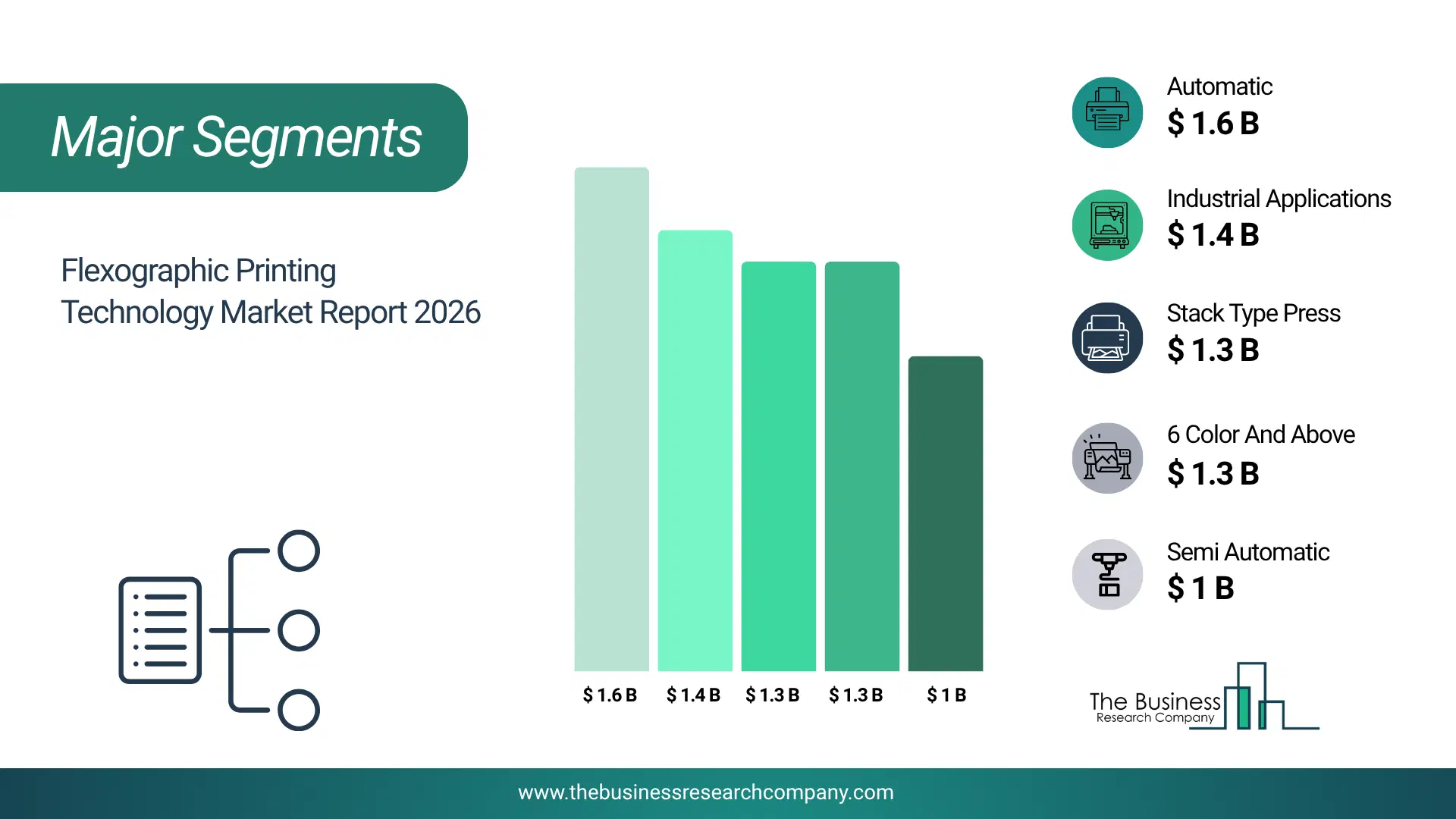
1) By Product Type: Inline Type Press, Stack Type Press, Central Impression Type Press 2) By Technology: Semi Automatic, Automatic 3) By Coloring Capacity: 2 Color, 4 Color, 6 Color And Above 4) By Application: Print Media, Office And Admin, Industrial Applications Subsegments: 1) By Inline Type Press: Single-Web Inline Press, Double-Web Inline Press, Multi-Color Inline Press 2) By Stack Type Press: Vertical Stack Type Press, Horizontal Stack Type Press, Narrow-Web Stack Type Press 3) By Central Impression Type Press: Single-Sided Central Impression Press, Double-Sided Central Impression Press, Wide-Web Central Impression Press The top segments in the flexographic printing technology market will be: • Automatic will reach $1657.51 Million by 2025. • Industrial Applications will reach $1491.27 Million by 2025. • Stack Type Press will reach $1385.52 Million by 2025. • 6 Color And Above will reach $1341.72 Million by 2025. • Semi Automatic will reach $1079.29 Million by 2025.What Is The Driver Of The Flexographic Printing Technology Market?
The increasing packaging industry is expected to drive the growth of the flexographic printing technology market going forward. The packaging industry encompasses a wide range of products and services designed to protect, contain, and present goods for distribution, storage, sale, and use. The packaging industry is increasing due to the surge in online shopping, which has driven up the need for packaging materials to ensure the safe delivery of products. Flexographic printing machines allow for printing on various substrates such as paper, cellophane, metallic films, and plastics, making them ideal for printing food packaging and product labels. For instance, in March 2024, according to the American Forest & Paper Association (AF&PA), a US-based association for the advancement of paper and wood product producers, February 2024 witnessed a 5% increase in exports of packaging sheets and specialized packaging over February 2023. Therefore, the increasing packaging industry is expected to propel the growth of the flexographic printing technology industry.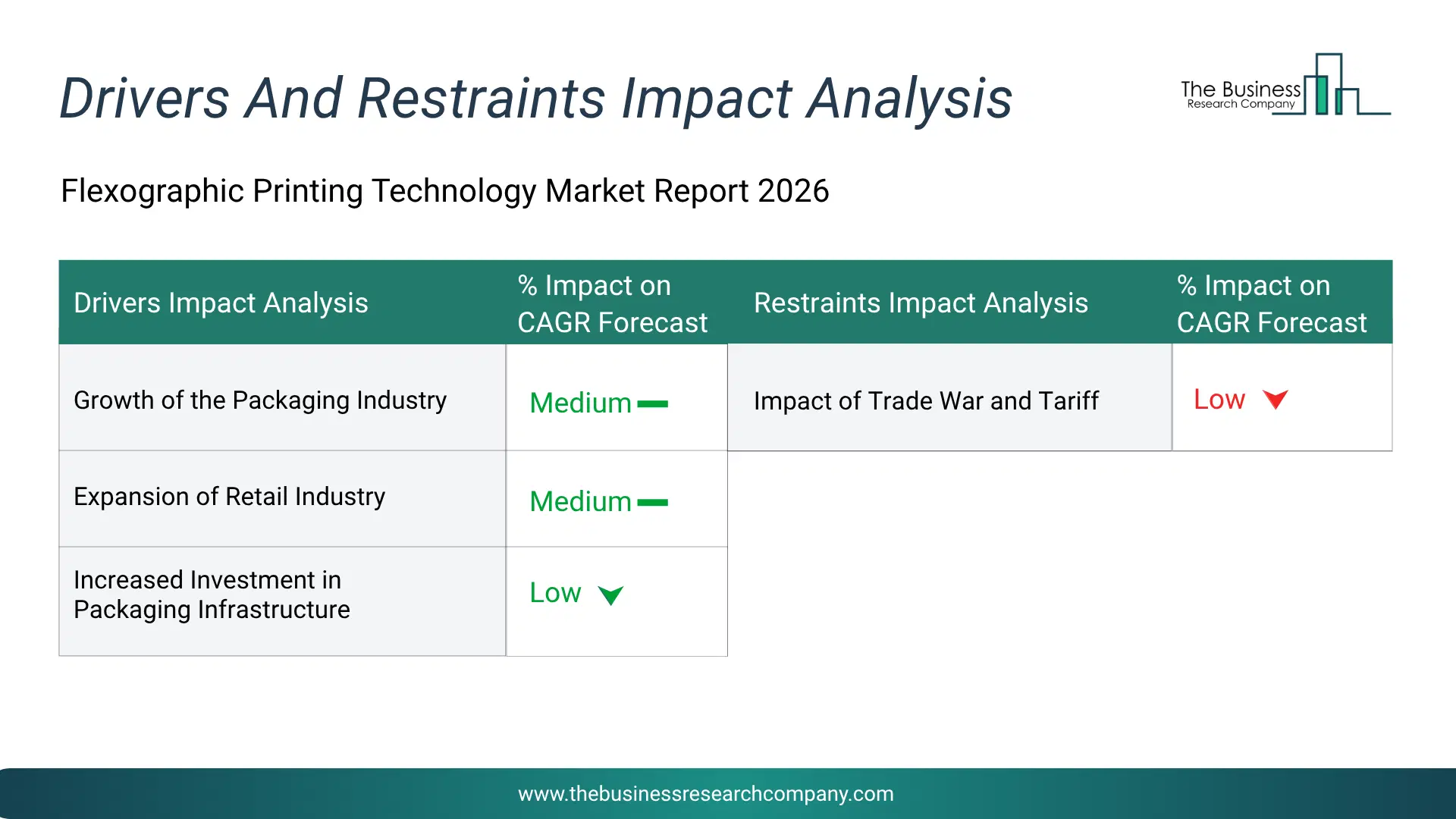
Infographic Chart Showing Key Market Drivers Analysis And Restraints For Flexographic Printing Technology Market
The chart presents an impact analysis of key drivers and restraints, quantifying their relative influence on the market's growth rate and helping assess the balance between growth enablers and limiting factors. This chart offers a high-level perspective; the full report contains more detailed insights.
How Will The Drivers Impact Growth In The Global Flexographic Printing Technology Market?
• Growth of the Packaging Industry (Medium) – The growth of the packaging industry will become a key driver of growth in the flexographic printing technology market by 2030. As expanding product lines and rising consumer goods consumption requires high-volume, high-speed, and cost-effective printing solutions. As packaging needs diversify across sectors such as food and beverage, personal care, and e-commerce, manufacturers increasingly rely on flexographic systems for their versatility across materials such as paper, cardboard, and flexible films. This expansion fuels investment in advanced flexographic presses to meet the industry's growing need for sharp graphics, sustainable substrates, and consistent print quality at scale. As a result, the growth of the packaging industry is anticipated to contributing to a 1.7% annual growth in the market. • Expansion of Retail Industry (Medium) – The expansion of retail industry will emerge as a major factor driving the expansion of the market by 2030. As retail businesses scale up operations and product offerings, they increasingly adopt flexographic printing to ensure fast, cost-effective, and consistent output across various packaging materials. This creates strong market pull for advanced flexographic systems that offer high-speed production, sharp image quality, and compatibility with sustainable substrates, supporting the evolving needs of the modern retail sector. Consequently, the expansion of retail industry is projected to contributing to a 1.5% annual growth in the market. • Increased Investment in Packaging Infrastructure (Low) – The increased investment in packaging infrastructure will serve as a key growth catalyst for the market by 2030. As companies upgrade facilities to meet growing consumer demand, enhance supply chain efficiency, and comply with regulatory and sustainability standards, there is a rising need for high-speed, reliable, and cost-effective printing solutions. Flexographic systems are increasingly adopted in new and retrofitted packaging lines for their versatility across materials and ability to produce consistent, high-quality output on a scale. This surge in infrastructure spending accelerates the deployment of advanced flexographic technologies across global packaging operations. Therefore, this increased investment in packaging infrastructure is projected to supporting to a 1.0% annual growth in the market. • Increasing Agricultural Exports (High) – The increasing agricultural exports will become a significant driver contributing to the growth of the market by 2030. Increasing agricultural exports drive the growth of flexographic printing technology by elevating the need for durable, informative, and regulatory-compliant packaging. Exported agricultural goods such as fresh produce, grains, and processed foods require high-quality labeling and branding that can withstand long-distance transportation and meet diverse international standards. Flexographic printing enables rapid, high-volume production of packaging with sharp graphics and variable data, supporting traceability, language localization, and country-specific compliance. As global demand for agricultural products rises, exporters seek scalable and cost-effective printing solutions, accelerating the adoption of advanced flexographic systems across the agri-food packaging value chain. Consequently, the increasing agricultural exports is projected to contributing to a 0.7% annual growth in the market.How Will The Restraints Impact Growth In The Global Flexographic Printing Technology Market?
• Complexity in Maintaining Consistent Color Quality (Medium) – Complexity in Maintaining Consistent Color Quality will restrict the growth of the Flexographic Printing Technology market during the forecast period. Achieving consistent color quality in flexographic printing is challenging due to variability in inks, substrates, and printing conditions. Color matching and consistency issues can affect print quality and customer satisfaction. The complexity of color management may limit the adoption of flexographic printing for high-end applications, affecting market growth. • High Competition (Medium) – High Competition will restrict the growth of the Flexographic Printing Technology market during the forecast period. Flexographic printing faces intense competition from alternative printing technologies including gravure, digital, and offset printing. Competitive pressures affect pricing and profit margins for flexographic printing service providers. Competition from alternative technologies can limit market share and growth potential, particularly in certain application segments. • Impact of Trade War and Tariff (Low) – Impact of Trade War and Tariff will restrict the growth of the Flexographic Printing Technology market during the forecast period. Flexographic printing equipment and consumables rely on global supply chains for inks, plates, and press components. Trade tariffs and restrictions can increase costs and affect product availability. Trade barriers may also impact packaging exports, affecting demand for flexographic printing services.Key Players In The Global Flexographic Printing Technology Market
Major companies operating in the flexographic printing technology market are Fujifilm Holdings Corporation; DuPont de Nemours Inc.; Heidelberger Druckmaschinen AG; Flint Group; Bobst Group SA; Koenig & Bauer Flexotecnica S.p.A.; Eastman Kodak Company; Windmoeller & Hoelscher Corporation; Esko; BFM S.r.l.; Mark Andy Inc.; UTECO Converting S.p.A.; Comexi Group; Nilpeter A/S; Rotatek S.A.; Soma Engineering; Edale Limited; Aim Machintechnik Pvt. Ltd; Donghang Graphic Technology Inc.; OMET S.r.l.; ShanghAI Printyoung International Industry Co.; Wolverine Flexographic LLC; Allstein GmbH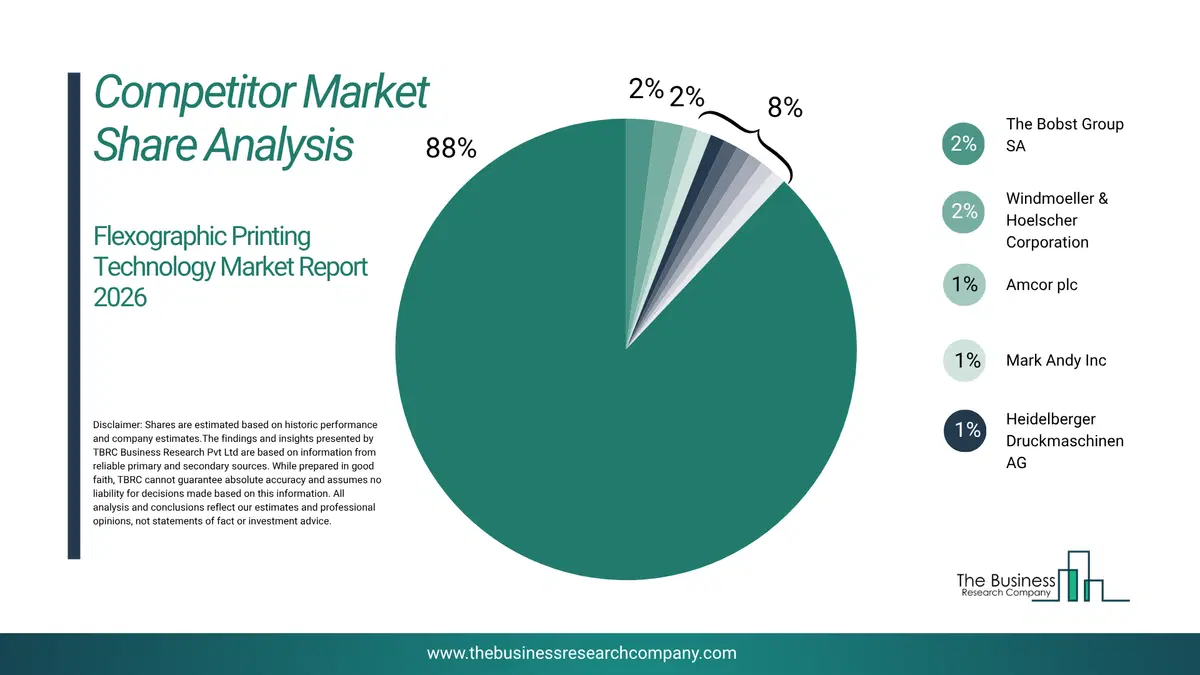
This chart is for illustrative purposes; the full report includes a detailed competitor analysis and comprehensive overview of the top 10 companies in the market.
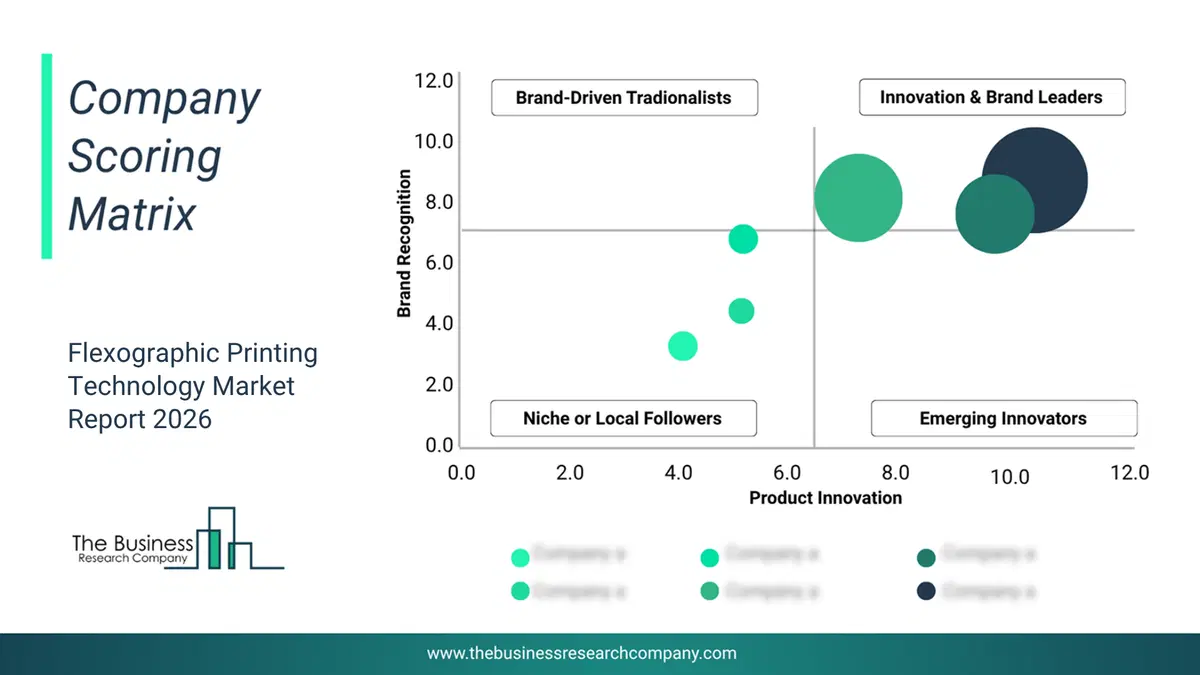
This chart maps companies by product innovation and brand strength, with bubble size indicating relative revenue, helping identify market leaders, challengers, and niche players. This is an illustrative chart; the full report provides a complete and accurate competitive analysis.
Global Flexographic Printing Technology Market Trends and Insights
Major companies operating in the flexographic printing technology market are focused on developing innovative products, such as Comexi F2 Origin, to serve customers with advanced features better. Comexi F2 Origin is a new flexographic press designed to deliver maximum productivity and exceptional ergonomics for operators, making printing jobs more efficient and user-friendly. For instance, in November 2023, Comexi, a Spain-based packaging machine manufacturer, launched Comexi F2 Origin. The Comexi F2 Origin achieves peak productivity, reaching speeds of up to 400 m per minute while prioritizing operator comfort and ease of use with outstanding ergonomics. Its capability to utilize solvent-free inks emphasizes its adaptability and eco-friendliness. The F2 Origin sets a new standard for excellence and efficiency in the industry with its cutting-edge features, which include Bellissima screening for excellent print quality and Genius Print for rapid task transitions.What Are Latest Mergers And Acquisitions In The Flexographic Printing Technology Market?
In August 2023, Reproflex3, a UK-based prepress and flexographic plate manufacturer, acquired ANF for an undisclosed amount. The acquisition is anticipated to strengthen Reproflex3's manufacturing capacities within the fast-moving consumer goods (FMCG) packaging realm and broaden its footprint in the European corrugated packaging and pharmaceutical sectors. ANF is a UK-based company that manufactures flexographic printing plates for the packaging industry.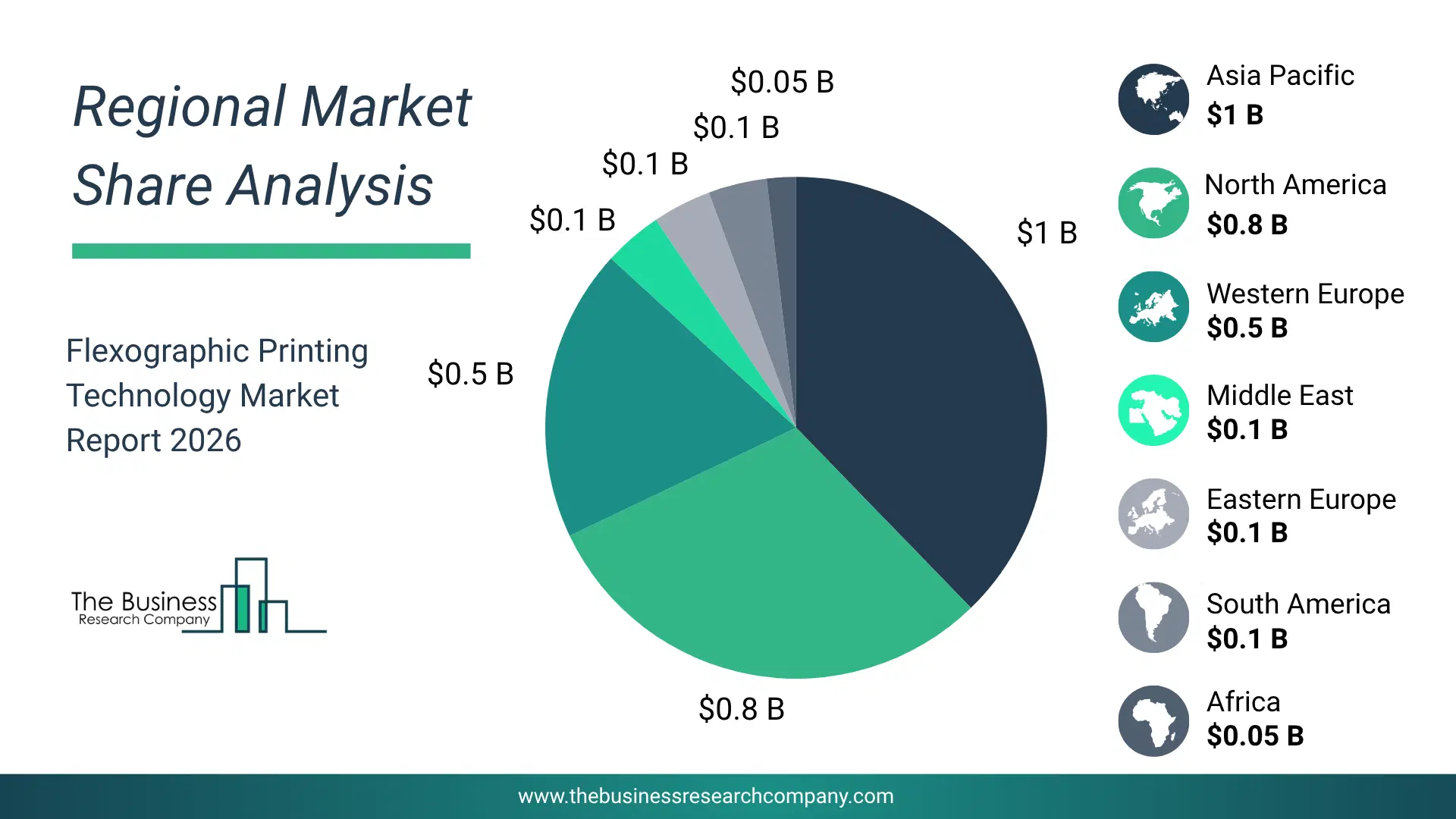
Regional Insights
North America was the largest region in the flexographic printing technology market in 2025. Asia Pacific is expected to be the fastest-growing region in the forecast period. The regions covered in this market report are Asia-Pacific, South East Asia, Western Europe, Eastern Europe, North America, South America, Middle East, Africa. The countries covered in this market report are Australia, Brazil, China, France, Germany, India, Indonesia, Japan, Taiwan, Russia, South Korea, UK, USA, Canada, Italy, SpainWhat Defines the Flexographic Printing Technology Market?
The flexographic printing technology market consists of revenues earned by providing services such as pre-press services and post-press services. The market value includes the value of related goods sold by the service provider or included within the service offering. The flexographic printing technology market also includes sales of water-based inks, solvent-based inks, and energy-curable inks. Values in this market are ‘factory gate’ values, that is the value of goods sold by the manufacturers or creators of the goods, whether to other entities (including downstream manufacturers, wholesalers, distributors, and retailers) or directly to end customers. The value of goods in this market includes related services sold by the creators of the goods.How is Market Value Defined and Measured?
The market value is defined as the revenues that enterprises gain from the sale of goods and/or services within the specified market and geography through sales, grants, or donations in terms of the currency (in USD unless otherwise specified). The revenues for a specified geography are consumption values that are revenues generated by organizations in the specified geography within the market, irrespective of where they are produced. It does not include revenues from resales along the supply chain, either further along the supply chain or as part of other products.
This chart presents market attractiveness based on a quantitative evaluation of growth, competition, strategic alignment, and risk, offering a clear view of opportunity areas for decision-making. This chart is for illustrative purposes; the full report contains the complete analysis.

This chart highlights the Total Addressable Market (TAM) by estimating the maximum revenue opportunity using an assumption-driven approach, supporting strategic planning and opportunity sizing across markets. The chart is illustrative; the full report provides a more comprehensive analysis.
What Key Data and Analysis Are Included in the Flexographic Printing Technology Market Report 2026?
The flexographic printing technology market research report is one of a series of new reports from The Business Research Company that provides market statistics, including industry global market size, regional shares, competitors with the market share, detailed market segments, market trends and opportunities, and any further data you may need to thrive in the flexographic printing technology industry. The market research report delivers a complete perspective of everything you need, with an in-depth analysis of the current and future state of the industry.Flexographic Printing Technology Market Report Forecast Analysis
| Report Attribute | Details |
|---|---|
| Market Size Value In 2026 | $2.93 billion |
| Revenue Forecast In 2030 | $3.82 billion |
| Growth Rate | CAGR of 6.9% from 2026 to 2030 |
| Base Year For Estimation | 2025 |
| Actual Estimates/Historical Data | 2020-2025 |
| Forecast Period | 2026 - 2030 |
| Market Representation | Revenue in USD Billion and CAGR from 2026 to 2030 |
| Segments Covered | Product Type, Technology, Coloring Capacity, Application |
| Regional Scope | Asia-Pacific, Western Europe, Eastern Europe, North America, South America, Middle East, Africa |
| Country Scope | The countries covered in the report are Australia, Brazil, China, France, Germany, India, Indonesia, Japan, Taiwan, Russia, South Korea, UK, USA, Canada, Italy, Spain. |
| Key Companies Profiled | Fujifilm Holdings Corporation; DuPont de Nemours Inc.; Heidelberger Druckmaschinen AG; Flint Group; Bobst Group SA; Koenig & Bauer Flexotecnica S.p.A.; Eastman Kodak Company; Windmoeller & Hoelscher Corporation; Esko; BFM S.r.l.; Mark Andy Inc.; UTECO Converting S.p.A.; Comexi Group; Nilpeter A/S; Rotatek S.A.; Soma Engineering; Edale Limited; Aim Machintechnik Pvt. Ltd; Donghang Graphic Technology Inc.; OMET S.r.l.; ShanghAI Printyoung International Industry Co.; Wolverine Flexographic LLC; Allstein GmbH |
| Customization Scope | Request for Customization |
| Pricing And Purchase Options | Explore Purchase Options |