
Fluorescence Microscopy Market Report 2026
Global Outlook – By Type (Upright Fluorescence Microscopy, Inverted Fluorescence Microscopy), By Application (Biology, Medical Science, Material Science, Other Applications), By End User (Hospitals, Diagnostic Laboratories, Academic And Research Institutes) – Market Size, Trends, Strategies, and Forecast to 2030
Fluorescence Microscopy Market Overview
• Fluorescence Microscopy market size has reached to $0.65 billion in 2025 • Expected to grow to $0.94 billion in 2030 at a compound annual growth rate (CAGR) of 7.9% • Growth Driver: Rising Drug Discovery Development Fueling Growth In Fluorescence Microscopy Market • Market Trend: Advancements in Fluorescence Microscopy for Enhanced Imaging and Research Efficiency • North America was the largest region in 2025.Market Gains By 2030 – Top Opportunities By Segment
Market Gain identifies the most promising market opportunities by highlighting the segments or products expected to generate the highest incremental revenue growth over the next five years.
What Is Covered Under Fluorescence Microscopy Market?
Fluorescence microscopy refers to a powerful imaging technique used in biology and materials science to visualize structures and processes at the cellular and molecular levels. It is a versatile tool that enables researchers to visualize and analyze a wide range of biological and material-related phenomena with high sensitivity and spatial resolution. The main types of fluorescence microscopy are upright fluorescence microscopy and inverted fluorescence microscopy. Upright fluorescence microscopy refers to a microscopy setup where the sample being observed is illuminated from below and the objective lens and detector are positioned above the sample. It is used in various applications for biology, medical science, material science, and others, and its end users are hospitals, diagnostic laboratories, and academic and research institutes.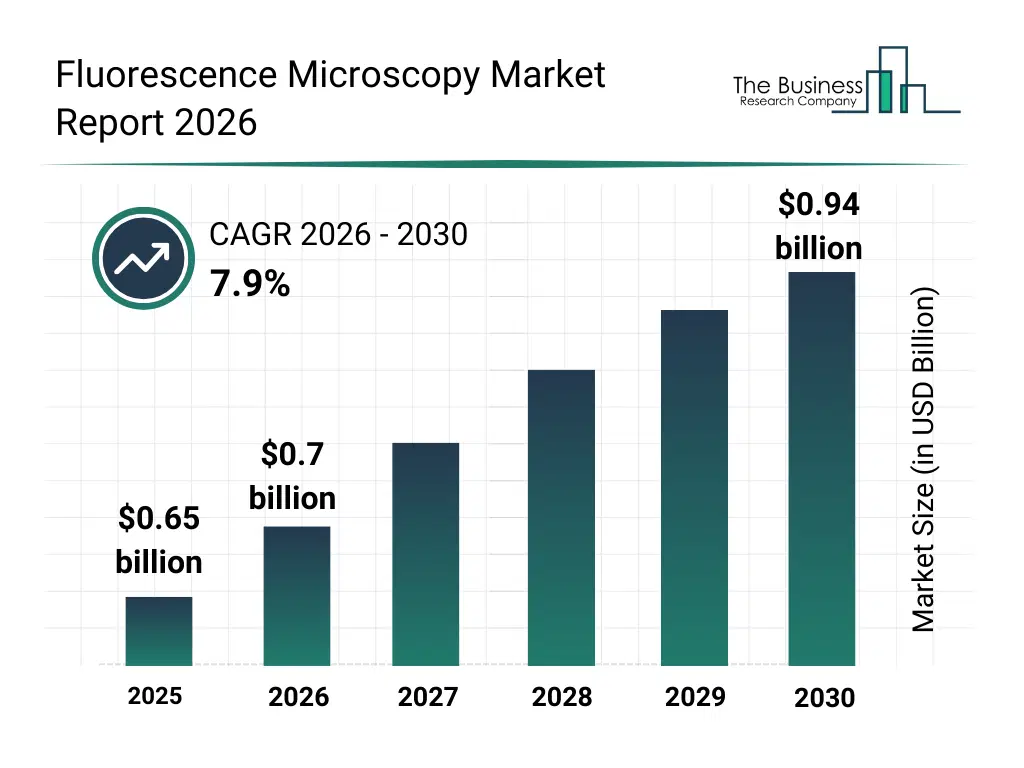
What Is The Fluorescence Microscopy Market Size and Share 2026?
The fluorescence microscopy market size has grown strongly in recent years. It will grow from $0.65 billion in 2025 to $0.7 billion in 2026 at a compound annual growth rate (CAGR) of 7.7%. The growth in the historic period can be attributed to growing use in biological research, increased demand for cellular imaging, expansion of academic research funding, adoption in medical diagnostics, advancements in optical instrumentation.What Is The Fluorescence Microscopy Market Growth Forecast?
The fluorescence microscopy market size is expected to see strong growth in the next few years. It will grow to $0.94 billion in 2030 at a compound annual growth rate (CAGR) of 7.9%. The growth in the forecast period can be attributed to rising demand for molecular-level analysis, expansion of precision medicine research, increasing use in material science studies, demand for high-resolution visualization tools, growth in advanced laboratory infrastructure. Major trends in the forecast period include super-resolution imaging adoption, live-cell imaging expansion, multi-color fluorescence analysis, enhanced optical sensitivity, modular microscope configurations.
Global Fluorescence Microscopy Market Segmentation
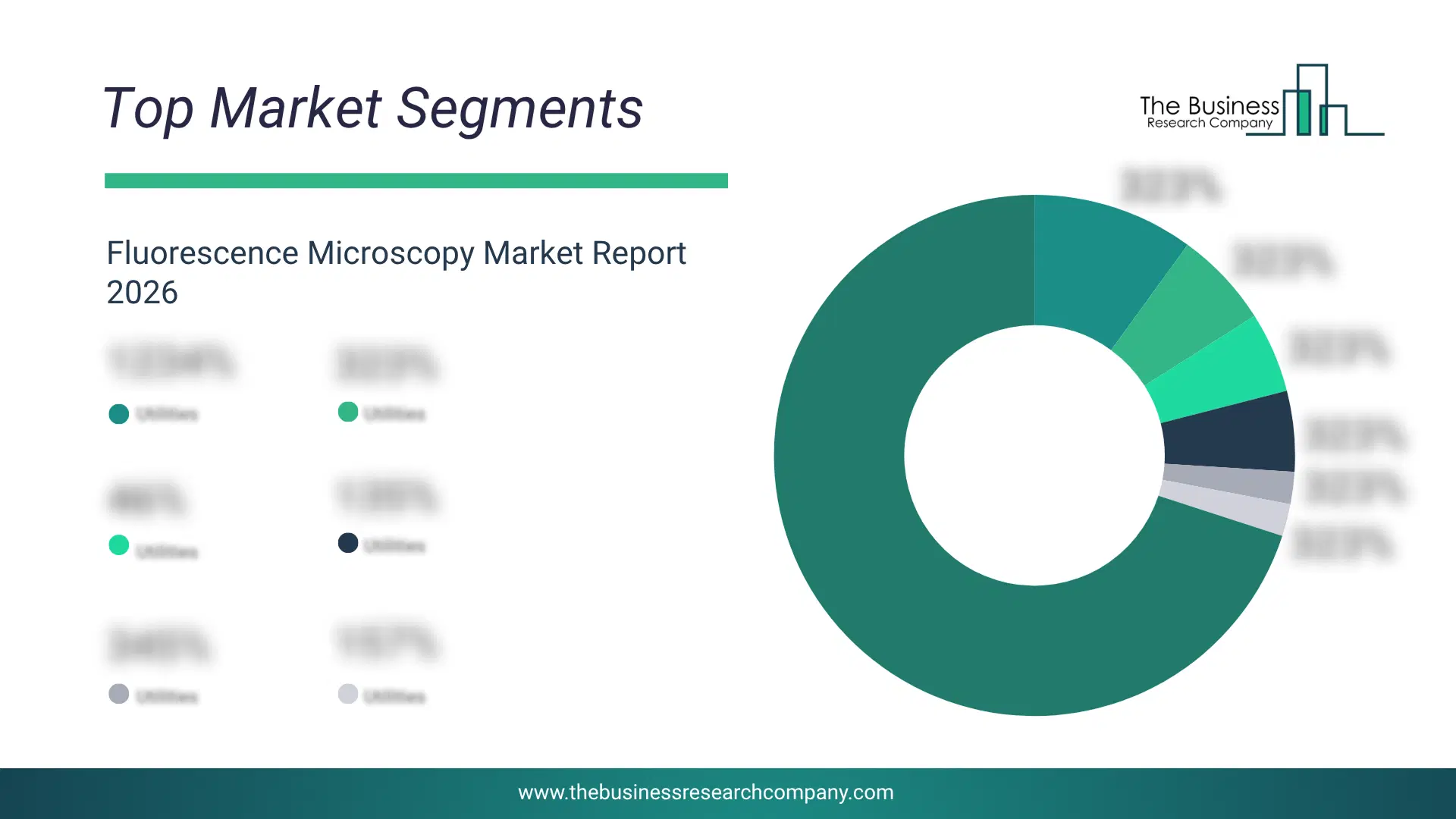
1) By Type: Upright Fluorescence Microscopy, Inverted Fluorescence Microscopy 2) By Application: Biology, Medical Science, Material Science, Other Applications 3) By End User: Hospitals, Diagnostic Laboratories, Academic And Research Institutes Subsegments: 1) By Upright Fluorescence Microscopy: Conventional Upright Fluorescence Microscopes, Confocal Upright Fluorescence Microscopes, Super-Resolution Upright Fluorescence Microscopes 2) By Inverted Fluorescence Microscopy: Conventional Inverted Fluorescence Microscopes, Inverted Confocal Fluorescence Microscopes, Inverted Super-Resolution Fluorescence Microscopes The top segments in the fluorescence microscopy market will be: • Upright Fluorescence Microscopy will reach $0.54 Billion by 2030. • Inverted Fluorescence Microscopy will reach $0.4 Billion by 2030.What Is The Driver Of The Fluorescence Microscopy Market?
The rising drug discovery development is expected to propel the fluorescence microscopy market going forward. Drug discovery is identifying and developing new pharmaceutical compounds to be used as medications. It involves multiple stages, from the initial idea or concept to a new drug's final approval and market launch. It arises because of technological advances, unmet medical needs, investment, and emerging infectious diseases. Fluorescence microscopy is a powerful tool used in drug discovery to facilitate the visualization, characterization, and evaluation of drug candidates and provide mechanistic insights into disease biology and therapeutic interventions. For instance, in March 2024, according to the Fierce Pharma Biopharma, an US-based pharmaceutical industry news and analysis provider company. The Novartis AG, a Switzerland based pharmaceutical company have increased their pharmaceutical spending for research and development from $9.17 billion in 2022 to $11.37 billion in 2023. Therefore, rising drug discovery development is driving the growth of the fluorescence microscopy industry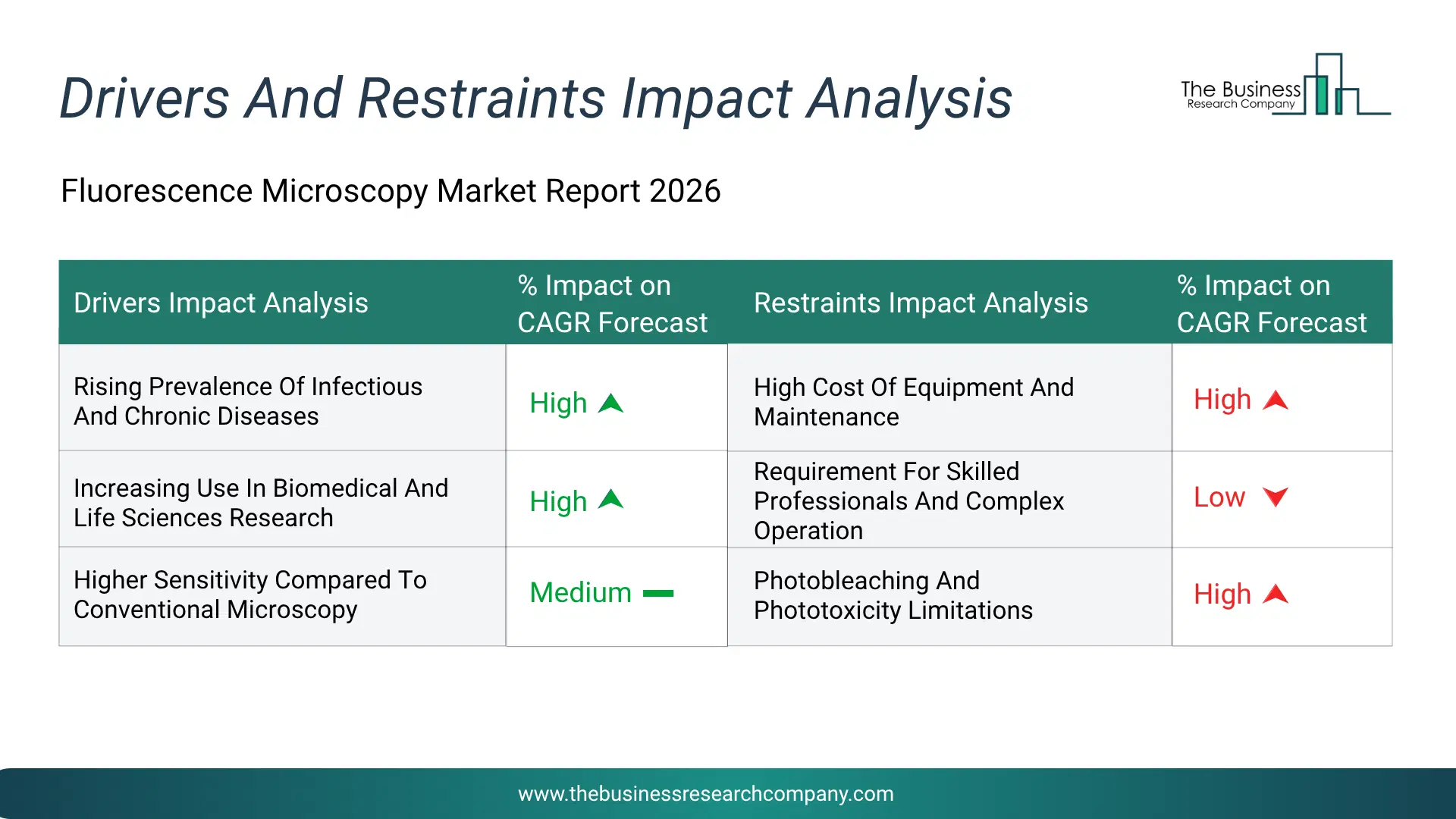
Infographic Chart Showing Key Market Drivers Analysis And Restraints For Fluorescence Microscopy Market
The chart presents an impact analysis of key drivers and restraints, quantifying their relative influence on the market's growth rate and helping assess the balance between growth enablers and limiting factors. This chart offers a high-level perspective; the full report contains more detailed insights.
How Will The Drivers Impact Growth In The Global Fluorescence Microscopy Market?
• Rising Prevalence Of Infectious And Chronic Diseases (High) – During the forecast period, the rising prevalence of infectious and chronic diseases is expected to become a key growth driver for the fluorescence microscopy market by 2030. Rising prevalence of infectious and chronic diseases is a major driver of the fluorescence microscopy market. According to the World Health Organization, infectious diseases such as tuberculosis and malaria still require accurate diagnostic tools, where fluorescence microscopy is widely used due to its higher sensitivity. Additionally, chronic diseases like cancer require cellular-level imaging for research and diagnosis. Fluorescence microscopy enables visualization of pathogens and cellular structures with high precision. Increasing disease burden is pushing healthcare systems to adopt advanced diagnostic technologies. This growing need for early and accurate detection is directly boosting demand for fluorescence microscopy solutions globally. • Increasing Use In Biomedical And Life Sciences Research (High) – During the forecast period, the increasing use in biomedical and life sciences research is expected to emerge as a major factor driving the expansion of the fluorescence microscopy market by 2030. Increasing use in biomedical and life sciences research significantly drives the fluorescence microscopy market. Research studies highlight that fluorescence microscopy is essential for observing molecular interactions, cell structures, and biological processes in real time. It is widely used in areas such as cell biology, neuroscience, and immunology. The technology supports drug discovery by enabling researchers to study cellular responses and protein behavior. Growing investment in life sciences research is increasing the adoption of advanced imaging techniques. Academic institutions and research organizations are expanding their use of fluorescence microscopy for innovation. This rising research activity is a key contributor to market growth. • Higher Sensitivity Compared To Conventional Microscopy (Medium) – During the forecast period, the higher sensitivity compared to conventional microscopy is expected to act as a key growth catalyst for the fluorescence microscopy market by 2030. Higher sensitivity compared to conventional microscopy is a strong driver for market growth. Studies show that fluorescence microscopy offers improved detection of low concentrations of biological molecules and pathogens. It provides better contrast and specificity than traditional light microscopy techniques. This allows researchers and clinicians to obtain more accurate and detailed imaging results. Faster processing and improved diagnostic efficiency further enhance its utility. Laboratories increasingly prefer fluorescence-based methods for reliable outcomes. These performance advantages are encouraging widespread adoption across research and diagnostic applications.How Will The Restraints Impact Growth In The Global Fluorescence Microscopy Market?
• High Cost Of Equipment And Maintenance (High) – During the forecast period, the high cost of equipment and maintenance acts as a major restraint in the fluorescence microscopy market. Advanced fluorescence microscopes require expensive components such as high-intensity light sources, detectors, and optical filters. According to global health resources, these systems also involve recurring costs related to maintenance, calibration, and consumables. Smaller laboratories and institutions often face budget constraints, limiting their ability to adopt such technologies. High upfront investment reduces accessibility, especially in developing regions. Cost-related challenges also affect large-scale deployment in healthcare facilities. This financial barrier continues to restrict market growth. • Requirement For Skilled Professionals And Complex Operation (High) – During the forecast period, the requirement for skilled professionals and complex operation significantly restrains the market. Fluorescence microscopy involves intricate procedures such as sample staining, labeling, and calibration, which require technical expertise. Proper handling is essential to avoid errors and ensure accurate results. Training personnel increases operational costs and time for laboratories. Lack of skilled professionals in certain regions limits effective utilization of the technology. Complex workflows can also reduce efficiency in high-throughput environments. These challenges make adoption difficult for smaller or resource-limited facilities. As a result, operational complexity remains a key restraint. • Photobleaching And Phototoxicity Limitations (Medium) – During the forecast period, the photobleaching and phototoxicity limitations act as important restraints in fluorescence microscopy. Scientific studies indicate that prolonged exposure to excitation light can degrade fluorescent dyes, reducing signal intensity over time. This affects image quality and limits long-term observation of samples. Phototoxicity can also damage living cells during live-cell imaging experiments. These issues restrict the ability to conduct extended or repeated imaging studies. Researchers must carefully control imaging conditions, adding complexity to experiments. Such limitations reduce efficiency and reliability in certain applications. Therefore, these inherent challenges hinder broader adoption of fluorescence microscopy.Key Players In The Global Fluorescence Microscopy Market
Major companies operating in the fluorescence microscopy market are Thermo Fisher Scientific; GE HealthCare Technologies Inc.; Agilent Technologies Inc.; Keyence Corporation; Olympus Corporation; Roper Technologies Inc.; Hitachi High-Tech Corporation; Nikon Corporation; PerkinElmer Inc.; Bio-Rad Laboratories Inc.; Bruker Corporation; Carl Zeiss AG; Hamamatsu Photonics K.K.; Horiba Scientific; Delta Vision Corporation; Leica Microsystems GmbH; Thorlabs Inc.; Gooch & Housego Plc; Molecular Devices; JEOL Ltd.; ZEISS Microscopy; Lumencor Inc.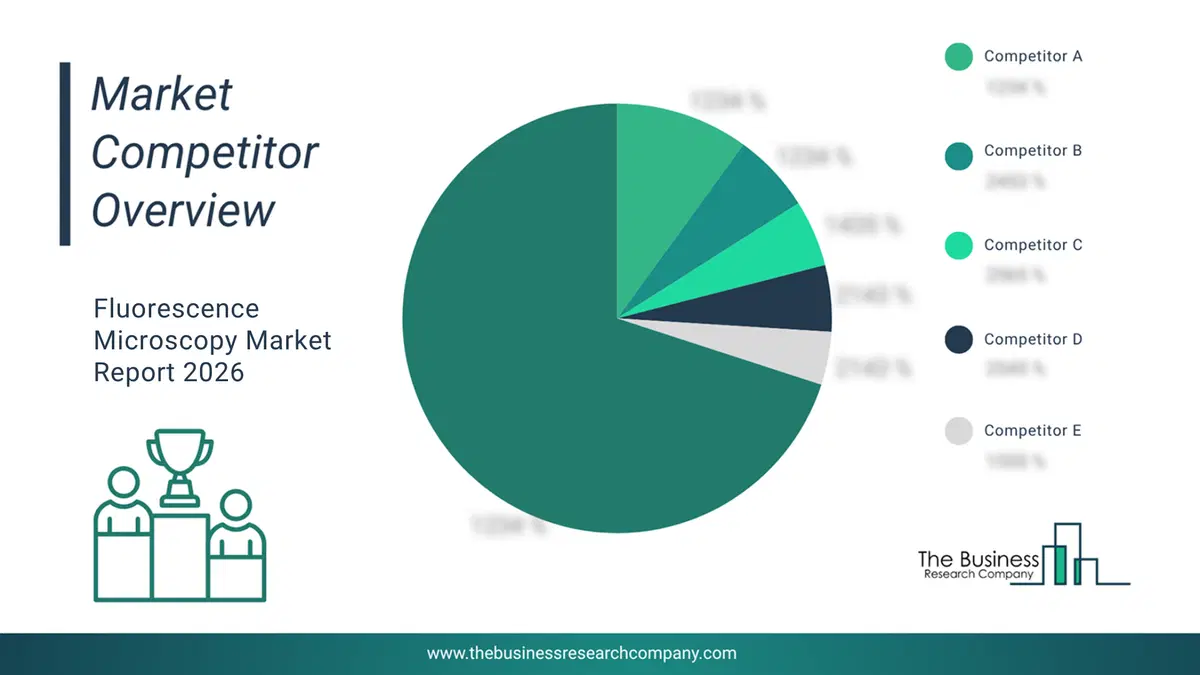
This chart is for illustrative purposes; the full report includes a detailed competitor analysis and comprehensive overview of the top 10 companies in the market.
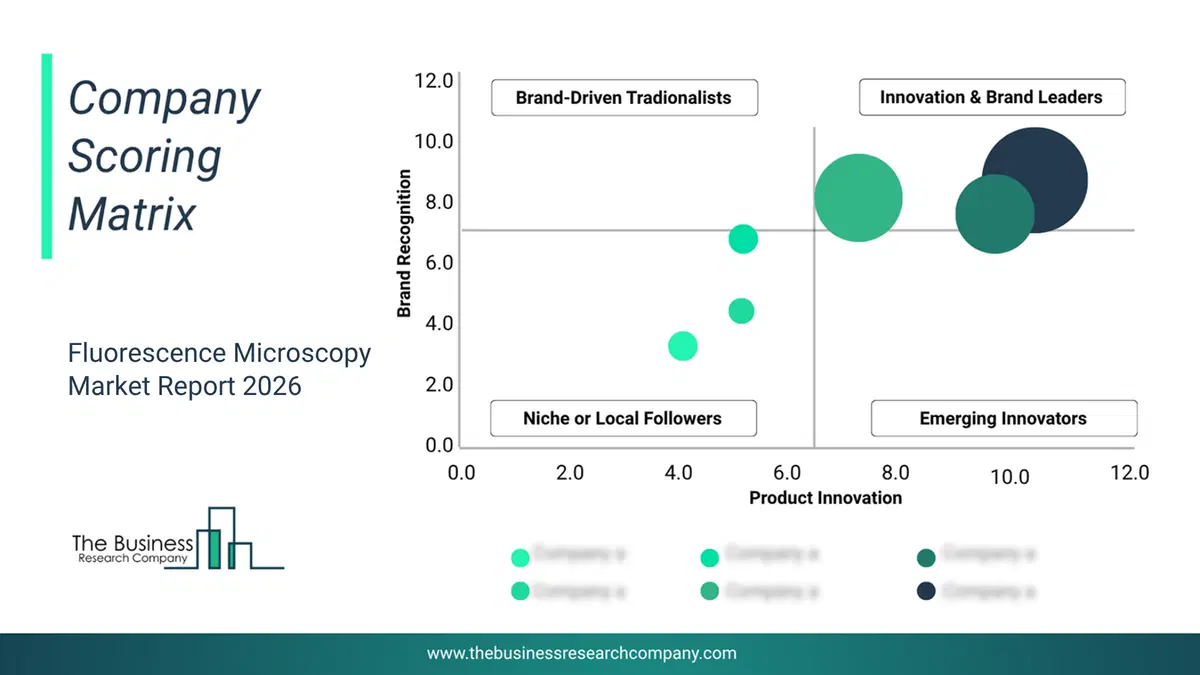
This chart maps companies by product innovation and brand strength, with bubble size indicating relative revenue, helping identify market leaders, challengers, and niche players. This is an illustrative chart; the full report provides a complete and accurate competitive analysis.
Global Fluorescence Microscopy Market Trends and Insights
Major companies operating in the fluorescence microscopy market focus on developing innovative advancements, such as ECLIPSE Ji, to stay competitive and meet the growing demand for advanced imaging solutions. ECLIPSE Ji includes various components arranged in an inverted configuration compared to traditional microscopes, allowing for unique applications such as observing cells growing on the bottom of dishes in cell culture. For instance, in September 2023, Nikon Corporation, a Japan-based optics and photographic equipment manufacturer, launched ECLIPSE Ji, a digital inverted microscope that utilizes artificial intelligence (AI) to automate the acquisition and analysis of cellular images. This aims to streamline research workflows, particularly in cancer and nerve disease research. Additionally, it features an eyepiece less design, AI-powered automation, image analysis, high-quality optics, and expandability. It empowers researchers by streamlining workflows, improving accessibility, fostering collaboration, and enhancing the quality and consistency of research data.What Are Latest Mergers And Acquisitions In The Fluorescence Microscopy Market?
In February 2025, Leica Microsystems GmbH, a Germany-based microscopy and scientific instrumentation company, acquired ATTO-TEC GmbH for an undisclosed amount. With this acquisition, Leica aims to strengthen its microscopy imaging workflow by integrating ATTO-TEC’s high-performance fluorescent dyes, labeling kits, and reagents into its imaging platforms and AI-driven analysis systems. ATTO-TEC GmbH is a Germany-based specialty biotech company that develops and produces fluorescent dyes, phospholipids, and custom reagents for advanced fluorescence microscopy.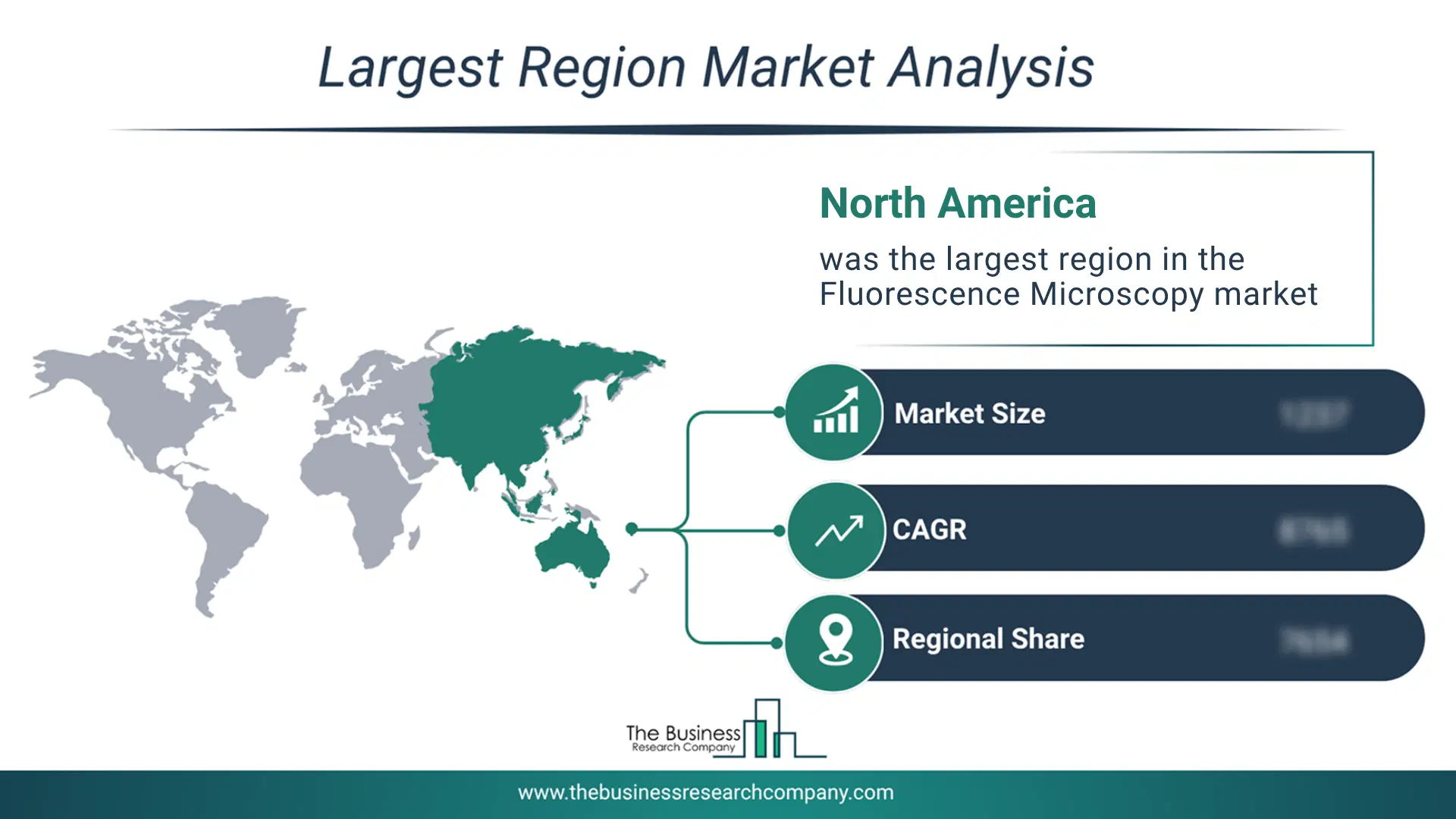
Regional Insights
North America was the largest region in the fluorescence microscopy market in 2025. The regions covered in this market report are Asia-Pacific, South East Asia, Western Europe, Eastern Europe, North America, South America, Middle East, Africa. The countries covered in this market report are Australia, Brazil, China, France, Germany, India, Indonesia, Japan, Taiwan, Russia, South Korea, UK, USA, Canada, Italy, SpainWhat Defines the Fluorescence Microscopy Market?
The fluorescence microscopy market consists of revenues earned by entities through services such as sample preparation, imaging services, image analysis, data interpretation and reporting, and training and consultation. The market value includes the value of related goods sold by the service provider or included within the service offering. The fluorescence microscopy market also includes the sale of filters, fluorophores, detectors, objective lenses, and software tools. Values in this market are ‘factory gate’ values, that is, the value of goods sold by the manufacturers or creators of the goods, whether to other entities (including downstream manufacturers, wholesalers, distributors, and retailers) or directly to end customers. The value of goods in this market includes related services sold by the creators of the goods.How is Market Value Defined and Measured?
The market value is defined as the revenues that enterprises gain from the sale of goods and/or services within the specified market and geography through sales, grants, or donations in terms of the currency (in USD unless otherwise specified). The revenues for a specified geography are consumption values that are revenues generated by organizations in the specified geography within the market, irrespective of where they are produced. It does not include revenues from resales along the supply chain, either further along the supply chain or as part of other products.
This chart presents market attractiveness based on a quantitative evaluation of growth, competition, strategic alignment, and risk, offering a clear view of opportunity areas for decision-making. This chart is for illustrative purposes; the full report contains the complete analysis.

This chart highlights the Total Addressable Market (TAM) by estimating the maximum revenue opportunity using an assumption-driven approach, supporting strategic planning and opportunity sizing across markets. The chart is illustrative; the full report provides a more comprehensive analysis.
What Key Data and Analysis Are Included in the Fluorescence Microscopy Market Report 2026?
The fluorescence microscopy market research report is one of a series of new reports from The Business Research Company that provides market statistics, including industry global market size, regional shares, competitors with the market share, detailed market segments, market trends and opportunities, and any further data you may need to thrive in the fluorescence microscopy industry. The market research report delivers a complete perspective of everything you need, with an in-depth analysis of the current and future state of the industry.Fluorescence Microscopy Market Report Forecast Analysis
| Report Attribute | Details |
|---|---|
| Market Size Value In 2026 | $0.7 billion |
| Revenue Forecast In 2030 | $0.94 billion |
| Growth Rate | CAGR of 7.7% from 2026 to 2030 |
| Base Year For Estimation | 2025 |
| Actual Estimates/Historical Data | 2020-2025 |
| Forecast Period | 2026 - 2030 |
| Market Representation | Revenue in USD Billion and CAGR from 2026 to 2030 |
| Segments Covered | Type, Application, End User |
| Regional Scope | Asia-Pacific, Western Europe, Eastern Europe, North America, South America, Middle East, Africa |
| Country Scope | The countries covered in the report are Australia, Brazil, China, France, Germany, India, Indonesia, Japan, Taiwan, Russia, South Korea, UK, USA, Canada, Italy, Spain. |
| Key Companies Profiled | Thermo Fisher Scientific; GE HealthCare Technologies Inc.; Agilent Technologies Inc.; Keyence Corporation; Olympus Corporation; Roper Technologies Inc.; Hitachi High-Tech Corporation; Nikon Corporation; PerkinElmer Inc.; Bio-Rad Laboratories Inc.; Bruker Corporation; Carl Zeiss AG; Hamamatsu Photonics K.K.; Horiba Scientific; Delta Vision Corporation; Leica Microsystems GmbH; Thorlabs Inc.; Gooch & Housego Plc; Molecular Devices; JEOL Ltd.; ZEISS Microscopy; Lumencor Inc. |
| Customization Scope | Request for Customization |
| Pricing And Purchase Options | Explore Purchase Options |