
Food Allergy Treatment Market Report 2026
Global Outlook – By Drug Type (Antihistamines, Decongestants, Corticosteroids, Mast Cell Stabilizers, Leukotriene Inhibitors, Nasal Anti-Cholinergic, Immuno-Modulators, Epinephrine, Immunotherapy), By Route Of Administration (Parenteral, Oral), By Allergen Type (Dairy Products, Poultry Product, Tree Nuts, Peanuts, Shellfish, Wheat, Soys, Other Allergens), By End-Use (Hospital Pharmacies, Retail Pharmacies, Other End-Uses) - Market Size, Trends, Strategies, and Forecast to 2030
Food Allergy Treatment Market Overview
• Food Allergy Treatment market size has reached to $7.6 billion in 2025 • Expected to grow to $12.73 billion in 2030 at a compound annual growth rate (CAGR) of 10.6% • Growth Driver: Impact Of Food Adulteration On The Food Allergy Treatment Market • Market Trend: Advancements In Food Allergy Treatment • North America was the largest region in 2025 and Asia-Pacific is the fastest growing region.What Is Covered Under Food Allergy Treatment Market?
Food allergy treatment refers to the medical interventions and strategies employed to prevent, manage, and treat allergic reactions triggered by specific foods. The goal of food allergy treatment is to reduce the frequency and severity of allergic reactions, improve the quality of life for affected individuals, and enhance overall patient safety. The main types of drugs in food allergy treatment are antihistamines, decongestants, corticosteroids, mast cell stabilizers, leukotriene inhibitors, nasal anti-cholinergic, immuno-modulators, epinephrine, and immunotherapy. Antihistamines refer to a class of medications that are used to alleviate symptoms caused by allergic reactions. They can be administered through parenteral and oral routes to combat various allergens, including dairy products, poultry products, tree nuts, peanuts, shellfish, wheat, soy, and others, and are available from hospital pharmacies, retail pharmacies, and other end-users.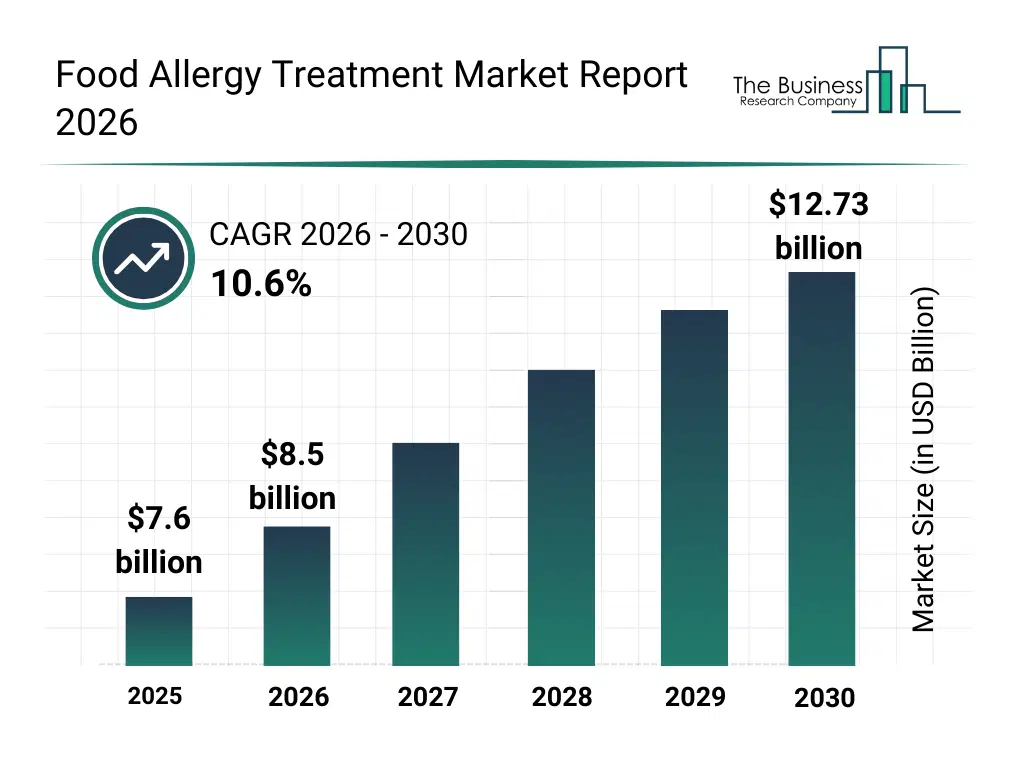
What Is The Food Allergy Treatment Market Size and Share 2026?
The food allergy treatment market size has grown rapidly in recent years. It will grow from $7.6 billion in 2025 to $8.5 billion in 2026 at a compound annual growth rate (CAGR) of 11.8%. The growth in the historic period can be attributed to growth in food allergy prevalence, availability of antihistamines, adoption of epinephrine therapy, increased allergy diagnosis rates, clinical guideline development.What Is The Food Allergy Treatment Market Growth Forecast?
The food allergy treatment market size is expected to see rapid growth in the next few years. It will grow to $12.73 billion in 2030 at a compound annual growth rate (CAGR) of 10.6%. The growth in the forecast period can be attributed to innovation in oral immunotherapy, expansion of biologic treatments, growth in pediatric allergy care, demand for long-term allergy management, increasing healthcare access. Major trends in the forecast period include rising adoption of immunotherapy-based treatments, increased use of epinephrine auto-injectors, growing focus on preventive allergy management, expansion of personalized allergy treatment plans, increased awareness of food allergy conditions.
Global Food Allergy Treatment Market Segmentation
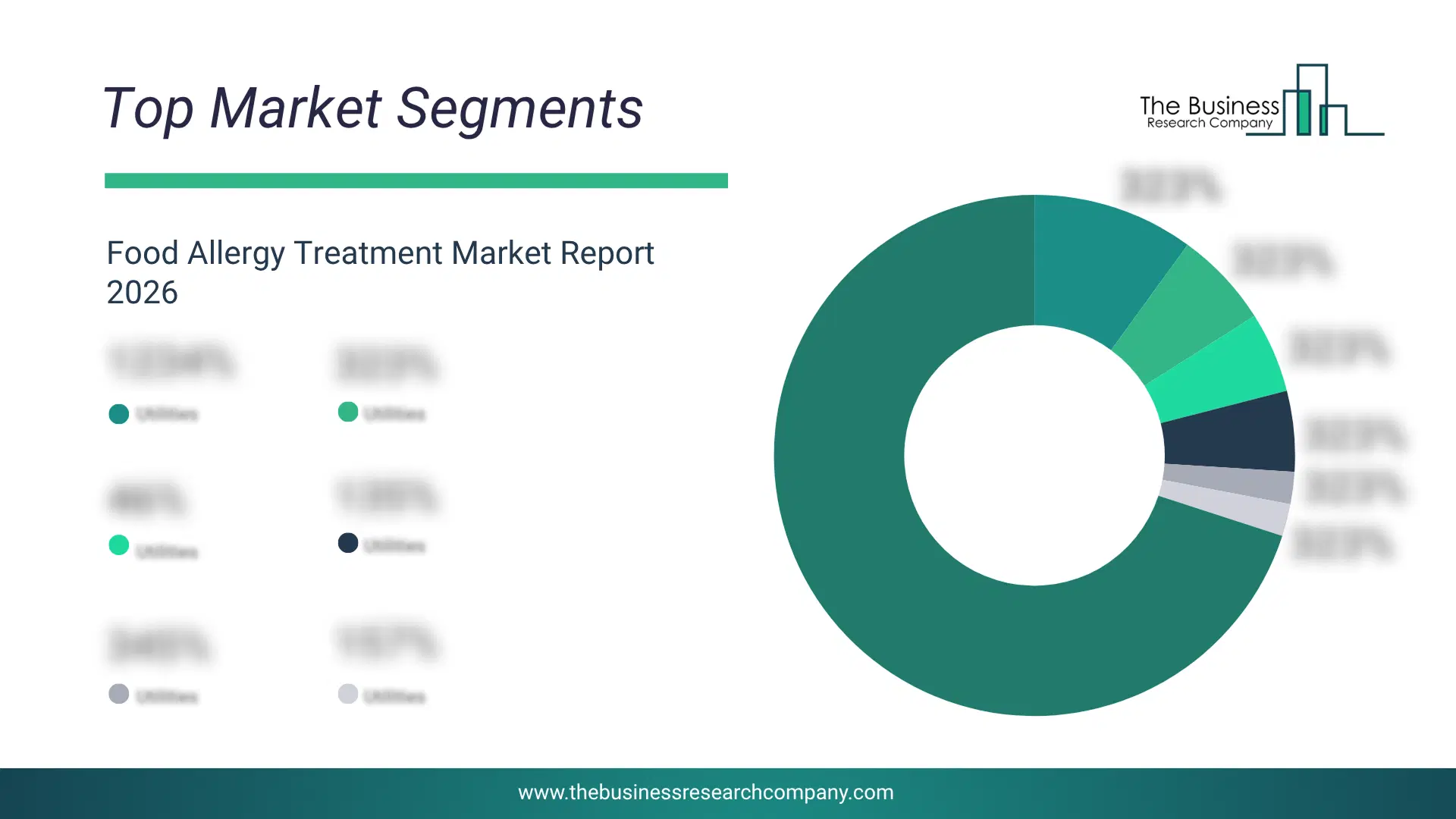
1) By Drug Type: Antihistamines, Decongestants, Corticosteroids, Mast Cell Stabilizers, Leukotriene Inhibitors, Nasal Anti-Cholinergic, Immuno-Modulators, Epinephrine, Immunotherapy 2) By Route Of Administration: Parenteral, Oral 3) By Allergen Type: Dairy Products, Poultry Product, Tree Nuts, Peanuts, Shellfish, Wheat, Soys, Other Allergens 4) By End-Use: Hospital Pharmacies, Retail Pharmacies, Other End-Uses Subsegments: 1) By Antihistamines: Oral Antihistamines, Topical Antihistamines, Intranasal Antihistamines 2) By Decongestants: Oral Decongestants, Nasal Decongestants 3) By Corticosteroids: Oral Corticosteroids, Topical Corticosteroids, Intranasal Corticosteroids 4) By Mast Cell Stabilizers: Cromolyn Sodium, Nedocromil 5) By Leukotriene Inhibitors: Montelukast, Zafirlukast 6) By Nasal Anti-Cholinergic: Ipratropium Bromide 7) By Immuno-Modulators: Omalizumab, Dupilumab 8) By Epinephrine: Injectable Epinephrine, Auto-Injectors 9) By Immunotherapy: Oral Immunotherapy (OIT), Sublingual Immunotherapy (SLIT), Epicutaneous Immunotherapy (EPIT)What Is The Driver Of The Food Allergy Treatment Market?
The increasing food adulteration is expected to propel the growth of the food allergy treatment market going forward. Food adulteration refers to the practice of intentionally altering food products by adding inferior, harmful, or unauthorized substances, or by removing valuable ingredients, to increase quantity or enhance appearance, often at the expense of quality and safety. Food adulteration is increasing due to factors such as economic gain, supply chain complexity, lack of regulation, technological advances, demand for convenience, globalization, environmental factors, consumer awareness, profit margins, and weak enforcement of regulations. Food adulteration is growing primarily due to the increasing demand for cheaper products, which incentivizes producers to cut costs and maximize profits through unethical practices. Food adulteration can increase the risk of allergic reactions by introducing allergens into food products or by compromising the safety and integrity of the food supply. For instance, in 2023, according to the FDA CORE Network, a U.S.-based government agency, its team evaluated 69 incidents, responded to 25, and issued 10 public health advisories, compared with 65 incidents, 28 responses, and 11 advisories in 2022. Therefore, the increasing food adulteration is driving the growth of the food allergy treatment industry.Key Players In The Global Food Allergy Treatment Market
Major companies operating in the food allergy treatment market are Pfizer Inc., F. Hoffmann-La Roche Ltd., Merck & Co. Inc., Bayer AG, Sanofi S.A., AstraZeneca PLC, Novartis AG, Amgen Inc., Regeneron Pharmaceuticals Inc., ALK-Abelló A/S, Stallergenes Greer, Kaleo Inc., HAL Allergy B.V., Vedanta Biosciences Inc., Aimmune Therapeutics, AnaptysBio Inc., Immunomic Therapeutics Inc., Alladapt Immunotherapeutics Inc., Aravax, Prota Therapeutics Pty Ltd., DBV Technologies, Adamis Pharmaceuticals Corporation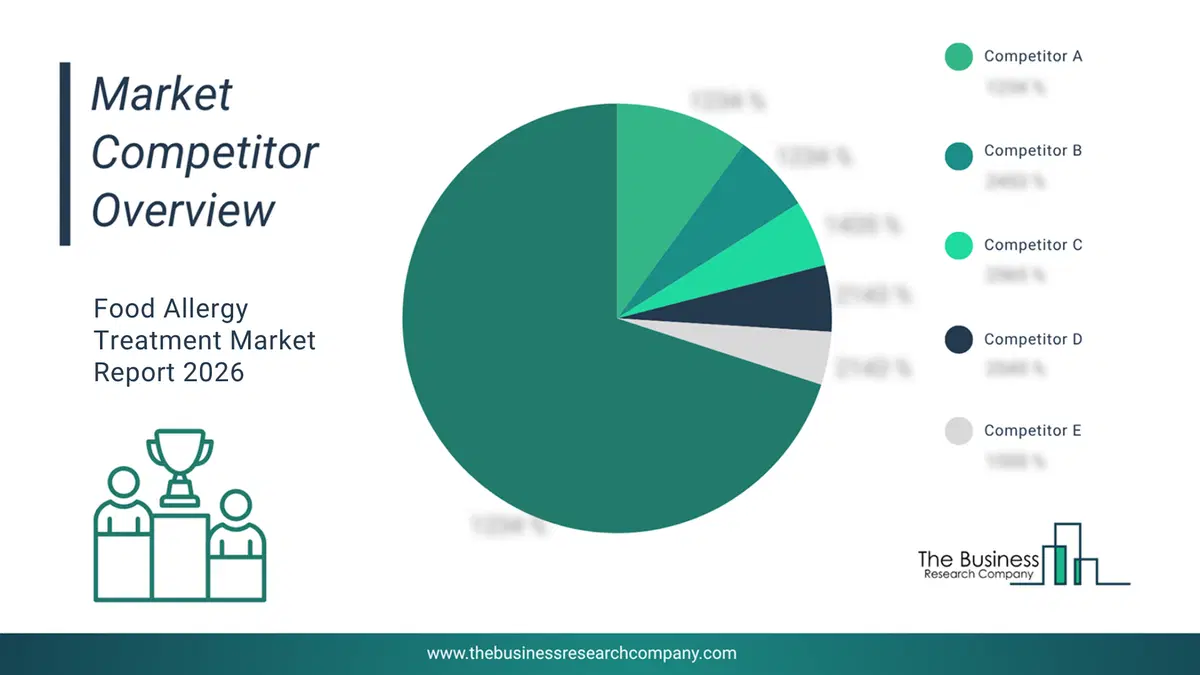
This chart is for illustrative purposes; the full report includes a detailed competitor analysis and comprehensive overview of the top 10 companies in the market.
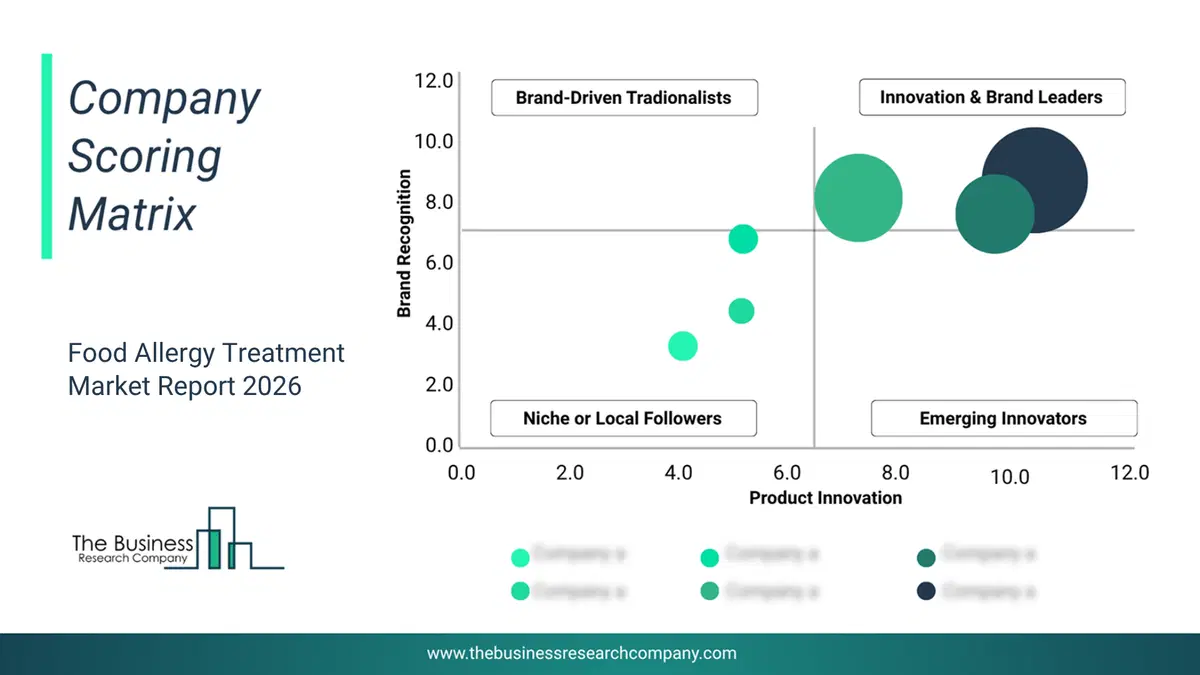
This chart maps companies by product innovation and brand strength, with bubble size indicating relative revenue, helping identify market leaders, challengers, and niche players. This is an illustrative chart; the full report provides a complete and accurate competitive analysis.
Global Food Allergy Treatment Market Trends and Insights
Major companies operating in the food allergy treatment market are developing innovative therapies, such as monoclonal antibodies, to address the underlying mechanisms of food allergies and provide more effective treatments for patients. Monoclonal antibodies represent a promising approach for treating food allergies by targeting specific components of the immune system involved in allergic reactions, providing more effective and targeted treatments for patients. For instance, in February 2024, Novartis AG, a Switzerland-based pharmaceutical company, received FDA approval for Xolair (omalizumab) to reduce IgE-mediated food allergies. It is a humanized monoclonal antibody, administered subcutaneously, that works by inhibiting the binding of IgE antibodies, thereby decreasing the release of chemicals responsible for allergy symptoms. The FDA approval is based on positive data from the Phase III OUtMATCH study, which showed that a significantly higher proportion of food allergy patients as young as 1 year treated with Xolair could tolerate small amounts of peanut, milk, egg, and cashews without an allergic reaction compared to placebo.What Are Latest Mergers And Acquisitions In The Food Allergy Treatment Market?
In September 2023, Stallergenes Greer, a Switzerland-based biopharmaceutical company, acquired a peanut allergy treatment business from Nestlé for an undisclosed amount. The acquisition allows Nestlé to focus on its core strengths and growth areas while enabling Stallergenes Greer to expand its allergy treatment portfolio. Nestlé is a Switzerland-based company specializing in food allergy prevention and treatment.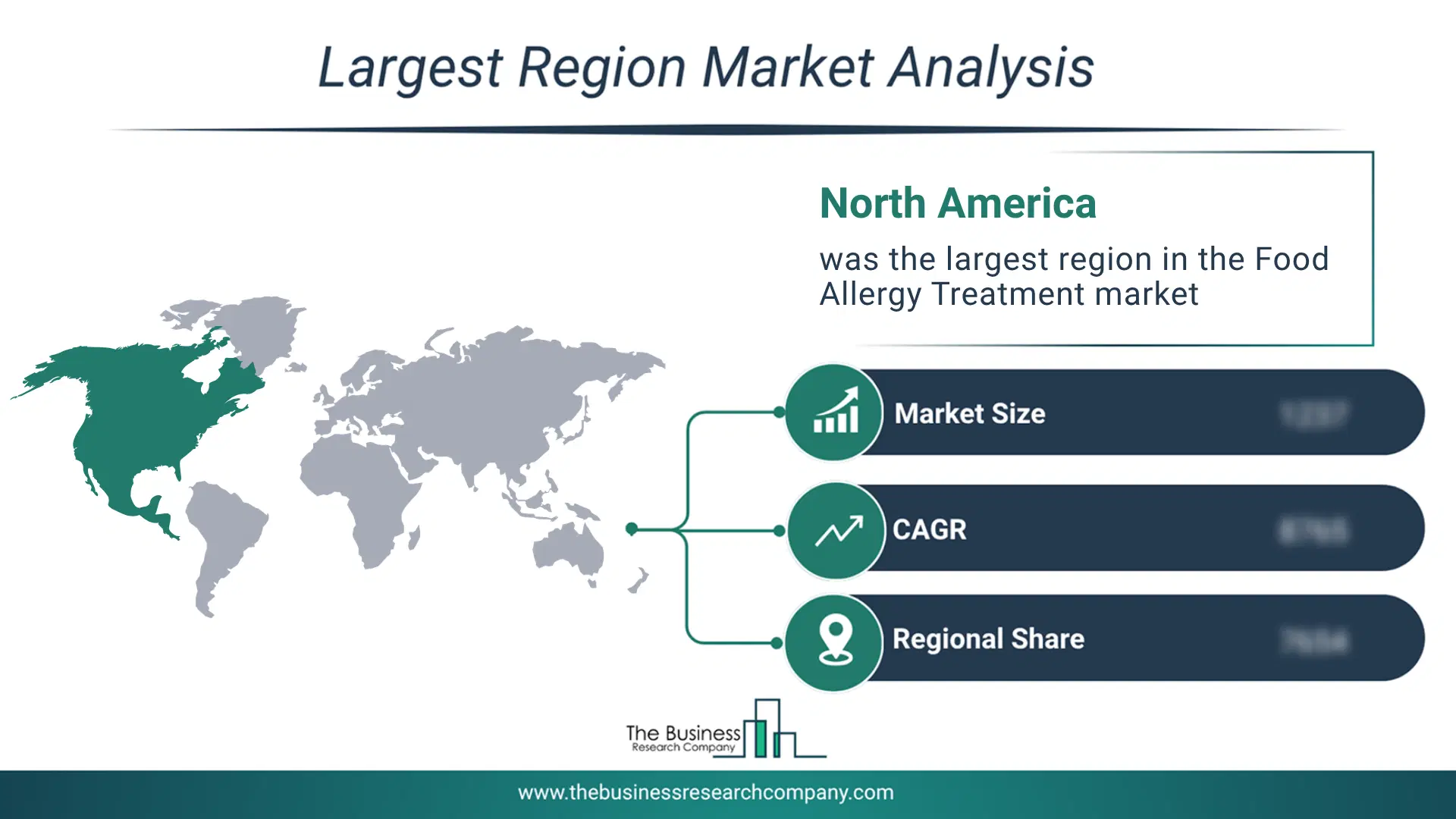
Regional Outlook
North America was the largest region in the food allergy treatment market in 2025. Asia-Pacific is expected to be the fastest-growing region in the forecast period. The regions covered in this market report are Asia-Pacific, South East Asia, Western Europe, Eastern Europe, North America, South America, Middle East, Africa. The countries covered in this market report are Australia, Brazil, China, France, Germany, India, Indonesia, Japan, Taiwan, Russia, South Korea, UK, USA, Canada, Italy, Spain.What Defines the Food Allergy Treatment Market?
The food allergy treatment market consists of revenues earned by entities by providing services such as diagnostic testing, pharmaceutical treatments, immunotherapy, nutritional supplements, emergency kits, educational programs, dietary counseling, telemedicine solutions, and research and development efforts. The market value includes the value of related goods sold by the service provider or included within the service offering. The food allergy treatment market also includes sales of medical devices, such as epinephrine auto-injectors, allergy management kits, and medical alert accessories. Values in this market are ‘factory gate’ values, that is the value of goods sold by the manufacturers or creators of the goods, whether to other entities (including downstream manufacturers, wholesalers, distributors and retailers) or directly to end customers. The value of goods in this market includes related services sold by the creators of the goods.How is Market Value Defined and Measured?
The market value is defined as the revenues that enterprises gain from the sale of goods and/or services within the specified market and geography through sales, grants, or donations in terms of the currency (in USD unless otherwise specified). The revenues for a specified geography are consumption values that are revenues generated by organizations in the specified geography within the market, irrespective of where they are produced. It does not include revenues from resales along the supply chain, either further along the supply chain or as part of other products.
This chart presents market attractiveness based on a quantitative evaluation of growth, competition, strategic alignment, and risk, offering a clear view of opportunity areas for decision-making. This chart is for illustrative purposes; the full report contains the complete analysis.

This chart highlights the Total Addressable Market (TAM) by estimating the maximum revenue opportunity using an assumption-driven approach, supporting strategic planning and opportunity sizing across markets. The chart is illustrative; the full report provides a more comprehensive analysis.
What Key Data and Analysis Are Included in the Food Allergy Treatment Market Report 2026?
The food allergy treatment market research report is one of a series of new reports from The Business Research Company that provides market statistics, including industry global market size, regional shares, competitors with the market share, detailed market segments, market trends and opportunities, and any further data you may need to thrive in the food allergy treatment industry. The market research report delivers a complete perspective of everything you need, with an in-depth analysis of the current and future state of the industry.Food Allergy Treatment Market Report Forecast Analysis
| Report Attribute | Details |
|---|---|
| Market Size Value In 2026 | $8.5 billion |
| Revenue Forecast In 2030 | $12.73 billion |
| Growth Rate | CAGR of 10.6% from 2026 to 2030 |
| Base Year For Estimation | 2025 |
| Actual Estimates/Historical Data | 2020-2025 |
| Forecast Period | 2026 - 2030 |
| Market Representation | Revenue in USD Billion and CAGR from 2026 to 2030 |
| Segments Covered | Drug Type, Route Of Administration, Allergen Type, End-Use |
| Regional Scope | Asia-Pacific, Western Europe, Eastern Europe, North America, South America, Middle East, Africa |
| Country Scope | The countries covered in the report are Australia, Brazil, China, France, Germany, India, Indonesia, Japan, Taiwan, Russia, South Korea, UK, USA, Canada, Italy, Spain |
| Key Companies Profiled | Pfizer Inc., F. Hoffmann-La Roche Ltd., Merck & Co. Inc., Bayer AG, Sanofi S.A., AstraZeneca PLC, Novartis AG, Amgen Inc., Regeneron Pharmaceuticals Inc., ALK-Abelló A/S, Stallergenes Greer, Kaleo Inc., HAL Allergy B.V., Vedanta Biosciences Inc., Aimmune Therapeutics, AnaptysBio Inc., Immunomic Therapeutics Inc., Alladapt Immunotherapeutics Inc., Aravax, Prota Therapeutics Pty Ltd., DBV Technologies, Adamis Pharmaceuticals Corporation |
| Customization Scope | Request for Customization |
| Pricing And Purchase Options | Explore Purchase Options |