
Food And Feed Grade Amino Acids Market Report 2026
Global Outlook – By Type (Food Grade, Feed Grade), By Form (Powdered Amino Acids, Liquid Amino Acids), By Amino Acid Blends (Animal Feed Blends, Nutritional Supplements, Functional Food Blends, Fertilizer Blends), By Application (Flavors, Infant Formula, Animal Feed, Other Applications) – Market Size, Trends, Strategies, and Forecast to 2030
Food And Feed Grade Amino Acids Market Overview
• Food And Feed Grade Amino Acids market size has reached to $9.95 billion in 2025 • Expected to grow to $13.39 billion in 2030 at a compound annual growth rate (CAGR) of 6.1% • Growth Driver: Surge In Food And Feed Grade Amino Acids Market Driven By Rising Undernourishment And Urbanization Challenges • Market Trend: Innovation In Essential Amino Acids Powers Sustainable Growth In Livestock • North America was the largest region in 2025 and Asia-Pacific is the fastest growing region.What Is Covered Under Food And Feed Grade Amino Acids Market?
Food and feed grade amino acids refer to high-purity amino acids specifically produced and processed to meet safety and quality standards for use in human food products and animal feed. These amino acids support nutritional balance, enhance growth performance, and improve overall health in both humans and livestock. The main types of food and feed grade amino acids include food grade and feed grade. Food grade refers to substances that are safe and suitable for human consumption, meeting regulatory standards for purity, quality, and safety. The various forms are powdered amino acids and liquid amino acids, and different amino acid blends include animal feed blends, nutritional supplements, functional food blends, fertilizer blends, and pharmaceutical blends. The multiple applications involved are flavors, infant formula, animal feed, and others.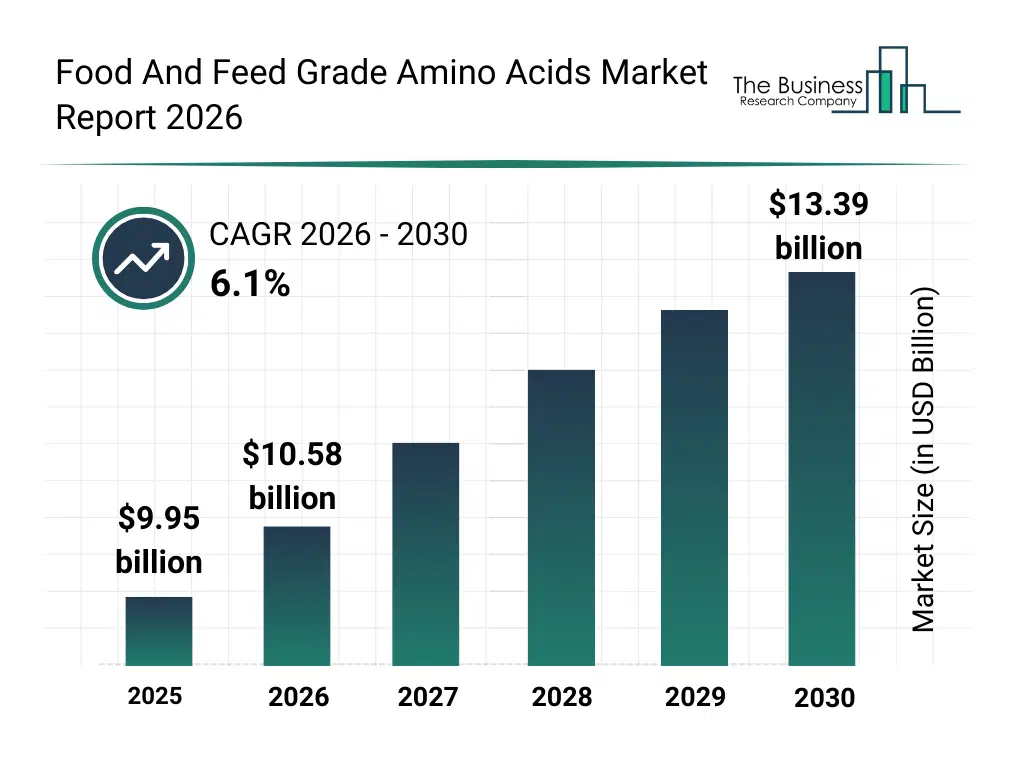
What Is The Food And Feed Grade Amino Acids Market Size and Share 2026?
The food and feed grade amino acids market size has grown strongly in recent years. It will grow from $9.95 billion in 2025 to $10.58 billion in 2026 at a compound annual growth rate (CAGR) of 6.3%. The growth in the historic period can be attributed to expansion of intensive livestock farming, rising demand for balanced animal diets, growth of amino acid supplementation practices, advancements in feed formulation science, increased industrial amino acid production.What Is The Food And Feed Grade Amino Acids Market Growth Forecast?
The food and feed grade amino acids market size is expected to see strong growth in the next few years. It will grow to $13.39 billion in 2030 at a compound annual growth rate (CAGR) of 6.1%. The growth in the forecast period can be attributed to increasing demand for sustainable animal nutrition, rising focus on feed efficiency optimization, expansion of specialty food nutrition markets, growing adoption of amino acid blends, increasing regulatory emphasis on feed quality. Major trends in the forecast period include increasing demand for high-purity feed additives, rising adoption in infant formula applications, growing use in functional food blends, expansion of precision animal nutrition, enhanced focus on consistent quality standards.
Global Food And Feed Grade Amino Acids Market Segmentation
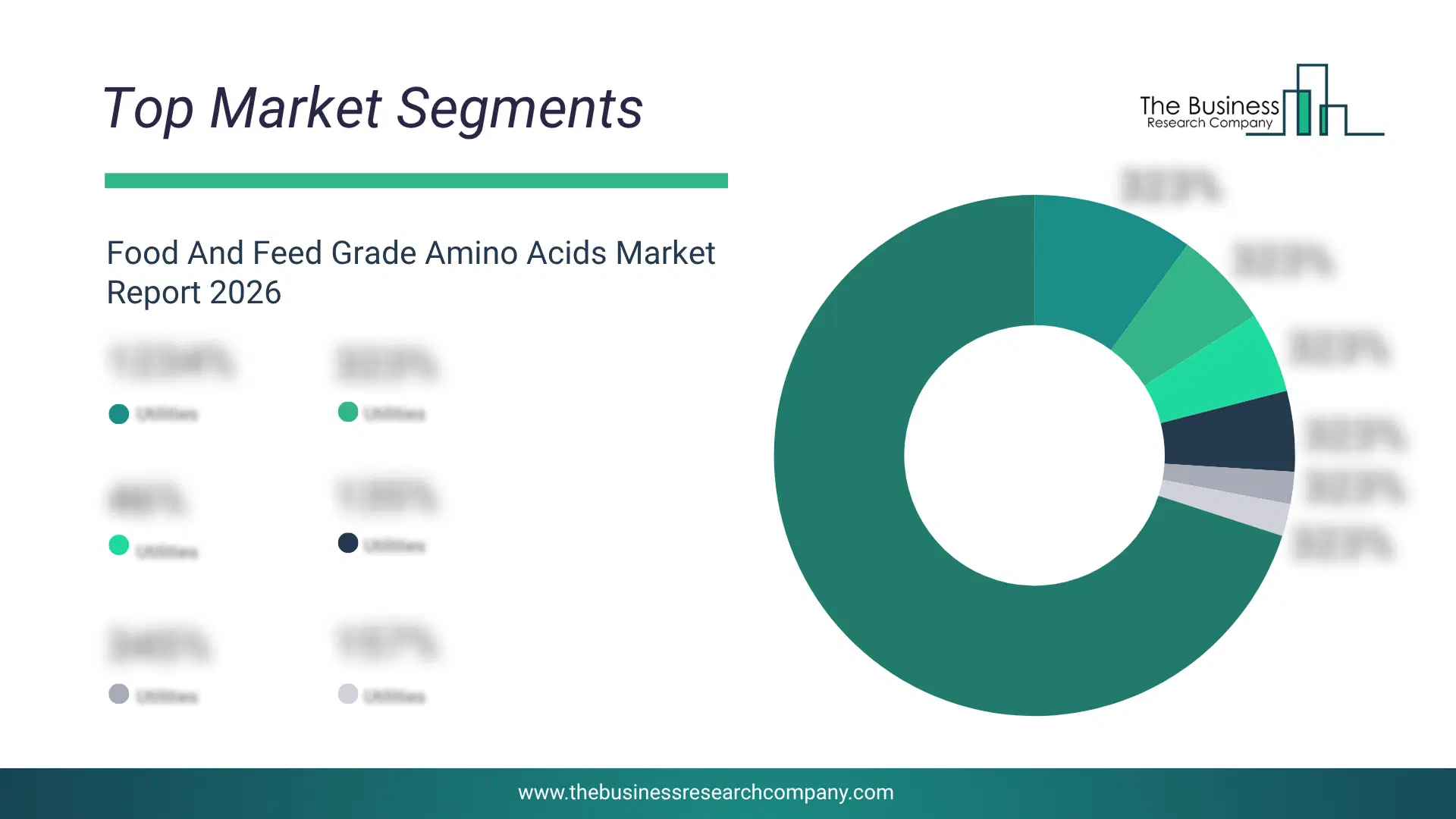
1) By Type: Food Grade, Feed Grade 2) By Form: Powdered Amino Acids, Liquid Amino Acids 3) By Amino Acid Blends: Animal Feed Blends, Nutritional Supplements, Functional Food Blends, Fertilizer Blends 4) By Application: Flavors, Infant Formula, Animal Feed, Other Applications Subsegments: 1) By Food Grade: L-Glutamic Acid, L-Lysine, L-Threonine, Methionine, L-Tryptophan, Glycine, Valine 2) By Feed Grade: L-Lysine Hydrochloride, L-Threonine, DL-Methionine, L-Tryptophan, L-Valine, L-Isoleucine, BetaineWhat Is The Driver Of The Food And Feed Grade Amino Acids Market?
The rising prevalence of undernourishment is expected to propel the growth of the food and feed grade amino acids market going forward. Undernourishment is a condition in which a person does not get enough food or nutrients to meet the body’s basic energy and health needs. Undernourishment is rising due to increasing food insecurity, as many people lack consistent access to sufficient and nutritious food to meet their daily dietary needs. Food and feed grade amino acids help address undernourishment by providing essential nutrients that improve human nutrition and enhance the protein quality of animal feed, supporting growth and overall health. For instance, in July 2023, according to the UNICEF/State of Food Security and Nutrition in the World (SOFI), a US-based child advocacy organization, by 2050, an estimated 70% of the world’s population will live in cities, creating a major demographic shift that requires transforming food systems to meet growing urban needs and address hunger, food insecurity, and malnutrition. Therefore, the rising prevalence of undernourishment is driving the growth of the food and feed-grade amino acids market.Key Players In The Global Food And Feed Grade Amino Acids Market
Major companies operating in the food and feed grade amino acids market are Cargill Incorporated, Archer Daniels Midland Company, BASF SE, Sumitomo Chemical Co. Ltd., CJ CheilJedang Corporation, Evonik Industries AG, Ajinomoto Co. Inc., DSM-Firmenich AG, Lonza Group AG, Wacker Chemie AG, Fufeng Group Limited, Meihua Holdings Group Co. Ltd., Daesang Corporation, Zhejiang NHU Co. Ltd., Kemin Industries Inc., Novus International Inc., Global Bio-Chem Technology Group Company Limited, AMINO GmbH, Kyowa Hakko Bio Co. Ltd.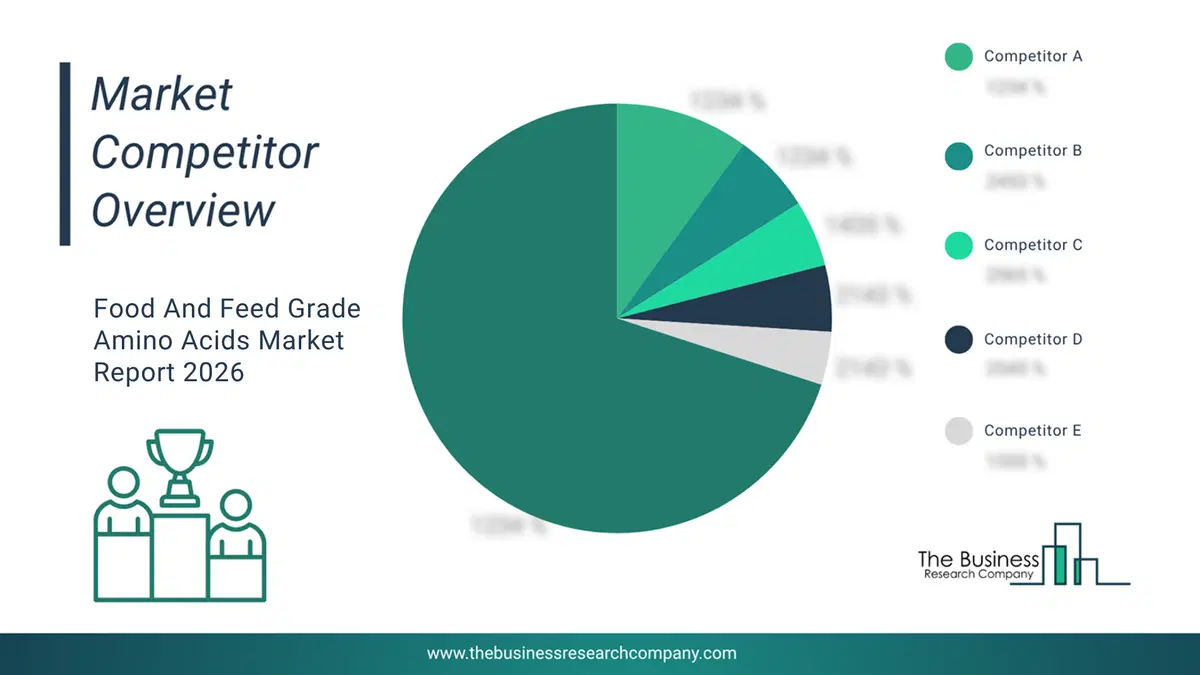
This chart is for illustrative purposes; the full report includes a detailed competitor analysis and comprehensive overview of the top 10 companies in the market.
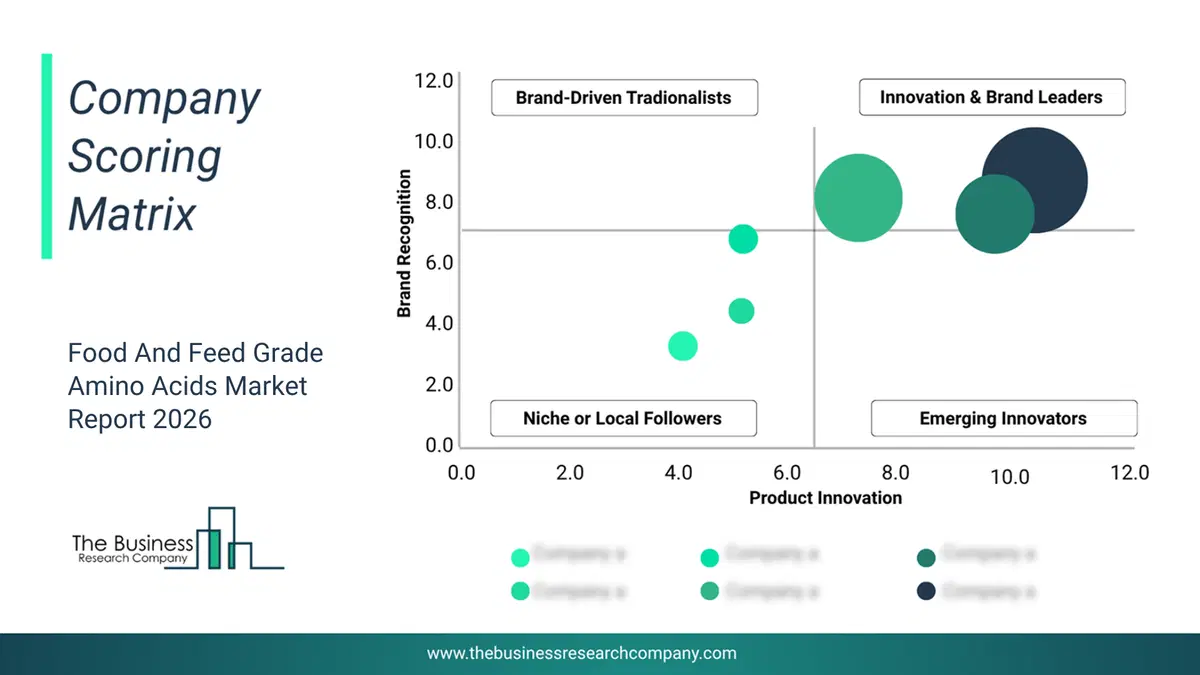
This chart maps companies by product innovation and brand strength, with bubble size indicating relative revenue, helping identify market leaders, challengers, and niche players. This is an illustrative chart; the full report provides a complete and accurate competitive analysis.
Global Food And Feed Grade Amino Acids Market Trends and Insights
Major companies operating in the food and feed grade amino acids market are focusing on developing innovative solutions, such as higher L-lysine concentration, to enhance nutrient efficiency, reduce feed volumes, and support sustainable livestock production through improved amino acid delivery. Higher L-lysine concentration refers to an increased proportion of the essential amino acid L-lysine in feed formulations, enabling more efficient nutrient absorption with reduced feed input. For instance, in May 2023, Evonik Industries AG, a Germany-based chemicals company, introduced an enhanced version of its Biolys product for animal feed applications. The updated formulation now delivers 62.4% L-lysine, offering an improved 80% ratio to lysine HCl, compared to the earlier version's 60% L-lysine at a 77% ratio. This upgrade provides more efficient amino acid supplementation for livestock diets. The product contains beneficial byproducts from the fermentation process, contributing extra nutrients and energy.What Are Latest Mergers And Acquisitions In The Food And Feed Grade Amino Acids Market?
In May 2024, Amino GmbH, a Germany-based manufacturer of high-quality pharmaceutical-grade amino acids, partnered with Barentz to expand its global distribution network. This strategic alliance enhances Amino’s global presence and supports its growth in the pharmaceutical and nutritional sectors. Leveraging its established distribution channels, Barentz will provide broader market access for Amino’s products. Barentz is a Netherlands-based company that manufactures both food- and feed-grade amino acids.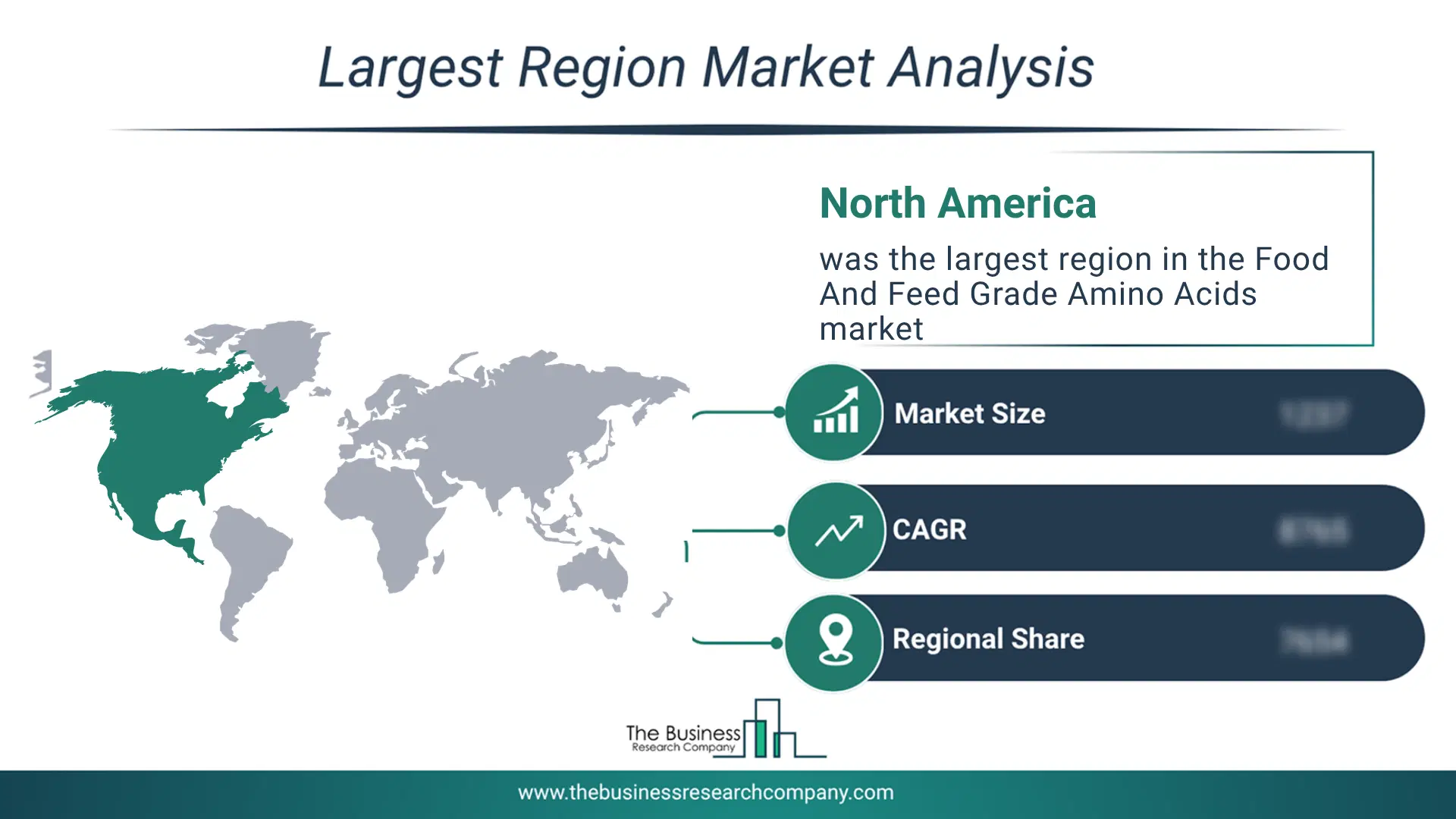
Regional Outlook
North America was the largest region in the food and feed grade amino acids market in 2025. Asia-Pacific is expected to be the fastest-growing region in the forecast period. The regions covered in this market report are Asia-Pacific, South East Asia, Western Europe, Eastern Europe, North America, South America, Middle East and Africa. The countries covered in this market report are Australia, Brazil, China, France, Germany, India, Indonesia, Japan, Taiwan, Russia, South Korea, UK, USA, Italy, Spain, CanadaWhat Defines the Food And Feed Grade Amino Acids Market?
The food and feed grade amino acids market consists of sales of glycine, L-carnitine, and taurine. Values in this market are ‘factory gate’ values, that is, the value of goods sold by the manufacturers or creators of the goods, whether to other entities (including downstream manufacturers, wholesalers, distributors, and retailers) or directly to end customers. The value of goods in this market includes related services sold by the creators of the goods.How is Market Value Defined and Measured?
The market value is defined as the revenues that enterprises gain from the sale of goods and/or services within the specified market and geography through sales, grants, or donations in terms of the currency (in USD unless otherwise specified). The revenues for a specified geography are consumption values that are revenues generated by organizations in the specified geography within the market, irrespective of where they are produced. It does not include revenues from resales along the supply chain, either further along the supply chain or as part of other products.
This chart presents market attractiveness based on a quantitative evaluation of growth, competition, strategic alignment, and risk, offering a clear view of opportunity areas for decision-making. This chart is for illustrative purposes; the full report contains the complete analysis.

This chart highlights the Total Addressable Market (TAM) by estimating the maximum revenue opportunity using an assumption-driven approach, supporting strategic planning and opportunity sizing across markets. The chart is illustrative; the full report provides a more comprehensive analysis.
What Key Data and Analysis Are Included in the Food And Feed Grade Amino Acids Market Report 2026?
The food and feed grade amino acids market research report is one of a series of new reports from The Business Research Company that provides market statistics, including industry global market size, regional shares, competitors with the market share, detailed market segments, market trends and opportunities, and any further data you may need to thrive in the food and feed grade amino acids industry. The market research report delivers a complete perspective of everything you need, with an in-depth analysis of the current and future state of the industry.Food And Feed Grade Amino Acids Market Report Forecast Analysis
| Report Attribute | Details |
|---|---|
| Market Size Value In 2026 | $10.58 billion |
| Revenue Forecast In 2030 | $13.39 billion |
| Growth Rate | CAGR of 6.3% from 2026 to 2030 |
| Base Year For Estimation | 2025 |
| Actual Estimates/Historical Data | 2020-2025 |
| Forecast Period | 2026 - 2030 |
| Market Representation | Revenue in USD Billion and CAGR from 2026 to 2030 |
| Segments Covered | Type, Form, Amino Acid Blends, Application |
| Regional Scope | Asia-Pacific, Western Europe, Eastern Europe, North America, South America, Middle East, Africa |
| Country Scope | The countries covered in the report are Australia, Brazil, China, France, Germany, India, Indonesia, Japan, Taiwan, Russia, South Korea, UK, USA, Canada, Italy, Spain. |
| Key Companies Profiled | Cargill Incorporated, Archer Daniels Midland Company, BASF SE, Sumitomo Chemical Co. Ltd., CJ CheilJedang Corporation, Evonik Industries AG, Ajinomoto Co. Inc., DSM-Firmenich AG, Lonza Group AG, Wacker Chemie AG, Fufeng Group Limited, Meihua Holdings Group Co. Ltd., Daesang Corporation, Zhejiang NHU Co. Ltd., Kemin Industries Inc., Novus International Inc., Global Bio-Chem Technology Group Company Limited, AMINO GmbH, Kyowa Hakko Bio Co. Ltd. |
| Customization Scope | Request for Customization |
| Pricing And Purchase Options | Explore Purchase Options |