
Food Cultures Market Report 2026
Global Outlook – By Product (Starter Cultures, Protective Cultures, Probiotic Cultures), By Microorganism Type (Bacteria, Yeast, Mold), By Function (Flavoring, Preservative, Texture, Other Functions), By Application (Dairy Products, Meat, Beverage, Other Applications) – Market Size, Trends, Strategies, and Forecast to 2030
Food Cultures Market Overview
• Food Cultures market size has reached to $12.01 billion in 2025 • Expected to grow to $47.31 billion in 2030 at a compound annual growth rate (CAGR) of 30.8% • Growth Driver: The Role Of Food Cultures In Mitigating The Rise Of Foodborne Diseases • Market Trend: Advanced Fermentation Solutions Aim to Deliver Stable, High-Quality Yogurt Experiences • North America was the largest region in 2025 and Asia-Pacific is the fastest growing region.Market Gains By 2030 – Top Opportunities By Segment
Market Gain identifies the most promising market opportunities by highlighting the segments or products expected to generate the highest incremental revenue growth over the next five years.
What Is Covered Under Food Cultures Market?
Food cultures refer to specific strains of microorganisms intentionally added to food during processing to achieve desired characteristics. They are critical in traditional and industrial food production, contributing to the sensory attributes, preservation, and nutritional value of various fermented and non-fermented foods consumed. The main product types of food cultures are starter cultures, protective cultures, and probiotic cultures. Starter cultures are preparations containing a large number of living microorganisms, either a single type or a mixture of two or more, that are deliberately added to foods to take advantage of the compounds or products derived from their metabolism or enzymatic activity. The different microorganism types include bacteria, yeast, and mold with various functions such as flavoring, preservatives, texture, and others. These are used in various applications such as dairy products, meat, beverage, and others.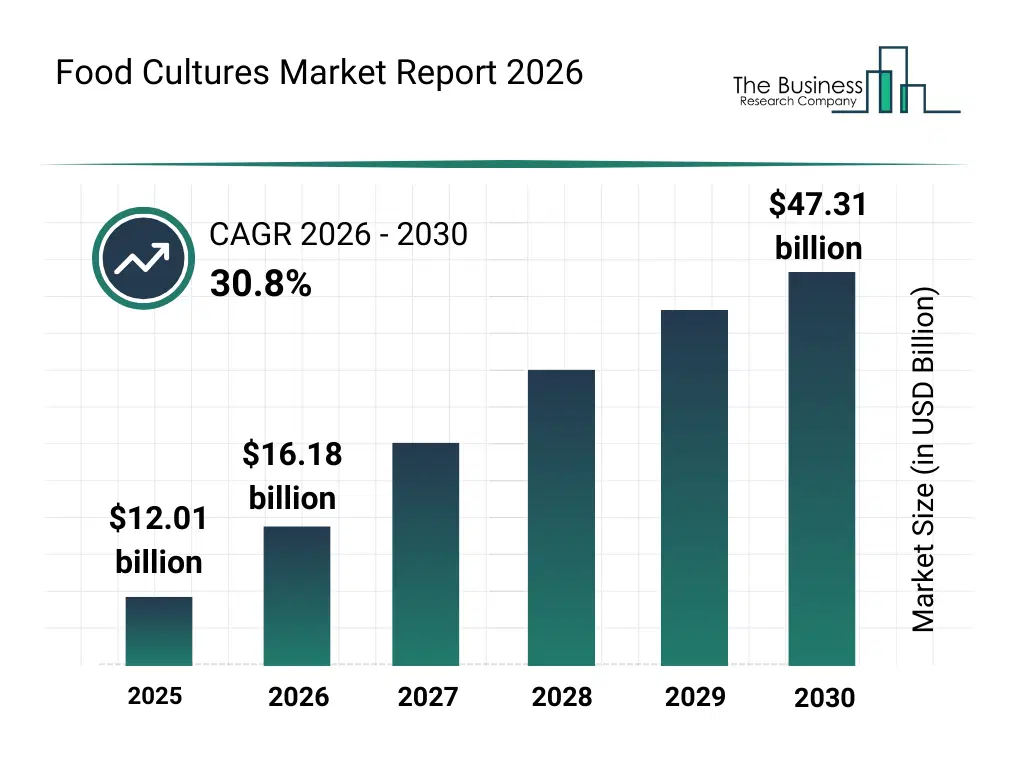
What Is The Food Cultures Market Size and Share 2026?
The food cultures market size has grown exponentially in recent years. It will grow from $12.01 billion in 2025 to $16.18 billion in 2026 at a compound annual growth rate (CAGR) of 34.8%. The growth in the historic period can be attributed to growth of fermented food consumption, expansion of industrial dairy processing, rising awareness of gut health benefits, increased use of microbial preservation methods, advancements in microbial strain development.What Is The Food Cultures Market Growth Forecast?
The food cultures market size is expected to see exponential growth in the next few years. It will grow to $47.31 billion in 2030 at a compound annual growth rate (CAGR) of 30.8%. The growth in the forecast period can be attributed to increasing demand for functional and probiotic foods, rising investments in precision fermentation, growing focus on clean-label food ingredients, expansion of plant-based fermented products, increasing application of tailored microbial solutions. Major trends in the forecast period include increasing adoption of customized starter cultures, rising demand for probiotic-enriched food products, growing use of protective cultures for shelf-life extension, expansion of application-specific microbial strains, enhanced focus on flavor and texture optimization.
Global Food Cultures Market Segmentation
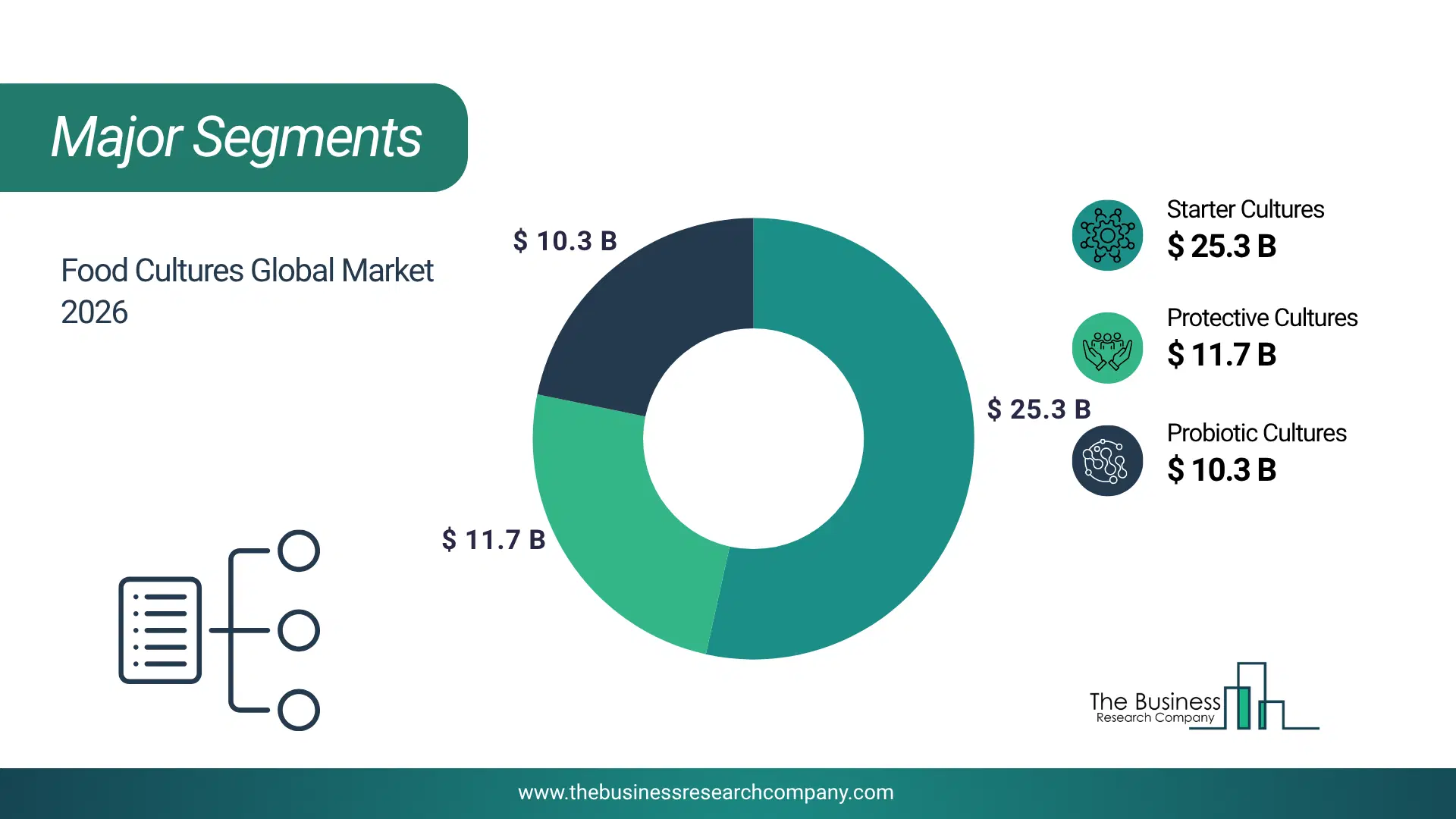
1) By Product: Starter Cultures, Protective Cultures, Probiotic Cultures 2) By Microorganism Type: Bacteria, Yeast, Mold 3) By Function: Flavoring, Preservative, Texture, Other Functions 4) By Application: Dairy Products, Meat, Beverage, Other Applications Subsegments: 1) By Starter Cultures: Lactic Acid Bacteria (LAB) Starter Cultures, Yeast Starter Cultures, Mould Starter Cultures 2) By Protective Cultures: Bacteriocin-Producing Cultures, Lactic Acid Bacteria (LAB) Protective Cultures, Non-pathogenic Microbial Cultures 3) By Probiotic Cultures: Bifidobacterium, Lactobacillus The top segments in the food cultures market will be: • Starter Cultures will reach $25.33 billion by 2030. • Protective Cultures will reach $11.67 billion by 2030. • Probiotic Cultures will reach $10.31 billion by 2030.What Is The Driver Of The Food Cultures Market?
The rise in the prevalence of foodborne diseases is expected to propel the growth of the food culture market going forward. Foodborne diseases are preventable diseases caused by consuming contaminated food or drink, leading to symptoms ranging from mild discomfort to severe and potentially life-threatening conditions. The prevalence of foodborne diseases is due to poor personal hygiene, improper holding temperatures, and contaminated equipment/cross-contamination. Food cultures (FC) contribute to the distinctive sensory characteristics of fermented foods, such as flavor, color, and texture, while also aiding in extending the shelf-life of foods by outcompeting spoilage microbes, reducing food waste and the potential for foodborne illnesses. For instance, in February 2025, according to Food Safety Magazine, a U.S.-based food-safety reporting source, reported that in 2024, foodborne-illness incidents increased from 1,118 cases in 2023 to 1,392 cases, while hospitalizations rose from 230 to 487 and deaths increased from 8 to 19 compared to the previous year. Therefore, the rise in the popularity of foodborne diseases drives the food culture industry.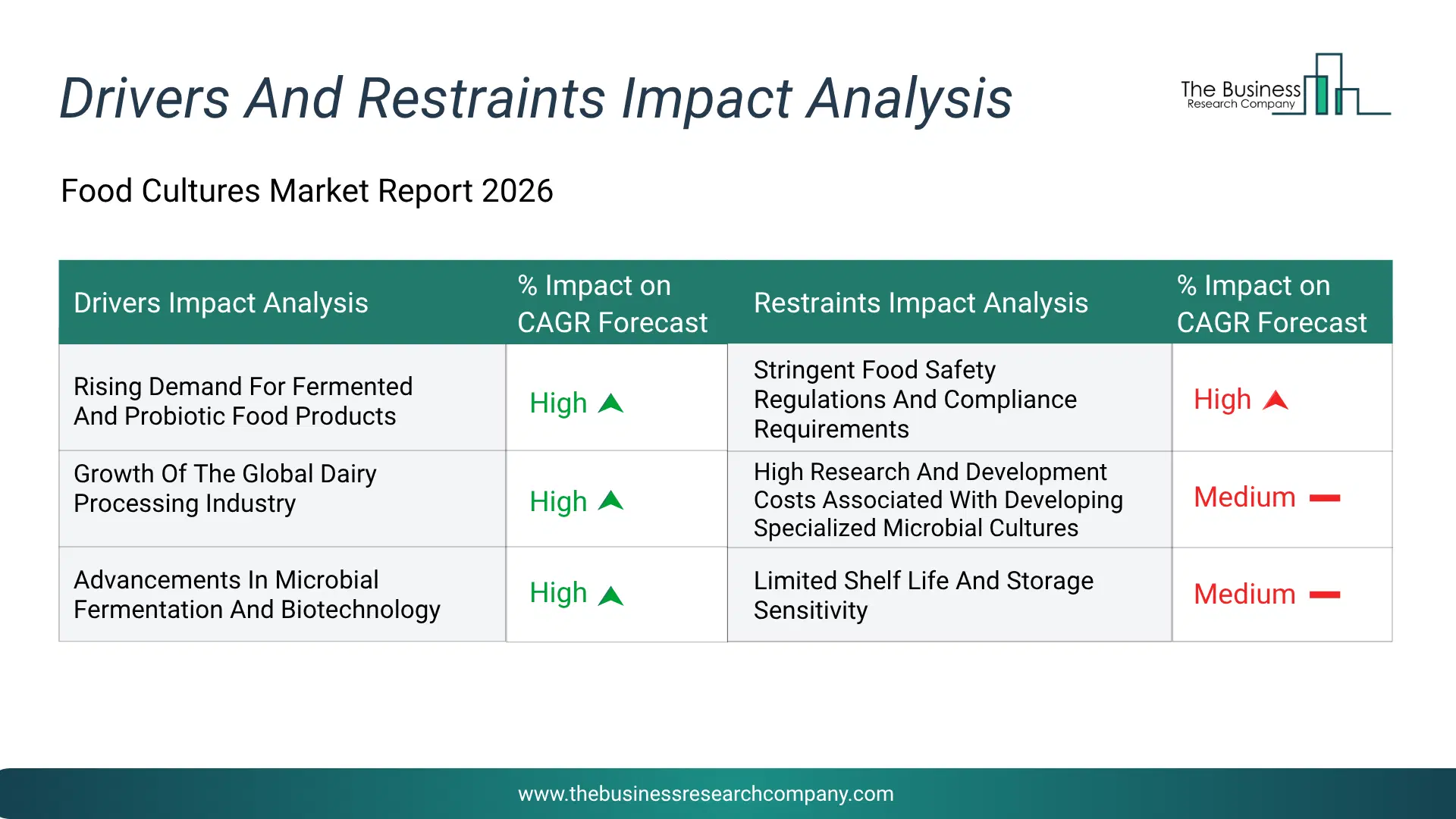
Infographic Chart Showing Key Market Drivers Analysis And Restraints For Food Cultures Market
The chart presents an impact analysis of key drivers and restraints, quantifying their relative influence on the market's growth rate and helping assess the balance between growth enablers and limiting factors. This chart offers a high-level perspective; the full report contains more detailed insights.
How Will The Drivers Impact Growth In The Global Food Cultures Market?
• Rising Demand For Fermented And Probiotic Food Products (High) – During the forecast period, the rising demand for fermented and probiotic food products is expected to become a key growth driver for the food cultures market by 2030. The increasing global consumption of fermented and probiotic -rich foods is significantly supporting the expansion of the food cultures market. Consumers are increasingly preferring functional foods that promote digestive health, strengthen immunity, and improve overall wellness. Products such as yogurt, cheese, kefir, fermented drinks, and probiotic dairy products depend heavily on specialized microbial cultures for production. As awareness regarding health benefits and natural ingredients continues to grow, food manufacturers are expanding the application of food cultures across a wide range of processed and fermented food products. • Growth Of The Global Dairy Processing Industry (High) – During the forecast period, the growth of the global dairy processing industry is expected to emerge as a major factor driving the expansion of the food cultures market by 2030. The continuous expansion of the global dairy processing sector plays a significant role in supporting the growth of the food cultures market. Dairy products such as cheese, yogurt, buttermilk, and sour cream require bacterial cultures for fermentation, flavor enhancement, and texture development. Increasing consumption of dairy-based foods, particularly in developing economies, is strengthening demand for advanced starter cultures. As dairy producers focus on product innovation and premium dairy offerings, the adoption of specialized microbial cultures is increasing steadily. • Advancements In Microbial Fermentation And Biotechnology (High) – During the forecast period, the advancements in microbial fermentation and biotechnology are expected to act as a key growth catalyst for the food cultures market by 2030. Ongoing technological progress in microbial fermentation and biotechnology is accelerating the growth of the food cultures market. Companies are developing specialized culture strains that enhance flavor, extend shelf life, improve texture, and increase the nutritional value of food products. Innovations such as freeze-dried cultures and direct vat set cultures are also improving production efficiency and simplifying manufacturing processes for food producers. These technological developments support the large-scale production of consistent, high-quality fermented food products worldwide.How Will The Restraints Impact Growth In The Global Food Cultures Market?
• Stringent Food Safety Regulations And Compliance Requirements (High) – During the forecast period, the strict food safety regulations and quality control requirements act as significant restraints in the food cultures market. Manufacturers must comply with rigorous regulatory standards governing microbial strains, production processes, and food safety certifications. Regulatory approvals for new microbial cultures can involve extensive testing and documentation. These regulatory complexities may slow product innovation and market entry for new culture strains. • High Research And Development Costs Associated With Developing Specialized Microbial Cultures (Medium) – During the forecast period, the high research and development costs associated with developing specialized microbial cultures also restrain market growth. Developing new culture strains requires advanced biotechnology research, controlled fermentation processes, and significant investment in laboratory infrastructure. Smaller manufacturers may face financial challenges in conducting extensive r&d activities. These cost barriers can limit the entry of new players and slow technological innovation in the market. • Limited Shelf Life And Storage Sensitivity (Medium) – During the forecast period, the food cultures are highly sensitive biological products that require controlled storage and transportation conditions to maintain viability and performance. Variations in temperature and handling can reduce product effectiveness and increase spoilage risks. Maintaining cold-chain logistics adds operational complexity and costs for manufacturers and distributors. These challenges can limit market expansion, particularly in developing regions.Key Players In The Global Food Cultures Market
Major companies operating in the food cultures market are Associated British Foods PLC, International Flavours & Fragrances Inc., Kerry Group PLC, Givaudan SA, Angel Yeast Co. Ltd., Corbion NV, Lallemand Inc., Chr. Hansen Holding A/S, The TATUA Co-operative Dairy Company Ltd., Cargill Incorporated, Meat Cracks Technologie GmbH, CSK Food Enrichment B.V, LB Bulgaricum Ltd., Wyeast Laboratories Inc., E&O Laboratories Ltd., Sacco Srl, Dalton Biotechnologie S.r.l, Lactina Ltd., DSM-Firmenich, Yakult Honsha Co. Ltd.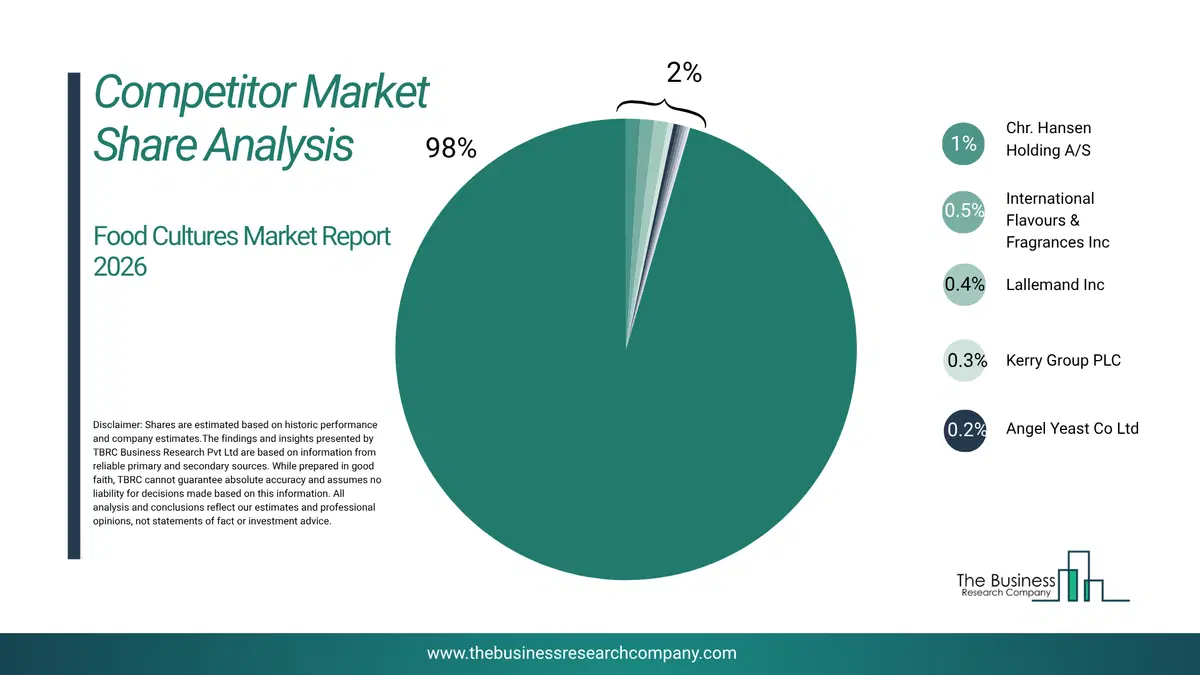
This chart is for illustrative purposes; the full report includes a detailed competitor analysis and comprehensive overview of the top 10 companies in the market.
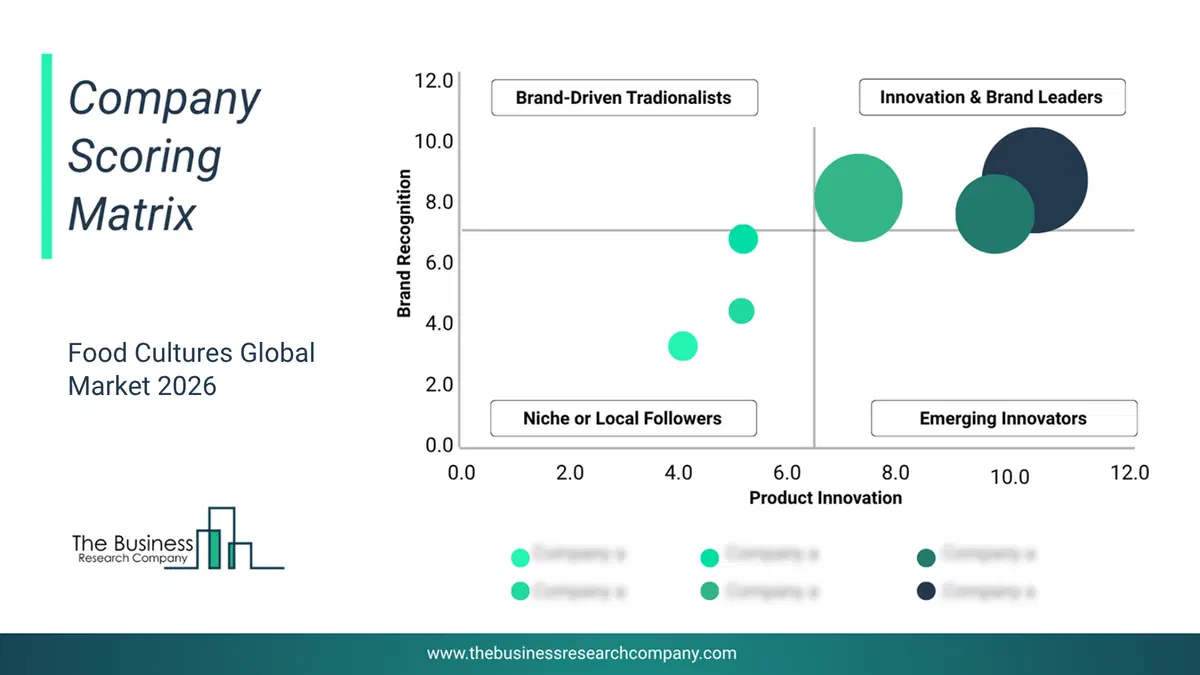
This chart maps companies by product innovation and brand strength, with bubble size indicating relative revenue, helping identify market leaders, challengers, and niche players. This is an illustrative chart; the full report provides a complete and accurate competitive analysis.
Global Food Cultures Market Trends and Insights
Major companies operating in the food cultures market are focusing on developing advanced starter cultures, such as Delvo Fresh Pioneer, to enhance product consistency, improve pH stability, and ensure high-quality taste and texture throughout shelf life. Next-generation yogurt starter cultures are specially engineered blends of beneficial microbes designed to maintain stable pH, consistent taste, and texture throughout yogurt production and shelf life, helping manufacturers reduce post-acidification, improve product quality, and ensure uniformity across batches. For instance, in September 2023, dsm-firmenich, a Netherlands-based global nutrition and health company, launched Delvo Fresh Pioneer, an advanced starter culture designed for very mild yogurts. This innovative culture ensures exceptional pH stability for up to 60 days in cold storage, reducing post-acidification even under challenging conditions such as higher temperatures. Composed of carefully selected microbial strains, Delvo Fresh Pioneer delivers smooth, creamy texture and consistent taste across batches, supporting premium and reduced-sugar yogurt formulations while enhancing production reliability. The cultures are part of dsm-firmenich’s broader fermented dairy toolkit, which includes starter, bioprotective, and probiotic cultures, enzymes, and hydrocolloids, providing manufacturers with flexible solutions to optimize yogurt production.What Are Latest Mergers And Acquisitions In The Food Cultures Market?
In March 2023, Novozymes, a Denmark-based biotechnology company, acquired Chr. Hansen for $12.3 billion. The acquisition created a new biotech powerhouse called Novonesis, combining complementary capabilities and positioning the company to drive innovation and sustainability in the ingredients and solutions markets. Chr. Hansen is a Denmark-based bioscience company that offers food cultures.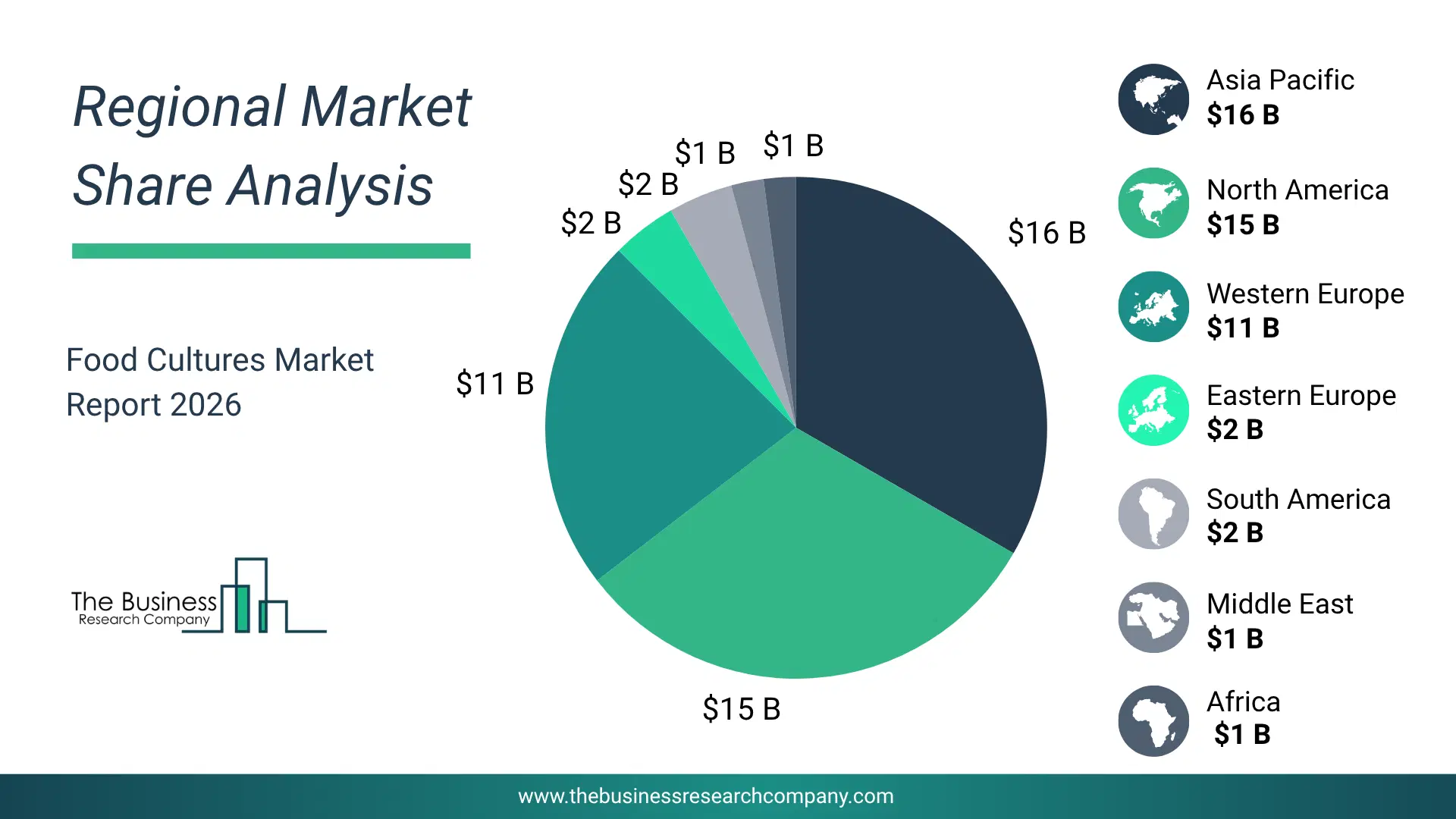
Regional Outlook
North America was the largest region in the food cultures market in 2025. Asia-Pacific is expected to be the fastest-growing region in the forecast period. The regions covered in this market report are Asia-Pacific, South East Asia, Western Europe, Eastern Europe, North America, South America, Middle East and Africa. The countries covered in this market report are Australia, Brazil, China, France, Germany, India, Indonesia, Japan, Taiwan, Russia, South Korea, UK, USA, Italy, Spain, CanadaWhat Defines the Food Cultures Market?
The food cultures market consists of sales of lactic acid bacteria, fungus, and enzymes. Values in this market are ‘factory gate’ values, that is the value of goods sold by the manufacturers or creators of the goods, whether to other entities (including downstream manufacturers, wholesalers, distributors, and retailers) or directly to end customers. The value of goods in this market includes related services sold by the creators of the goods.How is Market Value Defined and Measured?
The market value is defined as the revenues that enterprises gain from the sale of goods and/or services within the specified market and geography through sales, grants, or donations in terms of the currency (in USD unless otherwise specified). The revenues for a specified geography are consumption values that are revenues generated by organizations in the specified geography within the market, irrespective of where they are produced. It does not include revenues from resales along the supply chain, either further along the supply chain or as part of other products.
This chart presents market attractiveness based on a quantitative evaluation of growth, competition, strategic alignment, and risk, offering a clear view of opportunity areas for decision-making. This chart is for illustrative purposes; the full report contains the complete analysis.

This chart highlights the Total Addressable Market (TAM) by estimating the maximum revenue opportunity using an assumption-driven approach, supporting strategic planning and opportunity sizing across markets. The chart is illustrative; the full report provides a more comprehensive analysis.
What Key Data and Analysis Are Included in the Food Cultures Market Report 2026?
The food cultures market research report is one of a series of new reports from The Business Research Company that provides market statistics, including industry global market size, regional shares, competitors with the market share, detailed market segments, market trends and opportunities, and any further data you may need to thrive in the food cultures industry. The market research report delivers a complete perspective of everything you need, with an in-depth analysis of the current and future state of the industry.Food Cultures Market Report Forecast Analysis
| Report Attribute | Details |
|---|---|
| Market Size Value In 2026 | $16.18 billion |
| Revenue Forecast In 2030 | $47.31 billion |
| Growth Rate | CAGR of 34.8% from 2026 to 2030 |
| Base Year For Estimation | 2025 |
| Actual Estimates/Historical Data | 2020-2025 |
| Forecast Period | 2026 - 2030 |
| Market Representation | Revenue in USD Billion and CAGR from 2026 to 2030 |
| Segments Covered | Product, Microorganism Type, Function, Application |
| Regional Scope | Asia-Pacific, Western Europe, Eastern Europe, North America, South America, Middle East, Africa |
| Country Scope | The countries covered in the report are Australia, Brazil, China, France, Germany, India, Indonesia, Japan, Taiwan, Russia, South Korea, UK, USA, Canada, Italy, Spain. |
| Key Companies Profiled | Associated British Foods PLC, International Flavours & Fragrances Inc., Kerry Group PLC, Givaudan SA, Angel Yeast Co. Ltd., Corbion NV, Lallemand Inc., Chr. Hansen Holding A/S, The TATUA Co-operative Dairy Company Ltd., Cargill Incorporated, Meat Cracks Technologie GmbH, CSK Food Enrichment B.V, LB Bulgaricum Ltd., Wyeast Laboratories Inc., E&O Laboratories Ltd., Sacco Srl, Dalton Biotechnologie S.r.l, Lactina Ltd., DSM-Firmenich, Yakult Honsha Co. Ltd. |
| Customization Scope | Request for Customization |
| Pricing And Purchase Options | Explore Purchase Options |