
Food Enzymes Market Report 2026
Global Outlook – By Type (Carbohydrase, Lipase, Protease, Other Types), By Source (Microorganisms, Animals, Plants), By Formulations (Powder, Liquid, Other Formulations), By Application (Bakery Products, Beverages, Dairy Products, Processed Foods, Confectionery Products, Other Applications) – Market Size, Trends, Strategies, and Forecast to 2030
Food Enzymes Market Overview
• Food Enzymes market size has reached to $2.75 billion in 2025 • Expected to grow to $3.75 billion in 2030 at a compound annual growth rate (CAGR) of 6.3% • Growth Driver: Rising Demand For Processed Foods Fuels Growth In Food Enzyme Market • Market Trend: Innovation In The Food Enzyme Market • North America was the largest region in 2025 and Asia-Pacific is the fastest growing region.Market Gains By 2030 – Top Opportunities By Segment
Market Gain identifies the most promising market opportunities by highlighting the segments or products expected to generate the highest incremental revenue growth over the next five years.
What Is Covered Under Food Enzymes Market?
Food enzymes are unique proteins that serve as catalysts in different biochemical reactions involved in food processing and digestion. They facilitate chemical reactions without being used up. These enzymes assist in decomposing complex molecules into simpler ones, improving the texture, flavor, appearance, and nutritional quality of food. The main types of food enzymes are carbohydrase, lipase, protease, and others. Carbohydrase enzymes are a group of enzymes that catalyze the breakdown of carbohydrates into simpler sugars. The enzymes are obtained from various sources, such as microorganisms, animals, and plants, and are available in different formulations, including powder, liquid, and others. These enzymes find applications in bakery products, beverages, dairy products, processed foods, confectionery products, and others.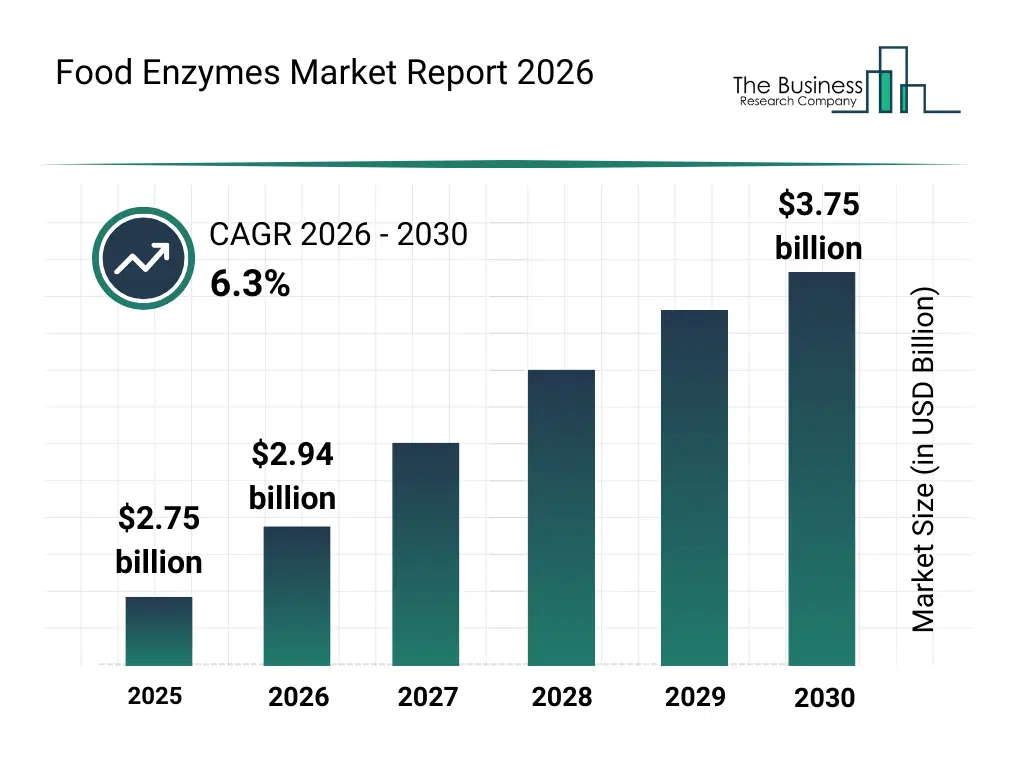
What Is The Food Enzymes Market Size and Share 2026?
The food enzymes market size has grown strongly in recent years. It will grow from $2.75 billion in 2025 to $2.94 billion in 2026 at a compound annual growth rate (CAGR) of 7.0%. The growth in the historic period can be attributed to expansion of processed food production, adoption of enzymatic processing techniques, rising demand for texture and flavor enhancement, increased use of enzymes in baking and brewing, advancements in enzyme extraction methods.What Is The Food Enzymes Market Growth Forecast?
The food enzymes market size is expected to see strong growth in the next few years. It will grow to $3.75 billion in 2030 at a compound annual growth rate (CAGR) of 6.3%. The growth in the forecast period can be attributed to increasing focus on sustainable food processing, rising demand for plant-based and alternative foods, expansion of precision enzyme engineering, growing investments in biotechnology-driven food solutions, increasing application of enzymes in functional foods. Major trends in the forecast period include increasing use of enzymes for clean-label processing, rising demand for specialty and tailored enzymes, growing application in dairy and bakery processing, expansion of microbial-sourced enzymes, enhanced focus on process efficiency and yield improvement.
Global Food Enzymes Market Segmentation
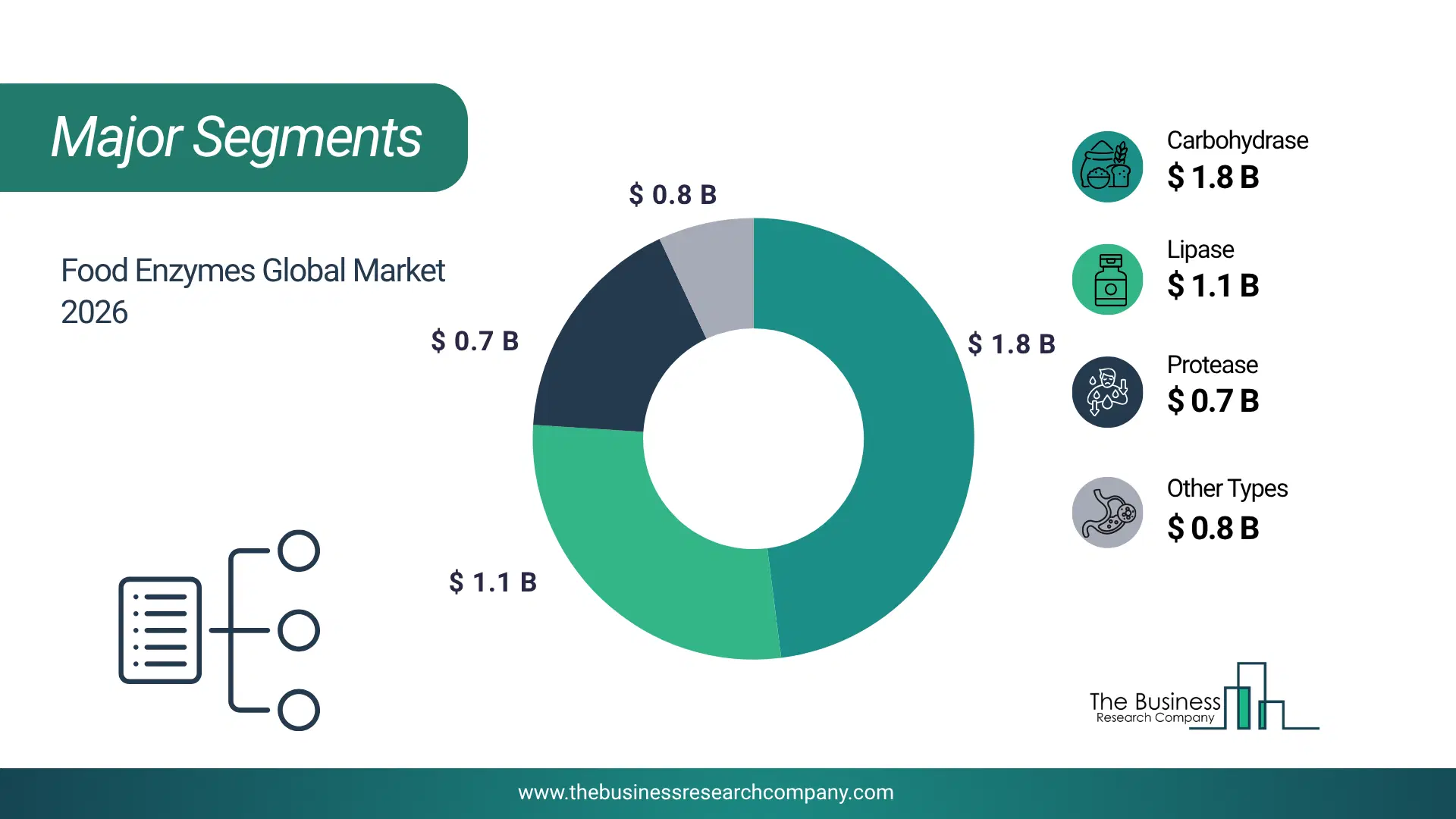
1) By Type: Carbohydrase, Lipase, Protease, Other Types 2) By Source: Microorganisms, Animals, Plants 3) By Formulations: Powder, Liquid, Other Formulations 4) By Application: Bakery Products, Beverages, Dairy Products, Processed Foods, Confectionery Products, Other Applications Subsegments: 1) By Carbohydrase: Amylase, Glucoamylase, Xylanase, Cellulase, Pectinase 2) By Lipase: Animal-Sourced Lipase, Plant-Sourced Lipase, Microbial Lipase 3) By Protease: Acid Protease, Alkaline Protease, Neutral Protease, Fungal Protease, Bacterial Protease 4) By Other Types: Lactase, Phytase, Protease Inhibitors, Esterase The top segments in the food enzymes market will be: • Carbohydrase will reach $1.77 billion by 2030. • Lipase will reach $1.06 billion by 2030. • Protease will reach $0.65 billion by 2030. • Other Types will reach $0.28 billion by 2030.What Is The Driver Of The Food Enzymes Market?
The increasing demand for processed food products is expected to propel the growth of the food enzyme market going forward. Processed food products refer to food items that have undergone various mechanical, physical, or chemical alterations from their original form to make them suitable for consumption. The fast-paced lifestyle, technological advancements in food processing, urbanization, and higher disposable incomes are leading to the rising demand for processed food products. Food enzymes serve as catalysts that accelerate chemical reactions during processing without being depleted in the manufacturing of processed food products. For instance, in July 2025, according to the Agriculture and Agri-Food Department Canada, a Canada-based government department, in 2024, the food and beverage processing sector remained Canada’s largest manufacturing industry by production value, generating $173.4 billion in goods. This represented 20.3% of all manufacturing sales and contributed 1.6% to the national GDP. Exports of processed food and beverage products reached a record $59.8 billion, an increase of 3.8% from 2023, and accounted for 34.5% of the industry’s total production value. Therefore, the increasing demand for processed food products is driving the growth of the food enzyme industry.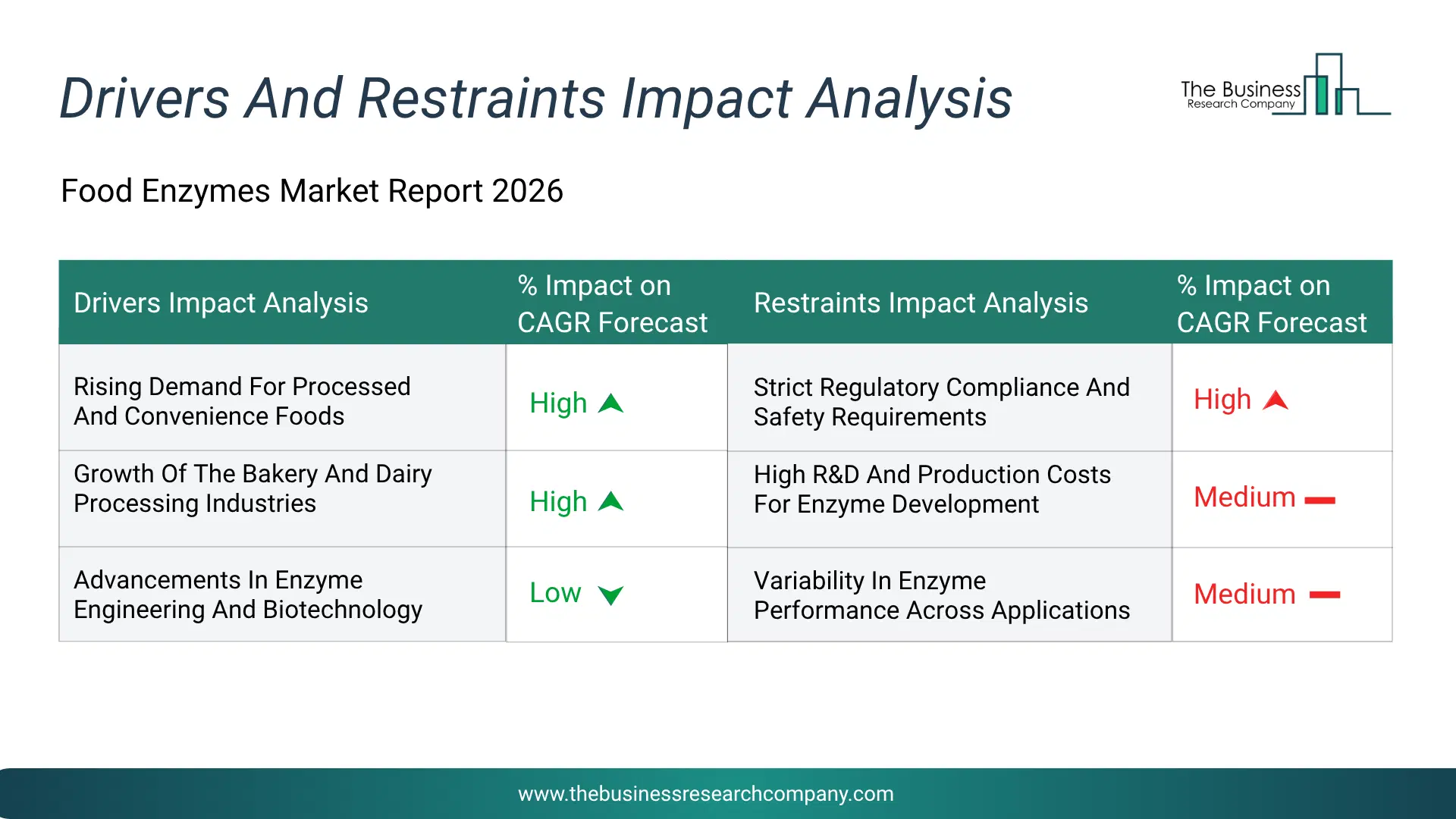
Infographic Chart Showing Key Market Drivers Analysis And Restraints For Food Enzymes Market
The chart presents an impact analysis of key drivers and restraints, quantifying their relative influence on the market's growth rate and helping assess the balance between growth enablers and limiting factors. This chart offers a high-level perspective; the full report contains more detailed insights.
How Will The Drivers Impact Growth In The Global Food Enzymes Market?
• Rising Demand For Processed And Convenience Foods (High) – During the forecast period, the rising demand for processed and convenience foods is expected to become a key growth driver for the food enzymes market by 2030. The growing consumption of processed and ready -to -eat food products plays a significant role in driving the food enzymes market. Enzymes are extensively used in food processing to enhance texture, improve flavor, extend shelf life, and increase production efficiency in products such as baked goods, dairy items, beverages, and meat products. As modern lifestyles become increasingly busy and the demand for packaged foods rises globally, food manufacturers are increasingly adopting enzyme -based solutions to enhance product quality and optimize manufacturing processes. • Growth Of The Bakery And Dairy Processing Industries (High) – During the forecast period, the growth of the bakery and dairy processing industries is expected to emerge as a major factor driving the expansion of the food enzymes market by 2030. The continued expansion of the global bakery and dairy sectors strongly supports the growth of the food enzymes market. Enzymes such as amylases, proteases, and lipases are widely used to improve dough stability, enhance fermentation performance, develop flavor, and optimize product texture. Increasing consumption of bakery items such as bread and cakes, along with dairy products including cheese and yogurt, is significantly boosting demand for enzyme-based processing solutions. As food manufacturers focus on achieving greater product consistency and improved processing efficiency, the adoption of specialized food enzymes continues to increase. • Advancements In Enzyme Engineering And Biotechnology (Low) – During the forecast period, the advancements in enzyme engineering and biotechnology are expected to act as a key growth catalyst for the food enzymes market by 2030. Continuous technological progress in enzyme engineering and biotechnology is further accelerating market expansion. Innovations in microbial fermentation and enzyme modification are enabling the development of highly efficient and application-specific enzymes tailored for food processing applications. These advanced enzymes help improve production yield, shorten processing times, and support clean-label product development by reducing reliance on chemical additives. As biotechnology research continues to advance, the range of enzyme applications in food production is expected to grow considerably.How Will The Restraints Impact Growth In The Global Food Enzymes Market?
• Strict Regulatory Compliance And Safety Requirements (High) – During the forecast period, the strict regulatory frameworks and safety assessments act as significant restraints in the food enzymes market. Regulatory authorities require extensive testing and approval processes to ensure that enzymes used in food production meet safety and quality standards. Compliance with regional food safety regulations can increase development timelines and operational costs for manufacturers. These regulatory complexities may slow the introduction of new enzyme products into the market. • High R&D And Production Costs For Enzyme Development (Medium) – During the forecast period, the high research and development costs associated with enzyme discovery and production also restrain market growth. Developing specialized enzymes requires advanced biotechnology expertise, fermentation infrastructure, and significant investment in laboratory research. Smaller manufacturers may face financial challenges in sustaining long-term r&d programs. These cost barriers can limit innovation and market entry for new players in the food enzymes industry. • Variability In Enzyme Performance Across Applications (Medium) – During the forecast period, the the effectiveness of food enzymes can vary depending on raw material quality, processing conditions, and manufacturing environments. Such variability may affect consistency in food production and final product quality. Manufacturers often need extensive testing and customization to achieve desired outcomes. This increases operational complexity and may discourage adoption among smaller food processors.Key Players In The Global Food Enzymes Market
Major companies operating in the food enzymes market are International Flavors & Fragrances Inc., Kerry Group, Soufflet Group, Koninklijke DSM N.V., Novozymes A/S, Chr. Hansen Holding A/S, MP Biomedicals, Biocon Limited, Advanced Enzymes Technologies Ltd., AB Enzymes GmbH, Bioseutica B.V., Specialty Enzymes & Biotechnologies Co., Nagase America LLC, Amano Enzyme Inc., SternEnzym GmbH & Co. KG, Enzyme Development Corporation, Sacco System Group, Lumis Biotech Pvt. Ltd., Jiangsu Boli Bioproducts Co. Ltd., Dyadic International Inc., Aum Enzymes, Creative Enzymes, Sunson Industry Group Co. Ltd., Noor Enzymes Pvt. Ltd.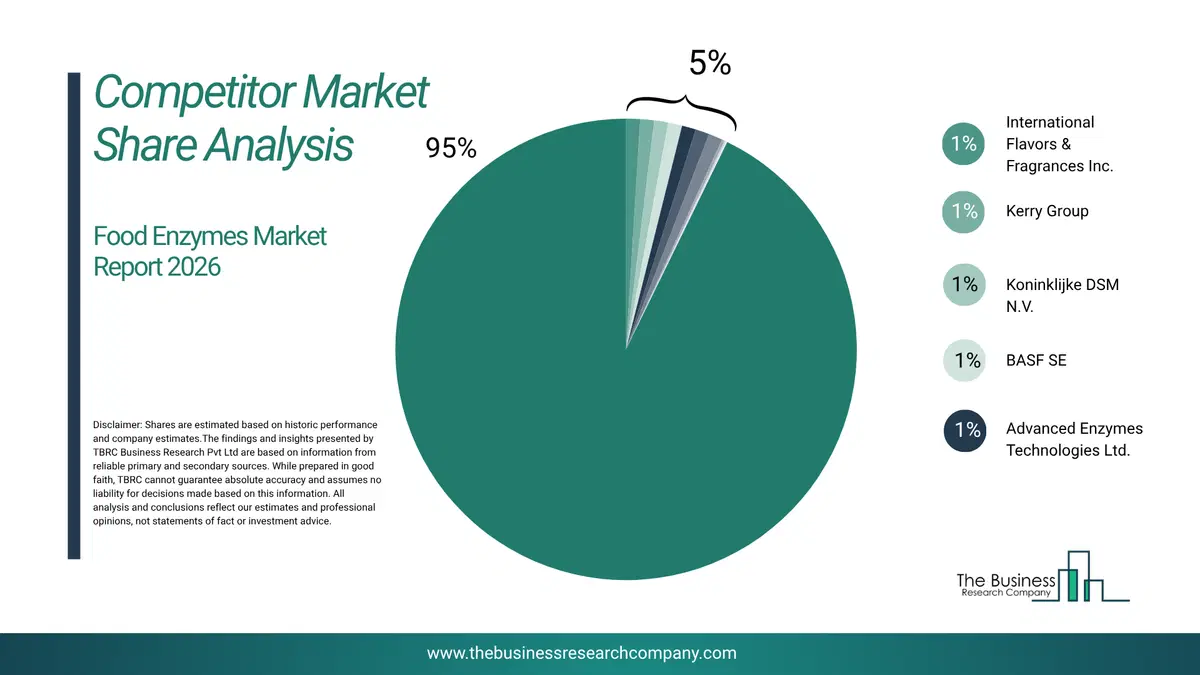
This chart is for illustrative purposes; the full report includes a detailed competitor analysis and comprehensive overview of the top 10 companies in the market.
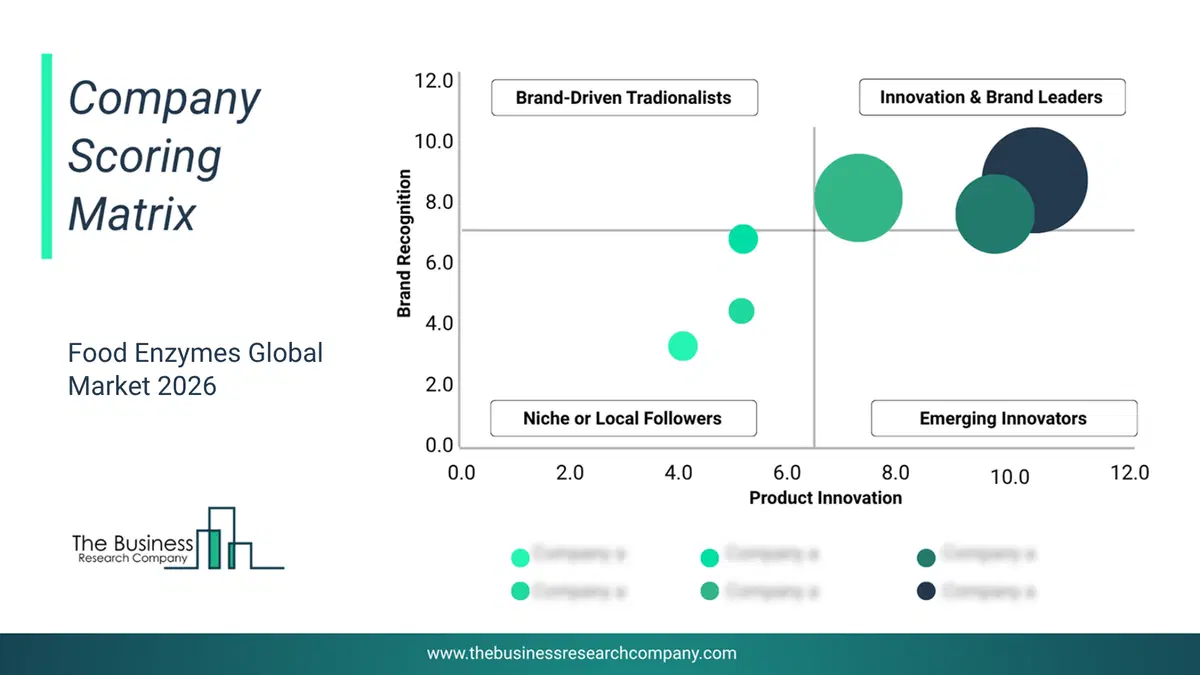
This chart maps companies by product innovation and brand strength, with bubble size indicating relative revenue, helping identify market leaders, challengers, and niche players. This is an illustrative chart; the full report provides a complete and accurate competitive analysis.
Global Food Enzymes Market Trends and Insights
Major companies operating in the food enzyme market are focused on developing advanced solutions, such as lactase technology, to improve the production process of lactose-free dairy products. Lactase technology refers to the utilization of enzymes, specifically lactase, in food processing to catalyze the breakdown of lactose, a sugar found in milk and dairy products, into simpler sugars such as glucose and galactose. For instance, in May 2023, DSM-Firmenich, a US-based nutrition and health company, launched Maxilact Next. Maxilact Next is the most effective and pure lactase that boasts an impressive speed, approximately 25% faster than its predecessor, resulting in a 25% reduction in hydrolysis time at equivalent dosages. This advancement empowers lactose-free dairy producers to enhance production efficiency, expand capacity, and optimize resource utilization without compromising the flavor of lactose-free products. MaxilactNext enriches the existing Maxilact portfolio, which draws on over five decades of expertise in lactose-free dairy production, offering a comprehensive suite of high-purity solutions.What Are Latest Mergers And Acquisitions In The Food Enzymes Market?
In November 2023, Biocatalysts Ltd., a UK-based biotechnology research company, acquired WeissBioTech for an undisclosed amount. Through this acquisition, Biocatalysts Ltd. aims to strengthen its position in the enzyme market. WeissBioTech is a Germany-based company focused on the food and beverage sectors and provides a wide range of enzymatic and non-enzymatic products designed to enhance food processing.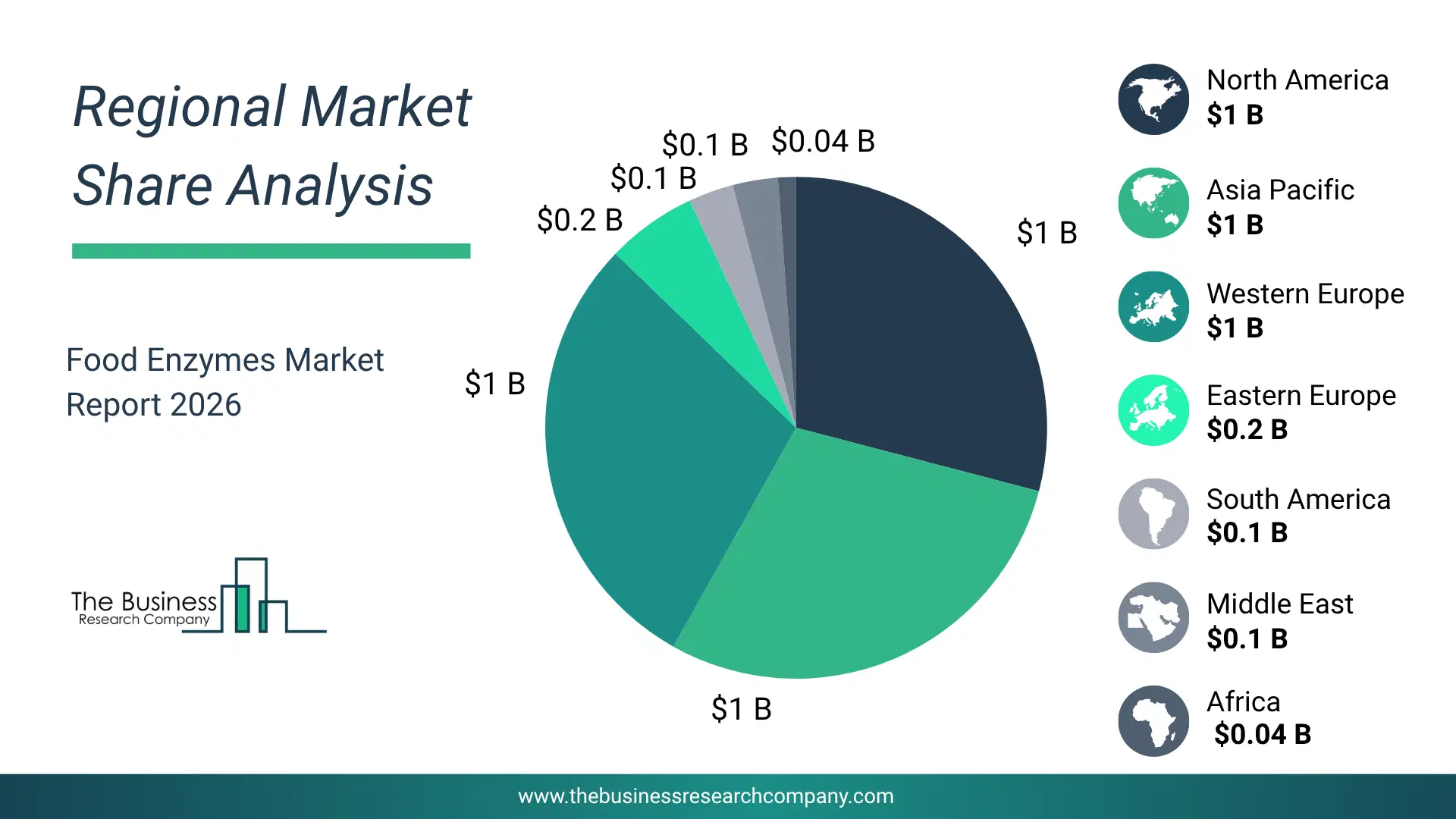
Regional Outlook
North America was the largest region in the food enzymes market in 2025. Asia-Pacific is expected to be the fastest-growing region in the forecast period. The regions covered in this market report are Asia-Pacific, South East Asia, Western Europe, Eastern Europe, North America, South America, Middle East and Africa. The countries covered in this market report are Australia, Brazil, China, France, Germany, India, Indonesia, Japan, Taiwan, Russia, South Korea, UK, USA, Italy, Spain, CanadaWhat Defines the Food Enzymes Market?
The food enzyme market consists of sales of amylases, pectinases, and rennet. Values in this market are ‘factory gate’ values, that is, the value of goods sold by the manufacturers or creators of the goods, whether to other entities (including downstream manufacturers, wholesalers, distributors, and retailers) or directly to end customers. The value of goods in this market includes related services sold by the creators of the goods.How is Market Value Defined and Measured?
The market value is defined as the revenues that enterprises gain from the sale of goods and/or services within the specified market and geography through sales, grants, or donations in terms of the currency (in USD unless otherwise specified). The revenues for a specified geography are consumption values that are revenues generated by organizations in the specified geography within the market, irrespective of where they are produced. It does not include revenues from resales along the supply chain, either further along the supply chain or as part of other products.
This chart presents market attractiveness based on a quantitative evaluation of growth, competition, strategic alignment, and risk, offering a clear view of opportunity areas for decision-making. This chart is for illustrative purposes; the full report contains the complete analysis.

This chart highlights the Total Addressable Market (TAM) by estimating the maximum revenue opportunity using an assumption-driven approach, supporting strategic planning and opportunity sizing across markets. The chart is illustrative; the full report provides a more comprehensive analysis.
What Key Data and Analysis Are Included in the Food Enzymes Market Report 2026?
The food enzymes market research report is one of a series of new reports from The Business Research Company that provides market statistics, including industry global market size, regional shares, competitors with the market share, detailed market segments, market trends and opportunities, and any further data you may need to thrive in the food enzymes industry. The market research report delivers a complete perspective of everything you need, with an in-depth analysis of the current and future state of the industry.Food Enzymes Market Report Forecast Analysis
| Report Attribute | Details |
|---|---|
| Market Size Value In 2026 | $2.94 billion |
| Revenue Forecast In 2030 | $3.75 billion |
| Growth Rate | CAGR of 7.0% from 2026 to 2030 |
| Base Year For Estimation | 2025 |
| Actual Estimates/Historical Data | 2020-2025 |
| Forecast Period | 2026 - 2030 |
| Market Representation | Revenue in USD Billion and CAGR from 2026 to 2030 |
| Segments Covered | Type, Source, Formulations, Application |
| Regional Scope | Asia-Pacific, Western Europe, Eastern Europe, North America, South America, Middle East, Africa |
| Country Scope | The countries covered in the report are Australia, Brazil, China, France, Germany, India, Indonesia, Japan, Taiwan, Russia, South Korea, UK, USA, Canada, Italy, Spain. |
| Key Companies Profiled | International Flavors & Fragrances Inc., Kerry Group, Soufflet Group, Koninklijke DSM N.V., Novozymes A/S, Chr. Hansen Holding A/S, MP Biomedicals, Biocon Limited, Advanced Enzymes Technologies Ltd., AB Enzymes GmbH, Bioseutica B.V., Specialty Enzymes & Biotechnologies Co., Nagase America LLC, Amano Enzyme Inc., SternEnzym GmbH & Co. KG, Enzyme Development Corporation, Sacco System Group, Lumis Biotech Pvt. Ltd., Jiangsu Boli Bioproducts Co. Ltd., Dyadic International Inc., Aum Enzymes, Creative Enzymes, Sunson Industry Group Co. Ltd., Noor Enzymes Pvt. Ltd. |
| Customization Scope | Request for Customization |
| Pricing And Purchase Options | Explore Purchase Options |