
Food Hydrocolloids Market Report 2026
Global Outlook – By Type (Gelatin, Carrageenan, Xanthan Gum, Alginates, Agar, Pectin, Gum Arabic, Locust Bean Gum, Other Types), By Source (Plant, Animal, Microbial, Seaweed, Synthetic), By Application (Bakery And Confectionery, Meat And Poultry Products, Beverages, Dairy Products, Sauces And Dressing, Other Applications) – Market Size, Trends, Strategies, and Forecast to 2030
Food Hydrocolloids Market Overview
• Food Hydrocolloids market size has reached to $4.44 billion in 2025 • Expected to grow to $5.78 billion in 2030 at a compound annual growth rate (CAGR) of 5.3% • Growth Driver: Rising Demand For Processed Foods Fuels Growth In Food Hydrocolloids Market • Market Trend: Advancements In Pre-Packaged Solutions For Specialized Applications In Food Hydrocolloids Market • North America was the largest region in 2025 and Asia-Pacific is the fastest growing region.What Is Covered Under Food Hydrocolloids Market?
Food hydrocolloids are a diverse group of long-chain polymers that form gels or thickeners when dispersed in water. These substances are used extensively in the food industry to modify food products' texture, stability, and appearance. The main types of food hydrocolloids are gelatin, carrageenan, xanthan gum, alginates, agar, pectin, gum arabic, locust bean gum, and others. Gelatin is a food hydrocolloid derived from the partial hydrolysis of collagen extracted from the skin, bones, and connective tissues of animals. The various sources such as plant, animal, microbial, seaweed, and synthetic. These are used in various applications such as bakery and confectionery, meat and poultry products, beverages, dairy products, sauces and dressing, and others.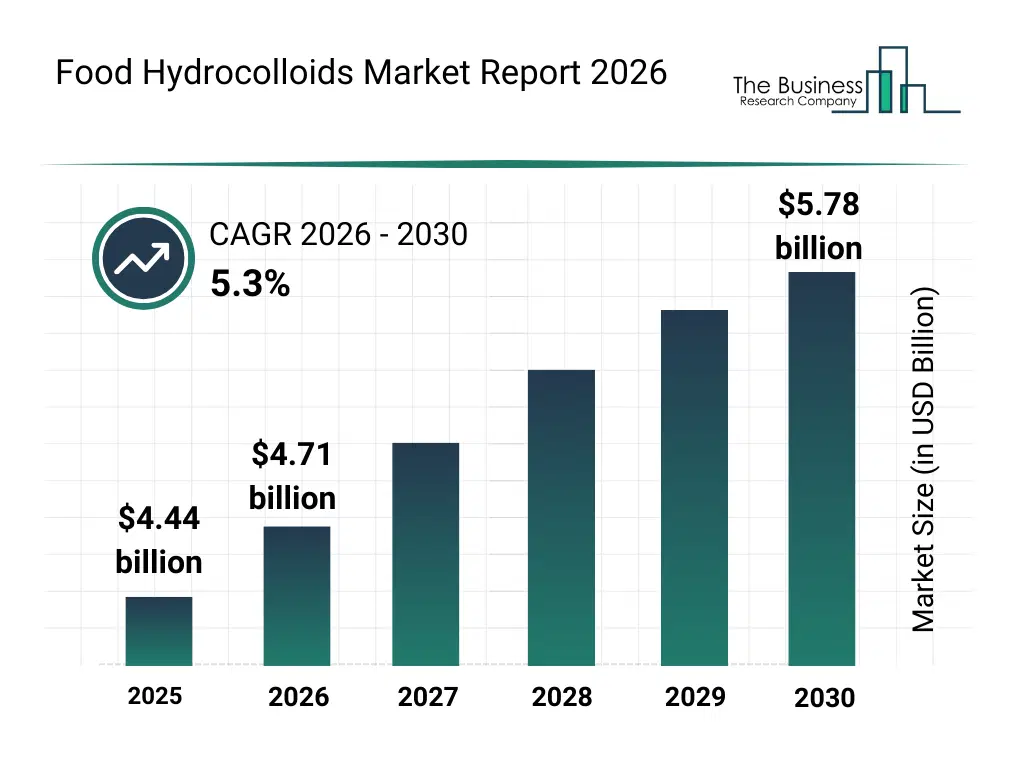
What Is The Food Hydrocolloids Market Size and Share 2026?
The food hydrocolloids market size has grown strongly in recent years. It will grow from $4.44 billion in 2025 to $4.71 billion in 2026 at a compound annual growth rate (CAGR) of 5.9%. The growth in the historic period can be attributed to expansion of processed and convenience food consumption, increased use of thickeners and stabilizers, growth of dairy and bakery applications, advancements in food texture engineering, availability of diverse hydrocolloid sources.What Is The Food Hydrocolloids Market Growth Forecast?
The food hydrocolloids market size is expected to see strong growth in the next few years. It will grow to $5.78 billion in 2030 at a compound annual growth rate (CAGR) of 5.3%. The growth in the forecast period can be attributed to increasing demand for plant-based and vegan foods, rising focus on clean-label ingredients, expansion of functional food formulations, growing innovation in hydrocolloid blending, increasing application in low-fat and low-sugar products. Major trends in the forecast period include increasing adoption of plant-based hydrocolloids, rising demand for texture and stability enhancers, growing use in clean-label food formulations, expansion of multi-functional hydrocolloid blends, enhanced focus on shelf-life improvement.
Global Food Hydrocolloids Market Segmentation
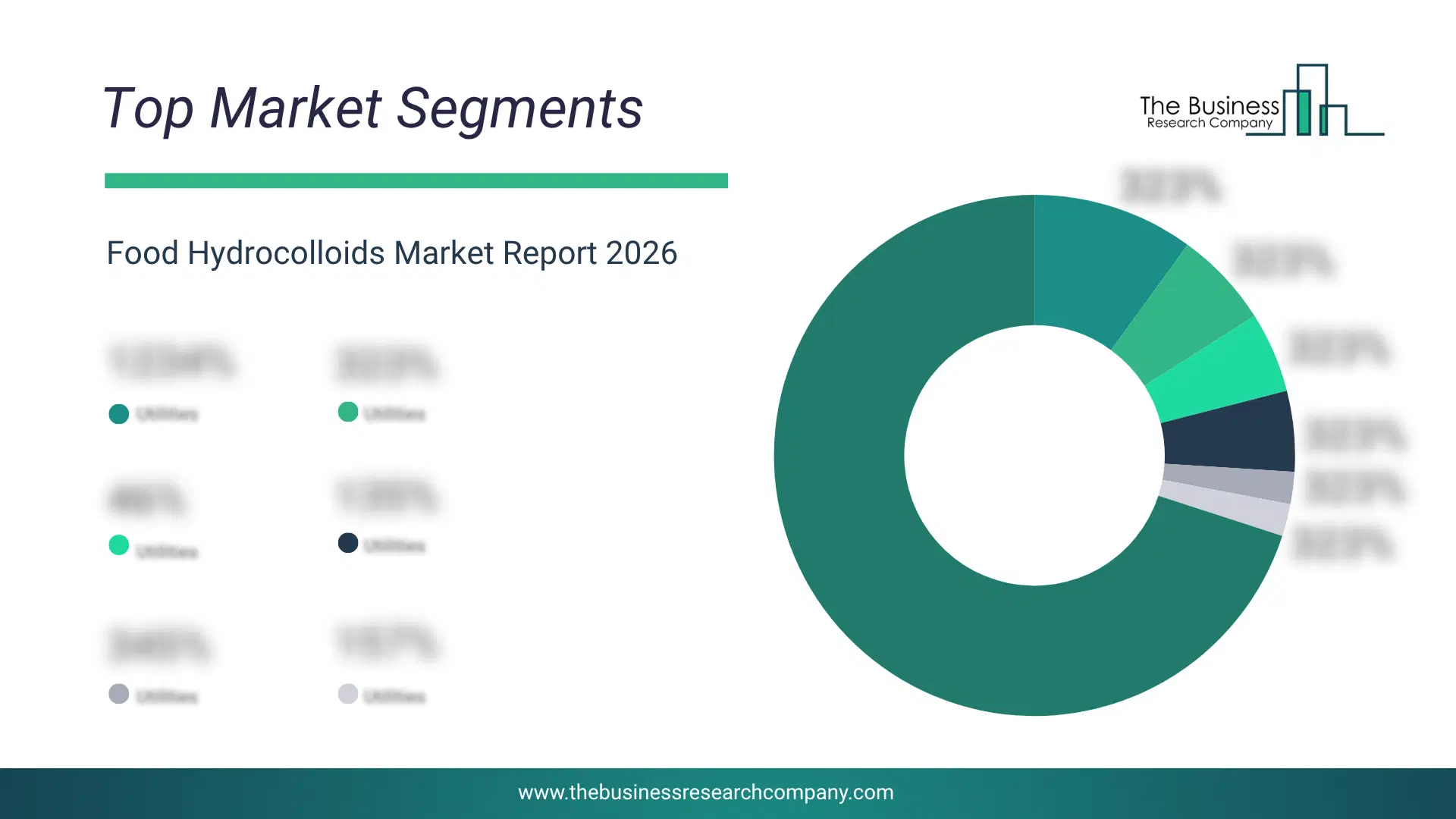
1) By Type: Gelatin, Carrageenan, Xanthan Gum, Alginates, Agar, Pectin, Gum Arabic, Locust Bean Gum, Other Types 2) By Source: Plant, Animal, Microbial, Seaweed, Synthetic 3) By Application: Bakery And Confectionery, Meat And Poultry Products, Beverages, Dairy Products, Sauces And Dressing, Other Applications Subsegments: 1) By Gelatin: Animal-based Gelatin, Plant-based Gelatin 2) By Carrageenan: Kappa Carrageenan, Iota Carrageenan, Lambda Carrageenan 3) By Xanthan Gum: Food-grade Xanthan Gum, Industrial-grade Xanthan Gum 4) By Alginates: Sodium Alginate, Calcium Alginate, Potassium Alginate 5) By Agar: Standard Agar, Agarose 6) By Pectin: High Methoxyl Pectin, Low Methoxyl Pectin 7) By Gum Arabic: Dehydrated Gum Arabic, Spray-dried Gum Arabic 8) By Locust Bean Gum: Locust Bean Gum (Carob Bean Gum), Hydrolyzed Locust Bean Gum 9) By Other Types: Guar Gum, Tara Gum, Konjac Gum, Gellan GumWhat Is The Driver Of The Food Hydrocolloids Market?
The growing demand for processed foods is expected to propel the growth of the food hydrocolloids market going forward. Processed foods are foods that have been altered from their original state through methods such as canning, cooking, freezing, or adding ingredients to enhance flavor, extend shelf life, or improve convenience. The demand for processed foods is due to modern lifestyles that require convenience, longer shelf life, and quick meal preparation options, as well as the widespread availability and marketing of these products. Food hydrocolloids are used to improve the texture, stability, and shelf life of processed foods, enabling fat and calorie reduction and enhancing nutritional value, which support the production of convenient and appealing ready-to-eat foods, meeting the demands of modern consumers. For instance, in 2023, according to the United States Department of Agriculture, a US-based federal agency, the total value of US processed food products exported from the country increased to $36.59 billion in 2023, an increase of 1.7% compared to previous years. Therefore, the growing demand for processed foods drives the food hydrocolloids industry.Key Players In The Global Food Hydrocolloids Market
Major companies operating in the food hydrocolloids market are Cargill Incorporated, Archer Daniels Midland Company, BASF SE, DuPont de Nemours Inc., International Flavors & Fragrances Inc., Kerry Group plc, Ingredion Incorporated, Ashland Inc., CP Kelco ApS, Tate & Lyle PLC, Darling Ingredients Inc., Jungbunzlauer Suisse AG, Nexira, Palsgaard A/S, Meihua Holdings Group Co. Ltd., Ceamsa, Koninklijke DSM N.V., W Hydrocolloids Inc., Tic Gums Inc., Polygal AG, Lucid Colloids Ltd., JM Huber Corporation, Deosen Biochemical (Ordos) Ltd., Hindustan Gum & Chemicals Ltd., UNIPEKTIN Ingredients AG, BASF SE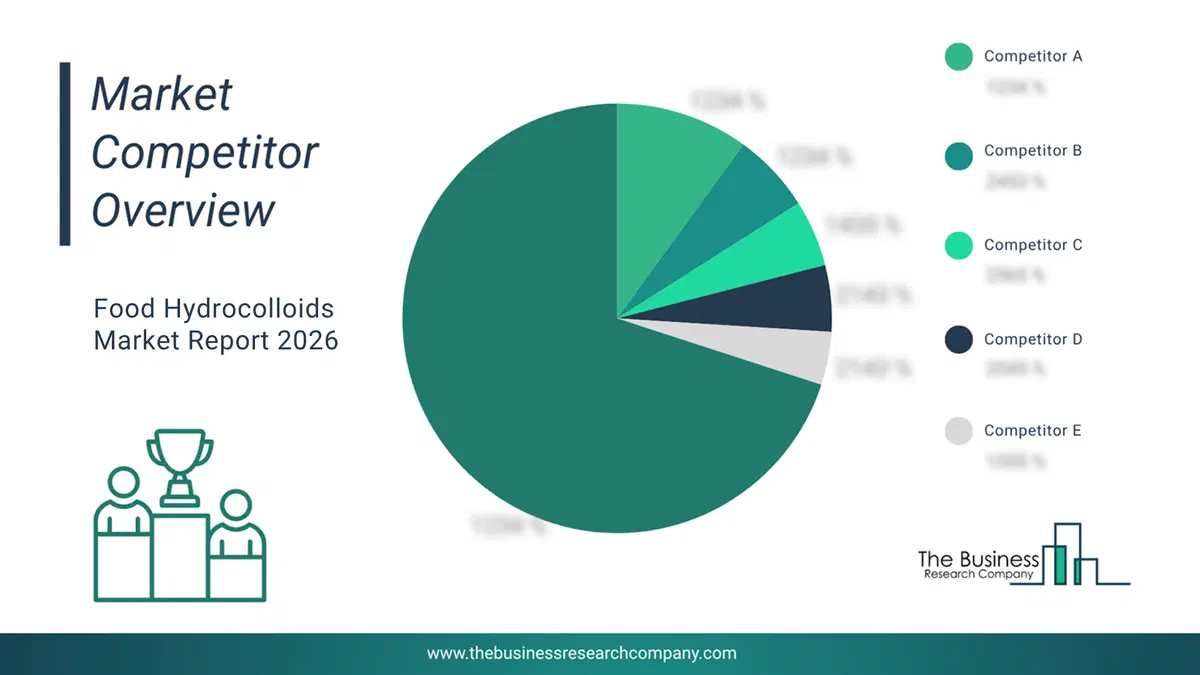
This chart is for illustrative purposes; the full report includes a detailed competitor analysis and comprehensive overview of the top 10 companies in the market.
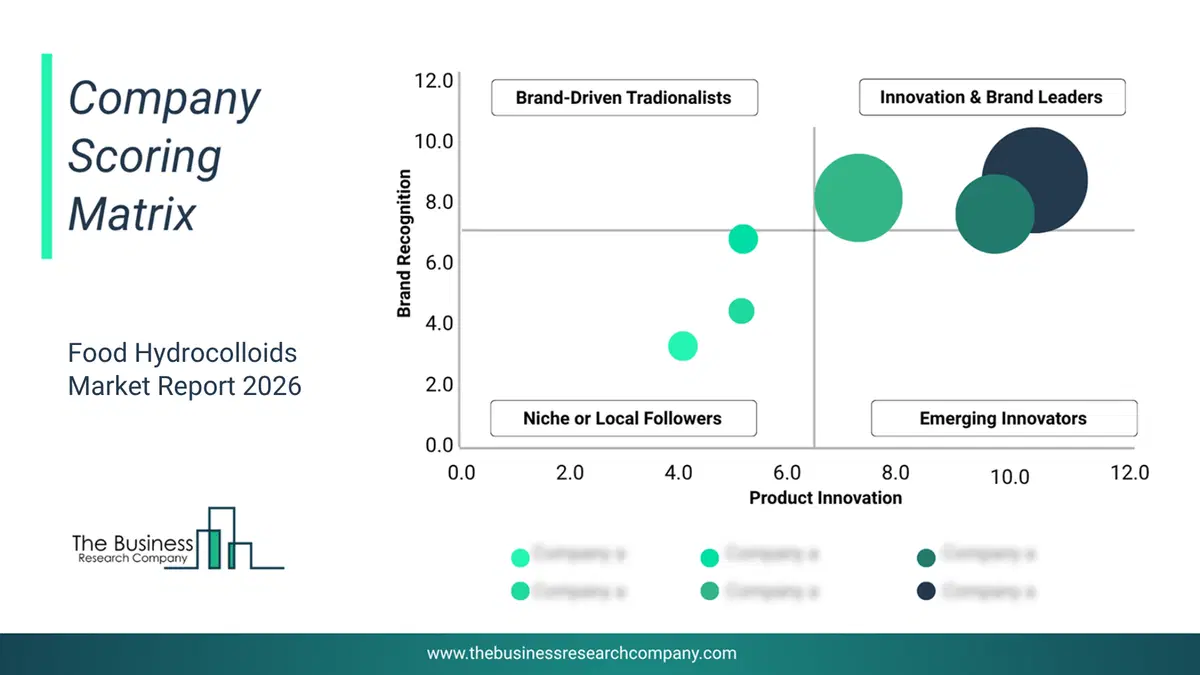
This chart maps companies by product innovation and brand strength, with bubble size indicating relative revenue, helping identify market leaders, challengers, and niche players. This is an illustrative chart; the full report provides a complete and accurate competitive analysis.
Global Food Hydrocolloids Market Trends and Insights
Major companies operating in the food hydrocolloids market focus on developing innovative pre-packaged formulations to gain a competitive advantage. Pre-packaged formulations refer to ready-to-use mixtures or products that are assembled and packaged in advance, designed for specific applications or uses. For instance, in March 2023, Meron Group, an India-based company specializes in manufacturing and distributing hydrocolloids launched new dessert premixes for the HoReCa (Hotel, Restaurant, and Catering) sector. These hydrocolloids are necessary to improve the mouthfeel, texture, and stability of a variety of desserts, including crème brulee, panna cotta, mousses, and puddings. They serve as stabilizing, thickening, and binding agents, guaranteeing a consistent level of quality and enhanced sensory appeal in the finished goods.What Are Latest Mergers And Acquisitions In The Food Hydrocolloids Market?
In November 2024, Tate & Lyle Public Limited Company, a UK-based food ingredients company, acquired CP Kelco for an undisclosed amount. Through this acquisition, Tate & Lyle aims to expand its portfolio of food hydrocolloids by integrating CP Kelco’s pectin, specialty gums, and other nature-based ingredients, enhancing its ability to provide functional solutions for food and beverage applications. CP Kelco is a US-based manufacturing company that specializes in producing pectin, specialty gums, and other hydrocolloids used as thickeners, stabilizers, and texturizers in the food industry.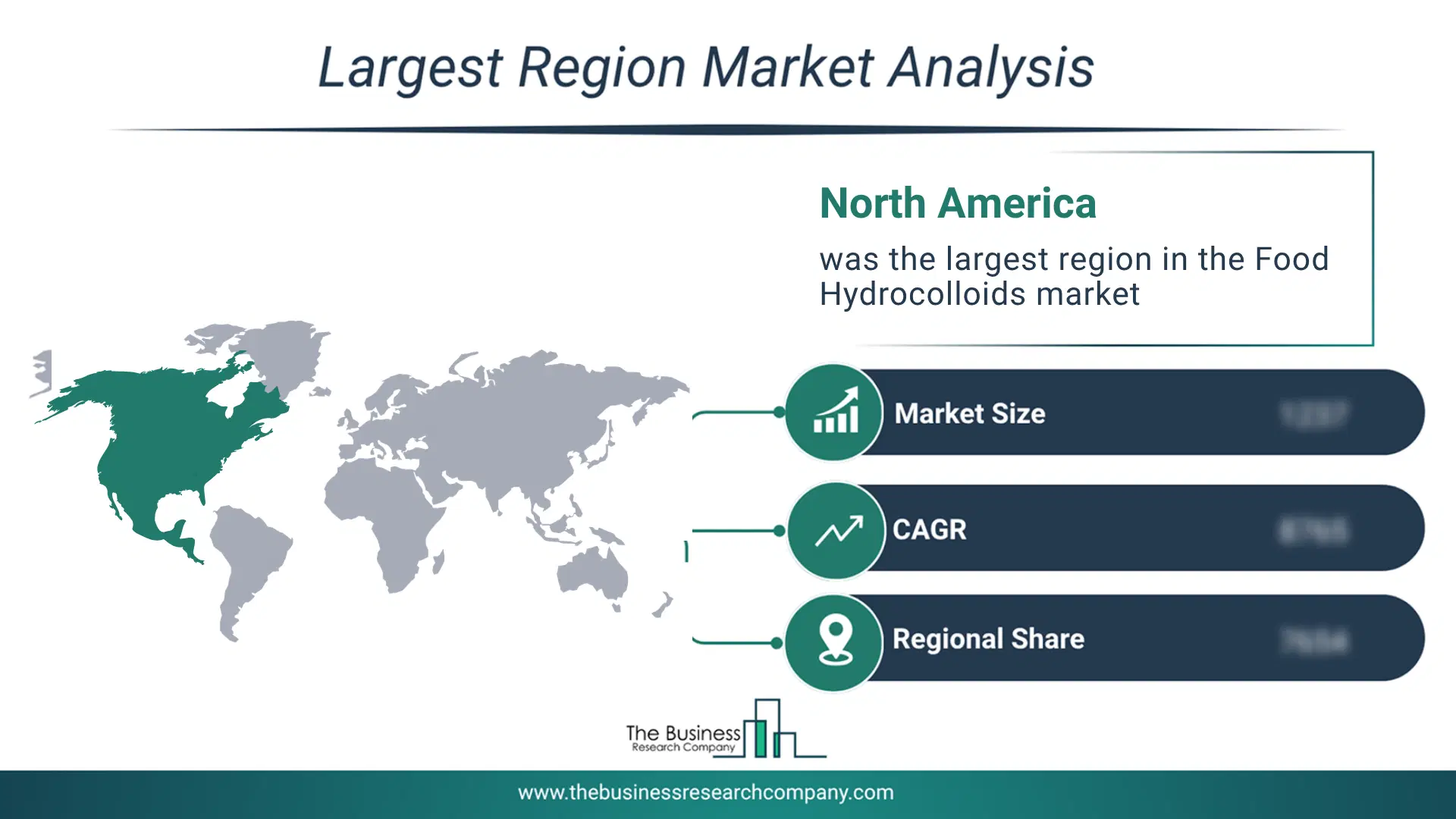
Regional Outlook
North America was the largest region in the food hydrocolloids market in 2025. Asia-Pacific is expected to be the fastest-growing region in the forecast period. The regions covered in this market report are Asia-Pacific, South East Asia, Western Europe, Eastern Europe, North America, South America, Middle East and Africa. The countries covered in this market report are Australia, Brazil, China, France, Germany, India, Indonesia, Japan, Taiwan, Russia, South Korea, UK, USA, Italy, Spain, CanadaWhat Defines the Food Hydrocolloids Market?
The food hydrocolloids market consists of sales of thickeners, gelling agents, stabilizers, emulsifiers, and moisture retainers. Values in this market are ‘factory gate’ values, that is the value of goods sold by the manufacturers or creators of the goods, whether to other entities (including downstream manufacturers, wholesalers, distributors, and retailers) or directly to end customers. The value of goods in this market includes related services sold by the creators of the goods.How is Market Value Defined and Measured?
The market value is defined as the revenues that enterprises gain from the sale of goods and/or services within the specified market and geography through sales, grants, or donations in terms of the currency (in USD unless otherwise specified). The revenues for a specified geography are consumption values that are revenues generated by organizations in the specified geography within the market, irrespective of where they are produced. It does not include revenues from resales along the supply chain, either further along the supply chain or as part of other products.
This chart presents market attractiveness based on a quantitative evaluation of growth, competition, strategic alignment, and risk, offering a clear view of opportunity areas for decision-making. This chart is for illustrative purposes; the full report contains the complete analysis.

This chart highlights the Total Addressable Market (TAM) by estimating the maximum revenue opportunity using an assumption-driven approach, supporting strategic planning and opportunity sizing across markets. The chart is illustrative; the full report provides a more comprehensive analysis.
What Key Data and Analysis Are Included in the Food Hydrocolloids Market Report 2026?
The food hydrocolloids market research report is one of a series of new reports from The Business Research Company that provides market statistics, including industry global market size, regional shares, competitors with the market share, detailed market segments, market trends and opportunities, and any further data you may need to thrive in the food hydrocolloids industry. The market research report delivers a complete perspective of everything you need, with an in-depth analysis of the current and future state of the industry.Food Hydrocolloids Market Report Forecast Analysis
| Report Attribute | Details |
|---|---|
| Market Size Value In 2026 | $4.71 billion |
| Revenue Forecast In 2030 | $5.78 billion |
| Growth Rate | CAGR of 5.9% from 2026 to 2030 |
| Base Year For Estimation | 2025 |
| Actual Estimates/Historical Data | 2020-2025 |
| Forecast Period | 2026 - 2030 |
| Market Representation | Revenue in USD Billion and CAGR from 2026 to 2030 |
| Segments Covered | Type, Source, Application |
| Regional Scope | Asia-Pacific, Western Europe, Eastern Europe, North America, South America, Middle East, Africa |
| Country Scope | The countries covered in the report are Australia, Brazil, China, France, Germany, India, Indonesia, Japan, Taiwan, Russia, South Korea, UK, USA, Canada, Italy, Spain. |
| Key Companies Profiled | Cargill Incorporated, Archer Daniels Midland Company, BASF SE, DuPont de Nemours Inc., International Flavors & Fragrances Inc., Kerry Group plc, Ingredion Incorporated, Ashland Inc., CP Kelco ApS, Tate & Lyle PLC, Darling Ingredients Inc., Jungbunzlauer Suisse AG, Nexira, Palsgaard A/S, Meihua Holdings Group Co. Ltd., Ceamsa, Koninklijke DSM N.V., W Hydrocolloids Inc., Tic Gums Inc., Polygal AG, Lucid Colloids Ltd., JM Huber Corporation, Deosen Biochemical (Ordos) Ltd., Hindustan Gum & Chemicals Ltd., UNIPEKTIN Ingredients AG, BASF SE |
| Customization Scope | Request for Customization |
| Pricing And Purchase Options | Explore Purchase Options |